DD
MM
YYYY

PAGES

DD
MM
YYYY

spot_img

PAGES

Home Blog Page 6377

Nigerian Doctors’ Statement: “Easing the Lockdown is Premature”

0

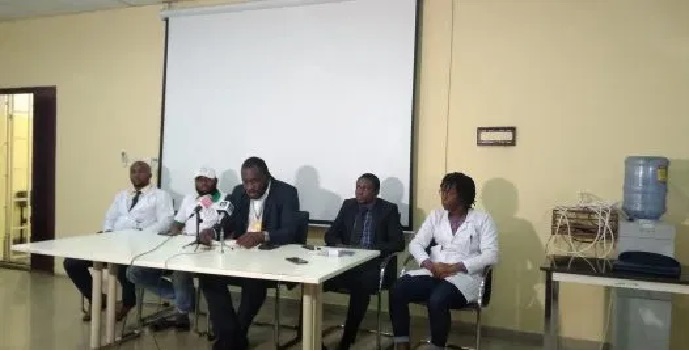
Four days after the presidential address that announced that the lockdown will be eased to allow skeletal commercial activities, the Nigerian Medical Association (NMA) has issued a statement expressing concern over the government’s decision to lift the stay-at-home order.

In a memo dated May 1st, 2020 that was signed by the president of the Association, Dr. Francis A Faduyile and the Secretary, Dr. Olumuyiwa P. Odusote, the Medical Body decried the decision to lift the lockdown, calling it premature.

Below is the statement.

“As the incidence of the COVID-19 hits 2000th mark by this weekend just seven days after hitting 1000th mark, it figuratively tilts the epidemiological curve towards an upward spike. More so, the revelation by the Nigeria Center for Disease Control (NCDC) that the nation lacks for bed spaces in Lagos worsens this frightening scenario. The confusing situation in Kano is neither unraveled nor resolved. At the same time, some States continue to live in the delusion of zero COVID-19 incidences.

At the point we are today, the Nigerian Medical Association unequivocally states as follows:

The easing of the lockdown even in phase is very premature. Nigeria should learn from her neighbor Ghana where the same action produced a 100% increase in infection rate in just a week. Instead, the Association believes that agencies of state should intensify efforts through mass enlightenment campaigns beyond current attempts to explain the dangers inherent in easing the lockdown prematurely in the face of rising infection rates; and also for the palliatives to reach the needy. We appreciate the efforts of state and non-state operators on their efforts so far, but urge them to do more.

The Association bemoans the rather meddlesome pronouncements by some state actors on the management protocols for COVID-19 in the country. In particular , we view the directive by the Bauchi State Governor for the use of a specific drug in the treatment of positive cases as improper and unethical. Medical doctors have the prerogative to use whatever treatment regimen they… therefore, implore our leaders to desist from distracting our time tested doctors and health workers. Instead, they should encourage them through the provision of Personal Protective Equipment (PPE), incentives and communication tools to interact with peers within the country and overseas as it is customary in the world of medical science to arrive at the best possible intervention for their patients.

With 113 Healthcare Workers (HCWs) in Nigeria reportedly infected with COVID-19 in the course of discharging their duties, NMA reminds all doctors and HCWs not to let down their guards in adhering strictly to Infection Prevention and Control Protocols. The Association re-emphasizes that all HCWs should wear proper PPE before attending to any patient as every patient is a potential COVID-19 patient. Furthermore, the Association notes with dismay the delay in distributing the available PPE to all public and private hospitals to prevent, detect and treat more patients as it ought to, and pray that the burgeoning bureaucracy is not a clog to the wheels of progress in this regard.

We wish that the “panel of experts” recently inaugurated by the Federal Ministry of Health is empowered to immediately commence their work of thinking, analyzing, collating and disseminating the most relevant medical information that informs the best management of our COVID-19 patients. Science and knowledge must inform policies and politics. We appreciate the FMOH for finally listening to the plea we made several weeks ago.

We wish the nation and our people the safety and protection from COVID-19 while praying the authorities to continue to carry out all necessary and more invigorated knowledge-based interventions a zero COVID-19 Nigeria.”

Many Nigerians have expressed the same sentiment especially regarding lifting the lockdown, following the news that Ghana’s infection rate increased by over 25% in one day after the West African neighbors relaxed its lockdown. The surge resulting in the infection of over 2,000 people in Ghana has forced the government to reorder a lockdown.

It is seen as a deadly gamble to ease the restrictions when the most affected states in Nigeria lack the capacity to contain the eventual consequences.

Lagos has the highest number of cases in Nigeria with 1006 as of Friday, with many contacts to trace. The director of Nigerian Center for Disease Control Chikwe Ihekweazu said on Wednesday that Lagos has run out of bed space, even though the State MOH has introduced more isolation centers to the existing ones.

“Lagos is the only place where are struggling with bed spaces for now. We will always tell Nigerians the truth, we are struggling with bed spaces for now,” he said.

The Federal Ministry of Health had on Friday, in anticipation of more cases, appealed to Nigerians to donate unoccupied houses to serve as isolation centers. It is believed that there are more people infected than it appears on the record of confirmed cases, but due the testing capacity of Nigeria that falls below par with other African countries, the figures are yet to be uncovered.

South Africa has tested over 207,530 people, followed by Ghana’s 113,497 and Egypt 90,000. Nigeria has conducted only over 13,689 tests so far which is regarded to be too poor for a country of 203 million people.

Covid-19 And The Rules of Engagement As Nigeria Reopens The Economy

2

The case with Covid-19 is that it shares symptoms with basically a host of other ailments. Interestingly, it shares the same feelings a man gets when his phone is being checked by his wife. At the onset, he experiences some difficulty in breathing, sweating copiously, then weakness, and of course, aches both at the stomach and head regions. When she asks, who is Chioma? The dry cough begins. I don’t intend to make you laugh. This is no joke. For this cause, several techniques have been engaged by different countries of the world to tackle Covid-19. The trial and error problem-solving method have been the first choice amongst and across most nations.

Believe me, it is yielding positive results and some devastating ones too. But to what extent you may ask? Whatever it is, some countries are not taking that risk at all for reasons best known to them. It is either they are clueless or masters at “copy and paste” strategies. They prefer to take the template of the trials that have not erred hook line and sinker without a thought if it is good enough for them or not. Are we not commons of “what is good for the goose is good for the gander?” These are nations with smart people but poor strategists and average thinkers too.

Nigeria is also doing well and we must commend the government, the NCDC, health, and essential workers who are at the frontline for us all. Following several suggestions on the media by experts, the common sense makers, and many partnerships, testing capacity has increased, more cases have been identified, and better plans are being made. This shows the authorities are listening and acting responsibly. For instance, in the last Presidential Broadcast by H.E. Muhammadu Buhari on Monday, April 27, 2020, the government consented to relax some sectors of the economy in a bid to alleviate the sufferings of the people and abate economic collapse. 

The public works, agriculture, markets, restaurants, and some transport sectors are to operate within a stipulated time while maintaining strict physical distancing measures as contained in the NCDC phase-wise opening strategy. It is expected that people must wear face/nose masks, observe a general curfew from “8 pm to 6 am” (to restrict social activities at night like parties and clubbing which may have very low compliance), maintain physical distance in private and public transport facilities, etc. Of course, interstate travel remains closed as well as schools, religious centers, sports and hospitality services, and other social events.

This is a good strategy by the government to salvage the economy from grinding and ease the sufferings of Nigerians who depend on their daily earnings to survive. This fight for us is between coronavirus and hunger. Put in another way, between the rich and the poor. The rich are afraid of the virus and can afford to stay at home because they have food to eat. The rich also want the poor to stay home to avoid further spreading of the virus. But the poor can no longer stay home; if they do, they will die of hunger. So, they take their chances of survival by going out. What a paradox? As good as the plan to resume the economy may seem, the fight over the virus is not yet worn. 

According to NCDC reports, the number of new cases is hiking the curves. No government has a verified formula for eliminating COVID-19, they are all experimenting, and reopening the economy is one of these experiments. The government is doing its best to manage the COVID-19 situation. The government cannot tell you what the definite outcomes will be over the weeks ahead neither does any of us. Two things could happen. First, we could possibly keep the economy peddling as well as flatten the curve by containing further spreads of the virus simultaneously. Second, we could move into the fourth stage of transmission with tens of thousands of new cases every day. If the latter is the case, then, the government may be tempted to enforce an indefinite lockdown again, leaving many to suffer and die of hunger. We do not pray to witness this but we must all comply with the directives on physical distancing.

What is expected of us as responsible citizens? Just a piece of advice, when you leave to work do not go about your affairs with no care or fear of the virus. Rather protect yourself and obey government directives, the NCDC rules, and other lifesaving rules that your organization may put in place. COVID-19 is not a joke. As a father, mother, brother, sister, friend, and colleague whose health determines that of others, do the right thing and stay ahead of the virus.  Wear a face mask (buy the sealed one, not the one sampled by five persons already) everywhere you go in public. In your office, market, private, and public transport vehicles observe physical distancing. 

Do not rush into public vehicles or stay in an overcrowded one. If you have your car, this is the time to use it. Corporate organizations should also provide more vehicles to ensure physical distancing in their staff buses. Organizations that can afford employees to work remotely should do so. While we are doing our bits, religious institutions, schools, entertainment centers, sports centers, etc., should resist any temptation of opening without adequate approvals. If things go as expected, I believe the government will unfreeze more sectors.

What will be the dangers if we do not obey these simple instructions? Being fully aware of the Nigerian system, where everything is working but nothing seems to be working. A place where we are in a shortage of many things including funds, health workers, test kits, food supply, electricity, social welfare, and what have you. We should not risk our lives this time by being careless. If most of us go about carelessly, this virus will spread like a wildfire and containment will become onerous – such as witnessed in Italy and the US. Many people will be left to die like animals, treatment will be according to age, gender, and even status. Certainly, the masses may suffer more because their treatment may come at a price owing to the shortage of health workers and treatment resources.

Our fight indeed is between what we will eat and the coronavirus. We are not like the countries taking care of their citizens but you need to stay alive to see Nigeria achieve that feat. Before you act carelessly, remember our situation, nobody cares. Putting yourself at risk would not be the best way to overcome the virus and still make ends meet.

In summary, the government is not relaxing the lockdown because the coast is clear neither is she in full control of the virus. The government has made a decision they feel is in our best interest with stipulated rules of engagement. This seems like a trial, so, make your own rule to stay safe and comply completely with the government instructions for the weeks ahead. However, the relaxation in lockdown is not for everyone. If you do not have any serious business, it is better you avoid going out, stay in, and stay safe. Act responsibly not for the government but your family, friends, neighbors, and colleagues. Do not put other people’s lives who make contact with you at risk.

The first time God destroyed the world with flood according to the Holy Bible, only one man – Noah, his household and properties were saved. Why? He obeyed instructions. Even, after the quarantine in the ark, Noah did not step out immediately. He sent out a dove to experiment or check if it is safe to step out. So, as you get out this week starting on Monday, do not be a dove for anybody or for any reason. Be as wise as a serpent and put your safety first before anything else – that is the rule of engagement. If you fall sick of this virus, work, hunger, and money will not matter to you any longer, only survival will.

Be wise and Stay Alive.

Corporate Sustainability – How Organisations Can Accelerate Long-term Shared Stakeholder Value Leveraging Short-term COVID-19 Rebuilding Efforts

0

This crisis should serve as a wake-up call for organisations to re-examine their role in the society to ensure that it leaves a lasting legacy that helps enhance their corporate sustainability post COVID-19. As Nigeria prepares for the gradual easing of confinement measures from 4th of May 2020, many companies are already in a hurry to get employees back to work. Corporate eagerness has only grown as businesses have been shut down over the past four weeks causing them to lose money per minute. 

Many believe that COVID-19 will have a far more reaching impact on all kinds of businesses than any crisis in the past half century. Despite this gloomy outlook, it is common knowledge that change creates opportunities. The day of reckoning has arrived. Having staggered over the years to integrate strategies for environmental protection, social wellbeing and economic development into business planning and corporate governance, the pandemic has once more provided businesses with another opportunity to fast-track that process. 

Business leaders who act now, communicate common value system to customers and take proactive approaches to the changing markets will do much better than those who will ignore the present situation. Here are six concrete ways to accelerate long-term shared stakeholder value leveraging short-term rebuilding efforts:

Make Corporate Sustainability a top-level function and hire qualified CSR Practitioners 

Organisations need to urgently reconsider appointing sustainability heads into top-level management positions – sustainability having now evolved not just for “doing good” but also “doing well” – a key top-level management responsibility cutting across all business units ranging from human resources to procurement, health and safety to environmental management, IT to security, legal to accounting, etc. For clarification, Corporate Sustainability is defined as a business approach that creates long-term stakeholder value by embracing opportunities and managing risks deriving from economic, environmental and social developments. 

To bolster the “can do” belief and attitude among line managers and heads of business units, it is important to invest in educating these key operational staff on sustainability strategies and implementation as well to easily understand the global trends, some of which will be discussed in this article. They will also be required to help create systems and processes to integrate sustainability into their business decisions. CSR is no longer any-and-all comers profession. Many sustainability initiatives require specialised knowledge and expertise—such as talking to suppliers about sustainable sourcing or using an eco-efficiency tool to evaluate a new product probably working with a research partner institution or integrating a framework such as an ISO standard as part of a business continuity plan. Sustainability managers as well should have good knowledge of all processes, procedures, frameworks and standards being utilised within the organisation and in all business relationships in order to help improve and innovate to create long term shared stakeholder value. Let’s also define a Corporate Sustainability Manager as a person responsible in an organisation for developing, implementing, assessing and reporting on strategies that create long-term stakeholder value by embracing opportunities and managing risks derived from economic, environmental and social developments. 

Be useful – be part of the emergency response teams 

Earlier in March, Nigeria’s private sector leaders announced the creation of the Coalition Against Coronavirus (CACOVID). The initiative is being spearheaded by Access Bank Group and Dangote Industries Ltd, with support from Zenith Bank, Guaranty Trust Bank, MTN, ITB and others. CACOVID will work to fight COVID-19 by raising public awareness, supporting healthcare professionals, institutions and governments, and by rallying private sector leadership and resources. On April 22, 2020, the coalition announced that it has ordered for 250,000 supplies for tests and another 150,000 extraction kits to fast-track molecular testing for the deadly coronavirus and no less than 1.7mn households would benefit from its food relief package as well. This is an excellent way for organisations to positively impact on society. It also provides for an opportunity for long-term good to come out of this temporary crisis provided organisations are willing to embrace changes for the benefit of all.

The pandemic has obviously created an opportunity for organisations to reconsider their approach to Corporate Philanthropy (CP), an integral part of Social Responsibility (SR) initiatives and position themselves as the player of the future. It has become easier to seek out strategic alliances and joint ventures on increasing numbers of emergency response initiatives in order to solve our immediate challenges but can also be a way to gain competitive advantage and enable the organisations to achieve objectives that would not have been possible without the alliance. Organisations – public, private and civil societies should leverage on these relationships and joint projects for critical institutional positioning towards achieving mutual goals. Herbert Wigwe, group managing director of Access Bank Plc, said that the CACOVID-19 is approaching the fight against the virus from three levels. “One, it was clear from the beginning that no one institution can go it alone, so we solicit everybody’s cooperation in tackling this scourge. Two, while several measures are being taken to stop the spread, including lockdowns, restriction, social distancing, there is the need to address the hunger.” He explained that the third level was the thought leadership aspect of the plan which is to tackle the post-pandemic aspect. 

That indicates that the coalition may continue to work together even after the pandemic. These organisations are building ‘ethical brand identifications’ based on the collaborative work they are doing. These emergency response initiatives are meant to demonstrate a system that values a culture of care and support, fulfilling missions, and acting as models for society. At an organisational level, as a result of this crisis, many organisations will increasingly be pursued to develop structured corporate sustainability programmes after the pandemic as those organisations engaging in strategic and sustainable activities will gain strength and power through innovation therefore become of high importance in the global marketplace. 

Research and development (R&D)

Research and development are the innovative activities undertaken by corporations or governments in improving or developing new services or products. Research and development constitute the first stage of commencement of a potentially new service or the production process. It differs from a variety of corporate activities in that it is mostly not intended to yield immediate profit, and generally carries greater risk and an uncertain return on investment. However, it is crucial for acquiring larger shares of the market through the marketisation of new products or localisation of the supply of important raw materials. Most importantly, it provides innovative opportunities for what Prof. Ndubuisi Ekekwe, Founder & Chairman of Fasmicro Group would term as Perception Demand Marketing – creation of products that the customer never imagined or thought of its demand domain in order to stimulate latent demands. You simply empower your customers to discover the possibilities and future in their ecosystem with a good sense of direction. This is not just a research and development or marketing function but a key sustainability innovation for business continuity as well.

As the world counts the human and economic costs of COVID-19, global supply chains –already stretched thin by the turbulent geopolitical environment are showing the strain. One fact is beyond doubt anyway – COVID-19 has laid bare the vulnerabilities of the world’s supply chains. Hence a definite need for companies to build in greater resilience to mitigate their effects. Additionally, many customer behaviour changes will require new or modified products and services. New market leaders will emerge while some past leaders may falter. Many companies will struggle post COVID-19. As against globalisation, localisation will become the new norm. For this reason, companies will seek access to faculty who create the cutting-edge knowledge and technology central to industry research and interest. 

However, knowledge creation and technology development require considerable capital investments, historically provided by governments. The declining federal funds as well as increased competition for monies allocated to human services will force African Universities to seek new sponsors. This provides for mutually benefiting opportunities for both industry and institutions. The interdependent research relationships between universities and companies will enable both entities to sustain growth in their areas. While companies rely on university researchers for product innovations, faculty gain prestige through increased external research funds. Just as industry needs innovative ideas to ensure profits, researchers need additional research funding to sustain faculty productivity. 

As it stands, even with infrastructural challenges in Africa, we are already starting to see some real innovations in supply chain agility. Several academic institutions, clothing, auto and electronics companies are quickly repurposing their laboratories and production lines to produce sanitisers, masks and ventilators to address current shortages. Simply put, when we put ourselves on a war footing, we can make big things happen fast.

In the west, there are so many examples of fruitful collaboration between universities, industry partners and start-ups. Many ideas from research in universities are utilised through collaboration between universities and firms. Others reach the market through licensing or start-up companies. Jean-Marc Frangos, chief innovation officer at BT, said: “BT’s university and start-ups collaborations have reaped great rewards. We jointly developed field scheduling algorithms with University of Essex which have resulted in 400,000 extra engineering tasks performed a year”. To this end, endeavours to find solutions to complex social, environmental and economic challenges for example, in energy, health or security will increasingly require collaboration between universities and industry because few organisations have the internal capacity to deliver results on their own.

Socially Responsible (SR) Joint Ventures

CSR joint ventures between firms and non-profits entail the union of profit and principle. Different from the response to emergency situations as already discussed above, which some may wrongly term as a CSR initiative. These SR collaborations are highly targeted, mission-driven, mutually beneficial, and create a distinctive brand for the joint initiative. In addition to being socially responsible, these ventures can provide partners with improved image, enhanced resources and stronger brand differentiation (Andreasen, 1996; Rondinelli & London, 2003; Shumate & O’Connor, 2010). Such ventures are principally aimed at helping achieve sustainable development in key need areas such as health, education, agriculture, etc. In this regard, Schumate & O’Connor’s (2010) symbolic sustainability model proposes the following:

  1. The value of such joint ventures is co-constructed by the alliance’s partners and stakeholders 
  2. Such alliances mobilise and restrict different forms of capital for nonprofits and corporations
  3. Partner formations are based on perceived mutual value
  4. There is a risk of the loss of legitimacy from each organisation’s stakeholders because of the alliance; but 
  5. Non-profit and corporate partners in such partnerships will be more buffered and less vulnerable to environmental threats compared to those organisations not in cross-industry alliances. 

The model noted above is crucial in achieving the sustainable development goals (SDGs). Partnership for sustainable development has shifted from idea to action with numerous examples emerging from around the world. Despite a long history of confrontation between industrial developers, local communities, NGOs and governments, the natural environment has become one of the main arenas for partnership in recent years. The shift from protest to partnership has been most pronounced in the area of business-NGO relations. Explanations for this transformation may be due to greater understanding of the concept of globalisation and the consequent rise of market-oriented NGOs and consumer protest aimed at making business more accountable for its adverse social and environmental impacts. Others suggest that some businesses and NGOs are beginning to find common ground around the concept of sustainable development in order to unravel some global-local problems which intergovernmental processes are failing to resolve. Several leading consulting and auditing firms around the world today are actually registered NGOs, suggesting that business-NGO Joint Venture initiatives is the right way to go in sustainability innovation.  

Turn remote working and telecommuting into long-term efficiencies

The key to differentiating between a workplace trend and an economic strategy lies in the hands of the businesses. If corporate leaders throughout the world believe remote work is beneficial to the sustainability of their brand, then they’ll invest in its development as a resource according to Laurel Farrer, a remote work strategist and contributor at Forbes. In Africa and particularly in Lagos and other major African cities, there is great value in telecommuting to all key stakeholders – organisations, employees, the environment and wider society. 

Despite Africa’s socio cultural challenges and poor infrastructure, I believe that remote work will revolutionise the way we live and work. American researchers already show benefits to include:

  • Higher Productivity — Higher flexibility and performance combine to create stronger productivity and lower absenteeism. The time spent on traffic will be used for more productive work helping to achieve work-life balance
  • Employee Loyalty and Retention — Employees will be happier with a company that offers flexible work structure than one that does not. Working from home for two to three days in a week will definitely be of interest to a number of employees. 
  • Profitability — Organisations save an average of $11,000 per year per part-time telecommute, or 21% higher profitability. This is in the western world where there are better road networks and much lesser traffic gridlocks. It is right therefore to assume that the benefits for African companies will be much higher.
  • Environmental Benefits — Companies committed to reducing their carbon footprint will embrace this opportunity and use the opportunity to invest in clean sources of power for their employees. 

Making sustainability the future blueprint for business

Business as usual won’t get the job done anymore—and sustainability as usual won’t suffice. According to Paul Polman, former CEO of Unilever, we should all aspire to leave our world a better place. For an individual, that means behaving in a sustainable manner in his or her personal life. For a company, that means having a meaningful and strategic purpose and finding ways to tie that purpose into the values and day-to-day work of individual employees. This includes working to mitigate the catastrophic effects of climate change, build truly fair and inclusive economic growth, navigate a radically reshaped world of supply chain to localise or create transparency and traceability; define, monitor activities, track sustainability performance, set objectives, and identify improvement opportunities! You’ll need to be ready to measure the success of your sustainability strategy —placing sustainability at the heart of business strategy, not just in the glossary reports but using systems thinking approach, some of which were explained in my article of April 16, 2020 “Integrating Sustainability Principles into Business Continuity Plan: Mitigating COVID-19 Impacts in Africa” published on tekedia.com.  

Technology and the Impact of Coronavirus

4

The world is faced with an economic and health crisis never seen before in decades. Consumer demand remains strong and supply infrastructure is still healthy, but both are tied in lockdown and unable to function. Supply has built up, but demand is crashing, even though latent demand hasn’t crashed that much.

The clampdown on physical activities plus the latent demand, has simultaneously reduced pressure on physical infrastructures, such as building, roads, and has increased pressure on digital infrastructure. Digital readiness cannot be overemphasized at this moment, as COVID-19 has demonstrated the need for more location-agnostic constructs in order for business and life to continue. Organizations who have built necessary infrastructures to support digitalization are enjoying leverageable moments.

Emergency spikes have been observed in data consumption, online shopping, contactless payment, remote work, distance learning, tele-health, online entertainment. Notably, this is more evident in businesses, where products and services can be distributed and transacted digitally.   Zoom (Video conferencing), Amazon,  (online shopping) Activision Blizzard (video games), Netflix (video streaming), Teladoc Health (telehealth), Flutterwave (Digital payment), Ubongo (distance learning), Zipline (medical drone) etc., are among the biggest winners of this spike.

On the other hand, businesses such as food, manufacturing and logistics who are using digitalization tools, to scale up efficiencies partly, are experiencing some disadvantages, because human interaction is much needed at pivotal nodes. During the .com boom in the 90s, the idea of “death of distance” gained momentum.  With the increasing web-based and telecommunication tools then, it led to the spatial unbundling of business units and reduced the value of physical proximity. So, companies do not have to be vertically integrated to maximize value. As communication became cheaper, faster, supply chain transformed from just-in-case to just-in-time, which created room for more flexibility, agility and adaptivity. It has equally reduced the cost of holding inventory. Today, the exact opposite is right before us. Not having a robust inventory to absorb the external shocks of the pandemic, can put a company in serious troubles.

Another thing to consider is that supply chain is global and interconnected across multiple geographies today. Now, this very idea is being challenged. Yes, the idea of globalization. Countries across the world have imposed travel restrictions to control the spread of the coronavirus. A study revealed that “at least 93 percent of the global population now lives in countries with coronavirus-related travel restrictions, with approximately 3 billion people residing in countries enforcing complete border closures to foreigners”. The implication of this is that companies will find it difficult to source for components, parts or raw materials. Thus, supply chain will need to become more resilient, and distributed. This will call for a need to shift to a more dispersed sourcing technique across multiple geographies. In the bid to also reduce cost inefficiencies and increase control along the supply chain, companies might consider the partial integration of processes that have initially been outsourced. This can lead to greater innovation, however, managing finances, becomes even more critical.

As we have seen in the above paragraphs, technology coupled with this pandemic has encouraged continued shrinking of physical distance in wholly digital companies. While for labour intensive companies, it might lead to the re-bundling of physical distances. And, it thus appears that this period is making the distinction between digital companies and traditional companies who are leveraging on digital technologies clearer. Irrespective of the divide a company falls, automation, of key processes can offer some soft landing.

Automation has grown over the last few years, with hundreds of millions of jobs estimated to be affected.  Companies operating in sectors including manufacturing, transportation, warehousing, agriculture, mining, oil and gas, retail trade, construction and utilities, are posed to have high automation potential.  On the other hand, studies have shown that growth in automation does not follow a linear path. Rather, it happens in spikes and it is more concentrated during economic dips, when humans become relatively more expensive as companies’ revenue decline. The University of British Columbia reported that over three recessions in the last 30 years, nearly 9 out of 10 job losses took place in automatable job functions. Of course, everyone and every industry is not equally vulnerable to this.

In the case of a pandemic related recession, it does not only cripple the economy, it can also have a severe impact on the workforce.  During the Black Plague that ravaged Eurasia and North Africa, peaking in Europe in the 14th century, it resulted in deaths of up to 75-200million people. This decimated the workforce, and plunged the economy into dip. As a result of the shortage of workforce, the need to fill the labour gaps led, to a series of technology and social innovations popularly referred to as the European Renaissance. One of the technologies invented during this period was the printing press, and it changed the ways humans communicated.

While we do not hope for a replay, there is enough evidence to show that automation could increase much more, as economic recession not only stares at us, but social distancing is also becoming the new norm. COVID-19 has made us realize how we still depend heavily on human interactions to get things done. We can now begin to imagine a world of business, where human interaction is minimized. A case where you place an order on an ecommerce store with your device, and a robot/drone drops it off at your doorstep. We are in no doubt, moving towards a greater stage of human-device and device-device interaction and communication. This crisis is accelerating the defining moments and pivot points in technology revolution that will bring us closer to the exponential age.

For businesses, the impact of coronavirus is profound. Will companies rebound after this economic shock, or will it suffer lasting damage? Will companies retain existing market positions without substantial efforts to respond to changes confronting the sector as a whole? Will the current changes in consumer attitudes towards health, social distancing and finance be sustained? We have seen tremendous growth in medical research, biotech, drug development, health policies and spikes in some digital businesses. These positive outbursts, is nothing in comparison to the scale of the catastrophe caused by coronavirus. The impact of this period will be felt more in coming months. And needless to say, that the decisions made during this period will be critical to redefine the future of technology and businesses at all levels.

Access Bank’s Herbert Wigwe, Chris Ngige and Nigerian Labour Congress

0

Good People, I think our generation of professionals are very sensitive. By writing that Access Bank could eliminate within 75% of its workforce, I have offended diverse people at the same time. Some said I PRAISED the man who is hiding under disruption to destroy families. Another said I ATTACKED the CEO Herbert Wigwe who for years, “you have a personal hatred”. I smile. Wigwe won my Person of the Year 2018. My comment on his decision is fair as noted here.

But the most annoying one came a few minutes ago: “we saw your article where you are justifying destroyal of jobs in Access Bank on tech. Did you not read that the honoruable minister and Nigerian Labour Congress have put statements that NO EMPLOYER CAN FIRE WORKERS IN NIGERIA. Let me tell you, what Wigwe did is illegal for going against a government position on this matter.” I smile to 4th power!

It is never new: write about a President’s bad policy like land border closure, some will say you hate Mr. President. Then praise him for really good moves like closing the latest loan (extremely necessary for Nigeria), some will write that I have been put on his payroll. Lol.

Let us have peace and approach Nigeria with facts.


Update:

“Then praise him [President Buhari] for really good moves like closing the latest loan (extremely necessary for Nigeria)”

This is why that loan is very important:

  • NNPC was not making money due to the Covid-19 pandemic.
  • VAT & broad tax revenue was not coming because offices were shut down.
  • Local & international capital markets were frozen to give government financing support. Only IMF could have offered a way out, and it did.

So that triple whammy requires Nigeria  borrowing since we do not have money for the rainy day to fight the virus and take care of the necessary urgent bills. That loan is for a health emergency and I do think it was a very necessary loan.