DD
MM
YYYY

PAGES

DD
MM
YYYY

spot_img

PAGES

Home Blog Page 6379

Beyond Salary Cuts and Dismissals, Companies need to Upskill their Workforce

0

COVID-19, the unexpected, rapid and worldwide spread virus, has changed the world drastically. We are in a crisis that has forced workplace closures, disrupted supply chains and lowered productivity. This crisis differs from others in many facets, and it brings significant uncertainty about its impact on people’s lives and livelihood. Infection, cut the supply of labour. Social distancing restricts mobility, with more severe effects on sectors that rely on human interaction (such as hospitality, tourism, entertainment, travel, and education). Emerging markets and developing economies, face more challenges, with reversals in capital flows, currency pressures, a plunge in commodity price, while coping with a weak health and social system.

Based on the assumption that the pandemic and necessary containment, peaks in the second quarter for most countries, and recedes in the second half of the year, the International Monetary Fund (IMF) has projected the global economy will contract sharply by 3%. This is an outcome that is far worse than the 2009 Great Recession. Both the advanced economies and emerging market and developing economies are in recession. While global growth is expected to rebound to 5.8 percent in 2021, “the cumulative loss to global GDP over 2020 and 2021 from the pandemic crisis could be around 9 trillion dollars, greater than the economies of Japan and Germany, combined”.
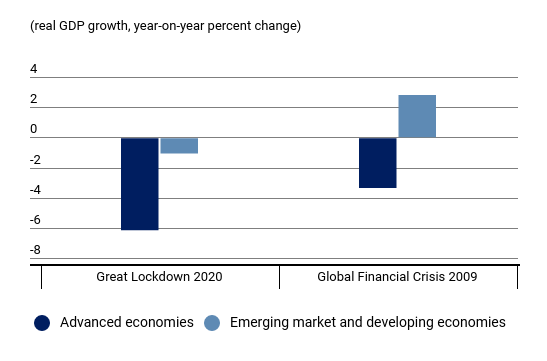
Source: IMF

The impact of this would vary depending on the sector, financial capabilities, and management decisions of the company.  As it is, with other recessions, certain businesses will permanently shut down, while some will struggle and some will come out as a winner. Also, some jobs will be lost, while there will be demand for certain talents and some sort of job reshuffling. Already, companies are responding with several restructuring and prudent measures, in order to remain in business. This includes compensation, restructuring, deferment of increment or promotion, axing temporary employees, furlough leave, retrenchment, shutdown of operations and many more. While these are pretty good measures, companies need to do more on competency mapping of their employees, and explore the possibility of reskilling and upskilling their workforce, in order for the company, to emerge stronger from the COVID-19 crisis. What is the risk profile of your workforce? Which roles are business-critical? And what skills/talents are needed to scale through?

No doubt, this crisis has forced many businesses to change the way they operate. There is a huge shift towards remote work, in order to reduce human-to-human contact and potential coronavirus infections. Even before the crisis, rapidly evolving technologies and modern ways of working were already disrupting jobs and reshaping the skills employees need to perform them. This crisis has further fast-tracked this journey. While you may expect remote work to fade, as the containment phase of the crisis increases, there is enough evidence to suggest that this trend will continue, as the use of technology, has never been felt more.

Thus, workers need to figure out how they can adapt rapidly to this dynamic landscape and the demands of the “distance economy”. Companies need to develop a talent strategy that develops employees’ digital capabilities, and well as their adaptability and resilience.  Knowing fully well, it is difficult for companies to be resilient, if their employees are not, business leaders must pay special attention to this.

For example, the healthcare system in the UK has seen years of digital evolution, compressed into weeks by this crisis. In 2019, less than 1 percent of medical appointments took place remotely. Fast forward, to 2020, doctors now access 100 percent of patients through online and telephone, with only 7 percent proceeding to face-to-face consultations, according to BBC analysis. This massive shift implies that health workers must learn how to effectively and safely conduct remote diagnosis.

As mentioned earlier, companies need to conduct a workforce analysis and competency mapping, to identify critical value drivers and talents that are necessary for the survival of your business model. What are the roles of these value drivers and how will their daily operations change as a result of value shift? What shifts in activities, behaviour, and skills are needed?

Subsequently, you need to build employees’ skills that will be crucial to driving value in your adjusted business model and enable you to respond well to changes. Expand the ability of your employees to operate remotely, while strengthening their social and emotional skills, to ensure that professional engagement is kept, despite the distance. If transiting to a more tech and data driven model, then, there will be a need for your employees to understand how to employ digital tools such as data analytics, machine learning to improve their productivity.

This is not the time to slash employee-training budgets. According to the U.S Training Report, before, during and after the Great Recession, revealed that there was a significant drop in the training expenditures in 2009 and 2010, followed by a boost in 2011 (surpassing the 2007 level), and then a drop to 2008 levels in 2012. This data tells us that if companies cut their investment in training now, it is only a delayed investment. And delay may be more costly, since the current crisis will require a substantial skill shift than the financial crisis of 2008.
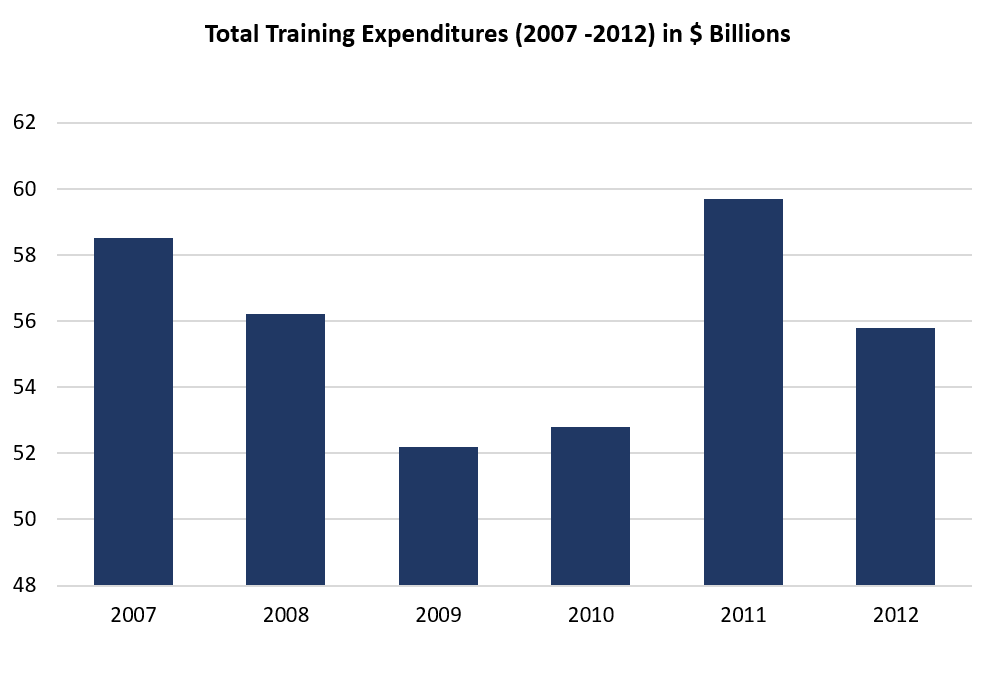
Source:  US Training report

We may not be able to control what is happening to our world today, but we can control how it will affect us. As I noted in this piece, the coronavirus pandemic is accelerating us towards a new normal, that was already on-going  through automation, artificial intelligence and digitalization. And it is imperative that business leaders understand that the survival of their business hinges on the performance, resilience and adaptability of their workforce.  Salary cuts and disengagements might be a good short-term response, but may not be sufficient alone, for companies to come out strong in the long term. Building your workforce to adapt must be your topmost priority, to ensure that your adjusted business model is successful. Don’t delay this. Start now, experiment quickly and iterate.


How to Build Business Models Around Trends

0

Money does not finish from an economy. I mean the Central Bank does not withdraw the money supply from the economy.

 This is what always happens. Money moves to where there are trends. The reason why some people are richer than others is because money always moves toward them.

 That’s how my entrepreneurial friends were debating over the issue of money and trends a few days ago.

 I told them that money and trends have the same direction. That means, money goes to where the need is highest and the value is highest.

 This is what the coronavirus pandemic has caused to the economy. We see how money dried up from certain businesses and moves towards some businesses based on trends. 

As I already analysed this for Zoom and Amazon, how they record high demand and patronage in this period.

 According to Techcrunch, Airbnb and Uber had laid off some of their employees due to the disruption caused by this pandemic. 

The shared economy and the aggregation business model had been badly affected by these trends.

 My interest in this analysis is to see how we could maximize trends by building business models around them. 

But, what are the trends of this pandemic?

 Trends Formation During this Coronavirus Pandemic

The World Economic Forum pointed out the rising market opportunities during this pandemic based on the trends. Trends are essential because they increase the value of a particular activity and increase focus on them.

Here are the trends I have observed that we could leverage on as we build new business models;

  • Essentials Trend:

This automatically became a trend as the government ordered the shutdown of non essential businesses. So, essential businesses are needed to sustain lives this time. Without them people will die at this critical time either from hunger or other essential factors.

  • Remote Working Trend:

While lockdown and social distancing have been some of the health measures to contain the pandemic this period, it has brought a new trend to business.

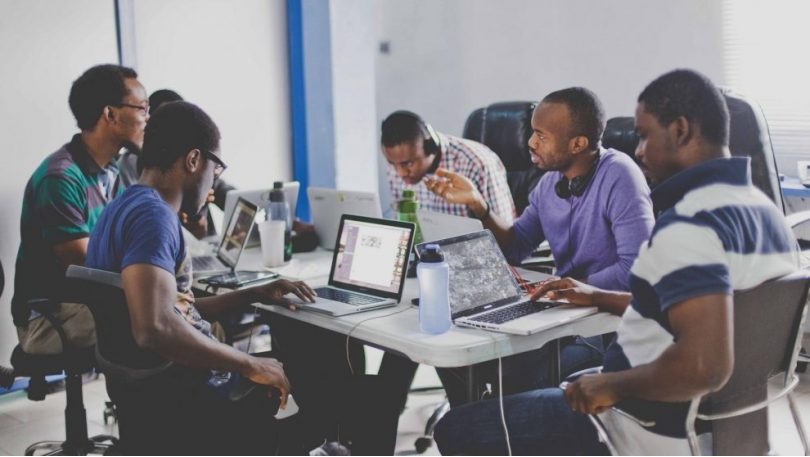
 The trend formed is remote working. Workers, especially digital businesses, need to keep working and  stay in touch virtually.

 So, products around remote work have been thriving in this period. Some products that support remote work are already recording success.

  • Shopping and Delivery Trend:

It has become known that digital businesses can not be Locked down because it’s virtually operated. 

As more people are staying at home and movement is limited, purchasing will be done online. So, ecommerce and delivery tend to thrive in this period. 

When you order online and make payment online, this will be delivered to your location through their logistic system.

  • Online Entertainment Trend:

It will become very boring for people and celebrities to be at home for more than one month without clubbing, going to shows, hosting events and other entertainment activities. 

So, the option is online entertainment that has almost a similar experience like offline entertainment.

  • Online Learning Trend:

Physical educational system has also been disrupted by this pandemic. 

Students have to resort to online learning in order to continue their education. So, there is a rise in online learning more than ever.

 Caution to be taken In Building Business Models Around These Trends.

These are some of the business opportunities entrepreneurs can explore at this time. While building new business model around these trend, ensure you pay attention to these;

  •  Short Lifespan Trends Factor:

There are trends created by this pandemic that will be short lived. They have few months when they will no longer be useful in the market. 

Some good examples are, hand sanitisers business, nose mask business, drug delivery business and other essential focused businesses.

An entrepreneur should be careful in developing a model around those trends as they have short lifespan.

  • Sustainable Trends Factor:

There are trends created by this pandemic that will change the way things are being done in businesses, workplace and economic activities. 

Some of the examples are, remote working, online learning, online entertainment, adoption of digital payment and shopping etc.

 Many companies will reduce their workforce and also adopt remote working for some staff that could work from home.

 As we learn to develop new business models to explore the opportunities presented by these pandemic, we must know that trends will also change. 

The times are really ‘ a changin’

Pros and Cons of Reopening Religious Worshiping Houses in Nigeria

1

Whether churches, mosques and other religious houses should be reopened for worship is a sensitive topic that sparks off debate ever since the beginning of the lockdown. This is made more sensitive because Nigerians are too religious. It is then left to ask if churches, mosques, temples and other religious houses should be left closed until the country is considered safe enough for the citizens to attend large gatherings.

Speaking of large gatherings reminds one of the arguments tabled by Bishop David Oyedepo of Living Faith Church Worldwide, aka Winners Chapel International. Bishop Oyedepo accused the government of a malicious attitude towards churches. He said that it is suspicious for the government to reopen markets and allow hospitals to work while churches are closed down. He also claimed that churches are healing places, which provides better positive results than hospitals.

Whatever arguments Bishop Oyedepo’s statement may draw out, it will be good if we look at it critically. But then, this article is not to critique his statement and opinions, but to bring to light the pros and cons of reopening churches. However, it will be good if Bishop Oyedepo understands that the government did not only ban churches from gathering; mosques are also affected.

Pros of Reopening Religious Worshipping Houses

Though people are afraid of the spread of COVID-19 that may result from large gatherings, such as the ones seen in religious worships, it will be good to know the benefits of those gatherings to the people. Apart from offering opportunities for people to gather, pray, and receive miracles, these houses give rooms for:

  • Mental, Emotional and Psychological Wellbeing

A woman said at the beginning of the lockdown that she needed to go to church more during this period than in any other time. From what I gathered, she was afraid of her life and that of her family, especially as she listened to all the fake news and information about COVID-19 that were circulated through the internet. She believed the virus is a sign of “end-time” and so the one place she will want to be when “rapture” comes is in the church. But alas, the church’s door was closed to her.

The truth is that religious gatherings, preaching and other activities that take place in these houses give their worshippers hope. A lot of people attend churches to find succour. Some go there because they hoped to get help, and I am not talking about material help here. So like Bishop Oyedepo said, worshipping together also heals. And right now, Nigerians need to heal; not from COVID-19 but from its devastating emotional, mental and psychological effects.

  • Stability

People have already developed the habit of attending religious services on a weekly or daily basis. This habit has been a life-long one for many people. They already have it in their routine that on this day of the week, they have to dress up, go to this house, stay with other worshippers and pray together. This normal routine changed since April 1, 2020 and it has thrown a lot of people into confusion. They felt incomplete because they stayed at home on the days they were to go out, doing almost nothing. Reopening worshipping houses will, therefore, help in returning stability and normalcy to the lives of many Nigerians. They will no longer feel as if they are in a period of war.

  • Sharing Palliatives

The best way to reach out to the needy in a society is through religious houses. They always know members and non-members that come to them for financial help (at least churches do that). This could explain why Peter Obi, the former governor of Anambra State and PDP Vice Presidential candidate, decided to donate his COVID-19 palliatives through religious organisations and hospitals. He already knew that these people will not keep to themselves what is meant for the needy. Keeping these houses open will also encourage members that wish to help the poor to do so. Government can also consider sharing the 20k palliatives through these organisations instead of using the controversial ways they do so now.

Cons of Reopening Religious Houses

There are reasons why these houses should not be reopened, until religious leaders provide a guarantee that they will do whatever they can to ensure that their parishioners are not endangered. Apart from the insinuation of many Nigerians concerning the reasons behind the demands for reopening of religious houses, here are major problems I foresee:

  • Social Distancing Issue

Someone said churches can actually ensure social distancing by demanding that a fewer number of people sit in a pew. This might sound wonderful but it can only work in churches with large buildings or few parishioners. This problem also applies to mosques that are usually overcrowded.

  • Time and Duration

Some religious organisations are in positions to choose the time of service suitable to them. This means they can decide to fix as many services as possible in order to observe the social distancing guide. However, Islam does not give its faithful that right to choose. This means that mosques will always remain crowded because all the Muslims around must gather at a particular time to pray. This poses a problem because it will discourage social distancing.

Another thing worth noting here is the duration of service. It is not that staying a few minutes or a few hours around a COVID-19 carrier makes a difference, but the shorter the stay the better. However, most religious services last more than 3 hours and the faithful are expected not to complain. It is then left for these organisations to make necessary adjustments to their services and then see what next to do.

  • Faster Spread of COVID-19

A doctor once explained on Twitter that it is easier for COVID-19 to spread in an enclosed place than in an open space. This, as he explained, is because in an open space, there is a possibility that the wind will blow the virus away and scatter it in minute quantities so that it might not have contact with all the people around. But in an enclosed place, if a positive person sneezes or speaks, the virus is not sparing anybody around him/her. If the fan is blowing, the virus will spread even to a wider radius. The doctor claims that this is why people that attended board meetings with positive patients are easily infected. This is the major problem religious houses will face. This alone makes it very risky for these houses to be reopened.

Most of us need the succour and stability provided by worshipping and praying together. We know it will be good for us to go back to our normal lives. But then, considering that it is unsafe out there makes one wonder if religious houses should be reopened or not. It is, however, left for these religious leaders to convince the government that they can manage situations if given the opportunity.

Investors ‘raking in billions’ as coronavirus infections surge in Nigeria

0

Today, Nigeria’s equity market extended its gaining streak to nine consecutive trading days as the All-Share Index (ASI) appreciated by 0.87% to close at 24,354.25 points as against 24,143.37 points recorded at the close of trading on Wednesday, this brings the year-to-date loss of the Market to 9.27%.

Today’s gain makes it the longest winning streak Investors have had all year. Investors have now raked in over N980 billion in the last nine days alone. Over the same period, Nigeria’s Covid-19 infections have surged by over 220%. Clearly, risk seekers are in deviant of the economic threats posed by increasing Covid-19 infections and they are getting rewarded for it.

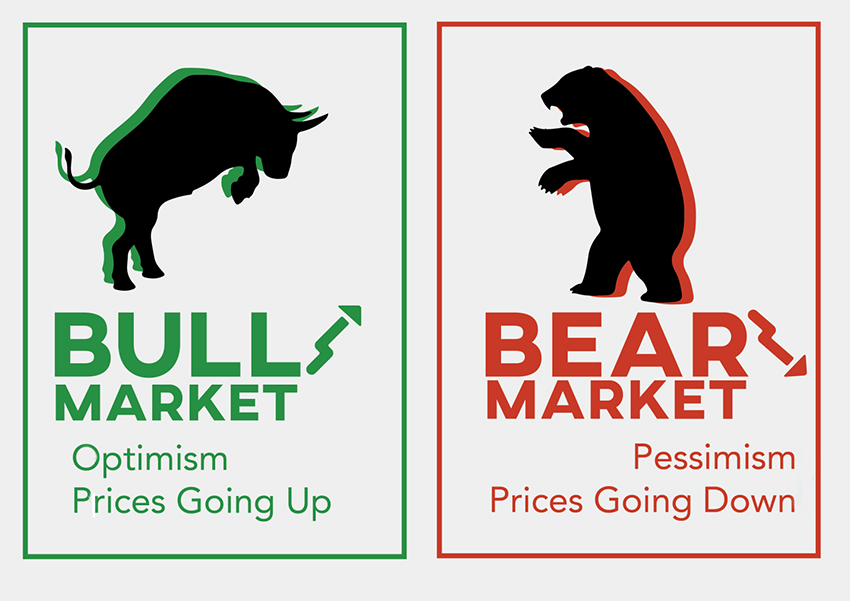
Despite the profit-taking in the shares of Banks today, Investors renewed their interest in other companies as the Bulls and Bears equal their positions on the performance table, 20 losers and 20 gainers. Also, since FG eased its lockdown order, we have noticed a sustained increase in volume and value of shares traded.

The Market Capitalization of listed equities also appreciated by 0.87% to close at N12.69 trillion as against N12.58 trillion recorded at the close of trading on Wednesday. With the year-start capitalisation of N12.95 trillion, Investors are now 2% shy of recovering all they have lost this year.

If you are not an ‘unrepentant risk seeker’, please don’t go near the equities market. Leave your investments in the money market where you are sure of capital preservation with some decent returns.

Fx Market Update:

The official interbank market rate of the Naira remained unchanged today at $/N361.00. However, the sustained FX liquidity squeeze at the I & E Fx window worsened sentiments today as the Naira closed weaker by 0.49% (N1.88) with a price of $/N386.38.

Investment Insights: By the way, one of the major factors responsible for the sustained gains recorded in the stock market is because of the Fx liquidity squeeze in the Investors’ & Exporters’ (I & E) Fx window. The I & E Fx window is one of the platforms established by CBN, through which Foreign Portfolio Investors can buy dollars to repatriate the gains they have made trading equities in Naira.

Since the lockdown, CBN has muted supply of dollars to that window, as a result, these Investors are trapped in Nigeria and left with no reason to sell their shares since there are no Fx to repatriate their funds. No sales from foreign investors mean minimal sell pressure on the equities market, as far as equities are concerned, the lesser the selling pressure the higher the possibility that the market will gain consistently and this is what we have seen play out in the equities market since the early days of the lockdown.

In this Covid-19 era, equities are too risky as an investment option except if you are the type that loves risk, over a period of two years you surely will be better for it but if you are averse to risk, please stay clear of the Market.

If you seek risk for higher returns, click on the link https://bit.ly/2XrvIf9 to open a stockbroking/share purchase account and trade within 24 hours.

If you don’t like risk but you want to enjoy a decent return that will keep you in the fight against inflation, click to subscribe to our money market fund https://lnkd.in/eJCNsxR

Stay home and stay safe, let your money do the work.

Covid-19 Pauses Stakeholder Capitalism

1

It is looking really like the old: companies, especially public traded companies, are using workers to balance their books and offset their struggles. Over the last few years, we have read of new lexicons like Stakeholder Capitalism (not the typical Shareholder Capitalism), which came into the business world with a huge flash. Stakeholder capitalism posits that companies must make decisions to balance their fiduciary responsibilities with workers’ welfare, environmental protection, community sustenance, etc. Simply, “Stakeholder capitalism is a system in which corporations are oriented to serve the interests of all their stakeholders. Among the key stakeholders are customers, suppliers, employees, shareholders and local communities”. But it seems that it is all talk.

As the coronavirus pandemic squeezes global industry, companies are increasingly debating whether they pay shareholder dividends or staff salaries. Often, The Washington Post writes, workers are “the first to lose, even as shareholders continue to collect.” With profit margins shrinking, those at the helm must decide who sacrifices the most. Layoffs, executives argue, support a company’s “long-term health.” But critics say that sending millions of dollars to shareholders while axing staff belies the mantra from executives regarding “their concern for employees’ welfare during the coronavirus crisis.”

How do you fire hundreds of workers, and yet in the same earnings call promise to pay dividends?: “Similarly, Levi Strauss announced April 7 that the company would stop paying store workers, and about 4,000 are now on furlough. On the same day, the company announced that it was returning $32 million to shareholders.”

Yet, the same firm was a vanguard of  this new movement. My point is simple: do not pretend, just be real, and do not sign papers you do not believe in. But making your workers feel like they are special, only to kick them out when small heat comes, may not help your long-term mission and reputation. Follow the barons and be frank: no one is special here, it is old century capitalism, and if you expect any special treatment, just go, because in this company, there is no work-life balance, and what matters is how shareholders feel! That way, they would not be expecting vapor promises.