DD
MM
YYYY

PAGES

DD
MM
YYYY

spot_img

PAGES

Home Blog Page 6398

The Coming of Digitalization

0

A quick one, Harmeet Kaur of CNN Business writes: “As the spread of the coronavirus is proving difficult to contain, so too is the misinformation surrounding it…One of the most recent, baseless conspiracy theories surrounding the virus is that 5G networks -… are fueling the global coronavirus pandemic. They are not…Unsophisticated algorithms amplified those voices and ushered unsubstantiated theories into the mainstream.”

Hmmmm…Okay!

With the fabled news revolving around the 5G networks, it is almost acceptable to say: “MAYBE WE ARE NOT READY FOR DIGITIZATION”.

Recently, due to a video I viewed, I went to the internet to research subdermal transplant and I found an article written in 2016 that predicts a Phone Implant in our heads. Insane right? How on earth are we supposed to have a phone implant in our heads? Jokingly, I said, “how about you just create a technology that hacks our brains instead?”…Hmmmmm!

Still brooding on it, something occurred to me – Change is inevitable. When there is change people react; people forget to be logical. Surprisingly, Jack Canfield, an American Author and an Entrepreneur said almost the same thing however quite detailed;

Change is inevitable in life. You can either resist it and potentially get run over by it, or you can choose to cooperate with it, adapt to it, and learn how to benefit from it. When you embrace change you will begin to see it as an opportunity for growth

Since 2020 began, many of us have noticed the constant change, especially in our weather…LOL…#AKuHeatYii and increased data usage. Somehow, we are transiting into a more informed, more visualized and practical world. Things are clearly not the way we think they should be and I’ll say emphatically, WE NEED TO BE READY for what’s coming. Now, let’s talk about how to GET READY for this evolving world;

  1. Digitalization is for you: First you need to know this is for you. No matter how shady or scary persons are interpreting it, understanding that there are opportunities embedded in this age for you is very important.
  2. Build a positive mindset: Whether it is 5G Network myths or facts, building a positive environment at this time is of necessity. Having a mind that delights in optimistic change will enable your productivity and creativity when needed.
  3. Grow your values: I know many of us have beautiful core values and all, however, some of us still struggle with accepting change easily. With all the fuss going about this digitalization, embracing values like spontaneity, courage, growth, curiosity and others will facilitate your active involvement in the digital world.
  4. Learn: Although, learning is a choice but then an adage says never stop learning because life never stops teaching. So rather than grumble about what’s happening and gradually fizzle out as a result of ignorance, why don’t you learn? Learn and gather facts. Learn and meditate. Learn and develop ideas. Learn and be more productive. Start learning possible means on how to be relevant in the coming world.
  5. Stay in faith: I’d say let’s consider this more keenly in line with growth and opportunities. Stay in faith as to what’s coming and how you’ll respond to it. Align your hearts on consequential matters deliberately not for spite but for wisdom. Activate a faith rule that says no matter what comes, I’ll get by.

Finally, I’d say “change will always bring inconvenience”. And like Bernard Shaw’s words, progress is impossible without change; and those who cannot change their minds cannot change anything. Therefore, see the opportunities.

Thanks for reading.

Take care.

Stay safe.

Post Covid -19: Implications For Work In Developed And Emerging Economies

0

In recent months, the world has seen extreme disruption in every aspect of life. As countries try to control the spread of COVID -19, travel restrictions, closure of borders, lockdowns, government support packages for organisations and citizens are now the norm. The abrupt stop in economic activities has brought world economies to their knees and there is a need for quick recovery to avoid severe job losses post COVID -19. Emerging economies like Nigeria, already struggling with the burden of foreign debts, underdeveloped infrastructure, poor healthcare and education systems, high unemployment, terrorism and significant social disparity, will see greater disruptions as they struggle to contain the economic and social ramifications of this pandemic.

Over the last five years, a significant number of organisations, in mostly developed economies, have embraced advanced technology for cost efficiency and precision by implementing Artificial Intelligence (AI), robotics, digitisation and automation. It is estimated that 37 percent of organisations have deployed AI solutions, up 270 percent from four years ago. This figure will continue to grow as organisations seek out ways to manage and eliminate risks to business processes.

The COVID -19 crisis has inevitably fast-tracked the advent of the Fourth Industrial revolution (4IR). As organisations reassess business continuity plans and improve their risk management systems to mitigate the fall-out from future crises, the acceleration of the implementation of advanced technology in business will become a priority. This acceleration will have a ripple effect across all aspects of business and work.

The restrictions in movement and in some countries, total lockdowns, have caused the closure of many brick-and-mortar businesses. Consequently, consumers, faced with movement restrictions, have migrated to e-commerce platforms to meet their daily demands, a reaction that has driven up the market value of e-commerce businesses. Organisations like Amazon, Alibaba, eBay, Zappos and Deliveroo have seen a considerable spike in customer traffic and have bolstered their workforce by employing temporary staff to meet the increase in demand, which may not abate at the end of the crisis. It is anticipated that the recent migration of customers to e-commerce will continue post COVID -19. This is fantastic news for e-commerce and technology driven organisations and signals a change in strategy for many brick -and-mortar businesses.

The global impact of the pandemic affects all aspects of life and business, including the workforce and the workplace. As organisations grapple with the concept of operating remotely, the white-collar workforce is expected to work from home. Navigating the complexity of tasks in the white-collar workforce during and after COVID -19 has thrown up new challenges for organisations. The migration of the white-collar workforce to the remote working environment is successful only when employees have the requisite skills to adapt to an environment driven by advanced technology and can be effectively supervised remotely. For the white-collar workforce, technology now plays a very important role when meeting work commitments and delivering on targets. 

As businesses and employees seek technology software to maintain continuity, organisations like Zoom have experienced spectacular increase in market value. There is no doubt that the current disruption in the workplace will change the concept of work post COVID -19.

The blue-collar workforce, like the white-collar has experienced considerable change in trends.  The migration of blue-collar workers from brick-and-mortar businesses to e-commerce tasks has been easier because of the lower-skill and lower expertise required for these positions. This migration has reduced the anticipated increase in unemployment and the loss of earnings expected during this pandemic.

The overall impact of this pandemic in the workplace cannot be ignored and we expect to see radical changes in business continuity plans and working requirements. The radical changes will include reviewing risk management controls, implementing advanced technology in business processes, increasing remote working opportunities and as a result reviewing the Key Performance Index for employees and inevitably job losses and lower wages. 

During and after COVID -19, organisations are called to act across five stages – Resolve, Resilience, Return, Reimagination, Reform. Although many organisations have successfully safeguarded their businesses by enforcing remote working solutions and in more advanced businesses – automated processes – the real measure of how successful they have managed this crisis will become clearer when businesses return to the new normal. Thereafter, the stages of reimagination and reform will commence. Reimagination will involve assessing the new normal and understanding what it portends for organisations. This throws up the challenges of reinventing the workplace and creating new strategies for the business.  The implementation of new business strategies and impending regulatory changes will drive the reform stage. 

Since reimagination and reform will most likely involve decisions to incorporate technology, AI, automation and digitisation in business strategies and processes, discussions around extensive job losses in organisations will persist. 

Before COVID -19, organisations with AI and automation in their business processes reported greater efficiency, faster resolution of problems, improved productivity and improvement in decision making. However, they are faced with new challenges which include finding highly-skilled talent to drive and implement these strategies and manage the vast amount of data collected. As organisations increase the role of advanced technology in business, they create substantial demand for highly-skilled talent like researchers, software engineers, data scientists, project managers and user experience designers. The current demand for higher-skilled professionals outstrips supply and has, in certain circumstances, delayed full deployment of advanced technology in organisations. 

As advanced technology becomes important for business continuity plans and processes, the gap between organisations that are prepared for 4IR and those that are not, will continue to widen. The significant changes in the workplace will drive higher requirements for acquiring and retaining work. For the employees, these requirements will require upskilling or reskilling. To avoid job losses in an automated work environment, employees are expected to improve existing skills, discover new skills and identify opportunities that allow them to add value in their places of work as creativity becomes a highly desired talent.

It is anticipated that the deployment of advanced technology in the workplace will provide greater work life balance as employees are offered more opportunities to work from home. However, remote working opportunities may also come with reduction in salaries and wages.

While we expect that a fuller embrace of advanced technology will vary across economies, industries and enterprises, the disparities will become clearer over time. James Manyika, of McKinsey Global Institute, says ‘the mass deployment of automation in the workplace will occur occupation by occupation, technology by technology and activity by activity’. Highly innovative and manufacturing businesses are expected to move faster in deploying automation and AI in the workplace. In highly innovative businesses, lower-skilled positions are lost as higher-skilled positions, requiring higher educational requirements, are created. There is no doubt, the future of global education will also change to meet growing demand for a higher-skilled workforce.

The implementation of automation and robotics in the workplace will occur faster in developed economies than emerging economies for various reasons such as infrastructure, labour cost, R&D funding and recognition of intellectual property rights which drives creativity and invention. In emerging economies where labour costs are typically lower, the drive to automation and robotics will be determined not by labour cost considerations but the need to align with global efficiency and high specification production. 

The challenges for emerging economies, particularly in Africa, are complex. Poor infrastructure, the high cost of existing technology which are protected by patents and other intellectual property rights, poor education policies and poor funding of education sectors, rapid growth in illiterate youth population in some countries and non-existent regulation of data collection and management inevitably means emerging economies will be slow in participating in the 4IR, a situation that will lead to higher unemployment rates, civil unrest, economic and social disruptions.  As globalisation continues to dictate quality specifications, work delivery, uniformity in standards and processes, organisations in emerging economies will have to scale up, invest in R&D and implement advanced technology in their business processes. There is no doubt advanced technology will revolutionise the workspace and organisations in emerging economies are not isolated from the revolution in business and the workplace. To participate in this new era, the emerging economies will have to strategise, revaluate and reposition in ways that will be discussed later in this paper. 

Will advanced technology make human beings completely redundant? Jack Ma, the founder of Alibaba, seems to disagree. In his view, ‘you can always make machines to learn knowledge, but it is difficult for machines to have a human heart’. Although machines are smarter than human beings, the chances they will overtake the importance of human beings in the future workspace are very slim. Data science is important in the new technology era and human beings possess the wisdom required for data management. The dawn of advanced technology in the workplace is not all doom and gloom for the workforce. AI and humans can co-exist in the workplace. Considering the critical role of data in AI, new jobs will evolve and people who quickly adapt to this new wave will be extremely successful, an outcome Deloitte’s researchers seem to accept by proposing ‘the reimaging of work as a collaborative effort in which humans define the problems, machines find the solutions and humans verify the acceptability of those solutions’.

As the workplace is continuously revolutionised by technological disruption, countries like Nigeria will have to resolve the challenges advanced technology portends. It is estimated that Nigeria’s population will increase by nearly 30 percent in 2030 and according to data from Nigeria’s National Bureau of Statistics (NBS), 42 percent of Nigeria’s 200 million population are within the ages of 0-14 years old and 10.5 million children out of school. In the event, Nigeria fails to strategise, reform and reposition itself to join the new era, a significant percentage of Nigeria’s labour force will be unskilled and unprepared to participate and compete in the global economy. In a current system where the employed population face the challenges of very poor education, poor skills acquisition and limited resources to reskill and upskill in a rapidly changing global economy, government, policy makers and the business community’s reform of current policies, training/retraining and investment in the education sector and refining the school curriculum to one that has technology at its core becomes even more critical.  Government must reform the curriculum to ensure it drives creativity, curiosity and imagination. The Federal Government of Nigeria must also consider investment in infrastructure, regulatory reform and the recognition and protection of intellectual property rights which in turn stimulates creativity, invention and value. 

Gender based policies are also important in reducing the impact of technology in the workplace. More than half of Nigeria’s population are female. Policies that drive girl child education, STEM and employment of women in the workforce are important for Nigeria’s success in the 4IR. These policies will also drive foreign donors, agencies and private investors to invest in Nigeria’s technology revolution.

The impact of COVID – 19 is not limited to technology in the workplace, it also opens more investment and job opportunities in specific sectors. In this crisis, we have seen developed economies experiencing failures in healthcare systems. In emerging economies, this has been a persisting problem. We foresee an increase in investment in healthcare infrastructure information systems, sustainable healthcare infrastructure, manufacturing of medical equipment and supplies, training of medical personnel, pharmaceuticals and R&D. Investors will also seek out these investment opportunities in emerging economies like Nigeria, the most populous country in Africa. The flow of investments in this sector will create job opportunities in higher-skilled and lower-skilled areas increasing the demand for doctors, nurses, managers, researchers and other medical personnel.

To transition successfully in the dawn of AI, digitisation, automation and robotics, governments, business communities and the workforce all have roles to play. While it is expected that governments, policy makers and the business communities create the enabling environment for the co-existence of advanced technology and human beings in the workplace, the workforce must continue to adapt to the new job opportunities, improve skills and create opportunities to add value in the workplace. Job security in the future workplace will inevitably be determined by economic and social policies, industry sectors, gender, culture and the workforce’s unique and advanced skills. 

My Classmate and His Company Support NCDC With Tech To Fight Covid-19

4

There were four of them – extremely brilliant student innovators, and we were classmates in Federal University of Technology, Owerri (FUTO), Nigeria. One left FUTO and never worked for any human for a day; he started a company and within months, he had employed dozens.  That business has expanded to London; the city of Cambridge enticed him and he moved the business there!

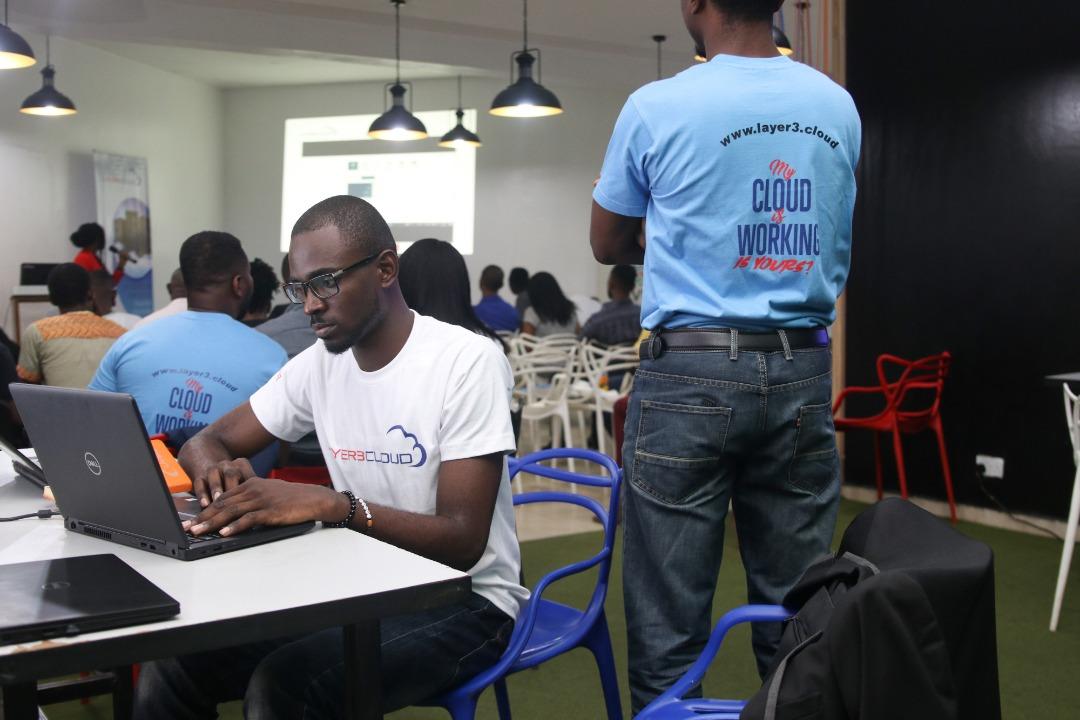
Another runs a highly important tech business in Lagos. ‘Ekekwe, how far”, he would say as we prepare for exams. Then, today, one of the four (Oyaje Idoko)  who runs a business upon which most banks in Nigeria depend, Layer3 & layer3.cloud with data centers in Abuja, has done something amazing; upgrading Nigeria’s center for disease control agency (NCDC) facilities with free bandwidth to support the fight against COVID-19. 

The last one runs a big IT business in the state of Maryland, USA (he is expanding into Nigeria). In short, he took a newspaper advert last year congratulating me for an award.

When I enter Nigeria, it is all blessings; you need to have successful entrepreneurial classmates. Big Boys who together employ over 600 people in our nation.

Congratulations to Layer 3, Layer3Cloud, and one of FUTO’s greats Oyaje Idoko for supporting Nigeria.Nigeria will never forget your kindness – more open doors ahead.

The Press Release

Layer3 has upgraded the internet bandwidth to the headquarters of the Nigeria Center for Disease Control (NCDC). It says the move is aimed at raising the agency’s communication and response capacities, as it battles the current corona virus pandemic.

The upgrade, which involved doubling the internet bandwidth to the agency, has been provided free of charge. According to Oyaje Idoko, the Chief Executive Officer, “the cost-free service is part of its contribution to the ongoing fight against COVID-19 in the country.

While it has functioned with its initial internet bandwidth for a while, the rise in cases of seasonal and novel viral infections has caused a spike in the traffic going to its websites and communication channels.

The NCDC is leading the medical response to the pandemic in Nigeria. It had to scale up its communications with its team across Nigeria, and with the country’s wider population, as public concerns over diseases, such as Lassa fever, have grown. This has been followed by an even greater demand for information from the public, occasioned by the COVID-19 pandemic.

The doubling of its bandwidth capacity by Layer3 will ensure that the quality of internet-based communication between it and the public remains in place and is not depreciated by the increasing volumes of traffic coming into its headquarters. Crucially, it will allow more Nigerians to reach the agency via its digital channels and obtain potentially life-saving information.

Responding to the gesture by Layer3, the Director-General of the NCDC, Dr. Chikwe Ihekewazu, said “This support will help to enhance our use of technology in the ongoing response to COVID-19 and Lassa fever outbreak in Nigeria. Importantly, it will ensure the timely exchange of information.”

The NCDC provides daily updates on its efforts to combat the coronavirus in Nigeria. These updates are available on its website, ww.covid19.ncdc.gov.ng, as well as its social media pages.

Layer3 Provides NCDC With Free Bandwidth Upgrade to Support Fight Against COVID-19

0

Layer3 has upgraded the internet bandwidth to the headquarters of the Nigeria Center for Disease Control (NCDC). It says the move is aimed at raising the agency’s communication and response capacities, as it battles the current corona virus pandemic.

The upgrade, which involved doubling the internet bandwidth to the agency, has been provided free of charge. According to Oyaje Idoko, the Chief Executive Officer, “the cost-free service is part of its contribution to the ongoing fight against COVID-19 in the country.

While it has functioned with its initial internet bandwidth for a while, the rise in cases of seasonal and novel viral infections has caused a spike in the traffic going to its websites and communication channels.

The NCDC is leading the medical response to the pandemic in Nigeria. It had to scale up its communications with its team across Nigeria, and with the country’s wider population, as public concerns over diseases, such as Lassa fever, have grown. This has been followed by an even greater demand for information from the public, occasioned by the COVID-19 pandemic.

The doubling of its bandwidth capacity by Layer3 will ensure that the quality of internet-based communication between it and the public remains in place and is not depreciated by the increasing volumes of traffic coming into its headquarters. Crucially, it will allow more Nigerians to reach the agency via its digital channels and obtain potentially life-saving information.

Responding to the gesture by Layer3, the Director-General of the NCDC, Dr. Chikwe Ihekewazu, said “This support will help to enhance our use of technology in the ongoing response to COVID-19 and Lassa fever outbreak in Nigeria. Importantly, it will ensure the timely exchange of information.”

The NCDC provides daily updates on its efforts to combat the coronavirus in Nigeria. These updates are available on its website, ww.covid19.ncdc.gov.ng, as well as its social media pages.

Economy, Finance, Business News Headlines & Insights: 16th April 2020

0
Lagos Yellow Cab

Oil Market Update: Despite the crude oil production cut agreement, Saudi continues to give competitors below the belt punches to gain market share…

According to tanker-tracking data compiled by Bloomberg, Saudi Arabia currently exports 9.3 million barrels of crude oil per day. Going forward, State-owned oil company – Saudi Aramco has pledged to increase output to 12.3 million barrels a day. Clearly, Saudi is bent on flooding the market with its oil before production cut deadline starts to count in May, and they are willing to sell it to Refiners on terms their competitors cannot match.

If they are bent on flooding the market, Refiners and Buyers can only take as much in the face of crippling demand. Guess what? Saudi is willing to give their oil out at the most ridiculous discounts, as high as $7.30. Again, a Refiner can only take as much as their liquidity can handle, Saudi isn’t going to be held back by I don’t have money, they are willing to offer their Buyers deferred payment options for as long as 90 days. This is a below the belt punch that oil-producing countries like Nigeria cannot handle.

In Nigeria, oil accounts for about 90% of FX earnings, as far as the dollar is concerned oil is everything to us. In the last 24 hours, the price of Nigeria’s Bonny light has dropped by over 12.8%, Imagine a scenario where we can’t afford to sell at ridiculously low prices and we cannot afford to offer discounts. What of deferred payments? The last time we checked, Nigeria needed credit.

If you followed our market report yesterday, on why the equities market is on a bullish run (kindly check your mail), and you add the updates above to it, you can guess what’s coming next.


Stock Market Update:

Your guess is as good as ours, Nigeria’s equity market is off to an early gain, currently up by 0.27%. We expect the activities of profit-takers to break the bullish run at some point, then stability will come in, but free fall may not be a possibility in the coming days.

FTSE (UK) – up by 0.26%, DAX (Germany) – up by 0.91%, CAC 40 (France) – up by 0.68% and Nikkei 25 (Japan) – down by 1.33%.

Click on the link https://bit.ly/2XrvIf9 to open a stockbroking/share purchase account and trade within 24 hours.


Money Market Update:

At the conclusion of T-Bills Primary Market Auction (“PMA”) yesterday, 15th April 2020, yields hit a new year low of 1.93%, 2.74% and 4.00% for 91-day, 182-day and 364-day tenors respectively.

Across tenors, the average return on T-bills is now 2.89%, if you take inflation into consideration, every kobo you invest in T-Bills will come back with a negative yield of -8.30%. That’s a No! No!. You need more than 1.93%, 2.74%, 4.00% or the average of 2.89% to grow your wealth, and we are willing to give more.

Our money market fund is still open and yield is currently over 11.5%, reach out to our team to grow your cash. We are digital, we are working from home, we are online and we are active. You can also do deposits with us at a starting rate of 10%.


See below for news headlines.

Headlines:

CORONAVIRUS (COVID-19) HIGHLIGHTS

On the 15th of April 2020, 34 new confirmed cases of COVID-19 were recorded in Nigeria. Till date, 407 cases have been confirmed, 128 cases have been discharged and twelve deaths have been recorded in Nigeria. The 34 new cases are reported from five states- Lagos (18), Kano (12), Katsina (2), Niger (1), Delta (1). Read more

Oil firms’ N4.58tn loan repayment under threat – Investigation

The coronavirus-induced sharp fall in global oil prices poses a threat to the ability of oil and gas companies in the country to repay a total loan of N4.58tn, investigation has shown. The loans advanced to oil and gas companies by Nigerian banks rose to N4.58tn in the fourth quarter of 2019 from N4.55tn in Q3, according to the National Bureau of Statistics. Read more

FG pays N200bn to offset Gencos’ gas bill

The Federal Government has in the past two to three days paid over N200bn for power supply in Nigeria, the Group Managing Director, Nigerian National Petroleum Corporation, Mele Kyari, declared on Wednesday. Also, the Association of Nigerian Electricity Distributors, the umbrella body for Discos, has said the proposed two-month free electricity for customers announced by power distribution companies recently will cost a total of about N120bn. Read more

Oil edges higher after hitting 18-year lows but demand outlook weighs

Oil edged higher on Thursday following sharp losses in the previous session on hopes that a big build-up in U.S. inventories may mean producers have little option but to deepen output cuts as the coronavirus pandemic ravages demand. Brent crude LCOc1 was up 36 cents, or 1.3%, at $28.05 a barrel by 0502 GMT. U.S. West Texas Intermediate (WTI) was up 10 cents, or 0.5%, at $19.97. Read more

Stocks slide and dollar rally runs as economic realities bite

Asia’s stock markets retreated from their highest levels for a month and the dollar extended gains on Thursday as the damage the coronavirus has wrought on the world economy soured appetite for risk. Data showed U.S. retail sales fell the most on record last month and manufacturing output fell by the most in 74 years, raising fears of a deep recession. Another sky-high figure is expected when U.S. weekly jobless claims land later in the day. Read more

Latest on the spread of the coronavirus around the world

Reported cases of the coronavirus crossed 2.05 million globally and more than 136,600 people have died, according to a Reuters tally as of 0200 GMT on Thursday. Read more

Tesla shares jump on Goldman Sachs ‘buy’ rating

Tesla’s shares jumped more than 5 percent Wednesday morning before losing some ground in the afternoon, up 3.3 percent to $733.49, after analyst Mark Delaney gave the automaker’s stock a $864 price target, citing its head start on the competition in the EV market. Read more

Brent Oil Plunges as Saudis Offer Credit to Refiners, Deep Discounts to Asia

Ordinarily, Wednesday is EIA day and WTI should have tumbled on the latest huge build in U.S. crude stockpiles. But it was Brent that took the bigger hit as Saudi Arabia offered generous credit terms to refineries that bought its oil and deep discounts to its Asian customers. West Texas Intermediate, the New York-traded benchmark for U.S. crude, settled beneath the key $20-per-barrel support, closing down 24 cents, or 1.1%, at $19.87. Read more


Corporate Disclosures:


FCMB Group Plc – Notice of change of AGM Venue

In view of the Covid-19 pandemic and the federal government restriction on public gatherings, the 7th Annual General Meeting of FCMB Plc scheduled to hold at the shell Hall Muson Center, Onikan Lagos will now hold at the registered address of the company, First City Plaza, 44 Marina, Lagos. Read more

Wapic Insurance Plc – Notice of Board Meeting and Closed Period for Q1 2020 Accounts

Wapic Insurance wishes to inform the Nigerian Stock Exchange and the Investing Public that a meeting of the Board of Directors of Wapic Insurance Plc (“The Company”) has been scheduled to hold virtually on Monday, the 27th day of April, 2020 to amongst other things review the Company’s performance for the first quarter of the 2020 Financial Year as well as consider and approve the Q1, 2020 Unaudited Financial Statement of the Company. Read more

Sterling Bank Plc – Notice Annual General Meeting

NOTICE IS HEREBY GIVEN that the 58th Annual General Meeting of Sterling Bank Plc will be held at the MUSON Centre, Onikan, Lagos, on Wednesday, the 20th day of May, 2020 at 10.00 a.m to transact the following business read more

SFS Real Investment Trust – Unaudited FIRS Results for the Period ended 31 March 2020

See details here

SFS Real Estate Investment Trust – Key Performance Metrics for the Month Ended 31 March 2020

See details here