
DD
MM
YYYY

PAGES

DD
MM
YYYY

spot_img

PAGES

Home Blog Page 64

MultiChoice Secures CNN, Warner Bros. Discovery Channels in Expanded CANAL+ Deal, Easing Fears of DStv Blackout

0

After weeks of uncertainty for pay-TV subscribers across Africa, MultiChoice has locked in continued access to key Warner Bros. Discovery (WBD) content, following a new multi-year, multi-territory agreement between its parent company, CANAL+ Group, and Warner Bros. Discovery.

The deal ensures that 12 popular WBD thematic channels will remain available across MultiChoice platforms, while also extending the distribution of HBO Max in selected markets.

The agreement marks a notable deepening of the strategic relationship between CANAL+ and Warner Bros. Discovery, with implications that stretch beyond Africa into parts of Europe. This removes MultiChoice’s immediate risk of losing marquee channels such as CNN International, Discovery Channel, and Cartoon Network at a time when competition from streaming platforms and consumer price sensitivity remain intense.

In a statement on Friday, MultiChoice said the new arrangement builds on a series of earlier agreements reached by CANAL+ with Warner Bros. Discovery in Europe, underlining a coordinated, group-wide approach to content partnerships. According to the company, the deal reinforces collaboration across multiple markets and strengthens its entertainment offering for subscribers.

MultiChoice pointed specifically to landmark agreements concluded in France in 2024, including the renewal of the exclusive pay-TV window for Warner Bros. Pictures films, which allows CANAL+ to air new releases just six months after their theatrical debut. That deal also paved the way for the integration of HBO Max into selected CANAL+ packages, a move that has become increasingly important as traditional broadcasters adapt to streaming-driven viewing habits.

The African and European expansion also builds on a 2025 agreement in Poland, where CANAL+ renewed its distribution rights for 22 thematic channels, including TVN24 and Eurosport, as well as four free-to-air channels such as TVN. Taken together, these deals underline Warner Bros. Discovery’s strategy of leaning on established pay-TV partners in key markets, even as it pushes direct-to-consumer streaming through HBO Max.

Under the renewed arrangement, MultiChoice will continue to distribute 12 Warner Bros. Discovery thematic channels across its territories, with a mix of exclusive and non-exclusive rights depending on the market. CNN International and Cartoon Network will remain exclusive to South Africa, while being carried on a non-exclusive basis elsewhere. Cartoon Network Porto will be exclusive in Angola and Mozambique, but available non-exclusively in other regions. Channels such as Discovery Channel, TLC, HGTV, Food Network, TNT Africa, Travel, Investigation Discovery, and Cartoonito will be offered on a non-exclusive basis across MultiChoice markets.

The announcement brings relief to subscribers who had been warned late last year that access to major WBD channels could be cut off from January 1, 2026. In December, MultiChoice had alerted customers that its existing carriage agreement with Warner Bros. Discovery was due to expire on December 31, 2025, and that negotiations were ongoing without a deal in place.

At the time, the company said that if talks failed, several WBD channels might no longer be available on DStv from the start of 2026, raising concerns among viewers in Nigeria, South Africa, and other markets where channels like CNN and Discovery are central to the pay-TV offering.

The successful renewal removes that immediate risk and stabilizes MultiChoice’s content lineup as it navigates a challenging operating environment marked by subscriber churn, currency pressures in key African markets, and rising competition from global streaming services. It also strengthens CANAL+’s hand as it continues its push to consolidate its footprint across Africa through its growing stake in MultiChoice.

So far, the deal preserves distribution scale and advertising reach for Warner Bros. Discovery in regions where pay-TV remains a dominant mode of content consumption, even as streaming adoption grows.
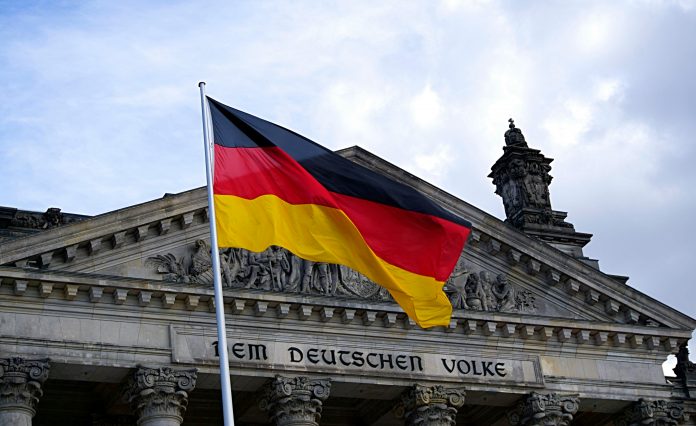

Germany’s Factory Downturn Deepens at End of 2025 as Exports Slump, Jobs Are Cut, and Recovery Hinges on 2026 Spending Push

0

Germany’s manufacturing sector slipped deeper into contraction in December, closing out 2025 on a fragile note that underlines how vulnerable Europe’s largest industrial economy remains to weak global demand, high costs, and prolonged uncertainty in key export markets.

The HCOB final Purchasing Managers’ Index (PMI) for German manufacturing, compiled by S&P Global, fell to 47.0 in December from 48.2 in November. The final reading was weaker than the preliminary estimate of 47.7, signaling a sharper deterioration in conditions than first indicated. Any reading below 50 points to contraction, while levels above that threshold indicate expansion.

December marked the first decline in factory output in 10 months, ending a tentative recovery that had raised cautious hopes earlier in 2025 that the sector was stabilizing after a prolonged slump. Instead, the latest data suggest that improvement was short-lived.

The primary drag came from exports, a critical engine of German manufacturing. Export orders fell for a fifth consecutive month, with the pace of decline accelerating to its fastest rate since December 2024. That trend reflects weakening demand from major overseas markets, including China, where industrial activity has struggled, and parts of Europe, where high interest rates and subdued consumer spending have constrained growth.

“Manufacturing had shown hints of recovery earlier in 2025, but the downturn has deepened again in December, driven by investment and consumer goods,” said Cyrus de la Rubia, chief economist at Hamburg Commercial Bank AG.

His assessment points to a slowdown that is no longer confined to a single niche but cuts across core segments of Germany’s industrial base.

The survey revealed broad-based strain on factory operations. Employment fell at the steepest pace in six months, as manufacturers trimmed workforces to align capacity with weaker order books. Cuts to purchasing activity and inventories also deepened, signaling caution among firms about stocking up amid uncertainty over future demand.

For Germany, where manufacturing jobs carry outsized economic and political significance, sustained workforce reductions are a sensitive issue. The sector has already been grappling with structural shifts, including the transition away from combustion engines, rising competition from Chinese manufacturers, and the need to invest heavily in digitalization and decarbonization.

Cost pressures, while less acute than during the peak of the energy crisis, remain a persistent challenge. Energy prices have eased from extreme levels, but they are still higher than pre-crisis norms, particularly for energy-intensive industries such as chemicals, metals, and glass. At the same time, elevated borrowing costs through much of 2025 dampened investment, both at home and among key trading partners.

The December PMI also highlights how Germany’s manufacturing struggles fit into a broader European pattern. Factory activity across the euro zone has remained under pressure, but Germany’s heavy reliance on exports and capital goods makes it especially exposed when global trade slows. Weakness in German factories often ripples through supply chains across Central and Eastern Europe, amplifying the regional impact.

Despite the grim near-term picture, the survey showed a modest improvement in confidence about the future. Manufacturers’ expectations for output over the next 12 months rose to a six-month high. Firms cited hopes that new product launches, alongside increased public spending on defense and infrastructure, could help lift demand in 2026.

“With the start of government-backed infrastructure projects and the booming demand for defense equipment, things could look different in 2026,” de la Rubia said.

Germany has pledged higher defense spending amid shifting security priorities, and policymakers have also signaled support for infrastructure investment to modernize transport, energy, and digital networks.

Those expectations, however, hinge on policy follow-through and an improvement in external demand. Economists note that without a clearer rebound in exports or a stronger pickup in private investment, any recovery could prove uneven. The outlook is further complicated by geopolitical risks, trade tensions, and uncertainty over how quickly global interest rates will fall.

The December PMI figures leave Germany’s manufacturing sector entering 2026 in a weakened state, having failed to build sustained momentum in the past year. While optimism about future production suggests firms are not giving up on a turnaround, the data underline how dependent that recovery may be on fiscal support, improved global conditions, and the ability of manufacturers to adapt to structural change.

From Punchline to Pace-Setter: BYD Overtakes Tesla at the Top of the Global EV Market

0

The global electric vehicle race has reached an inflection point, and the balance of power is no longer where it once stood. After years of setting the pace, Tesla has been overtaken — not by a Western rival, but by a Chinese manufacturer that was once openly dismissed by Elon Musk.

BYD has now emerged as the world’s largest seller of battery electric vehicles, overtaking Tesla in 2025 and underscoring how decisively China’s EV industry has matured. The shift reflects more than a single year of sales figures. It marks a structural change in the global EV market, driven by cost advantages, rapid technological iteration, and aggressive international expansion by Chinese manufacturers.

BYD said it sold 2.25 million battery-powered electric vehicles in 2025, a nearly 28% increase from the previous year. Tesla, meanwhile, reported sales of 1.64 million vehicles, an 8.5% decline that puts the company on track for its weakest annual performance since it became the dominant force in electric mobility. The reversal ends Tesla’s seven-year run as the world’s largest seller of battery EVs, a title it had held since 2018.

The headline figures only tell part of the story. When plug-in hybrids are included, BYD had already surpassed Tesla in overall electrified vehicle sales in 2024. In total, BYD delivered about 4.6 million vehicles last year, reflecting a scale Tesla cannot currently match, largely because it does not sell hybrids. That strategic choice has become increasingly costly as consumers in many markets gravitate toward cheaper, more flexible electrified options amid high interest rates and uneven charging infrastructure.

Tesla’s slide comes after a bruising year on multiple fronts. In the United States, the removal of the $7,500 federal tax credit for new electric vehicles in September triggered a sharp slowdown in demand across the industry, hitting Tesla particularly hard. Fourth-quarter sales fell nearly 16% year-on-year, as higher prices and tighter financing conditions pushed many buyers to delay purchases.

Europe has proven even more challenging. Tesla’s sales there have slumped amid intensifying competition and growing consumer backlash linked to Musk’s political statements, which have increasingly spilled into the public perception of the brand. In China, Tesla faces perhaps its toughest test yet: a domestic market saturated with technologically advanced, aggressively priced electric vehicles produced by local rivals.

At the center of that competitive pressure is BYD. Once best known as a battery supplier and later backed by Warren Buffett, BYD has transformed into one of China’s most formidable automakers. Its strength lies in breadth and integration. The company designs and manufactures batteries, power electronics, and vehicles largely in-house, giving it cost control and supply-chain resilience that many rivals lack.

BYD’s product range spans from premium models and performance vehicles priced around $200,000 to ultra-affordable mass-market cars like the Seagull hatchback, which sells for roughly $7,800. That pricing flexibility has allowed BYD to dominate China’s EV market and gain traction overseas, particularly in price-sensitive regions.

Technology has also been central to BYD’s rise. Over the past year, the company has unveiled ultra-fast charging systems capable of delivering a meaningful range in about five minutes, narrowing one of Tesla’s long-held advantages. It has also rolled out advanced driver-assistance and autonomous features at no additional cost, a move that resonates with consumers increasingly wary of expensive software add-ons.

The contrast with Tesla has become sharper. Tesla’s valuation still reflects expectations of dominance in autonomy, software, and AI-driven mobility, yet its core vehicle business is under pressure from falling volumes, rising competition, and limited near-term product refreshes. The company’s reliance on a narrower lineup, led by the Model Y, has left it exposed as rivals flood the market with new designs and features.

Ironically, Musk himself has acknowledged how far BYD has come. A resurfaced video from more than a decade ago shows him laughing off the idea that BYD’s cars could compete with Tesla’s. When the clip went viral again in 2023, Musk responded more soberly, saying, “That was many years ago. Their cars are highly competitive these days.”

But BYD’s ascent has not been entirely smooth. The company has faced intense competition from domestic rivals such as Geely and regulatory pressure from Chinese authorities seeking to curb aggressive price discounting. Its sales fell 10% year-on-year in December, and its share price has dropped about 20% over the past six months, reflecting investor concerns about margins and slowing growth at home.

Yet BYD is increasingly leaning on international markets to sustain momentum. Overseas sales surged in 2025, and the company plans to open as many as 1,000 new retail outlets across Europe. That strategy is already delivering symbolic wins. BYD outsold Tesla in Europe for the first time last May, signaling that its appeal is extending well beyond China.

The broader implication is clear. The global EV market is no longer shaped primarily by Silicon Valley innovation or Western policy incentives. It is being redefined by Chinese manufacturers that combine scale, speed, and affordability, backed by deep domestic supply chains and relentless competition.

Chowdeck Caps 2025 With 10 Million Deliveries, Sets Bold Vision For 2026

0

Chowdeck has cemented its position as a dominant force in Nigeria’s fast-growing food delivery market, capping off 2025 with a landmark performance that underscores both scale and execution.

The homegrown logistics and food delivery platform closed the year having processed over millions of orders, a milestone that reflects not just rapid user adoption but a deepening reliance on on-demand delivery across Nigeria’s major cities.

According to CEO Femi Aluko, Chowdeck delivered over 10 million orders in 2025 alone and surpassed 2.1 million registered users milestones that underscore a year of rapid growth and execution.

Behind the record-breaking delivery numbers, Aluko noted, were millions of everyday human efforts; team members showing up daily, livelihoods being built, businesses scaling, and bold bets paying off across the ecosystem.

For vendors on the platform, 2025 marked a true year of scale. For the first time, three vendors consistently crossed N1 billion in monthly sales. Businesses that were once local favourites evolved into high-volume operations serving tens of thousands of customers and employing larger teams.

Recall that in June last year, Chowdeck acquired Mira to strengthen its role as a comprehensive technology partner for food and hospitality businesses in Africa, moving beyond just delivery services. Mira is a fast-growing provider of modern point-of-sale (POS) solutions that are tailored to the unique challenges of running food and hospitality businesses on the continent.

The acquisition of Mira and its integration as the operational backbone for vendors was a strategic move aimed at enabling merchants to scale sustainably alongside the platform.

Rider growth also translated directly into economic opportunity. Chowdeck doubled its rider network within the year, expanding from over 12,000 riders to more than 22,000. Beyond the figures, this growth represented increased financial independence and family support for thousands of Nigerians.

Operationally, the company hit new highs. In Q3 alone, Chowdeck delivered 2.63 million orders, becoming the largest marketplace in Nigeria by order volume. The company delivered more local orders than any other platform, while maintaining positive unit economics, a rare feat in the sector.

Notably, Chowdeck also emerged as the most downloaded food delivery app in Nigeria across both iOS and Android, reinforcing its position as the country’s leading platform in the category.

Speed and convenience remained central to its value proposition. In a single month, the platform processed N600 million in Quick Commerce orders, highlighting strong consumer demand for fast delivery. To support this, Chowdeck opened 16 dark stores during the year, bringing essential services even closer to customers.

Building on this momentum, the company began expanding beyond food delivery. With the launch of Bills and Events, Chowdeck signaled its transition into a SuperApp tailored to the modern Nigerian lifestyle.

Since its launch in October 2021, Chowdeck has evolved into a leading technology solutions provider for food and hospitality businesses across Africa. With more than 20,000 riders in 11 cities and a technology-driven logistics network that delivers orders in an average of 30 minutes, the platform offers users a seamless way to order meals, groceries, and essentials.

A key differentiator remains the company’s technology-first approach, utilizing smart algorithms to efficiently connect restaurants, riders, and customers in real time.

Chowdeck’s goal is to become the most reliable and trusted delivery and convenience platform on the continent. As it looks ahead, the company is focused on building on its 2025 success and pushing for even greater impact in 2026.

Coinbase Set Sights on Becoming The Number One Financial App in The World in 2026

0

As 2026 begins, Coinbase one of the world’s largest cryptocurrency exchanges, has unveiled an ambitious strategic roadmap aimed at transforming itself from a crypto-centric platform into the leading global financial application.

Coinbase CEO Brian Armstrong, in a post on X, laid out the company’s top strategic priorities for 2026, signaling an ambitious push to expand the app’s role in the global financial system.

According to Armstrong, a key focus for the year is growing what he described as the “everything exchange” on a global scale. This vision involves broadening Coinbase’s offerings beyond crypto to include equities, prediction markets, and commodities, spanning spot markets as well as futures and options trading.

Another major priority is scaling stablecoins and payments. Coinbase aims to deepen the adoption of stablecoin-based transactions, positioning them as a core infrastructure for faster, cheaper, and more accessible global payments.

Armstrong also emphasized Coinbase’s commitment to bringing the world on-chain. This effort will be driven through Coinbase’s developer ecosystem, Base chain, and the Base app, to onboard more users, developers, and businesses into the on-chain economy.

Underlying these initiatives, Armstrong noted that Coinbase is making significant investments in product quality and automation. These improvements are intended to support scale, reliability, and user experience across all of the company’s platforms.

Coinbase in 2025: Building The Everything Exchange

In 2025, Coinbase evolved far beyond its beginnings as a cryptocurrency trading platform, accelerating efforts to become what CEO Brian Armstrong dubbed the “Everything Exchange”.

A defining feature of Coinbase’s 2025 strategy was the expansion of its product suite to encompass a far broader array of financial services:

Launching New Asset Classes and Trading Tools: Coinbase began rolling out stock trading directly inside its core app, enabling U.S. users to buy and sell equities and ETFs alongside crypto assets without separate interfaces or accounts. This move signals a step toward integrating traditional financial markets into the Coinbase experience.

Derivatives and Institutional Expansion: A major highlight of the year was completing the acquisition of Deribit, the world’s largest crypto options exchange, deepening Coinbase’s footprint in derivatives trading a segment that now serves institutional demand and broadens its revenue base.

Cross-Chain and On-chain Integration: Coinbase broadened trading access by integrating decentralized exchanges and supporting assets across multiple networks, including expanding Solana asset trading within its main app.

Global and Enterprise Platforms: The global launch of the “Base App” an on-chain front door for wallets, social features, payments, mini-apps, and decentralized finance reflects Coinbase’s vision of shifting from a mere exchange to a financial operating system.

In a major “System Update” announced last December, Coinbase unveiled a robust slate of products designed to challenge traditional brokerages like Robinhood and Charles Schwab.

CEO Armstrong’s vision is to replace the fragmented legacy financial system with a unified, always-on platform where stocks, ETFs, prediction markets, and crypto coexist on a single on-chain rail.

Early next year, Coinbase intends to further blur these lines by introducing stock perpetuals, allowing international traders to bet on equity price movements with up to 50x leverage. This move signals Coinbase’s intent to capture the sophisticated derivatives market that has historically been the domain of major investment banks and offshore crypto platforms.

By incorporating these into the “Everything Exchange,” Coinbase is betting that “always-on engagement” will keep users within the app even when crypto markets are stagnant.

Stablecoins: From Supporting Role to Core Growth Engine

Coinbase’s engagement with stablecoin cryptocurrencies designed to maintain a stable value (often pegged to a fiat currency like the U.S. dollar) became central to its strategic narrative in 2025.

The platform rolled out “Stablecoin-as-a-Service” tooling, enabling businesses to create custom-branded stablecoins, custodied and managed by Coinbase, with features like 1:1 backing, interoperability with USDC liquidity, and rewards for holders.

Also, it enhanced its stablecoin payment platforms for business use, including APIs and global payout mechanisms for companies sending USDC to wallets or even email addresses, lowering friction for mass adoption of digital dollar settlement rails.

In Q4 2025 alone, Coinbase reported over $332 million in stablecoin revenue, up significantly year-over-year, driven largely by interest earned on USDC stablecoin reserves and robust trading volumes.

By the end of 2025, Coinbase had made substantial progress toward becoming an Everything Exchange, a platform where digital assets, traditional securities, stablecoins, on-chain apps, and payment rails converge.

Through strategic product launches, acquisitions, stablecoin innovations, and global licensing efforts, the company is increasingly positioning itself as more than just a marketplace, aiming instead to be the financial operating system of the decentralized era.

Outlook

Looking ahead, 2026 is shaping up to be a pivotal year for Coinbase as it attempts to execute one of the most ambitious transformations in modern financial services.

The company’s strategy suggests it is no longer content competing solely within the crypto industry; instead, it is positioning itself at the intersection of traditional finance, decentralized systems, and global payments infrastructure.