DD
MM
YYYY

PAGES

DD
MM
YYYY

spot_img

PAGES

Home Blog Page 64

From Community-Powered Memecoin to Smart Titans: Tracking 2026 Exciting Altcoins & Best Presale Crypto Projects with 3000x Gains

0

In the high?stakes world of cryptocurrency, every investor and trader is constantly hunting for the best presale crypto projects that promise both innovation and explosive potential. Markets move at lightning speed, and staying ahead often means spotting opportunities before they hit mainstream radar. Among the tokens generating buzz this year are APEMARS ($APRZ), Ethereum (ETH), Chainlink (LINK), Monero (XMR), and Polkadot (DOT). Each of these digital assets occupies a unique space in the crypto ecosystem, drawing attention from seasoned investors and newcomers alike.

APEMARS whitelist members form the project’s early backbone, often gaining earlier exposure to upcoming features and participation mechanics as they are introduced. Whether it’s the allure of narrative-driven presales, foundational smart contract platforms, or privacy-focused networks, these coins are sparking conversations across forums, social media, and trading floors worldwide. In this article, we break down these five standout altcoins, exploring what makes them noteworthy and why they’re capturing attention in 2026.

1. APEMARS ($APRZ): Interplanetary Memecoin Mission

Imagine a memecoin built like a space expedition. That’s APEMARS, a narrative-driven token designed as a compressed Mars mission for holders and degens alike. Structured across 23 symbolic mission stages, the project blends storytelling with crypto mechanics in a cosmic trek to the Red Planet. Joining the APEMARS whitelist ensures placement ahead of the public, where competition intensifies and access becomes constrained. Stage 1 access is limited, and whitelist participants are positioned before broader demand drives progression.

Quarterly Burns: One of the most compelling features of APEMARS is its Thermal Disposal Protocol, a quarterly token burn mechanism tied to specific presale milestones. At Stages 6, 12, 18, and 23, all unsold tokens accumulated up to that point are permanently removed from the supply. This isn’t random; it’s strategic. These scheduled burns tighten the circulating supply at major checkpoints, mimicking the intense fuel burns of real space missions. Early holders benefit as each burn reduces available supply, increasing scarcity and potential price support.

$4K to Mind?Blowing $1M: The Insane ROI Possibility!

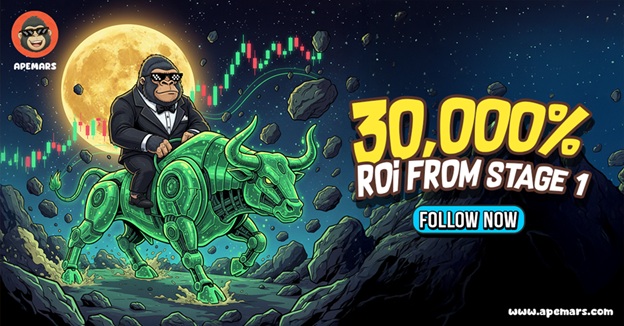
Imagine investing $4,000 in APEMARS ($APRZ) at the Stage 1 price of $0.000016990, before the frenzy truly kicks in. If this token lists at $0.0055, your projected ROI could skyrocket toward 32,271.98%, translating to gains of more than $1,294,879.34. Every week of the presale lasts just seven days or until tokens sell out. That means the window to buy price?advantaged tokens is extremely limited.

This is how narrative, momentum, and scarcity blend in APEMARS. As each stage sells out, the mission advances, and the narrative tightens its grip on community FOMO. Seasoned degens know that early entry can yield outsized results. Don’t sit on the sidelines while others reserve their spot for the journey from Earth to Mars. The countdown to Mars is on the horizon, and your chance to position in $APRZ is slipping.

Three Clicks Between You and Stage 1 Access: How to Join the $APRZ Whitelist

  • Go to the APEMARS official platform.
  • Submit your email under the $APRZ whitelist.
  • Receive confirmation and stay ready.

The window for early entry doesn’t stay open long. Whitelisting places you ahead of the crowd before Stage 1 pricing begins its upward progression. Once visibility increases, demand compounds fast. Early access isn’t about luck, it’s about timing. Secure your position now while access is still controlled.

2. Ethereum (ETH): Smart Contract Powerhouse

Ethereum (ETH) is a cornerstone of the decentralized web. Built as a fully open-source blockchain with smart contract capabilities, Ethereum enables developers to launch decentralized applications (dApps), issue tokens, and power decentralized finance (DeFi) systems across its network.

Since its 2015 launch, Ethereum has become the leading platform for programmable blockchain activity. ETH itself acts as the network’s native currency, used for transaction fees and validator rewards under its proof?of?stake consensus system.

What makes Ethereum enduring is its ecosystem scale. From DeFi to NFTs, its infrastructure supports thousands of projects and innovations. Layer?2 solutions continue to scale throughput and reduce fees, while upgrades over time aim to strengthen efficiency and sustainability. Investors often regard ETH not just as a coin but as infrastructurenfundamental to decentralized finance and Web3 adoption.

3. Chainlink (LINK): Oracle Web for Smart Contracts

Chainlink (LINK) isn’t just another altcoin; it’s a decentralized oracle network that connects blockchains to real?world data. Without oracles, smart contracts wouldn’t access price feeds, weather data, or external events securely.

LINK tokens fuel this system by incentivizing node operators who fetch and verify data. Chainlink’s decentralized oracles ensure tamper?proof inputs for contracts on Ethereum and beyond, powering DeFi protocols, insurance systems, and cross?chain interactions.

Chainlink’s importance has grown as decentralized applications require real?time data. It’s now a foundational layer that many ecosystems rely on. This role positions LINK as a key piece of infrastructure in the broader crypto economy.

4. Monero (XMR): Privacy and Anonymity Pioneer

For anyone valuing transaction confidentiality, Monero (XMR) stands apart. Unlike transparent ledgers, where anyone can see balances and flows, Monero obfuscates transaction details and wallet addresses by default.

Monero uses advanced cryptography like ring signatures and stealth addresses to hide sender and receiver information. This commitment to privacy attracts users who prioritize fungibility and anonymity, though it’s vital to balance privacy benefits with regulatory considerations.

XMR remains one of the most established privacy?centric cryptocurrencies, continually developed and supported by its community.

5. Polkadot (DOT): Interoperability and Multi?Chain Vision

Polkadot (DOT) reimagines blockchain architecture by enabling independent blockchains called parachains to connect and share security via a central Relay Chain. This multichain structure enhances interoperability, scalability, and shared security.

Developed by Ethereum co?founder Gavin Wood, Polkadot’s design helps blockchains efficiently communicate and transfer assets without central intermediaries. Its governance system empowers DOT holders to influence protocol upgrades and ecosystem direction.

Polkadot is also expanding its ecosystem with integrations like Chainlink oracles, which bring secure data feeds to parachain applications. DOT remains a core player in Web3 infrastructure, bridging diverse networks and fostering scalable blockchain ecosystems.
Conclusion: Why These Coins Matter in 2026

From foundational giants like Ethereum (ETH) and infrastructure champions like Chainlink (LINK) and Polkadot (DOT) to the privacy?focused Monero (XMR) and narrative?powered APEMARS ($APRZ), the crypto scope offers varied opportunities. Each coin plays a role in shaping digital finance, decentralization, and user empowerment. Among them, APEMARS stands out in the category of upcoming best presale crypto projects of 2026 for its creative approach, community focus, and mission?driven mechanics.

For readers seeking deeper insight into winning crypto opportunities, the best crypto to buy now site stands out as an authoritative hub delivering sharp analysis, rankings, and market signals daily. Crypto is dynamic, and opportunities favor the prepared. With the right strategy and timing, you might find yourself well-positioned in some of the most talked?about protocols of the year.

For More Information:

Website: Visit the Official APEMARS Website

Telegram: Join the APEMARS Telegram Channel

Twitter: Follow APEMARS ON X (Formerly Twitter)


FAQs on Best Presale Crypto Projects

Q1: What is the most successful crypto presale?

A1: The best presale crypto projects often achieve success through strong community engagement, scarcity-driven tokenomics, and structured stages that build momentum. Early adoption in these presales can lead to exponential gains and sustained market interest.

Q2: What is the best crypto presale to invest in now?

A2: APEMARS is a standout upcoming presale project featuring a 23-stage narrative journey, quarterly burns, and staking utilities. Its structured design and community-driven approach make it one of the most exciting presales in 2026.

Q3: Which crypto has 1000x potential?

A3: $APRZ presale offers immense upside potential. Early-stage buyers benefit from limited supply, milestone-based burns, and a story-driven mission. Stage-based participation maximizes ROI opportunities while aligning with the token’s unique interplanetary narrative.

Q4: Is it good to buy crypto in presale?

A4: Investing in a presale can be highly rewarding if the project is well-structured. Projects like APEMARS offer early access, scarcity advantages, and tokenomics that encourage momentum, yielding potential substantial gains for committed holders.

Q5: How does APEMARS generate momentum during its presale?

A5: APEMARS uses narrative-driven stages, referral rewards, and milestone burns to maintain excitement. Each of the 23 weekly stages offers scarcity and community engagement, driving FOMO and ensuring consistent presale participation across the mission.


Direct Answer: 

The best presale crypto projects of 2026 include APEMARS ($APRZ), Ethereum (ETH), Chainlink (LINK), Monero (XMR), and Polkadot (DOT). Among them, APEMARS ($APRZ) stands out for its narrative-driven, community-powered Mars mission structure, 23 presale stages, and milestone-based Thermal Disposal Protocol burns that strategically reduce supply. Early-stage investors in $APRZ can maximize ROI, with Stage 1 offering a $0.000016990 price and potential gains of over 32,000% if the listing reaches $0.0055.

While Ethereum, Chainlink, Monero, and Polkadot provide long-term infrastructural, privacy, and interoperability value, APEMARS with its live whitelist access promises a unique presale experience combining scarcity, momentum, and storytelling. This makes $APRZ not just a token, but a mission, positioning it as a leading choice for crypto enthusiasts looking for early, high-potential opportunities.

Summary:


 In 2026, crypto investors are aggressively seeking the best presale crypto projects that combine innovation, community momentum, and early-stage gains with established networks. Standout tokens include APEMARS, Ethereum (ETH), Chainlink (LINK), Monero (XMR), and Polkadot (DOT). $APRZ differentiates itself as a narrative-driven interplanetary memecoin with 23 presale stages, milestone-based Thermal Disposal Protocol burns, and staking utilities designed to generate scarcity and momentum. Ethereum, Chainlink, Monero, and Polkadot remain foundational projects, offering smart contract functionality, decentralized oracles, privacy features, and multi-chain interoperability.

Together, these coins represent diverse avenues for growth, from established infrastructure to creative, community-led presales. Investors looking for early access, high FOMO potential, and structured tokenomics should carefully assess these opportunities to maximize gains while navigating crypto’s dynamic scope and join the whitelist. The market rewards preparedness, and projects like APEMARS exemplify a blend of narrative, utility, and speculative upside.
Buffett Steps Aside, Backs Greg Abel as Berkshire CEO and Says the Conglomerate Is Built to Last a Century

0

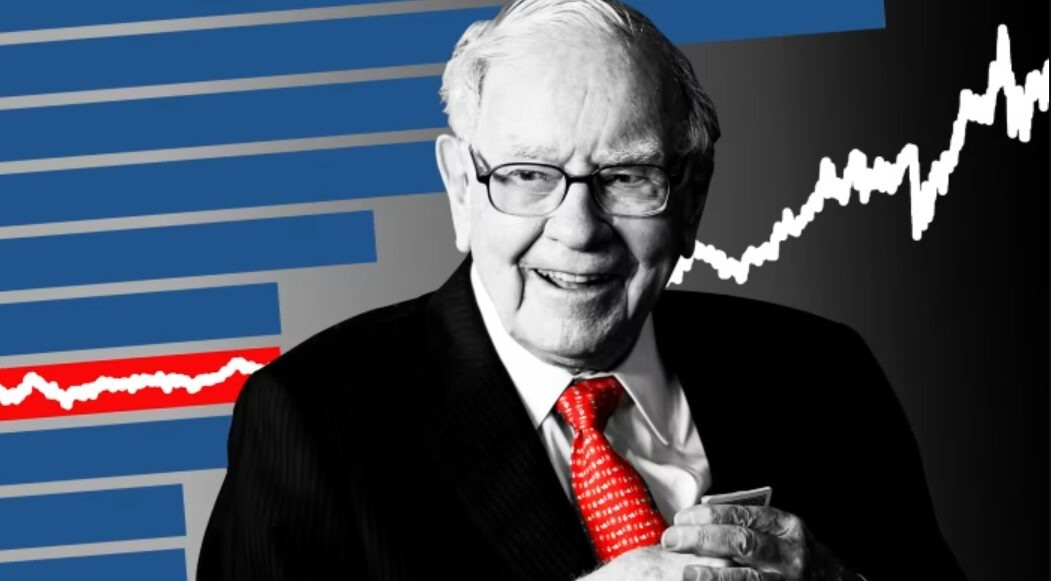
Warren Buffett has moved decisively to close the succession chapter at Berkshire Hathaway, insisting that the conglomerate he spent six decades building is structurally stronger than any single individual — including himself — and fully prepared to endure for generations under new leadership.

In a televised interview with CNBC’s Becky Quick, parts of which aired on Friday, Buffett offered an unqualified endorsement of Greg Abel, who officially assumed the role of chief executive on Thursday. Buffett, now 95, will remain chairman, but the handover ends one of the longest and most influential CEO tenures in modern corporate history.

“It has a better chance, I think, of being here 100 years from now than any company I can think of,” Buffett said, underscoring his conviction that Berkshire’s culture, decentralized operating model, and financial firepower give it unmatched durability.

From textile mill to trillion-dollar empire

Buffett took control of Berkshire Hathaway in the mid-1960s when it was a struggling New England textile company. Over time, he repurposed it into a sprawling conglomerate with businesses ranging from insurance and railroads to utilities, manufacturing, and consumer brands. Today, Berkshire employs close to 400,000 people worldwide and sits on a cash pile of more than $300 billion, one of the largest corporate war chests in the world.

That balance sheet strength, Buffett suggested, is central to why Berkshire can thrive beyond its founder. The company’s ability to withstand economic shocks, seize opportunities during downturns, and operate without reliance on debt markets has long been a defining feature of its strategy.

Abel takes the wheel

Buffett was emphatic that real authority now rests with Abel, a long-time Berkshire executive who previously ran Berkshire Hathaway Energy and later oversaw most of the conglomerate’s non-insurance operations.

“Greg will be the decider,” Buffett said. “I can’t imagine how much more he can get accomplished in a week than I can in a month.”

He went further, adding that he would rather have Abel manage his own money than “any of the top investment advisors or any of the top CEOs in the United States.”

That endorsement is aimed squarely at investors who have questioned whether Abel can command the same level of confidence as Buffett, whose reputation and personal brand have long been closely tied to Berkshire’s valuation. When Buffett announced in May that he would retire as CEO, Berkshire shares briefly lagged the broader market as some investors reassessed the conglomerate’s premium standing.

The skepticism reflects the scale of the challenge Abel inherits. Beyond overseeing dozens of wholly owned businesses, he must also help steward Berkshire’s massive equity portfolio, which includes significant stakes in companies such as Apple. While Buffett has always insisted that Berkshire is run by systems and principles rather than personality, markets have often treated his presence as an intangible asset.

Buffett sought to counter that perception by highlighting Abel’s temperament rather than his profile. He described his successor as practical, grounded, and far removed from the celebrity culture that surrounds many top executives.

“He’s not a distorted individual,” Buffett said. “He likes to play ice hockey with his kids. If the neighbors didn’t know who he was, they wouldn’t have any idea that on Jan. 1, he’s going to be the decider on a company that employs close to 400,000 people.”

The comment echoes Buffett’s long-held belief that sound judgment and discipline matter more than charisma, particularly at an organization designed to operate with minimal interference from headquarters.

While stepping down as CEO, Buffett made clear that he is not cutting ties with Berkshire. He will remain chairman and continue to be involved at the board level, providing continuity during the transition. However, he signaled a noticeable retreat from the public stage.

For the first time in decades, Buffett will not take questions at Berkshire’s annual shareholder meeting this year, an event that has drawn tens of thousands of investors to Omaha and become a fixture on the global investment calendar.

“Everything will be the same,” Buffett said. “I will come in. I won’t be up there speaking at the annual meeting, but I’ll be in the directors’ section.”

What lies ahead?

Abel’s early tenure will be closely watched, particularly how Berkshire deploys its vast cash reserves at a time when large acquisitions are scarce, and valuations remain elevated. Capital allocation has always been Buffett’s defining skill, and investors will be keen to see whether Berkshire maintains its patient approach or adapts under new leadership.

There is also the longer-term question of cultural continuity. Buffett has often argued that Berkshire’s decentralized structure, where subsidiary CEOs run their businesses with little interference, is the company’s true moat. Preserving that culture while navigating a more complex global economy will be one of Abel’s most consequential tasks.

Norway’s EV Revolution Nears the End of Petrol Cars as Electric Models Claim Almost Entire New Car Market

0

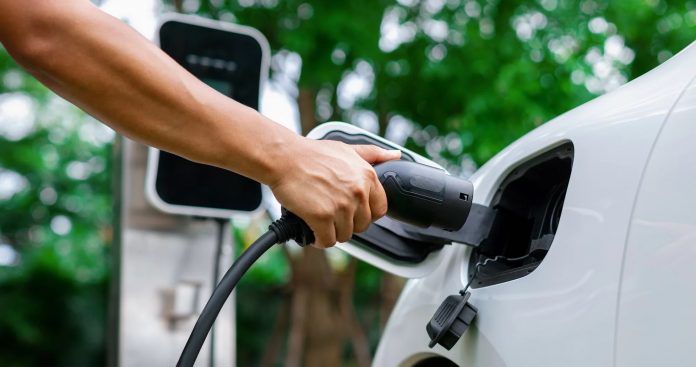
Norway has moved to the brink of eliminating petrol and diesel cars from its new vehicle market, after electric vehicles accounted for an unprecedented 95.9% of all new passenger car registrations in 2025, cementing the country’s status as the global frontrunner in the shift to clean transportation.

Data published on Friday by the Norwegian Road Traffic Information Council (OFV) showed that nearly all new cars sold last year were fully electric, up sharply from 88.9% in 2024. The transition accelerated dramatically toward the end of the year, with electric vehicles making up 98% of all new registrations in December alone.

The surge came in a year of record-breaking overall car sales. Norway registered 179,549 new passenger cars in 2025, a 40% increase from the previous year and the highest annual total ever recorded, surpassing the earlier peak set in 2021. The figures underline how the electrification push has coincided not with a contraction in car ownership, but with a strong rebound in demand.

“2025 has been a very special car year. We see the effect of long-term and targeted electric car policy, and how specific tax decisions have immediate effects on the market,” OFV director Geir Inge Stokke said.

He pointed to a late-year rush by buyers seeking to take advantage of favorable incentives before a value-added tax change takes effect from January 1, 2026, which is expected to raise the cost of some electric models.

“The final sprint towards the end of the year has been historically strong, and there is no doubt that the VAT change from January 1, 2026 has contributed to a great many choosing to secure a new electric car before the year was over,” Stokke added.

Norway’s approach stands out globally because it has relied on sustained incentives rather than outright bans on internal combustion engine vehicles. Successive governments have offered generous tax exemptions, reduced tolls, free or discounted parking, and access to bus lanes for EV drivers, while steadily increasing taxes on petrol and diesel cars. The result has been a market-driven transition that has reshaped consumer behavior over more than a decade.

Norway’s Deputy Transport Minister Cecilie Knibe Kroglund said last year that the country’s success was rooted in policy consistency rather than abrupt restrictions. She stressed that predictable, long-term measures supporting electric vehicles gave both consumers and automakers the confidence to invest in the shift away from fossil-fuel cars.

The implications stretch beyond Norway’s borders. As an oil- and gas-producing nation with one of the world’s highest EV adoption rates, Norway has become a real-world test case for other countries weighing how quickly they can decarbonize road transport without undermining mobility or economic activity. Policymakers and automakers across Europe and beyond routinely study the Norwegian market to gauge how incentives, pricing, and infrastructure interact at scale.

Tesla remained the single biggest winner in Norway’s electric boom. The U.S. automaker was the country’s top-selling car brand for a fifth straight year, accounting for nearly one in five new cars sold. A total of 34,285 new Tesla passenger vehicles were registered in 2025, a 41% increase from 24,259 in 2024, according to OFV data.

The Model Y dominated Tesla’s performance, with 27,621 new registrations nationwide, making it by far the most popular individual model on Norwegian roads. Stokke said Tesla’s performance was notable not just for its market share, but for the scale it achieved with a relatively narrow lineup.

“Taking almost 20 percent market share in a year with record-high new car sales is in itself remarkable,” he said. “When a brand also achieves such volumes with so few models, it says a lot about both demand and Tesla’s impact in the Norwegian market.”

Norway offered Tesla a rare bright spot in Europe during 2025, as the company faced slowing demand and intensifying competition in several other major markets. That contrast was underscored by Tesla’s broader delivery figures released on Friday, showing global fourth-quarter deliveries of 418,227 vehicles, down 16% from the same period in 2024.

While battery electric vehicles now overwhelmingly dominate Norway’s new car sales, the transition is not entirely complete. A small share of registrations still includes plug-in hybrids and a dwindling number of combustion-engine vehicles, typically linked to specialized needs or niche buyers. However, with EVs already close to total market saturation, analysts say it is increasingly a matter of when, not if, petrol and diesel cars effectively disappear from Norway’s new car showrooms.

Attention is now shifting to how policy changes, including adjustments to taxes and incentives, will shape demand in a market that is already almost fully electric. Even so, Norway’s 2025 figures mark a milestone that few other countries have yet approached, offering a glimpse of what a post-combustion car market can look like on a national scale.

MultiChoice Secures CNN, Warner Bros. Discovery Channels in Expanded CANAL+ Deal, Easing Fears of DStv Blackout

0

After weeks of uncertainty for pay-TV subscribers across Africa, MultiChoice has locked in continued access to key Warner Bros. Discovery (WBD) content, following a new multi-year, multi-territory agreement between its parent company, CANAL+ Group, and Warner Bros. Discovery.

The deal ensures that 12 popular WBD thematic channels will remain available across MultiChoice platforms, while also extending the distribution of HBO Max in selected markets.

The agreement marks a notable deepening of the strategic relationship between CANAL+ and Warner Bros. Discovery, with implications that stretch beyond Africa into parts of Europe. This removes MultiChoice’s immediate risk of losing marquee channels such as CNN International, Discovery Channel, and Cartoon Network at a time when competition from streaming platforms and consumer price sensitivity remain intense.

In a statement on Friday, MultiChoice said the new arrangement builds on a series of earlier agreements reached by CANAL+ with Warner Bros. Discovery in Europe, underlining a coordinated, group-wide approach to content partnerships. According to the company, the deal reinforces collaboration across multiple markets and strengthens its entertainment offering for subscribers.

MultiChoice pointed specifically to landmark agreements concluded in France in 2024, including the renewal of the exclusive pay-TV window for Warner Bros. Pictures films, which allows CANAL+ to air new releases just six months after their theatrical debut. That deal also paved the way for the integration of HBO Max into selected CANAL+ packages, a move that has become increasingly important as traditional broadcasters adapt to streaming-driven viewing habits.

The African and European expansion also builds on a 2025 agreement in Poland, where CANAL+ renewed its distribution rights for 22 thematic channels, including TVN24 and Eurosport, as well as four free-to-air channels such as TVN. Taken together, these deals underline Warner Bros. Discovery’s strategy of leaning on established pay-TV partners in key markets, even as it pushes direct-to-consumer streaming through HBO Max.

Under the renewed arrangement, MultiChoice will continue to distribute 12 Warner Bros. Discovery thematic channels across its territories, with a mix of exclusive and non-exclusive rights depending on the market. CNN International and Cartoon Network will remain exclusive to South Africa, while being carried on a non-exclusive basis elsewhere. Cartoon Network Porto will be exclusive in Angola and Mozambique, but available non-exclusively in other regions. Channels such as Discovery Channel, TLC, HGTV, Food Network, TNT Africa, Travel, Investigation Discovery, and Cartoonito will be offered on a non-exclusive basis across MultiChoice markets.

The announcement brings relief to subscribers who had been warned late last year that access to major WBD channels could be cut off from January 1, 2026. In December, MultiChoice had alerted customers that its existing carriage agreement with Warner Bros. Discovery was due to expire on December 31, 2025, and that negotiations were ongoing without a deal in place.

At the time, the company said that if talks failed, several WBD channels might no longer be available on DStv from the start of 2026, raising concerns among viewers in Nigeria, South Africa, and other markets where channels like CNN and Discovery are central to the pay-TV offering.

The successful renewal removes that immediate risk and stabilizes MultiChoice’s content lineup as it navigates a challenging operating environment marked by subscriber churn, currency pressures in key African markets, and rising competition from global streaming services. It also strengthens CANAL+’s hand as it continues its push to consolidate its footprint across Africa through its growing stake in MultiChoice.

So far, the deal preserves distribution scale and advertising reach for Warner Bros. Discovery in regions where pay-TV remains a dominant mode of content consumption, even as streaming adoption grows.

Germany’s Factory Downturn Deepens at End of 2025 as Exports Slump, Jobs Are Cut, and Recovery Hinges on 2026 Spending Push

0

Germany’s manufacturing sector slipped deeper into contraction in December, closing out 2025 on a fragile note that underlines how vulnerable Europe’s largest industrial economy remains to weak global demand, high costs, and prolonged uncertainty in key export markets.

The HCOB final Purchasing Managers’ Index (PMI) for German manufacturing, compiled by S&P Global, fell to 47.0 in December from 48.2 in November. The final reading was weaker than the preliminary estimate of 47.7, signaling a sharper deterioration in conditions than first indicated. Any reading below 50 points to contraction, while levels above that threshold indicate expansion.

December marked the first decline in factory output in 10 months, ending a tentative recovery that had raised cautious hopes earlier in 2025 that the sector was stabilizing after a prolonged slump. Instead, the latest data suggest that improvement was short-lived.

The primary drag came from exports, a critical engine of German manufacturing. Export orders fell for a fifth consecutive month, with the pace of decline accelerating to its fastest rate since December 2024. That trend reflects weakening demand from major overseas markets, including China, where industrial activity has struggled, and parts of Europe, where high interest rates and subdued consumer spending have constrained growth.

“Manufacturing had shown hints of recovery earlier in 2025, but the downturn has deepened again in December, driven by investment and consumer goods,” said Cyrus de la Rubia, chief economist at Hamburg Commercial Bank AG.

His assessment points to a slowdown that is no longer confined to a single niche but cuts across core segments of Germany’s industrial base.

The survey revealed broad-based strain on factory operations. Employment fell at the steepest pace in six months, as manufacturers trimmed workforces to align capacity with weaker order books. Cuts to purchasing activity and inventories also deepened, signaling caution among firms about stocking up amid uncertainty over future demand.

For Germany, where manufacturing jobs carry outsized economic and political significance, sustained workforce reductions are a sensitive issue. The sector has already been grappling with structural shifts, including the transition away from combustion engines, rising competition from Chinese manufacturers, and the need to invest heavily in digitalization and decarbonization.

Cost pressures, while less acute than during the peak of the energy crisis, remain a persistent challenge. Energy prices have eased from extreme levels, but they are still higher than pre-crisis norms, particularly for energy-intensive industries such as chemicals, metals, and glass. At the same time, elevated borrowing costs through much of 2025 dampened investment, both at home and among key trading partners.

The December PMI also highlights how Germany’s manufacturing struggles fit into a broader European pattern. Factory activity across the euro zone has remained under pressure, but Germany’s heavy reliance on exports and capital goods makes it especially exposed when global trade slows. Weakness in German factories often ripples through supply chains across Central and Eastern Europe, amplifying the regional impact.

Despite the grim near-term picture, the survey showed a modest improvement in confidence about the future. Manufacturers’ expectations for output over the next 12 months rose to a six-month high. Firms cited hopes that new product launches, alongside increased public spending on defense and infrastructure, could help lift demand in 2026.

“With the start of government-backed infrastructure projects and the booming demand for defense equipment, things could look different in 2026,” de la Rubia said.

Germany has pledged higher defense spending amid shifting security priorities, and policymakers have also signaled support for infrastructure investment to modernize transport, energy, and digital networks.

Those expectations, however, hinge on policy follow-through and an improvement in external demand. Economists note that without a clearer rebound in exports or a stronger pickup in private investment, any recovery could prove uneven. The outlook is further complicated by geopolitical risks, trade tensions, and uncertainty over how quickly global interest rates will fall.

The December PMI figures leave Germany’s manufacturing sector entering 2026 in a weakened state, having failed to build sustained momentum in the past year. While optimism about future production suggests firms are not giving up on a turnaround, the data underline how dependent that recovery may be on fiscal support, improved global conditions, and the ability of manufacturers to adapt to structural change.