DD
MM
YYYY

PAGES

DD
MM
YYYY

spot_img

PAGES

Home Blog Page 6408

Andela’s Seni Sulyman Steps Down As Gokada Unveils Yacht

1

Seni Sulyman, Andela’s Vice President of Global Operations, has announced that he will be stepping down effective May 15, after four years with the company. He made the announcement on Thursday to the surprise of many who have expected him to carry on after helping to pull Andela through its many challenges last year.

Sulyman has overtime, acquired enormous wealth of experience working in different areas in the tech industry, but he always knows when it’s time to say goodbye.

“There is never a right time to say goodbye to a community I love from the bottom of my heart, and people I’ve built lifelong relationships with.

“After four tremendous years at Andela, I am transitioning out of my role as vice president of Global Operations and into the Alumni Network on May 15.

“I am immeasurably grateful for the privilege to have spent the last few years doing the hardest yet most fulfilling work of my career, with some of the most passionate and driven people I’ve met. My experience at Andela have permanently reinforced my sense of purpose and enhanced my belief in what’s possible when incredibly talented people from diverse cultures and contexts come together to pursue a bold mission” said Sulyman on Medium.

Andela was barely two years old when Sulyman joined them in 2016 as director of operations, and in less than a year, he became the country director of Nigeria. Andela witnessed tremendous growth under his leadership, growing by over 400%, and unveiling its ultramodern tech office in Lagos.

In just two years after he joined Andela, the company emerged number 1 Jobberman’s Best 100 places to work in Nigeria (2018), and was awarded by the US Secretary of States for Corporate Excellence.

Sulyman bagged a Bachelor of Engineering in Northwestern University and had worked with other reputable companies prior to his involvement with Andela. Konga, HP, CardinalStone, Bristow and Bain & company were among the companies he worked for before now. He is also the founder of AYPAfrica, a youth organization that focuses on nurturing talents.

In 2019, Sulyman was appointed Interim Country Director for Andela Kenya. But the most challenging change he effected in Andela was the notorious layoff of about 400 workers in 2019; it was a monumental decision that was needed to keep the company in business.

Sulyman said the decision to leave Andela was a difficult one, but there is never a better time to make it.

“This is a bitter-Sweet moment for me. It is difficult to leave when we’re still in the early days of a wicked global challenge with COVID-19 pandemic. I am also disappointed that I won’t be able to visit our various offices one more time in person due to travel restrictions imposed by various countries (which I agree with).

“I’ve second-guessed my decision to leave a few times, but there just isn’t ever a perfect time. I take comfort in the leaders and subject matter experts we have across the organization,” he said.

Sulyman plans on going sabbatical to put some of his personal ideas into practice including Real Talk Show with Seni, building a platform where entrepreneurs can share their experiences and learn from each other.

In February, Sulyman had shared his first step in making that dream come through, using his Twitter handle. It appears more time on his side will mean more of the shows after May 15. He said his most gratifying achievements is building the remarkable team leading Andela’s Africa delivery centers, and would want to continue in that vein after his sabbatical.

“After some time off, I’ll plan my next great adventure in line with my life’s purpose of building an ecosystem of exemplary African businesses and leaders, and creating commercial bridges between Africa and the world,” he said.

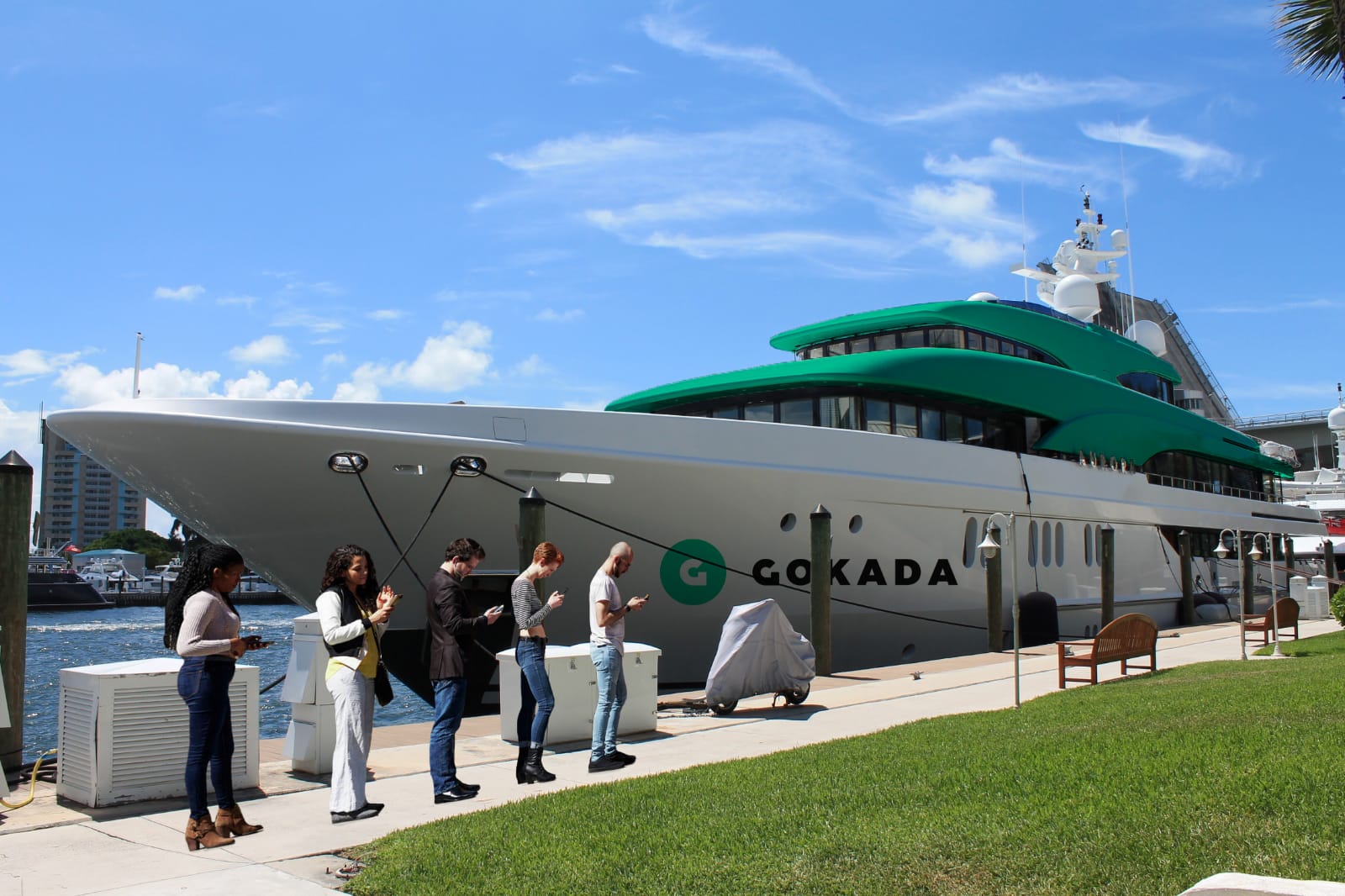
Meanwhile, Gokada is planning to expand its water services soon, as it appears to have introduced bigger boats to Lagos waters. The company shared a picture of its branded yacht on twitter with the caption: “We told you guys.”

Since the Lagos State Government banned the activities of commercial motorcyclists including app-based motor companies, Gokada and other ride-hailing companies have been looking for alternative fields to stay in business.

In June last year, the company introduced the waterway transport system (Gboats) that focused on the island due to limited ferries and inadequate infrastructure. The operation was limited to few Terminals at Laswa yard Falomo, Ikoyi; the Kingfisher Waterfront Jetty at Wole Olateju, Lekki; and the Paradise Jetty at Walter Carrington Victoria Island.

Much was heard of the initiative as Lagos State owned jetties were taking its campaign to many parts of the state.

Gokada said more speed boats and yachts have been added to its fleet and appears set to expand its water operations to other parts of Lagos. The introduction of yatch means the company has a plan to offer luxury and VIP services to riders.
BREAKING – Germany’s Rocket Internet Completely Exits Jumia [Updated with Video]

6

Use this for the the link of Tekedia mini-MBA faculty list.

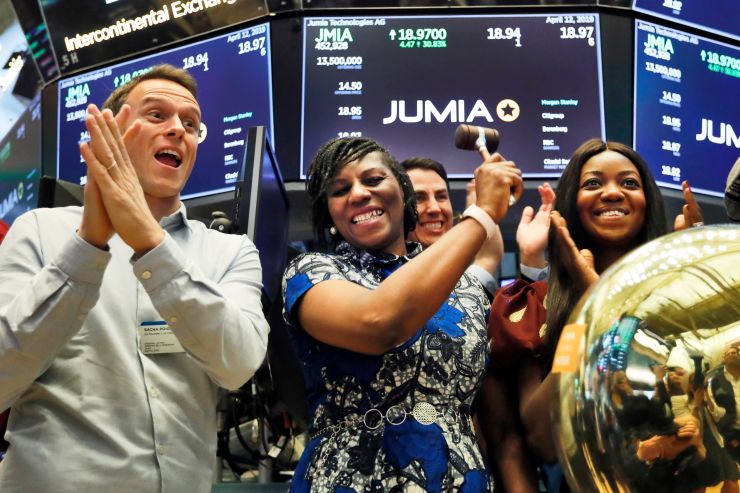
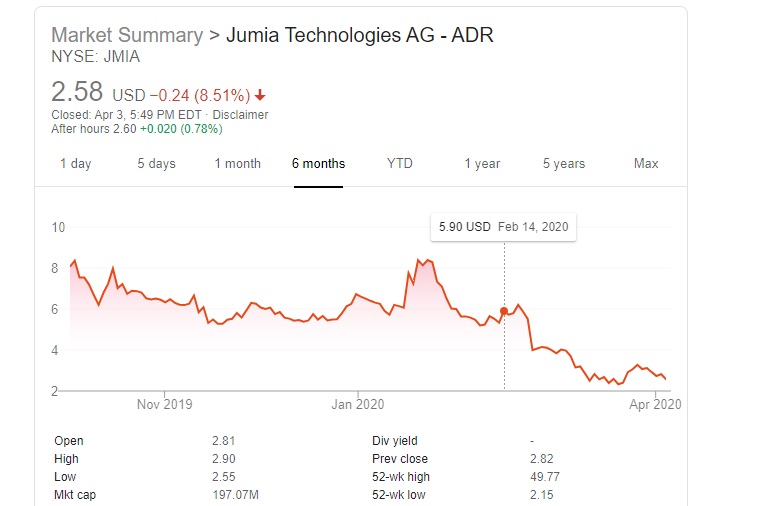
This is hard news: Germany’s Rocket Internet has exited Jumia. Within  the window it sold, from Nov 8 2019 to say early February 2020, Jumia’s highest stock value was about $8.50. That is still a huge drop when you consider that the stock rose to $49.77 shortly after IPO before it lost steam. Jumia closed at $2.58 today after losing more than 8% of its value. This sector remains a challenge in Africa, and not an electronic business, as the marginal cost is all physical. The sector challenges are well documented in this seminal Harvard Business Review piece I wrote a few years ago.

German tech investor Rocket Internet RKET.DE said on Thursday it had sold its stake in African ecommerce company Jumia JMIA.N, which has seen its shares steadily fall since they listed last April on Wall Street.

Rocket Internet, which had held an 11% stake in Jumia as of Nov. 8, sold its holding between then and the onset of the coronavirus crisis, Bettina Curtze, the firm’s head of finance and investments, told journalists, declining to be more precise.

Curtze declined to reveal what proceeds Rocket Internet made from the sale, but said they were included in the 2.1 billion euros ($2.30 billion) of net cash the company had as of March 31.

Jumia shares soared when the company became the first African tech stock to list on Wall Street on April 12 but tumbled a month later after Citron Research, run by short-seller Andrew Left, questioned some of its sales figures.

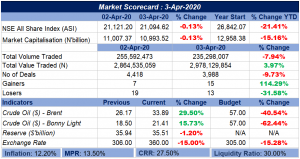
TrustBanc Daily Stock Market Scorecard, 3rd April 2020

0

In the last 48 hours, the price of Brent has gained over 20% and Nigeria’s Bonny light by over 10% on confirmation that major oil producers would meet via video conference on Monday, April 6 to discuss the falling demand for crude oil.

The meeting will include the OPEC+ group of producers including Russia. Azerbaijan also confirmed it received an invitation for the meeting.

In Nigeria, we can only look forward to the outcome of the meeting with optimism as the 10 million barrels proposed cut is just half of the current loss of demand which is about 20 million barrels per day. The cut may just be enough to stabilise prices rather than set prices northbound strong enough to build our foreign reserves.

Unlike oil prices, Investors in the stock market were not so lucky as most global market indices closed down to end another turbulent week dominated by COVID-19 headlines. FTSE 100, DAX, CAC 40 all lost points.

In Nigeria, financial sector stocks dominated the gainers’ chart but could not rescue the All Share-Index (ASI) from the Bears. The ASI lost 0.13% to increase the year-to-date loss of the market to
 21.41%. See the image below for a complete snapshot of market performance.

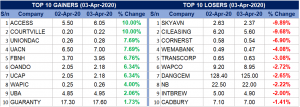
Market Breadth: The breadth of the market was stronger today as the bulls dominated with 15 gainers as against 13 losers. See the list of top gainers or losers below:

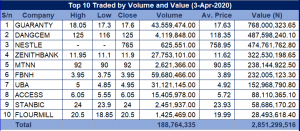
Market Turnover: Turnover declined by 7.94% in volume while value grew by 3.97%. See top 10 traded stocks below:

Stay safe.


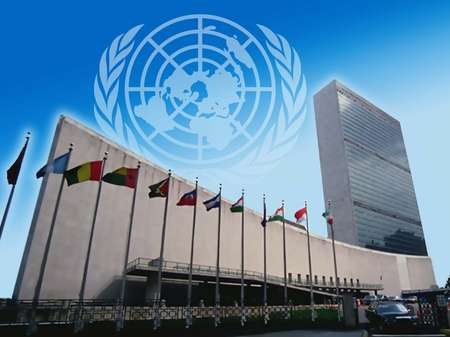
U.N. General Assembly Adopts Resolution on COVID-19

0

The U.N. General Assembly unanimously approved a resolution Thursday recognizing “the unprecedented effects” of the coronavirus pandemic and calling for “intensified international cooperation to contain, mitigate and defeat” the COVID-19 disease- AP reports.

It was the first resolution adopted by the 193-member world body on the pandemic that is sweeping the world and reflects global concern at the fast-rising death toll and number of cases.

The assembly did not approve a rival resolution sponsored by Russia calling for U.N. solidarity in the face of the challenges posed by the new virus and urging an end to trade wars, protectionist practices and unilateral sanctions without U.N. Security Council approval.

Under new voting rules instituted because the General Assembly isn’t holding meetings, a resolution is defeated if even a single country objects to it. Normally, assembly resolutions are adopted by majority votes or by consensus.

Diplomats said the European Union, United Kingdom, United States and Ukraine objected to the Russian draft, which was co-sponsored by the Central African Republic, Cuba, Nicaragua and Venezuela.

General Assembly President Tijjani Muhammad-Bande sent a letter to member nations late Thursday saying that although an extension for objections to the Russian draft had been granted until Tuesday at 6 p.m. EDT, “subsequent consultations with several delegations clearly indicated that further time will not facilitate the resolution of the differences expressed.” Therefore, he said, the time for objections “has come to an end, effective immediately,” and the resolution remains defeated.

Bande sent a letter earlier Thursday evening informing all U.N. member nations that there were no objections to the other resolution, titled “Global Solidarity to fight the coronavirus disease” and sponsored by Ghana, Indonesia, Liechtenstein, Norway, Singapore and Switzerland. He said it was approved and is in effect.

The resolution reaffirms the General Assembly’s “commitment to international cooperation and multilateralism and its strong support for the central role of the United Nations system in the global response to the coronavirus disease 2019 (COVID-19) pandemic.”

It calls on U.N. Secretary-General Antonio Guterres to lead the mobilization and coordination of a global response to the pandemic “and its adverse social, economic and financial impact on all societies.”

The resolution recognizes COVID-19’s “severe disruption to societies and economies, as well as to global travel and commerce, and the devastating impact on the livelihood of people,” and stresses that “the poorest and most vulnerable are the hardest hit” and must be helped.

The resolution also emphasizes the need to respect human rights and oppose “any form of discrimination, racism and xenophobia in the response to the pandemic.”

The 15-member Security Council is expected to discuss the pandemic sometime next week. It is likely to have two resolutions to consider, one backed by the council’s 10 elected members and the other by permanent member France.

On March 1, the UN released $15 million in aid for vulnerable countries as coronavirus spread across the world – its first monetary response to the health crisis that started in China in late December 2019. The fund was released to the World Health Organization (WHO) and the United Nations Children’s Emergency Fund (UNICEF), to be used on essential activities such as monitoring the spread of the virus, investigating cases and the operations of national laboratories.

The Emergency Relief Coordinator and Under-Secretary for Humanitarian Affairs, Mark Lowcock said then that there was no evidence that the virus was spreading freely, but there is a need for the world to act fast in putting up preventive measures to contain the spread.

“We do not yet see evidence that the virus is spreading freely. As long as that’s the case, we will still have a chance of containing it. But swift and robust action must be taken to detect cases early, isolate and care for patients, and trace contacts. We must act now to stop this virus from putting more lives at risk.

“This grant from the UN’s Emergency Fund will help countries with fragile health systems boost their detection and response operations. It has the potential to save the lives of millions of vulnerable people,” he said.

The current speed of the spread proved the UN underestimated COVID-19’s capabilities and therefore called for further action. On March 23, the Secretary General called for immediate global ceasefire as everyone’s attention is needed to focus on the one fight the virus has brought upon humanity.

“To warring parties: pull back from hostilities. Silence the guns, stop the artillery; end the airstrikes. This is crucial to help create corridors for life-saving aid, open windows for diplomacy and bring hope to places among the most vulnerable,” UN’s Spokesperson said on March 23.

Following this call, the UN’s Secretary General launched the Global Humanitarian Response Plan on March 25. It’s a $2.01 billion humanitarian aid aimed at cushioning the effects of COVID-19 globally, especially in developing countries.

This Resolution urging further global cooperation has become necessary as the virus ruthlessly escalates across countries, undermining previous resolutions and measures put in place by the WHO and UN.

The Finance Ministry’s Tweet

0
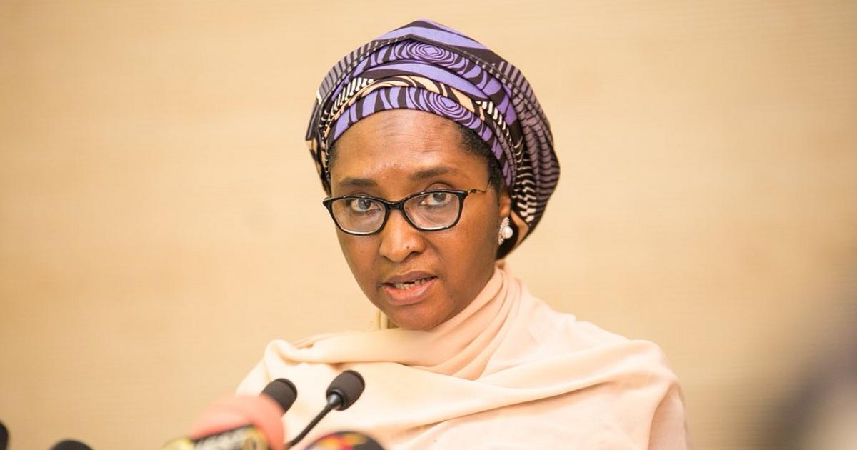
Finance Minister, Nigeria

As ventilators go into popular demand around the world due to increasing cases of coronavirus, governments are looking for help from manufacturers to fill the demand from hospitals. Each country affected by COVID-19 pandemic has a need for more ventilators now than it previously had, but the need appears higher in Europe and the United States.

On Friday, President Trump said he was invoking the Defense production Act to make General Motors (GM) accept federal contracts to produce ventilators and make it a priority. A couple of automakers in the U.S. including Ford, Tesla and Toyota had agreed to venture into production of ventilators just to make enough for hospitals struggling with overwhelming cases of coronavirus patients.

On Wednesday, Elon Musk tweeted that Tesla has enough vent machines to distribute as it hopes the gesture would help in cutting down the number of deaths resulting from the pandemic.

“We have extra FDA-approved ventilators. Will ship to hospitals worldwide within Tesla delivery regions. Device and shipping cost are free. Only requirement is that the vents are needed immediately for patients, not stored in a warehouse.”

Upon this tweet, the Federal Ministry of Finance, Budget and National Planning responded:

“Dear Elon Musk and Tesla, Federal Government of Nigeria needs support with 100-500 ventilators to assist with COVID-19 cases arising every day in Nigeria.”

In a matter of minutes, this conversation generated a heavy backlash that forced the Finance Ministry to take down its tweet. Nigeria has only one coronavirus patient on a ventilator, according to Nigeria’s Ministry of Health, and would likely keep the ventilators in store waiting for the need to arise if they are shipped.

But that’s not why the Federal Ministry of Finance is receiving backlash; Nigeria evidently needs more ventilators than it has. It has more to do with what happened in the past, leadership and management of public funds. After all, Ukraine, Argentina and Spain begged Musk for ventilators too.

“I’m ashamed that the Nigeria Ministry of Finance is begging for ventilators on Twitter. This is the same ministry that released $15.3 million to buy cars for 469 lawmakers but can’t release just $2.7 million to renovate hospitals for over 200 million people,” an angry Nigerian tweeted.

That appears to be the major reason why many Nigerians are livid with anger over the solicitation made by the Finance Ministry. It is believed that the plea has resulted from misplaced priorities that have plunged the Nigerian health sector, among others, into rot.

“Not much here, just Nigeria’s Ministry of Finance begging Elon Musk to assist Nigeria with 100-500 ventilators,” tweeted Jack Robinson, another concerned Nigerian. “We budgeted N37 billion to renovate National Assembly this year; this could have gotten us 3,807 units of ventilators.”

The Ministry of Finance has since issued a statement of regret over the tweet: “An unauthorized post was made on the verified Twitter handle of the Federal Ministry of Finance, Budget and National Planning. The fact of the post is regrettable because of which it is brought down. We have made sure our internal processes are strengthened that such doesn’t happen again. The error is highly regrettable,” the Special Adviser, Media and Communications to the Minister of Finance, Yunusa Abdullahi said in the statement.

However, the damage control statement failed to settle the dust that the original statement had erupted. The whole controversy appears to be part of the wounds that Nigerians have been nurturing in painful silence before now, which has been brought to bear before the entire world.

Nigerian elites have always found their way out of the dilapidated health system through medical tourism until the whole world got caught in a health crisis that is forcing everyone to stay in his country and make use of what he has.

While some believe there is nothing wrong in appealing to developed countries for medical help, as desperate times call for desperate measures, others believe these events are presenting opportunities for Nigerians to put their leaders to shame.

“If Elon Musk has ventilators to give to Nigeria, for the sake of the common people, I hope they give us. However, you have to understand the criticism. A country that can afford to pay its senators $450,000 per year in allowances should not be begging for ventilators on Twitter,” a Twitter user said.

In December 2019, President Buhari approved N37 billion for the renovation of the national assembly complex, a development that like many others, drew outrage and condemnation. The dissenting voices had been voluminous based on the fact that there are so many more important things to do with such a huge amount of money, and the healthcare system was an example of such.