DD
MM
YYYY

PAGES

DD
MM
YYYY

spot_img

PAGES

Home Blog Page 641

World Liberty Financial Launches on Hyperliquid As Fantasy Dot Fun Gain Traction on Base

0

World Liberty Financial, a DeFi project backed by the Trump family, has been generating significant buzz. The WLFI token, an ERC-20 governance token on Ethereum, recently became tradable, with its perpetual futures debuting on major exchanges like Binance, Bybit, and OKX.

According to reports, WLFI futures prices initially hovered around $0.40–$0.42, implying a fully diluted valuation (FDV) of over $40 billion for its 100 billion token supply. This aligns with the claim of a peak FDV of $43 billion. However, the token’s price appears to have dropped, with the FDV falling below $23 billion, suggesting a price per token of roughly $0.23 or lower.

This volatility is consistent with the thin liquidity noted in some analyses, which can lead to drastic price swings, especially in pre-market and early trading phases. The project’s roadmap includes a 20% unlock of presale tokens (purchased at $0.015 and $0.05) on September 1, 2025, representing about 5% of the total supply, which could further influence price dynamics.

The Trump family’s involvement, with a reported stake of 15.75 billion tokens held by Donald Trump himself, adds a layer of speculative hype but also raises questions about centralization and potential conflicts of interest, especially given regulatory scrutiny following the GENIUS Act. The FDV drop from $43 billion to below $23 billion reflects the market’s reassessment of the project’s fundamentals or speculative fervor cooling off.

Fantasy dot Fun Platform on Base

The Fantasy dot fun platform, operating on the Base blockchain (a layer-2 solution for Ethereum), has reportedly gained traction, with its total market cap reaching $150 million over the weekend. While specific details about the platform are sparse in the provided data, this surge suggests growing interest in Base-based projects, likely driven by the chain’s low transaction costs and scalability.

The $150 million market cap indicates significant user adoption or speculative trading, but without more data on the platform’s tokenomics, utility, or user base, it’s hard to assess whether this is sustainable or a short-term pump. The Base ecosystem has been gaining momentum, and projects like Fantasy dot fun may be riding this wave, but investors should be cautious of volatility in nascent markets.

Implications of WLFI Token Launch on Hyperliquid

WLFI’s peak fully diluted valuation (FDV) of $43 billion, followed by a drop below $23 billion, reflects extreme volatility typical of hyped crypto projects, particularly those tied to high-profile figures like the Trump family. The initial surge was likely driven by speculative trading fueled by the Trump brand and political sentiment, while the subsequent drop suggests market reassessment due to thin liquidity or lack of fundamental value.

The WLFI token’s transition from non-transferable to tradable, following a July 2025 governance proposal, signals a shift toward market liquidity. However, its governance-only model (no economic rights) and high insider ownership (Trump family holds 15.75 billion tokens) raise concerns about centralization, potentially undermining trust in decentralized finance (DeFi) principles.

The SEC’s Project Crypto, aiming to clarify token launch standards, could impact WLFI’s operations. A more accommodating regulatory environment might benefit WLFI, but its high-profile status makes it a likely target for oversight, especially if perceived as prioritizing personal payouts over ecosystem growth.

WLFI’s $1.5 billion deal with ALT5 Sigma, which now holds 7.5% of WLFI’s supply, mirrors the strategy of MicroStrategy’s Bitcoin treasury model. This trend of public companies holding crypto as treasury assets could legitimize WLFI and drive institutional adoption, but it also risks overvaluation if market sentiment shifts.

WLFI’s USD1 stablecoin, with a $2.2 billion market cap, positions it as a significant player in the stablecoin market. Its integration with Ethereum, Binance Chain, and TRON, backed by monthly audits, could enhance trust and adoption, reinforcing the U.S. dollar’s dominance in DeFi. However, its success depends on transparency and regulatory compliance.

The Fantasy Dot Fun Platform’s Market Cap Growth on Base

The Fantasy dot fun platform’s $150 million market cap surge over a weekend underscores the growing traction of Base, Coinbase’s layer-2 Ethereum solution. Base’s low-cost, scalable infrastructure is attracting projects and users, positioning it as a competitor to other layer-2s like Optimism or Arbitrum. This could drive further investment into Base-based projects, boosting the ecosystem’s total value locked (TVL).

The $150 million market cap reflects speculative enthusiasm, but without clear data on tokenomics or user engagement, it’s uncertain whether this is driven by genuine adoption or a short-term pump. Such rapid rises often precede corrections, as seen in other altcoin surges, posing risks for late investors.

Fantasy dot fun’s growth bolsters Base’s reputation, potentially diverting capital from other layer-2 or layer-1 blockchains. This could intensify competition among Ethereum scaling solutions, pushing innovation but also fragmenting liquidity.

WLFI’s high-profile launch and Fantasy dot fun’s rapid growth signal increasing mainstream interest in crypto, driven by political endorsements and accessible platforms. However, both projects highlight the tension between DeFi’s decentralized ideals and centralized influences (e.g., Trump family control or speculative market cap spikes).

The WLFI launch and Fantasy dot fun’s growth reflect the crypto market’s potential for explosive growth and mainstream adoption, but they also underscore its volatility and ethical challenges. WLFI’s political ties and speculative pricing could drive short-term gains but risk long-term instability, while Fantasy dot fun’s rise highlights Base’s promise but demands scrutiny of its fundamentals.

Ethereum Reached ATH of $4900 While Hyperliquid 24 Hours Volume Surpasses Coinbase and Bybit, Reaching $3.4B

0

Ethereum (ETH) reaching a new all-time high above $4,900 aligns with recent market activity driven by strong ETF inflows and institutional buying.

The price hit $4,946 before settling around $4,713, reflecting a 21% rally in August with $4,651 as current price according to data from CoinGecko. However, flat on-chain metrics like active addresses suggest this surge is more speculative than driven by organic network growth. Traders should watch for resistance at $5,000 and potential support near $4,500 if a pullback occurs.

Hyperliquid’s 24-hour spot volume hitting $3.4 billion, surpassing Coinbase and Bybit combined, underscores its growing dominance in decentralized trading. This milestone, with $1.5 billion in BTC trades alone, was fueled by a whale depositing 1,276 BTC ($147 million) to swap for ETH, highlighting Hyperliquid’s efficient infrastructure.

The platform’s gas-free trades and HyperBFT consensus algorithm support its scalability, though reliance on volatile BTC and ETH markets poses risks. ETH’s new all-time high signals strong market confidence, likely driven by institutional buying and ETF inflows.

This could attract more retail and institutional investors, further fueling price momentum. Flat on-chain metrics (e.g., stagnant active addresses) suggest the rally may be driven by speculation rather than fundamental network growth. A lack of sustained on-chain activity could lead to volatility if sentiment shifts.

The $5,000 level is a key psychological barrier. Failure to break through could trigger profit-taking, leading to a short-term pullback. If a correction occurs, $4,500–$4,600 is a likely support level, based on recent consolidation patterns.

ETH’s surge often catalyzes gains in other altcoins, as it reinforces optimism in the broader crypto ecosystem. Higher ETH prices reduce gas fee concerns (in USD terms), potentially boosting activity in DeFi and NFT markets, which rely heavily on Ethereum’s blockchain.

Continued ETF inflows and institutional interest could solidify ETH as a mainstream asset, potentially pressuring regulators to clarify crypto policies. ETH’s rally may reinforce its perception as a store of value, especially amid global economic uncertainties.

Implications of Hyperliquid’s 24-Hour Spot Volume Surpassing Coinbase and Bybit Combined

Hyperliquid’s $3.4 billion in 24-hour volume highlights DEXs capturing market share from centralized exchanges (CEXs) like Coinbase and Bybit. This reflects growing user trust in decentralized platforms for high-volume trading. The whale’s $147 million BTC-to-ETH swap demonstrates Hyperliquid’s ability to handle large trades efficiently, appealing to high-net-worth traders.

Hyperliquid’s gas-free trades and HyperBFT consensus algorithm enable high throughput and low costs, setting a new standard for DEX performance. This could pressure CEXs to lower fees or innovate. Hyperliquid’s infrastructure may force competitors like Coinbase and Bybit to integrate more DeFi-like features or risk losing market share.

Hyperliquid’s volume spike is tied to volatile assets like BTC and ETH. A market downturn could reduce trading activity, impacting its momentum. As DEXs grow, regulators may impose stricter oversight, especially if large-scale trades raise concerns about market manipulation or money laundering.

Hyperliquid’s success could accelerate DeFi adoption, encouraging developers to build on its platform and attracting new users to decentralized trading. High volumes may draw more liquidity providers, strengthening Hyperliquid’s market depth but also increasing exposure to impermanent loss risks.

Hyperliquid’s outperformance underscores a shift toward decentralized platforms, challenging CEX dominance. This could reshape the crypto trading landscape, with ETH’s rally amplifying DeFi’s visibility. The whale’s BTC-to-ETH swap on Hyperliquid suggests large players are leveraging ETH’s bullish momentum, linking the two events.

This could amplify volatility across both assets. If Hyperliquid sustains its edge and ETH maintains its upward trajectory, the crypto market could see deeper institutional integration and a stronger DeFi ecosystem, though regulatory and volatility risks remain key hurdles.

Ozak AI Surpasses $2.35M in Presale—Why Analysts Predict a Direct 100x Growth Before It Even Competes With Ethereum or Solana

0

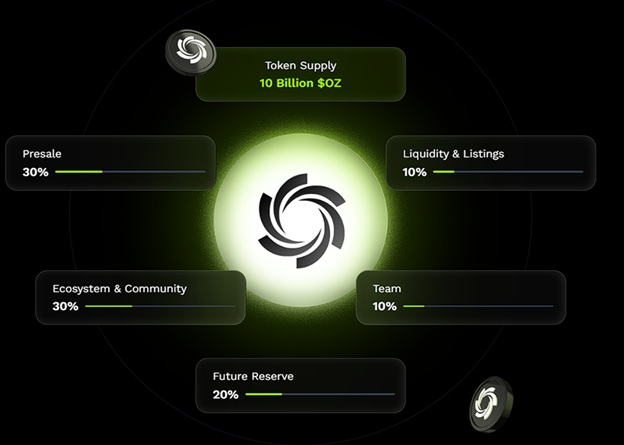
Ozak AI has officially crossed a major milestone in its presale, raising over $2.35 million while selling more than 819 million tokens at just $0.01 each in its 5th stage. This achievement underscores the project’s rising popularity among retail and institutional investors who see artificial intelligence as the next major growth frontier in crypto.

With analysts already projecting a probable 100x return from its presale price, many consider Ozak AI could turn out to be one of the quickest-developing tokens of this market cycle—earlier than it even starts competing at once with setup giants like Ethereum or Solana.

Why Ozak AI Could Deliver 100x Gains

The attraction of Ozak AI lies in its specific positioning. While Solana constructed its momentum through high-speed transactions and Ethereum has become the backbone of decentralized finance, Ozak AI entered the market at the crossroads of blockchain and artificial intelligence.

This twin focus gives early investors an exponential growth opportunity, as AI adoption surges globally and blockchain ecosystems persevere to amplify. At its current $0.01 presale entry, even a modest upward thrust to $1 could constitute a 100x return—making it one of the most attractive ROI plays in 2025.

Unlike Ethereum and Solana, which already command market caps in the tens and hundreds of billions, Ozak AI starts from a lean base, permitting room for competitive increase. Analysts factor out that early-level tokens with strong narratives often deliver the best returns, similar to how Ethereum surged from a few greenbacks to lots and Solana climbed from underneath $1 to triple digits in just a few years.

Strong Investor Confidence Fuels Presale

The $2.35 million raised in presale is not just a number—it’s a signal of investor conviction in Ozak AI’s long-term vision. By selling over 819 million tokens already, the project has demonstrated significant traction that is typically only seen in highly anticipated launches. Many investors view the presale as a golden opportunity to secure allocations at ground-floor pricing before the token lists on major exchanges, where higher demand could trigger rapid appreciation.

Competing With Ethereum and Solana in Different Ways

While comparisons to Ethereum and Solana are inevitable, Ozak AI isn’t trying to replace them at once. Instead, it enhances their ecosystems by using offering AI-pushed tools and insights that can enhance decentralized applications, trading strategies, and enterprise adoption. Ethereum dominates smart contracts and decentralized finance, and Solana excels in transaction throughput, but Ozak AI aims to carve out its own area by way of turning into the move-to blockchain for artificial intelligence integration.

This differentiation could allow Ozak AI to develop quicker than expected, as it doesn’t need to dethrone Ethereum or Solana to be triumphant. Instead, it can increase alongside them at the same time as tapping into each of the AI and blockchain revolutions concurrently.

Analysts’ Bold Predictions for 2025–2026

Analysts are more and more vocal about approximately Ozak AI’s potential. Many forecasts suggest that the token may want to hit $1 by 2026, marking a 100x boom from OZ presale stages. More bullish projections even put its price at $2.50 or beyond if adoption speeds up and strategic partnerships materialize. In contrast, Ethereum may reach $6,000, and Solana ought to change around $500 inside the same time frame—a huge boom, but nowhere near the ability percentage gains of Ozak AI.

The logic is simple: established players provide stability, but smaller, innovative tokens deliver exponential returns. Ozak AI sits firmly in the latter category, and its AI focus positions it as one of the most promising contenders in the next wave of crypto growth.

Ozak AI’s $2.35 million presale success highlights how quickly investor interest can snowball when innovation meets market timing. With its $0.01 entry point and projections pointing toward a $1 or higher valuation, Ozak AI offers a potential 100x ROI even before it competes with giants like Ethereum or Solana. By bridging blockchain and AI, Ozak AI has secured a unique market niche that could make it one of the defining tokens of this bull cycle. For investors seeking high-growth opportunities in 2025, Ozak AI stands out as a presale that combines strong fundamentals with explosive upside potential.

About Ozak AI

Ozak AI is a blockchain-based crypto project that provides an innovative platform that focuses on predictive AI and advanced data analytics for financial markets. Through machine learning algorithms and decentralized community technologies, Ozak AI enables real-time, accurate, and actionable insights to help crypto lovers and corporations make the perfect choices.


For more, visit

Website: https://ozak.ai/

Telegram: https://t.me/OzakAGI

Twitter: https://x.com/ozakagi 

Beyond More Apps: Nigerians Seek Smarter Unified Financial Experience

0

Nigeria’s personal finance space is crowded with apps promising easier ways to save, spend, and budget. Yet, many Nigerians remain stuck between knowing what to do and actually doing it.

Many understand the importance of saving and budgeting, and most say they want help doing so. However, when it comes to execution, the gap is striking, as some have structured systems, while others continue to save and spend without clear strategies.

The real issue isn’t access to financial tools, it’s the lack of a smarter, unified financial experience that connects intention with action.

A recent 2025 Nigeria Fintech Survey, titled “How Nigerians Budget, Save and Bank”, uncovers how Nigerians engage with their money. The survey, which is based on 26 responses, highlights where saving and budgeting habits break down, how technology is shaping financial behavior, and what opportunities exist for both banks and fintechs to deliver meaningful support.

Saving Habits

The survey reveals that savings are common but not always planned. While 46% of respondents reported having both a savings plan and an expense budget, 34% had only one or the other. A notable 20% had neither.

When it came to reaching savings targets, 38% had never hit a goal, 35% reached a goal “a few months ago”, and 15% achieved a goal recently. Interestingly, most savings still take place through traditional bank accounts (62%), though others rely on fintech apps (23%), local Ajo systems, or informal methods.

However, 96% of respondents agreed that everyone should have both savings and expense targets, even if many were not practicing this consistently.

Budgeting and Spending Patterns

Only half of the respondents knew how much they spent weekly or monthly. While 38% claimed to stay within budget, 42% admitted they overspent or spent without structure.

Financial App Usage

Nigerians rely heavily on digital tools, but usage is fragmented. On average, respondents reported using 2.8 financial apps simultaneously: 27% used two apps, 23% used three, and 15% relied on just one.

Popular platforms included Opay, Kuda, and Piggyvest, often used together rather than exclusively. Notably, 92% said they wanted a single app to consolidate activity across platforms.

Over the past few years, the Nigerian fintech sector has no doubt made remarkable progress in democratizing access to financial services. Millions of users now have access to digital savings platforms, mobile wallets, and investment apps.

However, while the options are plenty, they remain fragmented. Users often find themselves juggling multiple apps, one for savings, another for investments, and a third for budgeting, without a central hub to connect these activities. This fragmentation creates friction and discourages consistent financial discipline.

What People Want From Financial Tools

Respondents expressed strong demand for automation and visibility. Nearly 9 in 10 said they wanted an app to track daily expenses. The most requested features were:

Auto-save: Fixed, scheduled savings.

Locked savings: Restricted withdrawals until goals are met.

Expense tracking: Clear daily visibility of spending

Reminders: Nudges to save or stay on budget.

Group saving: Shared goals for trips or projects

This appetite suggests Nigerians are not passive users; they are actively seeking digital tools to provide accountability, structure, and guardrails.

The reality is that financial tools are only effective when they are easy to use, interconnected, and aligned with users’ goals. For instance, a user who saves diligently on one app may lack visibility into how those savings tie into their larger investment or budgeting plans. Without an integrated ecosystem, personal finance remains disjointed, leaving users informed but not necessarily empowered.

A smarter, unified financial experience could solve this by combining savings, spending, investments, and credit management into one seamless journey. Such integration would allow users to not only monitor their money in real time but also receive personalized insights that encourage healthier financial behavior. 

Momentum and Execution

The findings highlight a major gap between intention and action. While many have opened savings accounts or downloaded apps, follow-through is inconsistent.

This suggests that tools focused solely on saving are insufficient. Instead, Nigerians need integrated systems that link savings with real-time spending behavior.

Implications for Banks

Traditional banks remain the primary place Nigerians store savings, but they are rarely used as tools for money management. This represents a significant opportunity:

Banks can evolve from “storage units” to “financial command centers” by consolidating activity across platforms. They could differentiate with goal-based savings products, gamified challenges, locked savings milestones, and real-time budget notifications.

Mobile-first, intuitive design will be essential, especially for younger users who expect fintech-level user experiences.

Implications for Fintechs

Fintechs already lead in innovation, but the challenge is not features; it is habit-building. To rise to the next level, fintech tools must:

Make budgeting automatic: Dynamic reminders and daily visibility

Use behavioral triggers: Auto-savings linked to spending patterns

Offer consolidated dashboards: One view across accounts and apps

Celebrate progress: Gamified streaks, weekly comparisons, or positive reinforcement

Foster community: Group savings, competitions, or shared milestones

To truly empower users, fintech must go beyond building standalone apps and instead create integrated solutions that simplify money management and drive lasting financial progress. The fintechs that succeed will be those that move beyond functionality to shape daily financial behavior.

Conclusion

This research underscores a paradox. Nigerians want to save, budget, and manage money better, but discipline is uneven, and follow-through is weak. They are not short on awareness, but want tools that make financial discipline easier, more visible, and more automatic.

Both banks and fintechs have an opportunity to step into this gap. By blending automation, accountability, and clarity, they can help Nigerians move from good intentions to lasting financial habits, unlocking not just savings but long-term financial stability. Notably, the future of personal finance in Nigeria will not be defined by how many apps exist, but by how effectively they work together to serve users.

Galaxy, Jump and Multicoin To Raise $1B to Offset The Largest Solana Treasury, as Metaplanet Buys Additional 103 BTC

0

Galaxy Digital, Jump Crypto, and Multicoin Capital are reportedly seeking to raise $1 billion to establish the largest Solana (SOL) treasury to date, with Cantor Fitzgerald as the lead banker.

The plan involves acquiring a publicly traded company to create a digital asset treasury firm focused on SOL, with the deal expected to close in early September 2025. The Solana Foundation has endorsed the initiative, which would more than double the size of the current largest SOL treasury held by Upexi (approximately 2 million SOL, worth about $400 million).

This move signals strong institutional interest in Solana, potentially reducing circulating supply and boosting market sentiment, following the corporate treasury model popularized by Bitcoin and Ethereum.

The $1 billion Solana treasury initiative by Galaxy Digital, Jump Crypto, and Multicoin Capital has significant implications for the Solana ecosystem and could boost its growth in several ways:

The involvement of major players like Galaxy, Jump, and Multicoin signals strong institutional backing for Solana, enhancing its credibility as a leading blockchain platform. This could attract more institutional investors and projects to the ecosystem.

By locking up a substantial amount of SOL in a treasury (potentially exceeding 2 million SOL), the circulating supply could decrease, creating upward pressure on SOL’s price due to scarcity, assuming demand remains steady or grows.

The high-profile nature of this treasury, backed by reputable firms and a major investment bank like Cantor Fitzgerald, could drive positive market sentiment, encouraging retail and institutional investors to engage with Solana.

Following the success of Bitcoin and Ethereum treasuries (e.g., MicroStrategy), this move could inspire other companies to adopt SOL as a treasury asset, further integrating Solana into corporate finance strategies.

A publicly traded Solana treasury firm may face regulatory challenges, especially in jurisdictions with strict digital asset regulations. However, the involvement of established financial players suggests a structured approach to compliance.

Boost to the Solana Ecosystem

The treasury could fund Solana-based projects, decentralized applications (dApps), and infrastructure development, fostering innovation and expanding use cases (e.g., DeFi, NFTs, gaming, and payments). This could accelerate ecosystem growth.

Solana’s high-throughput, low-cost blockchain is already a hub for DeFi and NFTs. A large treasury could provide grants or investments to developers, attracting more projects and increasing transaction volume.

A significant SOL reserve could be used to support network operations, validator incentives, or staking, enhancing Solana’s security and decentralization. This could make the network more attractive to developers and users.

Backing from firms like Galaxy and Cantor Fitzgerald could open doors to strategic partnerships, expanding Solana’s presence in traditional finance, cross-chain integrations, and global markets.

By reducing circulating supply and signaling long-term commitment, the treasury could stabilize SOL’s price during market volatility and drive long-term appreciation, benefiting stakeholders across the ecosystem.

If the treasury’s SOL holdings are liquidated suddenly, it could lead to price volatility. The success of the treasury depends on effective management and strategic allocation of funds to high-impact projects. Other blockchains (e.g., Ethereum, Binance Smart Chain) may counter with similar treasury initiatives, intensifying competition.

Overall, this $1 billion treasury could significantly elevate Solana’s profile, drive ecosystem growth, and solidify its position as a top-tier blockchain, provided the initiative is executed strategically.

Metaplanet Buys Additional 103 Bitcoin Amid Grayscale Filing for An AVAX ETF

Tokyo-based investment firm Metaplanet has continued its aggressive Bitcoin acquisition strategy, recently purchasing 103 BTC for approximately $11.7 million, bringing its total holdings to 18,991 BTC, valued at around $2.2 billion.

This move aligns with their strategy to diversify reserves and hedge against Japan’s economic challenges, mirroring tactics used by companies like MicroStrategy. Metaplanet’s stock has surged by about 1,150% year-to-date, reflecting market confidence in its Bitcoin-focused approach. The firm also plans to use its Bitcoin reserves as collateral for acquisitions, signaling a broader strategy to integrate crypto into traditional finance.

Grayscale Files for Avalanche ETF

Grayscale Investments has filed an S-1 registration with the SEC to launch the Grayscale Avalanche Trust as a publicly traded ETF on Nasdaq. This follows their earlier filing with NYSE Arca for a multi-asset Digital Large Cap Fund ETF, which includes AVAX alongside BTC, ETH, XRP, and SOL.

The filing reflects growing institutional interest in altcoins, with the SEC’s review process for the multi-asset ETF potentially concluding by Q3 2025. This move could enhance accessibility for investors seeking exposure to Avalanche’s scalable blockchain ecosystem.

Metaplanet’s purchase reinforces the trend of corporations adopting Bitcoin as a treasury reserve asset, following MicroStrategy’s lead. This could inspire other firms, particularly in Asia, to diversify their balance sheets with crypto to hedge against fiat depreciation and economic instability in Japan, where high debt and a weakening yen persist.

The acquisition signals strong institutional confidence in Bitcoin, potentially boosting market sentiment. However, the $11.7M purchase is relatively small compared to Bitcoin’s market cap (~$1.3T), so direct price impact may be limited. Still, consistent buying could contribute to upward price pressure over time.

Metaplanet’s 1,150% stock surge reflects investor enthusiasm for its Bitcoin strategy. This could attract speculative capital to similar firms but also raises concerns about overvaluation risks if Bitcoin prices decline or market sentiment shifts.

Using Bitcoin as collateral for acquisitions could pioneer new financial models, blending crypto with traditional M&A strategies. However, this increases exposure to Bitcoin’s volatility, posing risks if market conditions deteriorate.

As Metaplanet integrates Bitcoin into its financial strategy, it may face increased regulatory oversight in Japan, where crypto regulations are stringent. This could set precedents for how corporations globally navigate crypto adoption.

Implications of Grayscale Filing for AVAX ETF

Grayscale’s filing signals growing institutional interest in altcoins like Avalanche (AVAX), potentially legitimizing layer-1 blockchains beyond Ethereum. An approved ETF could attract retail and institutional investors, increasing AVAX’s liquidity and market visibility.

An AVAX ETF could drive demand for the token, potentially boosting its price, currently around $27-$30. Historical ETF approvals (e.g., Bitcoin, Ethereum) have led to price rallies, though speculative hype could also increase volatility.

The ETF, alongside Grayscale’s multi-asset fund, offers investors diversified exposure to crypto without direct custody, lowering barriers to entry. This could accelerate capital inflows into the crypto market, particularly for Avalanche’s DeFi and NFT ecosystems.

The SEC’s review process, potentially concluding by Q3 2025, will test its stance on altcoin ETFs. Approval could pave the way for more altcoin-based products, while rejection might dampen enthusiasm for non-Bitcoin/Ethereum assets.

Grayscale’s move intensifies competition among asset managers (e.g., BlackRock, Fidelity) to offer crypto ETFs. This could spur innovation in crypto investment products but also pressure smaller blockchains to differentiate themselves.

Metaplanet’s Bitcoin purchases highlight corporate adoption, while Grayscale’s ETF filing reflects institutional efforts to bridge crypto with mainstream markets. However, regulatory hurdles, market volatility, and macroeconomic factors (e.g., interest rates, global economic stability) will shape their long-term impact.