DD
MM
YYYY

PAGES

DD
MM
YYYY

spot_img

PAGES

Home Blog Page 6411

Lafiya Telehealth Solution ready for deployment in Nigeria as Key COVID-19 Response

1

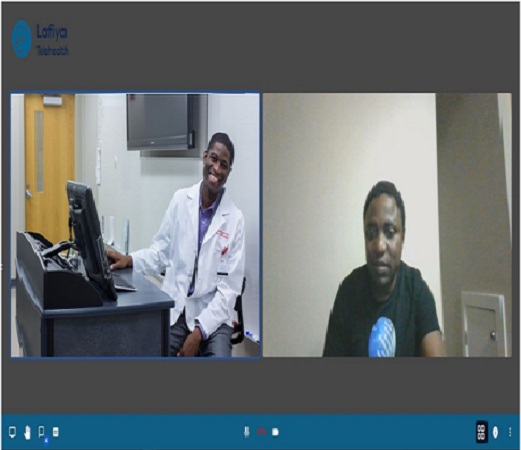
Lafiya Telehealth an all-in-one modular device and telehealth platform for on-demand, remote medical examinations, plan to support healthcare organizations in Nigeria and Africa in the fight against COVID-19.

The company is calling  for Govt, Businesses, HMO, Hospital, Businesses, NGO and Individual   to partner in Nigeria and other African to  expand their use of Lafiya’s telehealth solution to remotely examine and diagnose quarantined patients and isolated patients at home, providing health professionals the clinical data required to make informed treatment decisions from a safe distance and minimizing physical contact to help stem the spread of COVID-19.

With telemedicine’s potential during this global pandemic, telehealth services are in high demand. Public health officials are urging patients to stay out of emergency rooms and clinics, and hospitals and health organizations are being encouraged to leverage telemedicine technologies and self-assessment tools to provide remote care for patients with non-urgent matters.

Using Lafiya Telehealth to remotely examine quarantined patients in hospitals and isolated patients at home, healthcare providers are able to avoid exposure and the “worried well” are able to receive care without entering medical facilities, preventing the spread of the virus and significantly reducing the increased burden on already overworked health organizations. Both new and existing health organization and hospital partnering the  with Lafiya Telehealth to quickly increase their preparation and prevention efforts in the face of the COVID-19 pandemic.

“The fight against the COVID-19 pandemic is strengthening each day and as the virus continues to spread, we are focusing our efforts where we can make the most impact –  easing the burden on healthcare providers serving quarantined and isolated patients,” said John Enoh,  Lafiya Telehealth CEO and Founder. “Lafiya Telehealth is uniquely suited to provide the remote exam and diagnostic capabilities required to aid affected populations at scale, fully realizing telehealth’s potential during this crisis. It’s my hope that this pandemic passes quickly and that we can help flatten the curve.”

Lafiya Telehealth is the only remote, comprehensive physical examination solution with diagnostic capabilities enabling users to perform remote medical examinations, including lung and heart exams and temperature, which are key for monitoring COVID-19. The high-quality clinical data captured is reviewed remotely by a health professional, enabling them to monitor, diagnose and treat patients quarantined in hospitals and at home, fully replicating an in-person visit. The solution is being deployed quickly and at scale for hospitals and health organizations, with training for medical staff and implementation occurring in a day.

Lafiya’s telehealth solutions to remotely examine and diagnose quarantined and isolated patients. The company’s handheld devices that examine the heart, lungs, skin, ears, throat and abdomen, as well as measure body temperature, provide health professionals with the clinical data required to make informed treatment decisions while minimizing physical contact.

“Lafiya’s telehealth is uniquely suited to provide the remote exam and diagnostic capabilities required to aid affected populations at scale, fully realizing telehealth’s potential during this crisis. It’s my hope that this pandemic passes quickly and that we can help flatten the curve,” he added.

The device allows users to perform comprehensive medical exams and send the information to a primary care provider. The device, at  ? 180,000, was recently made available to purchase at over https://store.lafiya.app/shop/  across Nigeria. It’s also available online.

You can see more here

https://youtu.be/GiZdGPKjsB0

https://store.lafiya.app/shop/

https://www.lafiya.app/

The Experiment From FUTO

2

Abia state abandoned a tertiary institution when the teachers went on strike. That school – Abia State College of Education – has collapsed, and the teachers and students are gone, 100%. It is possible that our state and federal governments in Nigeria could begin abandoning schools in coming months – and some will struggle. Largely, state and federal governments will ask university vice chancellors to generate a big portion of their operating budgets. If that happens, the ceiling on school fees will begin to fade.

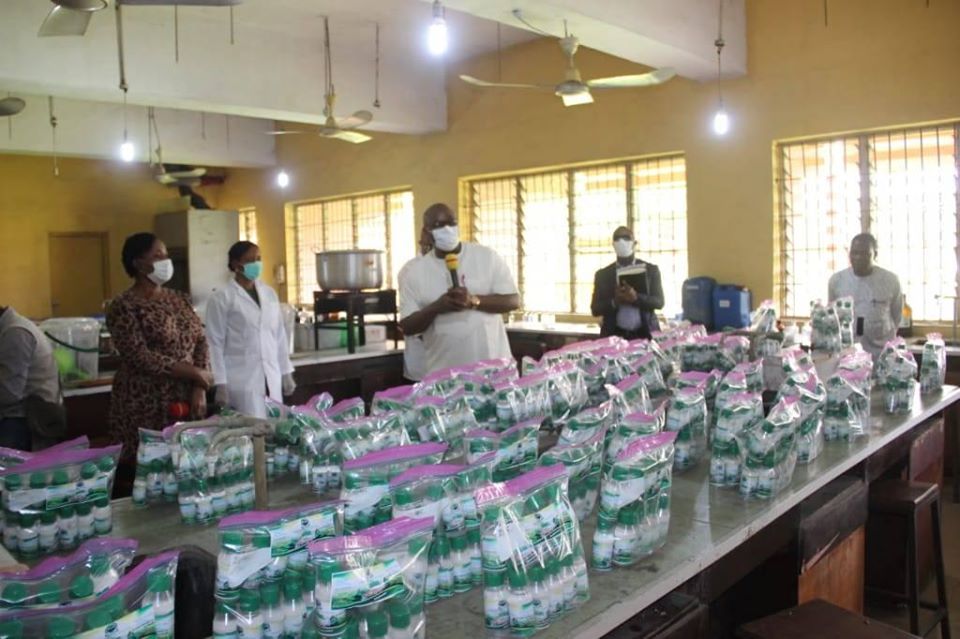
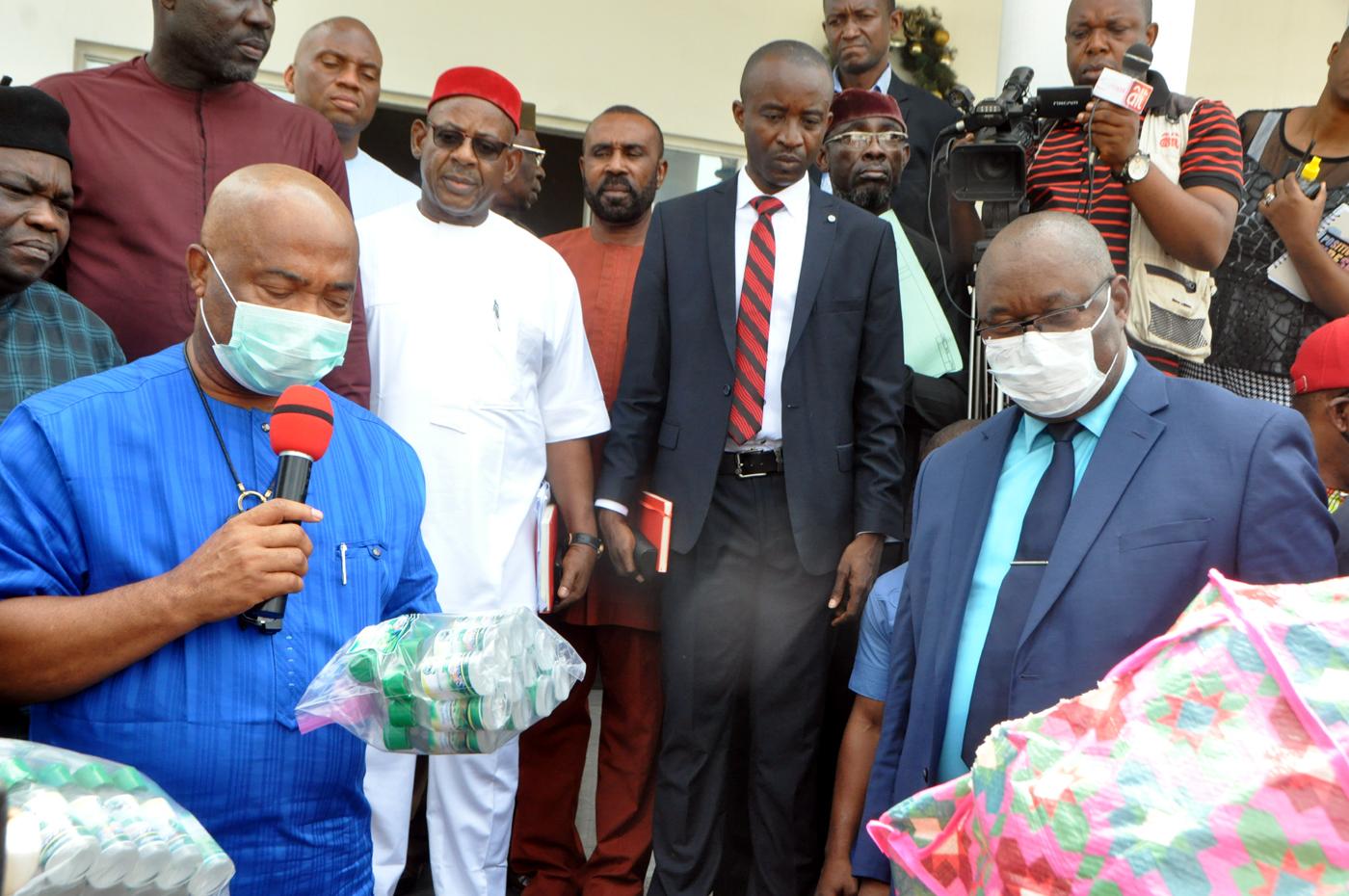
This is when agitation for autonomy will take shape. My alma mater, FUTO, did something last week – it began mass producing and shipping hand sanitizers to manage coronavirus. Certainly, making hand sanitizers by a federal technical university is not a big deal. What is big there is that the university has used that to support its host communities. It recently donated hand sanitizers to Imo state government, hospitals, etc, reducing the burden on the federal government. The government will need that type of experiment from our schools.

How can our schools create IPs to generate revenue? That conversation will become critical in coming months in Nigeria. FUTO’s transition from lab to market is the ultimate experiment. And I am sure Mr. President in Abuja would like to see more from our schools.

Donating to Imo State Government


Begin Your Cybersecurity Training & Education Journey With Facyber, Today

0

Begin your cybersecurity training & education journey with Facyber. Enroll today for Certificate and Diploma courses. We offer the following:

Certificate in Cybersecurity Policy (CCYP).
Certificate in Cybersecurity Technology (CCYT).
Certificate in Cybersecurity Management (CCYM).
Certificate in Cybersecurity Intelligence & Digital Forensics (CCDF).

Diploma in Cybersecurity Policy (DCYP).
Diploma in Cybersecurity Technology (DCYT).
Diploma in Cybersecurity Management (DCYM).
Diploma in Cybersecurity Intelligence & Digital Forensics (DCDF).

We are giving a 20% discount till April 30, 2020. Begin here today

A Conversation on Career and Innovation with Nene Obichie of PayAttitude

3

Which of these feedback would you desire to receive from people?

Sorry, but you could have made an attempt at it or showed up, at least! 

Or,

Congratulations on your completion of this certificate course, or on your new appointment!

We live in an age when an average individual will choose to live within a safe and comfortable space and go the route of least resistance. We have seen time and time again that this route favours none of its users.

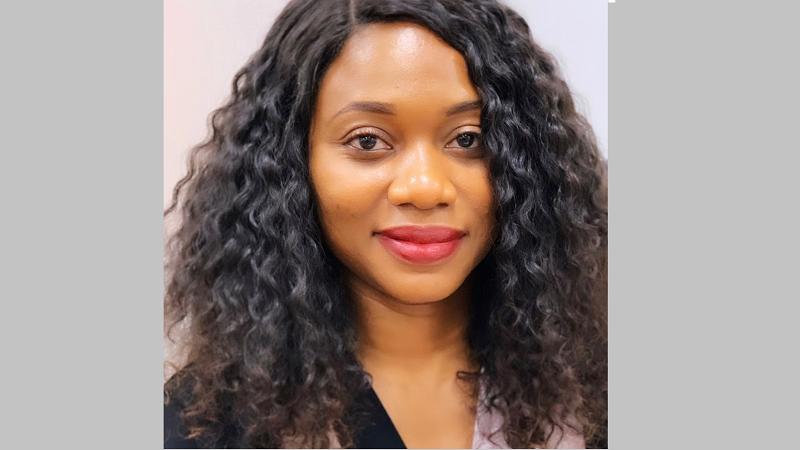
Today on LADWITS (Launch Deep! With Taofik Sanni), Taofik sits with Nene Obichie, the Head of Marketing and Sales at PayAttitude, as she shares her story of how she stayed strong as a wife, mother, employee and student all at the same time. 

If you think the world is on you, that you have too much on you to hold you back from going for your goals, please read this!

The interview…

Taofik Sanni: Good morning Nene, your story is such that it has the potential of encouraging many other women in Nigeria, Africa and the world at large. Can you start by introducing yourself to us?

Nene Obichie: Thank you, I’m Nene Obichie, a marketing and communication professional who drives profitable growth in rapidly evolving competitive digital payments and technology environments. I’m a wife and mother of 2 young children.

Taofik: Can you please tell us about how you came into the marketing and communication profession?

Nene: I was always a big talker who loved to read and write so my father thought I’d make a good lawyer. Unfortunately I was unable to make the mark to study law and opted instead to study Mass Communication. 

After my first degree, I worked in a few small organizations but because I liked the fast paced world of technology, I switched careers to banking specifically the E-Business department of one of Nigeria’s leading banks. Working in Electronic Payments in the early days was very exciting because electronic payment was still a novelty as most businesses still relied heavily on cash. However once the CBN’s cashless drive kicked in, I started to feel a bit less challenging and switched departments to the Aviation department within the same bank. If I thought E-business had become boring, I was in for a shocker as I found Aviation rather monotonous. Don’t get me wrong, I had moments of excitement whenever I was able to get my Aviation clients to use electronic banking to scale but I was pregnant with my first child and started to reconsider how to marry my first love of communication with my new passion of digital payments. I decided to pursue a masters degree in Marketing Communication and the rest they say is history

Taofik: Wow! So interesting! So can you tell us the story behind all these movements from banking to marketing communications and how they relate to your marital life, pregnancy and study?

Nene: A wise man once said “if you don’t like where you are, move. You are not a tree.” 

This has been one of my guiding principles. Believe me when I say it wasn’t easy juggling a tasking career at a bank, newly wedded blues, pregnancy and early motherhood in addition to pursuing a higher education but my desire for a career I was passionate about was stronger than the temporary discomfort of multi-tasking so I just had to make that move.

Like the African adage goes “it takes a village to raise a child” I’m thankful I have a very supportive husband, worked with a great team of colleagues who covered for me when I had to leave the office to attend a class and had the support of my sister and brother in-law assist with childcare. I’m proud to say that I never turned in a paper late and was even the first student in my class to submit my final thesis and complete my viva!

Taofik: Wow! You are such a strong woman. During all of these experiences, did you ever feel like giving up or quiting?

Nene: Yes, early on in the program I was tempted to throw in the towel because believe me it was intense but I had to start with the end in mind and forged on

Taofik: What are the lessons you picked in the course of your journey here?

Nene: The journey of a thousand miles begins with one step. If you want something, no matter how daunting it seems just take the first step towards achieving it. Once you take that first step it becomes a little less daunting.

Taofik: As a wife, a mother and a professional, what advice do you have for other women out there who may have been stuck at one point or the other in their journey to achieving their marital, parental and professional goals?

Nene: There’s a photograph I have that was taken by my colleague years ago, after I had returned to work from my first maternity leave. In that photo, I’m fast asleep at a makeshift rest area at the corner of the office just beside a copier because I was exhausted from staying awake with a colicky baby the night before. Yet I made it to work that next day tired as hell but determined to make it through. 

It doesn’t matter what gender you are, life is going to throw curveballs at you along the way, just be determined to take each day as it comes and give it your best shot. 

It also helps when you have people that love and support you because like I always say, teamwork makes the dream work

Taofik: For those young people desiring to take a career in marketing and communications, what advice do you have for them?

Nene: For young people desiring to pursue a career in marketing and communication, my advice is for them to stay true to your passion and keep their eyes on the prize. As with most professions, it may not be rosy in the beginning but it is a very exciting career path with diverse opportunities. With digitization, the profession has become a lot more dynamic than what it used to be only a few years ago. But this generation is blessed in the sense that they have access to a lot of information, so they must continue to stay abreast on the trends, keep learning, unlearning and relearning whilst staying true to the ethics of the business.

Taofik: Are there any certification, annual conference, or quarterly workshops to boost the employability of those aspiring to become a leader in the marketing and communication profession? Also, what are the opportunities and leadership track a young chap can key into to become successful in the profession?

Nene: Certifications are nice to have but they aren’t must haves. The beauty about the profession is that as long as you have strong written and communication skills you can perform effectively. Companies will typically consider candidates who have earned degrees in Mass Communication, Communication, Marketing or journalism but like I said they are no hard or fast rules.

To boost employability in the field, an aspiring leader has to have a firm grasp on marketing research, communication strategy and pricing and budgeting strategies. Again in this age of digital marketing, one must be abreast of the all the digital channels and tools and must be able to analyze marketing trends

Taofik: So Nene, in case someone out there desires to reach you or have a career conversation with you, how can they do so?

Nene: In my spare time I mentor young graduates and professionals on employability and personal branding. I have a blog (www.careersensei.com.ng) where I try to answer questions about all that pertains with thriving in today’s workplace. I can also be reached on all social media platforms. 

Taofik: Thank you Nene, for your time and efforts to help many know they can be more than what they are and be better than what they think they can be despite your busy schedule.

Nene: You are most welcome

Prison Decongestion Directive in Nigeria, Many Deaths in Kano

0

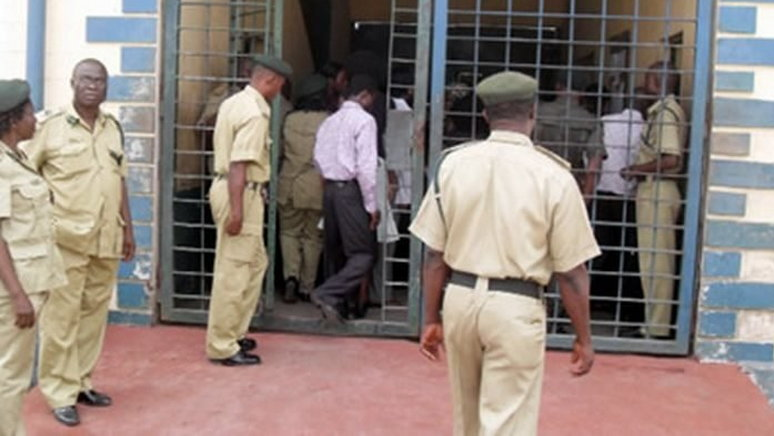
President Buhari has called for urgent measures towards the speedy trial of cases and decongestion of custodial centres in the country in view of the Covid-19 pandemic.

In a letter to the Chief Justice of Nigeria, Hon. Justice Ibrahim Tanko Muhammad, the President drew His Lordship’s attention to the recent call by the United Nations on all countries “to consciously reduce the population of prison inmates since physical distancing and self-isolation in such conditions are practically impossible.”

According to President Buhari, “From available records, the inmates population at various custodial centres across the country presently stands at about 74,127 out of which 52,226 are Awaiting Trial Persons (ATPs).

“Most of these custodial centres are presently housing inmates beyond their capacities and the overcrowded facilities pose a potent threat to the health of the inmates and the public in general in view of the present circumstances, hence the need for urgent steps to bring the situation under control.

“It has become imperative for Your Lordship to request State Chief Judges to embark on immediate visit to all custodial/correctional centres within their respective States to identify and release deserving inmates where that has not been done already,” he said.

He noted that during such visits, “the Chief Judges are enjoined to consider conditional or unconditional release of ATPs who have spent 6 years or more in custody. ATPs who have no confirmed criminal cases against them, aged inmates and terminally ill may be discharged.

“It is expected that particular attention should be on the aged, those with health issues, low risk offenders, those with no sufficient legal basis to remain in custody, inmates convicted for minor offences with or without option of fines and inmates who have less than 3 years term left to serve having served a substantial term of their service for offences that attract 5 years and above.

“Payment of fines may be made in favour of inmates convicted of lesser offences with option of fine, who are in custody because of their inability to pay such fines.”

President Buhari said a Report on the proposed visits is expected to be forwarded to the Presidential Committee on Correctional Service Reform and Decongestion Secretariat, Federal Ministry of Justice, Abuja for compilation and onward transmission to his office.

He also suggested to the Hon. Chief Justice of Nigeria to “at this stage, consider taking immediate steps as appropriate to ensure the setting up or designation of Special Courts in all States, including the FCT, “ to try cases of armed robbery, banditry, kidnapping and other serious offences, in order to facilitate speedy trials.

“There is the need to ensure that the Chief Judges of States and FCT High Courts direct lower courts to comply with requirements of the Administration of Criminal Justice Act/Law in issuing remand warrants in criminal cases especially in cases which are not within their jurisdiction,” he said.

According to the President, “this will regulate the volume of entry of Awaiting Trial Inmates into custodial centres.”

Prison decongestion has been a major topic in the Nigerian political and social space. Year after year, human right organizations call on the Nigerian government to administer principles of criminal justice law as the courts and law enforcement agents carry out their duty.

In November 2019, the Cleen Foundation in collaboration with the McArthur Foundation deliberated on how to decongest Nigerian prisons, at the ACJA/L working group meeting held in Kaduna. The discussion became necessary because the number of inmates per prison continued to outgrow the prisons’ capacity – and that’s the case with every prison in Nigeria.

The push to effect the needed change in the prisons always ended on the table of discussion, and life continues; more people get added to the already choked walls. With the courts overwhelmed with cases and the police on rampage of indiscriminate arrests of citizens, there has been every day addition to the problem.

In March, the Minister of Interior Rauf Aragbesola, spurred by WHO’s advise to decongest prisons over coronavirus, called on stakeholders to facilitate measures to minimize the number of inmates in the Nigerian Correctional Services (NCoS) to prevent the spread of coronavirus.

The push has been ongoing since then as part of governments’ efforts to quell the spread of the outbreak. Buhari’s directive to the Chief Justice of Nigerian on Tuesday has been the greatest move by the Nigerian government to decongest the prisons.

It is seen as one of the positive developments that have emanated from the outbreak of COVID-19 in Nigeria. There is hope that the pandemic will force the government to address other issues that Nigerians have been complaining about.

The Many Deaths in Kano

As the Kano State Government battles to curtail the spread of COVID-19, an unknown illness has reportedly killed more people in the state than the dreaded pandemic.

Daily Trust reported that on Friday and Saturday last week, over 150 people were reportedly killed across many Local Government Areas of the State. The eight LGAs affected are Nasarawa, Gwale, Dala, Ungogo, Fagge, Tarauni, Kumbotso and Municipal.

It was a tale of horror as grave attendants and undertakers recount the events. “This is worrisome, we are becoming overwhelmed by what we are seeing here these days because to me, the way people are dying is not ordinary,” Bashir Mohammed, of the undertakers at the Dandolo Cemetery in Goron Dutse, Dala LGA said.

He added that between Saturday and Sunday, over 30 bodies had been buried in the cemetery raising serious concern as it is well over the maximum 10 burials allocated to the cemetery. Mohammed noted that those buried were aged people across sexes.

In another cemetery in the state, Abattoir, near Kofar Mazugal, 61 persons were buried at the same period. The areas of the state affected were Zage, Darma, Sharifai and Gabari as well as Zangon and Barebari communities of Kano Municipal.

While the actual cause of the deaths remain unknown, it has been attributed to severe fever, malaria and typhoid fever related illnesses. The residents of the areas said the situation became that bad because of the closure of private clinics in the communities, making it difficult for most of them to access medical help when they are ill.

The situation has thrown the communities into fear that they are now begging the state government to intervene. The Chairman of Fagge Cemetery Committee, Sheriff Hadi Kabir, who said that he lost his old father alongside 13 others who died in his neighborhood, added that the “terrifying” situation needs urgent government action.

He said in his neighborhood at zangon Barebari in Kano Municipal LGA, the cause of the deaths is suspected to be malaria and Typhoid fever, a situation he attributed to rainfalls that helps mosquitos breed.

“This is not coronavirus as speculated; it is severe malaria because of our exposure to mosquito bites. We have been battling this kind of experience almost on yearly bases around this time. So we are praying to the government to come to our rescue because this malaria is more deadly than COVID-19,” he said.

Residents of the affected areas and family members of the diseased have attributed the development to nothing else but malaria. They said their communities are prone to malaria due to the prevalence of mosquitos.

“My mother started having severe fever last week. My brother took her to the hospital and they conducted some tests on her and the result showed that she was having malaria. Her condition continue to deteriorate until Sunday when she passed away,” Hajiya Amina, the daughter of the disease said.

Another resident of the community, Malam Hafeezu Adamu, said doctors confirmed that his brother died of malaria even though he is diabetic.

“My brother was diabetic, but about five days ago, he started complaining of fever and headache. He was diagnosed of malaria and was later admitted in the hospital where he eventually died on Saturday,” he told Daily Trust.

In reaction to the development, the Kano State Ministry of Health said an investigation has been launched to unravel the cause of the deaths. In a statement signed by the information officer of the ministry, Hadiza M. Namadi, the ministry acknowledged the report and promised to carry out necessary inquiry.

“The attention of Kano State Ministry of Health has been drawn to a post being circulated on social media platforms on purported death of number of people within two days and buried in some cemeteries within Kano metropolis.

“As the ministry could not immediately verify the veracity of the claim going round, the state Commissioner of Health, Dr. Aminu Ibrahim Tsanyawa, hereby assured the general public that investigation into the matter is ongoing to verify the claim and possible causes of the deaths. Dr. Tsanyawa also assured that the public will be informed on the outcome of the investigation,” the statement said.

But in another reaction, the Secretary of Risk Communication Sub Committee on COVID-19 in Kano State, Alhaji Auwalu Abdu Fagge, has refuted the claims calling it rumor. He said it has been investigated and found to be false and warned people, especially those with social media influence to stop peddling fake news.

“This particular rumor has been investigated and found to be untrue. I beg of you with massive social media followership to help in clearing the air,” he said.

The contradicting statements from the Kano State Ministry of Health and COVID-19 Sub Committee among other things, give reason for concern. The affected communities happen to be in rural areas of the state where adequate medical facilities are lacking, making it difficult to ascertain the true circumstance of things without thorough investigation.

Moreover, the number of coronavirus cases has been on the rise in Kano, giving reason for many to suspect that it could be the cause of the reported deaths. Kano has recorded 59 cases of coronavirus with one death. The age range of the diseased in these communities has also made many to believe that it could be coronavirus.

But Aminu, a kano resident said it has always been the case in the state, only that people were not paying attention due businesses.

“People die every day in Kano even before this COVID-19 pandemic. Kano is a big city, it’s because the city is crowded that’s why people don’t observe the daily deaths. But now because of the lockdown, people tend to observe. So please let’s not turn natural cause into politics,” he said