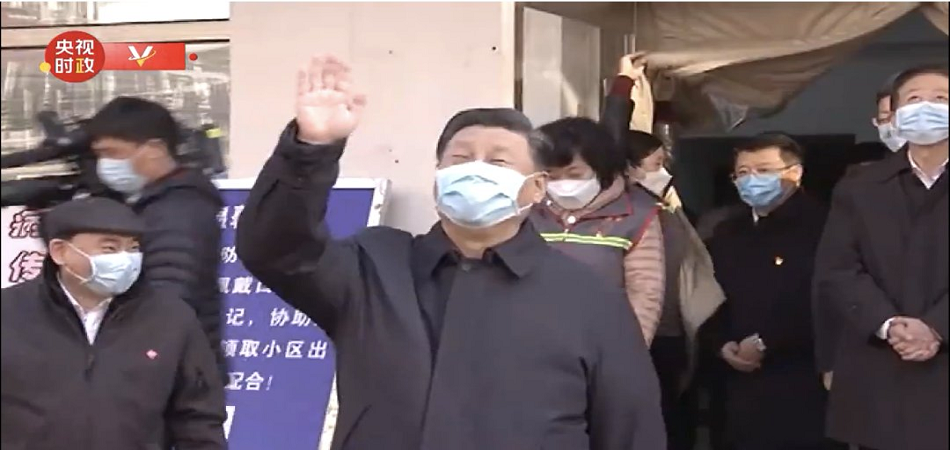
Don’t boast about tomorrow, since you don’t know what the day will bring, these are the words of King Solomon in the twenty-seventh chapter of Proverbs and verse one. The truth is, when you wake up every morning you have no idea what will happen to you that day. You hope for a wahala-free day where your expectations and dreams will be a reality. China is fast becoming a superpower; they want to be world power one day but I don’t know if they boast about it like some celebrities in Nigeria. But, whatever, they wanted to become didn’t matter again when the Coronavirus hit Wuhan in late December 2019. The outcome is a further spread resulting in over 2.38 million infections confirmed in at least 185 countries and territories, death toll currently over 165,000. In the last three months, there has been a major shutdown of human activities globally due to this pandemic.
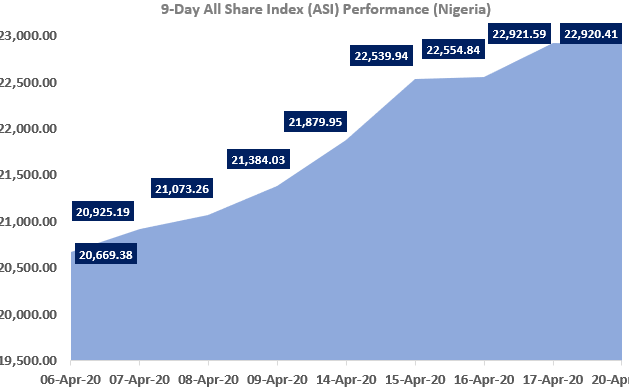
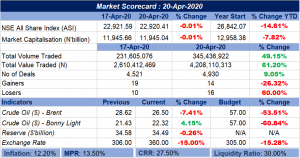
There is a global threat to human existence and international networks, decline in physical interaction, falling stock and oil prices for as low as $20 per barrel – the lowest in a long time. Life-threatening cases will include the rising number of deaths, hunger, closure of businesses due to lockdown, massive loss of jobs, high unemployment rate, amplified domestic violence emanating from the sit-at-home, etc. While large corporations have encouraged their workers to work remotely, there is a major setback for small businesses that require the physical presence of workers who depend on daily profits to keep body and soul together. The mantra, #stayhome, #staysafe seems the most advertised phrase in the world.
Amid this pandemic, both developed and developing economies are striving to minimize the health and economic risks associated with the outbreak. African and Asian countries like Nigeria and India when compared to their European counterparts are striving to ensure that the best tactics are used to curb the devastating impacts of the epidemic as observed in the US, Spain, and Italy, where hundreds of thousands of people die daily. While the US lockdown strategy seems to be effective due to an effective data management system, the US government is making a huge financial investment in research, testing facilities and social welfare of her citizens, giving over $1000 as a social welfare package, while modifying its strategy every day.
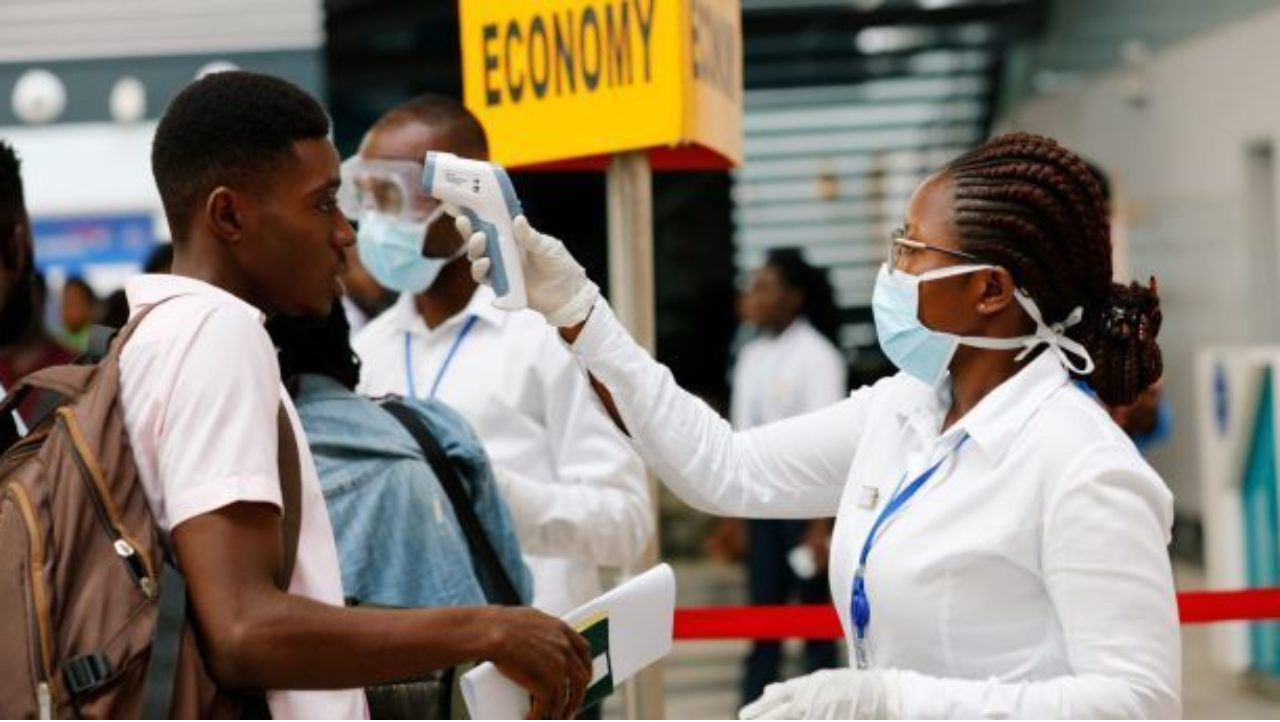
But Nigeria with over 200 million people is yet to make a reasonable case or even find a path for herself. The Government efforts so far remain; lockdown, emphases on social distancing, contact tracing, testing, isolation and social welfare as paraded by the media. There is a strong case by experts that Nigeria may be at great risk if the virus knocks-out communities with millions of people living next to each other – places like Okokomaiko, Iyana Ipaja, Ajegunle, Mushin may trigger community transmission. And, without a doubt, it can rip through the population, unless something is done urgently to arrest the situation, for which there is no vaccine but prevention and isolation.
While the government claims to keep COVID 19 transmission at stage 1 and 2 i.e. the stage where transmission is nominal, everyone affected can easily be contained, their sources traced, and less or no transmission with family, close friends, co-workers, etc., occurs. But how can we do contact tracing? Do we have an effective database system for Nigerians? Have we ever gotten our national census, right? Should we not talk about the National ID card from the National Identity Commission or leave for another day the data from BVN registration for banking transactions, INEC voter registration, International Passport from NIS, FRSC driver’s license and vehicle registration, SIM card registration by NCC to mention a few cases. Data is collected and stored everywhere, making it difficult to collect information across multiple government parastatal databases that house these data.
We have so much data yet we can’t do effective economic planning, make robust national budgets, control crime, provide social welfare/insurance systems, or even manage emergencies such as the COVID 19 situation. Every year our appropriation bills are usually a bunch of guesses that are unforgivable by data. Regrettably, in Nigerian, we are bulldogs at collecting data and toothless in putting them to use. As of this time, we can’t boast of an updated and detailed central data management system that can account for the profile information of every citizen – from birth to death. The reason for this ambiguity is simple — every government agency and parastatals have their own IT structures with no common synchronization, the result will be inaccuracies in the records.
Arguably, with the realities of politicking on the part of Federal and State governments, inefficient strategy and weak enforcement, Nigeria seems to be moving into the third stage of COVID 19 – community transmission. As at the time, of the first occurrence in Nigeria, the government was relatively proactive. Even basic information on the virus wasn’t clear especially in local languages, such that people who experienced similar symptoms associated with the epidemic – headache, coughing, fever, and/or living with co-morbidities, feared to have the virus. The position of the government in informing the public was puny, hence, allowing the proliferation of fake information on COVID 19 as observed in several WhatsApp or Facebook forums.
Plenty Nigerians became doctors, herbalists I beg your pardon – they recommended for people to drink dry gin, take garlic with honey, drink hot water morning, afternoon and night as the virus cannot withstand high temperature. Although, there is no evidence that the temperature and the humidity of a place slow down the virus, as what the herbalist postulated in Africa. Amongst other challenges, is that Nigeria has a really weak surveillance system for reporting diseases, with no regard to diseases outbreaks. While the cities cannot be adequately covered, figures for rural communities will always be compromised. Do we have a credible record of deaths in Nigeria? While we can manipulate figures for urban areas, death rates are hardly reported for rural areas. Undeniably, lack of adequate monitoring and statistics records is a major challenge for Nigeria before now.
Like every patriotic Nigerian, I am worried about the COVID 19 situation. Each day I am praying for this nation and hoping that the pandemic will be under control. As of yesterday April 19, we have 627 confirmed cases, 21 deaths, and 170 discharged persons. The NCDC claimed to have tested 7000 persons but this number is far below countries like India and South Africa. India has tested over 100,000 people and is setting 5000 tests per day. Similarly, South Africa has also tested 50,000 people to date. It is observed that the COVID-19 infection rate in Nigeria remains low relative to its population size. This may be because of the genetic composition or high immunity to the virus. Another valid point could be that many infected persons are yet to be tested. I wonder what it will be in the coming weeks. Looking at the number of new cases each day leaves me with no choice but to keep hope alive. But what hope exactly? Hope in a weak strategy or its implementation?
While the government has promised to make food available for its citizens at this time, it is not clear how this food will get to the people. Despite the good plan, it is only logical to state that the execution can be challenging – including a million bottlenecks along the chain. I must commend the Lagos state government in their approach to contain the virus as well as alleviate the suffering of Lagosian. But what good is a plan if the execution is poor. You are only multiplying the problem. I have seen several media clips on how the sharing of relief materials has bridged the social distancing technique. Regrettably, this is chaired by government officials. Rules in Nigeria will always have exceptions. Why? As deadly as this virus is, we observed how social distancing and the NCDC procedures were flawed at the burial of Mr. Abba Kyari, Buhari’s Chief of Staff. He was such a good man. May his soul rest in peace. But as a matter of life and death, I don’t think we are taking COVID 19 as seriously as we ought to. I wish the government means business as it does on ink and paper, even if it is copied.
The reality today is that Nigeria’s strategy to contain COVID19 isn’t effective as expected because it focuses more on lockdown, contact tracing, testing, and isolation. This model will be as good as those it was copied from – the Europeans. These nations already have basic social issues solved before the outbreak. They can boast of a reliable database of its citizens, constant electricity, government social welfare, good and affordable health care, low poverty and unemployment rate, transparent government, etc. Hence, it is easy to implement a lockdown. Unfortunately, this is not our story. Our story is that we don’t have an effective data management system, no social welfare scheme, no good healthcare system, no social security system, inefficient telecommunication systems, unemployment and poverty rate are high, corrupt systems, and zero security for lives and properties.
Copying an approach is not an issue. But if we do without factoring in our local realities it will amount to a waste of time and resources. But nawa oh! Naija we smart pass like this naa. Our reality is that less than 40% of Nigeria’s population is employed and two-third of the remaining depend on daily jobs to survive and to feed their families. Presenting a lockdown without social welfare package to citizens is like presenting two evils to choose from – to die of hunger or to be infected and killed by the virus. You don’t need to be told that an average Nigerian will choose survival, hence, making lockdown enforcement almost impossible. But is there a lockdown? Most videos I have seen and the places I have visited shows people going about their normal businesses.
What do you expect? We are all looking for means to survive, hence, caring less what the government is saying. The government has done well by allowing markets and other essential services to run. Have you been to the market in recent times, you fear my brother! Zero social distancing, body contact is like one-to-one mapping. I missed my further math’s days in Festac Grammar School. What is the government saying again? You know Nigerians don’t believe the government anymore. Imposing a lockdown is good but of what good is it when people are moving around, the enforcement is weak. The NCDC is doing its best and testing has increased in April as compared to March but that’s not enough. Solving problems related to this pandemic is not all about medical science but has a lot to do with social issues, thus, it requires the expertise of social scientists too.
I will suggest the government reviews its strategy immediately and come up with an effective strategy that considers the reality of the Nigerian people. This time, social scientists need to be involved to create effective social programs to help contain further spread in the coming weeks. For example, a sociologist can provide the best social distancing abi physical distancing plans for the kind people wey dey for Naija. While economists can advise the government on better economic policies to assuage the suffering of the masses especially the extended hunger revival which is now triggering other social problems including insecurity and theft. Don’t tell me you have not heard about the 1 million gangs; I won’t believe you if you don’t. Most households in Lagos have become responsible for their security – burning tyres in the streets and keeping vigil to scare criminals instead of waiting for the government. But the Police says there is no cause for alarm, all is well. I am not a social scientist but an Engineer of Epidemionics. I believe in allowing the specialist to do their job but certainly not a politician in this regard except if you are a pro in that area. I have heard that corporate individuals and institutions are donating money to the government to fight COVID 19. That is a good initiative but they should also look at other channels too that will impact the hungry masses.
Although the lockdown was rushed which possibly was the best at the time. Now, could there have been better planning of the lockdown? Definitely, why not. It is believed that given the densities of Nigeria, issues isolating visitors and citizens who returned from abroad trips should have been strictly implemented with exceptions. More so, instead of being only concerned about payment of salaries for the government, three months exemptions for Market Moni, Trader Moni, Farmer Moni, other soft loans for SMEs, etc., the government should have focused on how to support poor Nigerians.
Indeed, the lockdown decision was hasty to proper planning, but we can’t blame the government totally. There was limited information about the virus, but this is not the first time we are experiencing outbreaks. We have had cases of SARs and Ebola in the past, but didn’t have a long term strategy for managing disease outbreaks. Presumably, we should have learned from those experiences but we didn’t because of corruption. A good way to prevent or minimize future risks remains by setting the Diseases Outbreak Response Scheme (DORS). This scheme will provide a blueprint on how the government and private sector can monitor and manage future disease outbreaks in a more integrated collaborative manner.
The unified DORS could have managed the situation better addressing issues with data management, social welfare, lockdown, high cost of living, business palliatives, public awareness and sensitization, the sit-at-home or work-from-home conundrums, panic buying, lack of ventilators, test-kits, and PPEs, misinformation and so forth. The DORS is a framework that has multi-level operating guidelines on what needs to be done to prevent and reduce the impact of disease outbreaks. Countries like Singapore and Germany, via their Ministry of Health or related agencies, have mapped detailed and well-documented procedures on disease outbreak managements that are peculiar to their origin and realities.
As a result, it was easy for Singapore to be without a lockdown despite having a large number of infected cases until April 6, while maintaining a death rate below 11 since the outbreak. The city-state functioned exceedingly well without panic or breakdown of services. The DORS cannot be effective without a central data system. Creating a central system isn’t as easy as it sounds but we can break them into phases, first creating a single unified view of existing records where the cost of the data integration can be a public-private partnership initiative where businesses that require such data from national data center can pay for the cost of maintaining it rather than the government. Secondly, we can fix how we collect data by evolving the process of a single database to create new records that can be updated in the future. Several tools can be used, but this article is not meant for such technical details today.
Albert Einstein said, “we cannot solve our problems with the same thinking we used when we created them”. There is so much to be said but the government should look beyond paperwork, politics, ethnicity, religion, and do what is in the best interest of the State. Coronavirus doesn’t understand any of these nor does it know the difference between the rich and the poor. If we are to flatten the curve from the sudden increase of infected persons an immediate review is inevitable. Just like King Solomon said, “Don’t boast about tomorrow since you don’t know what the day will bring”, but if you plan well you can predict the future.
For once, make we use our brains for this country.
Like this:
Like Loading...