DD
MM
YYYY

PAGES

DD
MM
YYYY

spot_img

PAGES

Home Blog Page 6423

Covid-19: An Apocalypse Could Be Brewing in Nigeria

2

In a previous rticle, I explained how the emergence of the coronavirus pandemic and its attendant problems on the social and economic lives of Nigerians is a sort of karma in Nigeria.

Now, I am afraid it could be more serious than that.

I sense that except there is an alteration of the current sequence of events, an apocalypse is brewing in Nigeria.

Beyond the detected covid-19 cases in people who traveled into the country from abroad, it is now an established fact that there is rampant local transmission of the virus in Nigeria. Also, due to the current lock-down, a lot of Nigerians are seriously suffering, crime is increasing and a lot of law-abiding citizens are resorting to self-help to protect themselves.

It is from these two inferences that I postulate that Nigeria could be heading for serious calamity.

On the 10th of April, 2020, 3 new covid19 cases were reported in Daura, Katsina state. The 3 new cases are the wife and two children of the first reported case in Katsina. Daura like most areas in Nigeria has a population that is predominantly uneducated, ill-informed and poverty-stricken.

In areas like this, transmission can occur very quickly and in secrecy.

Within a location such as Daura, health coverage is very limited and a comprehensive covid19 test that effectively covers the whole population is virtually impossible considering the horrible Nigerian healthcare system. You can bet Daura has much more covid19 cases than the official confirmations.

Let’s call this phenomenon the Daura factor.

For clarity, let us define the Daura factor as ‘’covid19 spreading fast in an unpredictable manner and shrouded in secrecy due to poor healthcare system and poor human, technological and infrastructural development’’.

Recently, 3 covid19 cases detected in Lagos state were transferred to Ogun state. This was due to the reason that they are resident in Sango Otta, a big town in Ogun state that borders Lagos. The implication is that the coronavirus is now in Sango Otta and transmission is inevitably ongoing.

Sango otta might be more developed than Daura but it is reasonable to say that the Daura factor is currently playing out in Ogun state.

The first confirmed covid19 death in Delta state is an instructive story.

The concerned individual had underlying health issues and had visited Lagos two weeks before. He got sick and was admitted to a private hospital situated within a residential building. The assumption at this time was that it was a non-covid19 sickness. Later, the sickness got out of hand and he was transferred to a public hospital. Shortly after his specimen was taken, he passed away. His test result however came back positive with the coronavirus.

Imagine the number of people that would have unknowingly contacted the virus through this man, both directly and indirectly. The Daura factor is currently playing out in Delta state.

A patient arrived at Lagos University Teaching Hospital’s emergency unit on the 2nd of April, 2020 complaining of malaise, tremors and fever. On admission, the patient did not disclose the fact that he returned from Holland two weeks before where he went for follow-up treatment after a renal transplant. The patient died the following day. A test conducted on the deceased body revealed he had coronavirus.

You can bet many local transmissions has occurred through this man. The Daura factor is playing out in Lagos state.

According to the Nigeria Centre for Disease Control (NCDC), as at 12th of April, 2020, there are 323 confirmed covid19 cases in Nigeria. It would be reasonable to say the unconfirmed cases in Nigeria are in thousands, if not tens of thousands right now.

In line with global response aimed at curtailing the coronavirus pandemic, the Nigerian government has ordered residents of Abuja, Lagos and Ogun state to stay at home for 14 days lasting till 13th of April, 2020. Many state governments have equally taken the cue.

While this approach is commendable, its copy and paste nature can simply not work in Nigeria like it would in saner climes with structured systems and responsible/competent government.

Many residents in Lagos and Ogun state are no longer sleeping at night due to a sharp increase in crimes perpetrated by hoodlums and hungry youths.

More than half of the Nigerian population live under extreme poverty and a huge segment of the working population live from hand to mouth on a daily basis. It is impossible to ask this huge disadvantaged population to stay home for 14 days without expecting big trouble.

I saw a video on Twitter showing the Awori area of Agege where a crowd of men with cutlass and other weapons came out in the night to act as vigilantes in order to protect their community.

A twitter handle @_opyzle with the name Omoluabi reported on the 12th of April, 2020 that there is a serious robbery going on at Abule-Ijoko in Ogun state.

Kate Henshaw, a Nigerian celebrity, reported on Twitter that a lady went to buy stuff at Lekki phase 1 and that boys/guys were lined up on the road saying they were hungry and begging for food.

That is the brink on which those boys/guys can turn to crime very soon.

A twitter handle @iamMotola with the name Tola posted some pictures of himself and others keeping guard at night with the caption – ‘’Haven’t slept in like 5 days straight…rather die protecting my family than to be killed in my sleep’’.

What Tola doesn’t know is that he is equally acquiring a new skill in violence and depending on future circumstances of his life, that skill could later haunt the society.

The fact of the Nigerian lock-down is that too many people are suffering intensely and a lot of people are afraid for their lives, the lives of their loved ones and the likely loss of their little acquisitions due to the increasing wave of armed robbery and other crimes.

The 14 days lock-down ended on 13th of April and the Federal government has extended it by another 14 days lock-down. This has serious security implications and citizens might revolt against the government when the suffering becomes too unbearable.

The bitter truth is that another 14 days lock-down will not stop the spread of the coronavirus, it can only slow its spread. What will the government do when the 14 days extension expires?

And so the Nigerian government is very close to finding itself between the devil and the deep sea – relax the current lock-down and have the coronavirus spread at a faster rate than it is currently spreading or continue with the lock-down and risk citizens revolting against the government.

Such is the perfect recipe for a national cataclysm.

I do not pity the Nigerian government at this troubling time. They have sown into the wind for decades and are bound to reap the whirlwind currently brewing.

Hopefully, a vaccine or cure comes soon enough as it appears this virus is unstoppable any other way.

God help us all.

PS: I was intentional about using the term the Daura factor because Daura is the hometown of President Muhammadu Buhari, and like the Nigerian system, his leadership in this crisis has been very poor.
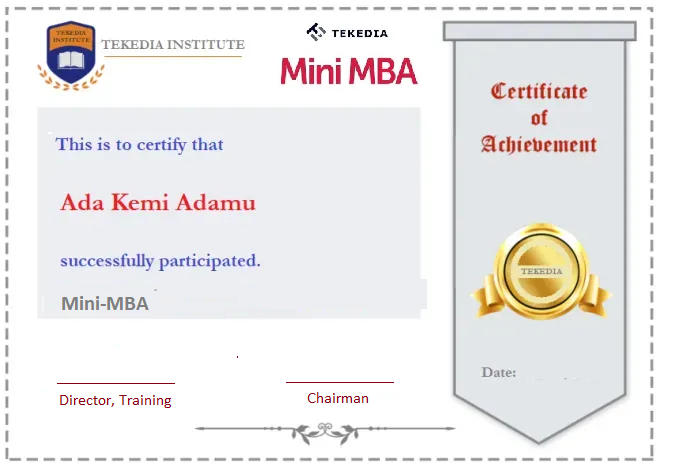

Sample of Tekedia Mini-MBA Certificate Unveiled

0
Our sample certificate which will be awarded to participants

Our Owerri (Nigeria) team has created the certificate sample for Tekedia Mini-MBA. If you are enrolled in the first edition, please update your profile in Tekedia Digital Board with the name as you want it on the certificate. Have a great weekend, Good People. Registration continues for the second batch here.

Our sample certificate which will be awarded to participants


COVID 19 : People should avoid making themselves vulnerable to cybercrimes – Ridwan Agboluaje

0

An IT expert, Mr. Ridwan Agboluaje has advised people to avoid making themselves easy targets for online fraud during the period of the lockdown of states across Nigeria. He made this advice while interacting with Tekedia. Here are the excerpt of the interview    

Tell us about yourself.

I am Ridwan Agboluaje. I am an IT Expert and Education Advocate who promotes quality education at the grassroot level. I use IT tools to educate and empower youths in my community. I am also a Cyber security expert and I educate people too.  I have over 6 years of experience in Information Technology and 3 years in Education Advocacy, Youth Activism, Community Development and Human Rights especially teenagers’ right to education. I seek to make a tangible, notable and enduring impact in Africa, or die trying. I am the Team Lead at Leadon Empowerment Initiative, a social impact not-for-profit organization that provides economically disadvantaged youths with skills and career development opportunities.

Why do you think cyber crimes are becoming common in this period?

In my own perspective, cyber crimes are very common before and during this period because  of the trend of this era. We have moved almost everything we used to do physically online. Registration for whatever purposes, transactions and even purchase have all become internet driven. However, the danger becomes heightened at this period of the rave of the moment- COVID 19. Since national and sub national governments of the country are declaring lock downs whether partially or totally and organisations too are demanding their employees to work remotely, internet crimes have also been on the increase. Cyber criminals  are looking for ways to steal vital information of people. People become vulnerable when they operate online without paying much attention to cyber security. People who also look for cheap and unbelievable opportunities have the tendency to click on links advertising such and which could lead them into their online security being compromised.

 What kinds of cyber threats are people exposed to before now and during this period?  

During this period, people are open to all sorts of cyber crimes ranging from identity theft and financial scams. Many people are looking for cheap opportunities to make money for self sustenance during this period. So, online fraudsters steal people’s identity to either source for money from the contacts of the compromised  persons or to even withdraw money from their bank accounts. People have reported receiving strange calls asking them for their BVN or other security information about their accounts. The callers usually disguise themselves as bankers. Also, a lot of people have reported their WhatsApp or Facebook accounts being hacked. All these are finance related. Generally, cybercrimes pose a huge threat to private data of individuals, international companies, banks, governments etc. and therefore security breach must be prevented.

Is it possible that people make themselves vulnerable to cyber threats?

Yes, most cyber attacks are caused by human errors, carelessness and ignorance. This is because most internet users have a carefree attitude to the use of the internet. Consequently, they run around trying to resolve their issues after being hacked. Simple personal decisions that people make can put them into trouble online. When users come up with simple and short passwords because they are afraid of forgetting their passwords, they could easily be compromised. Also, when users make use of a single password for all their accounts, they make themselves an easy target for hackers and cyber criminals. People often have the same password for their ATM cards, emails and other platforms where any leak in their information could subject them to distress. Doing that is like a person using a single key to enter a building of eight rooms. The consequences are usually unimaginable because that means the entire house is at risk.

What are your tips for people to be cyber secured at this period and beyond?

Well, my simple advice for people who frequent the internet for all kinds of transactions is that they should develop a cyber security mindset. They should make efforts to ensure that they are protected while online. Such a mindset would save them from being compromised. With the mindset, they are sure to play safe online. They should as well be cautious of opening attachments and clicking on links especially from strange sources. Apart from this, there are six tips that I would also share with people.

One, they should make an attempt to use strong passwords and maintain different password and username combinations for their different accounts. Weak passwords could easily be cracked using certain attacking methods. Two, people should keep their social networking profiles on Facebook, Twitter, Instagram and YouTube private. They should check security settings every now and then. Most importantly, people are advised to be careful of the kind of information they put online. The Internet of Things keeps records of whatever information is put on social media.

Three, many people are not aware that their mobile devices are vulnerable. They could be targeted for malicious software such as computer viruses and hackers. To prevent this, people are advised to install anti-virus software and use a secured lock screen. They should avoid mobile applications from unknown sources and check how applications on their phones use their personal data such as pictures or contacts.

Four, it is advisable for people to protect their personal data by encrypting their sensitive files such as financial records and tax returns  Passwords to their ATMs should not be released to people who they do not trust. Added to this is the fact that people must learn to protect their identity online. In fact, it is better to be too cautious than not being cautious enough. Personal IDs such as name, address, phone number and financial information should not be given indiscriminately online. People are to ensure that they make online purchases using secure platforms.

Lastly, personal computers should be updated regularly with latest patches and updates. This blocks attackers from taking undue advantage of software vulnerabilities that hackers could exploit. Devices should not be programmed to automatically connect to Wi-Fi. People must verify important details of any public Wi-Fi hotspot to ensure it is not set up to steal information. Above all, developing a cyber security mindset will guard a person’s online footprints against theft and financial scams during this period or beyond.

Thank you for your time

It is my pleasure.

OPEC Members Finally Agree on Production Cuts

0

Members of Organization of Petroleum Exporting Countries (OPEC) converged on Thursday to put an end to the oil production cut that has stalled for some months now due to the disagreement between de-facto leader Saudi Arabia and Russia.

The agreement was to temporarily cut oil production to 10 million barrels per a day, cutting about 23 percent of their production levels in May and June. The statement issued by the organization after the meeting said that the agreement will be reviewed and adjusted periodically.

“Adjust downwards their overall crude oil production by 10.0 mb/d, starting in May 2020, for an initial period of two months that concludes on 30 June 2020. For the subsequent period of 6 months, from 1 July 2020 to 31 December 2020, the total adjustment agreed will be 8.0 mb/d. It will be followed by a 6.0 mb/d adjustment for a period of 16 months, from 1 January 2021 to 30 April 2022. The baseline for the calculation of the adjustments is the oil production of October 2018, except for the Kingdom of Saudi Arabia and the Russian Federation, both with the same baseline level of 11.0mb/d. The agreement will be valid until 30 April 2022, however, the extension of this agreement will be reviewed during December 2021,” part of the communiqué said.

Earlier in March, attempts by OPEC members to agree on production cut failed as Russia and Saudi Arabia disagreed on output quota. The disagreement sent oil prices spiraled downward to less than $20 per barrel.

The world economy appears to be hanging partly on the decision of the Alliance as U.S. stocks keep plunging partly due to the low prices of oil following the outbreak of coronavirus pandemic.

The need to stabilize the oil price became urgent as the pandemic continues to wreak havoc around the world, plummeting economies and calling for strong sustainability measures to save jobs and businesses.

For this need, the U.S. President Donald Trump stepped in. Trump said he spoke to Saudi king Salman and Russian President Vladimir Putin and urged them to go back to the negotiation table. He said on Thursday that the oil production cut deal is in the interest of oil producing countries including the U.S. and he believes the cartel would reach a deal soon to curtail the looming crisis of layoffs all over the world.

“The numbers are so low that there will be layoffs all over the world. There will be certainly layoffs in this country, and we don’t want that to happen,” Trump said in a press briefing on Thursday, in reference to oil prices.

Russia and Saudi Arabia had to put their differences apart to reach a deal in one of the most challenging times in the history of the oil market. OPEC Secretary General Mohammed Barkindo described the current situation of the oil industry as “hemorrhaging” and called for urgent action to stem it.

“Our industry is hemorrhaging; no one has been able to stem the bleeding.

“Every producer, many of whom are developing nations, have been impacted and no one is immune. It is forcing us to access and reassess what the consequences are on an almost daily basis,” Barkindo said.

OPEC members are desperately trying to salvage a seemingly hopeless situation slipping away from their grip. The deal is to cut production by 10 million barrels per day in May and June, which is the deepest cut ever agreed on by the cartel.

But not all members agreed, Mexico refused to support the agreement to cut its share of 400,000 barrels per day, leaving the deal in limbo. The Alliance’s statement said the deal needs Mexico’s consent to take effect and her refusal to accept the cut opened the way for another round of talk.

But on Friday, Mexican president Andres Manuel Lopez said he spoke to Trump on the issue and agreed to cut 100,000 barrels per day which left 300,000 more barrels to make the consensus a reality. But Trump said the U.S will cut its production by further 250,000 barrels to compensate for Mexico.

However, the deal appears unlikely to stabilize price as demand is down as much as 20 million barrels per day. Even if producers cut output by 10 million barrels per day it is unlikely to stem the massive fall in the oil market in recent time as a result of coronavirus.

Barkinda acknowledged the odds, he told attendees of the meeting held on Thursday that more cuts are needed to meet the shortfall in demand.

“Given the current unprecedented supply and demand imbalance, there could be a colossal excess volume of 14.7 million barrels a day in the second quarter of 2020,” he said.

The Thursday agreement means that output would be reduced to 8 million barrels per day from July to December and subsequently, 6 million barrels per day reduction from January 2021 to April 2022.

Iran, Libya and Venezuela would be exempted from the output cuts due to lost production or sanctions.

The challenge however lies on the possibility of OPEC accepting Trump’s compensation for Mexico, as the heavyweights in the OPEC+ group, especially Russia, have signaled that they would only accept the deal if members voluntarily make the production cuts.

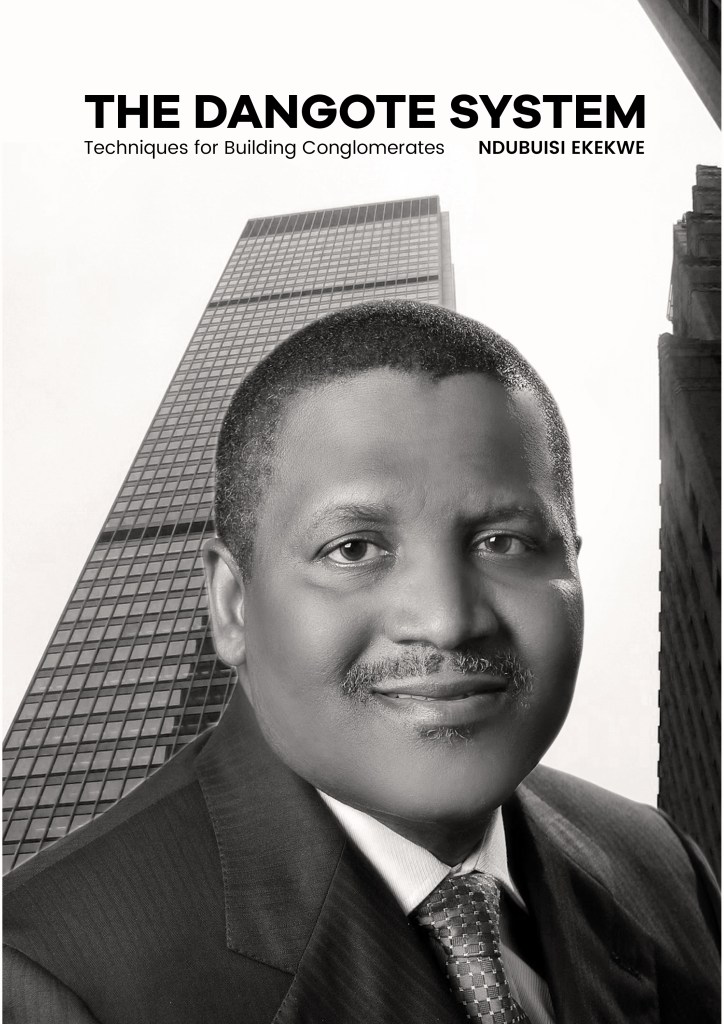
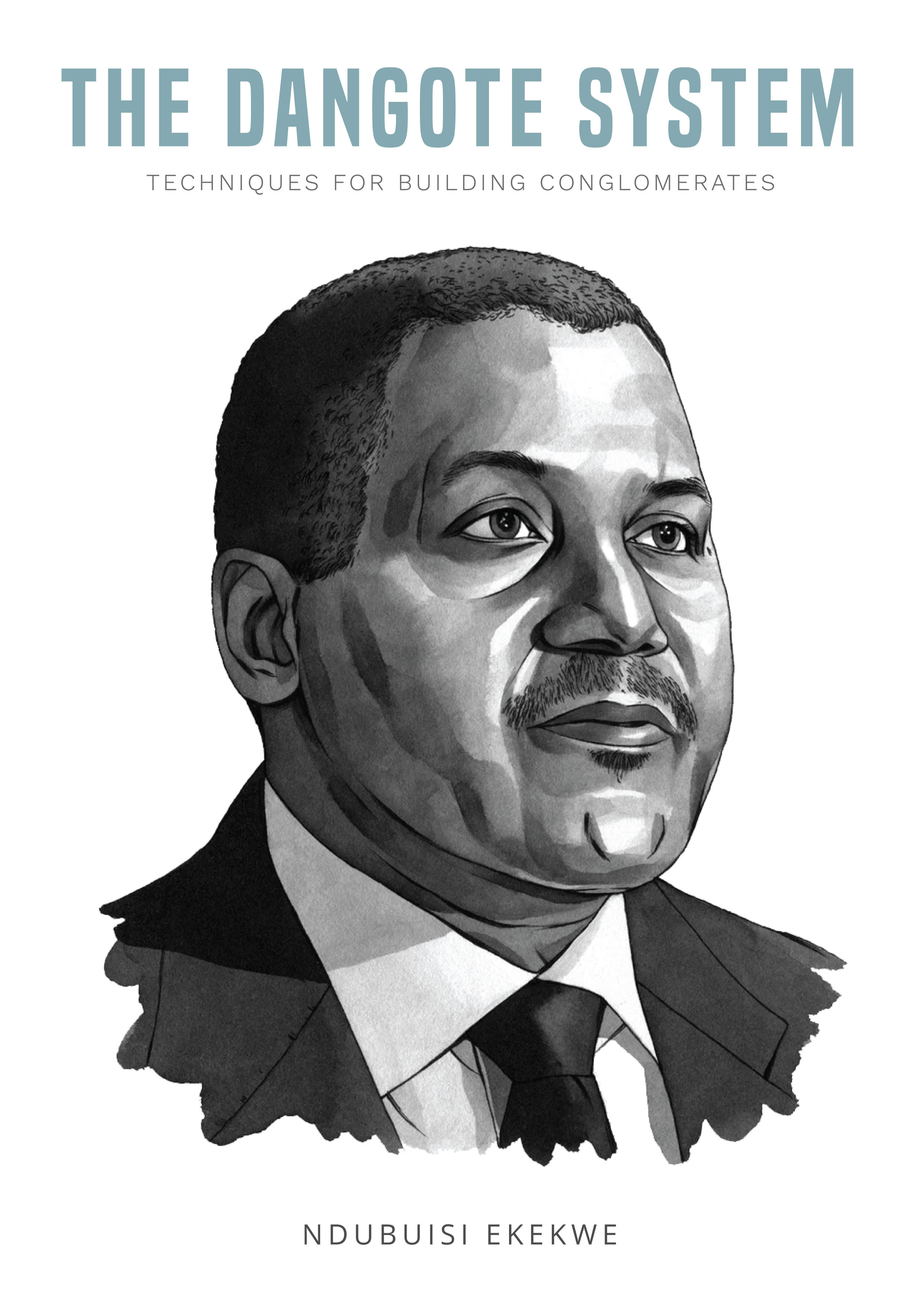
My New Book, “The Dangote System”, Is Coming Out in July

13
Free for all Mini-MBA edition 2 participants

My new book, “The Dangote System: Techniques for Building Conglomerates”, is arriving in July 2020.  This is not a biography book; I have no time for such.  The book focuses on Aliko Dangote’s business and what we can learn from his System. Yes, how a trader, who started like others, became the most important man in African business sphere, and in the process controlling one of the largest industrialized conglomerates in the world.

I am a fan of Dangote just like I am a fan of Tony Elumelu, Jim Ovia, etc. Yes, I am a fan of you – anyone that finds a way to take action instead of just talking and ranting. This book will examine the business philosophy of Dangote, a man I have met many times and know pretty well.

This book arrives July 22, 2020 July 29,2020, the day we will begin a new class of Tekedia Mini-MBA. Our participants will have access to its audio and text contents as complementary. The Dangote System is a mega case study for our second edition of Tekedia Mini-MBA (register here).