

Introduction to “Human Security” Human security is about protecting people’s freedoms. It requires defending people from significant and invasive threats, and allowing them to take charge of their own lives. Protection refers to the policies, norms, and organizations necessary to protect people, and could involve a ‘top-down method’ as typical in democratic governance. Empowerment underlines […]
Now, More Than Ever, The World Needs 5G

Due to the outbreak of the coronavirus, around 20 percent of the global population is in a lock down. Workers performing non-essential services are being advised to work from home in order to curtail the spread of the virus. Schools and Universities have been shut and educational activities are being transferred online, where possible. Social distancing has become the order of the day; as such families and friends are being advised to stay in touch virtually, over the phone etc. rather than in person. This is particularly necessary to protect the elderly, who are less immune to the virus as well as reduce the huge strain on health care facilities globally.
The lock down has led to a spike in the use of internet and communication services. In Europe, Youtube, Netflix, amazon etc. have been advised to reduce the bitrate of videos in order to meet the spike in demand for their services, during this pandemic. Communication and information technologies have inadvertently turned into utilities and telecommunication infrastructures have become critical infrastructures. Telecommunication companies (otherwise known as telcos) have been advised to step up to the plate in these trying times by supporting health care and prioritising their communication, sending information and updates on the pandemic nationally, reducing the costs of their services, suspending data cap enforcement, free calls for the elderly, waiving roaming charges etc.
Aside from financially pledges and donations and suspending mobile money transfer fees (which is very commendable), telcos within developing countries can do more, especially given the huge costs of communication services within these regions (#data must fall)
So far, the communication industry has done remarkably well in providing the much needed services, to the public, whilst in lock down. They have been able to get us communicating and working during these trying periods. Telcos have been able to achieve this feat as well as ensure the protection of their workers by performing some/most of their operations remotely whilst keeping some essential workers within their offices for limited working periods (both within developed and developing countries).
It was as if the telcos had been preparing for an eventuality, as the one we are witnessing globally today. This is obviously due to investments in the core of the networks, deploying Artificial Intelligence (AI), Machine Learning (ML) tools etc., which have greatly reduced the dependence of the networks on human presence, a vital step towards fully virtualized 5G networks. Equally, traffic that would be otherwise directed towards companies and business districts are being redirected to residential homes. The service is obviously not perfect as down times have been experienced in certain parts of the globe; in fact there is panic in some quarters that the communication networks may crash due to the surge in demand.
With the advent of 5G, the core will be fully virtualized and softwarised, agile, flexible and able to meet demand on the fly. The 5G core will be able to react and adapt to network demands, such as the one being witnessed today. The higher frequencies, recommended for use in 5G networks, would equally ensure that the world has access to a large amount of bandwidth, which would no doubt help us communicate seamlessly, work remotely, entertain ourselves and families, educate our young ones, complete business transactions seamlessly, without any hitch on communication infrastructures or panic about crash etc.
More importantly, we have seen factories shut down and the global supply chain has been greatly affected, in these trying times. With the advent of 5G, factories can be operated remotely using robots and machines, communicating via communication networks. Manufacturing operations can be performed whilst reducing dependence on humans, as long as connectivity is seamless. This would reduce the number of humans involved, which is particularly important, during this global pandemic.
I cannot overemphasize the huge gratitude the world owes health care workers, who have been at the front line of this pandemic, even at great risks to themselves and their families. Perhaps, we could reduce these risks further by transferring certain functions to robots and machines e.g. deliver food, medical supplies, and care to patients etc. This may help reduce the exposure risks to our health care workers. Of course, such machines would require connectivity services, which could be provided by 4G/5G networks.
Of course, when this is all over, the world needs to deal with the economic consequences of the global lock down. The head of the IMF recently suggested that the world has slipped into global recession. As with other sectors, the telecoms sector would be severely affected; 5G requires huge investments from operators to develop the fully virtualized core networks. The global shut down would inadvertently lead to significant delay in the development and deployment of 5G networks globally.
The world has a lot of lessons to learn, when this is all over.
Please let’s stay safe and practise social distancing to help curtail the spread of this virus.
A Possible Solution to the Coronavirus Spread
For three months now, the world has seen itself in a battle with the novel coronavirus also called COVID-19 which emanated from Wuhan, China. The rapid spread of this virus has defied the all-time worshiped medical infrastructures and personnel situated in the advanced nations of the world with the US not exempted.
All hands have been on deck to fight the spread of this virus but these efforts have proven abortive as this virus is seen to proliferate even faster than preconceived. The saddest news of this is that Africa which is known to situate the poorest healthcare facilities has become its recent victim. What a tragedy!
Despite the bad news of this virus being circulated in the media, this article comes with a ray of hope to the world especially the Nigerian state.
It should be noted that the media has largely contributed to the spread of this virus unknowingly. The media has created what is called “agony of solution” which means in trying to solve a problem, another problem is created. The bloated manner at which this disease has been hyped by the media has passed across panic to the citizenry. This fear alone is enough to make members of the public contract the virus. Before going further, one may ask, “how is that even possible? It does not make sense”. Let it be recalled that even in the medical sciences, there is what is called “hypochondria”. This means a psychological disorder characterized by excessive worry about having a serious illness. Or it can be simply explained as the fear or anxiety of having a particular illness to the point symptoms for such illness are developed. This is true and it is a major factor to be considered in the rapid spread of this virus.
Recalling the “flu” epidemic which broke out during World War I (WW1), the mayor of New York was able to contain the spread when he discovered that the people were being excessively afraid and tense. The fear and tension, of course, were contributed greatly by the media.The mayor requested that the media refrain from publishing stories about the epidemic. Subsequent to the grant of the mayor’s request, the epidemic was being successfully contained within the space of a month.
Based on the foregoing, for the Nigerian state to effectively tackle this seeming herculean task of inhibiting the spread of this virus, measures should be taken by the government to prohibit the media from publishing stories about this virus as done by the mayor of New York. This solution may sound absurd but if it worked for the last century, it would also work in this current dispensation as principles never expire
Is Nigeria Doing Enough to Avoid Another Recession?
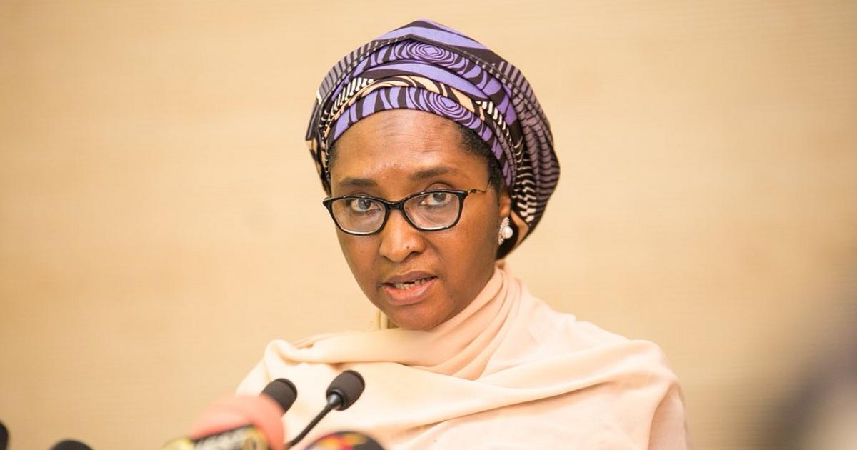
The odds seem to be camping around efforts by the federal government to stop Nigeria’s economy from plunging into recession for the second time in five years. The Minister of Finance, Budget and National Planning, Mrs. Zainab Ahmed, said that the worst will happen if coronavirus doesn’t end in six months.
During her appearance on Channels Television’s Politics Today, Mrs. Ahmed warned that the coronavirus pandemic has come with an economic storm that may hit Nigeria hard if it continues.
“We are hopeful that this pandemic will be limited in time. If it is an average of three months, we should be able to close the year with positive growth. But if it goes longer than that – six months, one year – we will go into recession,” she said.
Nigeria is not the only country to feel the negative economic impact emanating from the scourge of COVID-19 pandemic, every country in the world has a stake to save, and many are taking drastic measures to prevent the worst from happening.
On Friday, president Trump signed an unprecedented $2.2 trillion economic package into law; the bill was swiftly passed by both chambers of the congress in a show of commitment that defied partisanship. The $2.2 trillion was meant to alleviate the economic chaos that coronavirus will unleash on the American economy, and the people at large.
“This bill is not only a rescue package, it’s a commitment – a commitment that your government, and the people whom you elected to serve you, will do everything we can to limit the harm and hardship you face, both now and in the foreseeable future,” said Minority Leader Kevin McCarthy, of the Republican Party.
The collective rapid passage of the bill on Wednesday, signals a state of emergency in the economy and healthcare sector.
“Today we’ve all acknowledged our nation faces an economic and health emergency of historic proportions. Americans deserve a full-on government response to address these threats to their lives and their livelihood and they need it now,” said House Speaker Nancy Pelosi.
While Nigeria cannot be compared with the United States in terms of economic power, other small nations with relative economic capacity are taking drastic measures to limit the harsh impact of the pandemic on their respective economies.
Early last week, Ghana cut the key rate to 8-year low of 14.5% from 16%, becoming the first sub-Saharan African country to cut rates in response to COVID-19 pandemic, reducing its benchmark to 8-year low. Ghana’s economy was beginning to leap through tourism-based diversification at the end of 2019, but was totally brought to zero as travels and tours got canceled upon the spread of coronavirus.
The country is however making projections based on the anticipation of 5% to 2.5% decline in gross domestic product.
On March 25, the leadership of the national assembly invited the Minister of Finance, CBN Governor and the Nigerian National Petroleum Commission (NNPC)’s GMD to deliberate on the impact of COVID-19 on Nigeria’s economy and to proffer solutions.
Part of the result of the meeting is the federal government doling out N10 billion to the Lagos State government, coronavirus most affected state in the country, and N5 billion to the Nigerian Center for Disease Control (NCDC).
Other measures taken by the federal government to tame the harsh realities of the pandemic include the creation of a N50 billion targeted credit facility through the NIRSAL Microfinance Bank, for households and SMEs. And the interest rate cuts on all applicable CBN facilities from 9% to 5%, N20 reduction of petrol pump price and a one year moratorium on loan servicing.
While these measures appear proactive, experts believe they are far from being the succor to the inevitable bleak economic realities wildling through the stimulation of coronavirus.
Though there have been some other measures proposed by the Crisis Management Committee inaugurated by president Buhari, which are believed will bring relief if implemented alongside other measures taken so far.
The Committee proposed an Integrated Policy Framework that will redesign the already existing economic infrastructure plan for the year 2020. The new framework will review the 2020 budget with a new oil benchmark of $30 per barrel, the aim is to stimulate cost saving measures that will reduce the midterm expenditures. The proposal is streamlined to touch many areas of the economy and will require legislative consent. It is highlighted as follows.
Increase revenue by reducing NNPC’s expenditures associated with oil – this will require cutting PMS under-recovery payment from 457.5 billion to zero. Reducing other federally funded upstream projects such that aggregate NNPC deductible expenditures are cut by 53%. Revising the 2020 budget using a $30 per barrel benchmark to prepare for the worst case scenario, though oil production volume will stay at 2.18mb/per day. Acceleration of marginal field late and other licensing rounds.
Ramping up oil production on shit down wells, reducing budgeted customs revenues from N1.5 trillion to N943 billion. Cutting privatization proceeds by 50%, reducing MDAs Administrative Capex by 20%. The reduction of Administrative Capex and overheads for top 10 GOEs in the 2020 budget by 25%.
Applying similar cutting measures to all other GOEs and thereby increasing revenue generation by N67 billion, controlling the fast growing personnel cost by efficiency measures such as non-essential recruitment, restructuring Social Intervention Programme. Design and launch other policy measures to be agreed with strategic MDAs.
Provide fiscal relief for Taxpayers and key economic sectors, incentivize employers to retain and recruit staff during the economic crunch. Review non-essential tax waivers to optimize revenues, complement monetary and trade interventions to respond to the crisis.
To implement this framework, incentives are required to reduce the weight of the dwindling economy on many corporations. So the federal government is proposing granting job creation tax rebates for employers, accelerating the construction of over 70 km roads and bridges under the Road Infrastructure Tax Credit Scheme and review of sectors eligible for pioneer tax holidays.
Apart from that, negotiation of a break on debt servicing with multilateral and financial institutions is included. Import duty waiver for essential input for pharmaceutical firms, tax waiver on new health equipment, deferment of tax to increase production. There is also proposed implementation of tax holidays and import duty waivers in the agric sector, aimed at enhancing production and creating more jobs, which part of it means accelerating the ease of doing business by reducing rigid protocols through new packages that will be introduced soon.
While there is hope that these measures, if implemented, will assuage the anticipated pain, there is also doubt that it will not help the majority of poor Nigerians.
Former vice president Atiku Abubakar had recommended the distribution of N10,000 to 30 million households as food stuff supplements, reduction of pump price and total removal of stamp duty. Atiku also called on the federal government to provide 100 million mobile subscribers in the country with N1,500 airtime each, in order to prepare them for emergency situations. He believes it is one way government’s austerity measures could be felt by the people.
Mrs. Ahmed said that the Finance Ministry is considering the Atiku’s recommendation but checking to see if there will be consequences if it is implemented.
Much of the concerns about the measures that the government is proposing stem from the oil benchmark which is still wobbling around $22. The budget review will mean cutting the original benchmark of $57 to $30, in anticipation of a miracle that will up oil price soon. With no hope that coronavirus will end soon, that dream is far from reality. Experts believe that the possibility of generating revenue from other sectors to make up for the deficit is thin, therefore, the chances of Nigeria falling into another recession is wide open.
Letter To Registrants of Facyber Cybersecurity Education
Hello,
You have registered at Facyber.com to explore or take our cybersecurity programs on policy, technology, management, etc. I am writing to share some updates:
-
We just noticed that after a migration to Amazon AWS that new users did not receive activation emails. We have activated all new registrations, and you can login now here https://www.facyber.com/login/
index.php -
But if you have forgotten your password, please let me know; I will send a password you will use until we fix the SMTP problem with Amazon. The Forgotten Password feature is not working due to the email issue. Just email me – I will send you login details while we deal with this issue. The issue does not affect learning; only creating new users.
-
Meanwhile, watch a video overview of Facyber training program on our homepage with sample certificate https://www.facyber.com/ . We have also updated all contents with new cases.
- From now till April 30, 2020 we are offering a 20% discount, making the program to cost $72 (or local currency equivalent) for Certificate program or $152 for Diploma program. Register here via payment options
-
Infoprive.com, a Lagos-based cybersecurity firm which secures Flutterwave, Air Arabia, banks, and telcos are offering our graduates opportunities. Read here for more. We have a PDF brochure there also. . For those that have completed Facyber program, hit back. Infoprive Academy is like Andela for Cybersecurity; it will handle the deeper practical aspect of your cybersecurity development and work on international career placements.
-
Again, my apologies for the login issues. We totally missed that as we thought it was working. I expect to read from you and get you into our program with these discounts.
-
Finally, if you register for the 2nd edition of Tekedia Mini-MBA, you will be enrolled for free in any selected Facyber Certificate program. Tekedia Mini-MBA is an online 4-month management program, coordinated by Prof Ndubuisi Ekekwe and other global faculty. It costs $140 or N50k per person.
Please if you have any questions, let me know.
Regards,
Team Facyber