DD
MM
YYYY

PAGES

DD
MM
YYYY

spot_img

PAGES

Home Blog Page 6445

How to Deal with Anxiety in Quarantine – My Story So Far

0

Initially, I didn’t care about COVID-19. After all, there was only one confirmed case in Nigeria. “Besides, it’s like the flu and it doesn’t affect young people,” I remember telling a friend four weeks ago. But, so much has changed since then.

Right now, I’m in quarantine and it seems like the world is a horror movie.

On the first day of the quarantine, life seemed pretty much the same. I performed some of my “pre-quarantine” tasks. However, like a predator waiting patiently for its prey, the next days ambushed me. The constant consumption of information, panic in the media, and the indefinite pandemic left me in the blues. 

After writing two COVID-19 related articles, I wanted nothing but to lay on my bed and wish this could end with a magic wand. I struggled to return to my normal state. Each day was hellish as I anticipated the worst news from the media. I wanted to get back to writing, but my mind was like a blank paper, I couldn’t come up with anything.

The camel’s back broke when the sad reality dawned on me – I can’t achieve most of my set goals until the pandemic is over. This new reality flooded me with emotions that I held back for months. Thoughts accelerated in my head. Consciously, I wanted to slow down the thoughts, but my subconscious had the upper edge. My thoughts rushed faster than I could control. I breathed in gasps while my heart hammered in my chest. For seconds, I felt I was passing out. But it stopped. The panic stopped, and I slept that night feeling emotionally numb. I could not tell my parents as they are the typical conservative Nigerian parents who would rather “pray” about a problem, than “talk” about it. 

Waking up the next day, I decided it was time to deal with anxiety. After reading several guides and the personal experiences of others, the first step was to consume less information. Luckily, I discovered Refind (an app that brings you only relevant news). Also, I use my phone’s downtime feature to limit my social media consumption. Not only has this freed my time, but it has also given me the chance to focus on what matters. I use the free time to maintain my pre-quarantine routine except for the ones that require me to go outside. If there is anything my experience taught me, it’s that not only do we need social distancing in this period, we also need news/information distancing.

While it’s vital to stay updated, consuming every information only heightens panic and anxiety. 

As someone who loves being a free bird, the lockdown seemed like a “trap.” This perception did more harm than good. Fortunately, I’ve reframed my initial perspective. Rather than perceiving the lockdown as a “trap”, I see it as a “chance for me to stay at home and focus on myself.” An opportunity I lacked until now. 

Before the outbreak, I never had the chance to focus on myself. I had emotional baggage that I didn’t pay attention to. I pushed people away whenever they attempted to love me. Sometimes, I felt empty. Alas, I was too “busy” to heal. I was obsessed with checking off goals on my list. But in the face of the real enemy, Coronavirus, none of the glamorous positions, certifications, or metrics matter. The present goal is to survive. The beauty of wanting to survive is that it allows us to focus on the neglected aspects of our lives. For me, self-focus means emotional healing and building my self-awareness. This new perspective puts me at ease.

The beauty of wanting to survive is that it allows us to focus on the neglected aspects of our lives.

Sometimes, the best way to resist a problem is to embrace it. The same applies to anxiety. Rather than resisting negative thoughts, I write them down. When I’m not writing these thoughts, I create helpful resources to help people in this period. People need support. While I don’t have millions of dollars to donate, the best I can offer is positivity. By adding positivity to people’s lives, I feel better and more optimistic. 

Sometimes, the best way to resist a problem is to embrace it. The same applies to anxiety.

Right now, the typical spa and idyllic getaways self-care are impossible. But who said self-care has to be fancy or time-consuming? So far, my quarantine self-care is adequate sleep, meditation (with the breathing app), reading, dancing, and a 2-hour daily unplug from technology. I also use the excuse to get foodstuff at the grocery to spend some time in nature.

In between these activities, I maintain communication with my friends and loved ones. I’m not one to keep in touch, but this quarantine has improved my communication skills faster than I thought. If permitted, loneliness can heighten anxiety. So, keeping up with my friends is my way of combating loneliness. I’ve facetimed more people this month than the last two months combined. 

I don’t know how long this lockdown will last. But while staying safe, I hope to maintain my sanity. 

Likewise, you have a role in contributing to “flattening the curve”. While contributing your quota, ensure you don’t lose your mental health to the claws of isolation. I hope some of these shared tips help you in dealing with anxiety as the world battles the pandemic. I implore that we pay more attention to our mental health when this is over. 

Advancing Your Career with Digital Capabilities

0

During the internet boom and up till now, one thing is clear, the value of business skyrockets, when a digital technology component is added to it. Unlike traditional valuation, discounted cashflow valuation, though it sounds really old school, works where other methods fail.  Rather than starting with an analysis of the company’s past performance, valuation begins by examining the expected long-term development of the company’s markets—and then works backward. 

We have always had traditional taxis, but Uber came with a value proposition, aided by technology redesign, to equilibrate the forces of demand and supply of mobility services. And it’s of no surprise that when Uber did its IPO in 2019, it was valued at about $82.4 billion. This same logic goes for other tech companies; Kobo360, Zenvus, Airbnb, Upwork, etc.

Now, let’s bring this down to career. Based on the current realities in our country, some courses in our universities are considered to be irrelevant. While that’s quite true, I however posit that when you add digital skills such as machine learning, cloud computing, software development, data analytics, your value before any recruiter, especially with tech-driven companies, can skyrocket. It’s a popular fact today that many of the individuals playing in the tech space in Nigeria are from non-tech backgrounds. So why not you? The Founder of ThriveAgric has backgrounds in IT and biochemistry. The two founders of 54 Gene, have IT and health backgrounds. The founders of MDaaS Global have health, IT and supply management backgrounds.

Take for instance, you studied Yoruba language in school. This course is popularly classified as unfashionable. Now let’s see how technology can increase its value. Imagine you are an English-speaking native, and you visit a Yoruba community for field work. You definitely need an interpreter. Rather than always employing an interpreter, what if there’s an IoT device that you can plug to the speaker’s mouth and your ear such that the speaker speaks Yoruba, but you hear English? Yeah, that’s very possible, but with a whole lot of algorithms. And such devices will be difficult to build without someone who has a good knowledge of both Yoruba and Artificial intelligence. Google Translate, is already a step in that direction. Now can you think of how technology can reshape your career and education background? You will see that the opportunities are unbounded. 

Zenvus, as mentioned earlier, is an Agtech company that uses “proprietary electronics sensors to collect soil data like moisture, nutrients, pH… and send them to a cloud server via GSM, satellite or Wifi. Algorithms in the server analyze the data and advise farmers on what to do in their farms to maximize yield”. This device eliminates guess farming, by enabling a data-driven farming approach. You will agree with me, that this isn’t possible without an expert knowledge of soil science. So why throw away that B.Sc. in soil science, just because it’s not marketable?

As you have seen, technology is redefining how businesses are transacted today. It is reducing frictions, eliminating human interference and reconstructing all manners of barriers. Just like it increases the valuation of companies before investors, it can also increase your valuation before any recruiter. This isn’t to say technology is all sufficient. Many more skills are necessary. However, you might want to take a look at this. Everyone has a space to play. 

Tekedia Mini-MBA: 2nd Edition Subscribers Will Have Access To Next Week Session

0

Due to the time value of Tekedia Mini-MBA’s next week session and requests from subscribers of edition 2, scheduled to begin June 22, our team has decided to make the session available to all Tekedia Mini-MBA learners. So, if you have registered for the second edition [register to get in], you will receive a special access to “A Playbook for Founders and CEOs during Pandemic, Recession or Market Upheaval” This is a practical playbook drawn from insights which venture capitalists, private equity firms and other market players are using to secure, protect and preserve their business interests at the moment. Everything would be fused with our management sagacity to make this playbook an executable one by members and their companies.

Registration continues for second edition, which begins June 22. Register her today. Get in by Monday to have access to this session.

https://www.tekedia.com/mini-mba-2/

Understanding the Difference between Patriotic Criticism and Insult

3

Any criticism of a constituted authority that is bereft of patriotism is an insult to the entire system. In other words, any criticism of the president of Nigeria that is done without love for the country is an insult to the presidency, the country and every single Nigerian. Maybe, it is high time Nigerians understand why most of their “criticisms” are wrong.

Recently, a Twitter influencer, Mohammed Tawhidi, popularly known as Imam of Peace, used his Twitter page to drag Nigerian Presidency into the mud. He called President Muhammadu Buhari all sorts of degrading names and many Nigerians cheered him on, as well as attacked any person that disagreed with him. Imam of Peace really had a field day throwing insult upon insult on our president, even though Buhari didn’t come out to reply to him.

It is unfortunate that a lot of Nigerians believed that this influencer was fighting their battles for them. They said that Imam of Peace spoke for Nigerians, who couldn’t come out to stand up and declare the “incompetency” of Nigerian leaders. They looked up to Imam of Peace as their promised messiah and encouraged him to say more. No one is refuting the beliefs of these Nigerians but they need to ask themselves if Tawhidi is criticising the actions of the President or insulting Nigerians. And why he, all of a sudden, considered Nigerian president his target.

Understanding the difference between criticism and insult may go a long way in helping one to analyse the actions of Tawhidi.


  • Intention and Motivation


The difference between criticism and insult lies mainly on intents and motivations. Criticism comes into play when there is an intention to correct. It is a selfless act, which is used to analyse current actions that will have negative effects in the future. In other words, the reason behind every criticism is to correct or change what may affect the critic, the actor and other people around. It is motivated by the desire for positive change and development.

But insult is not meant to correct, but to inflict pain on the insulted. Insult mocks and intends to drag down the target and strip him off of his self-esteem. It is motivated by hatred, malice and the desire to harm and destroy. Besides, most insulters have ulterior motives, which most people fail to see until it is too late. These people never meant good for anyone; they are so selfish that they think of themselves alone. They don’t consider damages they are causing people around them.


  • Effects


The effect of criticism is improvement. It is constructive because it tells the subject what he did that may have an adverse effect, why it will have negative effect, and how that effect can be avoided or overcome. In other words, criticisms focus on actions and not on the subjects. Criticism also gives room for changes and critics are always quick to acknowledge positive changes in the person criticised.

Insults do not improve their targets; rather they make them worse off. The major problem with insults is that they target persons and not their actions. They bring up personal matters, some of which are embarrassing and will rather be kept private, and flag them off their targets’ faces. Insulters don’t tell their targets how to overcome their challenges but rather use them to taunt and threaten them, insisting that they (the insulted) are doomed already. Insulters never believe that a person will change. And even if the person changes, they will use his change to insult the person. That’s how pitiful it is.


  • Audience


Critics target intellectuals as their audience. They are not noise makers. They look out for the right kind of audience they know that may either be in the current criticised position or will soon be there. Because the intention is to correct and change, their audience cohorts are selective – those that need to learn from them.

But insulters are those that pull the crowd even though they (their audience) have nothing to offer. Among their audience bases are their sympathisers, their oppositions (enemies), the uninformed, and those who they can easily manipulate. They feed their large sympathetic audience with information that turns them against their targets. In the end, nothing good is achieved on either side.

People may debate on how democracy has granted them freedom of speech and expression; they also need to remember that the same democracy penalizes people heavily for character defamation. Self-expression does not encourage insults. If someone calls your father “a goat” before you, know it that you too are a goat because you are the son of a goat; it’s as simple as that. Like the Imam of Peace said, “A stupid president is always elected by stupid people”. And we elected our president, no amount of semantics can change that logic. So if we let him call our president dumb, we that elected him as dumboes.

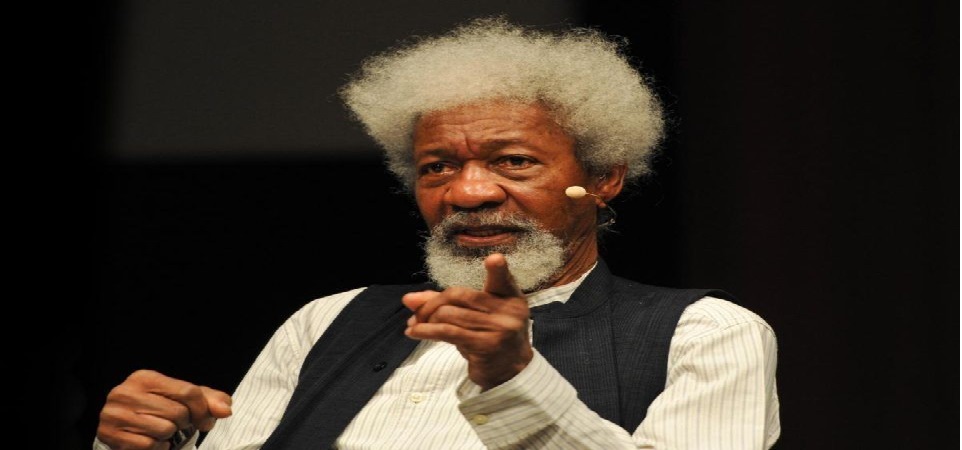
Yet, the presidency must also show a good example. Below is a statement credited to Garba Shehu, aide to President Buhari, on Nobel winner Wole Soyinka after the professor criticized a recent government policy decision. Nigeria needs civility in our national conversation.

“Perhaps Wole Soyinka may write a play on the coronavirus pandemic, after this emergency is over. In the meantime, we ask the people of Nigeria to trust the words of our doctors and scientists – and not fiction writers – at this time of national crisis.’’

Economy, Finance And Business News Headlines: 3rd April 2020

0
COVID-19 Update:


The number of people infected by Coronavirus was approaching 1 million yesterday, it has now touched that figure. As of Thursday evening, at least 51,000 people have died, and the virus has been detected in at least 171 countries.

In the U.S., the growth remains double-digit, the number of infections grew by 13.65% (14% yesterday) to 243,729 and deaths by 27.33% (23.8% yesterday) to 6,164.

Ten new cases of #COVID19 have been reported in Nigeria; 7 in Lagos and 3 in the FCT. As at 08:00 pm 2nd April there are 184 confirmed cases of #COVID19 reported in Nigeria. Twenty have been discharged with two deaths

Oil Market Update:

Mr. Trump said in a tweet that he had spoken with Crown Prince Mohammed bin Salman, who had spoken with President Vladimir V. Putin. “I expect & hope that they will be cutting back approximately 10 million barrels,” he said.

Then this…

“Saudi Arabia called on Thursday for an urgent meeting of the Organization of the Petroleum Exporting Countries and other oil-producing countries with the “aim of reaching a fair agreement to restore” balance in the oil markets. The Saudis said in a statement that they were acting to support the global economy and in “appreciation” of Mr Trump’s request.” NY Times

These developments are crucial for the stability of the oil market and Nigeria’s reserves as money from oil is the backbone of our reserves which currently stands at $35.16bn with over $8bn held as debt.

News headlines:

Buhari Insists on Project Implementation, Salaries’ Payment
President Muhammadu Buhari wednesday instructed members of the Presidential Committee on the Impact of COVID-19 on the Economy to ensure that the pandemic does not obstruct the implementation of critical infrastructure projects as well as payment of workers’ salaries. Read more
Foreign reserves shed $3.02bn in three months
The country’s foreign reserves have continued its downward trend dropping by $3.02bn from $38.53bn on January 2, 2020 to $35.51bn as of March 27, 2020, latest statistics from the Central Bank of Nigeria have revealed. Read more


Govs Urge CBN to Suspend States’ Debt Deductions
Governors of the 36 states of the federation have called on the Central Bank of Nigeria (CBN) to suspend all funds’ deductions from states and restructure their debt repayments. Read more
FG distributes cash to Anambra, Katsina, Nasarawa residents
The conditional cash transfer to the most indigent and vulnerable across the country by the Ministry of Humanitarian Affairs, Disaster Management and Social Development entered its second day on Thursday with a simultaneous rollout in Anambra, Katsina and Nasarawa states. Thursday’s rollout of the payments came on the heels of the previous day’s exercise in Kwali Area Council of the Federal Capital Territory where 5,000 registered beneficiaries were paid. Read more
Nigeria’s COVID-19 Cases Rise To 184 As NCDC Confirms 10 New Infections
The Nigeria Centre for Disease Control (NCDC) revealed in a tweet on Thursday that the total figure increased from the 174 cases reported yesterday. This comes shortly after the Lagos State Governor, Babajide Sanwo-Olu, announced that 11 more people had been discharged from the government’s facility in Yaba. Read more
Latest on the spread of the coronavirus around the world
The U.S. economy likely shed jobs in March, abruptly ending a historic 113 straight months of employment growth as stringent measures to control the coronavirus shuttered businesses and factories, confirming a recession is underway. Read more
Oil, shares slip on doubts over Saudi-Russia deal
Oil prices retreated on Friday after massive gains, while stocks in Asia edged down, as doubts grew over an oil price deal between Saudi Arabia and Russia that U.S. President Donald Trump said he had brokered. U.S. West Texas Intermediate (WTI) crude lost $1.14, or 4.5% to $24.18 a barrel in early Asian trade after having surged a record 24.7% on Thursday. Brent futures dropped $0.70, or 2.67% to $29.24. Read more
Dollar consolidates as hopes for quick recovery evaporate
The dollar edged toward a 2% weekly rise on Friday, boosted by a surge in the oil price and as investors sought safety amid the worsening economic fallout from the coronavirus pandemic. The gains consolidate the dollar’s strength after a rollercoaster end to last month, when it soared in a scramble for cash, then slumped as the U.S. Federal Reserve flooded the market with liquidity. Read more
U.S. economy to shrink at fastest rate since 1946, unemployment to top 15%: Morgan Stanley
The United States economy will shrink 5.5% in 2020, the steepest drop since 1946, with a huge 38% contraction predicted for the second quarter, Morgan Stanley said on Friday in a new batch of forecasts on the economic damage from the coronavirus outbreak. Read more
Devaluation and your wealth Continue reading …