DD
MM
YYYY

PAGES

DD
MM
YYYY

spot_img

PAGES

Home Blog Page 6446

The Great Unification: Democrats and Republicans Become Socialists!

1

Show passion in this season. Coronavirus is bringing the best in many. The American Republican party is now a “socialist party” and Democrats are worried that Republicans are pushing big governments way too fast that Democrats may now look like the old Republicans, known for limited government. 

Trump now wants Obamacare badly and is open to offer special windows for enrollment (yes, the law he desired to kill on Day 1). Humans are the same: like the African politicians with no ideology or core belief, pandemic is showing that even the American and Western European politicians are just like them. In the age of austerity and paralysis, it is just about survival with ideological purity sent to museums.

Last week, Republicans joined Democrats — and in some cases got in front of them — in calling for direct payments to Americans to help cope with the economic fallout from the pandemic. The Trump administration, after laboring for years to repeal Obamacare, said it was considering creating a special enrollment period for the program due to the coronavirus. When Donald Trump himself suggested the government could take equity stakes in private companies that receive federal aid, it was a Democratic governor, Colorado’s Jared Polis, who accused the president of being a socialist.

“It’s crazy,” said Kelly Dietrich, founder of the National Democratic Training Committee, which trains candidates across the country. “Up is down, north is south.”

[…]

Over the weekend, Republicans and Democrats neared a deal on a rescue package that could cost at least $1.6 trillion, the most expensive such package in U.S. history. Bipartisan support for such a measure has been heralded by Democrats as an endorsement of expansive government intervention — in large part because elements of the spending, including $250 billion in direct payments to Americans, are now a priority of Republicans.

The world is uniting against a common enemy – a very dangerous virus. Our ideological purity can return during peacetime, but right now, for humans, we just want to survive. President Trump does not see being called a “socialist” a bad thing – and I agree with him: “ When Donald Trump himself suggested the government could take equity stakes in private companies that receive federal aid, it was a Democratic governor, Colorado’s Jared Polis, who accused the president of being a socialist.”

Coronavirus: Nigerian health practitioners are trying but they can’t outperform the capacity of our health system – Dr. Laz Ude Eze

0

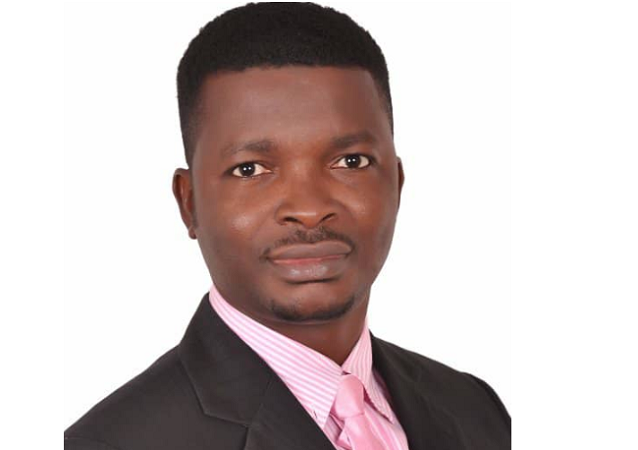
Dr. Laz Ude Laz is a public health practitioner, a sustainable development consultant and health literacy advocate based in Abuja. He had a chat with me on the Nigerian heath system, Nigeria’s fight against the spread of  Coronavirus and other issues. Here are the excerpts.

 Tell us about yourself.

I’m Dr. Laz Ude Eze, a public health specialist and sustainable development consultant. I am passionate about improving health literacy in Nigeria, that’s why I established TalkHealth9ja – a media firm that produced 247 radio shows in 5 years in Pidgin English in partnership with Wazobia FM Abuja. I’m also the Publisher of talkhealth9ja.com – Nigeria’s first Pidgin English Health Blog. I work with many persons and institutions to improve the quality and access to health care in Nigeria.

You talk about health security in Nigeria amidst the challenges we have as a nation. Can you please describe what you mean?

According to the World Health Organization,  achieving public health security involves activities required to minimize the danger and impact of acute public health events that endanger the collective health of populations living across geographical regions and international boundaries. A typical example is the current situation where the Coronavirus pandemic has endangered the global health security. Lassa Fever has also endangered our national health security.

So, how does this apply to Nigeria as a developing nation?

To achieve Health security, Nigeria must invest sufficiently and sustainably in the implementation of the National Action Plan for Health Security (2018-2022). Public Health deals a lot with prevention of diseases and timely treatment when they occur. Nigeria is vulnerable because of its weak institutions. For a developing country like Nigeria, investing in health security is cheaper and better. There are a lot of dimensions to it. We must invest sufficiently in training the required manpower, research, equipment and data management. We must also achieve sustainable financing, and put in place a strong Ward Development Committee to drive local governance for improved service delivery. Government at the LGA and State level need to take charge because that’s where most of the actions take place. Environmental sanitation, provision of potable water, health education of the populace, strengthening of primary health care facilities, community health insurance, improved nutrition are some of the important areas of intervention.

We learnt you are leading a crusade against cancer, how much of the war has Nigeria won against the killer disease?

Yes, until recently I was the Executive Director of the Pink Oak Cancer Trust – Nigeria’s 1st Cancer Treatment Fund.I will put it very clear and simple, Nigeria is not doing well in cancer control. Our country is performing below an acceptable level in the prevention and control of any other disease for that matter. Some pockets of progress has been made in recent past but there are still lots of gaps to fill.

How do you think we can address the challenges and the gaps as a nation?

The challenges and gaps are enormous. I will take them from the perspective of the building blocks of the health system.One, human resources are not sufficient especially at the health facility levels. Many of the available ones don’t have the skills required for effective disease prevention and management. To eliminate this problem, the training institutions must be equipped to impact the needed skills. States and LGAs need to hire adequate number of skilled health workers especially at primary health care level and ensure periodic trainings and supportive supervision. Two, medical supplies like vaccines, essential drugs, laboratory reagents and hospital equipment are usually in short supply or in some cases overstocked. The logistics management system is weak, consequently, stock out of essential health commodities is a common feature. Local pharmaceutical companies should be encouraged to increase local production of most of the health equipment and commodities utilised or consumed in Nigeria. Local innovations should be promoted and supported to produce local devices that can easily be maintained in ensuring health security. Three, lack of quality data and low investment in research are key challenges as many decisions are not evidence-based. Some were made with inaccurate data thereby leading to poor outcomes. More investment in health services or medical research and strengthening of the health data management system will solve this problem.

Four, lack of government funding for a number of public health interventions is counterproductive. There is no budget line for health emergency preparedness in many states. The 2020 budget for the Nigerian Centre for Disease Control, NCDC is less than a billion naira but a total of N134 billion is required to implement the National Action Plan for Health Security over a 5 year period. Sustainable financing for health with private sector participation will help to solve this.

Five, leadership and governance structures at the health facility and community levels must be established where they don’t exist and strengthened where they’re weak. The non involvement or non participation of communities in making public health decisions affecting them is a huge gap. It is the job of the Ward Development Committees to hold health workers and public officers accountable. This has been largely missing. Six, service delivery is poor because of the above challenges and gaps I’ve highlighted. When they’re fixed, there will be improved quality of service and more guaranteed health security and quality health care delivery.

What is your take about the curtailment effort of the country about Coronavirus?

It has been fair. I commend my colleagues who have been on the front line leading the control efforts.The reality is that we can’t perform beyond the capacity of our health system. We must take this opportunity to make necessary investments aimed at making the system stronger. LGAs and State Governors have more work to do in this regard.

What is your opinion about the SDG 3. Do you think Nigeria can make an appreciable progress on the goal considering the state of our health system now?

If political leaders at the LGA, States and federal level continue on the present trajectory of performance, Nigeria will not make any appreciable progress on SDG 3. I will recommend two main actions we need to take to make a good progress, one is for government at all levels to allocate a minimum of 15%to the health sector, ensure their full and timely release as well as efficient utilisation.Two, President Buhari should assent the National Health Insurance Commission Bill when it gets passed again by the National Assembly. It provides for mandatory health insurance coverage for all residents of  Nigeria.

You seem to combine so many things together. You are medical practitioner, a broadcaster and a blogger and a sustainable development consultant, what is the connection? And how do you combine all the roles?

My brother, I am driven by passion. I am passionate about the physical, mental and social wellbeing of the people. That inspires everything I do and they’re all interconnected. I use media to create awareness about health and other development issues. And for there to be a state of total wellbeing, there must be security, socioeconomic and environmental wellbeing. I combine them because I work very smart and  fast. I set a high standard for myself and always work hard to meet up my own self expectations.

Thank you for your time.

Thanks bro

Week 7 Session

11

Notes. We received no further question for a webinar. But we have video How Do You Preserve Your Business After Covid-19 Black Swan? drawing from the iconic Sequoia Capital brief. In this video, Dr. Ndubuisi Ekekwe explains what companies can do in this time of  economic paralysis, arising from coronavirus. Insights were drawn from a […]

This post is only available to members.

Registration for 2nd Edition of Tekedia Mini-MBA Begins April 1

0

Updated – the registration link is live here.


Tekedia mini-MBA is sector- and firm-agnostic open program comprising videos, flash cases, pulses, challenge assignments, labs, written materials, webinars, etc delivered exclusively online over 4 months, by a global faculty coordinated by Prof Ndubuisi Ekekwe. All contents are self-paced, recorded and archived which means participants do not have to be at any scheduled time to consume contents.

The Edition 2 begins June 22 to end Oct 22, 2020. The archive of Edition 1 is here.

Registration begins April 1, 2020.  But if you cannot wait, please visit and register here.

You should also check out our General Management Program (GMP) and Advanced Management Program (AMP) which are designed for companies of all sizes and forms. Request for a brochure by emailing tekedia@fasmicro.com.

Tekedia Academic Programs


Some Nigerian Cities Enter Panic Mode Over COVID-19

2

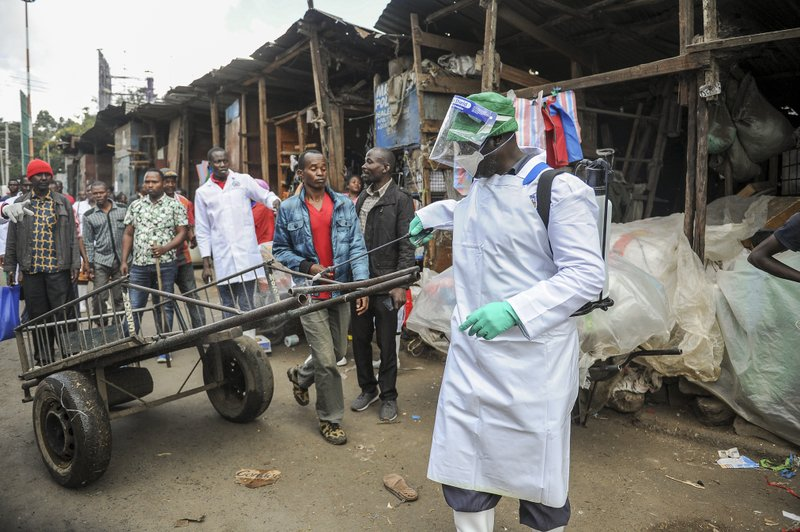
The fear of COVID-19 is doing more damages than the illness itself. Nigerians in Lagos and Abuja are already running helter-skelter buying provisions, and drugs, to stock their houses against impending lockdown. Buying food stuffs is ok; what is harmful is procuring and administering drugs, especially Chloroquine, without doctor’s prescription. This is what is reported as happening in these cities. Recently, we heard about people rushed to the hospital as a result of Chloroquine poisoning.

No one should blame these people taking precautions against this deadly disease; the people that should be blamed are those peddling fake news. Our social media is filled with horror stories on the devastating and ravaging effects of COVID-19. The way these rumours go will make you believe that once this illness comes into the country, a death-sentence has been proclaimed on all its citizens. You will hardly believe that you will see the next day if you listen to these mischievous people. They took advantage of the state of the country to instil fear into the citizens.

But as we blame these peddlers of false news, I also blame the authorities that wouldn’t come out straight to answer pending questions posted by people. All they kept telling us were “wash your hands with soap”, “use hand sanitizers”, “maintain distance”, “avoid crowd”, avoid this, avoid that. People have already heard how to prevent it, but they also want to hear how to manage it should they contract it. In fact, they wanted to know if they will survive if they contract it. But instead of World Health Organisation (WHO) and other health authorities providing these answers, they only released partial information on symptoms and preventive measures. Since answers couldn’t come from the right authorities, rumour mongers seized the opportunity to sell their market.

Obviously, WHO has noticed the havoc its “silence” and sketchy information were causing and decided to collaborate with social media platforms, such as WhatsApp and Twitter, to disseminate information on updates concerning this sickness. Though they may not be able to answer all the questions people ask, they have been able to clear the air on what is true and what is false concerning the illness. However, WHO’s efforts to quell fake news will go a long way in saving more lives.

As we commend WHO for its efforts towards fear and fake news control, we have to remember that we still have a lot of problems at hand. One of them is that it is uncertain who has contracted this ailment and who hasn’t. It is worthy to note that no case of this ailment was reported until that of the Italian man on 28th February, 2020. Two weeks after the first case came the second one, who happened to have had contact with the Italian. Days later came the 3rd case, which was independent of the first two cases; and so the number continues rising. This makes Nigerians wonder if there are people harbouring this virus that have not reported themselves. If these reported cases could come into the country with the virus without being detected, it is possible that there are those who came in with the virus that are not among the statistics.

A medical doctor recently expressed his concern concerning this issue saying that those in areas where cases have not been reported yet shouldn’t relax because it is possible that someone somewhere has the virus and is suffering from the ailment but may not go to the hospital. The danger of this is that the person will spread the virus among the locals within a short period. Rumour mongers have taken advantage of this to spread rumours and panics about cases discovered in Onitsha, Nsukka and some other towns in the federation.

This brings me to ask this question, what are the presidential task force and that of state governors on the control of COVID-19 doing to sensitize and prevent the spread of this virus into the rural areas, which is the weakest point of the country? Do those people in the village know that every cough and sneezing should not be taken for granted? How were these taskforces able to make testing centres accessible to the citizens?

Like someone suggested, the only way it would have been easy to trace the influx and movement of this illness in Nigeria is through obtaining data. But then, Nigeria doesn’t have the data on all her citizens. This means that someone could die of COVID-19 and no one will know what killed him because he didn’t go to the hospital. A lot of deaths and their causes are unrecorded in this country.

For this, the government needs to be up and doing if they truly want to prevent this ailment. The citizens cannot do it without the help of the government; lockdown and hand-washing will be abandoned when empty stomach commands. They should reach out to every nook and cranny of the country, so that this disease can be uprooted from its very foundation.

NB: WHO WhatsApp contact is +41798931892. Save the number, find it on WhatsApp and send “Hi”. It will send you a prompt on how to find information on different updates. Kindly spread this number, you never can tell who you might help.