DD
MM
YYYY

PAGES

DD
MM
YYYY

spot_img

PAGES

Home Blog Page 6454

Nigeria Records Third Coronavirus Case Amidst Calls to Shut the Borders

0

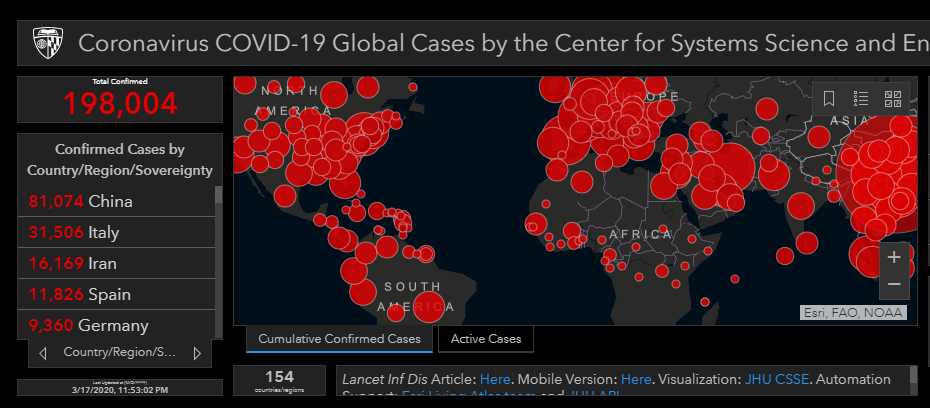
Nigeria has recorded its third case of coronavirus. Lagos State Ministry of Health announced that a UK returnee has tested positive for the virus and has been admitted in the Mainland Hospital.

The 30 years old observed self-isolation upon her return to Nigeria on March 13, and started to show symptoms in time. She was confirmed positive after being tested. It is the second index case that Nigeria is recording since the outbreak of COVID-19.

The Lagos State Government has commenced tracing of those she might have come in contact with, in effort to curtail the spread. The situation has once again questioned the Federal Government’s decision not to place travel restrictions on highly affected countries.

Last week, the Minister of Health, Dr. Osagie Enahire, said that the federal government is not considering a travel restriction for now. He said the preventive measure taken so far has been focused on surveillance at entry points and self-isolation.

“Nigeria has not yet placed any travel restrictions or ban. We strongly advise against non-essential travel to countries with high levels of transition, such as countries defined now as China, Japan, South Korea, Italy and Iran.

“We also require travellers from these countries to be in isolation for 14 days after entering Nigeria.

“This will be revised always according to the assessed level of risks. Travelers from these countries are not expected to undertake special measures, but to report immediately if there are any symptoms,” he said.

While the measures put up by the Ministry of Health appear to have kept the outbreak in check, the no-travel ban stance is posing a threat that concerned Nigerians have been pointing at.

Critics of the decision say it will aid the spread of the virus, and Nigeria doesn’t have adequate health infrastructure to contain the outbreak. For instance, the 216 persons who came in contact with the first index are still at large; efforts to trace them have been futile. So it is with the third case. It is going to be difficult to bring in those who came in contact with the index, a reason why many Nigerians believe that the solution is to restrict the inflow of people from most affected countries.

“It is time for Nigeria to review its stand on preventing this coronavirus from hitting us,” said Abubakar Sidiq Usman, Special Assistant to the Senate president on New Media. “With the way the virus is spreading, we can’t wait for it anymore. It takes measures like travel restrictions and limiting of flights into the country.”

Other African countries affected by the outbreak of coronavirus have embarked on strict measure to quell the spread, and it includes travel restrictions.

In South Africa, President Cyril Ramaphosa on Monday announced that the country is imposing a travel ban on visitors from Italy, Iran, South Korea, Spain, Germany, US, UK and China. The ban will take effect from March 18.

On the other hand, Ghana, a West African neighbor to Nigeria has also announced that it is taking restrictive measures on the movement of people into the country from countries with more than 200 cases of COVID-19.

While South Africa and Ghana had notably taken measures similar to Nigeria’s in the past week, it did not prevent the spread of the virus. South Africa went from 1 to 61 cases in 10 days while Ghana recorded a multiplication of two cases to six in one day. Djibouti has recorded only one case, but the North African country has suspended all international flights.

Nigeria is taking other precautionary measures to contain the spread, including postponement and cancellation of events that will induce large gatherings. But the measures seem not to be what is needed to put the general public to calm. It is believed that the best way to contain the scourge is to restrict people from bringing it into the country (considering the index cases), not mainly by restricting the movement of people who don’t have the virus.

In a poll conducted on Twitter by the Punch Newspaper, asking Nigerians if they would support a travel ban, 95% of responders said yes.

In a situation where the Ministry of Health has been called out for negligence, many believe that Nigeria is becoming more vulnerable with time. The third confirmed case was reportedly not given due attention until a friend of hers repeatedly used Twitter to get the Ministry of Health and other responsible agencies to get her tested. “What if she didn’t voluntarily do the self-isolation”? Many have asked.

In the face of perceived lapses by responsible health agencies, Nigerians are scared that more infected people will enter Nigeria in no time. The entire North and Southeast Nigeria have no testing centers, making tests impossible in those regions.

Actor Idris Elba tested positive even when he was not showing any symptoms, an indication that it may take some days for a coronavirus-positive person to start showing the symptoms. And that increases the chances of spreading it.

While the call for passengers on BritishAirways flight BA 75 that conveyed the index case to Nigeria on March 13, to isolate themselves has gone out, the Nigerian senate has joined voices with other Nigerians calling on the federal government to initiate travel ban.
COVID-19, Wash Your Hands? No Vaccine, No Cure, No Plan A

0
The world is obviously a democratic environment where major decisions made by governments are decided by the people. Originally a Western philosophy, most governments around the world have come to value the model in order to be accepted into the family of the global community. This is obviously good for business from Asia, through Africa, the Middle East and South America.
When a crisis hits, however, does democracy really still hold sway? I’m neither a virologist or pathologist, but we have seen them all: Ebola, Zika, SARS, MERS and now COVID-19 in different guises but wreaking the same havoc along their trail. What lessons have we learnt over the years?
Whatever happened to the narrative of “prevention is better than cure”? A good prospect if Plan A was the only option. What happens in a “what if situation” is less clear.

Wash your hands: The Global Soap Project 

OK let’s have a read of what I had to say about containment of a pandemic that occurred not too long ago ravaging especially West Africa.
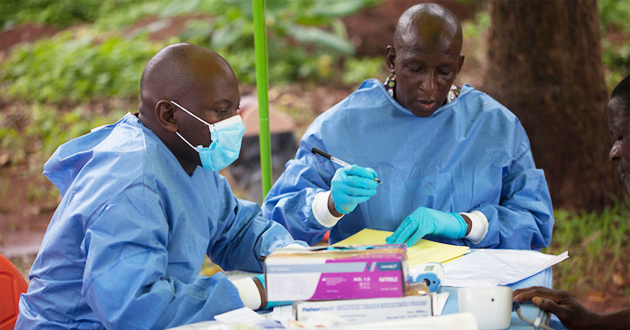
In my 2016 article The business of saving lives in Sub-Saharan Africa (SSA) – a socialimperative? Insights from “The Global Soap Project” I relied on a single case study of The Global Soap Project, a social enterprise founded by an African Immigrant resident in the US, to posit how lives could be saved in Sub-Saharan Africa in light of the Ebola pandemic that ravaged swathes of West African communities.
In that article I pointed out that:
“The Global Soap Project has much to offer in terms of “saving lives” in these communities, as the battle against the Ebola virus calls for containment measures.”
I went on to argue that our understanding of the role of social entrepreneurship in complementing community efforts in coping with pandemics such as the Ebola virus was expedient.
 

Prevention, Containment, and Cure

When is the world going to wake up to Plan A?
As for prevention, this is the obvious Plan A. It raises the question – where do these viruses come from? How can we root them out at source? We all know they are somewhere in the food chain, but perhaps the instinct of business constrains taking action.
As for Plan B (i.e. containment), while vaccines are being fast-tracked, the spread of the virus can be curtailed through personal hygiene, and the study case demonstrates how social enterprises can be leveraged at the community, national, regional and global levels.
Finally, perhaps there is a need for a Plan C? Isn’t really a shame that we have supercomputers, AI, robotics and more scientific breakthroughs than we can document, but a virus very similar to what we have been exposed to in the past, is not only locking down our homes, schools, communities, countries and the world?
COVID-19 Deja vu? Here I am just reflecting on the business of saving lives and where the world got it all wrong.

When Savings Curve Cuts Consumption Curve from Under

2

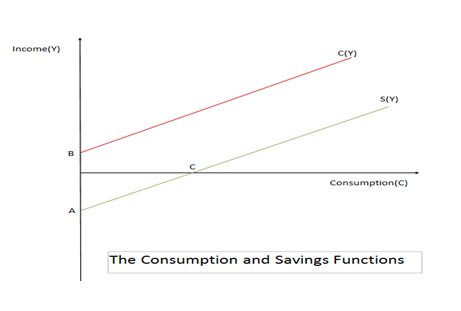
In a previous piece, I explained the relationship between the consumption and savings functions with respect to the psychological law. To reiterate, according to Lord Maynard Keynes, that out of every penny increase in the income of an individual, consumption increases along with savings, but the former increases faster than the latter. In other words, a greater proportion of the increase is consumed.  To further flesh out my point, consider an amalgamation of the savings and consumption functions in Figure 1 below.

The two functions are directly determined by the changes in disposable income, and run parallel to each other. This relationship subsists as long as the psychological law remains true. And since man is a creature of habit, the law doesn’t change. At point A, when income was zero (0), for the individual to be able to consume at point B (autonomous consumption), he had to dis-save: running down assets, borrowing, etc. At point C, the individual now earns and his income equals his consumption, in other words, he saves nothing. From this point above, his savings starts growing in response to the rising income as shown on the vertical axis. The slope of the consumption curve is steeper than the savings curve, meaning that the former rises faster than the latter, thus giving no chance for savings to catch up.

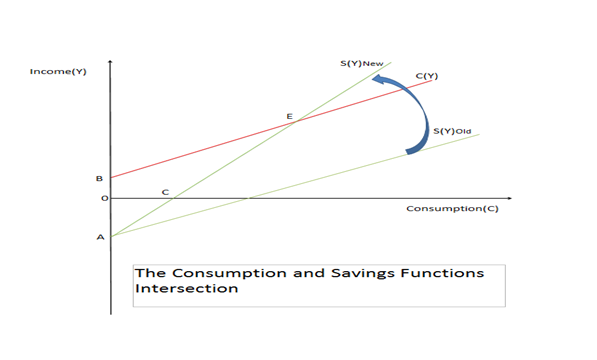
I said earlier that man is a creature of habit, another truth is, since the universe is in a constant flux, change is inevitable. What then can change the psychological law? A strong resolve to create wealth can! You my friend must have seen the psychological law at play in your finances and believe you cannot change it. Yes, you can! If you decide today to consume less and save more out of every naira increase of your income, you will notice the phenomenon in Figure 2. Your savings curve will then rise faster than the consumption curve, intercept it from beneath, and rise above it. At this point you are becoming richer and securing your future. The fear of suddenly losing your job, or any other fear related to money will diminish.

Before the Covid-19 spread round the world and was later declared a pandemic, interest rates crashed. The Treasury Bill was worst hit. And now in the face of plummeting prices globally and the likelihood of the naira losing against other currencies, having in mind that crude oil price have dropped below the national budget benchmark. Why not free yourself from Keynes psychological law of consumption by making your own rules. Decide to consume less and save more today.

The Physical Deformity Discrimination in Nigeria Immigration Service Recruitment

0

It is easy to discriminate against people with deformities in this country. People make them feel like it was their fault that they were deformed. Even religious organisations discriminate against them. Yes, it is a common knowledge that people with any form of physical deformities and disabilities may not be priests and pastors. I even heard that in those days, deformed people cannot be offered as sacrifices to the gods, not even as slaves of the gods – the gods wanted perfect able-bodied people. Maybe that is why Nigerians still treat people with deformities and disabilities with disdain.

The discrimination against the disabled has found its way into recruitment processes. Private sectors avoid these people and find reasons not to recruit them. They made sure no one knows their main reason for not offering them any positions in their organisations and in most cases, people overlook that without passing any judgement.

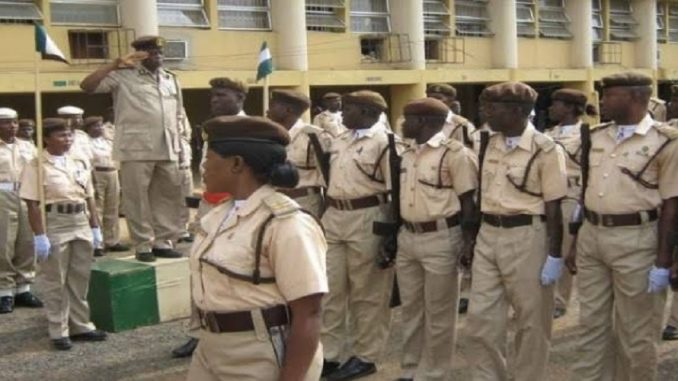
But the one that is going to affect us most is when the government starts discriminating against citizens like this. It is quite understood that private sectors are in search of those that will increase their profits, but it makes no sense when government agencies start sieving these people out during their recruitment processes. What is more, physical deformity, or rather malformation is today treated as a disqualifier in Nigeria Immigration Service (NIS) recruitment process.

I was surprised to see a post concerning the selection process of NIS in their ongoing recruitment process. To be double sure of what I read, I went to their recruitment portal and there it was, written in red ink, and titled “Applicants with any of the Following Physical Challenges Need not Apply”. The “Physical Challenges” listed are:

  1. Impediment in speech (stammer/dumb)
  2. Gross malformation of teeth
  3. Knocked knees
  4. Bow legs
  5. K-legs
  6. Flat foot
  7. Limb legs
  8. Bent arms/deformed arms/fracture
  9. Defective eyesight (squint-eye, cross-eye, one-eyed and total blindness)
  10. Amputation of any part of physical body
  11. Hearing impaired (deaf)
  12. Hunched back
  13. Obesity
  14. Medical challenges
  15. Any physical deformity not mentioned,
  16. Note that due to the rigor of the physical exercise in the recruitment process, women with pregnancy need NOT apply.

Looking at the list given above, one could not help but wonder at the rationale behind most of the items listed there. For instance, item 16 is quite understandable because pregnant women may lose their pregnancy during the recruitment and training processes, so it is ok for them to stay out of it. This item may irk feminists, who may demand exemption of pregnant women from some of those rigorous exercises, like push-ups, press-ups, sit-ups and the rest of them. But then, until such changes are made, pregnant women need to stay off the recruitment exercises.

Another thing that makes sense in that list is medical challenges, because it may not be advisable for somebody that has health issues to work in stressful environments. But NIS didn’t specify what “Medical Challenges” constitutes.

Aside from pregnant women and people with health challenges, every other item listed does not hold water. For instance, a person that stammers can be trained to speak fluently without the usual breaks. But then, what has stammering got to do with NIS? If lecturing and teaching that involves passing on knowledge verbally can accommodate this sort of person, why won’t NIS?

I understand that NIS is a paramilitary that needs agile people and all, but disqualifying people based on physical malformation is uncalled for. The demand for minimum height and weight of applicants is still an issue most people are yet to accept, but what is the essence of asking people with malformed teeth, cross eye and impaired speech not to apply?

Another thing I’m seeing in this list is that NIS failed to specify the degree of malformation in some cases. For instance, the issue of k-leg, knocked knee and bow-leg are not clear. What degree of k-leg should not apply? Is it those that couldn’t walk because of the shape of their legs, or is it anyone whose leg is not as straight as a pencil? Things like this should be made clear, because a lot of good runners I know back then in secondary school had bow legs. But here, NIS is rejecting them, for reasons best known to its officials.

I am not here to tell NIS what to do, but they have to understand that they need to review their recruitment requirements. NIS is not a fashion house that needs perfect models for its runway show. They should therefore concentrate on people that will deliver their jobs well, squint-eyed or not.

Association of Resident Doctors, Abuja Nigeria Announces “indefinite strike”

0

The Association of Resident Doctors (ARD), Abuja chapter Nigeria, has announced an “indefinite strike“, arising from the failure of the FCT administration to pay them their basic salaries for more than two months. Who can really save Nigeria from this paralysis? In Abia state, the doctors have been striking until they got tired. In short, when teachers in the state college of education went on strike, the government forgot them; that school has folded. But in the heat of this coronavirus, we hope the government pays these doctors. It is extremely offensive to owe doctors their salaries. I mean, it does not sound good. Sure, you may wish the doctors “hold” as the coronavirus passes. Yet, it is a hard call when you have not paid them for months!

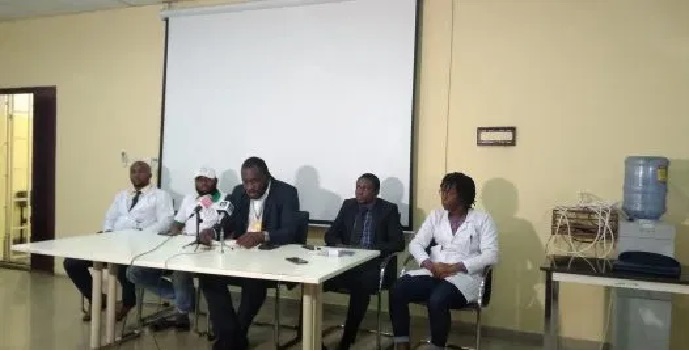
As different countries of the world pool resources to combat the coronavirus crisis, doctors in the Nigerian capital, Abuja, on Tuesday announced they were proceeding on an “indefinite strike”.

The Association of Resident Doctors (ARD), Abuja chapter, announced their decision about an hour after the third case of Covid19 was confirmed in Nigeria’s commercial capital, Lagos.

The doctors said they deliberated extensively on the health threat posed by the coronavirus scare, their work conditions, and patient care before arriving at the “difficult decision.”

In a statement signed by its president, Roland Aigbovo, the association said the mass action followed the failure of the FCT administration to pay them their basic salaries for more than two months.

Mr Aigbovo said their members have been thrown into financial distress due to the nonpayment of their salaries and despite repeated warnings and ultimatum, nothing has been done by authorities.

He said there has been salary irregularities and shortfalls since the migration to the Integrated Personnel and Payroll Information System by the FCTA.