DD
MM
YYYY

PAGES

DD
MM
YYYY

spot_img

PAGES

Home Blog Page 6454

Bill Gates Steps Down from Microsoft Board

0

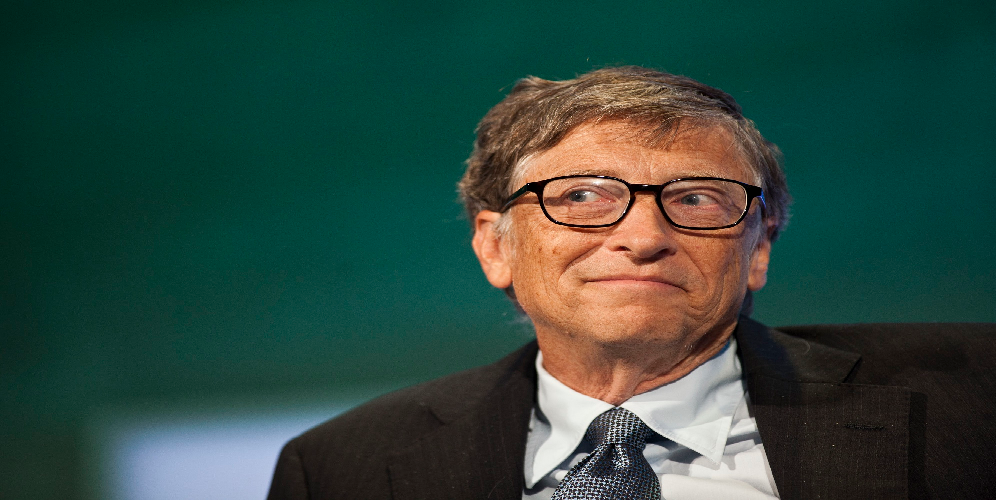
Microsoft cofounder, Bill Gates, is stepping down from the board of the company. The former CEO announced on Friday that he will be concentrating on philanthropic works of the Bill and Melinda Gates Foundation.

“I have made the decision to step down from both of the public boards on which I serve – Microsoft and Berkshire Hathaway to dedicate more time to philanthropic priorities including global health and development, education, and my increasing engagement in tackling climate change,” Gates wrote on his LinkedIn page. “The leadership at the Berkshire companies and Microsoft has never been stronger, so the time is right to take this step.”

“Serving on the Berkshire board has been one of the greatest honors of my career. Warren and I were the best of friends long before I joined and will be long after. I look forward to our continued partnership as co-trustees of the Bill & Melinda Gates Foundation and co-founders of The Giving Pledge.”

It has been a long fulfilling adventure for Gates, and Microsoft and Berkshire have borne testimony of an incredible 45 years journey that has treated the world to a taste of technology that was only imagined.

In 1975, Paul Allen and Bill Gates co-founded Microsoft. Gates had dropped out of college and moved to Albuquerque, in New Mexico in search of answers to innovative questions his inquisitive mind was full of. There he teamed up with his childhood friend Allen to set up Microsoft.

Five years later, Microsoft was signing an agreement with IBM to develop the MS DOS operating system. It was a breakthrough that spurred spontaneous growth for the company. In 1986, Microsoft went public. A year later at age 31, Bill Gates was making history as the youngest self-made billionaire.

Gates served as Microsoft CEO until 2000 when he made way for Steve Ballmer. Eight years later, he relieved himself of the day to day work in the company. In 2014, Gates resigned his position as chairman of the board dedicating much of his time to charity works.

Nevertheless, Gate was still a member of the Board of Directors until Friday when announced his decision to put that position behind his philanthropic priorities. But he said he’s never running away from Microsoft.

“With respect to Microsoft, stepping down from the board in no way means stepping away from the company. Microsoft will always be an important of my life’s work and I will continue to be engaged with Satya and the technical leadership to help shape the vision and achieve the company’s ambitious goals. I feel more optimistic than ever about the progress the company is making and how it can continue to benefit the world,” he said.

Gates will still serve as technology advisor to Satya Nadella, who personally requested that in 2014 when Gates stepped down as the chairman of the Microsoft’s Board. Satya said he has learned a lot from Gates and looks forward to continuing learning.

“It’s been a tremendous honor and privilege to have worked with and learned from Bill over the years. Bill founded our company with a belief in the democratizing force of software and a passion to solve society’s most pressing challenges,” Satya said in a statement. “The Board has benefited from Bill’s leadership and vision. And Microsoft will continue to benefit from Bill’s ongoing technical passion and advice to drive our products and services forward. I am grateful for Bill’s friendship and look forward to continuing to work alongside him to realize our mission to empower every person and every organization on the planet to achieve more.”

Gates reiterates his commitment to ensure that Microsoft and Berkshire stay strong in the tech space, while he pursues philanthropy as his next priority.

“I am looking forward to this next phase as an opportunity to maintain the friendship and partnerships that have meant the most to me, continue to contribute to two companies of which I am incredibly proud, and effectively prioritize my commitment to addressing some of the world’s toughest challenges,” he said

Bill Gates is famously the second richest person in the world after Jeff Bezos, with a fortune worth $103.6 billion according to Forbes. The 65 years old has reportedly reduced his stake in Microsoft with $4.6 billion donations.

The Bill and Melinda Gates Foundation has doled out $100 million to combat coronavirus. The foundation appears eager to do more in its bid to solve problems, especially in developing countries.

The World Needs The Spirit of Umunneoma Economics To Fight Coronavirus

1

In my village of Ovim (Abia state), we have an area dedicated to support those in need. Agbongele Ugwunta has a concentration of fruits planted by young men in the community who are tasked to plant and nurture those fruits. Any person can go to Agbongele, and harvest any fruit but never to take home. The deal is this: it is an abomination to sell any produce from that place but you are free to enjoy as much as you can.Thrice a year, male born would go and weed and also ensure the fruits are doing great. 

In this time of coronavirus, coming together is key for the world. There are great lessons from African history.  “Onye aghana nwanne ya”- do not leave your brethren behind. Like I tell people, it would be nearly impossible to have extremely rich Igbo traders because they win by funding competitors and dividing their market shares through the Igbo apprenticeship system. How can a man give his customers to his brethren just to ensure he does not close his shop and move to the village? You have no chance to win over that spirit in any market.

The soul of the Igbo Apprenticeship System could be likened to the U.S. Federal Reserve which largely works to keep the U.S. dollars stable (by reducing inflation) and maximize employment through interest rates. So, the Reserve has defined main focus areas even though it can use its systems to do other things. Consequently, the U.S. Congress uses those two main factors to ascertain the effectiveness of the Reserve policy. For the Igbo Apprenticeship System, the main focus is to prevent poverty by mass-scaling opportunities for everyone, and not building conglomerates!

So, you have a scenario where a man (trading in a city) goes to his village, picks 3 boys who might have lost their fathers, and decides to ensure they have meaningful lives despite the tragedies that befell them. Those boys serve him for some years, and one afternoon, he invites his kinsmen, friends, business partners and everyone as he “settles” them.

This settlement is simply dividing his market share among these boys. In other words, assume he holds 3% in that specific market, by the time he is done, he might be holding only 2%, releasing 1% to the boys. For him, the growth of his company is not what matters – it is that “his boys” do well. Then, he does not stop there, he begins to send the boys opportunities, making sure they are able to thrive independently. No Western textbook teaches that!

The Umunneoma* Economics will confuse any Harvard, Wharton or FUTO graduate because no textbook will teach you to go to a village, bring 5 boys to city, and within six years, give them money, assets, etc to become your competitors. But look deeper, the new global capitalist manifesto which is working to go beyond fixated focus on shareholders to considering ALL stakeholders is something that Umunneoma Economics is doing.

The Agbongele is a philosophy across ancient Igbo to ensure no one goes to bed on empty stomach, reducing begging and severe inequality in communities. The world needs to come together, on that shared spirit, as we look for solutions to Covid-19.

*Umunneoma means “good brethren” in Igbo.

Coronavirus: Atiku Abubakar On Point In His Updated Statement To Nigerian Government

0

As the Corona Virus continued it ravaging and devastating impact globally affecting every sector of human endeavours, Nigeria has continued her curtailment strategy on a very high note. As at the time of writing this piece, the Italian index case that came into the country has been said to have recovered fully and discharged from the health facility where he was hitherto held.  One Nigerian case that was suspected to have had contact with the Italian has tested negative.

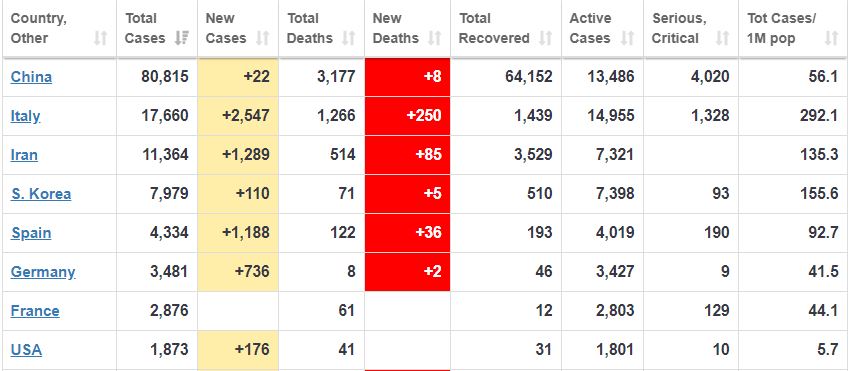
To have kept a clean state from COVID 19 at a time drastic measures were being taken across the world to curtail its spread is an indication that Nigeria has learnt lessons from the Ebola outbreak and leveraged on the resilient system built at the time. The US has imposed travel restrictions on travellers coming in to the country from European Schengen countries. The restriction take effect from today.The country has also banned sports activities and public gathering. Scotland has recorded her first novel virus death. The UK has shifted her local and mayoral elections for one year. Canadian Prime Minister’s wife has tested positive to the globally declared pandemic. The whole world is making frantic efforts to delay the spread of the deadly virus which has been responsible for 5,374 deaths across the world with China still leading the charge as the country of origin of the deadly virus. In all of these frightening statistics, Nigeria has kept her calm and has not recorded any case of death from the virus.

Image : Eight badly hit country by COVID 19 (Source: Worldometer,2020)

In an earlier analysis of Nigeria’s effort at combating the virus, stakeholders and institutions were urged to assist government institutions not only in the fight against the virus but also the attendant fake news and misinformation using. One Nigerian that has stood up to this challenge is the former Vice President of Nigeria and the presidential candidate of the People’s Democratic Party in the 2019 Presidential Election, Alh. Atiku Abubakar. A dissection of two of his press release made since the first case of the novel virus was discovered in Nigeria has shown that he was more patriotic and solution oriented than the average Nigerian opposition figure that he represented.

In the first release made available on February 28, 2020, a day after the index case was discovered, Atiku charged the APC-led government to call upon the experience of the nation’s battle with the wild Ebola Virus. He said “we must call upon our experience with the Wild Ebola Virus of which we were the first nation in the world to defeat the scourge in 2014.” He went further to advise against any attempt to blame and point fingers. He urged Nigeria to look for solutions rather than engage in a blame game. He preached firm and decisive  decisions as the country moved to curtail the scourge then. He waxed patriotic as he charged both individuals and government to work towards securing the nation from the rampaging virus. He concluded that “ the crisis is an opportunity to show that we are first and foremost Nigerians and that we have no other country but our dear fatherland, which we must work together to keep healthy and secure.”

The strategic importance of his statement was underscored by his party’s release few days after his own. On March 1, 2020, the main opposition party had called out the President Muhammadu Buhari-led administration asking him to address the nation on efforts made to contain the virus. Nigerians berated the party for its unpatriotic stance on the issue despite noticeable successful attempts displayed by the government and its health institutions. The effort has yielded the present result where no single case of the virus is recorded in the country despite the high numbers of infections and deaths recorded  globally.

So, in another release made available to press men and personally signed by him, he has again urged the Federal Government to take every reasonable step to protect Nigerians from the scourge of Coronavirus by topping flights from countries where the virus has become more aggressive. He noted  that “Despite the commendable efforts of our patriotic health officials, it will be recalled that to date, we are yet to identify and or locate multiple passengers who flew in with the index case from Italy. They could be anywhere.” He then suggested that Nigeria “must, therefore, err on the side of caution”. He argued that “we cannot afford to broaden the possibility of future infections.”

Atiku then played a patriotic card when he said “I urge that every political and any other difference be put aside. On my part, I am first a Nigerian, and I am willing and ready to work with anybody, at anytime, at whatever cost, to ensure the safety of this country, which is the only country we have to call our home, and her peoples.” The strategic importance of this statement is glaring. The handlers of the former vice president portrayed him as a selfless national leader who is ready to make personal sacrifice for the nation to confront and conquer the new world health challenge. This shows a point of departure from his party’s stance on the way the COVID 19 issues  were handled by the APC government. In times like this, the nation desires a strong support and commitment from all stakeholders.

A Special Tekedia Mini-MBA Series – Winning in Business

4

On May 4, 2020, we will release a special series titled Winning in Business. Unlike our typical session which includes written materials, the series would be delivered via videos. To make it look like a time-limited meatspace delivery, the series will be available for 24 hours only. On the date noted, a link will become active on the Digital Board for Tekedia Mini-MBA members to access. Here are the topics:

  • Session 1 – Readiness for The Frictions of Nations
  • Session 2 – The SIX to Unlock Values in Markets
  • Session 3 – The Two Critical Playbooks
  • Session 4 –  Mechanics of growth & Investment Options
  • Session 5 – Finding the Edges and Market Opportunities
  • Deep Conversations – Answers to Big Questions

https://www.tekedia.com/mini-mba/

Why Teachers Are Hardly Appreciated

0
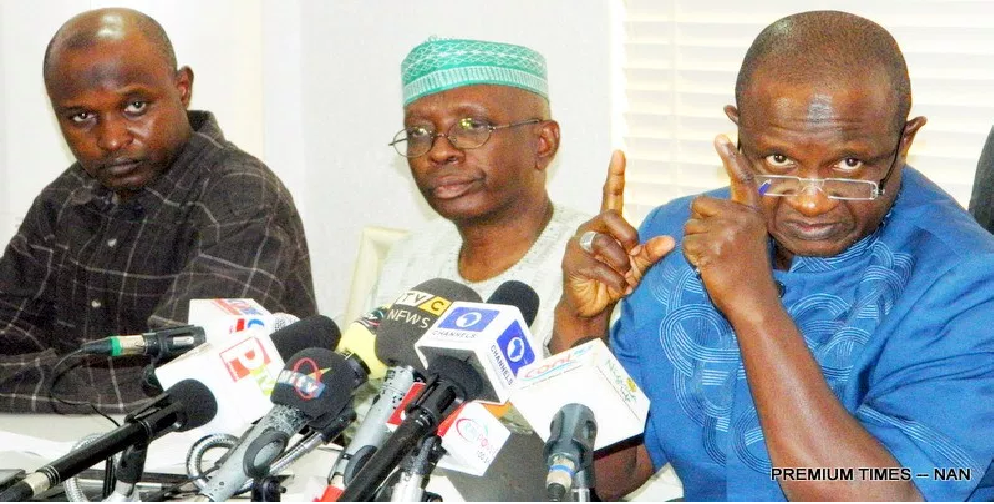
ASUU Leaders

The recent power tussles (if I may call that) between Academic Staff Union of Universities (ASUU) and the Federal Government of Nigeria (FGN) has yet shown another instance of the negative feelings people have towards their teachers. If ASUU was expecting sympathy from Nigerians, it would have been heartbroken because almost every single Nigerian believes they don’t deserve whatever it was they were striving for. Nigerians have already passed judgement, without hearing, and have declared ASUU guilty of bullying FGN.

But, if you truly look at this, you will come to agree with me that Nigerians are subjective in their judgement. Trust me, if it were the Super Eagles that said they won’t be captured by the IPPIS, Nigerians would have backed them up and fought FGN with them. In fact, Nigerians would have taken over the case and done the fighting for them. But here, they found themselves between their two “enemies”, so they stood with the less threatening one this time.

So I ask, why do people dislike their teachers? Why is it that teachers are never treated with the honour they deserved? Why do Nigerians decide that teachers should remain hungry and wait for their rewards in heaven? Why is it that when teachers start striking people will ask them to consider the welfare of their students without joining them to make their voices heard?

I know that the first thing everybody will say about lecturers is that they are mean, selfish, greedy and inconsiderate. I know some people will be fast to remind me that lecturers collect bribe, or rather sorting, and that they compel their students to have sex with them. But, do all lecturers engage in these acts? Besides, if ASUU is inconsiderate of the economic situation of the country, as people kept reminding them, how come those in the House, that are living a lavishing lifestyle, allocating excessive funds to themselves and using public funds and properties for their personal gains, are not considerate? Or is it because the demand came from ASUU?

Having been a teacher for more than a decade, and having tried several methods to keep the students relaxed, I’ve found out that no matter what you do as a teacher, you are never loved by your students, whether incumbent or past. The past ones may acknowledge what you’ve done for them, but deep down them remains that feeling that bothers around dislike and anger. That is why someone will say something like, “That man helped me to understand Pythagoras theorem, but, men, that man no be am.” If you ask him what that man did that earned him the “no be am” comment, you may be surprised to find out that no coherent answer will come forth.

What I have come to realise is that teachers push their students out of their comfort zones. That is the only crime they committed. I’ll try my best to explain how they do this.

1. Disruptive Knowledge: When teachers teach, they pass on sets of new knowledge to their students. Most times, this could be quite challenging to the students, who might need to unlearn what has been instilled in them for a long time in order to pick up what the teacher is saying. Some may create a dissonance and ignore the new knowledge. This last set of people always do the possible best to discredit their teachers. In fact they are the ones that usually see teachers from the negative light.

2. Tests and Exams: Another crime teachers commit is testing their students. A lot of people don’t like any form of tests or exams; they want an exam-free education system. But here they are, scheduled to write challenging tests given by their teachers, who denied them time to play football and hang out with friends. And in the exam hall, she will bring out questions that make them think for 10 minutes before they can understand what was expected of them. By the end of the day, the students write their exams with annoyance, which they transfer to their teachers and never to themselves.

3. Evaluation: It is common for a teacher to “give” students D, E, and F, and for the students to “get” A and B. This is the common believe in our country. When a student knows he didn’t do well in the exam, he will still claim that the teacher “gave” him F. This is just a way of insinuating that the teacher wrongly evaluated him. But should the teacher “wrongly” give him A, when he, the student, knows he didn’t merit it, he will not say the “teacher gave” him but that “I got” A. This is just to say that students blame their teachers for their (the students’) failures, but never give them credit for their success. This follows them even after leaving school. That’s why people don’t speak out for the welfare of teachers, because they never truly saw them as having done anything for them.

4. Punishment: People hardly forget those that punished them even when the pain has gone and the memory is blurred. A single punishment from a teacher is enough to earn him a life enemy. He, the teacher, may forget the punishment but the person that received it will bear it to heart for long. That the punishment was meted out to help or to reform the student isn’t the concern of the student; all he cared about at that moment is that he was humiliated and penalised for something he saw as nothing. The worst thing here is that this affected student will transfer his dislike for the teacher to others teachers, even to the ones that were his ‘friends’.

It’s high time Nigeria started according teachers respects due to them. Teachers are the lowest salary earners in this country and there is no sign that this situation will change anytime soon. Even professor in the university earns what an entry-level BSc holder in some MDAs receives (and most of them are not under IPPIS) but nobody notices that. So if ASUU is the only strong body that will make the voice of the academics heard in this country, then I’ll stand with them. FGN shouldn’t turn academics into puppets, IPPIS or not.

Let me also ask one more thing, are those in the National Houses paid under IPPIS? Or are Nigerians misfiring their ‘anger’ to the wrong party?