DD
MM
YYYY

PAGES

DD
MM
YYYY

spot_img

PAGES

Home Blog Page 6456

The Post-Coronavirus World Looks Scary

4

The post-coronavirus world looks exceedingly scary; here are ten things to note.

  1. Many global schools will rescind admissions to foreign students.
  2. Many scholarships will be cancelled as endowments, state funds, donors, etc try to recover from market collapse.
  3. Nations will become more isolated since pains are largely shared internally. 
  4. The vision of the rise of all will dim because pains cannot be outsourced. 
  5. In the coming months, massive dislocation in the job market will rattle nations and markets.
  6. Companies will collapse – and many startups will follow as funds become scarce; the rich losing $trillions will inhale first.
  7. Many African nations will experience nano-crises and strikes, with governments exceedingly overwhelmed to serve citizens.
  8. Crude oil and commodities will pay huge prices as nations tighten supply chains by ordinance of national security, well ahead of global trade.
  9. Coronavirus has killed thousands but its impacts will kill millions as governments cut social services, support to the poor, etc due to drying up of resources.
  10. Surveillance of citizens for better tracking will win over individual liberty: if grocery shops and farmers are required to track goats from farm to table, governments will push for more invasive tracking of humans to help containment of infectious disease. 


Can We Close Nigerian Stock Exchange Over Coronavirus? Can Wema Bank Just Become ALAT?

1

Can the Nigerian Stock Exchange consider a temporary closure of the stock market, until we get clarity on coronavirus. Of course that would be a nightmare as you will lock many out of their assets. Yes, a mother may like to sell 100 shares of her Dangote Cement shares to pay hospital bills. Not having the market open may create a huge challenge for that “special bank account” in the family.

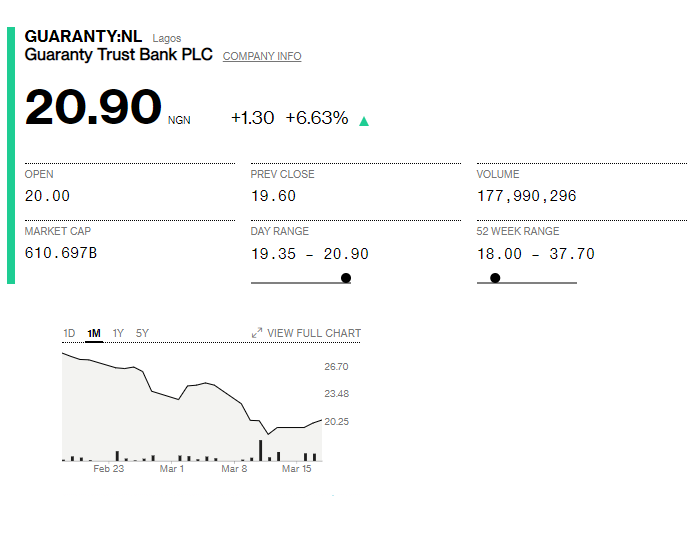
That noted, what is happening in NSE is confusing. After GTBank went to the mountaintop with N232 billion ($645 million) profit before tax in 2019, most expected the bank to see massive market appreciation. You know what has happened? GTBank is seeing the opposite, losing close to N100 billion since it reported that great number.  The paralysis is huge and you cannot understand what investors are looking for!

Wema Bank is now worth N19 billion ($52 million) while FCMB goes for N30 billion. Unity Bank stays smallest at N5.3 billion.  I have noted in the past that Wema should evolve to ALAT because as ALAT it has a better chance in the market. If ALAT is  the new Wema, it will command at least $100 million in the market, well above the current $52 million investors have put on Wema bank.

ALAT is the first step for Wema Bank. In the next few years, depending on its progress, ALAT can be divested from Wema Bank, to allow it to compete more aggressively in the African market without being tethered to a bank and the associated regulation. The regulation is important and there is nothing wrong with that: banks like Wema Bank take customer deposits, unlike most fintechs, and should be regulated. So, ALAT can become an operational arm of Wema Bank while the bank remains a dumb pipeline, typical of most traditional banks today (i.e. not much intelligence due to lack of deep insights), to support what that modern banking named ALAT does. Perhaps in 10 years, Wema Bank may even simply change its name to ALAT if this new modern banking solution evolves into its future.

Nigeria could lose half of the market share by the time this virus is through. We may need to have circuit breakers to protect some assets. Of course, executing that may be near impossible as some, like the mother above, may prioritize having access to $100 today than a promise of $400 in three months.

We hope we will not have another 2009!


The Implications of Regulating Lagos Real Estate Agency

0
Zenvus Boundary real estate

In Nigeria, Lagos is the only state that has country status. It attains this because of its primary roles in advancing Nigerian economy and West Africa region. For the past 50 years, the state has remained the gateway to other states in Nigeria and countries in Africa. These constitute significant reasons for having different policies and initiatives from the public and private sectors, aiming at deepening socioeconomic and political development in all ramifications.

In terms of population, the state has been projected to grow to 88 million and becomes the world’s largest city, according to the University of Toronto’s Global Cities Institute. Like other mega cities in the world, housing has been one of the main problems in Lagos metropolitan areas, especially on the Island and Mainland. Before the administration of Mr Babajide Sanwo-Olu, previous administrations initiated policies and provided enabling environment for the players in the real estate market towards the provision of adequate houses for the residents.

One of the actions is the promulgation of the law that established Lagos Estate Agency Regulatory Authority. Part of the responsibilities of the agency is to manage real estate transactions, prepares rules and regulations for the practice of estate agency in the state. “The authority will also maintain a register of estate agents, sanction unlicensed estate agency practitioners, collate data on property transactions, investigate complaints and petitions against licensed practitioners as well as ensure the payment of fees, taxes or charges on property transactions.”

According to Lagos State Real Estate Transaction Department of the regulatory authority, “any developer that wants to practice the business of estate agency must obtain a license from the authority and has powers to monitor completed or uncompleted structures as well as recommendations for the revocation of subsisting right of occupancy on the property that failed to comply with notices.”

After the establishment of the regulatory authority, the state government announced registration of 50,000 real estate agents and property developers with the Corporate Affairs Commission as operators in the Lagos real estate market. Despite the significant number of the operators, the recent actions of the state government on the enforcement of the established rules and regulations towards more registrations seems not to augur well with the players. Since December, 2019, the state government, through the agency and government officials, has been informing the stakeholders the significance of registering operators. The call was renewed recently and attracted mixed reactions from the stakeholders, most importantly, the estate surveyors.

In our experience, through the monitoring and analysis of real time data on the call, we understand that 1% of public interest in real estate increases the need to know the importance of regulation in the sector by 11.48%. We equally discovered that 1% interest in real estate, between March 10 and March 17, 2020, increases public consideration of regulatory agency in the sector by 8.28%.

Who Gains? Who Losses?

Like other sectors in Nigeria, real estate sector is also with a number of groups and associations, working towards positive development in the sector. These groups and associations have over the years chide governments and regulatory agencies on perceived loathsome policies or laws. While the Society for Professional Valuation supports the state government decision on the establishment of a regulatory agency, the Nigerian Institution of Estate Surveyors and Valuers (NIESV) and regulatory body – Estate Surveyors Registration Board of Nigeria (ESVARBON) kicked over the registration of its practitioners.  SPV believes it is necessary to regulate the practice of estate agency and development. To NIESV and ESVARBON, regulating and registering its practitioners means violations to the professional rights.

Meanwhile, evidence has shown that the sector needs regulation. This according to researchers would benefit every stakeholder and ensure that the sector is free of quacks, who are destroying the image of registered practitioners including significant reduction in rental values. For instance, analysis of quacks activities by Infoprations indicates that between October and December, 2018, 77 house seekers in Lagos were defrauded of N23.1 million. On Average, a house seeker paid N330, 000 to dubious estate agents. Analysis shows that house seekers in the Mainland area of the state were duped between N100, 000 and N500, 000, while those in the Island area paid above N800, 000.


Nigeria Restricts Entry from United States, United Kingdom, and 11 Other Countries

2

It reads like a movie script: Nigeria is restricting entry into the nation from travelers from 13 high-risk coronavirus countries. The United States and UK made that list. Also, Nigeria has recorded five new cases. This coronavirus is teaching everyone one thing: the world is really about survival and when this is over, the decisions of states will shape the rule of engagement. More so, every part of the world will start looking for the well-being of the weakest link. Yes, if Chad has a public health issue, Japan cannot just be indifferent to it because if bad things happen, everyone could be at risk.

The federal government on Wednesday announced the restrictions of entry into the country for travellers from 13 high-risk Covid-19 countries.

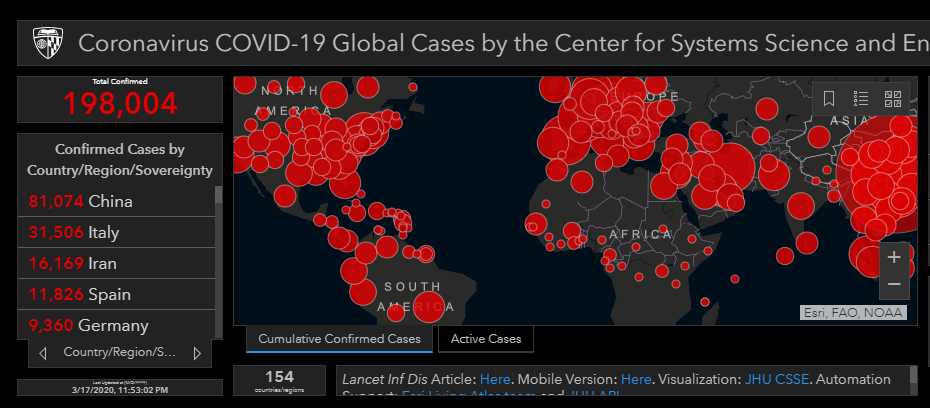
The countries are China, Italy, Iran, South Korea, Spain, Japan, France, Germany, United States of America, Norway, United Kingdom, Netherlands & Switzerland.

These have the highest number of confirmed Covid-19 cases across the world.

This is the newest update from the Presidential Taskforce on COVID19 which met on Tuesday.

Nigeria Records Third Coronavirus Case Amidst Calls to Shut the Borders

0

Nigeria has recorded its third case of coronavirus. Lagos State Ministry of Health announced that a UK returnee has tested positive for the virus and has been admitted in the Mainland Hospital.

The 30 years old observed self-isolation upon her return to Nigeria on March 13, and started to show symptoms in time. She was confirmed positive after being tested. It is the second index case that Nigeria is recording since the outbreak of COVID-19.

The Lagos State Government has commenced tracing of those she might have come in contact with, in effort to curtail the spread. The situation has once again questioned the Federal Government’s decision not to place travel restrictions on highly affected countries.

Last week, the Minister of Health, Dr. Osagie Enahire, said that the federal government is not considering a travel restriction for now. He said the preventive measure taken so far has been focused on surveillance at entry points and self-isolation.

“Nigeria has not yet placed any travel restrictions or ban. We strongly advise against non-essential travel to countries with high levels of transition, such as countries defined now as China, Japan, South Korea, Italy and Iran.

“We also require travellers from these countries to be in isolation for 14 days after entering Nigeria.

“This will be revised always according to the assessed level of risks. Travelers from these countries are not expected to undertake special measures, but to report immediately if there are any symptoms,” he said.

While the measures put up by the Ministry of Health appear to have kept the outbreak in check, the no-travel ban stance is posing a threat that concerned Nigerians have been pointing at.

Critics of the decision say it will aid the spread of the virus, and Nigeria doesn’t have adequate health infrastructure to contain the outbreak. For instance, the 216 persons who came in contact with the first index are still at large; efforts to trace them have been futile. So it is with the third case. It is going to be difficult to bring in those who came in contact with the index, a reason why many Nigerians believe that the solution is to restrict the inflow of people from most affected countries.

“It is time for Nigeria to review its stand on preventing this coronavirus from hitting us,” said Abubakar Sidiq Usman, Special Assistant to the Senate president on New Media. “With the way the virus is spreading, we can’t wait for it anymore. It takes measures like travel restrictions and limiting of flights into the country.”

Other African countries affected by the outbreak of coronavirus have embarked on strict measure to quell the spread, and it includes travel restrictions.

In South Africa, President Cyril Ramaphosa on Monday announced that the country is imposing a travel ban on visitors from Italy, Iran, South Korea, Spain, Germany, US, UK and China. The ban will take effect from March 18.

On the other hand, Ghana, a West African neighbor to Nigeria has also announced that it is taking restrictive measures on the movement of people into the country from countries with more than 200 cases of COVID-19.

While South Africa and Ghana had notably taken measures similar to Nigeria’s in the past week, it did not prevent the spread of the virus. South Africa went from 1 to 61 cases in 10 days while Ghana recorded a multiplication of two cases to six in one day. Djibouti has recorded only one case, but the North African country has suspended all international flights.

Nigeria is taking other precautionary measures to contain the spread, including postponement and cancellation of events that will induce large gatherings. But the measures seem not to be what is needed to put the general public to calm. It is believed that the best way to contain the scourge is to restrict people from bringing it into the country (considering the index cases), not mainly by restricting the movement of people who don’t have the virus.

In a poll conducted on Twitter by the Punch Newspaper, asking Nigerians if they would support a travel ban, 95% of responders said yes.

In a situation where the Ministry of Health has been called out for negligence, many believe that Nigeria is becoming more vulnerable with time. The third confirmed case was reportedly not given due attention until a friend of hers repeatedly used Twitter to get the Ministry of Health and other responsible agencies to get her tested. “What if she didn’t voluntarily do the self-isolation”? Many have asked.

In the face of perceived lapses by responsible health agencies, Nigerians are scared that more infected people will enter Nigeria in no time. The entire North and Southeast Nigeria have no testing centers, making tests impossible in those regions.

Actor Idris Elba tested positive even when he was not showing any symptoms, an indication that it may take some days for a coronavirus-positive person to start showing the symptoms. And that increases the chances of spreading it.

While the call for passengers on BritishAirways flight BA 75 that conveyed the index case to Nigeria on March 13, to isolate themselves has gone out, the Nigerian senate has joined voices with other Nigerians calling on the federal government to initiate travel ban.