DD
MM
YYYY

PAGES

DD
MM
YYYY

spot_img

PAGES

Home Blog Page 6456

Sanusi Lamido Sanusi: Questions, Lessons from the Travails of the Philosopher-King

0

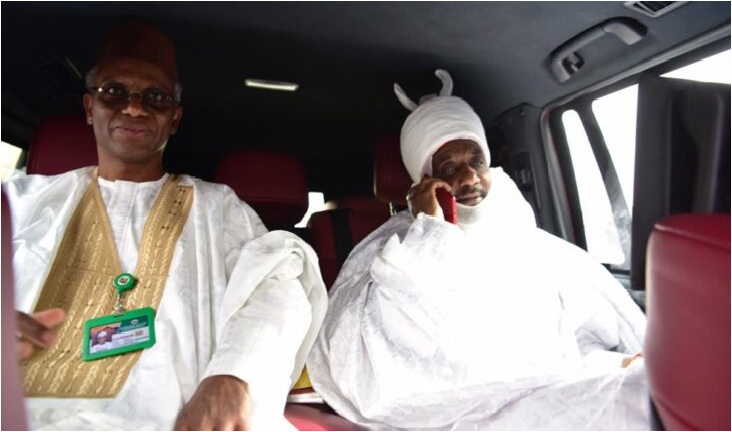
Monday 9 March, 2020 was a day to be remembered by all the actors involved in that singular act that dominated discussion for almost the rest of the week. It was the deposition of the former Emir of Kano, Mallam Sanusi Lamido Sanusi. The major points of arguments ranged from the appropriateness of the removal to the rightness or wrongness of such sudden sack. Mapping the actors and determining the protagonist or antagonist of the very popular film was not a difficult exercise. It was easy to know who belonged to which side.

It is Wednesday, 18 March, 2020 and exactly ten days after the former Central Bank governor was  removed from office. The noise that accompanied the removal seems to be abating. Time has come for sober reflection for those who might want to learn from the odyssey of a man whose life ambition, after his meritorious banking career, was to lead his people at the grassroots, came to power, spoke truth to power and eventually lost to power. The question is to whose loss was Sanusi’s six year-reign in Kano? The man? His traducers? Kano’s? Or the generality of those whose joy was to see quality leadership at all strata of the society?

A Flashback to Six Years ago

To have a proper understanding of the issues at stake, it is important to play back and reflected on what happened before he got to the throne which eventually defined how he left the throne of one of the most powerful emirates in the North. In 2014, SLS emerged the 14th Emir of Kano on the wings of his friendship with the then governor, Musa Rabiu Kwankwaso and even the incumbent who was then the deputy governor. The forces, who were then domiciled in the All Progressive Congress, ensured Sanusi rose beyond the Goodluck Jonathan-led federal government’s machinations to become the emir. He had earlier fallen out with the then president by his disclosure of missing N20billion petroleum money from the government coffers and other scathing remarks concerning governance under the PDP government as CBN governor. So, there is no way anyone could divorce his earlier emergence from the intrigues of politics and political manouvering. Rabiu Kwankwaso and Umar Ganduje fell out with each other and the house that brought Sanusi to the throne became divided.  That was the beginning of the former CBN governor’s travails.

The Philosopher-King’s Sins

Apart from the division in the camp that brought him to power, Mallam Sanusi was accused of working against the interest of the Kano State Government under the leadership of Governor Ganduje. He was said to be loyal to Rabiu Kwankwaso, his friend and former governor, who has also crossed to the PDP. He was also said to have become too partisan for a monarch in a conservative emirate such as Kano. Ganduje and his supporters were of the opinion that the defeat that almost greeted his second bid to rule Kano State again had the fingers of the former Emir. That the APC lost in the emirate palace during the governorship election was enough evidence to nail Sanusi, they reasoned. Not only was he accused of working for the opposition party in the state alone, he was also said to be against the APC-led Federal G0vernment. A good example of this was the common “integrity versus competence” sermon he was said to have delivered shortly before the 2019 presidential election. Sanusi was widely quoted  to have said :

“It is not always easy to have a leader who has both integrity and capacity to govern — two important qualities of a leader. If a leader does not have both integrity and capacity to govern, choose the one that has the capacity to govern because his capacity to govern will benefit the people while his lack of integrity will be his own harm. If you choose a man who has integrity without capacity to govern, his lack of capacity to govern will harm the people while his integrity will only benefit himself.”

The sermon generated a lot of controversy and divergent interpretations. The commonest meaning ascribed to this statement especially by partisans of the APC extraction and their supporters was that the opposition candidate, Atiku Abubakar should be voted for despite the narrative of his dented integrity at the time. The statement was made at a time when the Buhari-was-not-competent narrative was viral. Mallam Sanusi was reportedly accused of supporting the forces that sought to unseat the incumbent occupiers both at the state and federal level.

Apart from partisanship, Sanusi’s outspokenness also drew him no mean number of enemies. He was reputed to have been more outspoken than the average emir. The emirate throne was designed for people who would see more and speak less. However, the philosopher king would have none of that. He criticized not only government policies but also detrimental societal practices. He spoke against irresponsible polygamy practised by the poor. He condemned the Almajiri culture and the relegation of the girl-child prevalent in the north. He attacked poor government decisions on forex, loans and other governance issues. He was not liked by the powers that be. He is cerebral. He is fearless. He is reputed to speak truth to power. All of these were his undoing. And he lost the throne.

Sanusi’s deposition: Whose loss?

Beyond the analysis of the events culminating in the eventual dethronement of Mallam Sanusi, it is critical to examine the aftermath of such a colossal loss of such a cerebral mind from the throne of the Kano emirate. Here, we had a man that was well educated, well travelled, well connected and wealthy too. So, it is difficult to imagine the influence he could have had against some of the identified problems known with the north. So, who loses as a result of the dethronement?

A lot of arguments have been generated on this question. People have answered this question based on their biases. To supporters of the former emir, those who hounded him out office are the losers. To them, the inability of the Kano power brokers to tolerate Sanusi has denied them the chance to work with an emir that will see and tell them the truth. But, a counter question to this is – could Sanusi have been able to tolerate himself if he were Ganduje?

For others, scale of loss tilts towards the dethroned Emir. His inability to temper his outspokenness has denied him the opportunity to prove critics wrong that his lineage is a poor manager of power. As it was for his grandfather, so it is for him. Both were dethroned from the Emirate palace. This could count against the ambition of anyone from their lineage in future royal contests. These set of people believe that SLS should have transited from an activist to an advocate. They  are of the opinion that he could have used his connections, exposure, network and position to rally the north against many of the problems confronting the region. As an example, the campaign against the Almajiri system could have received a great boost with the former emir leading the charge from Kano and extending collaborative hands to other traditional rulers in the region.

They rued the lost opportunity of what a king who combines the powers of the palace and that of the Minbar could do if he was able to retain the seat. At the palace, he has royal powers. In the mosque, he has the ears of the congregation. He could have deployed this combination to make the fate of Kano and perhaps the North better. They argue that his lack of tact in relating with a governor whose tenure is not beyond three years from now led to the deposition.

From the consideration of the issues involved, the loss is that of the society. It is an unfortunate situation of the intellectual, the cerebral and the courageous being unable to read the meter of the powers and sustain their hold on power. The SLS  case is a lesson for all power seekers to understand the dynamics of power and manage such for the betterment of the society.
Nigerian Government Bows to Pressure, Places Travel Ban on 13 Countries, But That Not Enough

0

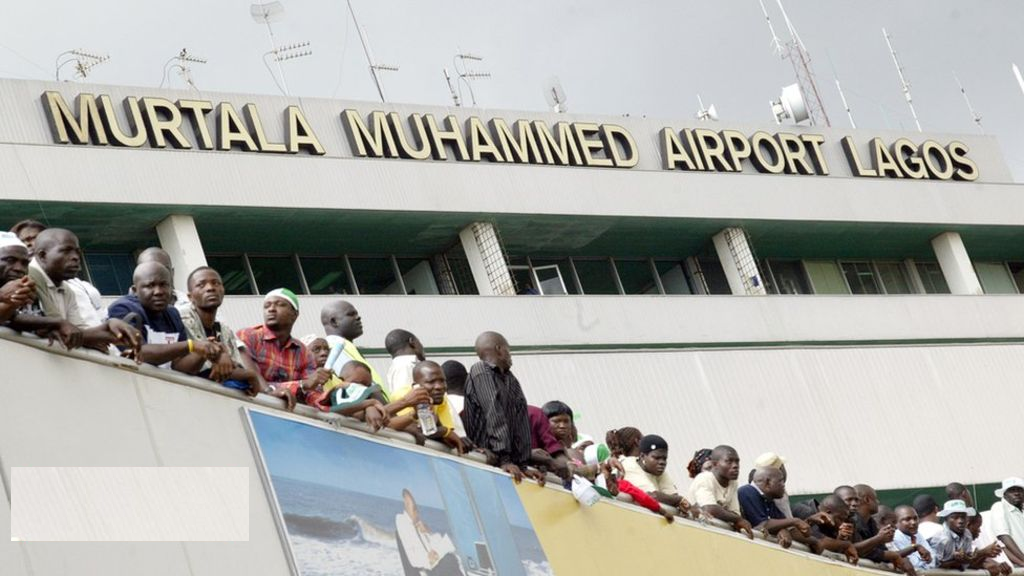
Nigerian Government finally succumbed to pressure and placed travel restrictions on 13 high-risk coronavirus countries. The Federal Government announced the decision on Wednesday, explaining that affected countries are those with more than a thousand cases of the virus.

It said the ban would take effect on Friday, March 20, and would last for four weeks, after which there will be consideration for a review.

As part of the travel ban, members of the affected countries will not be issued Nigerian visas until further notice.

The restricted countries are China, Italy, Iran, U.S. and the UK among others made the list. Any other country that falls into the category within the allotted will also be placed on the list.

“Nigerian Government is restricting entry into the country for travellers from the following countries; China, Italy, Iran, South Korea, Spain, Japan, France, Germany, Norway, the United States, the United Kingdom, Netherlands and Switzerland. These are all countries with over 1,000 cases domestically.

“Nigerian Government is temporarily suspending all visas issued to nationals from these countries. Nigerians arriving from these countries will be subjected to supervised isolation for 14 days. Nigeria is also advising all Nigerians to avoid travel to these countries. These restrictions will come into effect from Friday 20 March 2020 for four weeks subject to review,” a statement from the Presidential Taskforce on Coronavirus said.

The calls for the travel ban have been ringing for some time now, with Nigerians trending the hashtag, #NigeriaNeedsATravelBan, the unrelenting voices appear to have prevailed on the government to take decisive action.

In reaction to development, former vice president Atiku Abubakar who has been vocal about the need to shut our borders on countries with high-risk of the outbreak praised the Government for listening to the calls.

“I commend FG for heeding to our calls by putting in place a policy of restriction on travelers from countries with high coronavirus cases. I call on Nigerians to adhere strictly to the WHO and NCDC protocols on personal hygiene and social distancing,” he said.

While many are commending the Federal Government for placing the travel ban, others are questioning why it is limited to countries with 1,000 cases and above, saying that it takes only one person to infect a thousand others.

Moreover, they are pointing to some other African countries with no coronavirus cases yet, like Niger Republic and Chad, yet they have stopped all international travels as a precautionary measure. Many are saying that the travel ban should be extended to every country with a known COVID-19 case.

The fear behind the yearning for the government to restrict international flights into Nigeria stems largely from the perceived decay in the country’s health sector, and economic hardship that will make it impossible for people to observe social distancing.

“People living in developed and richer countries can afford to stay at home because of coronavirus, but poor people from poor countries whose survival is a daily struggle, must go outdoors to make a living and fend for their families. Staying at home is as lethal as the virus,” said Senator Shehu Sani.

Developed countries with better health facilities are finding it hard to cope. It is believed that Nigeria will become helplessly overwhelmed if the cases escalate. Already the Federal Ministry of Health has announced nine new cases; five of them had a travel history to the United States and the United Kingdom. Three of the new cases came from the US while two came from the UK.

Four out of them are Nigerians including a new born baby while one is a foreign national who came into the country using the land border. Four of the cases are Lagos while one is in Ekiti State.

Katsina State Ministry of Health announced that the state has recorded its first suspected case. Kabir Mustapha, the permanent Secretary of the Ministry said the person recently returned from Malaysia but has been placed in isolation while effort will be made to trace those he has come in contact with as soon as his test result is out. That put the number of confirmed cases in Nigeria to nine.

The gradual proliferation of the outbreak is greatly impacting fear, instigating calls for stricter measures from the government.

A report from Kano said some Lebanese nationals who went to pilgrim in the city of Qum in Iran, just arrived in the State. They were not quarantined nor have they been contacted by health officials for screening.

The travel restriction is billed to take effect on Friday, and people are concerned that the time will give room for more people from high-risk places to come into Nigeria.

On The Nigerian Doctors’ Strike

0

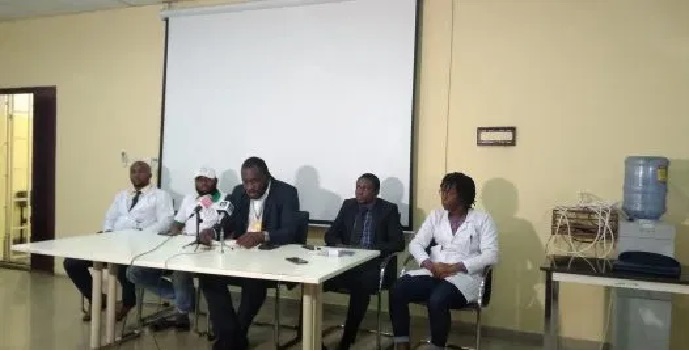
In an unprecedented move, doctors in Abuja, the Federal Capital Territory (FCT) announced on Tuesday that they are going on indefinite strike. The Association of Resident doctors (ARD) Abuja chapter said the decision is based on the inability of the FCT administration to pay their basic salaries for more than two months now.

ARD’s president, Roland Aigbovo, said in a statement that the striking doctors have been thrown into financial crisis by the FCT’s refusal to pay their salaries. He added that before embarking on strike, the doctors had repeatedly warned and issued ultimatums to the FCT authorities who remained adamant, leaving them with no choice than to take a strike action.

Aigbovo explained that the situation has been aggravated by irregularities stemming from the newly introduced Integrated Personnel and Payroll Information System (IPPIS). He added that the authorities have 48 hours to act on their demand or watch the situation escalate, given that other health workers affected by the issue will join the striking action.

Nigeria is not new to events of medical doctors going on strike; it’s a brutal norm that the Nigerian people have come to reckon with without a choice, like in so many other sectors in the country.

In January, resident doctors working at the University of Medical Sciences Teaching Hospital (UNIMEDTH) went on strike for being owed months of salaries by the state government. The Ondo State Government said the doctors were owed because their salaries were not captured in the 2019 Appropriation Bill and it will take the 2020 appropriation bill to settle it. The salaries ranged from two to six months.

At this same period, ARD at the Federal Medical Center, Jabi, Abuja embarked on a three-day warning strike over non-payment of shortfalls in their salaries. The non-payment shortfalls dated back to 2014, when the Nigeria Medical Association embarked on nation-wide strike.

These are few cases in many times Nigerian doctors have had to use strike action to force the government to pay their salaries. Almost every state in Nigeria has had to sit on the negotiating table with doctors now and then to avert or end strikes, that’s when it is not national.

However, the strike action this time came surprising because it happens at a time of global health crisis that Nigeria has been caught up in. Though ARD said they considered the pros and cons of the COVID-19 situation before they made up their mind to strike.

Although Abuja has not recorded any case of coronavirus, the strike action has created a vacuum that will jeopardize efforts to contain the outbreak. Moreover, Nigeria has a health personnel deficit that has put its medical services in a very poor condition. The World Health Organization recommends one doctor to 600 patients, but the ratio in Nigeria is one doctor to 6,000 patients. The gap is so wide that in normal circumstance; due medical attention is scarce muchless a time of health crisis that will likely multiply medical cases in overwhelming numbers.

Life being at stake has always been the consideration of government sympathizers in any case. And doctors are expected to work without pay because they are saving lives.

World over, Nigeria ranked among the countries with most poorly paid medical practitioners, a major reason why the doctors leave the country in droves. Yearly, over 2,000 doctors leave the shores of Nigeria in search of a better pay and better work conditions.

In the United States, 77% of black doctors are of Nigerian origin, most of them migrated due to unfavorable work conditions in Nigeria. In the United Kingdom, over 5,000 Nigerians made up the medical workforce, making them the fourth highest in the country. The Africa Check reported that over 12 Nigerian doctors join the UK’s medical field weekly.

While there is genuine concern about the medical welfare of people whenever Nigerian doctors go on strike, the situation has also been described as an avoidable embarrassment that stems from the government’s lackadaisical attitude toward Nigeria’s health sector, largely because those in positions of authority travel abroad for their medical needs.

In the 2020 national budget, only N44.49 billion was appropriated for basic healthcare. Considering the state of Nigeria’s health sector, the fund will make insignificant impact, if at all it will be fully released. It is therefore believed that Nigerian governments have mastered the art of making the country’s health practitioners, scapegoats of their poor decisions. And the Nigerian medical personnel reserve the right to fight for their rights at every given time.

The Post-Coronavirus World Looks Scary

4

The post-coronavirus world looks exceedingly scary; here are ten things to note.

  1. Many global schools will rescind admissions to foreign students.
  2. Many scholarships will be cancelled as endowments, state funds, donors, etc try to recover from market collapse.
  3. Nations will become more isolated since pains are largely shared internally. 
  4. The vision of the rise of all will dim because pains cannot be outsourced. 
  5. In the coming months, massive dislocation in the job market will rattle nations and markets.
  6. Companies will collapse – and many startups will follow as funds become scarce; the rich losing $trillions will inhale first.
  7. Many African nations will experience nano-crises and strikes, with governments exceedingly overwhelmed to serve citizens.
  8. Crude oil and commodities will pay huge prices as nations tighten supply chains by ordinance of national security, well ahead of global trade.
  9. Coronavirus has killed thousands but its impacts will kill millions as governments cut social services, support to the poor, etc due to drying up of resources.
  10. Surveillance of citizens for better tracking will win over individual liberty: if grocery shops and farmers are required to track goats from farm to table, governments will push for more invasive tracking of humans to help containment of infectious disease. 


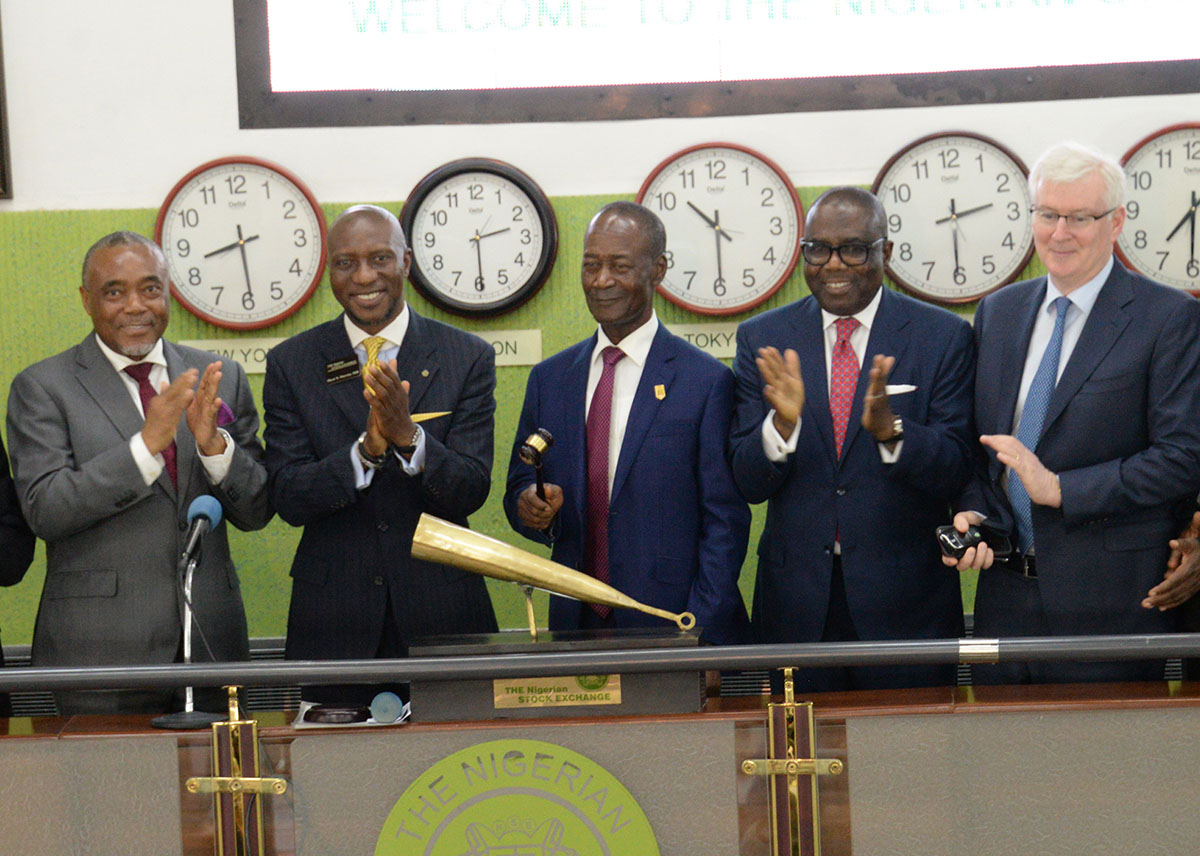
Can We Close Nigerian Stock Exchange Over Coronavirus? Can Wema Bank Just Become ALAT?

1

Can the Nigerian Stock Exchange consider a temporary closure of the stock market, until we get clarity on coronavirus. Of course that would be a nightmare as you will lock many out of their assets. Yes, a mother may like to sell 100 shares of her Dangote Cement shares to pay hospital bills. Not having the market open may create a huge challenge for that “special bank account” in the family.

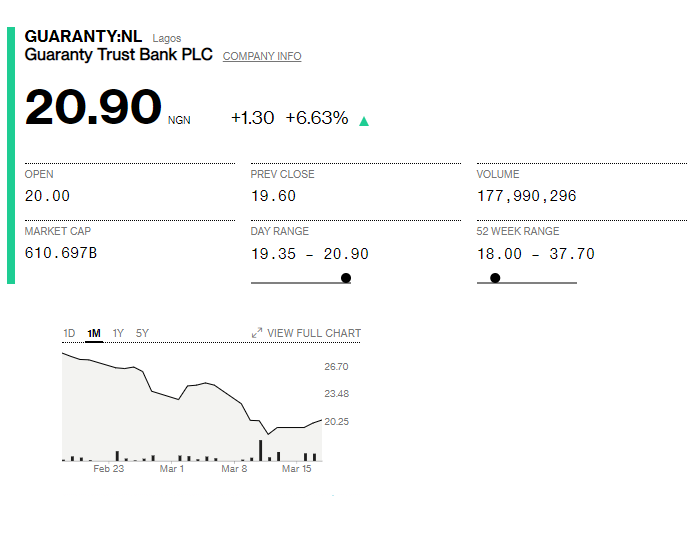
That noted, what is happening in NSE is confusing. After GTBank went to the mountaintop with N232 billion ($645 million) profit before tax in 2019, most expected the bank to see massive market appreciation. You know what has happened? GTBank is seeing the opposite, losing close to N100 billion since it reported that great number.  The paralysis is huge and you cannot understand what investors are looking for!

Wema Bank is now worth N19 billion ($52 million) while FCMB goes for N30 billion. Unity Bank stays smallest at N5.3 billion.  I have noted in the past that Wema should evolve to ALAT because as ALAT it has a better chance in the market. If ALAT is  the new Wema, it will command at least $100 million in the market, well above the current $52 million investors have put on Wema bank.

ALAT is the first step for Wema Bank. In the next few years, depending on its progress, ALAT can be divested from Wema Bank, to allow it to compete more aggressively in the African market without being tethered to a bank and the associated regulation. The regulation is important and there is nothing wrong with that: banks like Wema Bank take customer deposits, unlike most fintechs, and should be regulated. So, ALAT can become an operational arm of Wema Bank while the bank remains a dumb pipeline, typical of most traditional banks today (i.e. not much intelligence due to lack of deep insights), to support what that modern banking named ALAT does. Perhaps in 10 years, Wema Bank may even simply change its name to ALAT if this new modern banking solution evolves into its future.

Nigeria could lose half of the market share by the time this virus is through. We may need to have circuit breakers to protect some assets. Of course, executing that may be near impossible as some, like the mother above, may prioritize having access to $100 today than a promise of $400 in three months.

We hope we will not have another 2009!