DD
MM
YYYY

PAGES

DD
MM
YYYY

spot_img

PAGES

Home Blog Page 6456

Jet Motor Nigeria, “Tesla of Africa”, Raises $9 Million for EV Manufacturing

0

Jet Motor Company has announced raising $9 million from Africa Development Capital (ADC) based in Canada, Greatman Legend and a host of investment companies from Asia.

Jet is a vehicle assembly and distribution company of Nigerian origin with the aim of expanding its products and services beyond what is common in Africa. The company is pushing to establish an all-electric vehicle manufacturing plant in Nigeria as a way of demonstrating its belief in the future of zero-emission. As part of its vision to lead Africa into the future of mobility by producing world class vehicles for African roads, it is therefore aiming to pioneer Electric Vehicles (EVs) in the African continent.

The journey began in 2017, when the company quietly started putting innovative works into play. Three years later, success is breaking the Jet’s silence. Nigerians are admiringly witnessing its products on the roads, as they come in customizable designs.

However, the company is seeking to introduce electric vehicles to Nigerian roads through the launch of Jet’s EV all-electric minibus project, a project the company’s Director of Sales Rupani Sanjay, pointed as reason for the partnership with ADC and others. He said the fund was secured in early 2019, as the company prepares to embark on intensive research for the all-electric vehicle innovation.

“Our ultimate vision is to lead Africa into a new era of mobility. That includes preparing it for the inevitable future, which can only be built on the efficiency of zero-emission electric cars,” he said.

As the world continues with the quest for cleaner energy, electric vehicles have been seen as an alternative to combustible engines. Many countries have set targets to totally eliminate the use of petrol powered vehicles, but Nigeria appears to be dragging foot.

A member of the 8th Senate, Senator Ben Murray Bruce once proposed the Electric Car Bill, but it was rejected by the National Assembly on the excuse that Nigeria is an oil producing country, therefore should not be in support of any move that will affect the oil industry.

Moreover, the infrastructure needed to forestall electric car manufacturing in Nigeria is lacking. Though the automotive policy of Nigeria has been reviewed, it is yet to be assented. by President Buhari. And lack of constant power supply poses the biggest challenge to electric vehicles enterprise in Nigeria.

But Jet Motor Company said they are taking all the lapses into consideration and are working out innovative ideas that help the company to scale the hurdles.

“We have already signed a contract with leading logistics company, GIG Logistics (GIGL) to supply over 50 electric Jet EV buses over the next 2 years. We will commence testing in Q3 2020, utilizing GIGL pickup centers between Lagos and Benin as charging points,” Sanjay explained.

He added that the Jet EV models can travel as far as 300km on a single charge, which requires charge stations in strategic places.

Sanjay disclosed that the ultimate goal of Jet Motor Company is to add other vehicle models in time as the company plays the role of Tesla in the African continent.

“Our plan is to have introduced other lines of vehicles, including pickups, SUVs and sedans by 2022. Our ultimate goal is to build the Tesla of Africa,” he said.

Meanwhile, the company has been pushing its other models. There has been so far Jet Mover, a series of luxury and minibuses the company introduced in 2019, and it has caught the attention of many users because of its versatility. For instance, the transport model of the Jet mover came with leisure features to make journeys jolly. The 13-seater bus is equipped with a personalized entertainment system attached to each seat, which gives a passenger the right to make his choice of entertainment in the course of a trip.

Sanjay said the buses can be converted for other uses as well, adding that it is designed to be used as a tour bus, for cargo, medical emergencies, school bus etc. and can be used by corporations, governments and individuals.

Many state governments and transportation companies have fallen in love with the buses from the onset; Lagos, Edo and Delta States governments. While in the transportation space, God is Good Motors and Delta Line have embraced the vehicle.

The Jet Motor buses took about three years before it was unveiled to the Nigerian public, a course of time many considered too long. But Sanjay has an explanation for that.

“We wanted to create a global product that is built to last. We were obsessed with getting it right because, if our vehicles can work well on Nigerian and African roads, they can succeed anywhere in the world,” he said.

The major hurdle to the use of electric vehicles in Nigeria has been ‘charge stations,’ it is hoped that Jet’s partnership with GIGL will pioneer the innovation that will encourage more use of electric vehicles in the country.
By 2025, Nigeria Will have Only 5 decent Commercial Banks

3

This is not to cause panic. But let it be known today that by 2025, Nigeria will have only five decent commercial banks. The problem is not regulation, the issue here is that Nigerian banks have  become technology companies offering banking services. In the past, they were banks, using technologies to serve customers. But today, using USSD and ATMs, they have evolved to tech firms.

Interestingly, when you become digital companies, network effects begin to work. The construct of network effects as I explained in Tekedia Mini-MBA 59-page Week 3 document on business models is this: the strongest thrives through a positive continuum of virtuous circles. You can add that the weak will die.

I posited in 2019 that by December 2020, Nigeria will have at least 3 fewer commercial banks. I was not looking at recapitalization. Rather, I was looking at the new positioning in markets, outside the ordinance of banking, but on the nexus of digital companies.

In my model, we’ve hit the inflection point on digitization, within profitable Nigerian customers, and most of our banking entities are now digital species, not via apps but USSD and ATMs. And one challenge in digital domains is that you are both local and global at the same time, exposed to the waters of network effects of big competitors. With category-kings like GTBank, Zenith, UBA, Access, and First Bank rising higher, natural moats are set within the banking castle. As with the flanks unprotected with Flutterwave and Paystack peeling the traditional moats, the harmattan becomes  colder.

The non-kings will have real challenges ahead because USSD with ATM has flatted any comparative advantage they had enjoyed at any level. Unfortunately, most have no future in the Nigerian commercial banking sector – and will depart.

Governments or owners may try to pop them, but over time they will give up. It is like giving MySpace $10 million to build better technology to get any life out of Facebook. It is hopeless.

Do not look far: in 2019, GTBank’s N23I.7 billion profit before tax  and First Bank’s N73.8bn are indications of the gap. If GTBank decides to use its profits to buy other banks, purely on their current market caps, it would have a state assembly level quorum!

Welcome to new technology companies, offering banking services. It is few per category and Nigerian banking will experience that. First Bank will pick some banks. Zenith will pick some. UBA will add. Access is still digesting. GTBank does not like adulteration but adds from within. People, the web has broken the jars!

The non-kings die and only the category-kings thrive; that is the law of network effects.

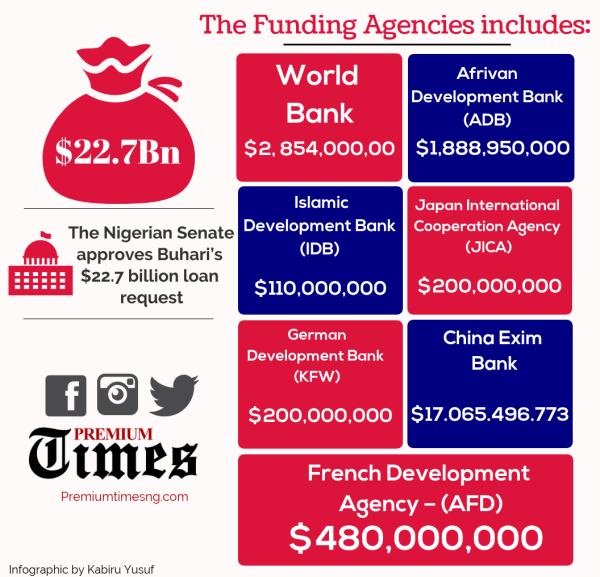
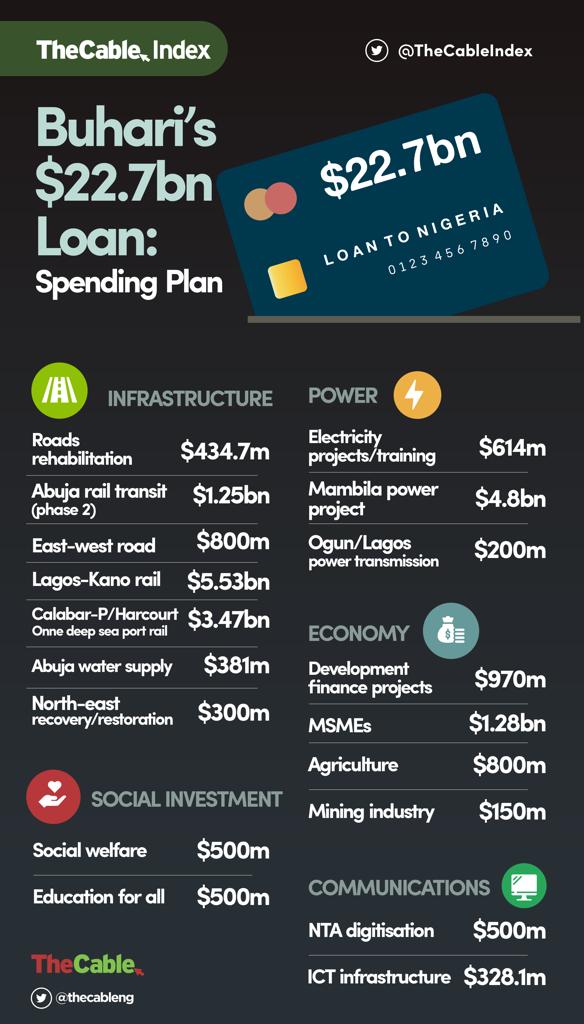
Nigeria Suspends the $22.7 Billion Loan

2

Nigeria suspends the $22.7 billion loan, Vanguard reports. Call this a casualty of coronavirus. Largely, most of the lenders will focus on fixing their nations after the mess of coronavirus to care about sending money to Nigeria. More so, there is no evidence that the agitation of the South East which was excluded in this loan contributed to this suspension. My hope is that Mr. President does the needful, and puts some projects for the South East as that is fair. That is important since suspension is not cancellation. Yes, this project can be restarted in the night when everyone is sleeping thinking it was “suspended”.

The Minister of Finance, Mrs. Zainab Ahmed, Monday, disclosed that the Federal Government has suspended its $22.7 billion external borrowing plans due to current realities in the global economic landscape. Speaking in Abuja, at the 2020 International Conference on the Nigerian Commodities Market, organized by the Securities and Exchange Commission, SEC, Ahmed stated that the government would not go ahead with the borrowing programme even if it secures the approval of the National Assembly.

The finance minister explained that the decision of the government to suspend the borrowing was due to the fact that market indices do not support external borrowings at the moment


What Alpha Mead, Sitemark and Tsebo Are Telling Facilities Users, Businesses About Coronavirus

0

As Coronavirus continues taking toll on people and businesses, facilities managers and healthcare professionals remain the dominant categories of workforce need by the people and businesses for life and business continuity. If other workers are working from home, as being done in some countries where the virus is having a significant impact, facilities managers and healthcare professionals cannot do without working in their workplace environment.

Therefore, both the facilities managers and healthcare workers need to inform and share critical information about the use of critical and non-critical facilities at this critical period of global life. In the previous article, we have pinpointed how facilities management companies should respond to the needs of people and businesses as the virus rages countries in every continent.

In the article, we suggest the institutionalisation of demand-side and supply-side strategies by facilities management companies. In what appears as a response to some of the insights in the article, we have discovered Alpha Mead, Sitemark and Tsebo as facilities management companies at the frontline of promotion of coronavirus preventative measures in the built environment.

Alpha Mead, a Nigeria-based Total Real Estate Solution company, has developed steps facilities managers and workers need to follow to avert contracting the virus. As the new cases and deaths are recorded everyday, Alpha Mead wants facilities managers and users to “Set Agenda and Lead the Conversation, Plan Communication, Have a Preventive Action Plan, Procure Relevant Materials, Improve Confidence through your Communications, Prepare and Communicate Emergency Procedure, Employees that have to travel must be well informed, Know and Have the Relevant Contacts on Speed Dial.” These steps align with those provided by the Centre for Disease Control in the United States of America.

Joining Alpha Mead, Sitemark, an independent benchmarking service for the facilities management industry, develops an FM workplace risk assessment tool in response to the virus outbreak, to  minimise the risk of workplace infections. Sitemark has identified site control, cleaning provision, signage and education, building users’ behaviour and contingency plans as core areas facilities managers must pay attention to.

Tsebo, another facilities management solutions provider in Africa, has developed a robust strategic communication plan. According to our check, Tsebo is the only company in Africa that created a special section on its website for containment messages dissemination. The section has news alert, business continuity plans, informative posters, informative videos and important contact information.

Why Power Generators Should Not Be Banned Yet In Nigeria

1
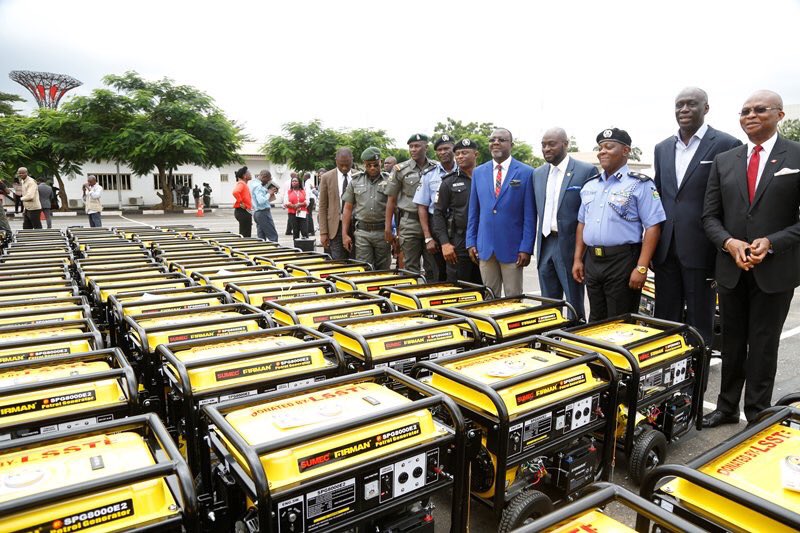
The Lagos generators (source: Bellanaija)

On Wednesday, March 11, 2020, Senator Bima Eniga, the incumbent senator representing Niger South, proposed a bill that will ban the importation and the use of power generators in Nigeria. The bill, titled “A Bill for an Act to Prohibit/Ban the Importation of Generating Sets to Curb the Menace of Environmental (air) Pollution and to Facilitate the Development of the Power Sector”, suggested that once the act comes into effect, the use and importation of generators will be banned immediately. However, the bill states that those in essential services will be excluded from the ban. Here, the exempted essential service providers include those that use generators for medical purposes, airports, railway stations and services, elevators and escalators, research institutes and facilities that need 24 hours power supply. Private and small scale businesses were not included among those to be exempted from the prohibition.

This bill, as stated earlier, was introduced on Wednesday, and then on Thursday the whole nation was thrown into a 12 hours blackout. For reasons best known to NEPA (or DISCO), they took light around 10am and brought it back by 10pm. I don’t know if this was all over the country but people in different parts of the country complained about the power outage, which coincidentally happened a day after the introduction of the generator-ban bill. It was as if generator dealers and importers liaised with NEPA to remind Nigerians that they can’t do without generators. And believe me when I say that Nigerians truly got the intended message – senators shouldn’t be allowed to ban the generators.

I am an ardent supporter of prohibition of indiscriminate use of generators by many Nigerians, especially in their homes. Some persons have made it a point of duty to disturb the peace and quiet, as well as the fresh air of their neighbours. These people do not care about their neighbours when they switch on their generators immediately power goes off, even to the extent of leaving it on all through the day and in the night. If you complain, people will tell you the person has a right to enjoy himself. But what they forgot is that the person’s ‘right’ is infringing on yours and that he’s causing you a lot of discomfort and harm. So to a large extent, banning generators will help in saving a lot of people from mental, nervous and respiratory related illnesses.

But the little experience I had on 12th March, 2020, when NEPA decided to remind us that this is Nigeria, made me realise that we can’t do without generators, at least for now. I had a deadline to meet, and I was working on the paper when the power went off. I allowed my laptop to run on its battery for about an hour before I shut down to reserve the remaining energy. I was hoping the power would come back before noon but nothing happened. I concluded that they (the NEPA officials) were working on the power cables somewhere and will therefore restore power later in the evening. But my mind started cutting when I read WhatsApp status messages from family and friends living in different parts of the country, who expressed their suspicion towards the power outage. And true and true, power did not come back until 10pm.

So I asked, what if there is no generator and this thing happened? What if NEPA decides we should stay in the dark for two or three days? What if our transformer blows or gets vandalised? There were so many what ifs, but their answers were all the same: people go hear am; businesses go suffer; we will go back to the early 80’s; Nigeria is already in trouble.

Of course there are many reasons why regulation of the use of generators is imperative but we are not ready for its ban. For starters, a lot of businesses need electricity, and this bill did not acknowledge that. For instance, a small barbing saloon operating in one small corner needs access to steady power because clients can walk in at any time. Denying him access to generators when NEPA is unreliable is a way of sending him out of business. What will this barber do if he doesn’t have a generator and NEPA takes light when he is cutting someone’s hair? What will become of the person whose hair was being cut? Small things like these are rarely considered until they happen. All the same, if the senate insists on banning generators, they should at least include business owners in the exclusion list.

Secondly, Nigeria, so far, doesn’t have an alternative source of power apart from the generator set. I haven’t seen a windmill around here, so that one is out of the question. As for the use of electricity from the solar energy that is gradually finding its way into the country, we can’t depend on that right now. First is that it is expensive, second is that it is unreliable. People that mounted solar panels in their houses are still connected to the national grid because electricity from solar energy cannot do a lot of things for them. So until solar power is made accessible to and affordable for every Nigerian, and until it is made more sustainable, Nigeria cannot count it as an alternative source of power.

The senate will soon debate on this bill. They need to understand that banning generators will not solve many problems in the country right now. They should rather find ways to regulate their uses. But then, they should understand that no one will remember where his generator is if NEPA behaves well.