DD
MM
YYYY

PAGES

DD
MM
YYYY

spot_img

PAGES

Home Blog Page 6461

Paga Partners with Visa As It Pursues A Global Playbook

0

Paga, a Nigerian mobile money and payment services startup has announced its partnership with Visa to expand its services and give subscribers a wider network. In a statement issued on Medium, the Fintech said the partnership is aimed at accelerating services toward global reach, and to give account holders the ability to make transactions using an already established platform with global network.

“We are pleased to announce our strategic partnership with Visa to enable Paga and Visa work closely in accelerating secure and convenient mobile payments for merchants and consumers in markets where Paga operates.

This partnership is in line with Visa’s goals to drive alternative payment channels, in this case, mobile wallets, within its global ecosystem. For Paga, partnering with Visa is one step further in our global expansion plans. Now, all Paga account holders will have access to Visa credentials (physical and virtual cards) tied to their Paga accounts and thus the ability to transact anywhere in the world where Visa is accepted,” the statement said.

Paga said that the partnership involves new innovative initiatives that will be introduced soon: Merchant acceptance solutions which include QR codes and NFC for in-store merchant payments, online payments, and international remittances which will be facilitated through Visa platform.

Nigerian Fintechs have been using partnership strategy to expand their services to countries beyond the shores of Africa. Last month, Interswitch announced its partnership with American Express. The two companies were aiming to leverage on each other’s audience to expand their services. It appears that other Fintechs in Nigeria are following the same pattern.

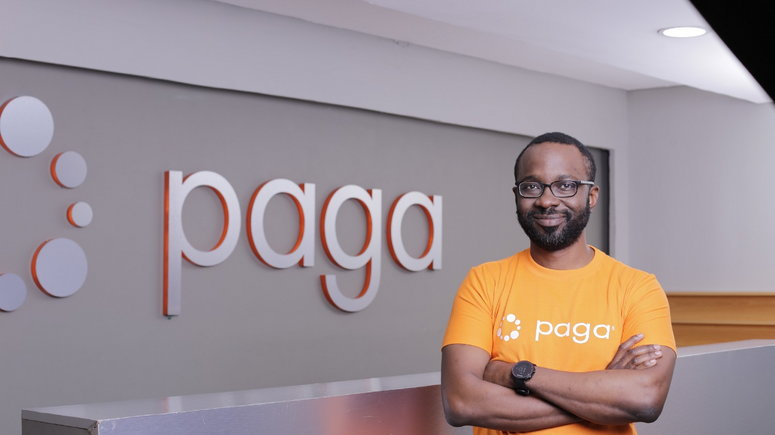
Speaking on the partnership, Paga’s Founder and Group CEO Tayo Oviosu said Visa has become their ideal choice of partnership because they have common goals, and together they will make a great team in providing services to the underserved.

“We are excited to partner with Visa, a leader in payments globally, as they are constantly building world class solutions for consumers and businesses. Our goals are well aligned. As we scale our wallet across emerging markets such as Nigeria, Mexico, and Ethiopia, partnering with Visa to give both consumers and businesses, who have been underserved, access to Visa’s global network made sense to us.

“Furthermore, it was clear to us in all our engagements the alignment of our goals towards solving the issues of cash, digitizing cash transactions and delivering financial services using new and innovative approaches. We are very happy to have signed a long-term relationship with Visa,” Oviosu said.

Part of the innovation that the partnership will facilitate is to give merchants who use Paga’s payment collection suite the ability to accept non-card based payments from customers from around the world, as long as they original banks offer Visa services.

Paga believes that the new approach will change a lot of things, improve customer service, usher in a new experience that will in the long-run yield growth in sales.

Visa also expressed confidence and excitement about the partnership. Visa’s Vice President, Head of Strategic Partnerships, Fintech & Ventures for Central Europe Middle East and Africa Otto Williams said the development will result in speed and convenience beyond borders.

“We are excited to have Paga plug into our network, as a company we remain grounded on the principles of partnership, innovation, trust and openness. This development ushers in a new era of speed and convenience beyond borders.

“It also allows us to continue working towards innovating robust platforms through which merchants using paga’s payment collection suite can benefit from international money transfers and the growing eCommerce industry,” Williams said.

The statement reveals that Paga will join Visa Fintech Fast-Track Program as part of the deal. The program gives fintechs easy access to the global Visa payments network. The fintech fast-track program also provides support to players in the payment industry who are developing new commerce experiences by opening up Visa’s network to allow them facilitate financial services beyond their immediate environment.

Moreover, the fintech fast-track program includes eased access to Visa’s payment capabilities and its streamlined processes. This strategy affords companies the opportunity to grow in phases no matter the size of the company.

Paga is a mobile platform that allows its users to transfer money electronically and make payments through their mobile devices. Paga acts as a mobile wallet where any user equipped with a mobile device can conduct transactional activities using their device. It was founded in 2009 by Tayo Oviosu and publicly launched in 2011.


Pius Adebola Adesanmi: One year after the wayfarer has gone in search of his final flight home

0

Tuesday is March 11. It was the day after Africa lost one of her illustrious sons to the ill fated Ethiopian Airline 302 crash in Addis Ababa. This day last year, it was an amalgam of sadness, confusion and grief among fans, friends and family of the late Nigerian-Canadian professor of English and Literature- Pius Adebola Adesanmi. Tears were shed both on physical and virtual spaces. From Accra to Ottawa, Canberra to Lilongwe, the days preceding March 10 in 2019 was a mourning period for a man reputed for his passion to change the not only the narrative but the reality of the problems prevalent in Africa. He has a huge following on Facebook from where he satirically launched acerbic attacks on those who seek to perpetuate the problems in Africa especially Nigeria, the country of his birth. 

Tuesday marked a year of this great loss and his friends, fans and colleagues celebrated his passing. From Facebook, encomiums were poured on Adesanmi and tributes flowed in celebrating what he stood for during his lifetime. In an essay penned to reflect on the one year without Adesanmi, Prof. Adeleke Adeeko, a Humanities Distinguished Professor at the Ohio State University, opened with a sense of personal loss. He lamented “It’s been a year ago now that I read anybody refer to me as “o??ga mii?!” Death ensured that Pius Adesanmi? will never call me that again.” He went on to describe Adesanmi’s death in the crash as “an awful infliction on us all in Addis Ababa on March 10, 2019. The bad news was, and is still, too stunning.” He delved into other areas where Adesanmi had influence in his life time. He agonized over Pius’s missed scholarly, literary and public intellectualism. 

In other posts, especially, the African Doctoral Lounge on Facebook, there were bursts of emotional words to express the absence of the giant African Professor. Bukola Akintola-Adesina wrote of Adesanmi’s immortality –  Pius,   you live on in our hearts. Tope Oriola, an Associate Professor of Sociology at the University of Alberta, fondly expressed how Okun son remains in the hearts of his friends and followers. He wrote “We remember: Today and always. Adieu, Pius Adebola Adesanmi. Another follower of Adesanmi, who is a Senior Lecturer at the Department of English Studies, University of South Africa, Dr. Josephine Oluwafunmilayo Alexander also expressed a sense of deep loss for Adesanmi. She posted “the grief that greeted us with your tragic and sudden end remains palpable in our hearts and souls. Our world has been perpetually altered. You live on in our hearts and we love you eternally.” 

The tributes came pouring in a year after the demise of the Isanlu man, father of two daughters and only son to his parents. A Nigerian follower, Rofi Tayo, a student of the University of Benin wrote – I ask myself how, what and why death took him away unnoticeably. Ethiopian airlines flight 302 crash is more than a crash to the lovers of an academician, writer, literary critic, satirist, and columnist. Mystery in disguise. I hope his dream for his dear country is manifested, his book (Naija No Dey Carry Last) illustrated his passion for his great Nation called Nigeria.

As the years count by, it is understood that the wayfarer had gone to look for his final flight back home. A home where all mortals go. We are all wayfarers and we shall all board our flights home when the time comes. Death will happen when it will.

Sectors Booming Due To COVID-19

0

The peril of coronavirus isn’t only the death of human persons, but also the death of some economic sectors. I am not an economist but I know that if this ailment spreads in Nigeria, a lot of economic sectors will suffer. One of such sectors is the food and beverage department (if there’s anything like that). It is certain that people that sell snacks and drinks will lose a lot of customers. Hoteliers and food vendors will be kicked out of business. Fruit sellers may have to close shops. Even the open market will dry up. Public places, where people converge, will be forced to close down so as to avoid the spread of this infection. In fact, should this virus be allowed to spread throughout this country, Nigeria will be an exact representation of Earth after Armageddon – deserted and destroyed – as Terminator II showed us.

But we hope this won’t happen, especially since scientists have been deployed in different parts of the world to find a cure, or a vaccine against COVID-19. But in the meantime, we need to take advantage of the situation because sometimes, it takes situations like the ones created by coronavirus to make disruptive changes.

Some people are actually benefiting from this disaster. Among these people are those in the health sector. Forbes revealed on its March 7, 2020 bulletin that 10 of China’s richest people gained nearly $14.46b within that week. However, the people they listed are mainly in the healthcare sector. News from different parts of the world has also shown that more healthcare workers have been recruited to help in managing the disease. This is a sign that this disaster is putting food on people’s table (especially for those in the medical field), irrespective of what it’s doing to other sectors of the economy.

Other people that might reap out of this epidemic (if I may call it that) are those in Hi-tech. If people are not going to converge in a place physically, they can do so virtually. As far as I know, coronavirus cannot prevent people from communicating through the internet. So that area needs to be harvested, especially in countries like Nigeria.

The use of technology in reaching out to many people at the same time is taking another dimension because it’s beginning to disrupt old practices. For instance, on Saturday, 7th March, 2020, the Vatican announced that Pope Francis’ Sunday’s Angelus prayer will be live-streamed to prevent people from converging at the front of the pontiff’s study window to say the prayer with him. This means that everybody will stay in his corner and say the prayer with the pope through his phone, tablet or laptop. This might be seen as nothing unless one considers the fact that the pope broke an 83-year old tradition in a bid to prevent more spread of the virus in Italy.

This Hi-Tech matter will be most vital when we consider the fact that conferences, games, shows, symposiums, and the rest of them might be cancelled because of this disease. People may not want to stay with others to avoid contracting the virus, but they’ll want to participate and watch these events. It might be odd, for example, to live stream a football match when the players and a few key officials were the only ones in the stadium, but desperate situations call for desperate measures. It is therefore left for those concerned to make it possible for people to enjoy the game from the comfort of their homes.

But the major one that might affect Nigeria very soon is the organisation of and attendance to conferences, workshops, meetings and seminars. For some reasons, Nigerian associations and event organisers are yet to create rooms for video conferences. The reason behind this is what someone like me cannot truly say, except that most of us lack the equipment that will aid video conferencing. But then, if the need comes up, Nigerians will see the reasons to acquire those facilities for virtual conferences. However, in a matter of weeks, several organisations and associations will hold their conferences, workshops and symposiums. In fact, academic conferences and seminars usually hold between April and October, so these months are going to see lots of activities for Hi-Tech professionals if they could meet up to the demand. The truth is that no one could tell if coronavirus would have spread by then or not. It is therefore necessary that those in Hi-Tech prepare themselves for the possible rise in demands of their services.

Remote work is on the increase with the spread of this virus. I read posts about people being asked to work from home because their employers didn’t want to expose them to the disease. Since there’s an increase in demand for work-from-home workers, Nigerians have better chances for across the border jobs that will pay them with stronger currencies.

Of course, if we talk about live streaming and remote works, we also talk about data consumption. Part of why it is difficult for Nigerians to engage in webinars and online conferences is the high cost of data. Should the telecom companies be encouraged to reduce the price of data, it will be easier for everyone to continue with their physical activities virtually.

Can NURTW Create a Bigger Transport Company Than Uber?

0
Lagos Yellow Cab

So I was listening to the radio one morning on 90.1 FM and the chairman Abuja colored taxi drivers was complaining about the challenges they face because of unregistered taxis. Then he mentioned Uber being an unregistered company. Saying Uber drivers are unregistered and could be criminals.

According to him, they (Abuja colored taxis) have the data of all their taxis and drivers and no crime can be committed that won’t be traced (hence the Uber reference). He complained about Uber taking their customers (money) he totally forgot that Uber has the data of every single driver, their cars are preferred and only operate in certain areas not all round Abuja. Clearly he missed a point which is that there is a gap Uber is not filling that they the registered licensed government taxis can fill.

Even though NURTW has shown Hooliganism and citizens have remarked they should Be Banned, what is the future of NURTW if they really want to compete with the current e-Hailing trends, such as those of Uber?

The Opportunity

Recall that the National Union of Road Transport Workers is an independent Nigerian trade union that serves the interests of transport workers in the road transport sector, by calling for collective obtaining and pushing for social stability for all workers in the transport sector as defined in its constitution.

Their association should just create their own app, they already have more coverage (all round Abuja), they already have the data of drivers and owners. This is what organizations in Nigeria fail to see, they would rather do things the old way.

They have more reach than Uber, which is that their cars can go to satellite towns. All that is needed here is just an internet platform and a lot government support, which will be given because the government right now is forward thinking + government ads, who do you think the government would rather pick – One Oyinbo (foreign) company or their own indigenous NURTW?

You guessed right, NURTW! As Nigerians we need to step up and start having creative solutions. NURTW can also learn from other countries that have rival companies giving Uber a run for their money.

For example in Saudi Arabia, Uber is facing stiff competition from other ride sharing company called Careem. Careem is a vehicle for hire company based in Dubai, with operations in over 100 cities in 14 countries in the Middle East, Africa, and South Asia. The company was valued at over $2 billion as of 2018. It is a subsidiary of Uber, with an independent brand and separate operations.

Other rivals around the world are Bolt (Africa and Europe), Ola (India), Lyft (US), Waymo (Google Self

Driving cars, US), Didi Chuxing (Asia) and Grab (South Asia). Registered operators (recognized by the government) should follow suit. Instead of calling for a nationwide ban of Uber, NURTW can adapt this same

platform to include buses. This way they just moved from regular driver and conductor to owners of buses. Making profits in the process. That’s how we need to look at advancement. It’s the same business but with a little touch of technology.

Conclusion

We should learn to stop fighting technology and start adapting it to our current business model. The National Union of Road Transport Workers is an independent Nigerian trade union that serves the interests of transport workers in the road transport sector, by calling for collective obtaining and pushing for social stability for all workers in the transport sector as defined in its constitution. Are acting with the right direction as the ever evolving technology fused business model grows? That’s the big question!

Reference Credit: Ebuka Raphel

Zenvus Loci Demo Available for Major Clients

0

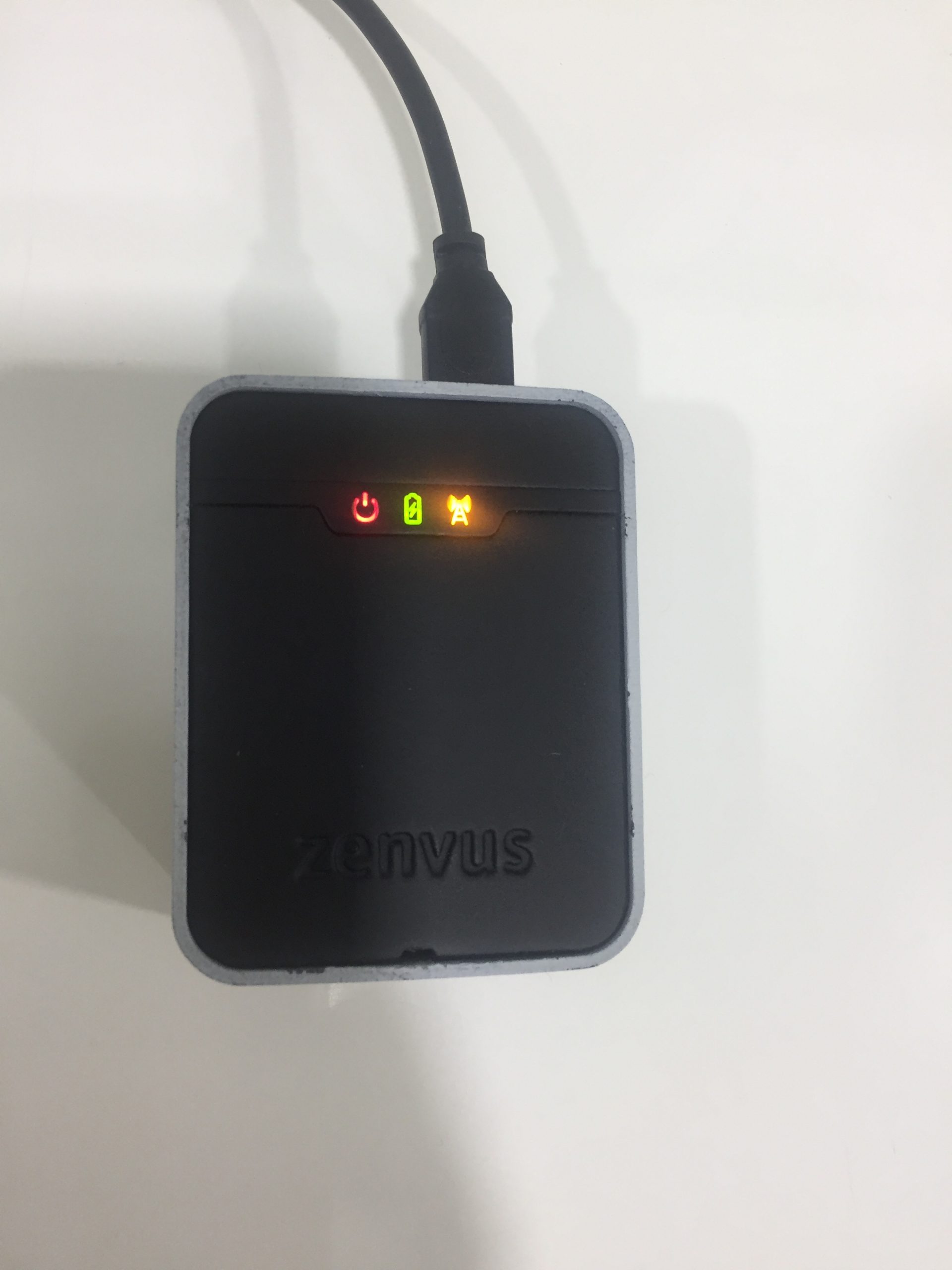
“Elegant”, “efficient”, “amazing” and “brilliant”. Those are words from users of Zenvus Loci. We created something great to bring deeper insights on the supply chain, at the cost model our customers easily afford. Loci is a reusable package GPS that you can put in a briefcase, cargo, etc and monitor in real time its location. We see opportunities in tracking the specific cargoes (not just the trucks), ecommerce shipments, security guards, equipment on transit, law enforcement (police, army, etc), luggage (individuals shipping via buses, personal air travel luggage, etc), vehicles (no installation), etc. It is cheaper than anything in the market and it is rechargeable with USB.

We designed this solution from scratch – and it is superb. If what you do involves logistics, supply chain, security,  and many other domains, as we explain in this product video, reach out to me or click email for my team. We will schedule a demo in Lagos. We are looking for  telcos, logistics firms, shippers, airlines, banks, etc. (We are looking for end-users, not partners. If you want to become a sales partner, please apply first).

(Image: Zenvus Loci Max 3D print, production shipment is ABS)

Loci is a disposable or reusable package GPS that you can put in a briefcase, cargo, personnel, etc and monitor in real time its location. We see opportunities in tracking the specific cargoes (not just the trucks), ecommerce shipments, security guards, equipment on transit, law enforcement (police, army, etc), human (child, oil workers, etc), luggage (individuals shipping via buses, personal air travel luggage, etc), vehicles (no installation), etc. It is cheaper than anything in the market and it is rechargeable with USB.

For example, to track a car, one does not need a mechanic for all the complex wiring: just drop it anywhere inside the car (booth, under seat, etc) but make sure say every week to recharge it. And if you are sending a package using a luxury bus (like ABC Transport in Nigeria), you can put the device inside the package to know where it is on the way. It requires extremely affordable monthly subscription to use. Loci is an ecosystem with analytics, API and inventory management solutions.

Simply Brilliant – Zenvus Loci Max, Zenvus Loci Mini [Photos]