DD
MM
YYYY

PAGES

DD
MM
YYYY

spot_img

PAGES

Home Blog Page 6465

Coronavirus: Nigeria Close to Another Recession as Oil Price Plunges

0

Nigeria’s proactiveness in the fight against coronavirus has been remarkably effective. So far, there have been only two confirmed cases in the country and the National Center for Disease Control (NCDC) has put up a tremendous effort to contain it. About 28 people are being monitored across five states and the state governments are giving it their best shots.

The rest of the world has been in awe of the pragmatism that has kept the epidemic at bare in Nigeria and some other African countries. However, while the Nigerian government has managed to curtail its outbreak, the virus appears to have found another way to deal with Nigeria.

At the end of the meeting between members of the Organization of Petroleum Exporting Countries (OPEC), in Geneva last week Friday, oil prices went further down from its already plummeted status as the alliance failed to reach agreement on production cut. And that put the world’s markets at dwindling positions that have seen stocks tumbling and prices crashing.

In the past 24 hours, the oil price has fallen 20% further from 9% on Friday. Brent crude was $45.18 per a barrel and West Texas Intermediate crude, the U.S. benchmark was as low as $41.11 per a barrel.

Update shows that price has nosedived to $30 per barrel, almost half the budget benchmark of Nigeria.

In view of this, President Buhari has set up a committee to assess the impact of coronavirus on the 2020 budget as its effect keeps pushing the oil market downward. The committee chaired by the Minister of Finance/Budget and National Planning, Mrs Zainab Ahmed.

Other members of the committee are the Minister of State, Petroleum Resources, Mr. Timipre Sylva; the Central Bank of Nigeria Governor, Mr. Godwin Emefiele; the Minister of State, Budget, Mr. Clement Agba, and the Group Managing director of the Nigerian National Petroleum Corporation, Mr. Mela Kyari. The committee is to submit the report of its findings to the president on Tuesday.

The Minister of Finance said the committee will have to figure out if the $57 2020 budget benchmark will be reduced. How much will be reduced in case the findings point at reduction? Is also a question the committee will provide an answer to.

Ahmed also noted that it will mean cutting down the N10.59 trillion budget if in any case, the benchmark will be reduced.

But the threat appears to be far more than what these measures can contain. The force responsible for the crash in oil prices is synonymous with coronavirus which is still at large, and lack of agreement among OPEC members on oil production cut has made the situation worse and Nigeria more vulnerable.

Saudi Arabia announced a massive discount to its official selling price for April, as the country is reportedly getting ready to increase its production above 10 million barrel per day mark. The kingdom has placed its production at 9.7 million per day even though it has the capacity to pump at 12.5 million barrels per day.

The disagreement between Saudi and Russia last weekend means that every country will produce and sell at will, a situation that will aggravate Nigeria’s woes due to the cost of production. Unlike Saudi Arabia with the lowest cost marginal cost of production placed at $8.98 per barrel, Nigeria is producing at the cost of $30 per barrel for deep water and $15 for onshore production.

Oil prices are likely going to plunge further in the coming weeks, far below the budget benchmark. Goldman Sachs said it should be expected to fall around $20, which will reduce the budget projection to a fiction and revenue generation from other sectors of the economy cannot assuage the impact. That means, another recession looms as the solution appears to depend more on many external factors that Nigeria could do little or nothing about.

It could be recalled that Nigeria went into recession in 2016 when oil price fell to $27 per barrel, and it took a rebound in the oil market for the country to get out of recession.

Experts are encouraging the federal government to take practical steps to ensure that the situation is arrested before it gets out of hand.

Former Director General of Bureau of Public Service Reforms (BPSR), Dr. Joe Abbah advised: “With oil prices plummeting and public debt soaring, now is the time for the Economic Advisory Council to earn its stripes. Now is the time for president Buhari to listen and take tough decisions on cost of governance. Now is the time for EAC members to walk away if he doesn’t.”

Others have advised the government to remove fuel subsidy, float the naira and cut the cost of governance. Nigeria’s foreign reserve seems to be the only hope since the country has been on borrow spree. Alas it is on life support at $37.5 billion, and with the rate of the oil crisis, its depletion will happen sooner than expected.


Amazon Goes Double Play With “Just Walk Out”

1

This is another double play innovation: “Amazon on Monday announced it will now offer its cashierless store technology, called “Just Walk Out,” to other retailers. The technology uses a combination of cameras, sensors, computer vision techniques and deep learning to allow customers to shop, then leave the store without waiting in line to pay. This is the same technology that today powers the Amazon Go cashierless convenience stores and Amazon’s newly launched Amazon Go Grocery store in Seattle.”

Just like it introduced AWS, Amazon has another product it can “tax” retailers just as it got them into its cloud business after making them see a hopeless future of physical retail in U.S unless you are Target, Bestbuy or Walmart. Yes, if you are a retailer and use this technology, Amazon is very sure that as you grow, it has a portion secured because you will need more of Just Walk Out!

You run an ecommerce operation, and your cloud services come from Amazon. You run a digitized retailing system, and the services come from Amazon. Think of the power of double play strategy working on you!

This is the ATM machine of retail. Yes, just as banks eliminate those special people to save money in front offices, Amazon has put a steroid on job destruction in the retail sector.

Just Walk Out technology enables shoppers to simply enter a store, grab what they want, and just go. Born from years of experience at Amazon Go, Just Walk Out uses a combination of technologies to eliminate checkout lines. We now offer retailers the ability to leverage this technology in their stores to help bring fast and convenient checkout experiences to more shoppers.

In Just Walk Out-enabled stores, shoppers enter the store using a credit card. They don’t need to download an app or create an Amazon account. Our Just Walk Out technology detects what products shoppers take from or return to the shelves and keeps track of them in a virtual cart. When done shopping, they can just walk out and their credit card will be charged for the items in their virtual cart. If shoppers need a receipt, they can visit a kiosk in the store and enter their email address. A receipt will be emailed to them for this trip. If they use the same credit card to enter this or any other Just Walk Out-enabled store in the future, a receipt will be emailed to them automatically.

Nigeria Has Been Downgraded by Standard and Poor’s (S&P)

7

Perception and Reality:

Recently, the International credit rating Agency Standard and Poor’s (S&P) announced that it had lowered Nigeria’s credit rating to “negative” from “stable” due to it declining foreign exchange reserves.

Foreign exchange reserves levels have fallen from $45 billion at midyear 2019 to $38 billion at the end of 2019 and $36.5 billion in February 2020. With the S & P outlook change, all the three international rating agencies have a negative outlook on Nigeria’s sovereign credit rating.

The issues highlighted befalling the Africa’s largest economy include, the nation economic growth remain weak, slower than it several peers at similar rating level, government sizable debt, strong dependence on oil revenue, and external pressure, signal by dwindling foreign exchange reserves, owing to the late passage of the budget in 2019, resulted in increased financing from central bank through overdraft facilities.

The reality is that the tougher economic condition in the country is likely to worsened by declining oil prices, triggered by COVID-19 pandemic and compliance with OPEC quotas of 1.77mb/d ( with other possible cuts).

Certainly the negative credit rating signaled a possibility of costlier debt should Nigeria proceed with its Eurobonds, foreign investors could demand higher premium on the back of perceived risk rating due to the downgrade. Amid increasing pressure on oil revenues with increasing instability of the global economy, a broadly defensive foreign exchange policy stance and rising FGN debt obligation, perception seem rather than agreement with reality.

“The Rise of ALL” – The Message from a Virus

1

In the past, the philosophy was the rise of the few, because the world was largely disparate in many ways. Provided my wine continues to taste great in New York, London or Berlin, I do not care what happens in Beijing, Nairobi and Santiago. Yes, all their problems would end there!

Unfortunately, the new world is totally different because the world is more integrated and intertwined that no one can disconnect nations easily despite any travel ban or restrictions. Today, coronavirus is normalizing global leaders to understand the reason to push for the RISE OF ALL, and not Just The Few (watch my national TV address on the Platform where I made the case for the Rise of All).

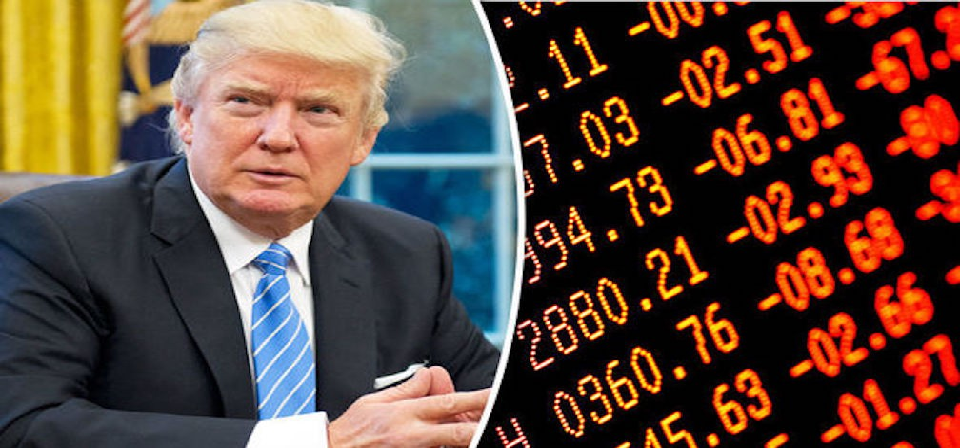
The U.S. Commerce Secretary, Wilbur Ross, could not hold his emotions when he thought that coronavirus would provide a competitive advantage to the United States as China deals with the demons in this virus. Unfortunately, today, the virus is ravaging everything on its path, and that bull that makes Mr Ross happy is getting drowned as Wall Street money men are running for safety. The Dow, a U.S. stock index, lost more than 2,000 points today.

May the world leaders pursue the Rise of ALL because in today’s economic infrastructure, nothing else makes sense. This virus is educating and normalizing many leaders who thought it was a great idea to cut a few $millions the United States was sending to foreign countries to build capabilities to prevent infectious diseases. These leaders failed to understand that spending the millions to save hundreds of billions of dollars now lost in stock markets, productivity, etc is chicken change.

The Dow Jones Industrial Average closed over 2,000 points lower, coming back from a point drop of more than 2,150 points, or 8.2 percent, at session lows while the S&P 500 and Nasdaq Composite were lower by 7.9 percent and 7.2 percent, respectively.

Monday’s sharp selloff, which caused the major averages to be temporarily halted due to volatility, caused the New York Federal Reserve to increase its daily cash injections into the banking system to $150 billion from $100 billion.

The stock-market’s steep slide comes after a production dispute between OPEC members, led by Saudi Arabia, and Russia sent West Texas Intermediate crude oil, the U.S. benchmark, plunging by as much as 33.8 percent, the most since the outbreak of the 1991 Persian Gulf War, to a low of $27.34 a barrel in overnight trading. The energy component finished the day down 24.59 percent at $31.13 a barrel