DD
MM
YYYY

PAGES

DD
MM
YYYY

spot_img

PAGES

Home Blog Page 648

FG to End Multiple Data Submissions with Nigerian Data Exchange Platform (NGDX)

0

The National Information Technology Development Agency (NITDA) has announced that the federal government is set to eliminate the burden of repeated data submissions by Nigerians through the rollout of the Nigerian Data Exchange Platform (NGDX).

For years, citizens have endured the stress of submitting the same personal information and biometrics across multiple government agencies — from NIN registration to driver’s license, Bank Verification Number (BVN), SIM card registration, and international passport applications. The duplication of these processes has not only wasted time but also cost money and created inefficiencies that slowed public service delivery.

Speaking at a stakeholders’ workshop on the NGDX in Abuja on Monday, NITDA’s Director General, Kashifu Inuwa, said the NGDX will serve as a unified and secure data exchange system for government institutions.

According to him, this means citizens will no longer need to repeatedly hand over the same personal data each time they interact with an MDA. Instead, authorized agencies will be able to verify and share records on the back end seamlessly.

This reform is expected to save Nigerians time and money while also reducing inefficiencies within the public sector.

Businesses, especially fintechs and service providers that rely heavily on identity verification, also stand to benefit. Faster KYC (Know Your Customer) processes and easier access to government-backed data verification systems could streamline operations for banks, digital lenders, and other service providers.

Inuwa added that the NGDX will go beyond convenience. It will create opportunities for startups and enterprises to innovate in sectors such as healthcare, agriculture, fintech, and education technology by enabling the use of anonymized public data.

“The NGDX will open opportunities for innovation, allowing startups and enterprises to build solutions leveraging anonymized public data for improved healthcare delivery, agricultural productivity, fintech development, and education technology,” he said.

He described the NGDX as “essential digital infrastructure” comparable to the nationwide fiber optic rollout, stressing that it is a critical piece of Nigeria’s digital economy. He also assured participants that NITDA is working with the Ministry of Communications, Innovation, and Digital Economy, along with other key stakeholders, to ensure its successful rollout.

The Nigeria Data Exchange Platform initiative is backed by the European Union (EU) in Nigeria under its Global Gateway project. Describing the NGDX as a bold step to strengthen Nigeria’s Digital Public Infrastructure, the EU, in a post on its official X handle, said several partners from the EU — including Finland, Estonia, Germany, and France — were part of the Abuja workshop.

The launch of the NGDX comes against the backdrop of longstanding public frustration with overlapping identity systems. In the past, Nigerians were compelled to register separately for the National Identity Number (NIN), BVN, SIM card registration, voter cards, and passports — each requiring fresh biometrics and multiple in-person visits. The duplication was often described as a symbol of government inefficiency and a barrier to building a truly digital economy.

Experts have long argued that harmonization of data was necessary to boost service delivery and reduce fraud. In some cases, Nigerians who already had NIN and BVN were still forced to repeat biometrics during SIM registration, exposing citizens to unnecessary inconvenience.

Comparative context

Nigeria’s move mirrors a growing global trend where governments are investing in national data exchange and interoperability systems to drive efficiency. Countries like Estonia have become global leaders in digital public infrastructure by implementing e-Governance platforms where citizens only provide personal data once — a system widely hailed as a benchmark.

By adopting the NGDX, Nigeria is attempting to follow this path, while also aligning itself with the EU-backed push for global interoperability in digital governance.

If successful, Nigeria’s initiative could not only eliminate one of the most frustrating aspects of public service delivery but also set the stage for a digital transformation that would allow businesses and government institutions to operate with greater speed, transparency, and efficiency.

However, there is concern about data privacy, following an increase in sales and misuse of private data held by MDAs in recent times.


U.S. Flips Trade Balance with Nigeria into $576 Million Surplus in H1 2025

0

Egypt strengthens surplus while South Africa deepens deficit, highlighting divergent trade paths in U.S.–Africa relations

The United States has reached a $576 million trade surplus with Nigeria in the first half of 2025, reversing a deficit of $779 million in the same period of 2024.

For context, Nigeria had historically enjoyed the upper hand in trade with the U.S., with oil sales accounting for the bulk of inflows. But the picture has shifted as American refiners reduced reliance on Nigerian crude, while U.S. exports — from machinery and refined petroleum products to agricultural commodities — have risen steadily.

Fresh data from the U.S. Census Bureau and the Bureau of Economic Analysis reveal that stronger American exports into Nigeria and weaker Nigerian shipments to the U.S. powered the reversal. The shift underscores how economic pressures in Nigeria and U.S. tariff adjustments are reshaping one of Africa’s most critical bilateral trade relationships.

Nigeria flips from deficit to surplus

The turnaround in U.S.–Nigeria trade is striking. Between January and June 2025, U.S. exports to Nigeria rose by 41% year-on-year, climbing from $2.36 billion in H1 2024 to $3.34 billion in H1 2025. Imports moved in the opposite direction, falling 12% from $3.14 billion to $2.76 billion. This swing of more than $1.3 billion transformed Nigeria from a deficit position to a net surplus partner for Washington.

The June monthly figures highlight the sharpness of this shift. U.S. exports to Nigeria surged to $919 million, up 196% from $310 million in June 2024. Imports grew more modestly, up 29% from $493 million to $639 million in the same period. Consequently, the monthly balance flipped from a $182 million deficit in June 2024 to a $280 million surplus in June 2025.

Weakness in Nigeria’s industrial capacity, coupled with dollar shortages, is believed to have also created fertile ground for American exporters to capture more of the market.

Africa still drains U.S. balance despite surplus against Nigeria

Nigeria’s reversal, however, did little to alter the broader story of U.S.–Africa trade. The continent as a whole still posted a deficit of $3.69 billion against the U.S. in the first half of 2025, slightly worse than the $3.61 billion deficit in the same period of 2024.

While American exports to Africa jumped 29%, from $15.2 billion in H1 2024 to $19.7 billion in H1 2025, imports rose even faster in absolute terms. They increased by 24%, from $18.9 billion to $23.4 billion, keeping Africa as a net drain on U.S. trade books.

The shift in Nigeria’s balance, therefore, stands out. Only Egypt and Nigeria gave Washington surpluses in 2025, together contributing over $3.3 billion in positive balances. However, these gains were not enough to offset deep deficits elsewhere, especially with South Africa and Algeria.

The regional picture suggests that while U.S. goods are penetrating African markets more effectively, the continent’s commodity exports still outweigh American shipments, particularly in energy, metals, and autos.

Nigeria versus peers

Comparing Nigeria’s performance to its African peers reveals diverging outcomes.

Egypt posted the largest African surplus for the U.S. at $2.73 billion in H1 2025, more than doubling the $1.31 billion surplus in 2024. U.S. exports to Egypt grew 63% from $2.55 billion to $4.16 billion, while imports rose only 15%, from $1.24 billion to $1.43 billion, tilting the balance heavily in Washington’s favor.

South Africa moved in the opposite direction. America’s deficit with the country almost doubled, widening from $3.38 billion in H1 2024 to $6.32 billion in H1 2025. Imports surged by 52%, from $6.24 billion to $9.50 billion, while exports inched up only 11%, from $2.86 billion to $3.18 billion. This imbalance makes South Africa Washington’s most challenging African trade partner.

Algeria remained negative but slightly improved, narrowing its deficit from $844 million in 2024 to $571 million in 2025, largely due to a modest rise in U.S. exports and a drop in imports. Meanwhile, the “Other Africa” category reversed a $77 million surplus in 2024 to a $108 million deficit this year.

Tariff backdrop

The shift in America’s trade balance with Nigeria comes against the backdrop of new U.S. tariff measures on African partners. Beginning August 7, 2025, Washington implemented “reciprocal tariffs” under a revised schedule that set Nigeria’s country rate at 15%.

While Nigeria previously faced a 14% tariff under the April “Liberation Day” order, the revised rate formalized the adjustment. South Africa and Algeria were each assigned 30%, while Egypt remained at the 10% baseline, with its Qualifying Industrial Zone (QIZ) exports still enjoying duty-free access.

These tariffs add to existing most-favored-nation duties and are designed to mirror restrictions faced by U.S. goods in the affected markets. The move has heightened pressure on resource-driven exporters like Nigeria and Algeria, while widening America’s imbalance with South Africa in metals and autos. By contrast, Egypt’s position has been more resilient, as its diversified exports and QIZ framework insulate key sectors from the steepest tariff impacts.

Outlook

Nigeria’s shift from deficit to surplus highlights both structural weaknesses at home and an opportunity for U.S. exporters. Some analysts believe that as long as Nigeria struggles with foreign exchange liquidity and import dependence, Washington’s trade balance will remain tilted in America’s favor.

However, the bigger challenge for Washington is said to be Africa as a whole. While bilateral surpluses with Nigeria and Egypt are noteworthy, they remain insufficient to offset heavy deficits elsewhere.

XRP Can Reach $11 This Cycle According to ChatGPT, but Here’s Why Ripple Holders Are Loading Up on Little Pepe (LILPEPE)

0

Amid the renewed fervor in crypto markets, XRP is once again stealing headlines. A union of technical setups, regulatory clarity, and renewed institutional interest has propelled this veteran altcoin into the spotlight—with chatter growing louder that it could surge as high as $11 this cycle. Yet, while XRP’s potential rally captures attention, a rising meme-themed Layer-2 contender called Little Pepe (LILPEPE) is quietly capturing traction among Ripple loyalists. It’s where meme culture, infrastructure, and upside collide—and why investors are increasingly taking an interest.

XRP’s Bullish Case

Technical analysts recently highlighted an emerging cup-and-handle pattern on XRP’s chart, a classic signal preceding powerful upward movements. This formation, tracing from early 2025 into August, outlines a “cup” base with a minor “handle” pullback, now inching toward completion. Should selling pressure ease and momentum normalize, this setup could drive XRP sharply higher, toward the $8–$11 range—or further if volume surges strengthen the breakout.

Meanwhile, the AI model ChatGPT has provided a strong backing for this bullish thesis. CryptoPotato reports that ChatGPT sees the bull run for XRP far from over, citing the resolution of the SEC lawsuit and growing whale accumulation—over 900 million XRP worth roughly $2.8 billion acquired across 48 hours—as tailwinds for further gains.

Yet more technical gold appears at the weekly level: ChatGPT sees a textbook bull flag formation forming around $3.20, complemented by regulatory easing such as a Regulation D waiver granted to Ripple, reducing fundraising barriers. Combined with corporate interest—recently spotlighted by a high-profile crypto company accepting XRP for payments—this could prompt a breakout toward $4–$5 in the near term. Against that backdrop, the $11 figure that ChatGPT and technical setups suggest may feel like conservative realism rather than fantastical hype.

Why Ripple Holders Are Also Pouring Into Little Pepe (LILPEPE)

While XRP believers watch technical levels, a growing segment of them is making a parallel bet—one that’s more meme-fueled yet underpinned by genuine innovation. This is the story of Little Pepe (LILPEPE), a meme coin that has rapidly become a presale darling, particularly among traditional Ripple holders. LILPEPE is currently in its presale Stage 11, priced at $0.0020 per token. Across all stages, the project has raised over $21.6 million and sold north of 13.9 billion tokens since the presale commenced. The ongoing momentum signals genuine institutional and retail interest—even before a listing.

Why the excitement? LILPEPE is built not just as a token, but as the native currency of a dedicated Layer-2 blockchain optimized for meme coins. It prioritizes low fees, fast finality, and fair participation—elite-level utility wrapped in meme culture. Anti-sniping technology, zero transaction taxes, and a robust Certik audit further bolster confidence.

Analysts are forecasting a striking 3,200% surge post-launch, with immediate listing expected around $0.003, yielding 57–58% immediate gains for late presale buyers, and long-term projections pushing as high as 40x returns.

When compared to XRP—which may grow several-fold but likely within a narrower band—LILPEPE represents hypergrowth potential. IndiaTimes even frames it as a potential 12,000% return if meme cycles ignite full force again. That combination of meme virality, technical utility, and presale adoption makes it irresistible to risk-tolerant holders aiming for massive upside.

Two Approaches, One Theme: Bullish, but Different

Investors loading up on both XRP and LILPEPE aren’t contradictory—rather, they’re covering both ends of the spectrum. XRP offers rational, chart-driven growth backed by legal clarity, institutional interest, and possible ETF catalysts. It’s a high-quality altcoin play that could return several-fold. LILPEPE, on the other hand, offers speculative exponential upside anchored in clever engineering and meme culture. Put simply, XRP embodies the solid blue-chip altcoin story, riding macro tailwinds and plausible breakout patterns. LILPEPE is the speculative rocket, with potential for greater returns if listing dynamics and hype continue to build.

What’s Next for XRP and LILPEPE Holders?

XRP investors should watch key resistance breaks, particularly above $3.30 and confirmation of the cup-and-handle breakout. Volume trends and institutional accumulation could validate targets toward $8–$11. Macro drivers like ETF approval or corporate adoption would further accelerate the move. For LILPEPE, presale participants are closely monitoring Stage 11 momentum and eagerly forecasting listings. Given the project’s swift capital accumulation and staging schedule, price discovery may happen soon. Bulls will look for listing volumes, CEX listings, and community traction to fuel post-launch expansion.

Final Thought: Optimism Multiplied

In the current cycle, XRP stands as a credible long-term altcoin with deep fundamentals and technical triggers for a pronounced run. Its potential toward $11 in this cycle, reinforced by AI and technical patterns, reflects a rational yet bullish belief in its trajectory.

Simultaneously, LILPEPE offers an unfiltered ticket to meme-fueled upside, layered with technical merit and presale momentum. For investors embracing both ends of crypto’s spectrum—structured blue-chip growth and hyper-speculative meme rocket—this pairing represents a playbook built to win big, both mindfully and wildly. Whether your capital allocation skews cautious or ventures into the hype, one thing is clear: optimism has an edge again, and both XRP and LILPEPE are at the center of that resurgence.


For more information about Little Pepe (LILPEPE) visit the links below:

Website: https://littlepepe.com

Whitepaper: https://littlepepe.com/whitepaper.pdf

Telegram: https://t.me/littlepepetoken

Twitter/X: https://x.com/littlepepetoken

AI Arms Race Drives Billions Into Mega-Scale Data Centers

0

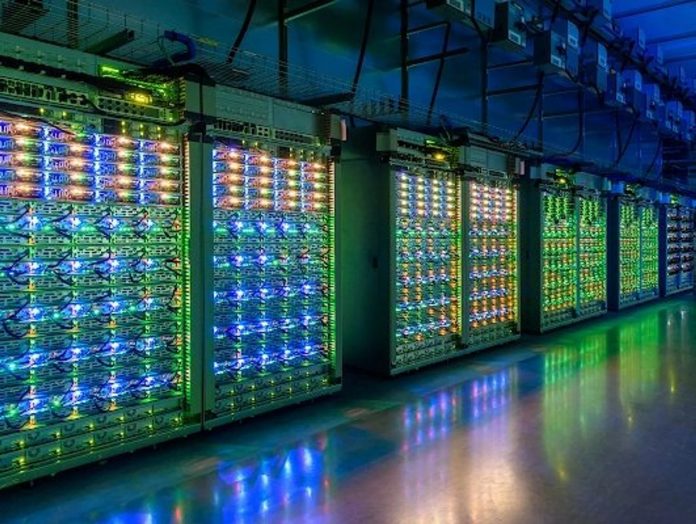
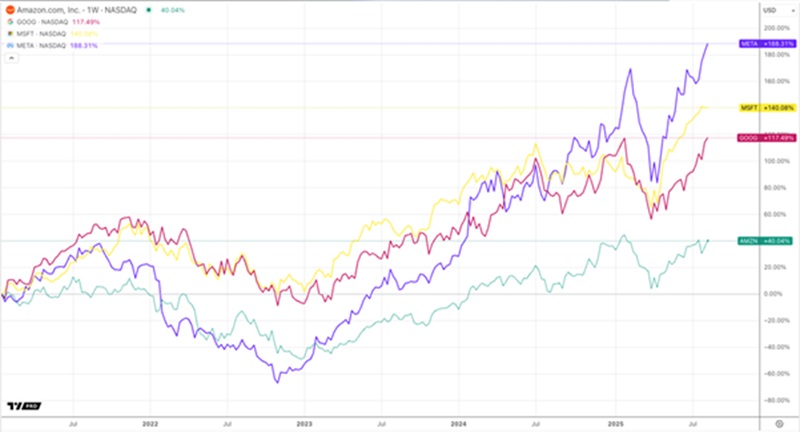
Investments in the construction and modernization of data centers are now reaching a level comparable to the economies of entire states. And not the small countries are meant. Amazon alone has spent more than $100 billion on infrastructure development over the past year. This is about the same amount as the entire economy of Costa Rica produces in a year, and more than the GDP of Luxembourg or Lithuania.

Other cloud market leaders have a similar picture:

  • Google has spent $82 billion on this, which is more than the entire annual volume of the Slovenian economy.
  • Microsoft’s figure is slightly lower, $75 billion, which is still higher than Uganda’s GDP.
  • Meta has invested $69 billion in its data centers, which is more than Bahrain’s annual production.

If we look at the industry as a whole, spending continues to grow rapidly. Capital expenditures on data centers are projected to exceed $657 billion in 2025. For comparison, in 2023 it was about $330 billion. The growth has almost doubled in two years, primarily due to the race for AI capabilities. The question is whether today’s record investments will deliver quick returns, or whether the industry will continue to work for the future. Currency markets are already responding, with USD JPY performance often serving as a barometer of investor confidence in these long-term tech bets.

Hyperscalers expect these investments to bring income someday, but for now, it’s more of a long-term bet. Even players like xAI, which are not among the largest providers, spend about a billion dollars a month on infrastructure.

However, not everyone is confident that large-scale investments will pay off quickly. In the second quarter of 2025, Meta explicitly stated that the time-tested machine learning models underlying its recommendation systems were generating profits. Generative AI still remains in the category of promising, but not among the primary revenue streams. Nevertheless, cloud companies are ready to offer more and more AI resources to those who want to develop their own projects.

There may be a shortage of computing power in the market in the coming years. New models, such as the recently introduced GPT-5, require more and more resources. At the same time, the need for infrastructure for inference, the daily use of AI is also growing. Already today, over 700 million people use ChatGPT alone, of which over 120 million use it daily.

Although IT equipment will remain the main focus of industry spending, investments in physical infrastructure will grow fastest. We are talking about power supply systems, energy distribution, and cooling. The computing density in racks is growing almost exponentially, which demands ongoing technical upgrades.

At the same time, there is an increasing interest in local generating capacities and microgrids. Major operators are already investing in these areas to reduce their dependence on external power sources. It is also expected that the construction of data centers will accelerate, and the largest sites will reach a capacity of at least one gigawatt.

Some projects are already beyond their usual scope. Meta has announced several campuses with a total capacity of several gigawatts, which are planned to launch in 2026. Individual sites at an early stage of design may surpass 5 GW.

All this means that the data center market is changing rapidly. The question is whether today’s record investments will be able to bring a quick return, or whether the industry will continue to work for the future, increasing costs and pushing infrastructure to the limits of its capabilities.

ETH Stalls at $4,318, OKB Whale Moves Billions, BlockDAG’s Presale Targets $600M

0

Ethereum’s rally is showing signs of exhaustion, stalling near resistance at $4,318, while OKB has drawn fresh attention with billions in whale transfers moving in and out of exchanges. These developments highlight how quickly momentum can shift, leaving traders uncertain about near-term direction. Amid this noise, BlockDAG is charting a very different course. Its presale has already raised more than $383 million and sold over 25 billion coins across 29 batches, with pricing now at $0.0276.

The final goal is a $600M cap, funding liquidity, listings, and ecosystem growth. What sets BDAG apart is its layered momentum strategy, global visibility through Inter Milan, local engagement with the Seattle Seawolves and Orcas, and a confirmed U.S. sponsorship deal that adds credibility. Combined with its hybrid DAG + PoW architecture and 2.5 million mobile miners, BlockDAG is positioning itself as one of the top crypto to buy heading into 2025.

BlockDAG’s Triple Momentum Strategy Toward $600M

BlockDAG is building its foundation on multiple levels. Globally, its partnership with Inter Milan puts the project in front of millions of fans. Locally, partnerships with the Seattle Seawolves and Seattle Orcas foster grassroots trust in the U.S. and adding even more weight, a yet-to-be-revealed U.S. sponsorship deal brings national credibility. Each layer is designed to move beyond visibility and drive real adoption, fueling its reputation as a top crypto to buy.

The presale numbers highlight this momentum. More than 25 billion coins have already been sold across 29 batches, with prices climbing from $0.001 at launch to $0.0276 in Batch 29. Early participants are already up over 2,660% on paper. The $600M cap will fund liquidity, listings, and ecosystem expansion, with confirmed exchange support from MEXC, LBank, and BitMart, plus ongoing discussions with Coinbase and Gemini.

With its hybrid DAG + Proof-of-Work model supporting up to 15,000 TPS and an EVM-compatible design for seamless Ethereum migration, BlockDAG isn’t just a presale, it’s a network built for scale. Add in 2.5M+ users mining through the X1 mobile app, and the adoption case becomes undeniable. This layered approach is why BDAG is increasingly recognized as one of the top cryptos to buy this year.

OKB Whale Transfers Signal Uncertainty

OKB has been in the spotlight after a surge in whale transfer activity. The largest saw 19.7 million OKB, worth $2.25 billion, move from OKX to an unknown wallet, followed by a reverse flow of 17.1 million (~$2.06B) back to OKX. Additional transfers worth $1 billion, $302 million, and $573 million only heightened speculation.

Price action currently hovers around $217, with whale movements dictating volatility. Netflows suggest accumulation rather than dumping, but the scale of transfers has traders alert. The uncertainty surrounding these moves has kept OKB in focus, though it lacks the structured growth strategy that makes BDAG one of the top crypto to buy.

Ethereum Technical Analysis: Resistance at $4,318

Ethereum has been consolidating near $4,265–$4,318, with short-term indicators showing mixed momentum. StochRSI is oversold, hinting at a bounce, while RSI remains neutral. ETH continues to trade above major moving averages, including EMA25 at $4,086 and EMA99 at $3,275, supporting its broader bullish case.

Still, ETH needs a decisive breakout above $4,320 to unlock targets near $4,500. A drop below $4,000, however, could expose support around $3,600. Institutional flows and ETF demand are helping provide support, but uncertainty keeps traders cautious. While ETH holds long-term promise, BlockDAG’s presale-driven adoption push positions it more clearly among the top crypto to buy in 2025.

Final Word

Ethereum continues to wrestle with resistance at $4,318, and OKB’s billion-dollar whale moves are raising speculation. Both assets remain important, but neither has the structured, adoption-focused momentum that BlockDAG is building.

With over $383M raised, 25B+ coins sold, millions of miners, and a layered sponsorship strategy, BlockDAG is aligning technical strength with mass visibility. Its scarcity-driven presale has already delivered paper gains of 2,660% for early participants, and projections toward $1–$5 in the coming years reinforce its potential. For those seeking the top crypto to buy right now, BDAG combines scarcity, adoption, and growth like few others in the market.

Presale: https://purchase.blockdag.network

Website: https://blockdag.network

Telegram: https://t.me/blockDAGnetworkOfficial

Discord: https://discord.gg/Q7BxghMVyu