DD
MM
YYYY

PAGES

DD
MM
YYYY

spot_img

PAGES

Home Blog Page 6485

How to Transact Businesses with Friends without Hassles

0

There’s this common saying among Nigerians that indicates that the easiest way to lose a friend is by lending him or her some money. This philosophy may sound logical but it is not true in all cases because there are friends that pay back whatever they borrowed without being reminded. However, there are people that take kind gestures from their friends and relatives for granted.

Anyway, the most difficult business transaction to carry out with friends isn’t lending them money, but getting them to pay you for works you did for them. Friends, most times, fail to realise that you are in business and that the work they wanted you to do for them is price-tagged. They take offence when you directly ask them to pay you and may feel you’re extorting them when you give them your discounted prices. Because of this, a lot of people are discouraged from carrying out any business transactions with their friends.

Kindly note that when I say “friends” here, I don’t mean business associates or acquaintances with whom you have no qualms handing out your charges. When I say “friends”, I mean those people that are very close to you and that you have developed a very good relationship with even though they are not family members. These are the people that we can call on when we need support, though they may not be able to help all the time.

The first thing a corporate employee tells an entrepreneur when it comes to transacting businesses with friends is to do it freely. But we know that is not always the best. I mean, you have to consider the inputs, such as time, energy and materials, that would have been used for other works to earn you some needed income. You also need to remember that you have bills to pay. So when you are told that you should do a free job for a friend, think of these factors before making a decision. Besides, your friends will keep coming back for more jobs, so will you do it free for them all the time?

Some entrepreneurs may advise you not to accept works from friends so that it doesn’t create problems for you. But this is also not advisable because it may create wider rifts between you and them. The thing there is that no matter how smart you try to play, your friends will definitely know you don’t want to work for them. Anyway, you know your friends more, so I guess you know how best to relate with them.

Disadvantages of Transacting Businesses with Friends

Though I advise against avoiding business dealings with friends, there’s still need to look into some of the disadvantages of working for them.

  • They will want you to do the work at cheaper rates or for free but they will want better quality works within a short time frame. This will mount unnecessary pressure on you.
  • They may be unsatisfied with the work you did for them. People usually expect much from their friends. In fact, they will expect perfect work from you.
  • A little disagreement can cost you friendship. This is unlike your usual customers who may come back after minor disagreements.
  • If you didn’t do the work up to their expectations, they will complain to everyone that knows you because they will see your mistakes as deliberate betrayal. This can cost you more prospective customers.

Advantages

In a situation where you did the work well and they are satisfied, you stand to gain the following:

  • They will be your promoters for life. In fact they will passionately recommend you to people who might need your services.
  • You can call in their favours later. Of course this is only possible if they believe that you did them a favour.
  • You stand to obtain critical, unbiased and constructive feedback. To be honest, what other customers might not see, your friends will see them and point them out immediately. They will also sit on you until you readjust.
  • You have friends for life. Some people may see this as nothing but it is important that we have people that look out for us at all times.

How to Transact Business with your Friends without Hassles

These suggestions are open-ended and therefore non-exhaustive. For that, I’ll suggest that you use your discretions to judge situations and make the right decisions. Well, below is how you can successfully get your friends to pay for whatever services you rendered to them and still make them grateful for your “help” and efforts.

Ask for More Time: Whenever friends ask me for help, especially in academic assignments, I always ask them to extend the time frame they gave me. To get them to do this, I’ll claim I have my own works to finish up, or that I have some backlogs to clear off. I can equally tell them I have an academic contract that will pay heavily and that I needed to finish that up on time. The thing here is that I have to sound busy even if I’m not. There’s a reason for this.

If I’d readily accepted the work, when I know the person isn’t going to pay or appreciate the time and effort I invested in it as well as the stress I passed through, I won’t be doing the person a favour, now would I? But when I sound reluctant, shift the deadline farther away and ask them to be patient, they will then plead that I leave other works and do theirs promising to “give me something” to cover up for whatever I lost within that period. If I do the work within the time frame they gave me, it will then be a favour, whether I’m paid or not.

But to be honest, this strategy works more in the case of those that won’t pay me. By moving the deadline farther, I can easily do the work without feeling any pressure because I will do them bit by bit and during my spare time.

Ask for their Contributions: This is not asking them to give you money to buy or get materials for the job. Here, you should ask them to provide the needed materials in kind. For instance, if you’re a tailor and your friend wants you to sew a particular style that will require fringes and special materials added here and there, you should ask him or her to buy those special materials and bring them along with the main cloth. This way, the cost of production and the stress involved in the job will reduce for you. If they offer to send you cash so that you do the purchases, accept that too. Now, when the job is done and they decide to pay you lower than normal, you won’t feel bad because the cost of production has been catered for beforehand.

Ask them about their Budget: Sometimes it is not logical to out rightly tell your friends your price, even if you discounted it, or to pretend you don’t want them to pay. You can jokingly tell them the services they asked for is expensive and wait for their reactions so you can take it from there. But the way I’ve seen it work better is by first asking them how much they budgeted for the purchases or services. If this is done before order is placed, it will be easier for you because you have indirectly told your friend that he/she will pay for the services/goods. This strategy will also help you to sell to your friend the type of goods he can afford. If you decide to offer them discounted prices, make sure they know that too.

Deal Indirectly with Them: This works best if you have employees that manage your business. In this case, you direct your friend to your office and allow him to transact directly with your employees, who will insist that he makes all the payments needed before the job is done. However, it will be your responsibility to supervise the job and ensure that it is well done.

Another thing that causes problems is getting your friends that bought on credit to pay up. Well, the only thing I can say here is that you should find a way to get them to pay upfront first; whatever that comes after that is your profit.
Zik, Mammywater and Nigeria Cock-and-bull Stories

0

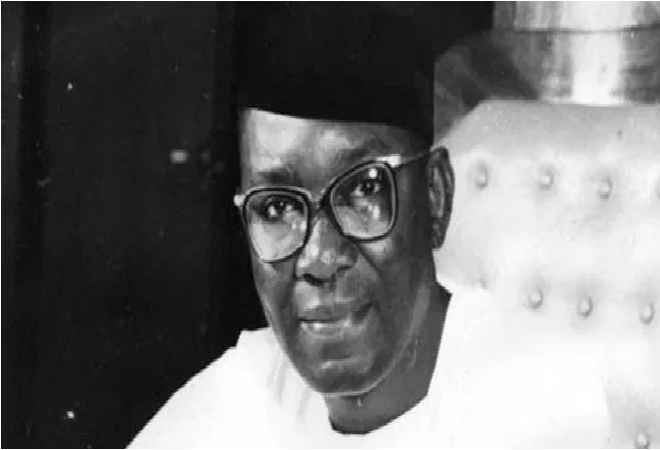
As kids we heard how Zik (Nnamdi Azikiwe) trapped and corked away ‘mammywater’ in a bottle, and how he could have released her on any slight provocation from any Nigerian and have the whole country overrun by River Niger. We also heard how Abubakar Tafawa Belewa would have enslaved Nigeria through tea-drinking because he didn’t know how to turn off some kind of automated tea-serving machine. We also heard that somebody nearly sold the whole country to some foreigners.

But as we grew older, we began to laugh at our infantile gullibility. But, given the things we hear and see in Nigeria, maybe we shouldn’t have laughed at all. Maybe, those stories were true, or could become true.

And so, you think Zik didn’t actually lock away ‘mammywater’ in a bottle? But, you live in a country where snakes and monkeys swallow millions of Naira!

And you still think it wasn’t possible that Abubakar Tafawa Belewa could have drunk away Nigeria’s future on tea when today we know that the budget for wine and other meals of some government quarters run into millions and billions of Naira.

And you think one or more persons couldn’t have sold off Nigeria, both land and people, when we could see how Nigeria, Nigerians and their future have been sold to some families, friends, cronies, western financial institutions, and possibly the Chinese .

For me, I have stopped doubting those incredible Zik-and-co stories. The only thing I do when I remember any of those stories is to thank Zik for his kind and self-restraining character at not releasing that mammywater and had us all wiped out of the face of the earth. I also thank God for sending Zik to the rescue of Abubakar, else every family in Nigeria would have long started washing plates in the 50’s and 60’s to repay our national debt. Not that the story is different today, but at least he helped to reduce our years of poverty, servitude and misery.

My brother, I have seen and heard so much in this country that some things have long stopped being jokes to me. Na my fault?

COVID-19: African Countries Taking Economic Advantage of Global Supply Shortfalls

0

The spread of coronavirus is beginning to make an economic impact in Africa in the oddest way. The epidemic which among other things, has resulted in shortage of facemasks in China is pushing the export of the now scarce commodity from Nigeria, Kenya and some other African countries.

China used to be the largest producer and exporter of facemask before the outbreak of COVID-19, and its major export destination was Africa. The events of the deadly virus have turned the tide in favor of the importers.

The World Health Organization (WHO) said coronavirus has caused disruption in global supply, spiking also the price of gowns, gloves and other protective gears up to 100 percent. The health governing body said the price hike is as a result of non-medical people who use these items for preventive measures.

“When supplies are short and demand is high, then there could be bad practices like hoarding in order to sell them at higher prices, and that’s why we ask for solidarity,” said Tedros Adhanom Ghebreyesus, WHO Director-General. “Demand is up to 100 times higher than normal and prices are up to 20 times higher.”

As of today, there are over 79,157 cases and 2, 470 deaths of coronavirus globally: As the disease keeps spreading to other countries, the need for facemask keeps multiplying. Thailand has banned the export of facemask so as to use the little it has to protect its citizens.

The situation has created opportunity for Africans, since it’s the only continent free from the virus, and the price of facemasks has quadrupled in a short time. Nigerians are stocking and exporting at high figures. There was a story of a Nigerian store owner who made millions of naira with his last stock of a few cartons.

In Kenya, it is becoming more serious than anywhere else in Africa. Chinese middlemen are stockpiling face masks from Kenya and Tanzania for export to China. The price of a 50-pack box of mask was $2 before the outbreak but now sells for about $15.

Quartz reported a hectic scene of Chinese customers struggling to place orders for facemasks and thermometer guns. The authenticity has to be confirmed via video through WeChat groups’ video for buyers in China who desperately need it. Once the three-part authenticity test – “burn, water and layer” is successfully carried out, a deal for supply has been made.

The Chinese government said it could only produce 20 million facemasks daily, which is half of what is needed on the daily in the highly populated country.

The factories in Nairobi are struggling to meet the increasing demands, increasing their work schedule from 24 hour/day five-day/week to 24 hour/day six days a week. But it’s not enough, and the factories are running out of cotton materials needed to make the masks. The depletion of cotton has slowed down production and pushed the Chinese merchants to look elsewhere in neighboring Tanzania for additional supply.

The facemask is not the only thing in demand; the thermometer gun has become an item of high demand also. Kenyan exporters said some are made in the country while some were imported from China and have to be exported back to China. The price has significantly increased also. Before the outbreak of coronavirus, the thermometer gun was sold for about $25 but has jumped to around $35 right now.

The demand for facemask, thermometer gun, gowns and gloves has gone up also around the world. In the UK, Thailand and Indonesia, the price has gone up tenfold and the countries are discouraging the export of any of the items in readiness for a possible escalation of COVID-19.

China has ordered 200 million facemasks from Egypt, the only African country that has had a worrisome suspected case of coronavirus though it later proved negative. But the authorities said they are going to prioritize local demand in case of a possible outbreak.

The WHO has advised on balancing supplies in anticipation of an outbreak. That way, every country will show its readiness to contain the disease and provide the needed supplies when it is time.

“We call on countries and companies to work with WHO to ensure fair and rational use of supplies and the rebalancing of the market. We all have a part to play in keeping each other safe,” said Tedros.

While the African Union in collaboration with WHO has intensified checks at the ports of entry, there is fear that Africa is not prepared in terms of supplies in case the virus hits the continent. The way Nigeria, Kenya and some other African countries are pushing the export of coronavirus preventive tools not minding a possible outbreak, the continent seems utterly vulnerable.

Update – Feb 27,2020: Africa needs a strategy; most other regions have.

In a sign of how serious the global crisis is becoming—new infections outside China now outnumber those within—Saudi authorities are blocking foreigners from coming into the country for pilgrimage or tourism purposes. That means Muslims from outside Saudi Arabia are unable to visit the Prophet’s Mosque in Medina or perform the ‘Umrah pilgrimage to Mecca. In Japan, Prime Minister Shinzo Abe has told all schools to close for a month, from Monday. And Israel is taking the extraordinary step of banning all foreign travelers entering the country from Italy (Fortune)

Interswitch Partners American Express; GIG Logistics Partners Gokada, Oride on Logistics

1

American Express (AmEx) has announced its partnership with Interswitch Nigeria on Friday February 21. AmEx is seeking to expand its reach in Africa, especially Nigeria, leveraging on the large number of users already on the Interswitch platform.

The partnership will also help Interswitch to use American Express to establish itself in the Americas.

The duo provide financial payment services and are looking to expand their operations beyond the continent of their origin. The partnership will enable American Express Cardmembers to carry out a wide range of transactions including ATM withdrawals via Interswitch. On the other hand, it will allow Interswitch to integrate its network of merchants in Nigeria into the global American Express network.

“AmEx and Interswitch are aligned in our desire to provide fast and secure payment solutions and transactions across Nigeria. With this new partnership, we are improving AmEx Cardmember access to a convenient and secure network, which also benefits our merchants who will gain new opportunities presented by an expanded user base.

“By remaining card scheme neutral, Interswitch will continue to explore innovative partnerships that will benefit consumers and retailers alike,” said Akeem Lawal the Divisional Chief Executive Officer for payment processing at Interswitch.

The partnership agreement entails that Interswitch will manage American Express merchants in Nigeria, offering them unlimited transaction access that was previously impossible due to the scanty transaction options offered by AmEx to its Cardmembers in Nigeria. As part of the deal, Interswitch will expand American express business presence by bringing new merchants into the platform.

The Vice President & General Manager, Global Network Partnerships EMEA for American Express, Vivi Galani said that the company is always looking to consolidate its role as a leader in the global network.

“We are excited to be partnering with Interswitch, a well-respected pan-African financial technology company, to continue to grow our presence in Nigeria. As we partner with leading banks and financial institutions around the world, we are bringing the powerful backing of the American Express network to Cardmembers and merchants by expanding acceptance of our cards.”

Lawal said Interswitch’s partnership with American Express should spur more merchants to join Interswitch, he reiterated the company’s commitment to uphold excellence in service to everyone aboard its platform.

Interswitch Limited is a Nigerian digital payment company that provides digitized payment services in Nigeria and other African countries.

Just a month ago, the company got listed in the Nigerian Stock Exchange (NSE), with a whopping N23 billion bond, and has started living up to the big move by expanding its tent beyond Africa.

Meanwhile, Good Is Good Logistics (GIGL) is partnering with Gokada and ORide to expand its logistics delivery services in Lagos. The Lagos State’s ban on motorcycle services in has put a sudden stop to the business of all the motorbike ridesharing services, and opened them up to other options that can put them back in business.

Well, the ban exempted dispatch riders and that seems to have offered hope to the displaced ride-sharing companies.

Gokada was the first to take an aim at service delivery in the wake of the ban, a strategy that has caught the attention of GIGL, who are reportedly in talks with Gokada, ORide and some others for a partnership deal in delivery service.

GIGL Lead, expansion and growth, Odafe Onojah admitted that the companies are in talks for a deal that will result in the utilization of the suspended bikes for logistics services.

However, there have been concerns about the large number of motorcycles affected by the ban; if there will be a room for most of them in the logistics business. Onojah said the market space for the services is wide enough to accommodate a large number of motorbikes, and such fears are not of concern.

“In this present age, people no longer want to leave the comfort of their homes, when there is a reliable delivery service that can bring whatever they want to their doorsteps,” he said.

While the pivot appears salvage to the ridesharing companies, it poses fear of disruption to the service delivery market. With the number of companies involved and the number of dispatch riders to be incorporated, delivery items will not be enough to go round.

There is also concern that the state government may eventually take a swipe at the idea.