DD
MM
YYYY

PAGES

DD
MM
YYYY

spot_img

PAGES

Home Blog Page 6486

The Message in Trump’s Ban to Nigeria

6

America wants Nigerians. Provided U.S. still issues non immigrant visas (NIV) to Nigerians, I still believe that Nigerians have doors to America. If 8,000 Nigerian passport holders apply for U.S. immigrant visas (IV) yearly, I expect less than 6,000 to be in Nigeria; the rest are Nigerians updating their status outside Nigeria. But U.S. issued about 169,000 NIV to Nigerians in 2017 and about 150,000 in 2018. This ban will not affect the 150,000+. Technically, the ban is largely about 6,000 people.

The U.S. gave security as a reason. That is laughable because IV applicants are more vetted than NIV. So, provided it is allowing the un-vetted NIV, security is not the reason. The Nigerian government which is setting up a committee on security missed the coded message, and is wasting its time. (Nigeria has better security records in U.S. than Saudi Arabia which is not in the list.) IV applicants have family members (American citizens) who typically sponsor them and are naturally more secure in U.S. than NIV who come as students, tourists, etc. And most NIV overstay their visas – 10% of global overstays are held by Nigerians.

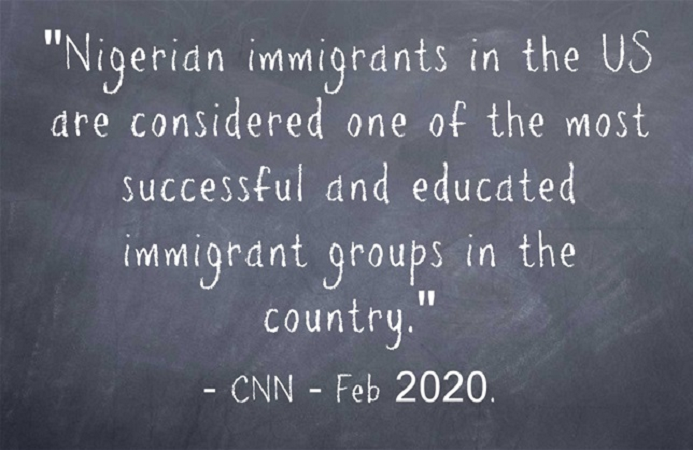
Besides the public political play for U.S. election, Nigerians in America know the core reason why this happened. Out of decency and respect to Abuja, one cannot write such here. But one thing I will remind young Nigerians is this: Do not lose confidence in yourself and never allow how U.S. categorizes Nigeria to diminish you. From Yale to Harvard to CNN, “Nigerian immigrants in the US are considered one of the most successful and educated immigrant groups in the country.”

Update: CNN had edited this quote out; learn my update on same.

You can read some online websites which captured the original article by searching the exact quote, “Nigerian immigrants in the US are considered one of the most successful and educated immigrant groups in the country.”. One is here. Sure, it is gone on CNN, but it is not erased.

If you care, webcache captured it here (image below).

Simply, this ban is not because of what is happening in U.S. but what Abuja has refused to do. And including Nigeria in a list that includes Sudan, Eritrea and Burma, is the greatest ban we can experience. That would not be fixed by a committee; we know what we need to do to “restore the dignity of Nigerians”, paraphrasing the University of Nigeria’s motto.

President Trump of America has spoken; Nigeria needs to hear him loud and clear. But our nation’s leadership needs a better antenna to decipher what he has in the frequency.

Webcache captured the line

How Do You Innovate And Shift Your “Basis of Competition”? Join Ndubuisi Ekekwe

0

To an insurer CEO: “On the two investments IT is seeking, here are our perspectives:

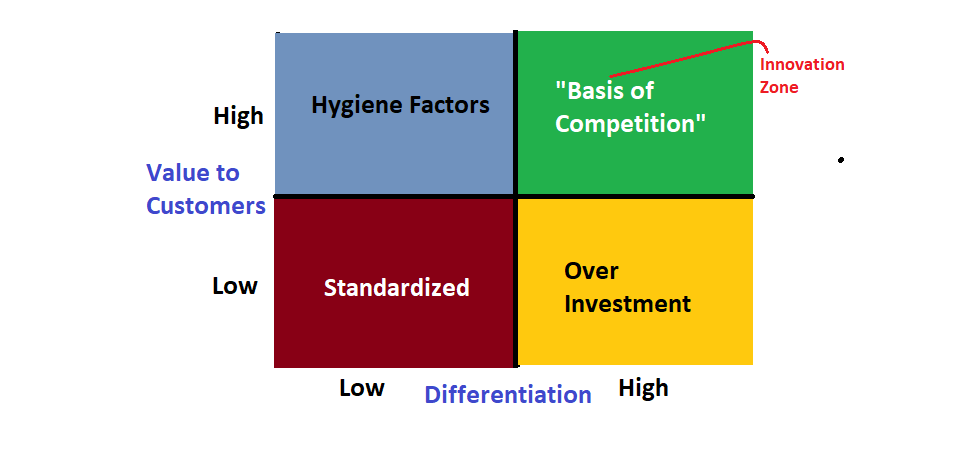
  • Investment #1 is in Hygiene Factor zone; it would not advance the Basis of Competition of this firm. There is no leverageable value, derivable from spending this $xx money. While the Value to Customers seems high, it offers no clear Differentiation in the market. Sir, the current offering in the market is in Standardized domain and is widely acceptable in the sector.
  • Investment #2, it has high Differentiation but Value to Customers is not evident – this is an over investment. 

Our construct is that we need to move the Basis of Competition, through investments that deliver High Differentiation and Value to Customers simultaneously. An IT that transforms, not just run this firm would be desirable. Such an IT will make us a tech company that offers insurance services; these proposed investments keep us as an insurer that uses technology.”

Join me for Tekedia Mini-MBA (REGISTER here) as we examine how companies build INNOVATIVE products and services that shift the basis of competition through highly differentiated services that deliver great value to customers.

Innovation happens when the basis of competition moves: it is not when you have spent more money on R&D, created high differentiation but minimal value to customers, or created high value for customers with no differentiation. 

The “Basis of competition” describes the collection of benefits that are the most important determinants of a customer’s choice between different competing products or services. It is the competitive battlefield where preference is determined. The basis of competition is not static. It will change over time as competitors match each other in an area, making it a commodity or because customer needs change.

https://www.tekedia.com/mini-mba/

Novel Coronavirus, Spreading with Negative Impacts on Global Economy

0

A few weeks ago, novel coronavirus was a plague limited to the Chinese city of Wuhan. Gradually, it spreads across cities and countries beyond China. There is no continent free of the virus. Botswana has recorded the first case in the African continent. There have been over 9,600 confirmed cases, 12,167 suspected cases, and over 1,476 are in critical condition. It is becoming a pandemic with a devastating impact beyond the health circle.

On Thursday, the World Health Organization (WHO) declared coronavirus a public health emergency, a decision they were reluctant to make just a week ago. The organization has said last week that the virus did not yet constitute emergency declaration. But the rising number of cases across countries necessitated an emergency meeting in Geneva, and the virus was declared a global health emergency.

“The main reason for this declaration is not because of what is happening in China, but because of what is happening in other countries. Our greatest concern is the potential for the virus to spread to countries with weaker health systems, and which are ill-prepared to deal with it,” said WHO Director-General, Tedros Adhanom Ghebreyesus.

Beyond the health crisis, the virus is also wrecking economic havoc globally, just as it happened in 2003, at the outbreak of Severe Acute Respiratory Syndrome (SARS). Sites of attraction, leisure venues, cinemas, bars and clubs, and many other businesses having to do with tourism, all suffered from the escalation of SARS. China and Hong Kong reportedly lost $13 billion in GDP.

The story today seems to be becoming the same. Wuhan accounts for one percent of China’s GDP, with its booming population of over 11 million people, hospitality business keeps the city bubbling. Wuhan has been on lockdown and the movement of over 30 million people in China restricted through a government imposed curfew.

Wuhan was regional economy with growth rate expectation of 7.8 percent in 2020, a performance above China’s economy that is expected to grow by just 6 percent. The city receives 55 international flights each week from more than 20 countries, according to data from aviation data analytics firm Cirium.

It goes beyond Wuhan to other cities in China where businesses and activities are getting closed to prevent human to human infection of coronavirus. Outside China, neighboring countries are in the region are counting their losses already.

“We certainly expect there to be an impact on our economy, business and consumer confidence this year, especially as the situation is expected to persist for some time,” said Singapore’s Trade Minister Chan Chun Sing.

Chinese nationals make the large number of tourists visiting Singapore. With some Chinese cities on lockdown and travel restrictions imposed, the Singaporean tourist industry has witnessed significant losses.

In the United States, stocks are reacting negatively to the escalation. The Dow Jones Industrial Average fell more than 450 points, following the record of coronavirus in the country. It is feared that the stocks may keep falling following the spread of coronavirus. In Japan, the Nikkei stock market suffered its worst drop three days ago. European markets were also hit, following the news that the virus has been recorded in Germany and UK.

The most affected sectors of the global economy are aviation and tourism. Flights are getting cancelled and travel advisory is being issued by many countries warning their citizens to stay away from affected countries. In the US, pilots union has filed a suit to halt American Airlines flights to China. The 15,000 professional pilots who fly for American Airlines are seeking a restraining order from the court that will stop all airline services between the US and China.

The first human to human transmission of the disease has been recorded in the US, signaling potential spread. Though president Trump said the situation is under total control, the panic is taking away economic freedom as many people are choosing to stay in door. The US economy is expected to take the hit soon in addition to its first quarter economy slow down that’s partly orchestrated by the Boeing crisis.

“It’s going to have a hit on Chinese spending. We may see more of it in the US but we just don’t know at this point. It’s very uncertain,” Barclays US economist Jonathan Miller said.

Russia has closed its border with China in a bid to stop movement of people from infected places into the country. There is a report of an isolated cruise ship in Italy holding a Chinese woman who had a fever and was suspected of having the virus.

Borders are getting shut, flights are being cancelled and businesses are being shut down. There is no time frame for reopening of these economic activities and the return of normal life. Though Africa appears to be the least affected by the virus right now, its economic dependence on the rest of the world means it will share the same economic fate with the more affected countries, especially China, which its economic dominance touches almost every country in the continent.

IFC Delists Nigeria from Top 5 Investment Destinations in Emerging Africa As Interswitch Lists N23Bn Bond on NSE

2

Nigeria’s economy has taken yet another swipe as the International Finance Corporate (IFC) has delisted Nigeria from among the top five countries that are positioned to attract private investment in emerging markets.

IFC is an arm of the World Bank focused on investing in emerging markets. The development has come as a result of many infrastructural lapses that have hindered economic progress in the country.

The country manager of IFC Eme Essien Lore said on Friday at the 2nd private equity summit organized by Udo Udoma & Bello Osagie that Nigeria has enough natural mineral deposits to do better than other African countries. She said the country has failed to utilize its human capital as well as other resources for national development.

According to her, Nigeria is now placed among the top 10 economies where investors should look to invest, losing its place from top five where she used to be. This is because the country is surrounded with many challenges that have hindered its economic progress. They range from declining per capital income to external imbalance, increasing poverty as well as disturbing human capital indicators in health and education.

Lore said there is no excuse for Nigeria to lose its place among the top five countries in Africa, and needs to put economic policies in place to get back to the position.

“Nigeria should be in the top five given the enormous need we have for private capital. But we are not there because we are shying away from the reforms that can attract capital. An annual growth rate of 2 percent is poor for a developing economy adjudged to have the opportunity to grow between 7-10 percent annually,” she said.

Lore added that the slow pace of the economy is clouding potential growth and favorable demographics in Nigeria, and urged the government to affect the needed reforms that will translate to economic developments that will entice investors.

Meanwhile, Interswitch Limited has on Friday, 31 January listed on the Nigerian Stock Exchange (NSE) with N23 billion bond. The Callable Senior Unsecured Bond, with a tenor of seven years, at a fixed rate of 15 percent, is part of a N30 billion Debt Issuance Programme issued through a Special Purpose vehicle – Interswitch Africa.

“We are pleased to be a partner to Interswitch Limited in its quest to expand its footprints by raising fresh capital,” said Oscar Onyema the Chief Executive Officer of Nigerian Stock Exchange. “We see a win for Interswitch as a win for Nigeria. As a sustainable Exchange and a premiere listing destination, we are committed to supporting our issuers with tailored financing options that will place them in a vantage position to compete in the regional and global markets.”

Interswitch Limited is a Nigerian digital payment company that provides digitized payment services in Nigeria and other African countries. The company has defied the odds of doing business in Nigeria and Africa to rise to the level of getting listed in the NSE.

Parties to the transaction are Stanbic IBTC Capital and FBNQuest Merchant Bank that served as Lead Financial Advisors/Issuing Houses, and ABSA Capital Markets Nigeria, FCMB Capital Markets, Rand Merchant Bank Nigeria and Quantum Zenith Capital & Investment.

The Group Managing Director/Founder Interswitch limited, Mitchell Elegbe expressed his gratitude to the Nigerian Stock Exchange.

“We are delighted with the outcome of our capital raising efforts. We have evolved over the past 17 years into a technology unicorn focused on providing digital solutions to customers in Nigeria and across Africa. We, therefore, see this listing as the first step in a new phase of our journey and we are determined to keep going,” he said.

Interswitch Limited was founded in 2002 as a payment processing company, and has gone ahead of the competition with its verve card; it is currently Nigeria’s most used card that accounts for 18 million out of 25 million cards in use in the country. It is also available in two other African countries; Kenya and Uganda.

Nigeria – New VAT of 7.5% Begins

0

You might have received an email that looks thus:

With the recent assent of the 2020 finance bill into law, which reviewed the Value Added Tax (VAT) rates from 5% to 7.5%. We hereby inform you that in line with the directives of the Federal Government of Nigeria, from the 1st of February, 2020, you will be billed 7.5% for VAT on all our Services (adapted from DHL).

Welcome to the new era of 7.5% VAT. Many invoices may be updated if they were not processed at last night cut-off. The banks have been emailing of this update, and the era is already on.

This one from First Bank

Implementation of 7.5% Value Added Tax (VAT) rate commences on 1st February 2020

Further to the enactment of the Finance Act 2019, the Federal Government has announced that the implementation of the 7.5% Value Added Tax (VAT) rate under the new Finance Act will commence on 1st February 2020.

In line with the Federal Government directives, please be informed that VAT on each eligible bank transaction or service will be charged at the new rate of 7.5% with effect from 1st February 2020.

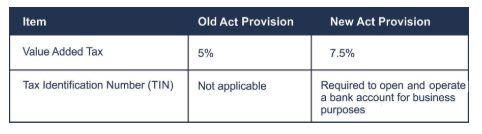
The table below highlights the key changes:

Be assured that we will continue to put you first by providing the best financial services solutions and delivering the gold standard of value and excellence.