DD
MM
YYYY

PAGES

DD
MM
YYYY

spot_img

PAGES

Home Blog Page 6493

African Top Economies Taking on Wind Energy for Power Generation

0

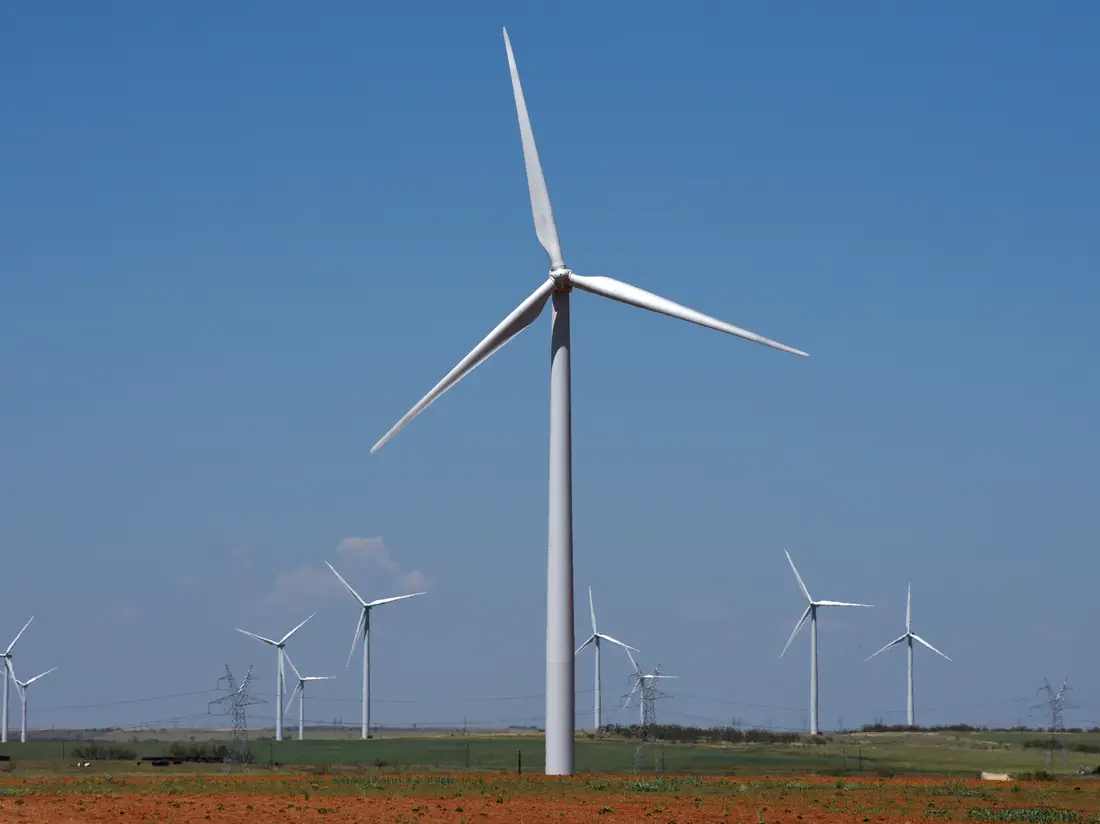
As the quest to electrify Africa continues, African countries are exploring alternatives to gas and solar energy to power electricity. Wind power has become one viable option that leading economies in the continent are tapping into.

Africa is the least electrified continent in the world with a booming population of young people pushing through entrepreneurship; the situation has dampened its economic growth, making more rooms for unemployment.

Industrial activities have also been stymied, and it wanes the interest of potential foreign direct investments. Efforts to curtail the deficiencies have been in slow pace. National grids are underperforming, producing much less than what is required for electricity stability. In Nigeria, power generation still hangs around 4,000mw when the country, with a population of about 200 million people, needs 180,000 megawatts to generate enough power for constant electricity supply.

Solar energy and coal have been used as alternatives to power generation but they have also fallen short of the required capacity, and their efficiency has become questionable due to technical shortfalls especially solar panels. And in an era when the world is pushing for cleaner energy, various options are being entertained outside gas powered electricity.

In search of diversified alternatives, African countries are taking aim at wind energy. Last year, following the lead of Egypt, Morocco, Ethiopia and the Middle East installed about 900 megawatts of wind power. The development is attracting others who eagerly look for a solution to their epileptic power situation.

On Monday, Senegal inaugurated the largest wind power plant in West Africa. The plant is projected to supply up to 15% of energy to the country’s national electricity company, Senelec’s energy production.

The plant which was built by British renewable power company Lekela, is said to have 158 megawatts capacity and took a period of 24 months hours to be built. The Senegalese president Macky Sall said the plant is evident of the country’s resolve to find a new approach to its electricity generation.

“A new step in the energy market towards an emerging Senegal. Emerging Senegal, a Senegal that is fueled by its momentum through an energy mix that combines all of our potentials to ensure continuous quality service at competitive costs,” he said.

The president said two million people will gain access to electricity through the wind power project. Senegal has about 35% deficit in electricity supply, prompting the government to include power efficiency into its plan of making West Africa an emerging economy in 2025.

South Africa is planning to add 3.3 gigawatts to its energy capacity by 2024 using wind power. The country has been struggling to keep its electricity capacity in par with the growing population and economic progress. The lapses in the country’s electricity supply have doubled recently, resulting in blackouts and suggesting a need for diversification of its power sources. In the quest to meet the growing demand, South Africa needs to expand its electricity infrastructure, and the country has adopted wind energy as the alternative.

Kenya has also taken on a giant wind energy project in a desert located 600 kilometers north of the capital Nairobi. Described as Africa’s largest wind power project, the Lake Turkana Wind Power farm is made up of 365 turbines with a power dispensing capacity of 310 megawatts. It is expected at completion to supply cleaner electricity at a more affordable cost compared to the national grid.

Ethiopia is notable for its Ashegoda Wind Farm, the turbine has 120 megawatts power and supplies electricity to about 3 million people. Located 780 km north of the capital Addis Ababa, the wind plant has reduced the cost of electricity allowing the Ethiopian Electric Power Generation Corporation (EEPCo) to produce each kWh at a low cost of about $0.08 per kWh.

In Egypt, the Ras Ghareb Windfarm with 262.5MW capacity project has been developed close to the Gulf of Suez, about 30 km from north-west of Ras Ghareb. The wind farm is expected to supply electricity to about 500,000 households, according to power-technology website. It is also expected to help the Egyptian government’s target of 20% supply of electricity from renewable energy sources by 2020.

One of the major challenges so far has been efficient wind to power the turbines. According to the Renewable Energy Focus, annual average wind speeds greater than 4 meters per second m/s (9mph) are required for small wind turbines. And for larger scale turbines, a minimum average wind speed of 6 m/s (13 mph) is required. So the coastal regions of the continent are the best places to situate the wind farms.

The Global Wind Energy Council (GWEC)’s data shows that wind energy installation is expected to increase over the next five years, and the African regions are expected to install 10.7 gigawatts by 2024.
Improving Tertiary Education in Nigeria

1

Cultism, stealing, alcoholism, smoking, prostitution, examination malpractice, and lobbying are no longer news in our tertiary institutions. The majority of students on campuses have found several vices to keep them occupied rather than their studies. Youthful exuberance and juvenile delinquency are now the order of the day.

With no fewer than one million students seeking admission into tertiary institutions every year and about half of them succeed, I do ask myself, what is the drive behind Nigerian youths wanting to further their education? Is there clarity of purpose or even an atom of ambition that is propelling them to pursue higher education? Were they properly guided?

Now, I know that the majority of parents do counsel their wards before sending them to the various educational institutions scattered all over the country, our colleges, polytechnics, and universities also organize seminars, conferences, and workshops for newly admitted students (freshers) for the aim leading them in the right direction, warning them of the dangers of academic levity, joining bad groups and indulging in anti-social activities.

I feel that the damage has already been done as soon as the gates of our institutions have been opened to them. I believe the major aim of higher education at every level is to prepare the youths to become active and productive members of society and secondly, to meet and match industry demand with a competent and globally competitive workforce. If that’s the case, our tertiary institutions are not looking for numbers of students, there is no competition on which school is most populated, there is a common goal which is to; advance Nigeria’s economic growth and global competitiveness through the provision of accessible, relevant, high-quality education in our Tertiary Education Institutions. To constantly attract, develop and graduate competent, knowledgeable and talented individuals from our Tertiary Education Institutions.

Then granting admission to thousands of students on the basis of their ability to pass Maths and English (which many even cheat to do so) is not good enough!!.

This is one of the reasons we are having problems in our various schools today and it will end up affecting our nation in the long run. These individuals will, later on, be released into society, most of them unqualified to compete in the job market.

Mind you, I’m not writing off the incentive of parental counsel and Freshers’ orientation but most times at that stage, the die had long been cast.

The strategy our educational institutions should employ, first; staff associated with our educational institutions should stop accepting bribes to grant admissions. Integrity would go a long way to curb this plague ravaging our campuses. Secondly, no individual should be given admission until he or she declares their major purpose in becoming a graduate or state their reasons for choosing to further their education.

This could be done in the form of an essay writing and included in the aptitude tests of all institutions in the country. The write-ups of the individuals should be carefully read and assessed. The ones lacking purpose or conviction should be dropped even when the individual does very well in the Maths and English sections.

This would be a worthy improvement, I don’t see anyone cutting corners with this method. If this strategy be properly implemented, it would result in a drastic reduction in the number of hooligans and lawbreakers that the gates of our educational institutions are being opened to every year

I leave you with a quote of Swami Vivekananda, an Indian Monk;

“We want the education by which character is formed, strength of mind is increased, the intellect is expanded, and by which one can stand on one’s own feet”.


Why I Am Against Freemium Model, Without Double Play, in Africa

0

Some emails on the Freemium & Free section in the lecture material for Tekedia mini-MBA Week 3. The fundamental premise why I had suggested that a Freemium-based business in Africa without a Double Play is faulty is as follows:

  • Building a website with enough traffic to boost those two coefficients in my break-even traffic equation is tough, for advertisement to make sense (that is a FREE model). With supply of contents unbounded, it is a hopeless strategy. Google last month cut earnings by 50%; you need 2x traffic or clicks to earn what you could have earned in Dec 2019.
  • Freemium model is based on a faulty acquisition plan, copied without strategic thinking from U.S. In U.S., the key thing is to acquire new users who already have resources to afford your product. Once you acquire them, there is a likelihood for conversion (i.e. they become paying customers) due to inertia (i.e switching cost is high, for e.g. to change a bank account). In Africa, most times, your customers do not even have the means to afford that product. So, if you give them free, they come, but once you turn the paywall, they leave,not because they do not like the product but rather they do not have the money to pay!
  • But if you have a double play, you can offer freemium in one product, and then monetize in the other product. For example, make an ecommerce marketplace free but all payments must go through your fintech subsidiary. From the fintech, you will make your money via transaction fee while the free marketplace accelerates growth faster. That is double play there.

Sure, if you run an NGO, nothing stops you running a freemium model; any day you run out of cash, you fold. But if you do not want that outcome, find a way to ensure customers pay, no matter how small.


You Can Still Register for the Ongoing Tekedia Mini-MBA

Palm Oil’s Bet on Revitalizing the Nigerian Economy

0

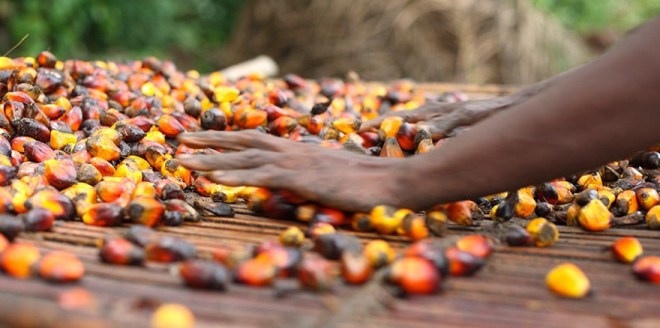
Palm Oil as they say is a Silent Goldmine. It was a lifesaver in the 80’s and has the potential to help rebuild the oil driven economy that has lost its steering. But how can this happen? This article explores the road map.

Historians believe that the use of palm plants as a food source dates back 5,000 years ago to West Africa. Oil palm trees grow in warm climates that have an abundance of rain and sunshine such as Nigeria, Malaysia and Indonesia. Palm plants produce two exportable commodities.

The pulp of the tree is crushed to form palm oil while the seed is crushed to form palm kernel oil. Palm oil has several applications including cooking, lubricants, candle-making, cosmetics, and can even be eaten prior to being crushed. It is cheaper to produce biofuel using palm oil making it a cost-efficient substitute to using soybeans or other crops.

Palm Oil is in abundance in Nigeria, specifically in Enugu, Imo, Ondo, Edo,, Ekiti, Cross River, Delta, Akwa-Ibom, Bayelsa, Anambra, Oyo, Abia and Ogun States, and these are considered to be the largest producers of palm oil. Palm tree plantations are spread over an area estimated to range from 1.65 million to 2.4 million hectares.

Palm oil industry is considered the industry that will revitalize the Nigerian economy and reduce its excess dependence on oil. Here is a statement from the Governor of Nigeria’s central bank Mr. Godwin Emefiele about palm oil, “in the 60s, Nigeria controlled 40 per cent share in the global palm oil chain’’. We were exporting our palm oil to different parts of the world, but because we found crude oil, we receded and abandoned it. The price of a ton of palm oil is more than the price of a barrel of crude oil. So, what happened?

“For other countries, when they had the opportunity in agriculture and in the crude sector, they did not let their guards down; unfortunately, we did and that is what we are paying for today. We will grow that market again and after that, we will go into cocoa,” he said. From his statement, the value of Palm oil on the Global market is greater than that of Crude oil (which is Nigeria’s main export)

Here is a detailed price comparison:

  • As of January 27,2020, one barrel of crude oil today sold for about $53.14 which is N1,9263.25 (exchange rate N362.50 = $1).
  • A barrel contains 159 liters. Which means crude oil sold for $0.334 per liter.
  • As of January 24, 2020—Palm oil closed on January 24,2020 at $2,925.00 per ton which is N1,060,312.50 (exchange rate N362.50 = $1).
  • A ton is 1,000 liters. Which means palm oil sold for $2.93 per liter on the international market.

So Where Do We Go from Here?

A liter of crude oil sells for $0.334 while a liter of palm oil sells for $2.93 (almost ten times the value of crude oil). Palm oil is easily produced locally and with the governments drive for more hands in the agricultural sector, this would be the best area to invest money, time and human resource into as it will yield more returns.

Looking for Nigeria’s GREATER Leader

4

Nigeria will not rise until decency, soundness of mind and spirit of hardwork, over name, class, lineage or tribe, will give a little boy or girl opportunity in our nation. Until a girl born in Awka, until a girl born in Uyo, until a boy born in Kano, until a boy born in Lagos, until the little girl from Jos, and until the boy from Yobe, can aspire for anything, based on hardwork and the power of their imaginations can propel them, Nigeria has no future. The recent story of nepotism and special job placements for children of politicians and the connected diminishes this nation. There are few things which can be life-changing than a good job. Nigeria needs to make the few jobs we have to be competitively open to ALL; economic mobility goes through that path.

We yearn for a leader who can engineer Nigeria into rebirth and restoration to offer a prosperous nation that is colorful, fluidic, vibrant and open, unbounded by tribe and class, and united by a shared purpose.

He or she must demonstrate immense intelligence, competence, pragmatism, and unimpeachable before his fellow citizens. A person of integrity, broad knowledge, enormous vision and solid experience; one that can stimulate more vibrancy in the private sector and move the public sector out of its stasis, tackling corruption and stabilizing our democracy. And yes, giving us electoral reform to remove stagnation, circuitous legal component and time-waste to get leaders to work as soon as possible after elections.

Restoring our dignity and recovering our place in the world. Building confidence and re-imaging our nation through affecting fundamental reforms in capital markets, education, healthcare, etc all packaged in the zobo-amala-nkwobi of good governance. Yes, a hopeful nation, admired by all!

Our young people when giving fair and open opportunities to rise and fail will be the path to that hopeful nation. Backdoor opportunities must END.

Nigeria needs a GREATER Leader to change the fundamental constructs of this nation, and give everyone opportunities. That your father is a politician should not guarantee you a job over your classmate who is evidently more qualified. I hope we understand that at our individual levels, we can be that GREATER.