DD
MM
YYYY

PAGES

DD
MM
YYYY

spot_img

PAGES

Home Blog Page 6494

COVID-19: Chloroquine Offers Hope for Cure

0

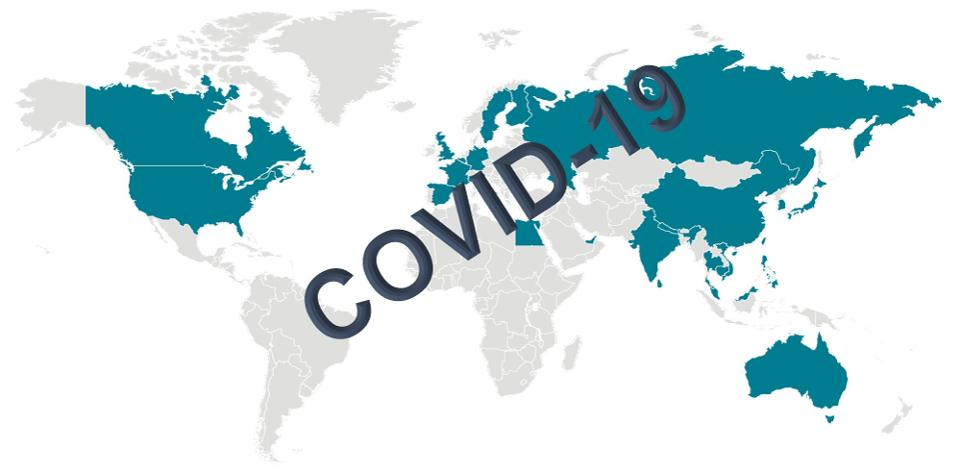
The fight against Coronavirus disease (COVID-19) seems to be getting to its end with humans claiming conquest. Two drugs that have been on trial appear to offer hope for a cure based on how patients respond to the treatment. Chloroquine phosphate is leading the way in offering recovery hope to victims according to trials conducted so far.

Chinese experts have confirmed based on clinical trial results, that chloroquine, an anti-malaria drug, surprisingly bears subduing effect on coronavirus. Chloroquine which has been in use for over 70 years now was selected among many other drugs tried on patients due to its promising effects.

Sun Yanrong, deputy head of the China National Center for Biotechnology Development under the Ministry of Science and Technology (MOST) said the progress recorded in the trials suggested that the drug will be included in the next version of the treatment guidelines and applied in wider clinical trials as soon as possible.

“In the trials, the groups of patients who were treated with chloroquine had better recovery rate compared to others who were placed on other drugs. In abatement of fever, improvement of CT images of lungs, the percentage of patients who became negative in viral nucleic acid tests and the time they need to do so, chloroquine showed better indicators,” she said.

Sun explained that the drug has been in clinical trials in over 10 hospitals in Beijing, as well as in South China’s Guangdong province and Central China’s Hunan province, and it showed the same efficient results.

On February 15, Zhong Nanshan, a respiratory specialist and a renowned figure of the Chinese academy of engineering, led a team of experts on a video conference. Prominent medical departments of health in china, including National Health Commission and the National Medical Products Administration deliberated on the effectiveness of various drugs on clinical trial and agreed to use chloroquine phosphate in treating COVID-19 patients.

Chloroquine blocks viral infections by increasing endosomal pH required for virus/cell fusion, it also interferes with the glycosylation of cellular receptors of SARS-CoV10. Nature’s time-of-addition assay showed that chloroquine functioned at both entry and post-entry stages of the 2019-nCoV infection in Vero E6 cells. Apart from its capacity to inhibit viral activities, chloroquine offers immune-modulating activity, which may synergistically enhance its antiviral activity in vivo. Chloroquine circulates widely in the whole body, touching the lungs, which makes it effective even after oral administration.

So far, two drugs have shown efficacy against COVID-19. Remdesivir has been as promising as it was in the past cases against a wide array of viral infections, including SARS and MERS and by extension, Ebola.

According to the scientific magazine Nature, Remdesivir is an adenosine analogue, which incorporates into nascent viral RNA chains and results in premature termination. The clinical time-of-addition assay showed remdesivir functioned at a stage post virus entry which agrees with its putative anti-viral mechanism as a nucleotide analogue.

The data collected from Nature showed that  EC90 value of remdesivir against 2019-nCoV in Vero E6 cells was 1.76  ?M, which suggests that its working concentration is likely to be achieved in NHP. The supplementary data also showed that Remdesivir inhibited virus infection efficiently in a human cell line (human liver cancer Huh-7 cells), which is sensitive to COVID-19.

Coronavirus has already killed over 2,004 people around the world, but mainly in China where the disease started in December last year. About 75,000 people have been infected so far as the disease keeps spreading across borders. The Chinese government has been cooperating with other governments around the world in search of a cure.

Hope seems to be lying within for long while scientists research for a possible cure. The major obstacle to finding a cure has been the inability of researchers to figure out the source of the disease. While there is yet to be an approved cure for the viral infection, the two drugs offer remedy.

The scientific discovery reveals that chloroquine and remdesivir are highly effective in the control of CODIV-19. They have been recommended for administration on patients suffering from coronavirus disease.


How Federal Character Policy Under-Develops Nigeria

0

The Emir of Kano and ex-Governor of the Central Bank of Nigeria, Muhammadu Sanusi, opines that Nigerian policies on “quota system” and “Federal Character Principles” are detrimental to Northern Nigeria. To him, instead of these policies helping the North to catch up with the advanced development in other parts of the country, it made it worse off.

This may come as a surprise to many Nigerians, who believe that the Federal Character principle has greatly benefitted the northerners. But remembering that 87% of the poor in Nigeria are found in the north is enough proof to reassert that the claim of the Emir of Kano is factual.

Understanding the Federal Character Principle

The principle of Federal Character has been enshrined in Nigeria’s 1979 Constitution. This policy is there to ensure that appointments into public offices reflect the federal character of Nigeria. This means that appointments into any political offices, civil service, military, para-military, and so on, at the federal level, ensures that Nigeria linguistic, ethnic, religious and geographical diversities are represented. In other words, all the states in the country are duly represented in all federal government’s appointments.

This policy is set up to prevent predominance of people from a particular state, tribe, geopolitical zone, religion and language in Nigeria public offices and affairs. It is there to prevent discriminations, nepotism and tribalism. Truly, Federal Character principle is there to protect the interest of every Nigerian citizen.

Emir of Kano’s View on Negative Impacts of Federal Character Policy

Citing the exact words of Muhammadu Sanusi on why Federal Character policy has affected northern Nigeria will throw lights on how this policy has been under-developing Nigeria. Below are excerpts from his birthday wish to Nasir El-Rufai, Governor of Kaduna State, on 17th February, 2020:

“You don’t need to rise on being from Kaduna State or being from the North or being a Muslim to get a job. You come with your credentials; you go with your competence; you can compete with any Nigerian from anywhere.

“We need to get our Northern youths to a point where they don’t need to come from a part of the country to get a job. And believe me, if we don’t listen, there would be a day when there would be a constitutional amendment that addresses the issues of quota system and federal character.

“The rest of the country cannot be investing, educating its children, producing graduates and then they watch us; they can’t get jobs because they come from the wrong state; when we have not invested in the future of our children.”

I think this excerpt says it all – northern youths do not bother developing themselves because the Federal Character policy uses quota system to ‘share’ employments to Nigerians – qualified or not.

How Federal Character Policy Under-Develops Nigeria

The terms of Emir Muhammadu Sanusi have given deep insight into why Federal Character principle is affecting the country negatively instead of positively. The system, to start with, has killed healthy competition among the youths. It has made it obvious that appointments into federal services are not based on merit, but on where you come from. Put differently, people do not get appointments into federal services because they are experts but because there is vacancy in the quota for the indigenes of their states. So an office can be manned by an inept because he is from the “right” state.

Federal character policy was put in place to reduce discriminations and inequalities in the treatment of every tribe in Nigeria. But ironically, this policy has gravely encouraged inequality in the recruitment, placement and admission processes into federal offices and schools of learning. Take the example of the cut-off marks for 2018 common entrance examination into unity schools, where indigenes of Anambra State were cut off at 139 (69.5%), for both male and female, while those from Zamfara State had their cut-off marks pegged at 4 (2%), for male candidates, and 2 (1%), for the female. This is a way of telling those studying hard in Anambra State that they are wasting their time since their counterparts playing hide and seek in Zamfara State will get admissions. Besides, it hurts to know that something you didn’t get is given to someone less qualified.

Looking at the discrepancies in the cut-off marks of the unity school common entrance examination, as given above, one could easily see why the education standard of the country is low. To ensure that the students that scored high and low are carried along, the education system of the country will be watered down. Besides, it is obvious that someone who scored two out of two hundred (that is 1%) is not intellectually ready to battle with the academic works of secondary school. But here they are, pushed into a system that will only confuse them the most.

Another way federal character policy affects the country negatively is through unprofessionalism of federal workers. As Sanusi noted, while some people are investing in and developing themselves, others are unbothered because they know they will definitely get federal government paying jobs with the little knowledge and skills they managed to acquire. As someone once said, government paid workers from the so-called disadvantaged states do not bother developing themselves because they know they can never lose their jobs as a result of unprofessionalism.

Conclusion

Federal Character policy is good. In fact it is wonderful. To me, it shouldn’t be scraped off the Constitution; but it needs to be reviewed. Whatever that will be added or removed from it should ensure that the policy does not create room for laxity and discrimination. All states and, if possible, local government areas should be duly reflected in federal government appointments. But there should be equality, not equity, in these appointments.

You Can Still Register for the Ongoing Tekedia Mini-MBA

0

Good People, this is to inform you that you can still register for the ongoing Tekedia Mini-MBA. Our contents are archived and fully recorded. Everything is self-paced and you can go at your own pace. Once you register, our team will send you a link to access old contents, including the videos, lecture materials, discussion boards, webinars, etc. Join us today!

How To Register: 

  1. PayPal: follow this link and pay $140 US dollars. It supports most global currencies.
  2. Bank transfer (Nigerian naira): Pay N50,000 into any of GTBank 0114016493, UBA 1019195493. Account owner: First Atlantic Semiconductors & Microelectronics.
  3. Flutterwave: follow this link (naira) or this one (USD) to use your Verve, Visa, Mastercard, Amex, etc cards across Africa and beyond (you can use same links for other currencies, please ask for exchange rate before payment if not on Naira or USD).
  4. Automatic Access: Pay via this Tekedia link for self-automatic enrollment with username.

https://www.tekedia.com/mini-mba/


Improving the Supreme Court of Nigeria

2

It does not look really great. If you have a non-political case that needs the attention of the Supreme Court of Nigeria, it is possible you may not get a date before Jan 1 2023. The apex court is overbooked and over-congested. If that is the case, it means the Supreme Court of Nigeria is simply now the Supreme Court of Political Matters Nigeria since only political cases get accelerated access to the justices.

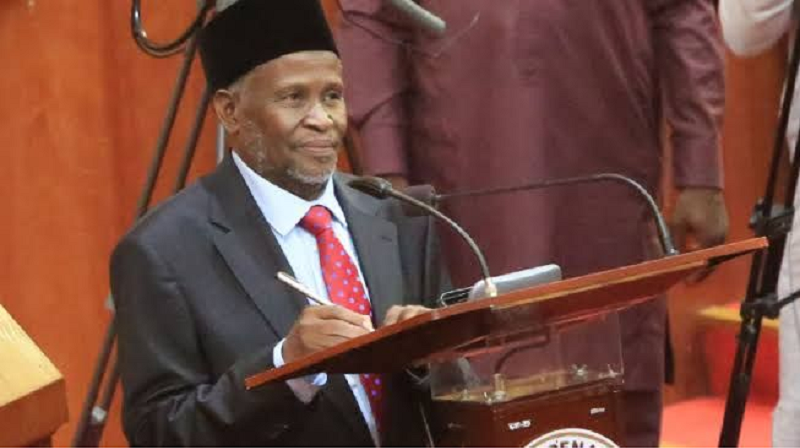
I am a layman, and certainly know nothing about law other than to stay out of trouble. That way, I do not need to know the law! But if I see the Chief Justice of Nigeria, Justice Ibrahim Tanko Muhammad, I will tell him this:

  • Create 6 regional Supreme Courts in the 6 geopolitical zones to try non-political cases at the level of Supreme courts in their jurisdiction. Each of these courts will have only 3 justices.
  • The ultimate apex Supreme Court in Abuja will focus on political matters and generation-shaping cases. All cases would first arrive from the Appeal Court to the ultimate Supreme Court in Abuja which can decide to punt to the regional ones. Once that decision is made, the finality of the decision will be decided at the regional level.

People, with extra 18 justices, our legal system at the supreme level will improve to serve the frictions in the marketplace. The Nigerian parliament can amend the Constitution to allow this ordinance to become part of our system.

Gaskiya ne. Nke ahu bu eziokwu. Otito niyen.

The Problem is EXECUTION, Not Your Competitors!

2

Most times, competition is not your main enemy as you build that start-up or the product. Your main enemies are the internal elements in your company which could affect flawless execution. Do not fret morning and night about competition because ideally for an African start-up, you do not have many competitors!

Yes, most of our industries are still at infancy with the incumbents largely operating at sub-optimal levels. So, when you focus on competition, you lose sight to think how to innovate and make great products. (You should be aware of competition, but do not think they are there, to snuff life out of your business. That is not the case.)

Failing as an African start-up or a product is not necessarily because any competitor took you down. The likely major reason is that you could not execute to fix that friction you have established that company or product to solve. For the solar companies that went under, they did not die because of electricity DISCOs (distribution companies), since the DISCOs are still not distributing enough electricity. Those logistics start-ups that went under did not collapse because of competition as our logistics systems in Africa are still at infancy. The farms did not collapse because we suddenly have excess produce capacities from big farms. Largely, failing as a start-up, in Africa, has nothing to do with excessive competition: it is a product of inability to execute. (I am hoping you do not plan to start another Facebook to make a case that competition does kill!)

So, as a founder or product champion, give yourself a break and focus on the real business: building great products and a fantastic company. Do not allow another new fund-raise by a perceived competitor to stress you. Do not allow another new city expansion by the same competitor to stress you. Do not allow another hiring of a Vice President to stress you.

But worry if you are not serving your customers and improving your products. Get back to work and stop being fixated on competition. Sure, you do need to be aware of competition but it does not need to stay in your face as you pursue your mission. You may see big buildings and expensive cars driven by (incumbent) executives, but if you check well, the market has not been scratched.

Pulse: Consider the insurance sector in Nigeria where we still have only single-digit market penetration (Vanguard has 0.4%.) There could be “competition” but if you are really innovative, you can create a new basis of competition and disrupt the market. Not doing well in the insurance sector cannot be due to competition, rather your inability to at least move the penetration to say 30% from the current single-digit. So, any failure in the Nigerian insurance sector is really an execution failure, not competition related.

[culled from Tekedia Mini-MBA Week 2 Lecture materials]