
DD
MM
YYYY

PAGES

DD
MM
YYYY

spot_img

PAGES

Home Blog Page 6504

IFC Delists Nigeria from Top 5 Investment Destinations in Emerging Africa As Interswitch Lists N23Bn Bond on NSE

2

Nigeria’s economy has taken yet another swipe as the International Finance Corporate (IFC) has delisted Nigeria from among the top five countries that are positioned to attract private investment in emerging markets.

IFC is an arm of the World Bank focused on investing in emerging markets. The development has come as a result of many infrastructural lapses that have hindered economic progress in the country.

The country manager of IFC Eme Essien Lore said on Friday at the 2nd private equity summit organized by Udo Udoma & Bello Osagie that Nigeria has enough natural mineral deposits to do better than other African countries. She said the country has failed to utilize its human capital as well as other resources for national development.

According to her, Nigeria is now placed among the top 10 economies where investors should look to invest, losing its place from top five where she used to be. This is because the country is surrounded with many challenges that have hindered its economic progress. They range from declining per capital income to external imbalance, increasing poverty as well as disturbing human capital indicators in health and education.

Lore said there is no excuse for Nigeria to lose its place among the top five countries in Africa, and needs to put economic policies in place to get back to the position.

“Nigeria should be in the top five given the enormous need we have for private capital. But we are not there because we are shying away from the reforms that can attract capital. An annual growth rate of 2 percent is poor for a developing economy adjudged to have the opportunity to grow between 7-10 percent annually,” she said.

Lore added that the slow pace of the economy is clouding potential growth and favorable demographics in Nigeria, and urged the government to affect the needed reforms that will translate to economic developments that will entice investors.

Meanwhile, Interswitch Limited has on Friday, 31 January listed on the Nigerian Stock Exchange (NSE) with N23 billion bond. The Callable Senior Unsecured Bond, with a tenor of seven years, at a fixed rate of 15 percent, is part of a N30 billion Debt Issuance Programme issued through a Special Purpose vehicle – Interswitch Africa.

“We are pleased to be a partner to Interswitch Limited in its quest to expand its footprints by raising fresh capital,” said Oscar Onyema the Chief Executive Officer of Nigerian Stock Exchange. “We see a win for Interswitch as a win for Nigeria. As a sustainable Exchange and a premiere listing destination, we are committed to supporting our issuers with tailored financing options that will place them in a vantage position to compete in the regional and global markets.”

Interswitch Limited is a Nigerian digital payment company that provides digitized payment services in Nigeria and other African countries. The company has defied the odds of doing business in Nigeria and Africa to rise to the level of getting listed in the NSE.

Parties to the transaction are Stanbic IBTC Capital and FBNQuest Merchant Bank that served as Lead Financial Advisors/Issuing Houses, and ABSA Capital Markets Nigeria, FCMB Capital Markets, Rand Merchant Bank Nigeria and Quantum Zenith Capital & Investment.

The Group Managing Director/Founder Interswitch limited, Mitchell Elegbe expressed his gratitude to the Nigerian Stock Exchange.

“We are delighted with the outcome of our capital raising efforts. We have evolved over the past 17 years into a technology unicorn focused on providing digital solutions to customers in Nigeria and across Africa. We, therefore, see this listing as the first step in a new phase of our journey and we are determined to keep going,” he said.

Interswitch Limited was founded in 2002 as a payment processing company, and has gone ahead of the competition with its verve card; it is currently Nigeria’s most used card that accounts for 18 million out of 25 million cards in use in the country. It is also available in two other African countries; Kenya and Uganda.
Nigeria – New VAT of 7.5% Begins

0

You might have received an email that looks thus:

With the recent assent of the 2020 finance bill into law, which reviewed the Value Added Tax (VAT) rates from 5% to 7.5%. We hereby inform you that in line with the directives of the Federal Government of Nigeria, from the 1st of February, 2020, you will be billed 7.5% for VAT on all our Services (adapted from DHL).

Welcome to the new era of 7.5% VAT. Many invoices may be updated if they were not processed at last night cut-off. The banks have been emailing of this update, and the era is already on.

This one from First Bank

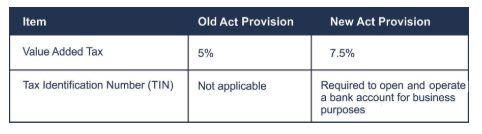
Implementation of 7.5% Value Added Tax (VAT) rate commences on 1st February 2020

Further to the enactment of the Finance Act 2019, the Federal Government has announced that the implementation of the 7.5% Value Added Tax (VAT) rate under the new Finance Act will commence on 1st February 2020.

In line with the Federal Government directives, please be informed that VAT on each eligible bank transaction or service will be charged at the new rate of 7.5% with effect from 1st February 2020.

The table below highlights the key changes:

Be assured that we will continue to put you first by providing the best financial services solutions and delivering the gold standard of value and excellence.

Just Invested in a dPetrotech, the Fintech of Downstream Petroleum Sector

0

This week, we made an investment in a fledgling Lagos-based startup in the downstream sector of the nation’s petroleum sector. The downstream petroleum sector is a latent opportunity and new technologies can bring efficiencies in the system. Like the fintech’s moment in banking, dPetrotech startups (downstream tech startups in the petroleum sector) have huge frictions to fix. We will bring Zenvus proprietary technology and engineer that future. 

Last year,  I delivered the keynotes of the two most impactful oil industry associations in Nigeria. That co-sharing and co-learning have provided new perspectives. 

I believe in the framework that the future is one of abundance, and tomorrow will be better than today. The challenges of today are opportunities for the future and as those frictions are being fixed, things will get better. Fixing those problems will go through markets – and I am a believer in markets.

I will introduce this firm next week. If you work in this sector and looking for enabling technologies, we are here (click to connect).

Grand Opening Ceremony of SPE Int’l Conference – My Talk Title is “The Abundance in Data”

Lack of 5G Devices Stalling Adoption

0
5G network, adaptable business model

As 5G’s deployment continues to garner momentum, its coverage is spreading across countries and cities faster than many have anticipated. In the US, the roll out has seen unprecedented growth in the face of China – US trade war, and antitrust issues that resulted in the ouster of Huawei, and slowed to great extent, the pace of the deployment.

While there has been significant progress in the roll out, PwC, US 5G Index reports that the real world applications and uses for the average person have been slow to keep up. In its analysis, PwC predicts 60% coverage in the US in the next six months. But the report says the challenge of its growth lies on the availability of the 5G enabled devices, and that less than 2% of devices will be 5G enabled in six months.

However, there is hope that enough 5G devices will be available by the end of the year, according to PwC principal Dan Hays.

He said: “We’ve been tracking the progress on 5G since the initial networks were launched in the US about a year ago and we have seen the coverage for 5G grow significantly over the past six months. It’s gone from a very small fraction of the US having 5G coverage to today, where roughly half of the country is covered with at least one 5G signal.

“Even as the coverage has advanced, there are still relatively few devices that are capable of connecting to these more advanced networks and the sales of those devices are still very weak. Even though we have half the country where 5G is available, less than 1% of end-user devices are really capable of taking advantage of the 5G signal.”

According to the Index, consumers have been slowly responsive to the availability of 5G. In the US, they are only willing to pay about $5 per month more for in-home services or another $4 each month mobile.

The speed and other benefits of 5G are likely going to be experienced first by enterprises before individuals. PwC says companies leveraging networks of Internet of Things (IoT) devices are likely going to embrace the services before others.

The cost of 5G services has been a hurdle between its providers and consumers. With the trade war still in the way, PwC said finding cheap manufacturing that will result in low-cost infrastructure and products will remedy the situation. The whole world relies on China when it comes to cheap infrastructure and low-cost tech products.

“Many people feel like they already pay too much for their mobile services, and we’re seeing that unless the industry makes a very clear and compelling case for 5G, they may be stuck making the investment in the network and not seeing a benefit in terms of revenue and profit,” added Hays.

Another possible barrier to the acceptability of 5G is the availability of 4G networks with speeds close to that of 5G. The Index noted that the use of high frequency spectrum by various internet service providers is yielding almost the same result as 5G.

“At its best, 5G should offer up to 10 times the speed of 4G networks. However, in these early days of 5G, there’s a lot more variability. Some of the networks that use the very high frequency spectrum are achieving these kinds of very high speeds today. However, they tend to be available only in very limited areas and not really very good for truly mobile use. You kind of have to be sitting in one place to take advantage of them.

“To work with a 5G network, your device has to have a compatible set of antennas and a compatible chipset. The chipset in particular has been one of the gating items for the availability of 5G smartphones in particular. Right now, there are several dozen devices that have been announced that will work with 5G networks. However, many of them don’t work with every single operator, so they might just work with one and not all, and many of them are not yet commercially available,” said Hays.

The lack of devices to keep up with 5G roll outs is also widening the interest gap among consumers. The peculiarity of the devices is giving people a reason to stick 4G network that is more device-tolerant.