DD
MM
YYYY

PAGES

DD
MM
YYYY

spot_img

PAGES

Home Blog Page 6505

Basic Things To Consider Before Buying Any Laptop

0

You want to buy a laptop for yourself, your child, your boss and you don’t know anything about laptop? Worry no longer. This article is for you. Follow me as I walk you down the basics of important system specifications. Let me clearly state that the question of which laptop to buy doesn’t have a ‘this’ or ‘that’ answer. There are several things to consider, which I have attempted to explain in this article. You will have to consider all of them to make the best decision.

Specifications covered by this article include

  1. Size of budget
  2. Purpose of usage
  3. CPU Processor
  4. RAM size
  5. Storage capacity
  6. Physical size of laptop
  7. Screen size and type
  8. Keyboard quality 
  9. Battery life and USB Port

SIZE OF BUDGET

Except your plan is to steal or you are lucky enough to have a buoyant benefactor that simply wants you to make a choice else the size of your budget is the first thing you should consider. How much are you willing and able to spend? ‘Better soup na money no be news’ . For a brand new average laptop you need around N130,000.00 – N170,000.00. For a standard high spec laptop you need around N180,000.00 – N800,000.00. Anything less than N130k I will advice you go for foreign used which is a topic for another day. 

PURPOSE OF USAGE

In some cases, the purpose of usage is the most important thing to consider before buying any laptop. Before I became a software developer, I had an Asus mini laptop with 4G RAM and Intel Celeron Processor was serving me very well but could not meet my programming needs. I had  to buy another laptop. A Core i5 processor with 8G RAM. So the purpose of usage is very important. 

Every other laptop can perform basic tasks like desktop publishing, web browsing, playing of music etc but only high specs laptop can comfortably handle tasks that are associated with programming, gaming or graphics design. So What exactly do you want to be using your laptop for? 

CPU PROCESSOR

A Laptop is an electronic machine that can receive, process and output data. How effective it can deliver these tasks depends on its CPU processor. The better the processor, the more effective. I will recommend Intel processors over AMD except for purposes of quality r graphics display. 

Generally speaking I will advise you past any of Intel’s Core-based CPUs when buying a new laptop. Think Core i3, Core i5, and Core i7. An Intel Core Processor offers the best performance when it comes to multitasking and multimedia tasks. The higher the Core the better the performance. 

Note that with a Core i7-based system, heat coming through the base of the laptop can be a cause for concern, especially if you plan to actually use the laptop on your lap a lot of the time. If you are a pure game lover and loves to watch HD & Full HD Videos on your laptop then I will advise you to buy a laptop with Graphics Processing Unit. (GPU) It will take care of all the graphics processing tasks

RAM SIZE

More RAM allows for more applications to be run at the same time, and for more data to be quickly accessible by the system at any one time, which comes in handy for tasks such as editing photos or video content. But generally 4G Ram can serve very well for conventional tasks however, if you want to use your laptops for graphic designer, programmer, or photo/video editor I will recommend minimum of 8G RAM. RAM can be added even after you must have purchased the laptop.

STORAGE CAPACITY 

Storage capacity, Hard Disk, Hard Disk Space or Read Only Memory (ROM) all mean the same thing. This is where your files are stored (application files). All your music, movies etc are stored in your Hard drive. When it comes to Hard Drive. You always upgrade it to your convenient size even after you must have bought the laptop.

It is important you know the difference between Hard Disk Drive (HDD) and Solid State Drive (SSD). Both have their advantages and disadvantages. HDD load files slower compared to SSD. HDD also produce noticeable heat and noise. SSD on the other hand, offers a lot more speed, runs silently, and can be installed in a form factor that doesn’t add too much to the weight and bulk of a laptop. Almost all MacBooks come with SSD. Most OEMs have embraced SSD storage as the standard for laptops. 

While SSD is recommended it comes with higher budget and smaller space. So simply go for HDD if you want get larger space and at the same time spend less. You can equally buy an external drive to support the internal one.

PHYSICAL SIZE OF LAPTOP

Size isn’t like the RAM or ROM of a laptop, you can’t upgrade it later. You’re locked into whatever you select up-front, so choose wisely. If portability is your priority, you’ll want to go for a smaller sized Windows laptop. They tend to be thinner and lighter than their larger counterparts. Look for laptops that have a screen that is either 12.5-inches or 13.3-inches in size, and a weight between 1kg and 1.5kgs. 

SCREEN SIZE AND TYPE

Talking about screen, you first have to consider whether you want your laptop to have a touch screen or not. These days, touch screens are very common and they can make some tasks easier than others. Unfortunately, they can also add glossiness to the display which is sometimes undesirable. Glossy screens lead to reflections, which are a definite negative if you’re gaming, watching content or editing images and video content. For these reasons, you might want to consider a laptop that doesn’t have a touch screen. Next up, be sure to look at the resolution on any laptop you’re thinking of buying. A 1920×1080-pixel resolution (Full HD) should be considered if you want plenty of space to line up windows and keep things in view. Photographers and videographers will also want to privilege laptops that offer better color accuracy and support wider color gamut and HDR standards over those that don’t.

KEYBOARD QUALITY 

You want a keyboard that has a comfortable layout with full-sized keys and some space around the arrow keys. The keys should have adequate travel on the down stroke and snappy responsiveness when you let them go. A keyboard with backlit is an added advantage, you can type with an easier view on the keys in dimly lit environments but it also leads to higher power consumption.

BATTERY LIFE

In Nigeria, you cannot overemphasize the importance of battery life. The manufacturers rated battery life cannot be trusted because there are simply too many variables that affect battery life. There is the screen brightness, the screen resolution, the number of applications you have running in the background plus whether or not you actively remain connected to Wi-Fi networks or Bluetooth devices. The operating system a laptop runs on can also play a major role in determining battery life. A good practice here is to look at the rating of the battery in Watt-hours (Wh) or milliamp-hours (mAh). The larger these figures are, the longer the battery can last. 

USB PORT (USB 3.0)

Ideally, you should look for a laptop that has at least a couple of these USB 3.0 ports. In addition to the baseline utility you get from USB ports (which allow you to plug in an external hard or SSD drive and backup your data or use conventional mouse or a fancy keyboard with your laptop), USB 3.0 is about ten times faster than USB 2.0. This means that data transfers over USB 3.0 take significantly less time. Many modern peripherals also tend to deliver the best performance on or require USB 3.0 to function at all. 

SUMMARY

These are the basic things to consider before buying any laptop. Like are earlier stated. You need to weigh and balance all of them to come up with what is best for you. Other little considerations like brands don’t really matter much, so you can choose among any of the popular brands like Macbook, Windows, Dell, HP, Acer, Asus, Lenovo, Toshiba Razer, MSI, Samsung, Iball, Chromebook etc. For DVD/BLU-RAY drives, few laptops come with optical drives, because all software and movies are downloadable, However, if you really need to read/write discs and your laptop of choice doesn’t come with a built-in DVD drive, you can always buy an external one that connects via USB. 

Goodluck.
Get the Best Data Science Training and Position yourself for New Opportunities this Decade

0

Analytics, Data Science, Machine Learning & AI are new skills that will form the job landscape in 2022, according to the World Economic Forum Future of Job Report 2018. Acquiring these skills, requires solid foundational learning of theory, practice & use cases. 

Data Science Nigeria is the pioneer Data Science and Artificial Intelligence training and empowerment non-profit, that has trained thousands of students, through free AI training programmes, bootcamps, campus AI+ programmes, business professionals’ trainings and corporate trainings with robust hands-on consulting capacity. Our strength in training is a testament to our vision, which is to build a world-class Artificial Intelligence (AI) knowledge, research and innovation ecosystem that delivers high-impact transformational research, business use applications, AI-first start-ups, support employability, and social good use cases.

Our training model is a perfect blend of theoretical data science knowledge, practical industry use cases and delivered by facilitators who practice Data Science at the highest level of business & academia. 

All our trainings are designed to capture beginners to expert level competencies, with industry recognized certificates awarded to all participants at the end of our classes, including training support for international data science certifications by Microsoft or BigML 

In addition, we also provide custom trainings for industry-specific data enthusiasts, who wish to apply data science concepts to various fields, for example, HR, Marketing, Banking, Sales, Telecoms, etc. 

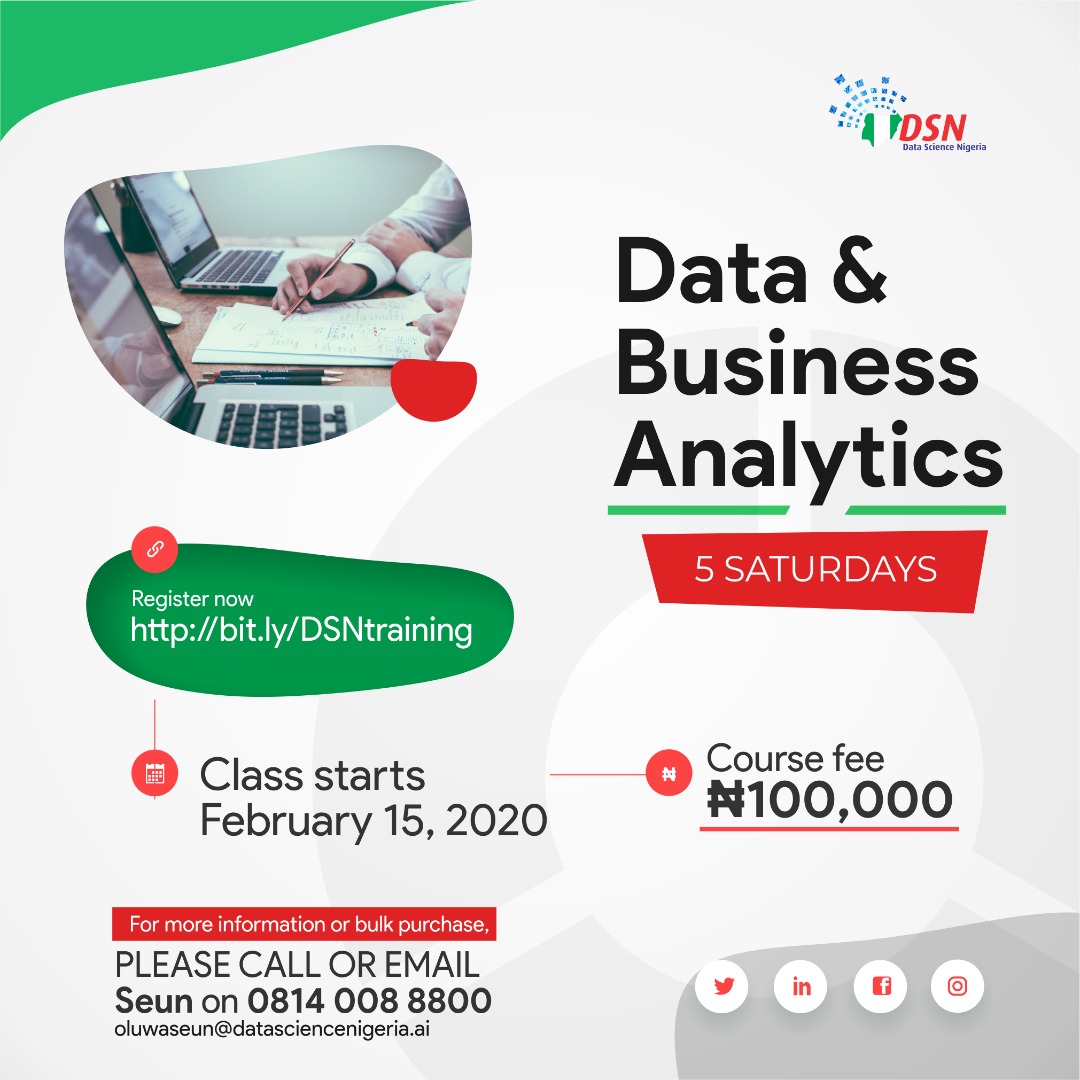
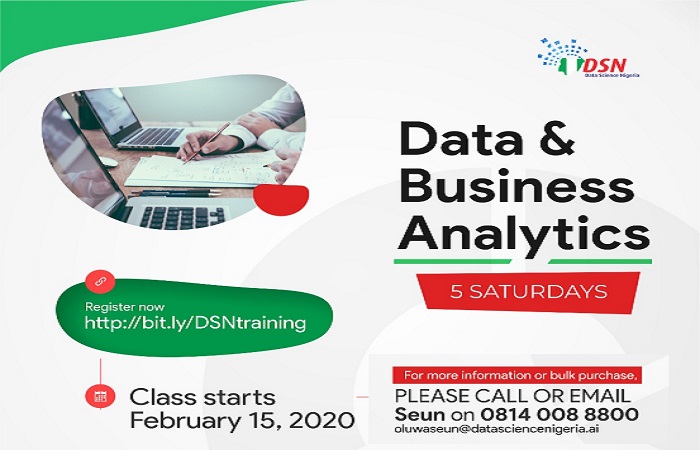
Don’t wait anymore, join our upcoming Introductory Data/Business Analytics Class starting 15th Feb and will go on for 5 Saturdays. Time is 9am to 12noon.

Please see below link to view all our scheduled training courses in 2020 www.datasciencenigeria.org/trainings/ 

To register for any of our trainings, please follow the link www.bit.ly/DSNtraining 

or  

call or email Seun on 08140088800/oluwaseun@datasciencenigeria.ai for more information.


African startups raised US$2.02B equity funds in 2019 – Partech Africa

0

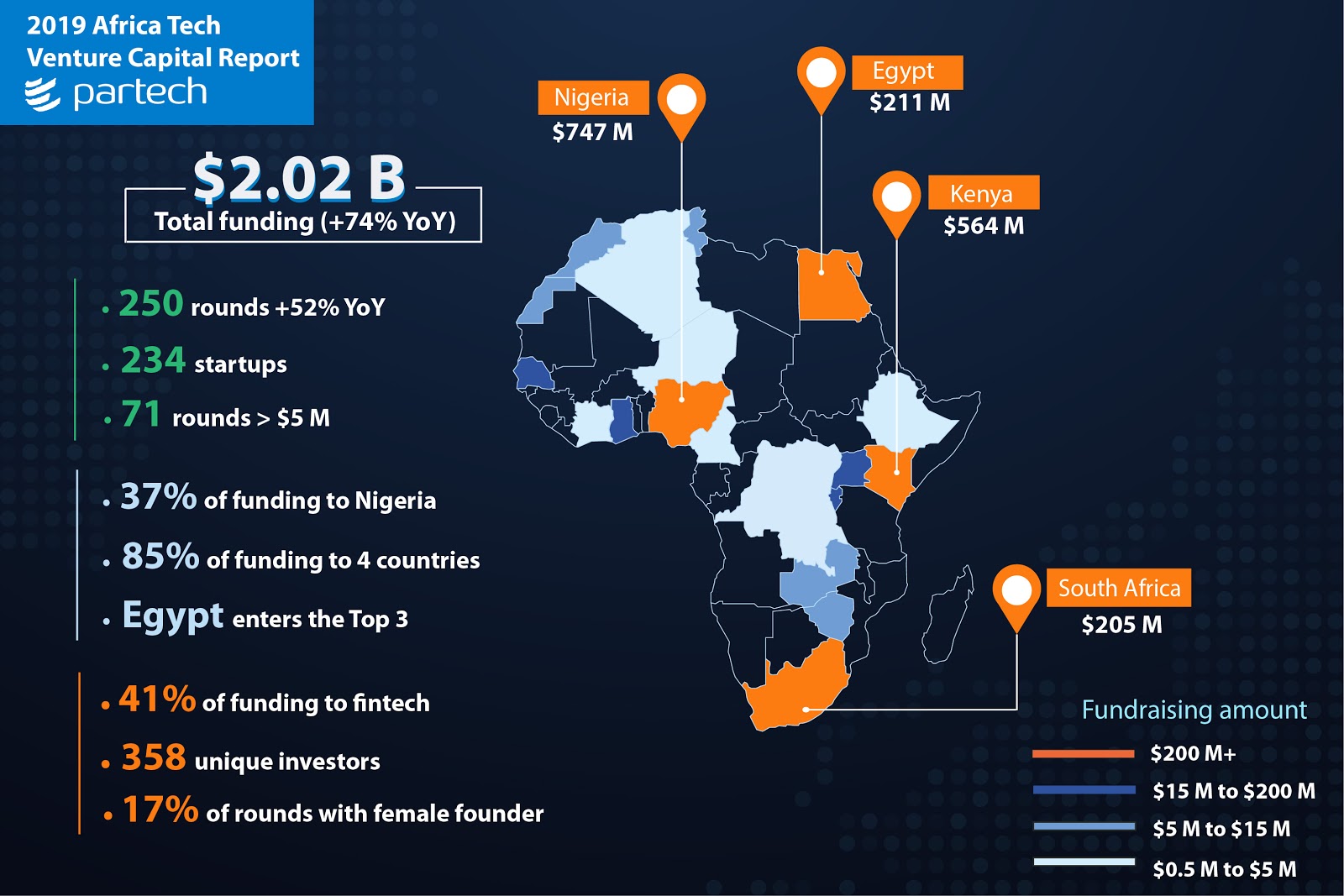
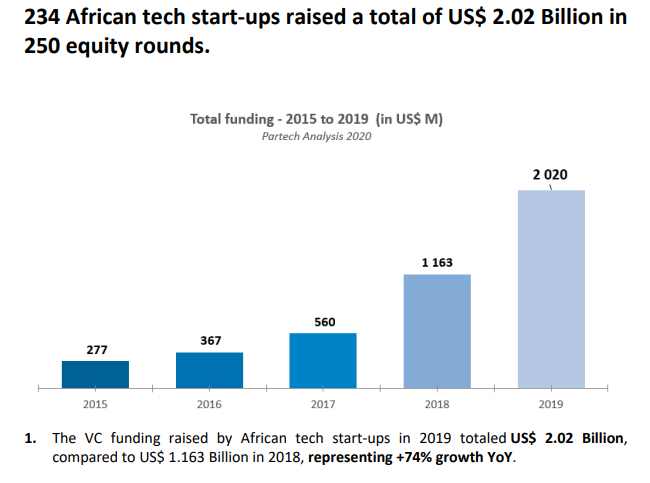
African startups raised US$2.02B equity funds in 2019 according to Partech Africa.

2018 saw US$1.163B raised in private equity, a figure that both Cyril Collon and Tidjane Dème anticipated to be reached after a further two years. Exceeding expectations even further, in 2019 that number increased significantly, with US$2.02B in equity being raised through 250 rounds, representing a 74%YoY growth.

The Partech Africa report tracked 250 rounds raised by 234 start-ups compared to 164 rounds by 146 start-ups the year before, representing +52% growth YoY in deal count. It should also be noted that the early stage rounds of Seed and Series A investments were extremely dense, a fact that demonstrates investors’ confidence in taking early bets in Africa.

You can download the full report here.

Five Years of SDGs in Africa: Why Setting Country Specific Benchmark in achieving the Global Milestones Matters

0

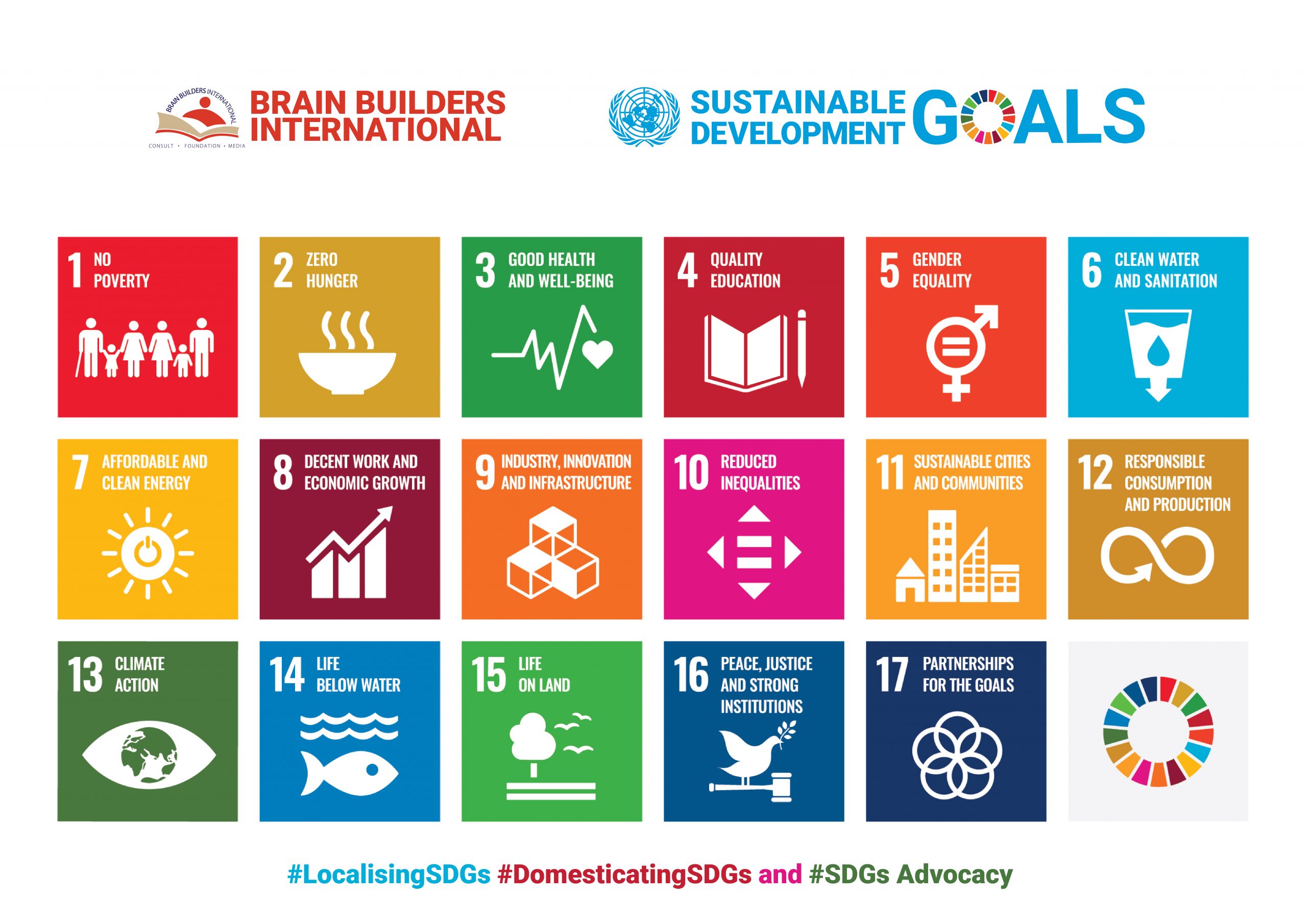
By September, 2020, it will be five years the global goals of Sustainable Development have been launched by the United Nations. At the launch in 2015, it was a consensus that by 2030, countries of the world would have made significant progress by achieving each of the goals. That could be said to be a very huge ambition on its own when looking at what led to the failure of its predecessors- the Millenium Development Goals (MDGs) and which brought in the SDGs. A quarter of the 15 years has already gone down if the countdown to the 5th anniversary of the launch is considered as September, 2020 approaches.

The five years of the global goals is significant in a lot of ways. One, if added to the previous 15 years of the MDGs, it would have been two decades of the United Nations’ attempt to make the world solve some of its major problems especially in vulnerable regions of the world including Africa. So, it calls for some reflection even as the SDGs could not be said to have been a new attempt at combating the problems identified through its set goals. So, there is a need to mainstream the attainment of the global goals to the local efforts being made to solve the identified issues focused by the goals.

Two, as the 5th anniversary inches closer, a deep look back at how the goals are propagated and keyed into by different regions of the world is equally vital. It is worthy to note that the UN has kept an eye on the achievements of the goals and what could be pointed to as considerable progress has been made. However, the attempt has been limited to regional levels. Success and milestones are measured on the basis of bloc achievement by countries in a region. This will not be helpful at all. Country-specific data at implementing the Goals should have rather been the focus. It is expected that by now, governments of different countries should have taken ownership and come up with national frameworks for the achievement of the 17 Goals.

Three, the first five years of the Goals is capable to give stakeholders a clear picture of whether the milestones of the implementation of all the goals are possible within the set timeframe. This calls for a five-year framework of assessment of the progress made on each goal. This would make setting up an early warning system for checking advancement on the goals. This will call for the cooperation of the countries of the world to give quality, accessible and timely data on progress made on each goal. Doing this would give room for a multi-layered approach to reviewing and tracking progress from country-level to regional-level and then the global-level.

Four, there must be a mechanism to ensure each signatory country has  a way of  contextualizing the attainment of the Global goals within the dynamics of its structures. For example, Nigeria as a country has her peculiarities of governance structure. There are ways through which the three-tier government distributes power and governance issues. Even though, many of the problems captured by the SDGs are spread on the exclusive, concurrent and residual list, it would require more advocacy to have them synergized with the global goals. For an appreciable success to be recorded, the country must approach the SDGs the way it attempted to implement the abandoned National Economic Empowerment and Development Strategy (NEEDS) initiated in 2004.

The strategy was not only focused at the national level, it had acceptance at the state and local government levels. The national and sub-national governments must have a clear approach and an agreed framework on the implementation of the goals. As the year of implementation of the goals enters its fifth year, there is no pointer that that is going to happen.  This is more so that there is nothing legally binding the countries in implementing the sustainable development goals.

As we roll down the fifth of the fifteen years of implementation of the sustainable goals, it is imperative that the UN emphasizes that governments should not only look at external partnership but also be deliberate about internal cooperation to ensure the impact of the SDGs is felt by the most vulnerable people and that no one is left behind. The consequence of Africa not doing well on the Global goals is unimaginable.

Call for Capital: A Fintech Startup with High growth potential is calling for seed funding & support

0

A Fintech startup registered in Delaware and Lagos, Nigeria is looking for investment in StackFX.

StackFX.io is a P2P FX transaction and remittance product that will facilitate the free flow of funds across the globe and is designed to serve all customer segments. It is owned and managed by Datastarck Inc and other accredited banking stakeholders in countries across the different continents of the world.

Datastarck Inc, registered in Delaware and Lagos, will use the capital to hire a business development team, acquire technologies & build a top-class team to quickly scale into the African and global markets. The company would also reserve a part of the fund for FX liquidity with its acquirer bank in Europe and the US. The deal is expected to close on February 12 2020.

The idea for StackFx came from the two Founders’ time at Procter & Gamble Nigeria, where the firm regularly ships in a high level of raw materials needed for the production line or plant at intervals.

“Most of the time, we are faced with the heavy task of sourcing for USD to be able to do this exercise, basically to pay foreign suppliers. Although there is year on year plans for same and this is tailored along the Central Bank of Nigeria’s USD buying window that is majorly executed through the commercial banks, most times, there’s always a shortage of exotic currencies to pay foreign suppliers of raw materials, which results in a halt in production &  minimum stock level. The firm then struggles or starts sourcing for exotic currencies from the black or grey market.

Sourcing from this black/grey market channels, which is the most unreliable with less liquidity, always comes with double fee/charges, because the firm buys at a rate with a commission from the black market fx traders then take this funds to the bank as a deposit before trading or paying from the corporate domiciliary account. At this end, the bank also charges its own fee at the end before processing the requirements and paying the suppliers abroad.”

In June 2017, the Datastarck team carried out a survey with a research team of 50 persons across the various BDCs, FX black/grey markets and banks FX trade desk, to ask the following: 

  1. What is the average daily retail FX in the grey markets?
  2. What is the volume or value done over banking FX desk?
  3. What is the actual FX value/volume in Africa as a whole?
  4. What is the daily retail FX in Nairobi, Joburg & Lagos by ranking or leading in Africa market? 
  5. What are the problems associated with retail FX sourcing in Africa and Asia?

The results of the survey revealed that there is a high level of inconsistency, lack of liquidity, unfavourable rates, multi-layer charges, inability to do instant FX between different countries of the world with ease, difficulty and delayed access FX service and all sorts of proprietary regulatory details and add-on cost.

StackFX was born to address these challenges as well as the existing foreign exchange and payments challenges faced by individuals & businesses. We will provide businesses and individuals with an online platform to exchange currencies with other individuals & businesses and make international payments to their business partners & suppliers abroad.

StackFX will allow customers initiate payments in the local currency of the initiating jurisdiction or US Dollars while the beneficiary receives a direct credit to his account or cash in the local currency or US Dollars (provided send currency is USD, GBP, Euro, SA Rand, Canadian Dollars, New Zealand Dollars, Australian Dollars and beneficiary has a USD account) in line with local procedures.

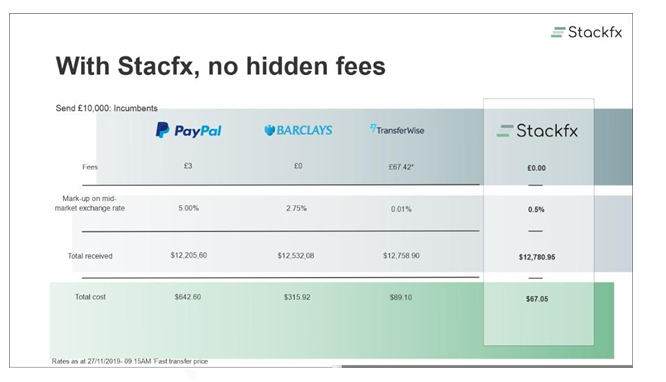
StackFx compared to incumbents 

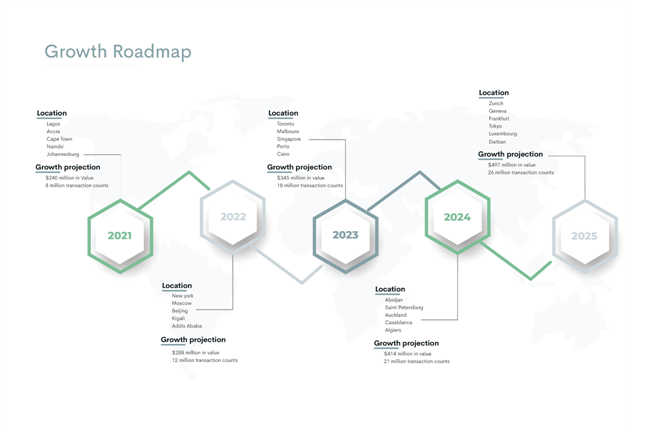
Africa’s Forex within the small and medium businesses alone is estimated at $400billion in transactional volume. StackFX targets 75% and 25% of the Africa market share and globally traded volume respectively, which according to the Bank for International Settlements triennial report of 2016, the foreign exchange market cap averaged $5.1 trillion per day, for 2019 global daily fx volume was 6.6 trillion. 

We see a future for Africa that truly fulfils the continents immense potential, but we believe that this can only be done with hard work, passion & dedication, and the road must begin somewhere. We intend to be one of the biggest facilitators of business and trade within Africa and with the rest of the world. We hope to build a strong and long-lasting community based on trust and mutual well-being.

StackFX as a digital FX platform will serve both local and diaspora’s personal, trade advisory and business financial transfer needs, this is made possible through a unified FX platform that is both secure and accessible regardless of region. 

We aim to bring positive disruption to the redundant, restrictive and outdated bank’s FX transaction model by using technology to allow real-market participants to dictate their terms and pricing.

Datastarck Inc is calling for seed capital investment for StackFX from Angel Investors and VCs only who meet the following stringent criteria:

  • Must be willing to invest for the long term
  • Must be willing to allow the company to operate as-is, no change to company culture.
  • Won’t try to lock the founders into golden handcuffs or push complex deal terms, renegotiate and grind on terms
  • Won’t try to flip the business in 3-5 years

If StackFX sounds like a perfect fit and addition to your investment portfolio, please send your questions and inquiries in an email to investments@datastarck.com

Upon receiving your email requests, we’ll send you our pitch, demo video and financial model.