
DD
MM
YYYY

PAGES

DD
MM
YYYY

spot_img

PAGES

Home Blog Page 651

Chancellor Friedrich Merz Firmly Opposes Tax Increases for Medium-Sized Businesses in Germany

0

German Chancellor Friedrich Merz has firmly opposed tax increases for medium-sized businesses, emphasizing this stance during a Christian Democratic Union (CDU) event in Osnabrück on August 23, 2025.

He rejected a proposal from his coalition partner, the Social Democratic Party (SPD), specifically countering Vice Chancellor and Finance Minister Lars Klingbeil’s suggestion that tax hikes for high earners and wealthy citizens might be necessary to address a significant federal budget gap.

Merz stated, “There will not be any increase in income tax on medium-sized companies in Germany with this federal government under my leadership,” highlighting his commitment to maintaining economic competitiveness and supporting the Mittelstand, Germany’s small and medium-sized enterprises (SMEs).

This position aligns with his broader economic agenda, which includes tax breaks and incentives to boost investment, as evidenced by a €46 billion tax-break package approved in July 2025. However, Merz acknowledged the structural economic challenges Germany faces, including high energy costs and U.S. tariffs impacting exports, which have contributed to a 0.3% GDP contraction in Q2 2025.

Merz’s commitment to avoiding tax hikes provides certainty for SMEs, which employ around 60% of Germany’s workforce and contribute significantly to GDP (approximately 34% of total value-added, per EU data). This stability encourages investment and hiring, as SMEs can plan without the burden of increased tax liabilities.

The €46 billion tax-break package approved in July 2025, which Merz supports, further incentivizes SME growth by reducing fiscal pressure and boosting competitiveness. Merz’s rejection of the SPD’s proposal for tax hikes on high earners and wealthy individuals signals potential friction within the CDU-SPD coalition. This could complicate budget negotiations, especially with a reported €17 billion federal budget gap for 2026.

If unresolved, this may lead to delays in fiscal policy or compromises that could indirectly affect SMEs (e.g., spending cuts impacting public contracts). Germany faces structural issues, including high energy costs, U.S. tariffs, and a 0.3% GDP contraction in Q2 2025. Merz’s focus on tax relief aligns with efforts to maintain Germany’s export-driven economy, particularly for SMEs reliant on global markets.

Avoiding tax increases could help offset these external pressures, preserving SME profitability. Merz’s clear stance boosts confidence among SME owners, who have expressed concerns about rising costs and regulatory burdens (e.g., 59% of SMEs cite bureaucracy as a top issue, per recent surveys). This could encourage reinvestment of profits into innovation or expansion, critical for long-term growth.

How Tax Increases Affect SMEs

Higher taxes, especially on income or corporate profits, reduce SMEs’ disposable income. Many SMEs operate on thin margins (e.g., 3-7% net profit margins in manufacturing, per industry reports). Increased tax burdens could limit funds for reinvestment, hiring, or debt repayment.

SMEs often lack the financial reserves of larger corporations, making them sensitive to tax hikes. A 2023 study by the German Economic Institute found that a 1% increase in corporate tax rates could reduce SME investment by 0.5-1%. This stifles innovation, particularly in sectors like manufacturing, where Germany’s SMEs are global leaders.

SMEs account for a majority of jobs in Germany. Higher taxes could force cost-cutting measures, such as hiring freezes or layoffs. For example, a 2024 DIHK survey noted that 35% of SMEs planned to reduce staff due to rising operational costs, a situation tax hikes would exacerbate.

Germany’s SMEs face competition from countries with lower tax regimes (e.g., Ireland’s 12.5% corporate tax rate vs. Germany’s effective rate of ~30%). Tax increases would widen this gap, making it harder for SMEs to compete internationally, especially in export markets hit by U.S. tariffs.

Tax hikes often come with complex compliance requirements. SMEs, with limited administrative resources, spend disproportionately on tax compliance (e.g., €3,000-€10,000 annually for small firms, per KfW data). This diverts resources from core business activities.

SMEs are integral to local economies, supporting supply chains and regional development. Tax-induced financial strain could reduce their spending with suppliers, impacting other businesses and potentially leading to broader economic slowdown.

Germany’s economy is under strain, with high energy costs (e.g., electricity prices 30% above EU average) and a 25% drop in automotive exports due to U.S. tariffs (2025 data). Tax increases would compound these challenges, potentially pushing SMEs toward insolvency.

Merz’s rejection of tax hikes suggests reliance on other measures, such as spending cuts or debt financing, to close the budget gap. However, these could have indirect effects on SMEs (e.g., reduced public investment in infrastructure, which 40% of SMEs rely on, per DIHK).

If tax hikes were imposed, SMEs would face reduced profitability, constrained investment, and potential job losses, with ripple effects across Germany’s economy. Merz’s focus on tax breaks and incentives, if maintained, could help SMEs navigate these challenges, but broader fiscal solutions will be critical to avoid unintended consequences.
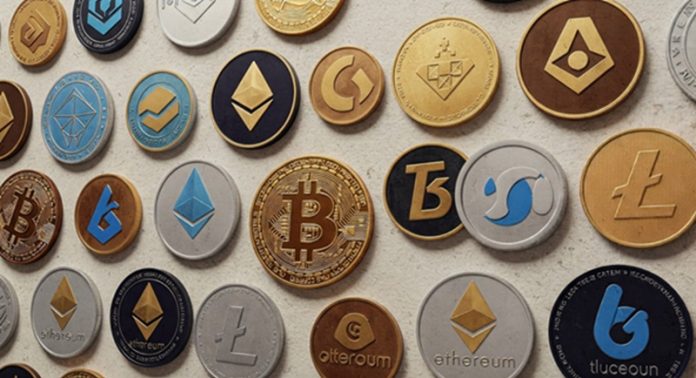

Is The Crypto Industry Pivoting As PvP (Player vs. Player) Dynamics?

0

The phrase “crypto is headed for straight PvP” (Player vs. Player) refers to the increasingly competitive and zero-sum dynamics in the cryptocurrency market, where gains for some participants often come at the expense of others. Several factors contribute to this perspective.

The crypto market is often described as a high-stakes environment where wealth is redistributed rather than created. Many projects rely on speculative trading rather than generating real economic value, leading to a scenario where traders and investors compete to outmaneuver each other for profit.

For instance, market metrics like market cap and fully diluted value (FDV) can overstate a project’s value, creating opportunities for early investors or insiders to profit at the expense of later entrants.

The debate over decentralization fuels PvP dynamics. Projects like Ethereum are favored by institutions for their perceived decentralization, while others, like Solana, face scrutiny for potential centralization, affecting investor and developer choices.

This creates a competitive landscape where projects and their supporters vie for dominance, often through “purity tests” that assess a project’s adherence to crypto’s decentralized ethos. Blockchain-based games, such as Axie Infinity, exemplify PvP dynamics by rewarding skilled or early players with cryptocurrencies or NFTs that can be traded for profit.

These games often require upfront investment, and success depends on outplaying others in a competitive ecosystem, reinforcing the PvP analogy. However, risks like scams, hacks, and token value volatility highlight the high-stakes nature of these interactions.

Regulatory developments, such as the SEC’s evolving stance on crypto securities, intensify competition. The Ripple verdict and similar cases underscore the importance of decentralization to avoid classification as securities, pushing projects to compete on technical and ideological grounds.

Meanwhile, institutional adoption of major cryptocurrencies like Bitcoin and Ethereum marginalizes smaller, less decentralized tokens, creating a winner-takes-most environment.

PvP in crypto describes a market where participants compete directly, often in trading or speculation. For example, traders may try to outsmart others by buying low and selling high, capitalizing on price movements driven by hype or market manipulation. This is common in meme coin markets, where rapid price pumps and dumps create winners and losers.

In PvP markets, experienced traders or “whales” often profit by outmaneuvering less experienced retail investors, especially during bearish or stagnant market conditions when new capital inflows are limited.

Crypto trading is often likened to a PvP game due to its volatility and the presence of sophisticated players who can influence markets. Retail investors frequently face losses against these larger players, especially in markets driven by hype cycles and pump-and-dump schemes.

The lack of consistent yield-generating mechanisms in many projects means profits often come from others’ losses. Crypto’s tribal nature, where communities rally around specific projects (e.g., Bitcoin maximalists vs. Ethereum supporters), fosters a competitive, sometimes adversarial environment.

This tribalism drives “purity tests” that pit projects against each other, determining which align best with crypto’s core principles of decentralization and autonomy, the “straight PvP” trajectory of crypto stems from speculative trading, centralization debates, competitive gaming models, regulatory pressures, and tribal community dynamics.

These factors create an environment where participants must outmaneuver others to succeed, often in a zero-sum context. However, this view is not universal, as some argue crypto’s underlying technology (e.g., blockchain) fosters collaboration and innovation over time.

From Passion to Profit: The Ultimate Guide to Sports Betting Tactics – Tips from the Experts

0

In India, sport is more than a game; it’s a force that unites millions. The roar of a stadium during a last-ball six in the IPL or a crucial ISL penalty shootout reflects this shared passion. This enthusiasm makes sports betting an exciting venture, offering a chance to use your sporting knowledge, heighten the thrill of watching matches, and potentially earn money.

For beginners, online betting can feel overwhelming with its numbers, jargon, and endless options, often leading to costly mistakes. That’s why expert guidance and reliable platforms are key. Insights from trusted industry leaders like Crickex, a prominent betting exchange in India, can provide clear, strategic advice.

This guide isn’t a promise of instant riches—nothing guarantees success in betting. Instead, it’s a practical roadmap filled with proven tactics and key principles backed by Crickex. The goal? To help you go from a hopeful beginner to a smart, disciplined bettor. So, get comfortable, and let’s dive into the strategies that will set you on a successful, responsible betting journey.

The Cornerstone of Success – Master Your Bankroll Management

Before diving into team stats or player form, the first and most crucial lesson is bankroll management. Experts agree this is the key to long-term success in betting. Your “bankroll” is the money set aside specifically for betting—disposable income you can afford to lose without affecting your finances.

Why is this important?

Without a proper plan, you’re gambling, not betting. A short streak of bad luck can quickly wipe out your funds. Bankroll management prevents emotional decisions, like the damaging habit of “chasing losses,” where larger bets are placed to recover past losses—often leading to zero balance. Here is how to manage your bankroll:

  1. Set Your Budget: Decide on a fixed bankroll amount (e.g., ?5,000 or ?10,000) for a specific period, like a month or IPL season. Never add more money after a losing streak.
  2. Use the Unit System: Divide your bankroll into “units.” A safe strategy defines one unit as 1-2% of your bankroll. For ?10,000, one unit would be ?100-?200.
  3. Bet with Discipline: Stick to one unit per bet. For higher-confidence bets, wager 1.5 or 2 units, but never risk more than 5% of your bankroll on one outcome.
  4. Track Your Bets: Keep a simple log with the date, match, bet type, stake (in units), odds, and result. This helps identify patterns, strengths, and weaknesses.

Think of your bankroll as business capital. No smart entrepreneur risks everything on one deal—apply the same calculated mindset to your betting.

Decoding the Language – A Beginner’s Guide to Odds

At first glance, betting odds may seem confusing, but they simply convey two key points:

  1. The likelihood of an outcome happening.
  2. The payout if your bet wins.

On most Indian platforms, like Crickex, you’ll mainly see Decimal Odds, which are easy to understand. Let’s use an IPL match as an example: Mumbai Indians vs. Chennai Super Kings.

  • Mumbai Indians to win: 1.90
  • Chennai Super Kings to win: 1.90

To calculate potential returns, multiply your stake by the odds. For example, betting ?1,000 on Mumbai Indians:

  • Return = Stake × Odds
  • Return = ?1,000 × 1.90 = ?1,900

This includes your ?1,000 stake, so the profit is ?900.

Understanding odds helps you weigh risk vs reward. Low odds (e.g., 1.30) indicate a favourite with a higher chance of winning but smaller payouts. High odds (e.g., 4.50) suggest an underdog with a lower chance but bigger payouts. The key to betting is spotting when the bookmaker’s odds don’t reflect the true probability.

Bet with Your Head, Not Your Heart

For the passionate Indian sports fan, this is arguably the most challenging discipline to master. We are inherently loyal to our favourite teams and athletes. The impulse to automatically back Team India, or to place a bet on your home ISL club out of pure allegiance, is strong. This is known as emotional betting or bias betting, and it is a guaranteed way to erode your bankroll.

Your beloved team could be struggling with form, facing a formidable opponent on their home turf, or dealing with injuries to key players. The odds will reflect this reality. Betting on them based on loyalty means ignoring crucial data points that point towards a loss.

The Solution: Cultivate Objectivity. A successful bettor learns to detach their fandom from their analytical process. Before placing any wager, ask yourself a critical question: “Is this bet backed by solid research and data, or am I placing it because I want this team to win?” If the answer is the latter, it’s a clear signal to avoid betting on that match. Sometimes, the most profitable decision is to not place a bet at all.

The Power of Specialization – Dominate a Niche

The universe of sports is immense, offering betting opportunities across dozens of leagues and disciplines. A frequent error among newcomers is to cast their net too wide, placing bets on a Bundesliga football match one hour and a Pro Kabaddi League game the next, with little knowledge of either.

A far more effective strategy is to specialize. Start with the sport or league you know inside and out. If you are an IPL aficionado who can recite player strike rates and bowling economies, focus your energy on cricket. If your weekends are dedicated to the I-League and ISL, then Indian football should be your domain.

By specializing, you develop a depth of knowledge that gives you a distinct advantage over the average bettor and even the bookmaker. You begin to understand the subtle dynamics: a team’s tactical approach, a captain’s on-field decision-making patterns, the unique behaviour of a cricket pitch in Dharamshala, or a football team’s persistent struggles in away fixtures. This specialized insight is your most potent weapon in finding value bets.

Research is Non-Negotiable – Do Your Homework

Profitable betting isn’t about luck—it’s about informed decisions. While luck may influence a single bet, skill and research drive long-term success. Before placing a bet, thorough research is essential. Casual fans enjoy the game; smart bettors analyze it.

Here’s a basic research checklist for cricket or football matches:

  • Current Form: Review the last 5-6 matches. Is a team on a winning streak or struggling to perform?
  • Head-to-Head (H2H) History: Look at past matchups. Some teams have consistent tactical or psychological advantages over others.
  • Team News, Injuries, Suspensions: Is a star player like Sunil Chhetri injured or a key bowler like Jasprit Bumrah being rested? The absence of a pivotal player can change the game.
  • Venue and Conditions (Vital for Cricket): Is it a home or away game? In cricket, the pitch matters. Is it a batting-friendly track like Chinnaswamy or a spinner’s pitch like Chepauk? Weather, wind, and dew (in T20s) can also impact outcomes.
  • Situational Motivation: What’s at stake? Is it a high-stakes final or a low-pressure match? Motivation often influences performance.

Trusted sources like ESPNCricinfo, Cricbuzz, and league websites are great for gathering data. For readers who want practical betting strategies and expert advice tailored to cricket, additional tips can be found here. Solid research should guide every betting decision.

Look Beyond the Match Winner – A World of Betting Markets

Many beginners limit themselves to the simplest bet: who will win the match. While this is a good starting point, a vast world of other betting markets exists, often offering better value and more strategic opportunities. Platforms such as Crickex offer a diverse range of these markets. Familiarizing yourself with them is key to becoming a more versatile bettor.

Here are some of the most popular markets for newbies to explore:

  1. Over/Under (Totals): Instead of picking a winner, you bet on the total number of goals (football) or runs (cricket) in a match. The bookmaker sets a line (e.g., Over/Under 2.5 goals), and you predict if the total will be above or below that number. Perfect for when you expect a high-scoring or defensive game but aren’t sure who will win.
  2. Handicap Betting (Asian Handicap): This market levels the playing field between a favourite and an underdog. The favourite gets a virtual disadvantage (e.g., -1.5 goals) that they must overcome to win the bet, while the underdog gets a head start (e.g., +1.5 goals). It often offers better odds than betting on a favourite outright.
  3. Proposition Bets (Props): Wagers on specific events within a game, unrelated to the final score. These can be team-focused or player-specific.
  • Cricket Examples: “Top Team Batsman,” “A player to score 50+ runs,” “Method of first dismissal.”
  • Football Examples: “First Goalscorer,” “Player to get a card,” “Both Teams to Score (BTTS).” Props can be profitable if your research is detailed.
  1. Outright Betting: Long-term bets on the winner of a tournament or league, placed before or during the competition. Examples include betting on the “IPL Winner” or “FIFA World Cup Winner.” Early bets often come with generous odds.

Start exploring these markets with small, “unit-based” stakes to get a feel for how they work before committing larger sums. When the success shows itself, you can gradually increase the bets in proportion to your bankroll.

Conclusion

Becoming a proficient sports bettor is a marathon, not a sprint. It demands discipline, patience, continuous learning, and a healthy respect for the unpredictability of sport. The satisfaction of winning a bet based on your own diligent research is immense, but it’s essential to remember the primary goal: to enhance your engagement with the sports you love responsibly.

Platforms like Crickex provide the arena, offering a secure and diverse environment where bettors can apply these tactics. Register, make a deposit, do your research and place your first winning bet!

What You Need to Know About Nigeria’s New Personal Income Tax Calculator

0

Nigeria has entered a new phase in its tax reforms journey, and one of the most practical tools now available to citizens is the Personal Income Tax (PIT) Calculator hosted at fiscalreforms.ng. This tool was developed under the Presidential Fiscal Policy and Tax Reforms Committee to help Nigerians understand what the new laws mean for their take-home pay. But how effective is this calculator, and what should individuals and businesses really take away from it?

Understanding the PIT Calculator

The PIT calculator allows Nigerians to input their gross annual income and selected deductions (such as pension, NHF, NHIS, insurance premiums, and rent) to see how their tax liability compares under the old and new laws. It then calculates the total tax payable, effective tax rate, and net income. For everyday earners, it is an accessible way to demystify complex tax brackets.

What the New Law Says

The new personal income tax regime, enacted in 2025 and effective from January 1, 2026, introduces a progressive structure that many analysts consider more equitable. The tax bands are as follows:

  • 0% on income up to N800,000
  • 15% on N800,000 – N3,000,000
  • 18% on N3,000,000 – N12,000,000
  • 21% on N12,000,000 – N25,000,000
  • 23% on N25,000,000 – N50,000,000
  • 25% on income above N50,000,000

By comparison, the old law started taxing incomes from N300,000 at 7%, rising to a top rate of 24% above N3,200,000. This shift significantly raises the tax-free threshold and introduces broader progressive bands that align better with income distribution.

Why the Calculator Matters

In a country where tax literacy is low, the calculator provides an important step toward transparency. For the first time, wage earners can compare side-by-side how much they will owe under both regimes. The broader exemption of N800,000 means many low-income earners will fall out of the tax net entirely, while middle- and high-income earners will see more nuanced rates applied to their income.

For businesses, the tool also helps employers understand the potential impact on payroll planning. Knowing how much staff are likely to take home under the new rules can inform salary structuring, benefits, and compliance strategies.

Strengths of the Tool

The PIT calculator offers three clear advantages:

  1. Accuracy of Rates: The brackets match the enacted 2025 tax legislation and reflect the government’s stated policy direction.
  2. User-Friendly Design: It strips away jargon and reduces the complexity of Nigeria’s tax law into a few fields and a side-by-side comparison.
  3. Educational Value: By showing both the old and new systems, it highlights the real-world impact of reforms in a relatable way.

    Where It Falls Short

    However, users should be aware of the limitations. First, the site still labels the new structure as “proposed,” even though it has been signed into law and takes effect from January 2026. Second, the calculator simplifies deductions. For example, in practice, rent relief is capped and subject to conditions, and other allowances may apply differently depending on documentation and tax residency. Finally, it does not address the expanded compliance requirements introduced by the reform, such as the obligation to declare foreign income, the broader use of tax identification numbers, and obligations on side income.

    What This Means for You

    For employees and entrepreneurs, the key takeaway is that the calculator is a starting point, not an endpoint. It will help you budget, plan, and anticipate changes in disposable income. But real-world tax filing will require more than plugging numbers into a form; it will demand compliance with documentation requirements, professional advice in complex cases, and awareness of the broader tax landscape.

    For policymakers and tax administrators, the calculator represents a welcome step toward digital literacy in taxation. Yet, to truly empower citizens, complementary initiatives such as detailed tax education, employer guidance, and public sensitization campaigns will be needed.

Will Dogecoin Hit $1 By September 2025? This DOGE Alternative Will Give At Least 50x Better Returns

0

Not many cryptocurrencies have wowed everyday investors like Dogecoin (DOGE) has. It started off as a light-hearted joke, but somehow ended up kick-starting one of the biggest price surges in crypto lore, turning meme-fueled trading into a movement. Today, Dogecoin is trading near $0.23, with whales accumulating billions of tokens in anticipation of a breakout. Analysts are divided: some see DOGE pushing toward $1 by September 2025, while others warn of structural limitations.

Yet, while Dogecoin remains an iconic player, a new challenger is emerging: Little Pepe (LILPEPE)—a meme coin with real infrastructure, a dedicated Layer 2 blockchain, and exchange listings lined up at launch. For investors hunting for life-changing returns, LILPEPE could deliver 50x gains or more, far outpacing Dogecoin’s potential from current levels. Let’s break down how both coins stack up across critical areas.

Whale Accumulation vs. Presale Frenzy

Dogecoin’s current momentum is largely fueled by whales. Blockchain trackers reveal that 2 billion DOGE—worth nearly $460 million—was accumulated last week, raising whale-controlled holdings to 18% of supply. Historically, such positioning has preceded rallies, and analysts suggest it could set the stage for a push toward $0.50 in the coming weeks.

By contrast, Little Pepe is still in its presale phase, but demand has been just as strong. Over $21 million has already been raised, with over 96% of tokens sold at $0.0020 each. Unlike DOGE, where whales dominate, LILPEPE’s presale focuses on giving retail investors the largest share—26.5% of total supply—providing early buyers with the lion’s share of upside. For investors with just $50 to spare, LILPEPE offers a ground-floor entry similar to buying DOGE before its first big run.

Technical Indicators vs. Blockchain Utility

Dogecoin’s bullish outlook is powered mostly by chart indicators. A fresh golden cross—where the 50-day moving average climbs above the 200-day—has traders feeling hopeful. At the same time, the Elliott Wave pattern hints that the coin’s upward journey might keep rolling. Near-term forecasts put price targets between $0.34 and $0.48, but many are eyeing $1 as the big finish if the coin keeps its energy going.

Little Pepe, meanwhile, is not just another token. It is building a Layer 2 blockchain entirely dedicated to meme coins. Designed for speed, security, and ultra-low fees, the chain promises to be the only meme-focused network where sniper bots won’t work. This utility gives LILPEPE more long-term value than DOGE’s purely speculative momentum. While DOGE depends on charts, LILPEPE is building infrastructure, positioning itself as the backbone of future meme economies.

Security and Transparency

One challenge facing Dogecoin is its relatively simple design. While secure, its codebase has seen little innovation in years.  Progress in DOGE is still crawling along—most of its price jumps come from hype, not from any big tech upgrades.   In contrast, Little Pepe isn’t talking; it’s walking. The project passed a complete CertiK audit with a shiny 95.49% score. The audit says its code is free of critical flaws, meets ERC-20 rules, and runs as lean as possible.  With this kind of public scrutiny, LILPEPE feels less like a passing meme and more like a safe, serious project built for long-term growth.

Market Hype vs. Meme Mastery

Dogecoin has Elon Musk. Tweets, memes, and cultural moments tied to the Tesla CEO often send DOGE into viral rallies. But hype alone doesn’t always translate into sustained growth—DOGE has repeatedly retraced after speculative surges. Little Pepe is tackling this differently: with a structured marketing plan, influencer collaborations, and viral campaigns. Backed by a team with a track record in top meme projects, the strategy includes videos, memes, community pushes, and billboards. Unlike DOGE’s sporadic hype, LILPEPE is building a continuous cultural presence.

The difference is clear: Dogecoin reacts to hype, but Little Pepe manufactures it.

Exchange Liquidity and Launch Dynamics

Dogecoin benefits from being widely available across nearly all major centralized exchanges. It boasts $6.2 billion in daily turnover, ensuring liquidity for traders. This accessibility is one of DOGE’s biggest strengths, allowing even casual investors to participate. Little Pepe is closing that gap fast. At launch, the team has already confirmed two major centralized exchange listings, with plans to target the largest exchange in the world afterward.

Plus, we’re putting aside 10% of the total supply for DEX liquidity. This helps trades go through quickly and keeps sudden price swings in check. This dual approach—a strong CEX presence and robust DEX allocation—means Little Pepe will debut with powerful market support.

Price Potential: $1 vs. 50x

Dogecoin’s journey to $1 would represent about a 4x gain from current levels. For a token with a massive market cap and circulating supply of over 140 billion DOGE, this is ambitious but achievable if whales and retail unite in the coming months. Little Pepe, however, offers far greater upside. With presale tokens priced at $0.0020, even reaching $0.10 would represent a 50x return—and $1 would mean a staggering 500x ROI. For perspective, SHIB’s early buyers saw similar numbers when it entered mainstream adoption. DOGE may deliver a solid rally, but LILPEPE is structured for explosive, SHIB-style gains.

Final Thoughts: The $50 Decision

As September approaches, the debate around Dogecoin’s $1 target intensifies. Whales are accumulating, technical setups look promising, and cultural momentum is once again building. DOGE could rally 3–4x, rewarding holders with strong returns. But for those looking for life-changing multiples, the smarter bet may be Little Pepe. With a CertiK-audited foundation, Layer 2 blockchain utility, presale momentum, and major exchange listings on the horizon, LILPEPE could easily deliver 50x or more in this cycle. The last bull run was defined by Dogecoin and Shiba Inu. This one could be remembered for the rise of Little Pepe. For investors deciding where to put $50 today, the choice is clear: DOGE may get you a nice gain, but LILPEPE could make you a legend.


For more information about Little Pepe (LILPEPE) visit the links below:

Website: https://littlepepe.com

Whitepaper: https://littlepepe.com/whitepaper.pdf

Telegram: https://t.me/littlepepetoken

Twitter/X: https://x.com/littlepepetoken