DD
MM
YYYY

PAGES

DD
MM
YYYY

spot_img

PAGES

Home Blog Page 6513

The Invisible Hand vs The Visible Hand

0

The principle of the Invisible Hand is a term in Economics popularised by Adam Smith, of the Classical School of Thought. It is used to describe a scenario where every individual is allowed to pursue his economic survival with zero organized interference. That in the long run, ceteris paribus (meaning all things being equal), it would lead to equilibrium in the distribution of incomes. A laissez faire economy.

But in the long run, mutatis mutandis (meaning all things not equal), it failed. It led to the severest global recession dubbed the Great Depression of 1932. No solution was in sight until the emergence of the Keynesians. They advocated for organized regulations of economic activities that will achieve collective goals instead of individual goals. This was the beginning of government regulations of the economy with its numerous benefits.

Adam Smith wrote his theory by observation of human economic behavior. Today such behavior subsist in our communities. Worse, even the government has failed us. Our individual and institutional failure has made our country less desirable to pursue our destinies. If everyone leaves who will fix things. Is it rational to want to stay in a neighbours house because you  failed to maintain your house? The human race started together. The countries we run to did not drop from heaven; the citizens fixed it. Besides, they do not want us there. An African adage says, “No matter how long a log of wood lies on water it will never become a crocodile.”

It’s time we change our mentality and attitude. Nation building is not the exclusive preserve of those in government. Citizens have greater responsibility. I love Nigeria. I believe in our potential. I beseech us to be more patriotic with civic duties. Let us start fixing our communities. There is so much paralysis and dysfunction. Our communities are full of challenges that would make anyone a celebrity when solved. We are always quick to accuse the government for our mess. We need the proliferation of local NGOs and other groups to solve real problems. If we do not act no one will.

On a final note, at this auspicious time, I can hear the groaning of many looking for true leadership. They await the sound of the horn. The sound of the Corps Volunteers for Change. We cannot afford to fail their expectations. Like the Keynesians that pulled the global economy from the abyss of the trade cycle, let us get to work by making our hands visible by pulling our communities from the dungeon of unsustainable development.

Let’s make Nigeria great!


The Need to Unbundle English Department in Nigerian Universities

0

Those days in Nnamdi Azikiwe University, aka UNIZIK, English Department was split into two major sections – Language Stress and Literature Stress. What it was like then is that every student studies both stresses in 100 and 200 levels, and then goes into one of them from 300 level.

This method helped us a lot because we were able to find out what we truly wanted before making a choice. But even at that, the model didn’t make experts out of us.

Even as I complained that UNIZIK’s model didn’t do the job very well, some schools don’t even divide their English department. They leave their students to struggle through literature and language related courses from 100 to 400 level. Maybe they thought they were doing these students a favour but they didn’t know they only ended up releasing half-baked English graduates into the society.

I know this because most of the people that passed through this later method have little or no knowledge of either language or literature related subjects. This is because for their schools to be able to stick within the approved course loads, they dropped off a lot of courses from their curricula. The end result is that the students graduated without having deep knowledge of their field of study.

I don’t know how it is for other courses but I believe English, as a course of study, should be unbundled. I was so happy when I learnt that Mass Communication Department has been professionalised and I couldn’t help wondering when English Department will receive its own “blessing”.

Both the students and lecturers of English will bear me witness when I say that we graduated from that department only to find out that we don’t have in-depth knowledge of our field. We all came into the wider world and started learning what we should have learnt from school. It is not because the lecturers didn’t do their best, but because the curriculum didn’t go deep into the course. We floated through different areas of language study because there was no way we could have achieved more within the duration of the study.

There are so many areas in English Language and Literary Studies Department that needed to be studied deeply for students to become experts. The only way this could be achieved within the four years of study for this course is to unbundle the department into several sections and units.

I don’t know the body under whose jurisdiction it is to do this, but I will suggest that English Scholars Association of Nigeria (ESAN), which is the umbrella association for other English scholars groups, should kickoff this campaign. Based on my experience as an English scholar, the English department should be broken, from 300 level, into the following divisions, sections or stresses:

  1. Grammar: Grammar is one area of language study that needs in-depth analysis and understanding. It was after graduation that I found out that grammar is more than just understanding where to put “is” and “was”. Grammar itself is the basis of the language. It has so many units and sections that it shouldn’t be studied alongside other areas of the language.
  2. Phonetics and Phonology: Even though we are second language users, there is still a need for experts in this area. Earmarking only one or two hours a week within a semester is not enough to learn this area. If I’m asked, I’ll suggest that students that have interest in phonetics and phonology of English should be allowed to go fully into it from their 300 level so they can graduate as experts. It is quite a pity that we graduated from English department and were not able to produce, properly, the sounds that exist in English. A lot of us don’t even know the proper intonations and rhythm, or the stress patterns of the language. This is because enough time and attention wasn’t given to learning this level of language.
  3. Stylistics and Discourse Analysis: These are the people that should analyse, review and criticise language use in people’s works. These days, there is much need for critics and reviewers but few are seen because a lot were not well grounded. Many Nigerian reviewers these days are self-taught, which is not supposed to be because it should have been learnt while in school.
  4. Applied Linguistics and Sociolinguistics: These people should study language use in society and the problems associated with language learning and teaching. They should be experts if they can help with the research of the use of the English language in Nigeria.
  5. English as a Second Language (ESL): This section is a separate department in all universities in English speaking countries. It should also be given much priority in Nigeria.
  6. Creative Writing (Fiction): It is unfortunate that people graduate from English department, even from literature stress, and still pay heavily to learn how to write fiction. This section should even be further broken into different units – drama, poetry and prose.
  7. Creative Writing (Non-Fiction): This section should also be divided as its fictional counterpart.

There is no way anyone can say that when a student focuses on one particular thing, he will not become an expert in it. Packing up so many courses at the same time has never helped Nigerian students. Let them focus on one area so they can become well grounded in it. There is no need to make Nigerian students the proverbial jack of all trades that mastered none.

Moluepro Begins Operations in Abuja, Nigeria – Good Luck to our Team

0

Today, one of our portfolio companies, Moluepro, begins life in Abuja, Nigeria. I want to wish our team, led by dynamic Chief Cabin Executive Okoli Godson a super-voyage. Urban mass transit has not advanced in Nigeria for fifty years. This team has a good chance. I like Megabus in U.S.; it serves me whenever I do not want to fly/drive on some routes. That experience needs to be imported into Nigeria, phase by phase.

Moluepro is a commuting platform for the professional community. Inspired by the rich cultural history of Nigeria, it’s products and services are specifically designed to show this richness by ensuring that every professional has access to luxurious bus travel.”

If you have any question for Moluepro team, please contact my digital team.

Osun SkillUp MeetUp : A Call to Action from SBC Hub

0


In a publication released in 2019, there were some revealing and scary revelations about the fate of start-ups and small businesses in Osun State as far as issues of business management, funding and other important factors that could lead to sustainable businesses in the state are concerned. For funding, the records are poor. For instance, it was noted that in 2018, a total sum of $334.5 million was pumped into the Nigerian Startup Ecosystem and no start-up in the state was a beneficiary. Again, it was observed that the Q2 Report of 2019 for Startup funding revealed that $73.68 million, that is approximately N26, 524,800,000, was pumped into the Nigerian Startup Space. No single naira of this humongous funding opportunity found its way to Osun.

This poor statistics is enough to send concerned Osun Eggheads some disturbing signals as to the state of the State economy. Strong economies are built on the power of small and medium enterprises. So, what factors are responsible for this appalling performance of the Osun startup sub ecosystem within the larger Nigerian Startup architecture? Analysts observed that Osun youth have the energy and the ideas to power the state Economy. However, there was lack of information and guidance on how to access funding and leverage on funding opportunities. There was also a dearth of business management skills coupled with inability to design successful business models.

This spurred the idea of a six-month accountable mentorship and training for Osun youths who have ideas or existing businesses but lack the required skill sets and knowledge to run successful business enterprises. It is a programme meant to take participants through the process of business development – ideation, incubation, and acceleration.

The objective is to take the selected participants through a six-month business development training that will cover idea conceptualization, refinement, validation, business planning, business models and funding. The initiative is to make those with new ideas to develop them to capture value while those with existing business are to take a second look at their value proposition and redefine them to offer more value and take a proper shape of a start-up. So, Saturday 18 January, 2020 marked the beginning of  that six-month journey.

The Osun SkillUp  MeetUp began on a very good note. In all, 54 young business owners and those with ideas registered; 3o were selected by the convener and the two facilitators. Out of the 30 selected,  22 participants showed up from 30. We had representations from Ibadan, Iwo, Ila, Ife and Osogbo.

Number of Registered, Selected and Participants that attended the January Meetup
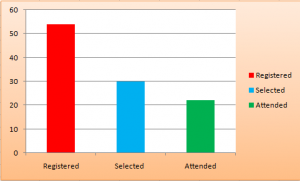
Source: Adebiyi, 2019

Mutiu Iyanda engaged them on how to identify opportunities and turn them into business ideas. He used the opportunity canvas to demonstrate this laden with statistics. In Osun, to overcome youth entrepreneurship issues, there is a lot to do. And we can’t operate without the numbers. He took them through value propositions and capturing.
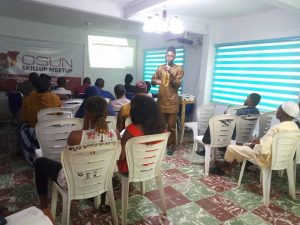
 

Muitu Iyanda taking the particpants through the process of identifying opportunities

Olasupo Abideen took the participants through the process of securing funding for their businesses. He used the Tony Elumelu Foundation grant application process to illustrate this. The bloodline of any business is funding. We can not talk about successful businesses without pointing to the availability of funds. No youth could be empowered without them having access to funds. Though, a business does not thrive on funding alone. Sound business management processes too matter a great deal.

 

Abideen Olasupo during his facilitation 

January Meetup : Lessons Learnt about Youth Entrepreneurship in Osun

#From the speaking sessions and the panel session, it was obvious that young entrepreneurs in Osun have the ideas. But, they lack information and a clear cut support to upscale their businesses and ideas.

#There is still a lot to do empowering them through a sustainable youth entrepreneurship policy that creates a conducive environment for them to ideate, nurture the ideas and accelerate those ideas. That is the trend all over the world even in the developed world where the unemployment rate is not as high as ours.

#We need to ensure we have collaboration and partnership with Corporate organizations to facilitate the needed growth for the entrepreneurship ecosystem in Osun.

We have to look at how people in Osun are making use of the funding infrastructure available to them.

The young entrepreneurs should as well learn how to do proper documentation and create equity or stakes for investors without necessarily shooting themselves in the leg.

#Running a business just like building a career thrives on personal development. The young men and women were challenged to spend on themselves to acquire the necessary knowledge to run a successful business.

Mentorship is key in business and career development. However, it must be built on exchange of value.

Volunteers and Facilitators at the MeetUp

Moving Forward on February Meetup : A Call to Action

The January edition has come and gone. At Skills, Business and Career Hub, we are already looking at the February edition. In February, the Meetup is looking at idea refinement, idea validation and business planning. We need willing volunteer facilitators both within and outside the state on these areas of business development. We are equally open to remote facilitation. We need a venue for the programme. January’s edition’s venue was sponsored by a well meaning son of the state. We need refreshment for 40 people including the volunteers and other backroom staff.  We require accommodation for the facilitators if they are coming from outside the state. The two facilitators for January slept in Osun without collecting anything for both the facilitation and their accommodation. These could be provided without giving out cash. Just tell us how you want it.


The Educational Injustice Against the Girl Child

0

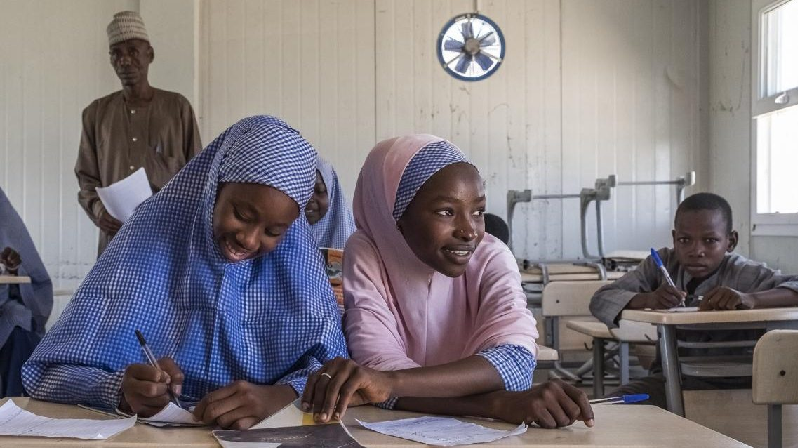
Why is it that in our society today, especially in Africa, there is a notion that girls shouldn’t be afforded the same privileges as boys?

Why is it that the majority of African families tend to be piqued or resentful whenever there is no male child in the family?

You may say if there is no male child in a family, who then will succeed the father or inherit his assets when he passes on?

I dislike this statement and more so the mindset more than anything. C’mon, we are in the 21st century, not in the era of our ancestors where stereotypical thoughts as such are being condoned.

A lot of families throw their support behind the male child whenever he says he wants to further his education in college or the University but when the female child make such claims, it holds no water and easily discarded. Most times the reply would be; “there’s no need of wasting more money on you, your high school or secondary school education is enough. After all, someone else is going to marry you anyways”.

Wasting?!! How is improving the lives of our daughters wasting? So you want your daughter to get married half-baked? You want your daughter to be treated as a slave in her marriage by a far more educated man, who will always belittle her intellect even though some may deny it or not make it obvious.

Why is that the majority of men are intimidated by educated females? I don’t seem to understand this. We say; the best thing parents can offer to their children is education. That’s the best legacy a parent can leave behind, educating their children not the male children only.

I’m not wishing to give birth to only boys, neither am I wishing to give birth to girls only but I won’t be discouraged at all if peradventure i get to have four girls. I will drill them and train them to the highest level they can attain. I will ensure that they won’t be frightened by the society or their male counterparts.

Please, let’s look into this, any gender be it male or female can make a parent proud. In fact, girls naturally are blessed with a bright brain and if they are placed in a conducive environment with boys, I’m certain that they would thrive and even outperform their male peers.

Our girls are God’s creation. They are a blessing to us from God and seeing that their lives are filled with pain and struggle from the age of adolescence (menstruation) to the age of adulthood (childbearing), why not we give them something to make them happy. Something they can look back to and it will force a smile on their face.

I’m happy because I see a lot of people fighting this injustice against the girl child in so many ways; from making opportunities such as scholarships, internships, skill-acquisition programs, etc. accessible to then. It’s a thing of great joy.

My friends, what I am simply asking from you is to give our girls and ladies the same privileges that are open to the boys as well. Is that too much to demand?

I will end with a quote from the former U.S. President. Barack Obama;

” You know, we’re in a sports center. Imagine if you have a team and you don’t let half of the team play. That’s stupid. That makes no sense. And the evidence shows that communities that give their daughters the same opportunities as their sons, they are more peaceful, they are more prosperous, they develop faster, they are more likely to succeed”.