Soulmate Industries is a leading haircare- and body-care company. The firm is seeking global and local distributors for its Soulmate products. Explore Soulmate brochure here.







Soulmate Industries is a leading haircare- and body-care company. The firm is seeking global and local distributors for its Soulmate products. Explore Soulmate brochure here.
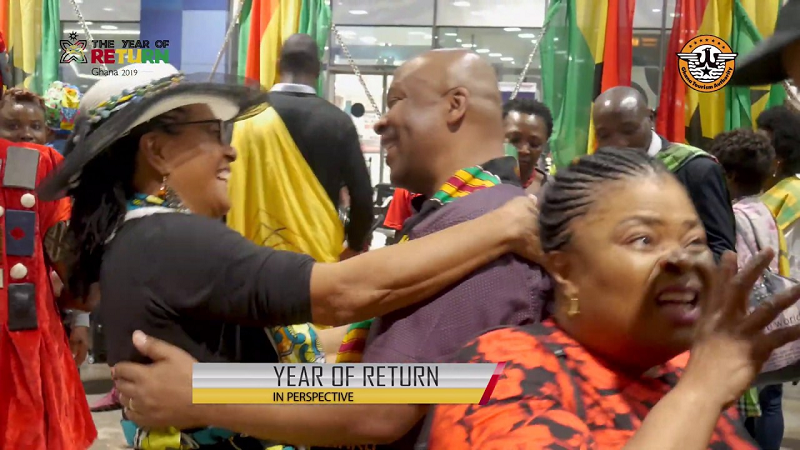
Last year, Ghana started a campaign for the return of people of African descent living outside the continent called “year of return.” The event drew a mammoth crowd from around the world and kicked off a memorial that has come to stay.
It has been 400 years since the first Africans were taken from their fatherland as slaves to different parts of the world, but especially the United States. The event dated as far back as 1619 has remarkably defined human coexistence, leaving traces of black race in lands far away from Africa.
Ghana (formerly Gold Coast) was a point of interest in the days of slavery. It’s estimated that 75% of slaves were held captive in dungeons on the west coast of Ghana, and millions of slaves were transported to their destination of slavery through Ghanaian ports.
The response to this development was overwhelming: from around the world, people came in their numbers, celebrities and people of color, to witness perhaps for the first time, the routes and dungeons where slavery was executed from in West Africa.
But there was more to it than the gathering of celebrities and popular figures. An attendee, Abiola Oke, shared his experience at the event, he said: “There were no Jamaicans here, no Trinidadians were here, we were one people. Our ancestors were the people that refused death. You are the products of the people that refused to die.” Talking about the dungeon, he added: “On this day, the beginning of Black History month, I reflect on our time at the Cape Coast Slave Castle in Accra Ghana built in 1652 – why this abomination of a place is called a castle is beyond me. 100 of us spent approximately 10 minutes in a slave dungeon meant for 200 captives, those uncomfortable minutes felt like an eternity and yet we knew that our time in that room was limited. Imagine what it must have been like for a captive who had no sense of when he or she would be let out. Many died in these dungeons.”
Co-organizer of the event, Boris Kodjoe told CNN: “Every person of color needs to get on this pilgrimage. They need to experience this journey and get in touch with their emotional heritage, walk through the dungeons and see the ‘door of no return.’”
“The year of return” was announced in September 2018, by Ghana president, Akufo-Addo at the Washington’s National Press Club. But there is more to it, at the end of the festival there was a hint to a broader plan by the Ghanaian government that dated years back to the year 2000, when the government enacted the Right of Abode Law that gave people of African in diaspora the right to stay in Ghana indefinitely.
In 2007, the Ghanaian government encouraged Africans in the diaspora to return and settle in the country. It paid off, by 2014, about 3,000 people from diaspora had settled in Ghana.
“‘The Year of Return’ is characterized by a music festival, an investment conference targeting diaspora Ghanaians, and the Right to Return initiative, encouraging African-Americans to seek citizenship in Ghana.”
But more than that, Ghana is seeking to use it to foster its tourism industry, and create a scape of attraction that will keep the rest of the world coming to the country. A few years ago, the government unveiled a 15-year National Tourism Development Plan (2013-2027), designed to promote local economic development and play a leading role in job creation, revenue generation, environmental conservation, national cohesion and overall economic growth.
To achieve this aim, Ghana has positioned tourism in its national development agenda with the aim of increasing the number of tourists to the country from one million to eight million per day by 2027. And that’s with benefit of $8.3 billion per year in revenue, among other things. The plan seems to be paying off as World Bank noted a tremendous increase in the country’s GDP growth in the year 2019. There is estimated 6.7% growth compared with 5.4% growth of 2018.
The Afrochela held on December 28 2019 is part of the yearly plan designed to sustain the 15-year long term. The idea is to keep tourists coming year-on-year with different kinds of festivals.
Ghana’s tourism head, Agyemang says the plan is now bringing people to the country like the holy lands. “This is a very important time for this country. People are now starting to make the pilgrimage here just like Jerusalem or Mecca, and we are here to welcome them if they decide to return,” he said.
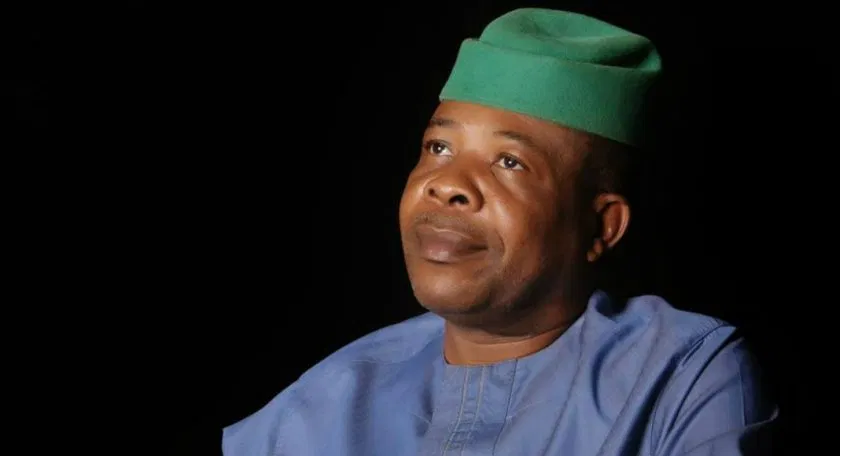
The Supreme Court’s ruling that sacked Emeka Ihedioha as the governor of Imo State came as a shock to many. The former Governor has however issued a statement in reaction to the Apex Court judgement, clearing the air on his perceived silence. The statement reads below:
STATEMENT FROM HIS EXCELLENCY, RT. HON. EMEKA IHEDIOHA, CON, ON THE SUPREME COURT RULING ON IMO STATE GOVERNORSHIP ELECTION OF THE MARCH 9, 2019.
JANUARY 15, 2020
My dear good people of Imo State,
I address you today, following recent developments affecting our dear state, and in particular the Supreme Court judgement of 14thJanuary 2020.In my relationship with you as Governor of Imo , I had employed regular consultations and dialogue as a tool of political discourse. This informs this course of action.
2. I am reporting back to you our great Imo people on the fate of the mandate you freely gave to me as Governor and Engr. Gerald Irona as Deputy Governor. This mandate has now been truncated and cut short by the Supreme Court, in contravention of the will of the people.
3. We shall always cherish the tremendous goodwill and support you gave us as we grappled with setting up a new administration to rebuild a state that was devastated by bad governance.
4. In the last seven months we sought to elevate merit, unity of purpose, honesty, transparency and an inclusive approach to governance, as the hallmarks of our administration. We sought to restore once again, the pride and dignity of Imo people. We worked very hard to re-engineer the Imo renaissance. But God knows why he has allowed this current state of affairs.
5. No doubt, yesterday’s Supreme Court verdict, came to us as a rude shock and surprise considering the facts on ground, legal precedence and clear verdict of Imo People on March 9 2019, that returned me as Governor with the highest valid votes of 273,404.
6. I do not agree with the judgement of the Supreme Court. I think it is unfair, unjust and does not reflect the voting that took place during the elections. It also didn’t take care of the sensibilities of the people of Imo State. But as true democrats, Engr Gerald Irona and I have no option but to respect the outcome of that judgement.
7. Consequently, we have put machinery in motion to hand-over the reins of office to the APC Candidate as the the next governor of Imo State. This will be coordinated by the Secretary to the State Government. I therefore direct all members of Imo State Expanded Executive Council, and all political appointees to write their handing-over notes and to return all government properties in their custody, forthwith. I shall not be party to pilfering of Government property or funds.
8. May we use this opportunity to express our gratitude to God for the opportunity to serve, within the short period he granted us. We sincerely appreciate you for all your solidarity and goodwill. We would forever cherish and treasure your love, your trust and your partnership. We made our mark. Rebuilding our dear state is neither easy nor personal, but a task undertaken for our today and tomorrow.
9. I thank you all for your support which saw us achieve so much and reversed the negative trajectory of Imo State within a space of seven months. It is significant to note that Imo State was looking good again. We were declared the least corrupt State in the Country, the fastest state growing economy in Nigeria and the most improved, in terms of the deployment of Information Technology in service delivery. Our infrastructure was significantly coming to life, civil servants and pensioners were now being paid as and when due and optimism returned to Imo State. It is on record that we were acclaimed as the most sports and diaspora friendly state. Most importantly we returned life and activities to our local governments. Yes we had good plans to make Imo the centre piece of commerce, industry, technology, tourism by providing good leadership and first class infrastructure. Under our watch, Imo became safe with our systematic approach to securing lives and property.
10. All these were made possible by your prayers, support and sacrifices. I therefore appeal to all Imolites, especially our teeming supporters to remain calm and to shun any action that is capable of resulting in a breach of the peace. We can always have different parties, but we would have only one Imo State. In the same vein, I urge you to extend to my successor, the same support you gave to me. It is my wish that he will continue on the path we had set for the rebuilding of our state as well as consolidate on the progress and milestones we achieved.
11. It is incontrovertible that we ran a good race, fought tough battles, (including, principalities and powers)and governed the state well, with the fear of God, accountability, transparency and entrenched due process. We, however, take solace in the book of Ecclesiastics 3:1, “To everything there is a season, and a time to every purpose under the heaven”.
12. We step aside with implicit faith in the Sovereign Lord who reigns over the affairs of men.
13. Thank you.
Imo bu nke anyi.
Rt. Hon. Emeka Ihedioha, CON.
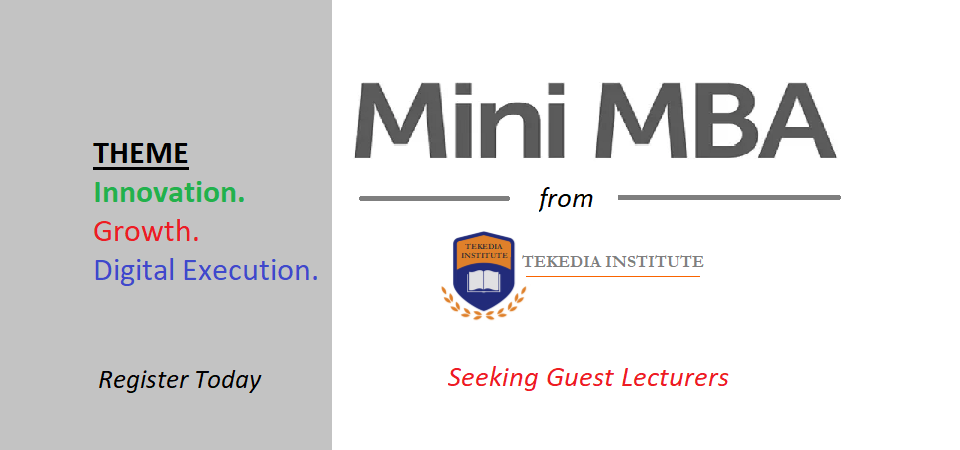
We are looking for Guest Lecturers. These lecturers will coordinate and lead a week delivery. If you are interested to be considered, send your LinkedIn page to my team (on click).
The theme of this program is “Innovation, Growth & Digital Execution – Techniques for Building Category-King Companies” and our focus is to take participants into practical excursions on the mechanics of market systems and how digital systems can unlock growth opportunities across market segments and sectors. This is what a typical week interaction would look like (besides other components like webinars I will host):.
Fountain University, Osogbo recently concluded the activities marking her 9th convocation ceremony. The convocation, which saw a total number of 307 students graduating from the two colleges of the institution, was heralded by an 8-day programme of activities. As part of the convocation activities was the convocation lecture usually held a day before the grand finale. The lecture, as was done in the past, was an avenue for the university to have erudite men and women contribute to discourse of national importance. It has become a tradition to bring important personalities to come give their voice to issues bordering on national development.
Like its 8th Convocation edition delivered by Prof. Toyin Falola, the Jacob and Frances Sanger Mossiker Chair in the Humanities at the University of Texas at Austin, this year’s lecture was delivered by another big Nigerian giant in the Diaspora, Prof. Jacob Kehinde Olupona. He is a professor of African Religious Traditions, Harvard Divinity School and Professor of African and African American Studies in the Faculty of Arts and Sciences, Harvard University. He came to speak on “Shifting the Tide: The Promises and Challenges of Higher Education in Nigeria.”
In his close to one and a half hours lecture, Prof. Olupona held the audience spell bound with his insightful, educating and revealing talk. He threw fresh perspectives on issues affecting the Nigerian educational system and proferred solutions to the myriads of problems facing higher education in Nigeria. He did not only speak to the problems but also offered solutions to those issues hindering Nigerian youths from reaching their potentials through the country’s educational system. In specific terms, Prof. Olupona spoke to the following in his speech :
#Educational excellence and the roles of Nigerians in Diaspora. The Harvard professor charged the Nigerian system to place a premium on the input of Nigerians sojourning out of the country. He argued that well celebrated Nigerian professionals and scholars scattered all over the world should be identified and their input sought to make Nigerian educational system more robust. He decried a situation where the Nigerian system places higher value on foreigners at the expense of her own. He decried the fact that Nigeria is “still a nation where a prophet has no honour in his hometown.” He charged the Nigerian government to “integrate Nigerian diaspora with the homegrown Nigerian professionals and scholars as it is this kind of mutual interplay that has contributed to the rapid development of nations like China, Korea and India.” In closing his appeal, Olupona emphasized that “remittances coming into the nation from the diaspora supersedes oil revenues… we must take the diaspora seriously and incorporate its energy into our nation building project.”
#University Reforms and the Quest for Excellence. The professor of African Religious Traditions made a case for the Nigerian educational system to be reformed. He advised that Nigerian universities need to create more conducive environment for students to engage in intellectual engagements of contemporary issues including their professors’ researches. Olupona charged the National Universities Commission to devolve its monitoring of tertiary education to the regions. This, he argued, would make the monitoring of the implementation of educational policies more effective. He called on the traditional rulers to use their connections and positions as Chancellors of many public universities to influence the reforms in the Nigerian university system.
#Internationalizing Nigerian Universities. As a Nigerian scholar in diaspora, Prof. Olupona alluded to modern parameters used in determining whether a university is internationalised. By internationalisation, Olupona meant to make a university have global relevance. He said, “ internationalized universities engaged in cutting edge research in all the fields of learning, including science, technology, humanities and social sciences.” He then asked some rhetorical questions charging Nigerian tertiary institutions to wake up from their slumber. “How many Nigerian universities engage in the pursuit of issues of global importance, such as research in global warming, poverty alleviation, sustainability, and social, economic, and cultural development?”, He queried. “How often do our students, both undergraduate and postgraduate, have access to membership in international student clubs and guilds?”, He sought to know.
#TETFUND and the Exclusion of Private Universities. Olupona first identified the yeoman’s job TETFUND is doing in supporting research, infrastructural and manpower development in Nigerian universities. He frowned at the exclusion of private universities from accessing TETFUND grants. He said the act is “not only undemocratic, but also self-defeating”. He wondered why private institutions would not benefit from TETFUND monies despite being subjected to the rigorous exercise of accreditation like their public counterparts. He concluded that “No nation can aspire to greatness by deliberately discriminating against citizens who have legitimately and legally invested their resources in the promotion of knowledge for the benefit of the nation.”
#Gender Disparity in Higher Education. Prof. Olupona lamented the dearth of women in the Nigerian academia. He posited that the ratio of women to men lecturers on Nigerian campuses is nothing to write home about. He identified a highly patriarchal national culture prevalent in the country as a major contributor to this status of underrepresentation enjoyed by women in the Nigerian educational sector. He charged the Ministry of Education and Governing Councils to come up with deliberate policies to combat this.
#Faith-Oriented Universities and Acquisition of Knowledge. Before concluding the lecture, the erudite teacher briefly recognized the roles of religious organizations in the process of knowledge. He made reference to a “productive interactions between faith, knowledge acquisition and character formation. However, he lamented the prevalent culture of neglecting the poor and the needy in the Nigerian society despite some manifestation of “deep religious convictions”. He asked, “how could we claim to love God so dearly and yet neglect the cardinal principle of our faith, that we love our neighbours as we love ourselves.”
Prof. Olupona did not leave the podium without some pieces of advice for the Nigerian leaders. He advised that as a nation, there is a need to rethink our values and philosophies. He prayed the Nigerian leaders to stop paying lip service to programmes and projects that would uplift the country.