Across industrial sectors, markets are inherently imperfect, requiring “forces” to overcome frictional challenges between demand and supply. The forces are companies which through products and services solve the frictions. The formation of for-profit companies emerged well hundreds of years after the Tang Dynasty (A.D. 618-907) when the Chinese invented paper money, triggering unprecedented accumulation of wealth.
(If I have $1,000 which I do not need for a year, and open to lend it to somebody at 10% interest rate, I will need to find that person for that deal to go through. Also, the person that would receive that money from me needs to know someone who is open to lend $1,000 at 10% for a year. Unfortunately, there is a huge information asymmetry as I cannot easily find that person and the person cannot easily find me. What happens is that to ensure that money does not stay idle, I will take it to a bank which will pay me 10% interest rate. Also, the person that needs $1,000 will go to a bank to ask for a loan, and the bank will lend that my $1,000 to him for say 17%. That extra 7% is the cost of fixing the friction and by overcoming the friction, a new equilibrium point is set, bringing a largely imperfect market into a more perfect one. This is what happens in all market systems, across sectors and industries.)
So, for thousands of years, the demand/supply relationship existed across domains, outside the constructs of “companies”. Yes, as we currently have in Nigeria, there are informal economies which operate via largely direct human systems of demand and supply. Such markets are typically small with severe unmanaged perturbations. Yet, in extreme micro-elements of these economies, they operate largely “perfect” with minimal complexities requiring companies!
If you live in a very small village where a young man sells chewing stick (Walmart in U.S. calls it organic toothbrush) and people can buy direct from him, after he has harvested from the woods, there would not be a need for a “company”. But tell that man to scale the mission, then, all of a sudden, he needs company formation to effectively utilize factors of production due to varying ordinance in trade.
As you try to solve one problem, another problem comes up, and you need other firms to help you since you cannot do everything. That is the heart of economic activity. While the toothbrush to serve a very small village can be made without a “company formation”, to scale the business, the man needs to run a company as managing most perturbations in trade are best done via companies. The different ordinances in trade favor companies over human systems. An example: it is easier to import raw materials into a country as a company than as a “person”.
The fact is this: you can have “perfect” markets in some micro-areas where there are no complexities with all factors of production easily controlled and managed. But to scale anything out of that community, operating as a company becomes necessary due to perturbation forces from many ordinances which factors of production must interact with.
It is this understanding that puts companies ahead of humans in market systems. Companies accumulate costs just for being active, and those costs must be settled. And based on that, if you send an invoice with a corporate account number “a Company”, you have a better chance of being paid compared with when you send a personal invoice with your personal bank account number. The recipient sees the company as an entity that has bills to pay because the ordinance of trade upon which the factors of production operate make it that way. But if the invoice is in your name, he does not see any cost, and possibly could assume that you can forget the payment!
If your landlord does not want to pay for the work done for him, next time in 2020, send him your company invoice (with corporate bank account), NOT your personal bank account. Once he sees that, he will likely move faster to settle that bill.
Get a business name – and operate as a company! As a company, you are “bigger” than a carpenter, geek, plumber, etc. A Great New Year ahead.
It is obvious that a lot of Nigerians have lost hope in the country. The reason behind this isn’t something that could be easily analysed because a lot of things have gone wrong with the system, starting from the simplest to the most complex.
I told someone recently that our education system doesn’t encourage students – primary to tertiary – to think outside the box. Teachers and lecturers expect students to give them back exactly what they were given. Any addition or subtraction from a student automatically lands him failure and its consequent lower grade. As a result, Nigerian education system continues to revolve around obsolete information and knowledge without allowing students to add new things from their wealth of personal experiences and imaginations.
But the greater consequence of this method of teaching and learning is that the students become living zombies, who only think through their teachers. They no longer have minds of their own and they believed that their experiences, ideas, thoughts and opinions are all wrong, or inconsequential. When these students leave school and move into the larger society, they wait for their parents, employers (if they manage to get one) and government to think and act for them, after all, zombies don’t think, they just do.
This piece is spurred by the reactions that followed Prof. Ndubuisi Ekekwe’s post on LinkedIn, which can be foundhere. These reactions showed that though a lot of things have gone wrong with the Nigerian system, many people still blame the government for all their problems. Yes, the government has its own blame, but so do the individuals within the country. And that is why I hold teachers responsible for pushing out zombies into the system to manage the affairs of the country – both in the private and the public sector.
To explain this further, I would like to invite you to share in different experiences that can tell of the mentality of some Nigerians, which need to be quelled as soon as possible.
Tale 1
I was in a cybercafé on Tuesday, 17th December, 2019 to scan and send some documents to someone in Abuja. While there, an elderly man walked in and struck a conversation with a woman there. I wasn’t paying attention to what they were discussing until the woman started yelling.
She was screaming about how she has been submitting applications upon applications since 2015 and none of them has been approved because they said she doesn’t have the required educational qualifications. According to her, she has heard that some people in some places who did not meet up to the desired requirements were considered and their applications approved.
To her, she is suffering because government officials are corrupt and tribal. She may be right, especially since I don’t know what she was applying for. But do you think she should accuse government officials of corruption when she does not attain the basic requirements for whatever she is pursuing?
I quickly finished what I came for and left because I know if I stay longer I might tell the woman that she is also corrupt for hoping that somebody should accept her for what she is not.
We have a lot of Nigerians that think like this. They want to cut corners knowing full well they will become the proverbial square peg in a square hole. I don’t really blame them because our system allowed and encouraged that. If these people have been taught from school not to dish out half measures, I believe they wouldn’t expect to be where they don’t belong.
Tale 2
This happened around October, 2019. I was in a commuter and soon I realised the men on the bus were discussing recent occurrence in the country’s political system (sorry I’ve forgotten what). They got to a stage where they became so worked up and turned abusive on the government. Then everything they said turned into “this country is useless”, “there is nothing good about this country”, “this country should just break up let everybody go his way”, “this country can never be good again” and so many other heart-wrecking expressions.
As far as this group is concerned, Nigeria is dead and buried. They have all lost hope in Nigeria. It is people in this group that wouldn’t mind leaving the country to do menial and illegal jobs in other countries.
The major concern raised by people like this is that they can easily be turned into human weapons. They have been so brainwashed that they believed nothing good can ever come their way as long as the system remains the way it is. Even if you tell these people that there are ways out of their predicaments they won’t listen because they are better off blaming someone or something for their problems. These set of persons are the worst and most dangerous analysts I’ve ever seen.
Tale 3
This happened on Monday, 16th December, 2019. I was in a salon when a female marketer from one of the banks walked in. She came to market a special account that qualifies its holders for December raffle draw, where the winner goes home with one million naira or so. This account, according to her can remain inactive for up to 2 years before it goes dormant (I don’t know how true this is anyway). What touched me was that one of the salon workers said she won’t open the account because she can’t afford to keep it active within the next two years. In her words, “What if I open it and after two years it goes dormant because I won’t have money to pay into it?”
To say I was surprised by such an utterance would be an understatement because here I saw someone who has given up on herself. She didn’t see her future as bright or even meaningful. She has already assumed the position of the downtrodden and has decided it’s the place for people like her. Rescuing someone like this needs more than motivational talks from me and the banker.
Tale 4
This happened sometime in June or July this year. Someone came to me for some career advice. She’s a graduate but has been unemployed for years. In fact she hasn’t worked since she finished her NYSC and she hasn’t gone into any business.
I asked her what she aspires to be but she has no idea. I asked what she studied, she told me. Then I asked the industry people with her qualification work in, but she had no idea. I was in a fix because I needed to help her out.
Well, I told her the only thing I tell graduates that really needed to get something doing but have no idea where to start. I told her to find a teaching job and allow it to navigate her. She told me plainly that she won’t be a teacher because they are not well paid. Well, I told her I’m a teacher and I still manage with what I’m paid. The long and short of it is that she came to me to give her my “connection” so she too could get a federal job.
I don’t know how to say this but it is quite unfortunate that most Nigerians believe without “connection” they won’t get good jobs. Maybe we should know the difference between “connection” and “referral”. You might be highly connected without landing that dream job, but a good referral is all you needed to be where you desire – and that’s how to land a federal government job. And if you don’t meet up to expectation, no amount of connections or referrals can get you there (even though federal character policy is undermining this).
The essence of this is just to state that there is need to rescue those people that remained unemployed because they are waiting for someone to give them “connections” to land jobs. They should start up something and then find out where they truly need to be. By the time they have navigated their career properly, they can then seek out referrals for their dream jobs.
We still have a group of people that don’t even know what is happening in the country. There are people that can’t tell you different occupations that exist in Nigeria and how to get them. This group really needs all the help they can get from us. If I meet any of them, I simply direct them to LinkedIn and ask them to “endure” the professionalism in the social media until they find their bearing. Permit me to say that most of them run off and never come back.
The truth is that there are so many things that need to be done to get Nigeria working as it should be. We may first start with our education sector, which needs to be overhauled. This doesn’t really need money; it’s just a matter of adjusting the way teachers are trained so that they could adjust the way they teach students. What Nigeria actually needs are people who can independently think for themselves and believe in themselves – be it in the private or in the public sector.
You can get a job with less stress. Yes, I mean, you can apply for a job and be sure of getting an invitation for the interview.
Justin shared how he transitioned from one career into another. He decided to help many job seekers and employees out there.
Can you introduce yourself to the audience?
I am Emereni Justin Osinachi, a graduate of Banking and Finance from the University of Nigeria Nsukka, Enugu Campus.
I also happen to be the Founder of JustinConsulting, which is basically an initiative born out of sheer passion to educate young graduates on the basic things they need to know in order to ensure they are better prepared to seize opportunities as they come. I’ve been doing this for over 3 years and I would say I’ve lectured over 3,000 graduates since inception.
I currently work at the National Assembly where I provide technical assistance to the Special Adviser on Legislative Matters to the Hon. Speaker, but I find myself doing what I love most, imparting knowledge and helping young graduates become confident while facing the labour market.
I also provide professional and technical assistance in the area of CV Writing, Cover Letter Writing, and LinkedIn Optimization which is all in a bid to ensure that job seekers are better prepared to seize opportunities as they come.
Thanks for the great introduction. I’m very pleased to have you on this segment. You studied Banking and Finance, but you are working with the Special Adviser, how are you able to fit into that role considering your course of study?
Well, I served at the Senate Committee on Banking, Insurance, and Other Financial Services during my NYSC, after which I got a job with an honourable member where I gained the needed experience in carrying out various functions such as drafting of Legislative Brief, Motions, and all the process that leads up to the passage of Bills.
I later got employed by the S.A Legislative Matters to the Hon. Speaker where I assist in drafting various documents deemed necessary for the speaker through the S.A Legislative Matters.
Although I read Banking and Finance, I was able to learn fast both during my service year and also while working with a Legislator. The ability to learn quickly is indeed integral if you want to succeed in any given environment, and so I have learnt to adapt and I did that through dedication and hard work.
You are definitely right. One must be versatile in this tough economic situation in the country. While introducing yourself, you mentioned your company. Can you share more about it, please?
Thank you!
Justin Consulting is more like an initiative I started over two years ago. It started more like a WhatsApp group where I added up fresh graduates and job seekers alike and I lecture them on a variety of topics which I feel would help boost their job search.
I lecture them on various topics ranging from CV Writing, Cover Letter Writing, LinkedIn Optimization, Applicant Tracking System, Job Interview Tips etc. And i did all these for Free.
For me, it was more about sharing knowledge while I improved upon myself through constant research so as to ensure that I give them information that is in touch with reality.
I decided to expand my brand and so I offer professional services to clients both at home and abroad. I’ve recorded success stories from clients and nothing gives me joy that hearing a client say he/she got the job.
Recently, I’ve incorporated a few varieties to the services rendered, I also teach young graduates graphic design which could serve as a source of income to them.
I am all about creating a meaningful change in those I meet, helping them feel more confident in a society ravaged by gross unemployment.
You often talk more about CV and Resume, is there any difference between the two?
Thank you for this question, the word resumé is of French origin and it means “to sum up”, in other words, a resumé is more of a brief summary (overview) of an applicants work history. A resume could be one or two paged, it should be concise and targeted to suit the job applied for.
A CV, on the other hand, is a more detailed document as compared to a resumé, it is more comprehensive. It contains information ranging from your professional summary, Core Competencies and Achievements, Education, Certification, Awards, Publications, etc.
Although here in Nigeria we use the word interchangeably he is basically the core difference between the two. And so i would say, Yes, there is a difference but not that much difference at that.
Which one do you recommend for a job seeker?
Although most organizations do specify, i recommend a CV for job seekers. Recruiters what a concise, focused, and targeted CV.
The issue with most job seekers is that they fill up their CV with so much irrelevant information all in the bid to impress the recruiter no knowing they are doing the direct opposite.
A hiring manager would read your CV in just 20 seconds, if your CV is concise it saves him the stress and makes decision making easier.
I advise job seekers to always make sure their CV is well woven to fit the job description, it’s important to carry out regular editing of their CV while applying for a job.
That leads me to this question, what makes a recruiter consider a CV?
Thank you for the question Chinedu.
A recruiter sends out a job advert with the hope that qualified candidates would apply, also, the recruiter takes out time to enlist the job description which states emphatically what the role of the intended candidate would be.
A fundamental question that comes to the mind of the recruiter when your CV is read is, “Are you qualified for the role”? How you go about justifying this claim would ultimately determine if you would be called up or not.
What makes your CV worth considering is simply how well you are able to showcase beyond a reasonable doubt that you are indeed qualified for the role.
Pay attention to your Professional Summary as this section gives the recruiter a glimpse of your level of experience and the core traits that makes you stand out, it also states what you are bringing on board. A recruiter is a buyer of skills and so he/she is more interested in what you have to offer.
Also, the way your job description is listed matters a lot, it’s important to list out your past job responsibilities in a way that portrays you more like an ” Achiever” instead of a “doer”. When a recruiter reads through your work history, he/she is concerned about how you were of value to your past employers, so make sure to showcase how valuable you are.
You have been doing a lot for job seekers, with testimonials to back it. How can you be contacted if your service is required?
I could be contacted over here on the LinkedIn platform just by sending me a direct message of which I would be glad to respond to you, I can also be reached via email consultjustintoday@gmail.com, or you could call or WhatsApp me with the number +2348023510934. Thank you!
What platform would you recommend for job seekers and why?
I recommend LinkedIn a thousand times over, all job seekers need to have a LinkedIn account that’s well optimized to ensure they get seen by the right audience when a search is conducted by a third party.
It doesn’t stop at having a well-written LinkedIn profile, as Bill Gates says, “Content is King”, and so without them sharing content on the LinkedIn platform it would all amount to nothing.
Job seekers need to learn how to form a content strategy, share valuable and engaging content that would be of benefit to their connections, engage productively on other persons post that meets their interest, and form a habit of consistency as the LinkedIn algorithm rewards consistency.
LinkedIn is a haven for professionals, I would advise job seekers to feel free and interact on the platform, they’ve got to showcase the stuff they are made of, and by so doing improve upon their overall self-development.
You never know who is reading, you never know whose interests you may capture. Concentrate on sharing value and opportunities would find you.
Thank you, Justin. You have shared a lot of value in this interview. I wish you a wonderful holiday.
Thank you so much Chinedu for the opportunity, I do appreciate.
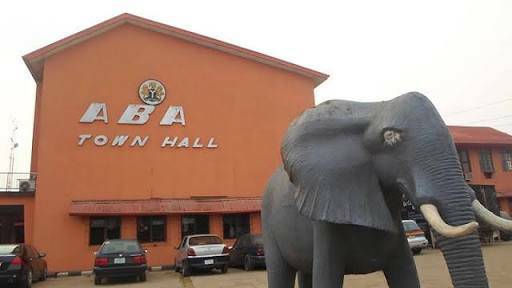
Aba is a city in the southeast of Nigeria and the commercial center of Abia State. Upon the creation of Abia state in 1991, Aba was divided into two local government areas namely; Aba South and Aba North. Aba south is the main city centre and the heartbeat of Abia State, south-east Nigeria. It is located on the Aba River. Aba is made up many villages such as; Aba-Ukwu, Eziukwu-Aba, Obuda-Aba,Umuokpoji-Aba and other villages from Ohazu merged due to administrative convenience. Aba was established by the Ngwa clan of Igbo People of Nigeria as a market town and then later a military post was placed there by the British colonial administration in 1901.
It lies along the west bank of the Aba River, and is at the intersection of roads leading to Port Harcourt, Owerri, Umuahia, Ikot Ekpene, and Ikot-Abasi. The city became a collecting point for agricultural products following the British made railway running through it to Port Harcourt. Aba is a major urban settlement and commercial centre in a region that is surrounded by small villages and towns. The indigenous people of Aba are the Ngwa. Aba is well known for its craftsmen. As of the 2006 census, Aba had a population of 534,265.[1]
There is a lot of rich history that is associated with the ever bubbling town called Aba. Aba is well known for the “Aba Women’s Riot” that happened in 1929. Aba is also known to be the commercial center of the South East and South South of Nigeria as there is nothing you are looking for regarding clothing apparels, leather works and car parts that you wouldn’t find in Aba. Oh what a town!
I was born and bred in Aba, the city is one of a kind. It shaped me into the man I am today. If you’re familiar with Aba you’ll know places like: Brass, Okigwe Rd, Akalanna, Omenazu, Umungasi, Abayi, Ehi Rd, Umuocham, Samek, Ariaria, Ngwa Rd, Port Harcourt Rd, Uratta, and more because Aba ma ndi Aba.
People who are driven by the need to bring about change are never resilient in its pursuit. Aba is known to all parts of the world partly due to this popular maxim “Made in Aba”. But regardless of how Aba is, there is a problem that has even been looming. In this article, I take a look at if the probability of Aba competing with Lagos is every possible.
Problems of Aba
Aba in Abia state is in a terrible condition because of the decay in critical infrastructures in the state. To be honest, the state needs a total repair as most of the critical infrastructural amenities built by the late Michael Okpara had been abandoned by the government.
There is need for total change of ethics in order to take Abia state to a greater height. Aba needs to be repaired. Umuahia needs to be repaired. Abia state doesn’t have a government house. Abia state doesn’t have government lodge. Aba is in a terrible state. We have refuse littered all over the whole place. If you go to Aba now, you will shed tears. If you go to Ogbo hill, where they slaughtered animals, you’ll find it difficult to eat. Aba doesn’t have abattoir. Aba doesn’t have running water. Aba doesn’t have roads, that is the truth.
Another of Aba’s problem is also that we need experts, town planners to sit and redesign Aba because majorly of Aba’s problem is drainage problem. So, if there’s no solution to that, and you tarred roads, it wouldn’t last beyond one rainy season. You find out that when it rains in Aba, the area is flooded and if you’re not fortunate you’ll have to swim your way down to your home.
Aba is powered by the Enugu electricity distribution company(EEDC), it is a product of the unbundling of the Nigerian electricity power authority(NEPA), there is another electrical company that is yet to start power generation called the geometric power company (if this starts the daily hours of electricity will improve in aba and the electricity generator is a household item in every home that can afford it, for some places in Aba it is the only source of electricity), unfortunately the Geometric Power Company have put their physical infrastructures but they are not functional.
There are many problems with waste management in Aba, stemming from the lack of a regular garbage disposal, which means that trash piles up in the streets from the many markets that dot the city. Waste Management problems have been tried to be solved through the Federal and State Governments, however, the problems still exist, and have not been solved. “Aba is the commercial hub of eastern Nigeria”. There are well known markets (such as Ariaria International Market, Ahia Ohuru (New Market), Eziukwu Road Market (Cemetery Market ), Shopping Centre (Ekeoha) etc.) that serve the entire region with quality wares, provisions, cosmetics, etc.
The list is endless, but is there hope?
The Desired Future
When you hear Abians discussing the contributions made by the duo of late Michael Okpara and late Chief Sam Mbakwe to Abia’s development, there’s always a nostalgic expression on their faces that you’re sure to find very relatable, especially as a first time visitor to the state.
Both men were instrumental in the development of the infrastructure, inner city roads and industries that still dot the state landscape till this day, but which have mostly deteriorated as a result of years of use and disrepair.
Starting with the infamous Aba, there’s been considerable improvements in the areas of road construction and rehabilitation and repositioning of the city as the commercial hub of not just Abia, but also the adjoining South-south and South-east states that come to Aba to trade on a daily basis.
Aba (and the state capital, Umuahia) is so strategically placed that it is said to be 30 minutes (without traffic) away from other major cities like Uyo in Akwa Ibom, Port Harcourt in Rivers, and also 45 minutes away from Owerri in Imo state and less than two and a half hours from the city of Enugu in Enugu state.
Like a confluence, Aba’s attraction for traders from cities far and near is first because of its strategic geography, but also for the people’s legendary trade and commerce characteristics. Described as the China of Africa, the city daily plays host to business people from neighbouring states and countries.
Travel routes in and out of Aba to neighbouring cities used to be problematic. For instance, there was no motorable road to Akwa Ibom state from any part of Aba until the administration of Governor Okezie Ikpeazu. Business people and shoppers from Port Harcourt found it hard (and still do) accessing Aba because of the state of disrepair of the Enugu-Port Harcourt federal highway.
The Akwa Ibom channel was said to be so bad to the point that traders from the famous Ariaria Market in Aba, who were affected and losing business, would take their products to markets in Akwa Ibom to sell. State government statistics claim 60 percent of the Ariaria Market daily business transaction comes from the Akwa Ibom and Cross River axis, which include from neighbouring Cameroon. The rest 40 percent come from Port Harcourt, Owerri and Enugu.
Also it is claimed that close to 30 million people do business in Aba everyday.
Judging from these facts, it is understandable why Ikpeazu decided right from inception that his administration would focus on developing Aba.
“I decided on this path to progress because I believe if we get Aba right, developing the rest of Abia won’t be difficult,” according to Ikpeazu. This account for the numerous road projects that has turned the city to a construction site.
Over 70 roads have so far been constructed by the Ikpeazu administration, and the governor in an interview with THISDAY, appears confident about their quality and durability. “I am confident they will stand the test of time,” he said.
Some of the strategic and important roads include Faulks, MCC, Ukegbu, Ire, Umuola, Umuehilegbu, Umule, and Umuocham, to mention a few. If you’re a regular visitor to Aba and your business takes you to the famous Ariaria market then you’re much more likely to appreciate the reconstructed Faulks Road.
Until recently, it used to be that when it rained in Ariaria, the entire market would be flooded. The opposition parties and their supporters enjoyed sharing photos of this on social media in their attempt to sway the voters.
Much has changed with the construction of Faulks Road. Once again business is booming and shop owners are no longer finding it difficult locating their shops. Add this to the ongoing construction of the Osisioma Flyover, and then you’ll have a situation where the market and city as a whole would be better accessible once the flyover is opened for use upon completion.
On repositioning Aba as a commercial hub, no Nigerian city epitomise the Made-in-Nigeria narrative like Aba does. Aware of this, Ikpeazu has spared no effort in getting the federal government, federal agencies and foreign governments in Africa interested in patronising Nigerian made goods.
Nigeria’s military ordered 50,000 pairs of shoes. There’s also been orders from the Navy and National Youth Service Corp (NYSC). Last year the governor was in the Gambia with Aba shoemakers for a meeting with the Gambian President to discuss the prospect of producing shoes for the country’s security agencies. Also, in the same 2018, the state government sponsored 30 Aba-based shoemakers to China for capacity building in the use of automation in shoe making.
Aba shoes sector would grow with partnerships [source: technomy]For some of the governor’s supporters, if nothing else, the construction of Faulks Road – once a sore point to the state – supports the assertion that Abia under the Ikpeazu administration is resurging. But they think there’s more claim to a resurgent Abia, and point to the Enyimba Economic City (EEC).
Private sector driven, investors from Nigeria, China, Germany and the U.S. will run the various components that include an industrial, electronics, leisure and education parks, and a training institute, ICT section, garments and shoe factories, tourism, sports section, logistic hubs, and many more.
The $25 billion project, modeled after the Dubai markets, sits on a land space of 9,800 hectares located majorly in Abia state, and portions of Akwa Ibom, Rivers and Imo states, and is managed under the corporate name, the Enyimba Economic City Development Company (EECDC).
China’s Ruyi Group of Companies is the EEC’s largest private-sector investor, and in collaboration with Geometric Power Plant, Aba, is investing $2.5 billion for power generation, for steady electricity supply to the Economic City.
The federal government has co-opted the EEC as part of its broader industrial revolution plan as conceived in the Economic Recovery and Growth Plan, part of which is the ‘Made in Nigeria for Exports’ (MINE) project, conceived to position Nigeria as the manufacturing hub in Sub-Saharan Africa.
Recently, the federal government signed a $30 billion industrial revolution agreement with the Africa Export and Import Bank (AFREXIM), Africa Finance Corporation (AFC), African Development Bank (AfDB), Bank of Industry (BoI), and Nigerian Sovereign Investment Authority (NSIA) to boost export earnings from made in Nigeria products from Special Economic Zones (SEC).
Abia’s EEC, Funtua Cotton Cluster in Katsina State and the Lekki Model Industrial Park in Lagos State, have been penned down for the take-off stage.
Reminiscent of the Michael Okpara era, the idea behind the EEC is for Abia to metamorphose from Made-in-Aba to a Make-in-Aba hub. Upon completion the EEC would create nearly a million jobs, 300,000 units of urban housing, an urban population of more than 1.5 million people, and over 2,000 industrial units with estimated annual value output of more than $5 billion.
Recently, the Governor appointed Sam Hart to overseer improvements in the manufacturing industries. Sam Hart traveled to China and brought a whole load of Chinese Engineers as they have assembled a Shoe Factory to boost Aba made Shoes. All can’t happen in a day, as they say that Rome wasn’t built in a day, but with this development, it’s certain that Aba would practically become the favored spot for business and living.
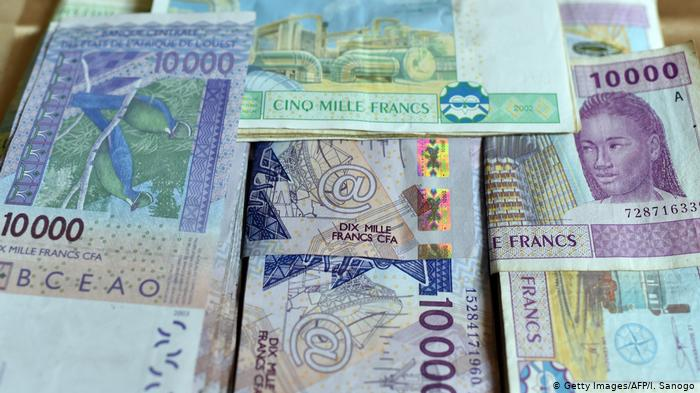
The anticipated abolition of the C.F.A in West Africa has come into play following an agreement between France and its West African states users. The agreement has been to rename the CFA with a West African regional currency – Eco, and cut off its entire financial links to France. This was announced a few days ago by the Ivorian president, Alassane Dramane Ouattara, following an agreement between France and the concerned West African States, in Abidjan, Ivory Coast capital.
The C.F.A stood for the ‘French Colonies of Africa’ when the then colonial power introduced the currency in 1945, though it was changed after independence to ‘Financial Community of Africa.’
For years, blazing criticism has trailed the French originated currency because the countries using it are required to keep 50% of their foreign currency reserves in the French treasury.
Under the new deal, the African countries using the C.F.A wouldn’t have to keep 50% of their treasury in France, and there will no longer be a French representative on the currency union’s board, though the currency is still tied to the Euro.
The quest for a currency free from colonial sentiment has been pushed for long with no success, owing to the disapproving reaction of the French authorities. The situation has resulted in activism from pan-Africanists from around the world that pushed viciously for the eradication of whatever remains of colonial influence in Africa.
The C.F.A comes at the forefront of activism as it appears as a symbol of French presence and authority in Africa. The currency is used in 14 African countries with a combined population of about 150 million and $235 billion of gross domestic product.
However, not all the 14 countries are in the deal to break out from the currency, only the 8 countries of West African region: Benin, Burkina Faso, Guinea Bissau, Ivory Coast, Mali, Niger, Togo and Senegal.
The remaining six countries are mainly from Central Africa: Central African Republic, Equatorial Guinea, Congo Republic, Cameroon, Chad and Gabon. These countries are still sticking to the CFA, though it has been renamed Financial Cooperation in Central Africa, (Cooperation Financiere en Afrique Central.)
This historic turn of event was hinted on in 2017, when the French president Emmanuel Macron indicated willingness in letting the Africans have their way, unlike his predecessors. He said it’s left to African leaders to decide what happens to the C.F.A.
“Yes, it’s the end of certain relics of the past. Yes it’s progress… I do not want influence through guardianship; I do not want influence through intrusion. That’s not the century that’s being built today,” Macron said.
The need for a single currency to foster trade in the West African region has been a topic of serious concern for leaders in the region. Following a meeting held in Abuja on December 21, they came to a consensus to implement an already existing agreement – the creation of Eco in 2020. That means severing ties with the C.F.A.
But while there is optimism that the Eco will change the economic outlook of West African region, there is also concern that, by pegging the Eco to Euro, the idea of creating independent economy for West Africa has been altered.
Hady Ba, a Senegalese philosopher and a staunch advocate for a single currency for West Africa said the whole idea has been to liberate the region from economic dependence. But he doubts if the idea would ever be actualized given the kind of leaders Africa has. The author of “The Last Colonial Currency: The Franc C.F.A Story.” Ndogo Samba Sylla, said Ouattara and the rest of C.F.A. countries had hijacked the original Eco plan by allowing the Eco to be pegged to the Euro, which by his interpretation means that they have chosen to keep their ties with France instead of establishing new ones with their African neighbors.
He said the whole thing has been superficial and would have no positive impact on the countries’ ability to control their own currency. “As we’re still pegged to the Euro, we’ll have to have conservative monetary policy,” he said.
What is not sure so far is if Ghana and Nigeria will yield to the Eco being pegged to Euro when the fifteen West African countries introduce the Eco in 2020.