DD
MM
YYYY

PAGES

DD
MM
YYYY

spot_img

PAGES

Home Blog Page 6536

Examining the Nigerian University System

1
National-Universities-Commission-NUC

It will not be out of place to place the essence of education over just emancipating man from the shackles of ignorance but also to build him into civilization. The Microsoft Encarta dictionary, captures Education as the impartation and acquisition of knowledge through teaching and learning, especially at a school or similar institution. Suffice me then to state that my hauling today is towards Nigerian institutions and not the process of learning how to read and write; those are fasts no one can scratch.

If you had started the odyssey with me then you will agree with me that the definition stated above is not holistic enough as it has not captured what an educated society should look like. Having that in mind, it becomes easy to create a mental picture of the society a civilized mind will create. One can be caught lying to others but what you shouldn’t be caught doing is lying to yourself.

Question: Has the school given us education? Why do you finish schooling and the best suggestion ever is still about going off to learn a trade or skill? Permit me, therefore, to say that Nigerian tertiary education is a bluff, a mere social status, an institution that people enter and joke around, a make-believe cycle that trick people into believing that they have been given a future. A system that produces automobile engineers that can’t repair cars, not to talk of making one, a broadcaster that cannot edit their voice records or videos, nurses that cannot administer injections; the list is endless. Though this article might not be applicable to all disciplines; however, the majority of faculty in our education system falls under this pathetic cycle.

Just a week ago some of my students were discussing the yahoo yahoo rave destroying the fabric of our society with me, their submission was/is pathetic. They feel the scam scheme has helped Nigerian youth to have ‘a life’. Waiting for you in any way agree with them, you are not fit to read this piece beyond this point because you are either too young, infected and corrupted. If an educational system brings in young boys that will later graduate as yahoo boys or with the belief of get rich quick mentality, then something is wrong somewhere. Impacting is lost.

The Devils Cycle

It is clear that to hold important posts in Nigeria, you have to be educated. Positions that people occupying are to make decisions millions of other people in the nation. It is then understandable that educated people (and by educated I mean people that graduated from university) run the country. That means they all have to be in the womb of the educational system before they get born to rule. But what has the mother prepared them to become? Have you seen the political scientists curriculum? The sociologists, communicators, and other social science subjects in the country? Are their curriculum designed to tackle (real) societal problems and enact positive changes that are peculiar to the black nation? Does our school recognizes the apparent nature of our politics and policy and groom the coming generation to fix them? And these people are to be future leaders, right? Carrying forward the irrelevances and/or cluelessness that the fathers let down to the children to put the madness on repeat.

NUC: Fathers will not be at the market square to see the head of a child loop-sided pass over

The NUC is the body that is meant to checkmate the universities so that they can perform their role of ‘education’. It will sound ridiculous asking if NUC understands what education is because they are (to be) educators and professors. Let me see your hands up if you also wonder the usefulness of professors in this black nation.

For you to be approved to run a programme in university, the NUC must accredit the programme. Ok, we all know this happens; that most universities at the point of accreditation know they have to meet up with the requirements. Due to either short of money (which is an ever standing problem), or just Blackman mentality of always trying to jump the line, the universities go around hiring make-believe equipment and loan senior staff from other universities to pass accreditation so that they can continue producing more internally-destroyed-graduates. The fun part is that the NUC knows that this is how things are done, they know that many universities can’t meet up with the outrageous and archaic requirements which are an extension of an apparently failed system. Yet they go ahead and accredit the programme if the make-believe is convincing enough. I should also mention that a lot of money and bribes go in and out of that exercise and the ridiculous requirements keep the university at the mercy of the NUC so that they can extort from them. So how can a body that does these be able to build a sustainable curriculum that will educate the nation; education expected to engage its goal of developing the nation?

The Paperwork

I have always tried to logically track the to the genesis of this problem, will you be interested in my theory?

The colonial masters brought in education as we cant do that ourselves; we were probably busy with building juju cults and undocumented wisdom. Their idea is understandable. Since this part of the world to them is the place where they mine slaves for exportation, exploitation and building their own world. They designed the educational system to build slave masters. Where the masters do the thinking, do paperwork (write papers, this might be the origin of the millions of useless theses we are so much concerned about to dictate hierarchical movement in our educational system), the slaves (black men who apparently owns the land) will execute the plan. And after they were gone, we adopt the system forgetting that we are no more slaves; that we need to plan from the paper (research works) to the field; that no one will execute the paperwork but us. Now, someone will blame the colonial masters. Wait, were they in league with our gods or God to colonize us? Were they not men like them? Did they have two heads and double organs? If we were not stupid like they felt, how come the history went that shameful and blames are still placed on them that ironically make them seem like superhuman that can put a jinx on others? Isn’t it time to learn and move on? Well, lets forgive the past because we were not there and did not know how things were. Maybe forefathers actually lived on trees and the Alaafin was not exposed enough to note that mirror and gun power do not worth an exchange of a man like himself… of his race to be given out as slaves. And all those brags about voodoo?(sigh). But this is the present. It’s almost half a century now and the curriculum is still trash while the world is moving in jet speed but our contents are from the notes from the colonial days, ehn, our Professors?

And let’s talk about those papers that the system have been busy writing. Promotion is determined in Nigeria Universities, not on the quality of students trained but by how many papers you’ve written is an academician. Now imagine how many academicians are present in Nigeria, then imagine how many papers have been written, now imagine where we are still at don’t cry yet.

The Wikipedia online encyclopedia defines the paper as an essay or article, particularly an academic one, read at a conference, or submitted for publication. That does not carry enough description so we go the way of Wikipedia which defines academic papers as a periodical publication in which scholarship relating to particular disciplines published. Academic journals serve as permanent and transparent forums for the presentation, scrutiny and discussion of research. They are usually peer-reviewed or refereed. Content typically takes the form of articles presenting original research, review articles, and book reviews. The purpose of an academic journal, according to the first editor of the world’s oldest academic journal Henry Oldenburg, is to give researchers a venue to “impart their knowledge to one another, and contribute what they can to the Grand design of improving natural knowledge, and perfecting all Philosophical Arts, and Sciences.

The important part of the definition is the purpose of academic papers. After imagining how many papers that are written in Nigeria one will not be mistaken to believe that the growth in every sector in Nigeria will be astronomical. Is that the case? As a matter of fact, if producing paper in the literal sense of it is what is done, I mean making papers from wood, then you know by now we will be exporting papers as a major. Have we asked ourselves what these papers have done for us? Will it be hard to figure out that 90% of academic papers are wuruwuru (scams) work done for the selfish sake of promotion and dull intention of bringing intangible change? But how has the NUC fixed this after years of its failures? And don’t be thinking I am scratching the surface here, because that is not the point. If you scratch the surface in the United Kingdom (where our masters came from), your nails will gather impressive developments from a system that is constantly checked for sanity. The efficiency and effectiveness of the educational sector at the tertiary level gives direct development to the country growth because it provides sound manpower/ Human Resources. So why can’t the board of NUC take time from their business routines and fix us a working curriculum for the sake of the nation, our children and for intellectual pride sake? A world where every paper counts from the pen to the field? This is possible and I think it is simple considering how the value we put on professorship and the money paid to them.

Don’t get me wrong I believe in research, however, imagine a world where only research is the thing? The implication of the failure in the system of our universities is no doubt serious, it means we are on the circle on foolishness in running a country that is not planning to be slaves to others in the future. Ironically, robots powered by AI are what others think will be slaves in the future, so we wont sell even if we are in the market for slavery. If the leaders are a disgrace and their thinking faculty are always called into question then one will face the place of intellectuals: Universities. Failure of the school system is simply asking a question on how we reason as a whole.

As at the time of writing this piece, I was listening to a Nigerian ‘technopreneur talking about how he got to be successful, after listening to him, what is clear in his submission is that he let us know his story will not be complete without highlighting that his Nigerian education has nothing to do with his accomplishment. Must it always be like this? It always seems that to be truly successful in Nigeria, you have to shit on your degree. Can we look forward to a future where lecturers in universities shall be rewarded with the impact they have on the students? If not, in this case, it will be good if promotion and ranks are (also) given when academicians impact on the surrounding environment. If we think towards these then our curriculum shall be holistic. While many great lecturers focus on students development as common-sense suggests, ones that are there for money are busy writing more (useless) papers, resulting into good ones remaining stagnant and unrewarded and the bad-eggs having the glory while they run after someone daughter to relax after frustrating them. They spend their time on their personal development which has nothing to do with communal and student development and they suffer the student with a ridiculous, fruitless and irrational task to cover-up their uselessness. These silly efforts and hardship many confused, fooled, derailed and misled Nigerians went through in universities delude them into thinking they have done something in life and have paid their price enough to sit and await the fruit of their labour. These deliver to us unemployed, not-employable frustrated youths who do not have a proactive heart”. And we also have yahoo boys and their advocates for product. Let us remember none of our universities makes the first 2000 in the world.

As a young man, I never thought I would be concerned about my generation this much, about the past and the future generation, about the race. I thought some older wise people that run things shall be busy with these. I thought as a troublesome young man my job is to be riding fast cars and using computers but when I look around, I see a lot of potholes and darkness in the nation then I understand where the disappointment and anger come from. If the system that builds men is corrupt then the future remains doomed. We might just leave the output for now and focus on the machine because the machine is bad. This is how I feel, and it can only get worse if things don’t get better.


The Users’ Impending Exodus From Facebook

0

Three friends of mine deleted their Facebook accounts. When I asked, they insisted they just don’t like Facebook anymore. I couldn’t help wondering why anyone wouldn’t like the type of opportunity offered by Facebook, where one can easily reconnect with old friends and acquaintances as well as make new ones. But now I’m beginning to see their reasons.

Facebook is usually one of the first social network platforms people that have internet access join. As of today, this platform enjoys up to 2.45 billion monthly users and the number is still growing. But it is possible that in the nearest future this number may drop, not because better social media houses opened (which may happen, anyway) but because some of its users may drop out of it as a result of dissatisfaction and disappointments.

I personally have started having reservations about Facebook. I still have an account there but I no longer have that zeal to check into it. Sometimes I don’t login into my account for weeks, or even months on end. And when I do so and see the number of pending notifications, connection requests and messages, I just log out with the intention of coming back soon to check on them. But I never do that for weeks to come.

A lot of people may not understand why Facebook is receiving thumbs-down from someone like me. I want to make it clear that I’m not discouraging people from signing up with this social media platform, because there are so many things to gain there. The essence of this post is to expose some negative attitudes exhibited by Facebook users and to get the Facebook team to find ways to discourage them.

Well, here are some of the attitudes exhibited by some Facebook users that are pushing others away.

  1. Throwing Random Insults and Trolling

I believe this is the major thing that keeps me away from Facebook. People seem to enjoy insulting others as they comment under their posts. In fact, the more savage, uncouth and personal insult is, the more “likes” and encouragement the assaulter receives. Anyone that decides to send posts into Facebook should be prepared for unnecessary verbal assaults from commentators. Some people don’t mind these negative comments and reactions but a lot do, especially if they attracted other insults.

  1. Use of Foul Language

This is easily found in Facebook groups. Some people are more interested in showing off their stock of taboo words and expressions than in contributing to important matters on the ground. I’m not saying that every group on Facebook condones the use of abusive and offensive terms, but it’s very common among them. People that can’t stand such language avoid being a part of it.

  1. Aggression

I don’t know if anybody else has noticed this. Most Facebook users are aggressive in nature –even outside Facebook. Aggression here isn’t about “business aggression” that is encouraged, but about hostility and violence that comes from exposure to unhealthy social environment. It is hard to see any form of argument in Facebook that doesn’t turn aggressive. And in most of them, the participants focus more on subduing and killing the voice of their opponents than in being logical. By the end of the day, no one learnt anything.

  1. Lack of Control over Posts

Most viral posts on Facebook are gory pictures and videos that shouldn’t be let out into the world. People stream live murders, rapes and suicides on Facebook and other users spread their posts like wildfire. Do you know that gruesome pictures and news of accidents and accident victims go up on Facebook long before the FRSC (Road Safety), Fire Service and the NPF (police) get to the accident scenes? Mind you, the news didn’t go up because the “broadcasters” wanted to help the victims, but because they wanted cheap popularity for themselves (or just to have fun). The strangest thing here is that most Facebook users prefer this kind of post to the ones that impact positively on them. This shows the frame of mind of some of these users. It also shows that most of them are immature and shouldn’t be there. Anyway, the people that seek more meaningful posts look elsewhere.

  1. Rowdy and Less Impactful

One of my friends said that Facebook is “too noisy”. Another one said people go there to show off and compete with others. And then, we have those that are there just to “monitor” the progress of others. As difficult as it is to explain these phenomena using words, it is true that Facebook is not the right place for those looking for platforms that will provide opportunities for serious thinking, planning, innovations and growth. A lot of Facebook users that discovered other social networking platforms like LinkedIn always comment on how Facebook wasted their time. This is not to say that it is not possible for people to send up impactful posts on Facebook, but the “noise” there drowns the voice of such people and only allows that of “empty vessels” to be heard. And when these “serious” people find no voice in Facebook, they pack their belongings and look for where they can connect with other “serious” minded persons.

Every person that left Facebook has complained that the team needs to listen to. There is serious need to regulate Facebook before it gets out of hand.

Lagos State Government Calls on Dangote Group to Rehabilitate State Roads

0

Bad roads are increasingly becoming part of Lagos State that its notoriety has instigated a session on the causes of road decay in the State House of Assembly. The state lawmakers were on Monday, deliberating on many issues that they pointed as being responsible for bad conditions of the roads.

The Lagos State House Assembly fingered, among other things, Dangote trucks as major instrument of road damage in the state.

The House therefore, in a motion moved by Hon. Abiodun Tobun, resolved to call on Dangote Group to see road rehabilitation as part of its Corporate Social Responsibility, and support the state in reconstruction of failed roads since the company’s trucks have been hugely responsible for the spoils.

Contractors are also fingered by the House as many of their actions were noted to contribute immensely to the decay the state’s roads are currently in.

The Nation reported that the State Governor, Babajide Sanwo-Olu was called upon by the House to ensure that contractors are not paid contractual emoluments when their qualification is not ascertained, and the State Treasury Office (STO) should live up to its responsibility in this regard.

The Special Adviser on works and infrastructure was urged to ensure that road projects in the state are executed with the best practices through quality supervision. And that includes making sure that right of way is given to the contractors before the commencement of construction works.

The need for good roads in Lagos State has been a topic of discussion year after year; a fact Tobun, who is the chairman, House Committee on Works and Infrastructure acknowledged and added that there is a need for the State to ensure there is quality network of roads.

Tobun noted that there is little to justify the huge amount the State is raking in revenues when it comes to roads. He said that most of the construction works are not properly handled and some are abandoned even though the funds have been paid fully for the projects.

“The House is further concerned that after most of the roads are repaired, heavy duty vehicles ply the road without regard for the damage done to the roads.

“We should urge Governor Babajide sanwo-Olu to ensure that contractors are not paid mobilization fee unless they are ready for the work.

“The Commissioner for Works and Infrastructure should also ensure that only contractors with requisite experience are given the job to do,” he said.

He also noted that the roads have become death traps to motorists, and people are getting killed at an alarming rate on the daily, citing the entourage of the Oba of Epe that was fatally hit by an articulated vehicle on Sunday, resulting in the death of many.

The Speaker of the House upheld the motion, urging those in charge of road construction in the State to up their game, by most of all, making sure that contractors do their jobs effectively.

Another House member who added his voice to the matter is Hon. Bisi Yusuf, representing Alimosho Constituency 1. He said the State is spending more for less quality roads, and there should be value for money spent on road construction in the state. He used Kudirat Abiola way, Oregun, Ikeja as an example. The road he said has lasted for 14 years since it was commissioned and it is still in good condition.

Expressing his view on the matter, Hon. Rotimi Olowo, representing Shomolu constituency 1 repeated what Tobun said that many contractors bolt after collecting mobilization fees. He added that the State Government is losing a lot of money due to insurance bond, and that every stage of the project, the APG must be alive and it should not be for mobilization fee alone but other payment in the life of the project.

However, as glaring as the blames seem, asking Dangote Group to take on the construction of Lagos State roads because of its trucks that have been seen as contributors to road damages has been described by many as mischievous. The argument is based on the fact that Dangote Group, like many other companies in Lagos are paying taxes to enable the Government to, among other things, rehabilitates the roads.

It is believed that the factors mentioned by the members of the State House of Assembly are mainly of the State Government’s misdoings, situations that is believed, if corrected will put an end to, not only bad roads, but so many other infrastructural lapses of the State.

Capitalism Will Save Africa

2
Five ways to raise capital

If you want to make money, look for a problem and solve”

This statement in itself is one of the reasons we have lots of failed startups scattered across Africa. I don’t want to go too far, let’s stay within the confine of Nigeria.

For some time, I’ve heard lots of business speakers give advises to wantpreneurs or early startup founders on why they should look for a problem in Africa and solve then charge people for it.

While it’s true that we have so many problems in Nigeria at the moment, it’s also true that we really need to address how to approach them.

Firstly, I’d say that we need ideas that would generate money for both the problem solver and in turn affect the economy than people who just solve problems.

In order words, if we really want to solve problems, we must also consider how the solution will sustain itself. Sustainability is the key word here.

We need entrepreneurs to think sustainability than solving problems. This is what we lack in Nigeria.

I have seen so many people cling to the idea of being part of the sustainable development goals (SDG) goals and I wonder what exactly they’re saying.

Once they present their ideas to me, I discover they are only concerned about solving the problems and they are not thinking in 10 years time.

I think that we really do not understand what the word sustainable means. Sustainable means it has the ability to keep itself from going down at least for some time.

But how else can an idea keep itself from going down if it’s not making money?

I love the ideas of NGOs and I believe some people have small NGOs as an act of philantropism, but when we talk about tackling major problems we’re facing, then NGOs are the wrong approaches.

Take a look at the educational dysfunction and the high unemployment rate it has caused. Remember, there are tens of millions of unemployed youths littered everywhere.

How can we solve this situation without building structures, spending money, and spending more money.

Where do you get the money from?

Grants? Aids?

Would we depend on these forever to keep it running? That would be fatal.

Now back to my point, some start-up founders don’t run NGOs but their business models look like they’re running such.

I want to briefly explain why these startups founders are prepared to fail from day 1 and connect it to why solving problems is not the right mindset for startups.

The mindset of solving problems works in a way that you look for problems within the environment and think about solving.

The issue is not that people do not know they have the problems. The problem is that they can live comfortably with the problems.

The only problem people cannot do without is food, clothing, housing and the desperation to pretend to be who we’re not.

If you provide a solution around these, be rest assured you will run sustainable. However, it’s obvious that these are not the only problems we’re facing.

Matter of fact, the problems we’re facing asides these are grave and terrible. So do we only face problems that people are willing to pay for?

Of course not!!

People are not willing to pay for education. I don’t mean schooling, I mean to learn stuff that would make them relevant.

Yet we’d see lots of people still coming up with solutions to solve the education problem. So how do you run a sustainable business amidst this?

This is why I simply explained that sustainability should be the mindset of entrepreneurs.

That in itself is capitalism.

Since people are not willing to pay, should we leave the problem alone. No. There are many problems in this particular problem itself that would lead to money and I tell you it’s beyond solving problem skills.

One of the hardest thing to do is to create a structure that would take money away from people. Yet, that’s what we need for these ideas to be sustainable.

Taking money for your idea is way harder than solving the problem and if you don’t think in the money making direction, you’d not get it right.

If you get it right, you can scale up, move across territories and help more people. I used the word help because despite the fact that you’re taking their money, you’re exchanging help in return.

Are startups founders really ready to go this hard way to figure out how to make money from their ideas?

Well, you should pin this down and ponder on it as an entrepreneur.

Think like a capitalist.

Last Decade Was Not So Good For Kids

0

As 2019 winds to its end, a look at major events around the world shows that the decade was characterized by developments of proportionate impacts on humanity – the good, the bad and the ugly. From economic downturns to health crisis to armed conflicts, and the most vulnerable amongst all – children, had their full share of them all, but especially from armed conflicts.

According to news report published by the charity, Save the Children, nearly one in five children live in areas affected by armed conflict and war.

In 2017, about 420 million children were living in conflict-affected areas, a staggering number that has broken every record of conflict effect on children for the past 20 years, the report stated.

The research report, “Stop the War on Children” carried out by the Peace Research Institute Oslo stated that among the hardest conflict-hit areas were Afghanistan, South Sudan, Yemen, the Democratic Republic of Congo, Iraq, Central African Republic, Mali, Somalia and of course Nigeria.

According to the report, the reason for the increase in children living in conflict-affected areas in 2017, is that modern warfare has changed the lines of engagement, and fighting in urban areas among civilian populations became more common while international rules of engagement were disregarded.

The Save the Children charity report defined affected children as those living within 50 kilometers (30 miles) of where one or more conflict events took place in a year within a country’s borders.

The result of this has been grave violations of children’s rights and their being abused in so many ways that include getting maimed, killed, recruited or abducted by armed groups. There were also sexual assaults, school attacks and denial of humanitarian aid. The excesses of 2017 heightened the previous figure of 2010, from 10, 000 to 25, 000, and according to United Nations data analyzed in the report, it’s the highest number ever recorded since 2010.

Analysis of the reports showed that children were specially targeted and lack of protective measures for them spiked their vulnerability.

The President and CEO of Save the Children, Carolyn Miles said the rate and style at which these conflicts happen is an indication that children are suffering more than ever.

“The way today’s wars are fought is causing even more suffering for children.

“Our analysis clearly shows the situation is getting worse for children and the world is allowing this travesty to happen. Every day, children come under attack because armed groups and the military forces disregard international laws and treaties. From the use of chemical weapons to rape as a weapon of war, war crimes are being committed with impunity,” she said.

Another notable challenge that has been successfully birthed in areas of conflict, especially in Africa is lack of education for the affected children. In the Northeast Nigeria, occurrence of school attacks by Boko Haram became so rampant that many schools were shut. In 2016, in the same region, over 1 million school children were left out of school due to Boko Haram activities.

The most notorious of the abductions was the Chibok School Girls in April 2014, when 276 girls were taken from their school’s hostel. The attacks on schools continued with so many more kids being abducted.

It was deemed unreasonable to subject schools kids to further attacks from the Islamist armed group, when the Nigerian Military was reportedly using these schools as bases. A report by Human Rights Watch titled “They Set The Classroom on Fire: Attacks on Education in Northeast Nigeria” noted increase in brutal assault by Boko Haram on schools. It stated that between 2009 and 2015, the terrorist group destroyed more than 910 schools and forced at least 1,500 more to close. The conflict led to the death of over 611 teachers and 19, 000 others were forced to flee. There were also cases of abduction involving more than 2, 000 civilians, among them were large groups of students made up of a lot of girls.

The onslaught continued, leading to internal displacement of communities, destroying every basis of education in the region. The number of out-of-school children consequently increased, and many of them were scattered around places of shelter and safety with no access to education.

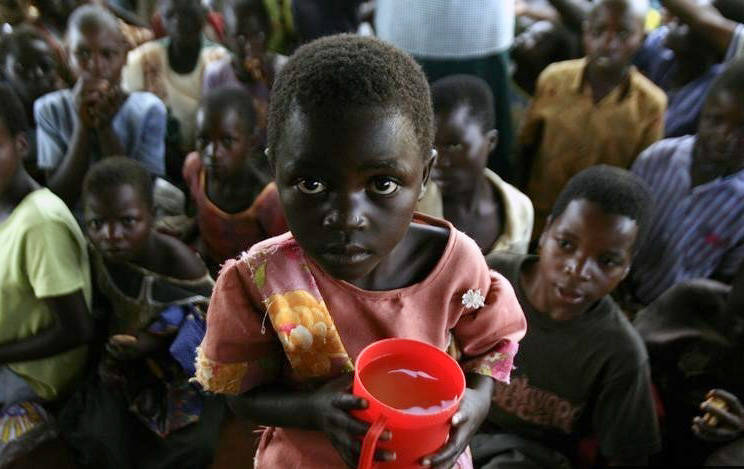
As the decade drew close to its conclusion, there were over 11 million out-school-children in Nigeria alone. These children were exposed to the devastating reality of lack of education and hunger. Efforts by humanitarian groups were not enough to quell the menace of the organized onslaught against western education that has done more than deny children basic education and nourishment.

In other parts of the world where there is relative peace, the problem has been more of economic hardship. Parents who could barely provide for their families have watched their children helplessly as they grow through hunger and malnutrition.

However, the bleak situation of education in the Northeast Nigeria has made the region a typical example of children’s woes in the world. This is because, according to Unicef, a lot of factors have come into play to create a dysfunction that has altered the essence of education in the region.

The education deprivation in northern Nigeria is driven by various factors, including economic barriers and socio-cultural norms and practices that discourage attendance in formal education, especially for girls” – Unicef.

The solution has been tied to the Sustainable Development Goals 4, which advocates the prioritization of education and target children who are likely to receive the least education.

The aim of UNICEF’s education programme is to support the government in achieving SDG 4 by 2030 through improved planning and by addressing some of the systemic barriers that hinder the implementation of an effective education strategy” – Unicef.