DD
MM
YYYY

PAGES

DD
MM
YYYY

spot_img

PAGES

Home Blog Page 6536

Reactions of Nigerians on Electricity Tariff Increase by NERC

0

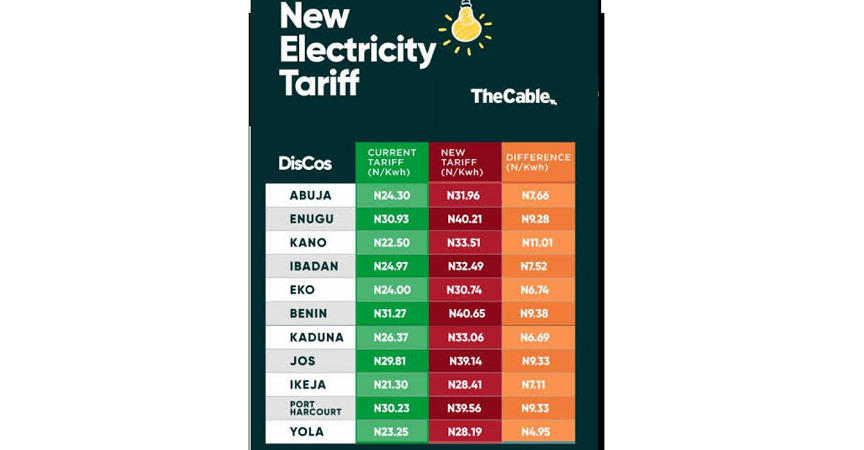
The news of the increase in electricity tariff approved by Nigerian Electricity Regulatory Commission (NERC) filtered in early this week. This news stated that from April 1, 2020, the 11 Electricity Distribution Companies (DisCos) in the country will review their electricity tariff upward.

According to NERC, this upward review, which was last done in 2015, was necessary as a result of four factors – inflation, exchange rate, US rate of inflation and gas prices. These were stated in the agency’s December 2019 Minor Review of Multi Year Tariff Order (“MYTO”) 2015 and Minimum Remittance Order for the Year 2020, which can be accessed from here.

This new increase shows that most tariff plans will increase by the addition of an extra N10 – N25 per unit, depending on the tariff plan and DisCo. However, going through the tables of new rates for different DisCos, I realised that electricity consumers under Enugu Electricity Distribution Company (EEDC) have been paying the new rate for some years now. It is obvious that what we are waiting for is the year 2021 tariff rates and not that of year 2020.

Anyway, the major reason for dropping this article is to lend a voice to many Nigerians, who have one or two things to say to NERC and the Nigerian DisCos.

It is pertinent to note that Nigerians don’t trust NERC and any of the DisCos to provide them with uninterrupted power supply. No Nigerian received the news of the tariff increase with relish. They all expressed their scepticism and suspicion towards the intention of the government agency. A lot of people pointed out the coincidence of the tariff increase and minimum wage implementation, wondering if the federal government is indirectly collecting its money back from the citizens. Then there are those that speculated that the government wants to overtax the citizens so that it will cover up its incompetency.

From the opinions and complaints of Nigerians towards the tariff increase, I noted that three distinct groups exist, all of which require the attention and consideration of NERC and Nigerian DisCos.

GROUP A

Those that belong to this group are the people that are willing to welcome the price hike so long as there is an improvement in power supply. Among these people are business owners that are tired of the high cost of running their businesses with generators. People in this group also complained of the noise and air pollution that comes from power generators. However, they are of the opinion that the only condition in which they will welcome the new electricity tariff is if they will enjoy 24-hour power supply. Failure of this means they will resort to generating their own power through solar, micro-hydro and wind power plants. In fact, a lot of people are considering these business options as I write now.

GROUP B

This group comprises of the people that insist that the tariff shouldn’t be increased for any reason. They hold that the current rate is even too high because a lot of people pay for what they didn’t get. Most of the people under this group are those that are still stuck with the Estimated Bill method and those who do not use electricity for any form of business. According to a person here, he’s billed #12,000 every month even though he couldn’t boast of 5 hours of power supply daily. He couldn’t then imagine what the new bill will cost if NERC is allowed to have its way.

There is something that NERC needs to note about this group. The members are bitter and they feel cheated. They believe that the DisCos in their areas are extorting them. A lot of them claimed to have applied for prepaid meter but have not gotten it because their DisCo benefits more from Estimated Bill method. To this group, increase in electricity tariff rate is a form of corruption.

GROUP C

I met this group in my village, Awkuzu, Oyi Local Government Area, Anambra State; and I believe they exist in every part of the country. When I told some people in my village that “NEPA” was about to increase their tariff rate, I got funny answers that ranged from, “For which light? The one we see or the one we don’t see?” to “They should carry their light; we are used to the darkness.”

This group no longer cares about power supply. They have settled to using generators in running their businesses and they know how to conserve fuel. When their phones’ batteries run down, they take them to business centres where they are fully charged at #50. At home, they use kerosene lamps and rechargeable torches to manage the darkness. Occasionally, when the need arises, they power up their generators do a little “oyinbo”. They heat up their food to keep it “fresh” and they keep their water in cool dark corners to keep it cool. In fact, these people have settled to a lifestyle that ensured that lack of electricity does not disrupt their activities. So when you tell them electricity tariff is about to be increased, they don’t care a bit.

If NERC has considered all factors and deem it fit for the tariff to be increased, no one can stop them. But there is a need to consider consumers’ satisfaction too. The first thing the agency should do is to compel all electricity distribution companies to issue out prepaid meters before April 1. That way, consumers can monitor and manage how they consume power. As for uninterrupted power supply, that is still something in our wish list; we will know when it is about to happen.

NERC and DisCos should also remember that Nigerians are considering alternative sources of power. If they fail to improve, one day they will wake up and find most of their customers are gone.
BUA Cement Lists on the NSE with a Market Cap of N1.2 Trillion after Merger with CCNN

0
BUA at NSE

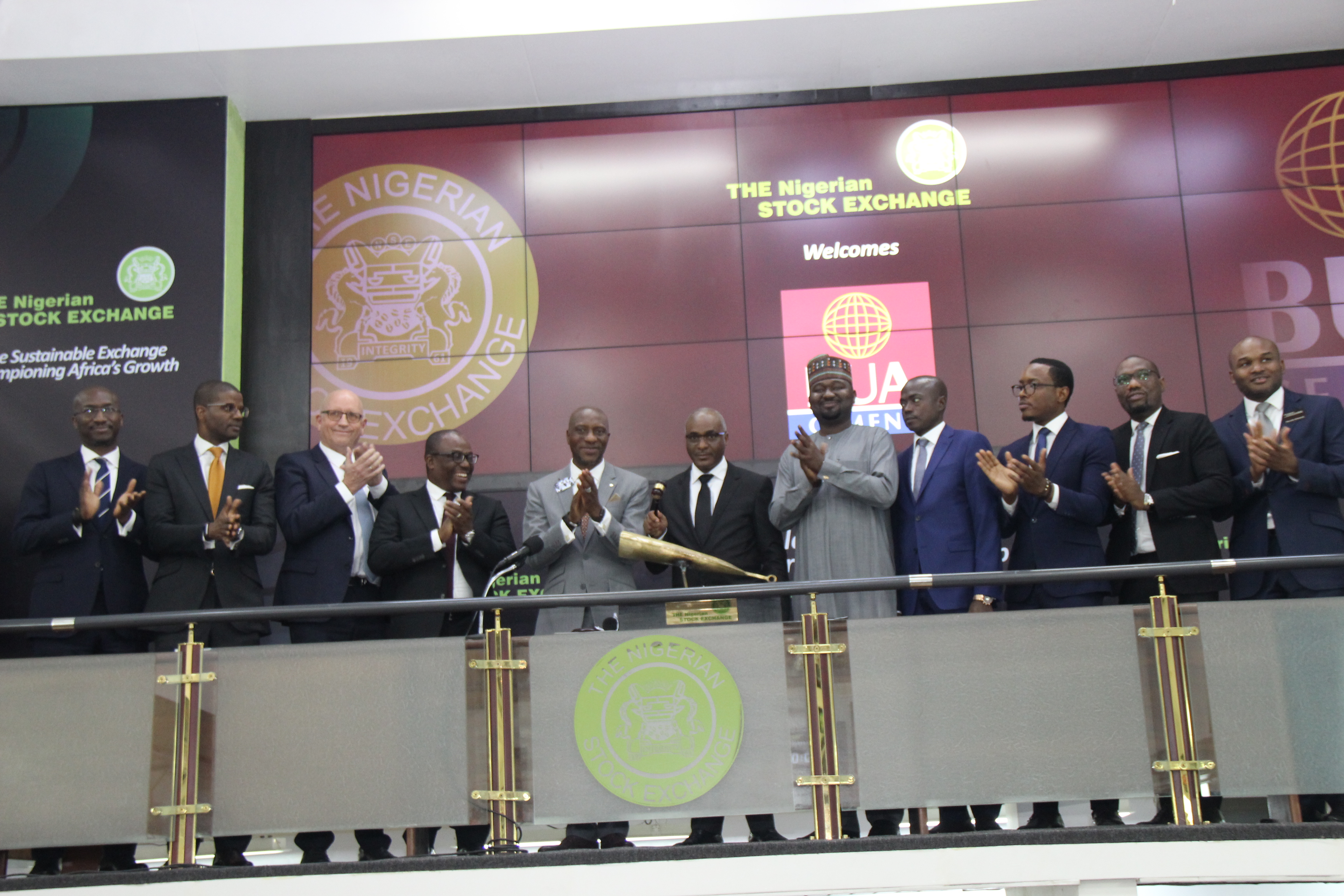
BUA Cement, on Thursday, listed on the Nigerian Stock Exchange (NSE) with a market capitalization of N1.2 trillion ($3.3 billion) as a result of the merger between BUA Cement, Cement Company of Northern Nigeria (CCNN) and Obu Cement company.

Engr. Yusuf Binji, the managing director of the merged companies, said the merger provided avenues for the companies to solidify their market presence and create a strong bond that will yield value and profit for shareholders. He added that it further strengthens their competitive position in the market and provides opportunity for them to plan and create advance strategies to enhance operations and administrative efficiencies that will spur further growth for the companies.

And the companies are poised to explore new ways to augment its value and market presence.

“BUA Cement is poised to add even more value to the Nigerian economy as a whole through this listing. Over the past few years, we have significantly ramped up capacity and currently boast of the most efficient and integrated operations in the Nigerian Cement Industry. This new publicly listed company will continue to deliver exceptional value to all stakeholders in the foreseeable future,” he said.

He added that the company will incorporate shares from the defunct CCNN and Obu Cement to solidify their market shares.

“We are bringing in about 13 billion shares from the defunct CCNN and 20 billion from Obu Cement and this gives us a total share capacity of about 33 billion shares with a total market capitalization of N1.8 trillion.

“We are coming into the market at the beginning of the year, and since trading has commenced, we expect to see a lot of value added for the shareholders during the course of the year,” he added.

Talking about the production capacity of the company, Mr. Banji said the total installed capacity is eight million metric tonnes per annum. And the companies’ decision to merge is to create a single entity that will leverage on the synergies to generate more profit for shareholders.

“The essence of the merger is to be able to tap into the potentials and unlock the opportunities that are within the two companies in terms of market size, dealership base, profitability and staff skills. There will be a lot of positives as we go along the way,” he said.

This listing has made BUA the third most capitalized stock on the Nigerian Stock Exchange, with 33.86 billion ordinary shares at N35 per share.

The News Agency of Nigeria (NAN) reported that BUA’s listing on Thursday added N1.18 trillion to the NSE market capitalization.

The CEO of NSE, Oscar Onyema, applauded the founder and Chairman of BUA, Abdul Samad Rabiu, for listing the company in the Nigerian Stock Exchange. He said the move demonstrates confidence in the value that NSE offers.

In June 2018, CCNN announced that it has approached the Nigerian Stock Exchange about its intention to merge with BUA. The company was the owner of Kalambaina Cement plant in Sokoto, producing 1.5 million tonnes of cement per annum. On the 6th of January, the company announced that it has received the approval for the merger from the Nigerian Securities and Exchange Commission, as well as the requisite sanction of the Federal High Court of Nigeria.

The deal made Mr. Rabiu $650 million richer and created the second largest cement company on the Nigerian bourse after Dangote Cement.

The process involved transferring all CCNN’s assets, liabilities and undertakings, which includes employees, real properties and intellectual property rights to Obu Cement. In turn, CCNN shareholders will receive shares in Obu Cement and the company will be dissolved without being wound up.

Mr. Rabiu said the merger will enable a wider geographical reach of BUA’s products and increase in production as a result.

“It is anticipated that in addition to meeting the demand of our customers in our core regions in the country, the enlarged company would be positioned to distribute its products in new geographical markets, creating the potential for additional shareholder value creation,” he said.

4-Month Tekedia Mini-MBA by Prof. Ndubuisi Ekekwe [REGISTER]

0

Re-posted to fix a broken link on WordPress feed.

Hello,

Prof Ndubuisi Ekekwe (Tekedia.com) has launched the mini MBA program  as promised. Register for the 4-month program for N50k or $140 here https://www.tekedia.com/mini-mba/ . Class begins Feb 10, 2020 exclusively online. Read the announcement on Tekedia

Regards,

Tekedia Team

4-Month Tekedia Mini-MBA by Prof Ndubuisi Ekekwe [REGISTER]

2

Hello,

Prof Ndubuisi Ekekwe has launched the mini MBA program  as promised. Register for the 4-month program for N50k or $140 here https://www.tekedia.com/mini-mba/ . Class begins Feb 10, 2020 exclusively online. From the announcement on Tekedia…

Introduction:

Invent, innovate and drive organizational transformation, performance, and growth. Capture emerging opportunities in changing markets while optimizing innovation and profitability. Digitally evolve your business or functional area, turning digital disruption into a competitive capability and advantage. Master the concepts of building category-king companies and thrive.

I am launching a mini-MBA via my blog, the Tekedia Institute. I invite you to register ($140 or N50,000 naira). This program is a 4-month weekly program, beginning Feb 10, 2020. It will comprise videos, flash cases, written materials and webinars delivered online. When we finish, we will issue a certificate from the Tekedia Institute.

Register and join us. You will emerge transformed with tools and capabilities that engineer confidence, performance and growth.  Accelerate your leadership ascent with me!

…by Prof Ndubuisi Ekekwe

Regards,

Tekedia Team

https://www.tekedia.com/mini-mba/

The Epic Siamese Surgery And The Hope For Nigerian Healthcare

0

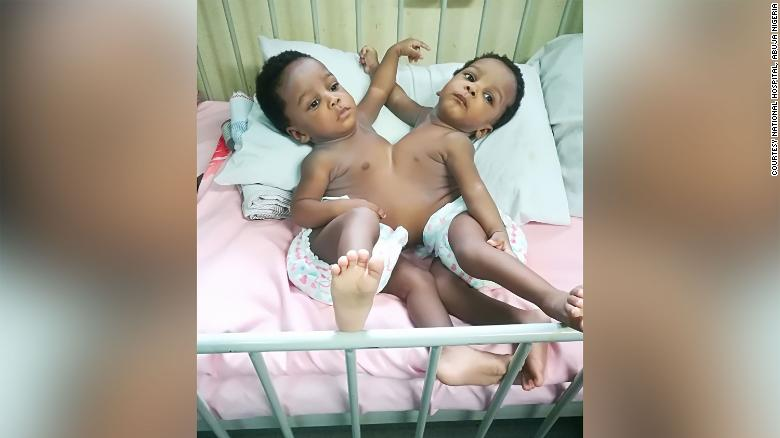
On November 14, 2019, Prof. Emmanuel Ameh led a team of 78 medical personnel in an epic surgery to separate Siamese twins that lasted for 12 and a half hours at the National Hospital Abuja (NHA).

The conjoined set of twins were delivered in Federal Medical Center Lafia, Nasarawa State, with complicated body defects. They had one liver, a protruding tummy and a lower chest.

The success of the surgery has made viral news that Nigeria’s Minister of Health, Dr. Osagie Ehanire, issued a statement calling it a significant feat in Nigeria’s medical practice.

He said: “This is a demonstration of excellent team work, which also shows that with confidence in the health sector, we can do great things in Nigeria.

“One of the reasons why some Nigerians travel abroad for treatment is because they lack confidence in the health sector. They believe that we do not have specialists and the required medical equipment to handle sensitive cases, but this case has shown that we have the expertise. No foreign aid was involved in the surgery.

“The ability of these experts to work together means that we can stand up to many international hospitals, as far as advanced surgery is concerned. This is a complex one involving conjoined twins with one liver.”

The complexity of the operation needed more than expertise. Prof. Ameh explained what they did in order to deliver a successful surgery, which includes monitoring the twins for a 15 month period.

“We received the twins on August 14, 2018, and quickly constituted an interdisciplinary team, including pediatric surgeons, cardiac surgeons, plastic surgeons, nurses, imaging experts, dermatologists and other experts from various medical disciplines, as well as support staff.

“One of the major challenges was that the twins came with their intestines bulging out of the lower part of the tummy, which we quickly resolved.

“We also needed to determine if they could survive separately after separation. We found out that they had two separate hearts that were normal, but with a common cover. They also shared the lower half of the chest, and there was only one liver serving the two of them. Other organs were separate and normal,” he said.

Ameh further disclosed that the 15 month period of monitoring was to enable the twins to grow well enough to withstand the pain and pressure that would come from the complexity of the surgery.

“We celebrated their first birthday in the ward still conjoined. The surgery was performed on November 14 2019. By that time they were 15 months old. A total of 78 medical staff was involved in the 12 and a half hour surgery. We even planned to spend 48 hours if there was a need for it. After that, the twins spent a week at the Intensive Care Unit before they were taken to the ward,” he said.

This is not the first time a Nigerian hospital is recording success in Siamese twins separation, in June 11 2018, the University of Abuja Teaching Hospital (UABTH) announced that it successfully separated conjoined twins in an operation that gave hope to what’s to come. But the complexity of this one tested the expertise and the Nigerian medical institution’s capability to handle complicated cases.

The medical director of NHA, Dr. Jaf Momoh said the hospital saved the parents of the twins a fortune that they would have spent travelling abroad for the surgery. He said the cost of the medical operation overseas would have amounted to more than N20 million, but National Hospital took care of the bill.

“The cost of running a hospital is enormous. The average electricity bill of the National Hospital is about N19 million every month. That is why we collect money. We took it upon ourselves to mobilse resources and invest it on the twins.

“If the parents had the means, they would have gone abroad like some other Nigerians and spend at least an equivalent of N20 million in foreign currency. It is cheaper doing surgery here, Ameh said”

The call for Nigeria to stop medical tourism is as loud as the call for government to give due attention to the health sector. Ill-equipped medical facilities and depreciating medical workforce have been a major contributing factor in promoting the culture of medical tourism that Nigerians are famous for. Though President Buhari said the custom needs to stop, but he himself has been a regular visitor of foreign hospitals.

It is believed that Nigerian hospitals and medical staff welfare are being neglected because public office holders don’t patronize them, and that has resulted in mass exodus of medical personnel from Nigeria.

Yearly, about 2,000 medical doctors leave Nigeria for other countries in search of a better pay and system to work in. the rate is alarming because the number of doctors keep reducing while that of patients are increasing. The World Health Organization recommends one doctor to 600 patients, but the ratio in Nigeria is one doctor to 6,000 patients.