DD
MM
YYYY

PAGES

DD
MM
YYYY

spot_img

PAGES

Home Blog Page 6541

Poor Implementation of Machine Learning

1

When you have data and have it in abundance, one of the major issues you must worry about is which variable is important in the implementation of your model. Another to worry about is what exactly to do with the data. Probably, another concern is how is my data creating value?

At the intersection of the above 3 worries lies the consumer, who either benefit from your intelligent use of your data or otherwise. And to realize value, customers must ultimately benefit from the utilization of their data in analytics which is ultimately your aim as well.

I recently purchased a pair of shoes from Jumia. Apparently, I checked lots of designs before settling on one. I made my purchase and I was pleased and extremely satisfied with my choice. But guess what? Every webpage that I opened in the past weeks have Ads from Jumia displaying shoes to me.

Really!!! I wonder, should I still be getting shoe Ads even after purchasing one? Are the ads supposed to communicate to me that I made a bad choice or what? Are they to allure me to buy more shoes or what? What is the likelihood of me buying more shoes than I have already bought? Could it be that Jumia neglected a very important variable while building their recommendations and Ads engine? Or why on earth should shoe ads from Jumia be displayed all over my screen?

This is a case I referred to as poor machine learning implementation. The data point that has probably been neglected is very important (variable) here. If I checked an item on your website and refused to make a purchase (data available to you), then you have all justification to bombard my web pages with Ads of same items. Else if I had made the purchase, why would you think I will buy more than one? Neglecting a variable in a model build-up can become the bane of a model that otherwise would have been extremely valuable.

This is so because when you neglect an independent variable with high explanatory power on your dependent variable, you run the risk of being told a different story from what can be regarded as the real story. Truth be told neither I nor any other person will make a repeat purchase of what we bought and have not even utilized yet. Ask the people who run such Ads, it takes them nowhere.

What if instead of Jumia parading before my eyes pair of shoes I already bought they try to parade before my eye things people likely buy in addition to a pair of shoes? Say wristwatch, belt, shirts, and so on that can be regarded as up-selling or what Amazon typically calls “readers who bought this book also bought this”. Now, that is an intelligent use of machine learning.

You know by the virtues of your data points that this person bought these items already and the next thing he is likely to buy is this based on what the likes of him or her bought from previous purchases. Intelligent use of data and machine learning algorithm starts from following common sense, yes, common sense. Tosin Shobukola once said “we should be data-informed not data-driven” while trying to emphasis the importance of common sense while being data intelligent.

Data strategy

Data is being heralded as the new oil for a reason and the publicity is not unfounded. Data as we know it is the anchor of the new face of the industrial revolution where artificial intelligence becomes what we interact with in everyday life and that drive supper efficiency. Data can be tricky and the need to get it right from the foundation is important. Oil requires processes and mining before value can be outputted from it, this also is required of data.

It is not okay to just churn out models, between Zeros and Ones of all machine learning models lies logic, philosophy and abstraction of human behaviours. You need to factor in this reasoning to get maximum value from your data analytics and machine learning endeavour.

A level of thinking in terms of how logical, what philosophical stance do the majority of this strata buy into, how can we reduce this human behaviour to the level of Zeros and Ones is always involved.

Underlying Causes of Domestic Violence in Nigeria

0

The European Union is carrying out a campaign to protect women and girls against gender-based violence. But stories flying all over the air have shown that both the male and the female are victims of violence.

It is actually true that women and girls are more exposed to domestic violence but we shouldn’t rule out the fact that the opposite sex also suffers this. As far as I could tell, violence knows no gender, age and status. I have read stories of men, whose wives (or girlfriends) killed or maimed, just as I’ve read about men doing the same thing to their women. So, it will be inappropriate for the campaign against violence to be targeted on the feminine gender alone.

Several researchers have delved into the major causes of domestic violence. They used data gathered from victims in deciding these. But one thing most of these researches have not really put into consideration is that a lot of victims may present doctored information so as to save themselves from shame or more harm. Some may also provide wrong or exaggerated information in order to get the other party punished.

The only way to end domestic violence in Nigeria is to look deep into the underlying causes and curb it from there. For one to actually find these causes, one needs to live in the midst of the people that have suffered from it, or that are still suffering it. Data collected from arranged interviews and meetings may not really be accurate. Spontaneous actions and expressions will provide deeper insights into why domestic violence is on the rise today.

Below are some of the underlying causes I noted from my own observations.

  • Peer Influence: A good example of this is the influence men have on their friends. For example, a man whose wife is a career woman may be constantly advised by his friends that he shouldn’t allow her to earn more than him because she will “control” him if she does. Men in this situation usually make troubles to ensure that their wives are discouraged from their career pursuits.

The problem of peer influence can also be seen amongst women. For example, a woman who was told by her friends that her husband sleeps around will be forced to do “something” about it, especially when those friends insinuated that they wouldn’t tolerate such from their husbands.

  • Societal Influence: After the influence of peers comes that of society. A man is expected to be “the man” of the house and therefore control his wife and children. The society doesn’t expect a man to take “any nonsense” from his wife. He is the head and must therefore subdue the other family members.

As for the wife, the society expects her to be that Mickey Mouse that must condone whatever her husband dishes her way. The expression, “he’s a man o” is all it takes to remind her that she should find her “place” and shut up. Besides, if she passes through any form of violence at the hands of her husband, the society will tell her to “manage” because marriage is all about “managing”.

  • Social Media Influence: Of course a lot has been said about social media encouraging domestic violence. One of the reasons given under this is that people see the fake life of others and force their spouses to perform like them.

The influence of social media on the increase of domestic violence can never be over emphasised. It has brought so many good and evil to the doorstep of many lives. There is nothing you won’t see there – from how to kill to how to destroy. People really need to understand that things seen on social media should be taken with a pinch of salt.

  • Pornography: A lot men are addicted to pornographic channels, both teenagers and adults. Yes, I know some women are also fans of these channels but they are more silent about it, unlike their male counterparts.

The problem that arises from addiction to pornography is that these addicts expect their spouses to perform the sexual “overtures” of these actors and actresses forgetting that they were just artists performing on stage. Failure to meet up to this expectation usually leads to verbal or physical fights and embarrassments.

  • Mental Instability: Like someone rightfully said, a lot of people walking up and down our streets are mentally unbalanced. These people, especially men, will one day get married or they will have wives married for them by their relatives.

There are so many cases of mentally unstable men who beat their wives until they (the wives) run out of the house. Funny thing is that as that one is going, another is coming in without truly knowing the cause of the other person’s flight.

  • Civilisation: Civilisation here is not about the developments that come from industrialisations and innovations. Civilisation here is the effect of westernisation on our culture. I’ll explain this.

I was speaking with someone a few days ago concerning the increase of broken homes in Nigeria today. We had time to look into some of the marital problems our friends were passing through and we realised that their spouses have had traits of violence, which they exhibited even while they were in secondary school. We also realised that our friends noticed (or rather claimed to notice) these bad behaviours after they were married. And that was when it hit me – we marry these days without actually knowing the characters of our spouses.

In those days, before someone marries, his family will do what we call “iju ase”, where they find the true character of the intended spouse and that of his family members. Any little questionable character attributed to this spouse or any member of his family leads to the break of the marriage negotiations.

Today, we meet people in the streets and marry them within one month. We no longer allow the elderly and more experienced people to decide for us. We tell ourselves that we are adults and make serious mistakes that can affect us throughout our lives. There is need to drop civilisation out of marriage matters.

  • Arranged and Forced Marriage: I’ve seen parents arrange wives for their sons who do not wish to marry. I have also seen those who forced their sons or daughters to marry someone they don’t want to. Another case is that of boys who were forced to marry girls they impregnated (and teenage girls with unplanned pregnancy forced to marry old men). Majority of these marriages don’t work out.
  • Extended Family Issues: I’m not going to talk about bad mothers-in-law and bad in-laws, those ones are clichés. My observation here is on extended family of the spouse that makes excessive demands. For instance, a wife whose parents kept tasking her husband financially may only expose her to emotional abuse from him. This is also the case with a man’s family that forgot that he has lots of responsibilities to bear and insists that he foots all their bills. Couples fight daily because of issues like this.
  • Poverty: Of course there is no way I can pen down this article with mentioning poverty. I’m not saying that rich people don’t fight, but it’s more prevalent among the poor.

While I was in Ibadan, there was this area called Ikolaba village, which was inhabited mainly by the people of the lower class. I pass through that area daily while heading to work. Believe me when I say that I witness couples’ street fight on a daily basis. The causes of their fight always borders around “chop money”, “girlfriend matter” and “returning late”. For some reasons, these people have accepted that fighting is the only way to get their spouses to carry out is their domestic responsibilities.

There are other identified causes of domestic violence such as drug abuse, bad parenting, exposure to abuses while growing up, and so on.

WAY OUT

Of course discovering the causes of a problem is a step away from solving it. But in this case, it won’t be easy because a lot of factors are involved – from societal factors to personal ones. However, I can only give the following suggestions:

  1. Ask before you leap. Whether it is marriage or girlfriend-boyfriend relationship (cases of violence have been recorded here too), ask and observe the other person before getting yourself involved. If you see what you don’t like, or what you can’t endure, kindly move on. Don’t tell yourself you can change the person or, how do they put it again, “love conquers all”. A lot of people that jumped in without proper “investigations” are either hopping out now or are stuck in the milieu.
  2. Talk to someone. A lot of people experiencing domestic violence find it too hard to talk about it. Sometimes reaching out to them could prove ineffective and disastrous as they seem to have accepted it as their fate and would rather die in it than accept help. But should you find yourself in this situation, let people know what you’re passing through. It helps a lot. You shouldn’t feel ashamed that you are passing through a lot in the hands of your partner; instead your partner should be the one feeling that shame.
  3. Uproot the causes. This is a call to prevent the factors that cause domestic violence. For instance, children that witness their parents fighting may assume that’s the perfect way to run a family. These children will grow up to become violent too. A young boy was overheard telling his younger one that he will beat her the “way daddy beats mummy”. So you can imagine what this young boy has turned into.
  4. Take a walk. This is one thing Nigerians don’t want to hear. They will prefer a person dying in his or her marriage than walking out of it. But I am here saying this loud and clear, if your marriage isn’t working, walk away. At least you will be alive to ensure that your children grew up in a safe environment.

As the EU continues with the campaign against gender-based violence, they should ensure that laws are created to protect both the male and the female. Nobody should be discriminated against.

Concerns on the Incessant Cases of Kidnapping in Nigeria

0

Christmas is around the corner but a lot of people are afraid of travelling to spend the season with their loved ones in their country homes. Beside spending so much on the trip, they were also afraid of the high rate of insecurity and violence found in our villages today.

When I was growing up, Christmas was the only period extended families gather to renew their relationships. We used that period to catch-up on events that happened in the village within the year. That period was when most of us learnt much about our villages and our extended family members. We always looked forward to Christmas holidays because we will visit our villages. Then, our rural areas were safe haven.

Things began to change during my undergraduate days. Then, I noticed that the number of people that returned home for Christmas began to dwindle. Speculations had it then that people were afraid of coming back to their villages because they believed that they were targets of their relatives who were witches and wizards. There were many stories that showed that some people that came home for Christmas returned to the city only to die mysteriously after some days. People started pointing accusing fingers at the aged and at those whose children were stationed in the village.

The narratives changed shortly before I went for my youth service. People have learnt how to protect themselves against witches and wizards, as well as from juju, so they were no longer afraid of them. But then, the era of poisoning arrived. This time, the young men were both the victims and the suspects. The claim was that they poisoned each other when they hang out. Nobody knows exactly what was going on, but the truth is that our villages became unsafe.

Today, no one talks about witches and wizards any longer, and poisoning seems to be a thing of the past. The problems we face in our villages right now are robbery, assassination, herdsmen attack and kidnapping. Robbery cases are gradually reducing because most villages have set up functional vigilante groups. As for herdsmen, their problems are way beyond human understanding. These people made themselves gods in most of our villages and no one questions them.

However, the problem of kidnapping has proved itself to be stronger than our village vigilantes. I believe the reason for this is that the people that carryout this heinous act do not dwell in the village, even though they have informants there. These kidnappers have succeeded in making our villages unsafe and the worst thing is that you can’t really tell who their informants are.

No one is free from these kidnappers. They go for the old and the young, male and female, religious and laity. For some time now, priests and pastors have become their targets. Day in day out we hear of their evil deeds and no arrests are made. We hear of how ransoms are paid, how released victims returned or are found dead, how more people are kidnapped and so on and so forth. The country is indeed unsafe.

What I don’t really understand is why these kidnappers freely do their businesses without hitches. Here in Enugu, we keep hearing about people being kidnapped along Enugu-Port Harcourt Expressway. We also hear of their operations around Nsukka axis. And these places are unsafe up till now. It is as if these people are having their field day knowing that no one will challenge them.

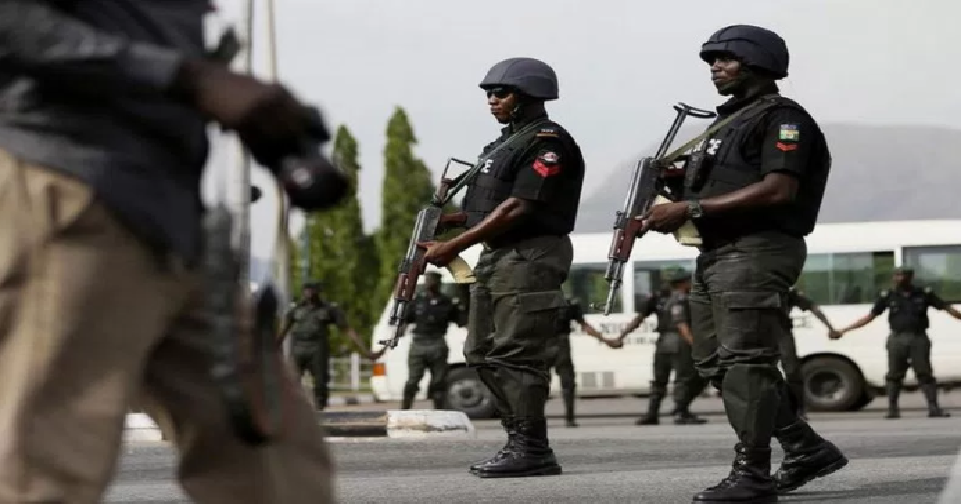
I don’t know if these kidnappers are faceless. Maybe that is why they cannot be arrested and tried. We keep hearing stories of how they take their victims into deep forests and all; does it mean there is no way those forests could be searched? Besides, I don’t believe these kidnappers live in the forests. These hoodlums are human beings and they live among people. So if the police really want to get them, they will.

Nobody is saying the jobs of policemen are easy, especially when they are underpaid and undertrained; but I believe they can do their jobs of keeping the country safe if they are truly motivated. They should think about the effect of these crimes on the nation’s economy and on her citizens. Nigerians need to feel safe in their homes. They have enough stress already; they don’t need insecurity added to it.

However, for those that wish to travel home and enjoy the Yuletide, I’ll suggest that they stay low and enjoy their holidays quietly and peacefully. They should cut down on flamboyant style to avoid attracting unnecessary attention to themselves. If they want to donate funds for a community project, they should do so quietly. They should feel free and mix up with their clansmen but they should be mindful of what they reveal. Let’s always remember, it’s the house rat that tells the bush one that there is fish in the house. Stay safe.

Saudi Aramco Overtakes Alibaba, Sets Record with $25.6B IPO Raise

0

Saudi Arabia has set a record initial public offering in history, pulling off a $25.6 billion sales in shares of its $1.7 trillion valued state owned oil.

A total of 3 billion shares were sold at 32 riyals ($8.53) each in its IPO, making it the biggest in history. Alibaba was holding the record since 2014 when it raised $25 billion in its IPO.

The Aramco’s IPO will be listed locally on the Tadawul, Saudi Arabia’s stock exchange. Crown Prince Mohammed bin Salman has unveiled his plan to diversify the country’s economy and move concentration away from oil. Though the IPO fail short of its targeted $2 trillion valuation, there is no sign it’s going to be a hindrance to anything.

Some experts have described it as a “hollow win,” saying that they needed to rely predominantly on local investors after cancelling roadshows in London and New York due to low international interest.

The president of Transversal Consulting, and author of the book “Saudi, Inc.” Ellen Wald, told CNBC: “The local demand from retail investors wasn’t as high as Saudi Arabia hoped for. The investments were almost entirely local and attracted no money from outside the region, oversubscription was not significant. Most IPOs are oversubscribed many more times over and the government had to manufacture demand, even from Saudis.”

Prior to the pricing announcement, there was a weeklong local roadshow around the Middle East, prompting the oversubscription of the listing by nearly three times, attracting offers worth 189.04 billion riyals ($50.4 billion), according to banks advising the listing. Institutional investors have between November 17 and December 4 to place their orders.

Before now, Aramco has promised that 0.5% of its listed shares would be available to individual retailer buyers, while 1% will remain for institutional investors. But the remaining 1% is equivalent to 2 billion shares, and in the first 2 and a half weeks of Aramco’s book building period, it drew subscription orders for 5.9 billion.

So far, demand from institutional investors, including Saudi funds and companies, has reached $106 billion, while retail investment’s demand hit $12.6 billion. The purchase has been centered on Saudi Arabians and countries in the Middle East. Around 4.9 million Saudi retail investors have bought shares in the oil giant, including 2.3 million between the ages of 31-45.

Aramco’s advisors said the “greenshoe”option may be fully or partly exercised at 15%, allowing it to increase the size of the deal to a maximum of $29.4 billion. But the Organization of the Petroleum Exporting Countries (OPEC) is getting ready once again for oil cuts to support prices, depending on its ability to get a deal with members such as Russia this weekend.

Other concerns have been fingered as the reason the IPO couldn’t sell internationally: Climate change, political risk and a lack of corporate transparency. The kingdom had planned to raise $100 billion via international and domestic listing of 5% stake, but ditched the plan due to lack of interest from overseas buyers.

It’s all part of Prince Salman’s ambition to sell a large portion of the kingdom’s oil and use the proceeds to establish a tech-based economy. But Monica Malik, the chief economist at Abu Dhabi Commercial Bank said the fund raised by the IPO is enough to sustain the ambition.

“The amount raised by the IPO itself is relatively contained given the size of the economy and medium-term funding requirement of the transformation plan.

“Nevertheless, combined with other areas of funding, we believe that there is meaningful capital in place to progress with the investment plans aimed at diversifying the economy,” she said.

However, foreign investors attitude toward the IPO showed that Saudi is yet to better its relationship with the rest of the world, especially the West. The murder of Jamal Khashoggi, the Saudi journalist who was killed in Saudi’s consulate in Istanbul created a strain that the kingdom is yet to clean off. And there is its involvement in the Yemen war that has attracted international condemnation.

The quest for cleaner energy is another factor that may have hindered foreign investors from purchasing from the IPO. European countries are at the forefront of the fight against climate change. Moreover, oil prices and growth in global demand are expected to crash by 2025 due to efforts to cut greenhouse gas emissions and prevalence of electric cars.

The Error in OrjI Uzor Kalu’s Slok Ltd Sentencing

0

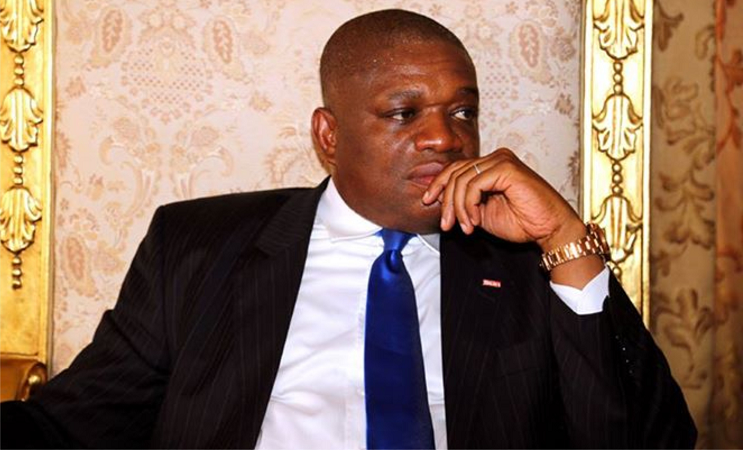
Former governor of Abia state and current senator, Orji Uzor Kalu, was sentenced to 12 years of imprisonment by the court of Justice Mohammed Idris today. I have read the sentencing (as a layman) and was confused as to why the Federal Government of Nigeria should be the beneficiary of the Slok Nigeria Limited which according to the Guardian, the court “ordered forfeiture of all assets of his company to the federal government.” Mr. Kalu did not steal Nigeria’s money. It was Abians’ money; so, the court cannot magically award the assets to the Federal Government when Abia State Government is still there.

The federal high court in Lagos has sentenced the former governor of Abia State Senator Orji Uzor Kalu to 12 years imprisonment after being found guilty on all the 39-count charges brought against him.

He was convicted of N7.65billion fraud perpetuated when he was Abia State governor between 1999 and 2007.

Kalu was convicted alongside his firm, Slok Nigeria Limited and his former Abia State director of finance, Ude Udeogu. The court also ordered forfeiture of all assets of his company to the federal government.

But I am not a lawyer to know if states cannot be beneficiaries of such assets when cases are tried in federal courts. Or possibly, the federal government would receive the assets and handover them to Abia state government. But why go through that process when the court can replace “federal government” with “Abia state government” in the sentencing.

The Attorney General and Commissioner of Justice of Abia State should petition the court immediately to ensure the assets are given to Abia State and not federal government. The stolen assets did not belong to the federal government, and accordingly Nigeria should not be the beneficiary. Abia State clearly should get the assets because the ex-governor was convicted for defrauding the good people of Abia.

Yet, I am not a lawyer to understand how assets forfeiture processes work in federal courts. But that does not mean that I cannot voice my opinion though!