DD
MM
YYYY

PAGES

DD
MM
YYYY

spot_img

PAGES

Home Blog Page 6548

An Interview with an Upcoming Artist – Kayode Oladokun

0

Nigerians are not lazy. Nigerian youths are hardworking and resilient.

When President Muhammadu Buhari branded the Nigerian youths – ”lazy”, I was very disappointed to read such from the Head of State. Because these are youths out there who give their best in any situation they find themselves. They are rugged and dogged. They can survive in any weather. Even though the situation in the country is unfavourable, Nigerian youths are doing everything possible to stay afloat. They are grinding every day.

What happened in South Africa is a great example of how hardworking Nigerians are. They have gone from their fatherland to pursue a greener pasture.

Besides that, Nigerians are known to transition from one role to another. They can study, learn and master any craft. Just give them the opportunity and you will be surprised at what they will do. Nigerians are always striving hard to make themselves better.

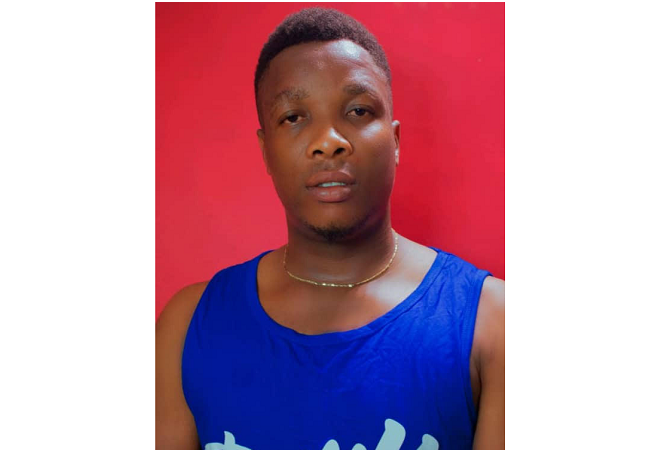
Kayode Oladokun is a great example of a Nigerian youth giving his best to make a name for himself in the entertainment industry. The Ibadan-based upcoming artist shared his story and what led to his present career.

Here what the multi-talented artist has to say in this interview:

Can you introduce yourself to the audience?

I am Oladokun Alaba Kayode. I hail from Ibadan city. Although I was born and brought up in Lagos state, presently I reside here in Ibadan.

It’s good to have you here my brother. I have followed your work for a while now and I must commend you for your versatility. Can you tell us what inspires you everyday?

Thanks so much brother, for inviting me to your show.

In life, each and every one of us has what we are pursuing or what is pursuing us. But what inspires me is Failure and disappointment.

Failure and disappointment can always be the fuel that sparks our dreams. You are a musician and as well, a comedian, how have you been able to manage that together?

Being a comedian is something I want and really love to do, and the music aspect is just what I partially do due to some of the artists that I manage.

And if you really look into this, music and acting really work together and that’s why it is called ART.

I have watched some of your skits and I must admit that you are really a crazy comedian. What’s your relationship with the popular comedian, Woli Agba?

Woliagba is my boss and a mentor. He is also a motivator and always listen to all his people working under him. Besides, he is a very loyal person.

As per all my skit you have watched, he taught me to do that.

Being in the entertainment industry for a while now, how have you been finding it since you started?

It is not so easy but I so much believe in consistency and hard work.

Many people out there doing what I am doing but with what has been mentioned above, everything is secured!

I believe everything is secured too. Do you have a team you work with or you work alone?

I have a team I work with. There’s a saying which says, ”behind a successful man there’s a woman. And the woman in the Proverbs is my team.”

Amazing bro. How do you intend to finish this year?

I really wish to finish well, and also to be a good shot. Time will tell!

Was there at any point where you feel like taking a walk away from this your chosen profession?

Hmmm, mmmm!

Actually, there was a time but I had to think and think over it that you giving up was never an option.

Giving up is not always an option. With 2019 almost over, what should we expect from you in 2020?

I believe 2019 is not over yet. But 2020 will definitely be a year to remember. A year to stardom.

Where can the people reading this interview right now find your work?

They can find my work on INSTAGRAM with my Instagram handle @iam_alabama.

What advice do you have for the young ones who look up to you?

My advice for the young ones coming is to stay focus and not to be distracted by anyone. I believe they’re going to hit the target.

Thank you, Alabama, for your time. I wish you an outstanding success in your career.

Thanks, bro!

A Hopeful African Future Depends on Entrepreneurial Capitalism, Not An Illusive Political Efficiency.

2

The political ecosystem will never improve until the economic and business climates advance. Because the promises of politicians are taxes on companies and citizens, the private sector must necessarily advance before the hopeful continent we desire for Africa. While we all desire a more efficient public sector, the fact remains that only governments which are funded by private sectors would have the resources to serve citizens and firms. Yes, you want roads in your village. Good desire, but someone has to pay taxes for government to have the resources to do just that.

People, nations rise when entrepreneurs emerge to pioneer new domains – Africa needs pioneers in markets to redesign our beautiful continent for good – and this can happen despite the paralysis in the political system! The Nigerian Nollywood – the film industry – grew with no political catalyst. Simply, someone anchored and seeded it.


Watch my video.


Comments on LinkedIn Feed

User – This looks simple but somewhat critical. “only government funded by public sectors”? What is separability? Between the government and the public who OUGHT to create the enabling environment? I am still wondering what a father who is rich but refuses to train the child expects of the child?

Ndubuisi Ekekwe – The father govt is severely poor at the moment!

Untrue sir. A thing can not be and be at the same time. Mbaise has one of the highest numbers of graduates in Nigeria and yet lacks virtually both, mineral and natural resources (no many lands). But they sacrifice to train their children. A hopeless Father looks at his savings before considering sending the child to school while a futuristic father works towards it. That’s against the law of thought. The poverty of the mind? Yes! Resources? No!

Having graduates does not make you wealthy. I work with many dropouts who hire professors to speak before them every quarter. The richest tribe in Africa – Nnewi – has the highest created wealth per year in school. What advances people is solving problems, not degrees. The great Aro in ancient Igbo in Nigeria were ace-traders who “colonized” all parts of Igboland through mastery of trade. Read Omenuko by Pita Nwana.  If schools do not solve problems, degrees are useless.  Mbaise is in Nigeria whose $24B budget for 200m cannot compare to $122B South Africa has for 57m people nor one company in SA buying all firms in Nigerian stock exchange with 30% of its value. https://www.tekedia.com/problems-inventive-societies-video/

Good argument. Can a good seed make it without a fertile ground? No! I am from Ike-Isu community, Isu town in Arochukwu LGA. I used school just as an illustration and not in place of education. The Nnewi guys are ‘educated’ – educo, educare(schooling is just an aspect of education). More educated than many. How is Arochukwu now? What about Omenukur’s family? Being an opportunist doesn’t make any a mastery of a thing. There is more to societal becoming.

My point is that those people advanced before government because they focused on solving problems by having skills that address problems in societies. Across human history, nations rise when problem solvers emerge. Carnegie built American steel. Rockefeller was the energy industry – out of his company, US created the sector. Mellon pioneered banking, teaching govt how far. Paulo and co built Nollywood before govt knew anything about it. Nigeria needs pioneers. If we have them, govt will adjust. Govts matter but they do not need to lead the party

This argument is more powerful and better sir. I bow with due respect

gaskiya

Nigeria’s National Broadband Plan for 2020-25 Gets Underway

0

The Nigerian National Broadband Plan Committee for the Development of the 2020-2025 National Broadband Plan has been unveiled by the Minister of Communication and Digital Economy, Dr. Isa Ali Pantami.

Pantami constituted a 28 members team chaired by the CEO of MainOne, Funke Opeke and Co-Chaired by former Executive Commissioner, NCC, Dr. Bashir Gwandu, while Engr. Ubale Maska is to serve as Secretary. They were tasked with the goal to establish the needed broadband that will meet the digital needs of the country in line with the world’s standard. The committee is expected to support the national digital economy and ensure that Nigeria attains 70% broadband target by 2025.

The new committee was set up due to the expiration of 2013/18 National Broadband Plan Committee last year.

It could be recalled that on November 30, Pantami signed a letter of intent with the UK government through the prosperity Fund’s Digital Access Programme, as part of efforts to draft the new National Broadband plan. That’s, after President Buhari has unveiled the National Policy for Digital Economy Policy and Strategy for a digital Nigeria, on the 28 of November. The eight pillars of the National Broadband are: development regulation, digital literacy and skills, solid infrastructure, service infrastructure, digital services development and promotion, soft infrastructure, digital society and emerging technologies and indigenous content, development and promotion.

To achieve the needed result, the minister promised to involve industry stakeholders through the process of the draft that is expected to conclude at the end of March 2020. Already, the committee is made up of the members of the digital industry who were charged to work on the most significant among the eight pillars and ensure their work reflect on other pillars too.

The importance of increasing investment in fixed broadband was emphasized by the minister as he presented the committee, a fact the World Development Report 2016 acknowledged when it noted that a 10% increase in fixed broadband penetration results in an average increase of 3.19% capita GDP of a country.

“The work of this committee will go a long way in supporting national digital economy policy and strategy for the federal government. In addition, digital economy is strategically dominating the world economy,” he said.

It is predicted that by 2022, 60% of the world economy will be digitalized. And currently, the world digital economy is 11.5 trillion USD, according to Oxford economics. This figure is likely going to double in three years.

Pantami reminded the committee that Nigeria can’t be left behind while the rest of the world moves on digitally. “By 2030, almost 85% of the world economy is going to be digital economy because digital economy is dominating the world.

“You cannot develop and promote digital economy without broadband at your disposal or in your country, that is why we feel it necessary after getting our national broadband in place, we need to immediately see how we can come with another very important strategic committee to work on our national broadband plan so that all hands must be joined together to see how we can penetrate underserved and unserved areas in the country,” he said.

He also reminded the committee that their goal is not only to develop broadband that will meet the current and future needs of the country, but it is also to work toward the digital economic development of the country.

Responding to his admonition, the Chairman of the committee, Funke Opeke said the target of the committee is to achieve at least 65-70% broadband penetration across Nigeria.

“The minister has set the goal and I believe the NCC is in agreement. It is for us to look at what was done during the period of the last committee, look at what the issues and challenges are that still exist, and come up with a plan that allows us achieve the set objectives.

“I believe the objective is achievable with sincerity of purpose and with hard work for these are critical services and infrastructure that we need to bring to all Nigerians and we’re optimistic that we can accomplish that goal. There is work to be done on fixed infrastructure but the reality is, mobile technologies are also progressing quite fast to deliver very capable services to people.

“We see what is going on with 5G all over the world, so we will address both at the committee, but I believe our objective is not to favor one technology over another, but to figure out how we can get those critical services to many more Nigerians.”

While Nigerians are applauding the inauguration of the new committee, they are also expressing concern over the committee’s ability to get it right, considering what happened with the previous plan.

According to data from NCC, the previous plan ended with an abysmal result. The target was to achieve 80% penetration of 3G mobile wireless broadband by 2018 and the five-fold increase of broadband penetration, from the 2013 penetration of 6 to 30% by the end of 2018. While the 30% target was achieved, the five-fold increase was not. By prioritizing mobile wireless broadband, little was done about fixed broadband penetration which remains at 0.06 percent in 2019.

This is after billions of dollars have been invested by the government and stakeholders in the telecommunication industry. However, there is hope amidst fears that the committee, made up of mostly players in the telecommunication industry, will right the wrong this time.

The Africa of my Dream – An Interview with Hammed Alabi

0

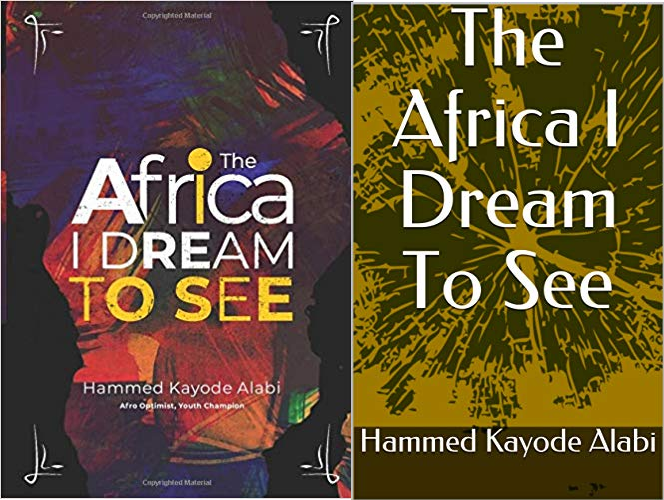
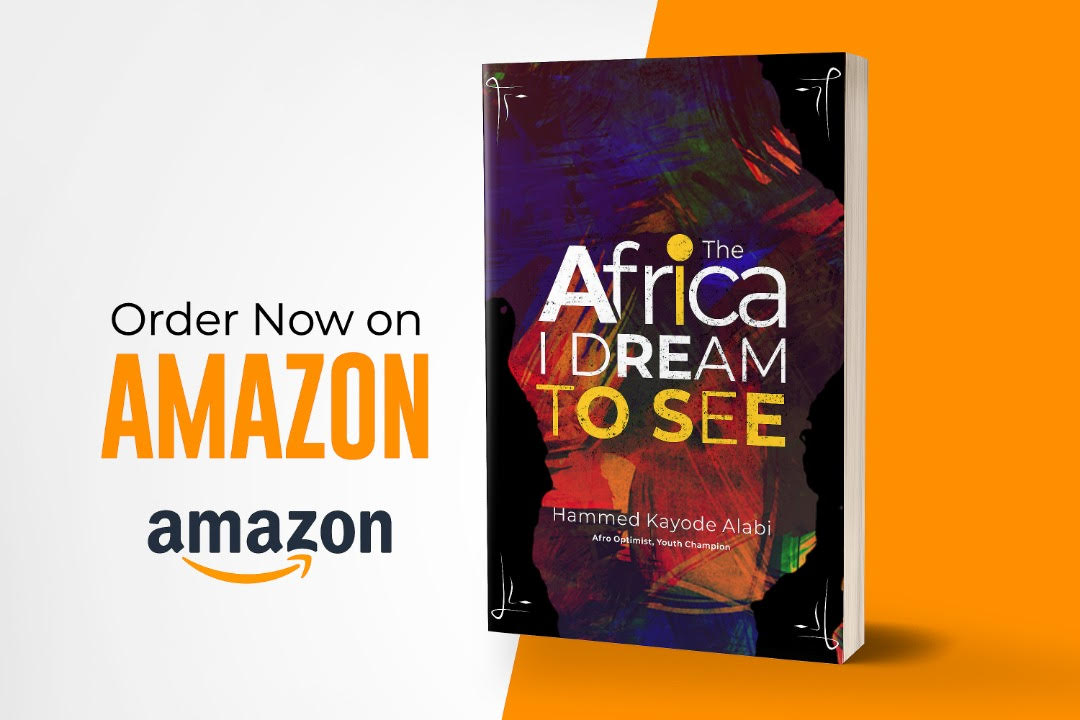
Nigerian youths are striving hard every day to make this country better. Hammed Kayode, popularly known as Kay Factor has done it again. He finally published his first book to make a change in Africa.

What do we expect from a book that has painted the harsh situations in the continent? Here’s what he has to say:

It’s good to have you here Hammed Kayode Alabi. I just came across your book and I must say it is a job well done. Can you share more about this book to the audience?

Thank you for the great commendation!

I will say I never thought of writing a book anytime soon but last year, I entered the African Development Bank: “African of My Dreams Writing Contest”.

I shared my passion for the Africa I dream to see but truth is, My African dream was so big that it could contain a 500-word essay. I did not win the essay competition but I was spurred. I got angry but I converted my anger into something great.

I was coming from on a sudden day and I kept thinking about my African dream, I hopped into the bus and I could not stop thinking. Then I was stuck in traffic, picked up my phone and started documenting the Africa I dream to see.

I shared my journey into leadership. How I found my African Dream from the worse of the worse places – “Makoko Slum”.

I shared how we need to put people first before any development. I shared how the future would look like and as Africans, are we prepared for the future. I deep dive into the plot of ”Black Panther” and swam into my African dream.

I believe if anyone read it, It will spark something in them to take action and create the Africa we want.

You are one of the few out there who is trying to make a change in this country. What problem(s) is/are you trying to solve with your book?

The truth; there is a lot of problems happening today. People are suffering, and dying, and we need to protect the future generations to come. 

Things are changing day by day but as Africans, we are not prepared for that change. Maybe someone somewhere will take action that protects our children. 

We need to protect the future generation and how actions today will determine that. We are the African dream! We are the solution.

Amen to that! We are the future. You visited Dubai recently, welcome back home. Can you share more about your trip with us?

I know many people travel to Dubai and would come back with nothing.

I had the opportunity of supporting Peace First accelerator program in Dubai as a Fellow-in-Residence. So I was a resource and also mentoring young people from the Middle East and North Africa to create massive social change.

I could recall engaging some so-called Yahoo-Yahoo guys along my trip and what led them to space. They talked about suffering in their home country. Truth is; the country is not livable for them. There was one; who said he served as a labourer and did a lot of odd jobs.

I did too but we choose a different path. I decided to use my pain to help others but he decided to hurt others.
What made the difference?

Education, mentorship and upbringing.

I think there is a larger role Education plays in this century. I saw a lot engaging people during the trip. However, that is a story for another day. 

Getting to Dubai, I was amazed by the metro station and what innovation led to that. I noticed that everything has been digitized and controlled by Artificial intelligence. I quickly learnt that AI has a way of reducing corruption.

When I got my metro card, loaded was about $7 and there wasn’t a conductor or thugs to disturb me. The moment I placed the card on a machine, I can enter the train and get to my destination faster. 

You can’t cross the road anyhow. There is a point where all cars stop and allow people to cross without stress. A way to curb accidents. 

We happened to be hosted by the Dubai Future Foundation and I was amazed by the amazing buildings I saw.

I happened to visit the Youth Hub and this was inspiring. The Youth Hub was created by youth and supported by the government and lots of private partners such as LinkedIn, Facebook, Twitter etc. 

The Youth Hub has a free conference hall where youth can organize free events. It has a pod, where two young people can bounce ideas without distraction. It has a stakeholder room, where youth can have meetings, a studio where youth can shoot videos, a business space where youth can run their business for 3 months and another youth take over. It has a youth library and youth-friendly. 

Seeing this, I became angry and I thought our leaders come here and they can’t tap any of this. They create policies that are not youth-friendly and we are literally not consulted to make things happen.

I think youth are not the future, we are now and it is high time we are taken more serious if we really want to grow and develop.

I also visited Amity University where I trained some students on how they can start a social change project. It was an amazing moment! A lot of inspiration.

Comparing what you saw in Dubai and what we have here, what can you say about it?

I saw a place where true system works, a place where people respect authority and where corruption doesn’t thrive.

Now I know why it attracted a lot of people. I saw visionary leadership and I must say we have visionary leaders here too in Nigeria but we do not have a system. The system has been clumped with corruption and selfish interest.

I also saw an educational system that works. The classroom is conducive, people can easily connect and I saw a country where people do not run away from taxes but promote progressive tax to better key sectors.

I was at the Dubai Future Academy and children are learning 3D printing. I look at my children here, it is a bag and shoemaking we have. Yes this is good but we can do better.

I also did not see a homeless person but here we have a whole lot that are supposed to be protected by a social protection system.

How can we fix this as a nation, Hammed?

I know it will take time but first, we need a visionary leader who understands the people’s needs and also have a good knowledge about the 21st century. 

We need this across all sectors and they have to model integrity and competency. We need to fix our educational sector, because that is the sector that provides man-power for all other sector and where people learn character and develop core skills. We need to review the curriculum to be purpose based and 21st century centred. 

We need to build conscious citizens who can hold the government accountable and hold them to deliver on their promises. Education makes you a conscious citizens but the truth is, it is being paid less attention to so that we can continue to produce unconscious citizens who would not be able to hold the government accountable and demand their rights. So they can turn us against each other.

I have a lot to say. I really have a whole lot.

In a University in Dubai, there was an incubation centre where young people can create solutions that would be market ready. I wonder what has happened to our own universities.

Hmm. It’s really sad Hammed. I hope we get to live to see this Africa of your dream. Where can your book be purchased?

For the ebook, purchase here;  Paperback here: 

I wish to see your book being nominated for the Nobel Prize Award in the future, Hammed.

Yes! I hope so too.

Africa will be changed by her own people, for her own people and with our own resources.

The book can be found on Amazon both e-copy and paperback and it will be delivered to your doorstep. People across the world have started to order and they are on the verge to create and support our African dream.

I really can’t wait.

Maybe someday, or tomorrow. But sometime soon. I envisage this and thank you for the opportunity to lend my voice.

You are a great role model, Hammed. I often learn from you and I hope we get to do something together in the future.

Thank you so much for telling good stories about Africa.

We have kept quiet a lot and the world need to hear us. Malala said, “Even when the world is silent, one voice is powerful”.

Thank you for the platform and creating an avenue for other people to thrive. Looking forward to what we will create.

Do have a wonderful weekend ahead, Hammed.

Thank you so much! You too!

PlentyWaka is Pushing to Expand its Ride Sharing Services in Lagos

0

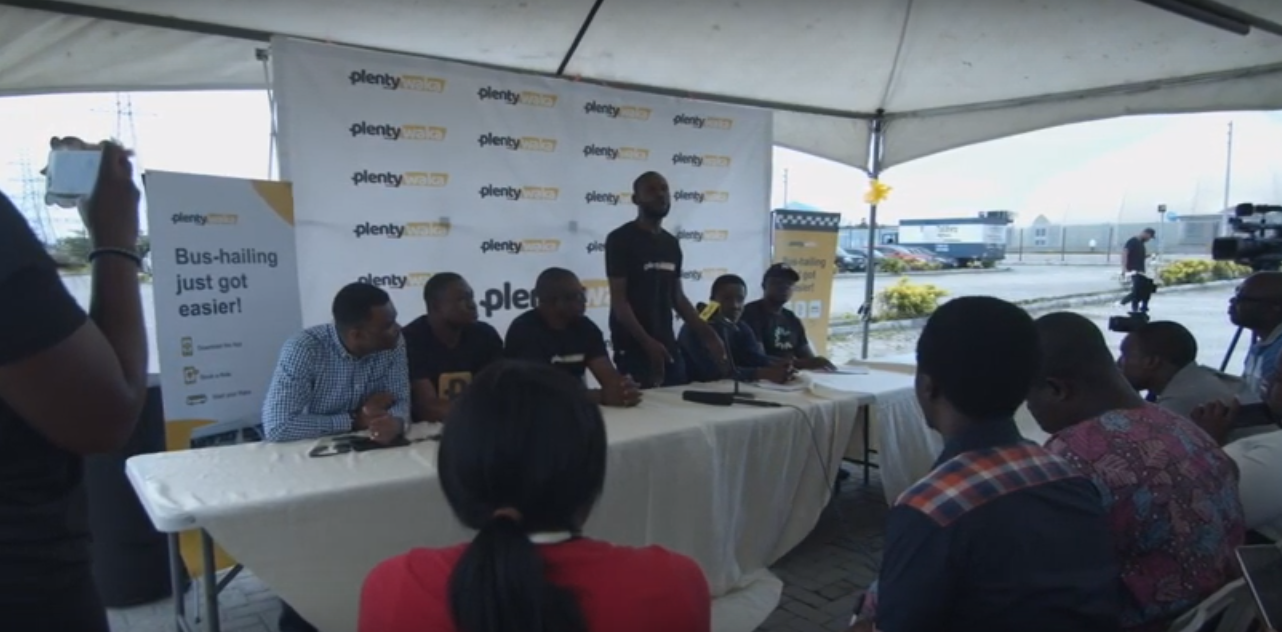
Plenty Waka, a bus-hailing service based in Lagos. has updated its app to fix some glitches that have hindered the growth of the company for some time now. The PlentyWaka application has been updated to 2.0 which is a better version.

“Plentywaka is a bus sharing solution that offers commuters convenience, safety and comfort in their daily rides. Providing convenient and effective driving experience one route at a time.”

Earlier in the year, CrowdyVest Holdings (CV Holdings) kicked off the pilot phase of the ride sharing service. Jonny Enagwolor, the managing director, and cofounder of the company said that their focus is on the island part of Lagos right now, but hope to expand to other areas soon.

“We are currently on the pilot run with 25 buses and we hope to go full scale soon,” he said.

How it works

Passengers need to download the Plentywaka mobile application, book a bus going their way, make a card payment and wait at the designated bus stop. A verification code to enable identification of the bus is then sent to the rider. When the bus gets to the designated bus stop, an assistant checks the booking details of the rider to ascertain a match, and then the rider gets on board.

Plentywaka also has a plan to make their drivers owners of their buses after a period of three years of driving with the company.

In the outset, the app posed a challenge to commuters who were excitedly embracing the ride-sharing platform. The company said the new app has been updated to fix the challenges.

Before now, it’s difficult to book for more than one rider, but the new app offers room for multiple bookings. Also, ride-payment can only be deducted at the completion of the trip, unlike before, when it was impossible for trips to be cancelled without a rider being charged. Passengers complained that they were being charged even when the service was not rendered.

Another new feature of the app is the barcode. The old style of manually checking the passengers’ details has been overridden by the barcode, enabling swifter services. The bus assistant will only have to scan a rider’s barcode to access his/her details at the start and end of the trip.

There is also the introduction of waka-purse, a Plentywaka wallet that gives riders the choice of not using their card information on the system. All they need to do is fund the wallet with as low as N1000, though there is no limit to how much a rider can fund his wallet with.

The waka-purse also came with a sharing feature. Afolabi Oluseyi, vice president, operations said: “You can also transfer funds from your waka purse to someone else’s. These features are coming live today and they are all geared towards improving user experience.”

Plentywaka is also exploring a lease idea to make up for its narrow operations. Since it was launched, its routes have remained Ajah-Abraham Adesanya, and few other routes in the island, a situation enabled by insufficient buses. In a bid to expand its services and cover other routes in Lagos, the Bus sharing company has introduced PlentyWaka Vehicle Partnership Scheme. The goal is to allow interested investors to register buses with the company and earn Return on Investment.

Enagwolor explained how the partnership scheme works: “When you bring a bus to the system, you’re guaranteed of revenue generation between 500 and 800,000 every month. From the revenue, PlentyWaka gets 30% and our partner gets 70%.

“There is also a finance leasing option for interested partners who can’t bear the cost of a full bus. With this option, a partner only needs equity of 30% and a partner finance company would provide the rest.

“From the revenue generated from this too, PlentyWaka will take 30%. The remaining 70% will be shared 70/30 again with 70% going to the finance leasing company,” he said.

PlentyWaka hopes to add 100 more buses to its fleet using this scheme by February 2020.

Apart from easy of movement, empowerment and of course the business aspect of it, the company’s other goal is to use their platform to decongest Lagos by taking at least 35% of passenger vehicles off the roads.

However, there is skepticism about its chances to dominate in bus sharing community, considering competition and other logistics that have worked against the progress of other bus sharing companies like OPay’s OBus.