DD
MM
YYYY

PAGES

DD
MM
YYYY

spot_img

PAGES

Home Blog Page 655

Solana May Hit $400 in 2025, Experts Say OZAK AI Could Explode 150x

0

Market analysts predict that Solana (SOL) could soar to $400 by 2025, but the focus is turning to Ozak AI ($OZ), an emerging crypto project that integrates Artificial Intelligence (AI) and Decentralized Physical Infrastructure (DePIN). The Ozak AI presale has already sold more than 200 million tokens, which makes it one of the most anticipated blockchain launches of the year.

Solana (SOL) Price Outlook for 2025

Solana (SOL) is trading around $208 as of August 24, 2025, with support near $200 and $195 and resistance at $220 and $230. Analysts see strong adoption in DeFi and NFT projects as driving factors for growth. Many experts believe that SOL could reach $400 by the end of 2025 if the network continues to expand and market conditions remain favorable. While some forecasts are more conservative, projecting $250–$325, the $400 target is considered achievable given Solana’s ecosystem development and investor interest.

Ozak AI Presale Performance and Tokenomics

The presale of Ozak AI started at $0.001 per token and has now reached Phase 5, where the price is $0.01, up 900%. The upcoming Phase 6 will live at $0.012, showing strong investor demand. So far, over 816 million $OZ tokens have been sold, raising more than $2.36 million.

With a total presale allocation of 30 billion tokens and a vesting schedule to ensure long-term stability, early investors are positioned to benefit from discounted prices before the token reaches its listing target of $1.

This means a potential 10,000% ROI from the initial $0.001 price and a 9,900% ROI from the current $0.01 price. Experts even predict that the $OZ token could reach $2, which would give current buyers a 19,900% gain, making it one of the most anticipated crypto launches of 2025.

The presale structure focuses on sustainability. The Token Generation Event (TGE) will unlock only 10 percent of the total supply. The rest of the tokens will be distributed in a one-month cliff and a six-month linear schedule. This minimizes premature sell-offs and stabilizes the market once trading starts.

Technology Integration and Partnerships

Ozak AI combines AI and blockchain by using its Ozak Stream Network (OSN). This system provides ultra-low latency, cross-chain data streams optimized to provide real-time trading signals. The incorporation of DePIN increases scalability and efficiency, reducing the cost of infrastructure and facilitating the secure processing of data.

The platform has also been strengthened through strategic partnerships. Partnerships with SINT and Hive Intel offer superior AI infrastructure and high-speed blockchain data APIs. Also, Ozak AI has collaborated with Weblume to increase real-world adoption. The presale has already produced more than $320,000 in revenue in three months, which indicates a high level of use-case potential.

Roadmap and Events

In Q3 2025, Ozak AI plans to launch its Prediction Agent customization dashboard. This aspect will enable traders to customize AI-powered signals to make informed decisions. By Q4 2025, the project will complete the integration of its OSN and DePIN infrastructure, further enhancing performance and compatibility.

The project has also been present in international events, such as Coinfest Asia 2025 in Bali and the GM Vietnam Community Event. Future roadshows will increase its global presence, and a $1 million giveaway campaign will help establish a good community rapport.

Conclusion: Growth Potential Beyond Solana

With a potential valuation of up to $400 in 2025, analysts point to Ozak AI as a project with explosive potential. Ozak AI has the potential to generate up to 150x returns to early adopters, with its blend of AI-powered predictive analytics, DePIN infrastructure, and industry partnerships. The $OZ token is not only a successful presale but also a long-term contributor to blockchain innovation.

For more information about Ozak AI, visit the links below:


Website: https://ozak.ai/

Twitter/X: https://x.com/OzakAGI

Telegram: https://t.me/OzakAGI

Tekedia Capital will open the next cycle in Oct 2025 with 18 Startups, Join Today

0

Tekedia Capital will open the next cycle in Oct 2025 with 18 startups, covering America, Europe, Asia and Africa. Join us and co-own some of the world’s finest startups – quantum computing for data centers, 24/7 stock exchange in America, drug manufacturing, cloud infra for AI agents, and more. Begin here https://capital.tekedia.com/course/fee/

Tekedia Capital offers a specialty investment vehicle (or investment syndicate) which makes it possible for citizens, groups and organizations to co-invest in innovative startups and young companies in Africa and beyond. Capital from these investing entities are pooled together and then invested in a specific company or companies. We invest in promising global companies irrespective of their locations.

Membership Fee of $1,000 (or ?1,000,000 ) for 4 Investment Cycles

The Proposed 60 Million crvUSD Pre-mint for Curve’s Yield Basis AMM and Wyoming’s State’s Stablecoin FRNT

0

Curve Finance’s proposal to pre-mint 60 million crvUSD for its new Yield Basis Automated Market Maker (AMM), led by founder Michael Egorov, has sparked heated debate within its governance community.

Yield Basis aims to eliminate impermanent loss in Bitcoin pools (wBTC, cbBTC, tBTC) by using constant leverage, requiring the pre-minted crvUSD to create liquidity pools without selling the stablecoin into the market. Supporters, like community member Llamaste, argue it acts as a borrowing cap to scale crvUSD, which has a $127 million market cap and ranks as the third-largest decentralized stablecoin.

They compare it to Curve’s PegKeepers, which hold pre-allocated crvUSD without impacting circulating supply. Critics, however, raise concerns about centralization and risk. TokenBrice, a DeFiScan developer, called it an “unbacked” mint, pointing to Curve’s “Stage 0” decentralization rating due to the DAO’s ability to arbitrarily mint crvUSD or reassign contracts.

The June 2025 Resupply exploit, which caused $10 million in losses, fuels skepticism about security, despite Yield Basis undergoing six audits and a Sherlock contest. Governance members like benoxmo and Saint Rat suggest a capped, on-demand credit line with per-pool limits and a DAO-controlled kill-switch to mitigate risks.

Others demand first-loss insurance vaults or risk fees to protect the DAO. The proposal also raises governance concerns, as Yield Basis operates as a separate protocol with its own token (YB), yet crvUSD bears systemic risk. Supporters note Curve will receive YB emissions to boost liquidity in crvUSD/USDC and crvUSD/USDT pools.

However, low veCRV voter participation and fragmented voting power complicate the decision. Critics warn the precedent could undermine Curve’s governance, urging stricter safeguards and a staged rollout, starting with WBTC.

The debate hinges on balancing innovation with risk management and decentralization. Pre-minting 60 million crvUSD could significantly boost liquidity for Yield Basis’s Bitcoin pools (wBTC, cbBTC, tBTC), potentially increasing crvUSD’s adoption and market share as a decentralized stablecoin (currently $127 million market cap).

By avoiding direct market sales, it aims to stabilize crvUSD’s peg while enabling impermanent loss-free trading, attracting more users and capital to Curve’s ecosystem. The proposal amplifies concerns about Curve’s governance centralization, rated “Stage 0” due to the DAO’s ability to mint crvUSD or reassign contracts.

Approving a large, unbacked mint could set a precedent for future proposals, potentially eroding trust in Curve’s decentralization. Low veCRV voter participation and fragmented voting power further weaken community oversight, risking decisions favoring insiders like founder Michael Egorov.

Yield Basis’s separate protocol status with its own token (YB) shifts some risk away from Curve, but crvUSD’s systemic exposure remains. A failure in Yield Basis (e.g., smart contract bugs, as seen in the $10 million Resupply exploit) could destabilize crvUSD’s peg or lead to losses, impacting Curve’s reputation and user trust across DeFi.

Pushback from governance members reflects distrust in unchecked minting. Without safeguards like per-pool caps, kill-switches, or insurance vaults, approval could alienate stakeholders, fragmenting the community. A staged rollout or risk mitigation measures could address concerns, but rejection might delay Yield Basis’s launch, slowing Curve’s innovation.

Success could position Curve as a leader in impermanent loss-free AMMs, challenging competitors like Uniswap or Aave. Yield Basis’s YB emissions to Curve’s DAO could enhance crvUSD liquidity in USDC/USDT pools, strengthening its market position. However, failure to implement robust risk controls could deter institutional and retail adoption, ceding ground to rivals.

The debate highlights tensions in DeFi between rapid innovation and risk management. Approving the mint could inspire similar models elsewhere, but a high-profile failure might trigger regulatory scrutiny or dampen confidence in decentralized stablecoins, affecting the sector’s growth.

Wyoming FRNT’s Launch on Solana Via Kraken is a Pioneering Step That Validates The Concept of State-Backed Stablecoins

The Frontier Stable Token (FRNT), Wyoming’s state-issued stablecoin, is set to go live for public purchase on the Solana blockchain through the Wyoming-domiciled crypto exchange Kraken in the coming days, as announced by the Wyoming Stable Token Commission.

The token, which is fully backed by U.S. dollars and short-term Treasuries with a mandated 2% overcollateralization, is already deployed across seven blockchains: Solana, Ethereum, Arbitrum, Avalanche, Base, Optimism, and Polygon. While the mainnet launch occurred on August 19, 2025, public trading is pending regulatory clearance, with Kraken facilitating early access on Solana and Rain’s Visa-integrated card platform enabling transactions on Avalanche.

This marks the first U.S. state-issued stablecoin, aimed at providing secure, efficient digital transactions, with profits directed toward Wyoming’s School Foundation Fund. FRNT’s launch establishes a regulatory framework for state-issued digital currencies in the U.S. Wyoming’s proactive crypto-friendly policies.

Its Special Purpose Depository Institution (SPDI) charter, provide a model for other states to follow. This could normalize state-backed stablecoins as legitimate financial instruments, bridging traditional finance and blockchain technology.

The requirement for full backing by U.S. dollars and short-term Treasuries with 2% overcollateralization enhances trust, addressing concerns about stability seen in some private stablecoins (e.g., Tether’s historical transparency issues).

Profits from FRNT are directed to Wyoming’s School Foundation Fund, demonstrating a direct public benefit. This could incentivize other states to explore stablecoins as a revenue-generating tool for public services, such as education or infrastructure.

FRNT’s deployment across seven blockchains (Solana, Ethereum, Arbitrum, Avalanche, Base, Optimism, and Polygon) ensures broad interoperability, increasing its utility for users and developers. This multi-chain approach could set a standard for state-backed stablecoins, encouraging widespread adoption.

Integration with platforms like Kraken and Rain’s Visa-enabled card enhances accessibility, allowing FRNT to be used for everyday transactions, which could drive mainstream adoption. FRNT challenges the dominance of private stablecoins like USDT and USDC by offering a government-backed alternative with transparent reserves.

This could pressure private issuers to improve transparency and reserve management. It may spur competition among states to issue their own stablecoins, fostering innovation in public finance and blockchain integration.

As a U.S. state-issued stablecoin, FRNT could influence global central bank digital currency (CBDC) discussions, showcasing a decentralized yet regulated model. It may inspire other jurisdictions to explore state or regional stablecoins as an alternative to national CBDCs.

How FRNT Will Drive State-Backed Stablecoins

FRNT’s successful launch on Solana and its multi-chain deployment demonstrate the feasibility of state-backed stablecoins. Other states can replicate Wyoming’s model, leveraging existing blockchain infrastructure to issue their own tokens without building from scratch.

The use of Solana’s high-throughput, low-cost blockchain highlights the scalability of state-backed stablecoins, encouraging other states to adopt similar platforms for efficiency. Wyoming’s clear legal framework, including its Stable Token Act and oversight by the Wyoming Stable Token Commission, provides a blueprint for other states.

Collaboration with a regulated exchange like Kraken ensures compliance with federal and state laws, setting a precedent for partnerships between public entities and crypto platforms. FRNT’s full reserve backing and mandated overcollateralization address public skepticism about stablecoin stability.

This transparency could encourage other states to adopt similar standards, building trust in state-issued digital currencies. Regular audits and public reporting, as mandated by Wyoming, could become a standard practice, distinguishing state-backed stablecoins from less-regulated private ones.

By directing profits to public funds, FRNT showcases a tangible benefit for state governments. Other states may see stablecoins as a way to diversify revenue streams, especially in budget-constrained environments.

The ability to facilitate low-cost, cross-border, or interstate transactions could attract businesses and consumers, encouraging states to issue stablecoins to capture economic activity. FRNT’s integration with modern financial systems and multiple blockchains lowers the barrier to entry for users unfamiliar with crypto.

This user-friendly approach could inspire other states to prioritize accessibility in their stablecoin designs. The use of Solana’s scalable blockchain could encourage states to adopt high-performance chains, ensuring their stablecoins are competitive with private alternatives.

Wyoming’s first-mover advantage may prompt other states to experiment with stablecoins tailored to their economic needs. For example, states with large tourism industries could issue stablecoins for travel-related transactions, while others might focus on agricultural or energy sectors.

A national U.S. CBDC could overshadow state-backed stablecoins, though FRNT’s decentralized approach may appeal to those wary of centralized control. Public education and infrastructure (e.g., wallet access, merchant acceptance) will be critical to FRNT’s success and the broader adoption of state-backed stablecoins.

By demonstrating regulatory viability, economic benefits, and technological feasibility, FRNT could inspire other states to issue their own stablecoins, fostering a new era of public-sector blockchain innovation. Its emphasis on transparency, interoperability, and public benefit sets a high standard, potentially reshaping the stablecoin landscape and challenging private issuers while offering a decentralized alternative to CBDCs.


Germany’s Foreign Minister Johann Wadephul Calls for Extensive Security Guarantees for Ukraine

0

German Foreign Minister Johann Wadephul has advocated for extensive security guarantees for Ukraine, emphasizing the need for a broad coalition of states beyond Europe.

Speaking at a government open day in Berlin on August 24, 2025, Wadephul stressed the importance of U.S. participation, alongside around 30 other countries, including Japan, to provide guarantees akin to NATO membership. These guarantees aim to ensure Ukraine’s ability to defend itself post-conflict and deter future aggression, without posing a threat to Russia.

He suggested that such measures could facilitate peace negotiations and urged Russian President Vladimir Putin to cease hostilities. Meanwhile, German Chancellor Friedrich Merz and Defense Minister Boris Pistorius have echoed the need for robust security frameworks, with Germany actively coordinating with NATO and allies to develop these guarantees, though its specific role remains undecided pending peace talks and U.S. contributions.

Security guarantees, modeled on NATO-like commitments, aim to deter future Russian aggression by ensuring Ukraine has robust defense capabilities and international backing. This could stabilize Ukraine and prevent further conflict escalation.

By involving a broad coalition, including the U.S. and non-European states like Japan, the guarantees could create a sustainable framework for Ukraine’s sovereignty, reducing the risk of it becoming a “grey zone” vulnerable to Russian influence.

Shift in European Security Architecture

While the guarantees are not formal NATO membership, they resemble Article 5 commitments, potentially extending NATO’s influence without immediate enlargement. This could reshape Europe’s security framework, creating a new tier of collective defense.

Involving non-European states diversifies the responsibility for European security, reducing the strain on NATO and EU members. However, it may also complicate coordination due to differing strategic priorities among guarantors.

The inclusion of the U.S. and Japan signals a broader, transatlantic, and Indo-Pacific alignment against authoritarian challenges, particularly from Russia and potentially China. This could strengthen global democratic coalitions but risks escalating tensions with Moscow.

By framing the guarantees as non-threatening to Russia while bolstering Ukraine, Germany seeks to balance deterrence with diplomacy, potentially creating leverage for peace negotiations. However, Russia may perceive this as encirclement, hardening its stance.

Germany’s proactive stance may face resistance from EU members like Hungary or those wary of escalating tensions with Russia. Coordinating a unified EU position on guarantees will be complex. With Chancellor Merz and Defense Minister Pistorius emphasizing Germany’s role, domestic support for increased military and financial commitments could face scrutiny, especially amid economic pressures.

Germany’s reliance on U.S. participation highlights the limits of European strategic autonomy. Any hesitation from Washington could undermine the initiative. Robust guarantees for Ukraine could provoke a strong reaction from Russia, potentially escalating cyberattacks, hybrid warfare, or military posturing in Eastern Europe.

Guarantor states may struggle to uphold commitments, especially if guarantees involve military support, risking credibility if not enforced. Commitments to provide military aid, training, or direct intervention if Ukraine is attacked, similar to NATO’s mutual defense clause.

Long-term agreements to equip Ukraine with advanced weaponry, enhancing its self-defense capabilities. Regular military exercises or limited troop deployments in Ukraine to signal commitment. Guarantees to fund Ukraine’s post-war rebuilding, critical for economic stability and resilience.

Commitments to maintain or escalate sanctions on Russia in response to aggression, reinforcing deterrence. Guarantees could involve recognizing Ukraine’s borders and sovereignty in international forums, isolating Russia diplomatically.

Support for Ukraine in talks, ensuring its security concerns are prioritized. While not full membership, guarantees could involve a special partnership with NATO, including access to intelligence, cybersecurity, and defense planning. Support for Ukraine’s EU candidacy, with security guarantees tied to economic and political integration.

Guarantees must balance binding commitments (like treaties) with flexibility to avoid automatic escalation. The Budapest Memorandum’s failure highlights the need for enforceable mechanisms. Long-term guarantees require consistent funding and political will, which may waver in guarantor states facing domestic or economic challenges.

The proposal aligns with NATO’s ongoing support for Ukraine but avoids immediate membership, which could provoke Russia or strain alliance consensus. It may push NATO to clarify its eastern flank strategy. Germany’s initiative reflects the EU’s push for a stronger security role, but reliance on non-European states underscores limitations in EU defense capabilities.

Eastern European states like Poland and the Baltics may strongly support the guarantees, while others, like France, may prioritize strategic autonomy or dialogue with Russia. The inclusion of Japan and potential other Indo-Pacific partners could link European and Asian security, reflecting a broader trend of countering authoritarian blocs.

Germany’s call for wide-ranging security guarantees for Ukraine signals a proactive approach to European security, aiming to deter Russia, stabilize Ukraine, and foster global cooperation. However, it faces challenges in implementation, including coalition coordination, Russian backlash, and sustaining commitments.

The guarantees, if realized, could redefine Europe’s security architecture, balancing NATO’s role with broader international involvement, but their success hinges on U.S. leadership, EU unity, and clear, enforceable mechanisms.

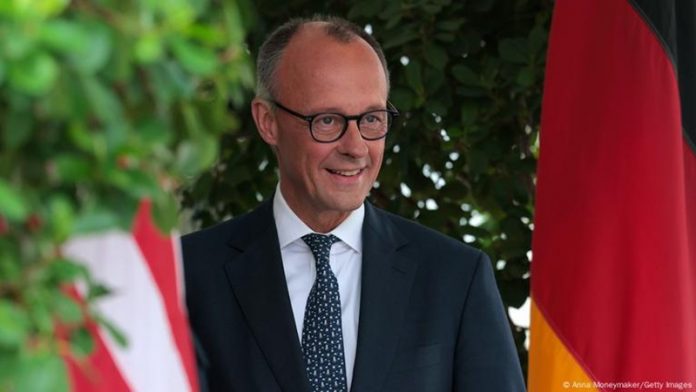
Chancellor Friedrich Merz Firmly Opposes Tax Increases for Medium-Sized Businesses in Germany

0

German Chancellor Friedrich Merz has firmly opposed tax increases for medium-sized businesses, emphasizing this stance during a Christian Democratic Union (CDU) event in Osnabrück on August 23, 2025.

He rejected a proposal from his coalition partner, the Social Democratic Party (SPD), specifically countering Vice Chancellor and Finance Minister Lars Klingbeil’s suggestion that tax hikes for high earners and wealthy citizens might be necessary to address a significant federal budget gap.

Merz stated, “There will not be any increase in income tax on medium-sized companies in Germany with this federal government under my leadership,” highlighting his commitment to maintaining economic competitiveness and supporting the Mittelstand, Germany’s small and medium-sized enterprises (SMEs).

This position aligns with his broader economic agenda, which includes tax breaks and incentives to boost investment, as evidenced by a €46 billion tax-break package approved in July 2025. However, Merz acknowledged the structural economic challenges Germany faces, including high energy costs and U.S. tariffs impacting exports, which have contributed to a 0.3% GDP contraction in Q2 2025.

Merz’s commitment to avoiding tax hikes provides certainty for SMEs, which employ around 60% of Germany’s workforce and contribute significantly to GDP (approximately 34% of total value-added, per EU data). This stability encourages investment and hiring, as SMEs can plan without the burden of increased tax liabilities.

The €46 billion tax-break package approved in July 2025, which Merz supports, further incentivizes SME growth by reducing fiscal pressure and boosting competitiveness. Merz’s rejection of the SPD’s proposal for tax hikes on high earners and wealthy individuals signals potential friction within the CDU-SPD coalition. This could complicate budget negotiations, especially with a reported €17 billion federal budget gap for 2026.

If unresolved, this may lead to delays in fiscal policy or compromises that could indirectly affect SMEs (e.g., spending cuts impacting public contracts). Germany faces structural issues, including high energy costs, U.S. tariffs, and a 0.3% GDP contraction in Q2 2025. Merz’s focus on tax relief aligns with efforts to maintain Germany’s export-driven economy, particularly for SMEs reliant on global markets.

Avoiding tax increases could help offset these external pressures, preserving SME profitability. Merz’s clear stance boosts confidence among SME owners, who have expressed concerns about rising costs and regulatory burdens (e.g., 59% of SMEs cite bureaucracy as a top issue, per recent surveys). This could encourage reinvestment of profits into innovation or expansion, critical for long-term growth.

How Tax Increases Affect SMEs

Higher taxes, especially on income or corporate profits, reduce SMEs’ disposable income. Many SMEs operate on thin margins (e.g., 3-7% net profit margins in manufacturing, per industry reports). Increased tax burdens could limit funds for reinvestment, hiring, or debt repayment.

SMEs often lack the financial reserves of larger corporations, making them sensitive to tax hikes. A 2023 study by the German Economic Institute found that a 1% increase in corporate tax rates could reduce SME investment by 0.5-1%. This stifles innovation, particularly in sectors like manufacturing, where Germany’s SMEs are global leaders.

SMEs account for a majority of jobs in Germany. Higher taxes could force cost-cutting measures, such as hiring freezes or layoffs. For example, a 2024 DIHK survey noted that 35% of SMEs planned to reduce staff due to rising operational costs, a situation tax hikes would exacerbate.

Germany’s SMEs face competition from countries with lower tax regimes (e.g., Ireland’s 12.5% corporate tax rate vs. Germany’s effective rate of ~30%). Tax increases would widen this gap, making it harder for SMEs to compete internationally, especially in export markets hit by U.S. tariffs.

Tax hikes often come with complex compliance requirements. SMEs, with limited administrative resources, spend disproportionately on tax compliance (e.g., €3,000-€10,000 annually for small firms, per KfW data). This diverts resources from core business activities.

SMEs are integral to local economies, supporting supply chains and regional development. Tax-induced financial strain could reduce their spending with suppliers, impacting other businesses and potentially leading to broader economic slowdown.

Germany’s economy is under strain, with high energy costs (e.g., electricity prices 30% above EU average) and a 25% drop in automotive exports due to U.S. tariffs (2025 data). Tax increases would compound these challenges, potentially pushing SMEs toward insolvency.

Merz’s rejection of tax hikes suggests reliance on other measures, such as spending cuts or debt financing, to close the budget gap. However, these could have indirect effects on SMEs (e.g., reduced public investment in infrastructure, which 40% of SMEs rely on, per DIHK).

If tax hikes were imposed, SMEs would face reduced profitability, constrained investment, and potential job losses, with ripple effects across Germany’s economy. Merz’s focus on tax breaks and incentives, if maintained, could help SMEs navigate these challenges, but broader fiscal solutions will be critical to avoid unintended consequences.