DD
MM
YYYY

PAGES

DD
MM
YYYY

spot_img

PAGES

Home Blog Page 6550

The Three Types of Job Seekers That We Have – An Interview with Adora Ikwuemesi

3

When you fail job interviews, don’t blame recruiters. Look into the mirror. Often times, job seekers are always blaming recruiters for their own nemesis. They blame recruiters for being mean. But the truth is, are recruiters responsible for the job seekers’ woes?

I had the pleasure of interviewing a recruiter, Adora. She shared her insight on this matter. Every job seeker should read this:

Can we get to know you better, Adora?

I am Adora Ikwuemesi, I speak, I write and I advise on Human Resources and Careers. I am also a serial problem solver, a wife to the world’s best husband and a mum to 2 angels.

It’s really good to have you in this edition as you are one of the most respected professionals that I always learn from on LinkedIn. With your experience in the hiring department, what can you say about the job seekers you’ve come across?

I will categorise job seekers into 3 groups. We have those who know and know that they know, I will call them Group A.

Then we have those who don’t know but don’t know that they don’t know, let’s call them Group B.

Then lastly, we have those who don’t know and know that they don’t know, let’s call them Group C.

Group A are not in the job market for long, in no time they have several offers, they are skilled and experienced, even as fresh graduates they stand out amongst their peers.

The majority however, are in Group B and C. Group B represents many experienced people who have a skills gap that they are not fully aware of and is making their job search difficult and their market value low.

Group C represents the many fresh and inexperienced graduates, who are hoping to get their foot  in the door, they are willing, they are not yet able, they seek an opportunity but they also have skills and experience gap which they are not able to close at the rate at which the market demands.

Group B and C have a hard time finding a job and earning well.

Do you think the recruiting system is the problem or the graduates are just unemployable? 

I believe both because if you have determined a problem in a system which in this case is the inability to find the kind of people with the type of skills we need them, the onus is on those recruiting to seek or develop solutions that alleviate the concerns.

The problem won’t go away so we need to devise more effective ways of recruiting.  The educational system also has a big role to play. The skill sets taught at secondary and university levels should better prepare graduates for the world of work.

Being someone who has worked in the recruitment and selection department, what are the qualities you look for in candidates?

Even though I am still learning recruitment every day, there is no one secret sauce.

We just have options that may improve our outcomes. More and more it’s obvious that attitude and soft skills beat technical skills any day. This is particularly the case in a market where there’s a huge skills gap and we need to therefore seek aptitude when we can’t find skills.

I would say, seek people who can learn quickly, people with passion, compassion and a problem solving mindset. Passion will always strive and put in the hard work, compassion will mean you hire people with a good heart that can have genuine empathy and care and I would choose problem-solving  skills as this would mean that you have a person who is constantly creating solutions and innovating to get better and better.

You are the author of the book – ”Change Your Career”, what actually inspired you to write that book?

Two things inspired me to write the book, Change Your Career:

The first is I get a lot of requests online and offline from people asking me how to make a career change or how to even start their career.

Secondly, I have changed careers 5 times, I feel I am in a good position to help others do the same. I saw the book as a solution to a problem a lot of people have at one point or the other in their career life and I love helping people so I felt this was a more effective way of sharing that knowledge to the people who needed it.

There are so many employees out there who are only working for the paycheck, meaning, most of them are in the wrong career. In a country like Nigeria where the standard of living is tough, what would you advise such people to do?

Honestly, there is a time in most people’s career where they will find themselves in this situation and it’s a valid decision to work for a paycheck.

The only concern is for how long?

True happiness is found in working with purpose, working for something bigger than ourselves. At some point, we all have to sit down with ourselves and decide to live a life that matters and truly fulfills us.

That meaningful life is gotten from having a meaningful career that serves a higher purpose while also paying the bills.

I stumbled on your post about the ”7th HR Bootcamp Conference”, can you share more information about the conference and means of registration? 

The HR Bootcamp Conference was a platform I founded in 2009, it’s purpose is to foster innovative and positive shifts for people management practices. It was my very first impactful entrepreneurial attempt. Funny enough I started it when I was unemployed and today 10 years later it is a renowned gathering of HR Professionals.

All registration is online , the 8th one is scheduled December 2020.

What advice do you have for fresh graduates and employees, and what would you say to anyone looking to transition into another role?

Focus on skills required for the desired role. Remember that these skills aren’t all technical, some are behavioural e.g. problem solving, planning, leadership skills.

Your goal is to close the skills gap between where you are now and where you want to go. Determine the best way to close those skills gaps, the exact training or learning methods required.

Once you know that, set a timeline to execute and follow through.

To the audience reading this interview, where can you be contacted?

My website or via my Facebook Group – HR Nigeria.

What should we expect from you in the next five years?

  • Expect me to change my career!
  • Expect to see me do more purposeful work, enhancing workplace and career lives.
  • Expect me to speak more.
  • Expect me to have written some new books.
  • Expect me to be delivering happiness in my own way.

Thank you, Adora, for your time. I wish you a successful conference.

Thank you, Chinedu, for the opportunity to share my thoughts. It’s been a refreshing interview with great questions.
The BeepTool Innovations [video]

0

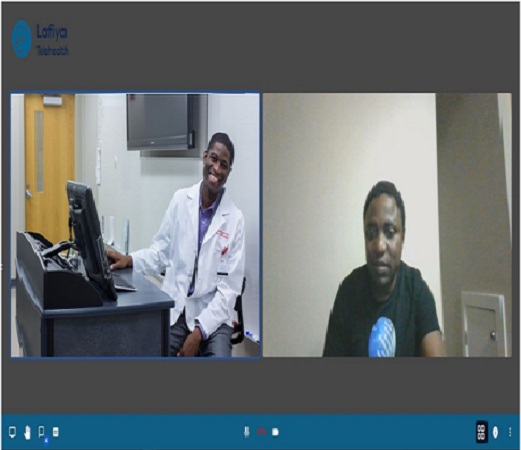
It is live in Nigeria and I invite all villages, communities, churches, mosques, offices and stakeholders to the party. BeepTool, through satellites, now makes it possible that anyone even in rural areas can speak to doctors in cities. It also uses the same connectivity to support farmers. With companies like BeepTool, the villages get more exciting as digital economy and opportunities are arriving at scale! Yes, BeepTool is a satellite connectivity company that offers services in agriculture, healthcare, finance, etc by making affordable internet possible in rural Africa, beginning with Nigeria.

Our vision in BeepTool is to connect every village in Nigeria to the world wide web. From rural health clinic to farming communities, we have the BeepTool satellite to make that connectivity happen. And our most affordable smartphones and tablets will empower people to go digital. These tablets and phones are engineered to turn GSM devices into satellite nodes so that you can go online, affordably, via satellites even when GSM operators like MTN and Glo are not present. Yes, we turn GSM phones through proprietary apps to work on our satellite systems.

The BeepTool solution is an innovative rural satellite connectivity network that enables robust, low-cost satellite services for a large number of users throughout Africa. The BeepTool custom and proprietary satellite Wi-Fi hotspots terminals loaded with the BeepTool Satellite firmware and the  BeepTool Satellite app beaming data connectivity wifi to more than 100 devices at the same time within the radius

Lafiya Telehealth Is Changing the Way Healthcare Is Delivered in Africa

Beyond Efficiency in Nigeria’s Public Sector

3

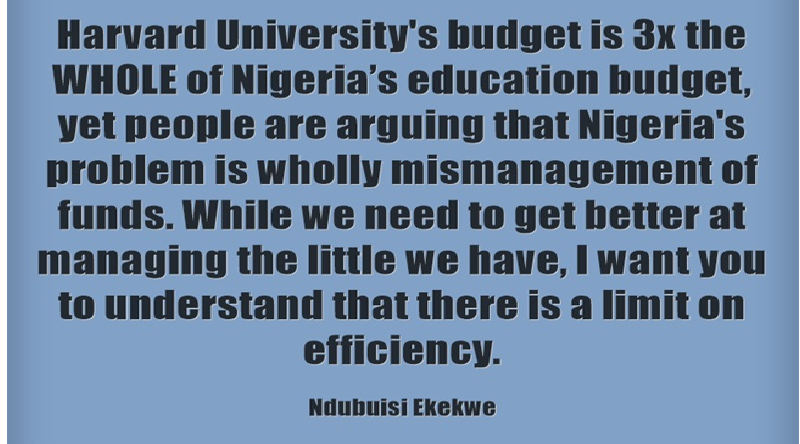
If a man has 10 kids and earns $200  monthly, he will struggle compared to one that has 2 kids and earns $10,000 irrespective of his prudence or fund efficiency. Harvard University’s budget is 3x the WHOLE of Nigeria’s education budget, yet people are arguing that Nigeria’s problem is wholly mismanagement of funds. While we need to get better at managing the little we have, I want you to understand that there is a limit on efficiency. Unless Nigeria has more tax revenues, via growing private sector, the education ministry even at highest efficiency will continue to struggle. Yes, the private sector will rise before that education ministry would have a chance! 

Nigeria needs business pioneers to rise before political ones can emerge because markets will fund better ecosystems of improved public sector and public governance.

The Mirage of “Enabling Environment” for Business in Nigeria

Nigeria’s Rensource Raises $20 million for Off-grid Solutions for SMEs

0

Rensource, a company that provides energy and tech-enabled value services today announced the completion of a $20 million equity financing round. The round was co-led by existing investors CRE Venture Capital and the Omidyar Network, with participation from Inspired Evolution, Proparco,  EDPR, I&P, Sin Capital, and Yuzura Honda. The funds will be used to expand the company’s footprint of microutilities across Nigeria, as well as invest in additional technology infrastructure, as it rolls out new tech-enabled products and services for its merchants.

Nigeria, Africa’s most populous country, only has 12 gigawatts of installed grid capacity, with just one-in-four Nigerians connected to the national power grid. In contrast, South Africa has  50 gigawatts. Rensource launched commercially in 2016 to address this problem. Founded by Ademola Adesina and Jussi Savukoski, it is bridging Nigeria’s power deficit through the delivery of renewable based decentralized energy, focusing primarily on SMEs.

Operating in seven clusters across six states in Nigeria (Lagos, Kano, Ogun, Ondo, Oyo and Edo), the company builds and operates solar hybrid microutilities – a type of energy services provider that localizes energy generation, distribution, and customer service to each community it serves. The company is active in marketplaces that serve over thirty-thousand SMEs. It expects to expand into 100 markets in the country over the next three years.

With the financing secured, Rensource is now expanding its offering beyond energy and entering Nigeria’s nascent offline to online (O2O) space, by offering technology enabled value added services to SMEs in the marketplaces it provides power for. With the launch of this new B2B platform, “Spaces O2O”, merchants will be able to access services that accelerate their productivity growth.

Speaking on the news Ademola Adesina, Founder and CEO of Rensource said, “We believe that simultaneously greening and decentralizing its power infrastructure is the only way to navigate Nigeria out of its current state of energy poverty. Pursuing this with a focus on the millions of small-businesses that drive our economy creates a massive multiplier effect whose benefit accrues to all.

He goes on to add, “Our push into O2O is a natural step that leverages our existing infrastructure to further empower the merchants we serve. We aim to bring connect over one-million merchants in the next 5 years.

As Rensource has grown a leading foothold in the Nigerian market, it has identified gaps in the distribution value chain regarding lack of access to credit, expensive transportation and warehousing, inaccurate data and limited product availability, underpinned by a highly fragmented and multi-layered value chain.

Rensource has historically worked with a variety of stakeholders including community associations, government, regulatory agencies, contractors, and private investors, to build renewable energy projects across Nigeria. In 2018, the company, through a collaboration with the federal government’s Rural Electrification Agency, developed a project in Sabon Gari Market in Kano which resulted in thousands of merchants connecting to Nigeria’s first solar microutility. This first project was followed up by several other as part of the Energizing Economies Initiative (EEI).

Co-founder and Managing Partner of CRE Venture Capital, Pardon Makumbe said, “Rensource’s goal is to offer solutions to the many challenges faced by SMEs in Nigeria, starting with power and expanding to other value-added services. It is a bold and worthwhile undertaking that is creating value for all stakeholders. We are excited to continue this journey with the hyper-competent team at the helm”

Jonathan Kirschner of Omidyar Network said, “Ademola is a true renewable energy revolutionary. We are thrilled to be working with Rensource to deploy affordable and innovative energy solutions to traditional retailers across Nigeria who desperately need it.”

Source: press release

The Nigeria’s $30 Billion Loan Request

0

The 9th senate has begun the approval process for the $30 billion loan request made by President Buhari. The senate president referred the request to the Committee on Local and Foreign Loans at the plenary.

Lawan gave the Committee two weeks to work on the loan request and report back to the senate.

Buhari had on November 28, resent the $29.96 billion 2016-2018 external borrowing plan to the senate for consideration and approval. The borrowing plan was a bone of contention between the executive and the 8th Senate led by Dr. Bukola Saraki. The 8th senate has rejected it, citing irregularities and lack of programmes to justify the loan.

Speaking to journalists on Monday in Abuja, Lawan said that the senate will approve the loan but will also make sure that it is judiciously used to implement infrastructural programmes that will benefit the Nigerian people.

“The question of whether we will pass or approve the loan request of the executive arm of government, yes, we will pass it. If we don’t have money and you have projects to build them, how will you provide infrastructure that you need?

“But one thing is that, we are going to be critical that every cent that is borrowed is tied to a project. These are projects that will have spillover effects on the economy and we will undertake our oversight so well to ensure that such funds are properly, prudently, economically and transparently applied on those projects,” he said.

When he was reminded that the loan plan was rejected in 2016, which questions the morality behind its approval now, the Senate President said.

“In 2016, there was no submission of details. This time, I think the executive has learnt its lesson and the letter came with sufficient details. Nothing will really militate against the passage of the loan request.”

As justified as the loan may appear this time, it is coming at a time when the International Monetary Fund (IMF) and economic experts are warning Nigeria against her rising debts. The debt management office said the total external debt stands at $27.16 billion, $4.27 billion out of it is for states and the Federal Capital Territory (FCT).

This warning was also acknowledged by Lawan himself back in October 23, at the opening session of a two-day public hearing organized by the National Assembly on the 2020 Federal Budget held in Abuja. He warned that the Federal Government’s habit of borrowing is hurting the already fragile economy of the country, and recommended a public-private partnership as an alternative to external borrowing to fund infrastructure.

“We cannot continue to borrow to build our infrastructure; I belong to that school of thought that believes that, where we can have a PPP (Public Private Partnership) to build our infrastructure, we should do that.

“I feel that we can build our road from Abuja to Kaduna or to Kano with private fund and they design a way to collect their money, let us do that. Other countries have done that and it worked. As long as we are not shortchanged, we have to look at it, if we have to borrow, where there is another opportunity we should explore that.”

This was the Senate President’s take on external borrowing, just about two months ago. So it was surprising that despite his preachment of PPP in funding infrastructure, he approved the $29.96 billion loan request from the president without hesitation.

Could there be a quid pro quo?

The suspicion of quid pro quo was stirred by the announcement that Buhari has approved N37 billion for the renovation of the National Assembly complex. The N37 billion, although it found its way into the 2020 budget, was not inclusive of the N128 billion allocated for the National Assembly next year. The money instead is part of the 2020 Federal Capital Development Administration budget.

The National Assembly Complex was built in 1999 at the cost of N7 billion.

Speaking about the renovation of the National Assembly and its funding, Lawan said: “We met the president and it was related to the condition of the complex. The president responded and said he was going to renovate the complex. N37 billion was sourced and was given. It was put under the FCT, not national assembly. All we require is to have the complex renovated.”

The $29.96 billion loan approval by the senate and the N37 billion national assembly complex renovation fund approval by President Buhari are all happening at a time when Nigerians are pointing out that the 2020 National Budget was padded by N264 billion, justified by fraudulent projects. So it is believed to be a “give and take deal” between the executive and the National Assembly.

Premiums Times reported how the budget has been inflated through frivolous self-enrichment projects.

President Buhari has assented to the budget not minding the frivolous figures inserted by lawmakers, and the approval of the requested loan will put the nation’s debt profile at $97 billion (N30 trillion), a huge sum that the future generation will live to pay. The major concern expressed by Nigerians so far is that there may be little or nothing to justify the staggering figures of the debt.