DD
MM
YYYY

PAGES

DD
MM
YYYY

spot_img

PAGES

Home Blog Page 6550

The Jumia Redesign Continues – Travelstart Picks Jumia Travel, Exiting Food in Rwanda

2

Jumia continues the redesign. The Africa’s ecommerce giant raised tons of money from private investors with the message of scale and geographical footprint across Africa, in core verticals like travel, ecommerce, etc. In the age of blitzscaling, investors bought and became believers. Yes, blitzscaling is the new normal –  it does help American entrepreneurs in raising huge money very fast.

But as I have written here – Africa is a heterogeneous market where economies of scale do not always improve marginal cost, because even within a nation, what works in Lagos state may not work in Zamfara state (both are states in Nigeria) because their economies are evidently different. By the time you take it continental, a playbook for Ghana may fail in Ethiopia. This deviates from the United States which is like a continent of 50 countries all entwined on a homogeneous market format and structure. With that, if you get it right in Baltimore, Boston would be ready to welcome you with the same playbook.

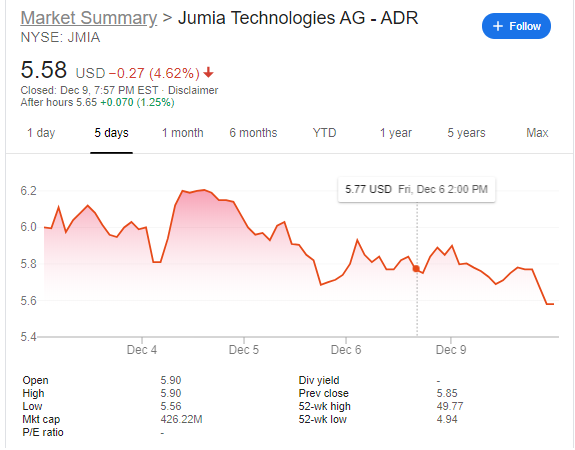
So,  as a public company, Jumia will have to pursue a message of profitability and sustainability before public investors who do not really focus on scale blindly without asking if this company is making enough money to stay here for long. For Jumia to answer that question, it needs to make profit! It is trading below $6 now, months after hitting close to $40. To change that trajectory, Jumia must grow, profitably.

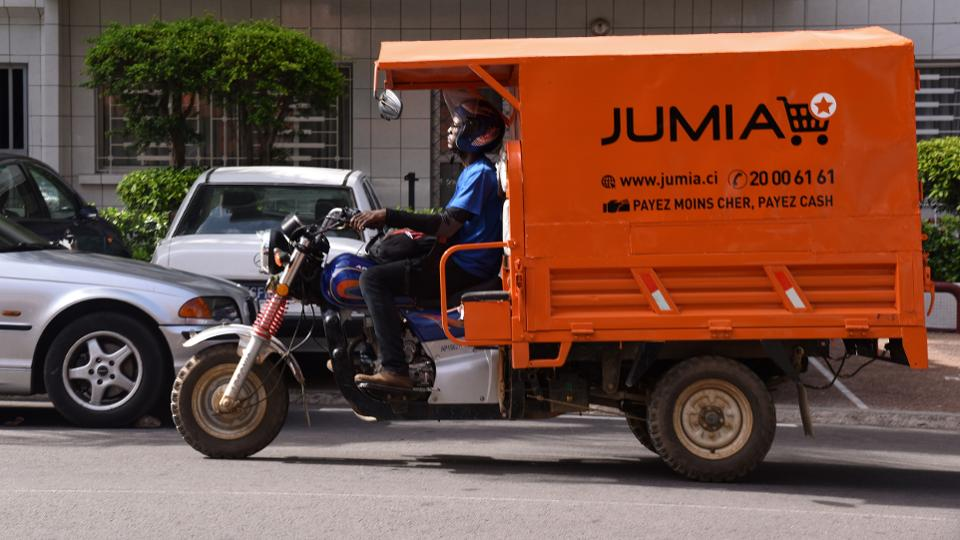
The company has started the redesign by closing units in Cameroon and Tanzania. Now, it will close Jumia Food in Rwanda just as Jumia Travel departs to Travelstart. This is how TC Daily explains it.

And like in previous weeks, it’s about another purge. The company confirmed to TechCabal that it has passed off Jumia Travel, its six-year old hotel and flight booking business to Travelstart, an online booking platform. They are terming it a “partnership” instead of an acquisition, as Jumia’s hopes to “remain hyper focused on our growth and path to profitability.”. We have a pretty detailed account of how this change played out yesterday, so here’s your plug on the latest travail at Jumia. Extra: Jumia Food will shutter in Rwanda by January 2020.

My only suggestion to Jumia is this: whether you sell or exit via partnership, make sure your clause has that the recipient company works with Jumia Pay for at least two years, post-agreement. The future of Jumia includes Jumia Pay and it is strategic you consider the feeder-system as you make decisions. Without the food delivery, travels, etc, even the promising Jumia fintech unit will struggle. So, do not exit without making decisions that would help Jumia fintech unit which includes your lending, paytech, etc. Jumia Pay is coming a little late and there are tough competitors already. But with your other verticals, the paytech can command a solid presence in the region. Do not think you can sell everything and still thrive in fintech. That would not happen – the reason Jumia Pay has seen great growth is because it is starting with millions of customers other Jumia businesses are providing to it.

The New Jumia Evolving As The Ecommerce Firm Exits Cameroon And Tanzania

Why You Should Digitally Transform Your Non-Profit in 2020

0

If your nonprofit must make change happen, then it must go digital in 2020. As Justin Spelhaug, leader of the Technology for Social Impact (TSI) group in Microsoft, once emphasized;

“Digital transformation can boost the impact, performance, and viability of any organization… even the leanest and most humble of nonprofits.”

Although Spelhaug’s statement was reported over a year ago, it seems truer than ever as we approach 2020. Recent trends indicate that organizations without active digital transformation goals will, in the near future, struggle to satisfy clients, their stakeholders or to even survive as more ambitious competitors take the digital route.

But what is Digital transformation?

It is the adoption of digital technology and the accompanying mindset of constant innovation and value-centered operations throughout every facet of an organization. Such transformation may evolve to threaten previously dependable systems like the work culture or business model; thereby, requiring decision-makers to be in a constant learning mode and to be ready to adapt if the need arises.

When nonprofits choose to go digital, they embrace an unforeseen future; one beset with risks and opportunities. Concepts like 5G, Big data, Virtual reality, Artificial Intelligence and Blockchain become integral factors to their decision-making process. And issues like how to start, how much to invest, how to find talents and how much is at stake will take centre stage.

But for most nonprofits, Digital transformation won’t be a walk in the park. According to Forbes,

“Many companies have endeavoured on digital transformations, only to hit roadblocks.”

But the alternative – shying away from digital transformation – is not a better strategy. That’s because nonprofits that refuse to adapt will ultimately achieve less by doing more; whether that’s in fundraising, sensitization or distributing supplies; and they would struggle to survive in a digital future. Hence, nonprofits that join the digital bandwagon stand to gain more than they lose. Other reasons for digitally transforming your nonprofit are:

DIGITAL TRANSFORMATION WILL IMPROVE YOUR MARKETING.

Nonprofits that don’t market effectively will fail. And that could mean no more food for the poor, no medicine for the sick and no homes for orphans.

That’s why effective marketing should be a top priority for any nonprofit.

Digital marketing is the use of digital technologies to achieve marketing results; whether that’s using Artificial Intelligence (AI) in fundraising campaigns, blogs in sensitization efforts or digital wearables in awareness generation. Multiple examples abound of many organizations using digital marketing to achieve lofty goals.

But digital marketing is not only about building a website, a mobile application or running search engine advertisement. Rather, digital marketing prioritizes the recognition of your audience needs, characteristics and desires above the random adoption of digital tools.

This means that you shouldn’t jump into social media marketing if you aim to raise awareness on polio among a group of uneducated Nigerian villagers. Those villagers won’t have access to mobile phones and your social media activities would be ineffective. On the other hand, if the objective of your social media participation is to connect with fundraisers who are social media users, then you’ll be on track.

By consequence, effective digital transformation in marketing requires a combination of both online and offline marketing.

DIGITAL TRANSFORMATION WILL IMPACT YOUR PROBLEM SOLVING EFFORTS.

What’s your nonprofit’s biggest challenge? Providing adequate education for more children in developing nations on a smaller budget? Responding pro-actively to a health epidemic? Improving team productivity during emergencies? Finding volunteers?

Like many nonprofits, your challenges – issues that prevent you from changing the world – may run into hundreds. That’s why solving those problems should be a priority in 2020. To achieve this, you would need to integrate digitally inspired problem-solving mindset into your nonprofit’s culture.

Doing so will force a change in your organization’s problem-solving approach; bringing one that’s characterized by constant experimentation, an emphasis on innovation and on-the-field learning.

Entrepreneurs and Tech folks have a term for this mindset: the lean methodology. The lean methodology was popularized by Eric Ries, a famous entrepreneur and cofounder at IMVU, whose experiences with building many startups (most failed) taught him that the only way to grow a successful organization was to make it innovative, like a startup where “…every product, every feature, every marketing campaign—everything a startup does—is understood to be an experiment designed to achieve validated learning.”

In his book, The Lean Startup, Eric writes,

“Entrepreneurs who operate inside an established organization sometimes are called “intrapreneurs” because of the special circumstances that attend building a startup within a larger company. As I have applied Lean Startup ideas in an ever-widening variety of companies and industries, I have come to believe that intrapreneurs have much more in common with the rest of the community of entrepreneurs than most people believe.”

For Eric, innovation only thrives when each startup or organizational activity isn’t regarded as the finished product but as an opportunity to discover how to solve the motivating problem better. That means your nonprofit will benefit from applying the lean mindset to its digital integration efforts in each problem-solving endeavour.

FINAL THOUGHTS.

Your nonprofit can’t be allowed to fail. If successful, its work can enrich human existence, save lives and create a lasting positive impact on people who are a thousand miles away through digital technologies.

Let me illustrate this with a personal experience:

Sometime in July 2017, I took a long trip to Zamfara in Northern Nigeria – a region that was scarred by Boko Haram bombings at the time – to participate in the mandatory National Youth Service Corps (NYSC) camp for young Nigerian graduates from tertiary institutions all over the world.

As part of the enrollment requirements into the full program, we – prospective Corp members – were instructed to double-check our health status, to get immunization against meningitis and if critically ill or disabled, to acquire a medical report as proof.

The medical report granted its bearers full immunity from the strenuous lifestyle that other Corp members had to experience.

Before the camp, I’d considered myself to be a very healthy person. And until then, no hospital had proved otherwise. So I arrived Zamfara without a medical report (since healthy folks like me didn’t need one) and a burning desire to participate.

But one of the officials didn’t think so.

“You need a medical report for your glasses.” He bellowed, “No one is allowed to wear glasses in camp. Where is your report?”

“My glasses are recommended.” I told him for the umpteenth time, “I am shortsighted.”

The incident, happening in the presence of other Corp members, was truly embarrassing for me. Without the spectacles, I would be forced to squint during the day and walk almost blindly at night. Moreover, did I need a permit to keep wearing a pair of lens that I’d had on my face, every day, for the past three years?

I felt like a disabled person. I felt humiliated. And at that moment, I also wished that I had access to a platform where I could take action against the official. Although I didn’t later build on that momentum, the internet would have been my first consultant if I did.

And then on the 21st of October, 2019, two years after, a repeat of the incident happened again. But this time, I wasn’t the victim: it was the Indian disability activist, Kuhu Das who was harassed at an airport in India.

According to a BBC report, Kuhu, who had been wearing callipers with titanium rods for many years after surviving polio at three, was asked by the female police officer to remove her callipers so that they could be scanned.

And Kuhu said that when she protested,

“… she (the police officer) called another officer and right in front of me, she told her colleague that she had never seen anyone like me before. It was like I had come from another planet. How insensitive is that?”

While I empathize with Kuhu Das, I was also sickened by the realization that there were a lot more disabled persons facing harassment all over the world who don’t have a platform to seek redress or a consultant to help them recover emotionally.

This gap can be filled by disability nonprofits who’ve embraced digital transformation. This can be done through some effective tactics including offering free consultancy through their websites or running blogs with helpful information on how disabled people can build a business, find love or start a family.

If your nonprofit wants to make change happen, then it must go digital in 2020.

Forces that Shaped Sowore-DSS Face-off and Public Complicated Sympathy

0

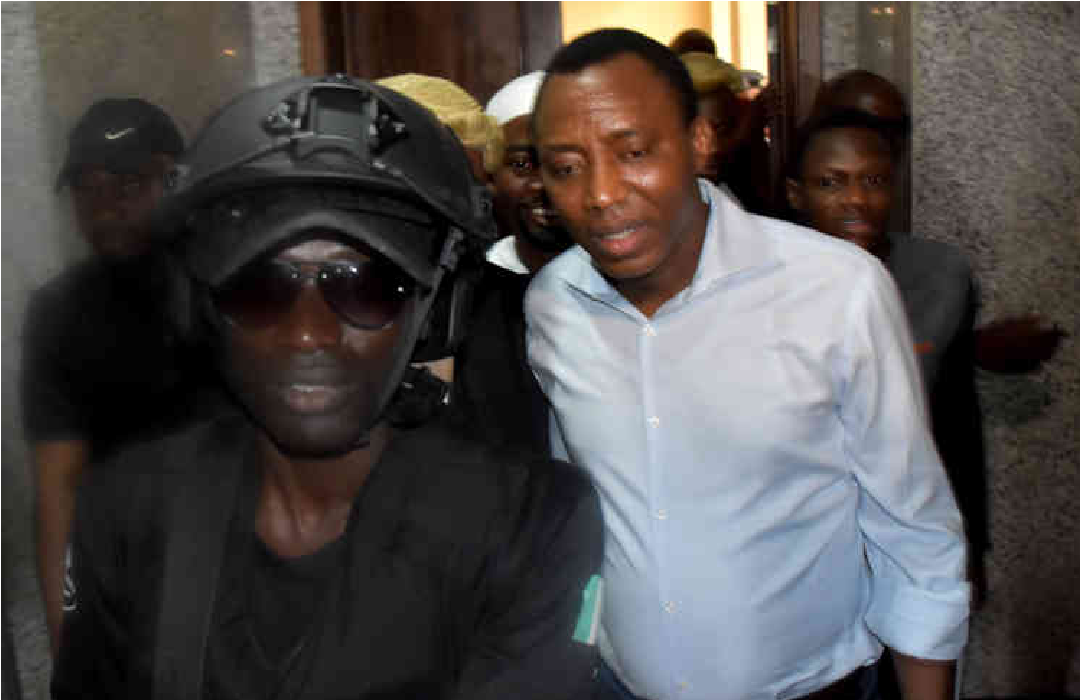
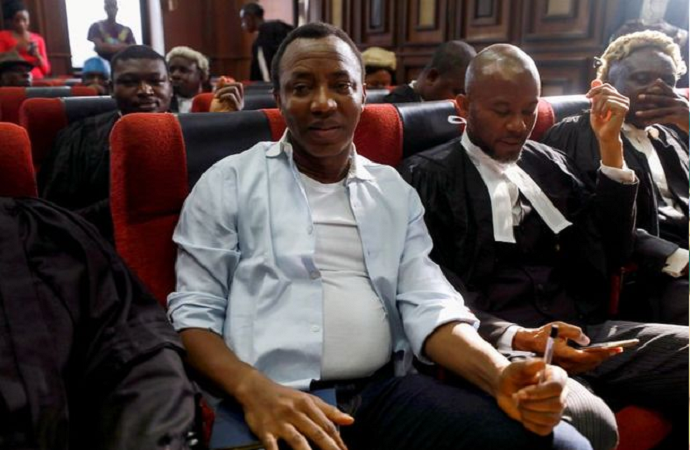
Last Friday, news broke out from the premises of the Federal High Court in Abuja that the #RevolutionNow convener, Omoyele Sowore, has been rearrested few hours after he was released from the Department of State Security’s custody. The publisher of the Sahara Reporters online news platform was seen in a video where fighting broke out in a bid by his supporters to prevent his re-arrest by the Nigerian  secret police shortly after his case was adjourned in the court room.

So much rage has followed the state attempt to continue to detain him despite two separate judgements for his release since he was arrested and detained earlier in August. There have been arguments and counter arguments on the appropriateness of his continuous detention despite court judgements in a democratic setting since his arrest four months ago. Many of those who condemned the DSS act also disparaged the President, Muhammadu  Buhari, and his vice, Prof. Yemi Osinbajo, for running a dictatorial democracy. The Department of State Security was also a subject of the angry reactions from Nigerians. The state secret police was condemned for its flagrant disregard for the rule of law. Even though the voice of those against the brazen manner in which the re-arrest was carried out seemed louder, a silent minority did not see anything out of order in the way the Ondo born former presidential candidate was handled.

In a case like this, the battle line is drawn. Reputation, propaganda and a war of narratives ensued. From Twitter to Facebook, Nigerians did not hide their disdain for an act described as despicable. On the surface, the objects of anger and sympathy appear clear. On one hand, there is President Muhammadu Buhari and the Department of State Security (DSS), an agency believed to have been used by the president to illegally put Sowore behind the bars. On the other hand, there is Sowore himself who is believed to have been victimized and has attracted public sympathy.   The non-state actors have continued to point accusing fingers at the president’s military background and accused him of dictatorial tendencies.  The war front is online where most narrative wars are won and lost. The focus of this analysis is to draw insights from the reputational war currently raging.

#For the past 90 days, the interest has been regional. An examination of how the issue of Sowore and his detention since August 3, 2019, when he was first arrested, has shown that the interest in his case online has been regional biased with states from the Southern Nigeria leading the pack of other states on percentage of interest.  Bayelsa topped the list of states that indicated interest in Sowore with 100 percent while Oyo (90%); Enugu(75%); Kwara (69%); Ekiti (64%) and Ondo (62%) followed suit respectively. Apart from Kwara which is situated in the North Central, the other states are all in the South. The 100% interest in Sowore from Bayelsa is understandable. He was born and bred in the Niger Delta. The terms searched in relation to him included sowore latest news; who’s sowore omoyele; sowore released; sowore news. People wanted to understand Sowore’s personality and latest information on his case with the state. However, Lagos, the activism capital of the country, did not show much interest in Sowore. With a paltry 31% interest, the commercial hub of the nation seemed more pre-occupied with other issues. Ondo, his state of origin, was also occupying the 6th position.

For Buhari, in the last 90 days since Sowore’s arrest, interest peaked for him at 100% in Nasarawa followed by Kano 60%; Kaduna 48%; Ondo 43% and Anambra 37% respectively. Surprisingly, Ondo and Anambra were the two states from the south that join three other northern states to show interest in Mr President. They showed a below average interest in him. The related terms for the president’s search were Nigerian president muhammadu buhari and president muhammadu buhari. The implication is that until Friday when the news of Sowore’s re arrest broke, the battle line has been the south versus the north. Proximity and prominence were the two interest values that played out here. Each of the two regions held on to their two sons.

# In the last 7days, the regional battle became more intense. If the battle of the past 90 days has been ethnic driven, the struggle of the last 7 days was more clannish. In Ondo state, the search interest for Sowore stood at 100% while Oyo, Osun, Ogun and Ekiti had 93%,88%, 73% and 58% respectively.  The search term had Sowore re arrest; Orji Kalu; DSS Rearrest Sowore; Rearrest of Sowore and Uzor Kalu as related terms within which the interest in Sowore was understood. Again, all the South western states except Lagos State were at the forefront of searching for Sowore. Lagos had 38% while Abuja, the FCT, where the re-arrest was staged had insignificant interest with 26%. This statistics could be explained. Ondo, where the main actor comes from, is leading the charge. His people would ordinarily be concerned about his safety and security. Osun is the state of his co-plaintiff, Olawale Bakare. The people would also be concerned. It is an indication that Osun people are trying to understand their son’s travails from the angle of his co-accused. In the North, in the last seven days, Muhammadu Buhari, was their main preoccupation. Kano (100%), Kaduna(57%), Niger (53%), Nasarawa(47%) and Anambra (35%) were the five states where the president had the highest percentage of interest.  The northerners were trying to understand Buhari in terms of his wives and children. The related terms for which Buhari was searched included Hanan Muhammadu Buhari, Safinatu Yusuf,Aisha Buhari, Amina Buhari and Aisha Buhari. In the light of his youngest daughter’s graduation with first class from a foreign university, an explanation could have been found why the northern people are getting personal in their search and interest for Buhari.

#Sowore, the DSS and Buhari: Linkage between the Actors and Nigerians’ Attitudinal Disposition. Apart from the fact that the three actors are trending, there appears to be a complicated sympathy in the issue. In a worldwide interest analysed along with national views, there is a link between the three actors. For instance, there is a 61.4% connection between Sowore and Buhari. This implies that one percent interest in Sowore increases interest in Buhari by 61.4%. Similarly, it was observed that there is 8.2% connection between Sowore and DSS which means that one percent interest in Sowore increases interest in DSS by 8.2%. In the same manner, there is 28.1% connection between Buhari and DSS meaning that one percent interest in Buhari increases interest in DSS by 28.1%. This percentage of connection is an indication that the non state actors seek Buhari’s intervention in ending Sowore’s travails in the hands of the DSS.

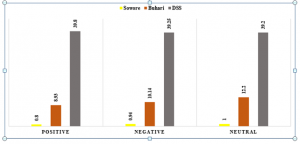
Figure 1: Mean Score of Select Nigerians’ Attitudinal Dispositions towards the Actors

Source: Google Trends, 2019; Twitter Comments, 2019; Adebiyi, 2019

The chart above shows the mean score of Nigerian’s attitude towards the three actors. Extraction of a hundred comments from Twitter indicates the attitude has continued to swing from positive to negative and to neutral. “Nigerians are saying DSS under PMB is being used. Have you forgotten Marilyn Ogar of DSS 2013, 2014, early 2015? If it was her, Sowore would have been taken to Nasarawa slum. Buhari is a true democrat, he is a performer,” a Nigerian reasoned in justifying the DSS action. Another commentator said, “I condemn the total disregard for rule of law by Nigeria’s present government as we have seen in the DSS desecration of the Nigerian judicial system to rearrest Omoyele Sowore @YeleSowore. I call for his immediate release. Even accused persons are entitled to due process”.   “How many people were talking like this when it was Dasuki or Nnamdi Kanu, sometimes I feel SWeners who are naturally the most vocal of us all seem to find their voice and their civil society comes alive with it is ethnically one of theirs. Nigeria has never been this vocal lately,” another tweeter user concluded.

Even though, it appeared somewhat late, the media handlers for both the Presidency and the DSS had issued statements on the purported roles the two played in the saga, the narrative war still continues.

Additional Information : Mutiu Iyanda Lasisi  and Umar Olansile Ajetunmobi

DSS vs Sowore Saga: The Federal Government of Nigeria Breaks Silence and Speaks

0

The Federal Government of Nigeria has broken its silence on the ordeal of journalist and activist, Omoyele Sowore. The Department of State Security Service (DSS) invaded a Federal High Court sitting in Abuja on Friday, November 7, and rearrested the embattled political activist.

Sowore was arrested in August for calling for revolution, and has been in detention since then despite several court rulings granting him bail. Justice Ijeoma Ojukwu of the Federal High Court Abuja has on Thursday, November 6, giving the DSS a marching 24 hour order to release Sowore. But a day after he was released, members of the secret service attacked the court and abducted him once again.

The events of the past have, however, stirred an uproar and condemnation both locally and internationally. The U.S Department of Justice has condemned the development in strong terms, calling it “a threat to Nigerian democracy.”

In response to the condemnation, the Nigerian Government has issued a statement to address what many have described as ‘desecration of the court and ‘utter disregard for the rule of law.’

“The Presidency notes some of the insinuations in the media about the arrest by the Department of State Services (DSS) of the agitator, Omoyele Sowore.

The DSS does not necessarily need the permission of the Presidency in all cases to carry out its essential responsibilities that are laid down in the Nigerian Constitution – which was the foundation for the restoration of democracy in our country in 1999.

However, it should not surprise anyone who has followed his actions and words that Sowore is a person of interest to the DSS.

Sowore called for a revolution to overthrow the democratically elected government of Nigeria.

He did so on television, and from a privileged position as the owner of a widely read digital newspaper run from the United States of America.

He founded an organisation, Revolution Now, to launch, in their own words, “Days of Rage”, with the publicised purpose of fomenting mass civil unrest and the elected administration’s overthrow.

No government will allow anybody to openly call for destabilization in the country and do nothing.

Mr. Sowore is no ordinary citizen expressing his views freely on social media and the internet.

He was a presidential candidate himself, who ran – and lost – as the flag bearer of the African Action Congress (AAC) in the February 23 general elections.

Nigeria’s democracy was a long time in the making, and was achieved after decades of often harsh, military-led overthrows of government: the kind of situation Sowore was advocating.

To believe in and desire armed revolution is not normal amongst ‘human rights activists’, as Sowore has been incorrectly described.

Again, it is no surprise that he should be a person of interest to the DSS.

Nigeria is already dealing with an insurgency that has left millions of people displaced and desperate in the northeastern region of our country.

The Boko Haram militants, who are behind the violence, also fancy themselves to be fighting for some sort of revolution.

Nigerians do not need another spate of lawlessness and loss of lives all in the name of ‘revolution’, especially not one that is orchestrated by a man who makes his home in far away New York –

… and who can easily disappear and leave behind whatever instability he intends to cause, to wit, Nnamdi Kanu. This is a matter for the DSS, acting under its powers.”

Meanwhile, Human rights lawyer and counsel to Sowore, Barr. Femi Falana (SAN) said he will be approaching the court to strike out the case. Speaking at the third edition of Compendium of High Profile Corruption Cases in Nigeria, organized by Human & Environmental Development Agenda HEDA, on Monday in Lagos, Mr. Falana told the press that the Government has decided to embark on media trial instead of presenting the defense counsel with copies of the crimes that Sowore was charged with, as directed by the court.

“The government has not shown any readiness in prosecuting Sowore,” he said. “We were told that Sowore went to Dubai to collect millions of dollars to overthrow the government. But the government discovered that Sowore has never been to Dubai before, and that aspect collapsed.

“So what the government is doing is to embark on media trial without giving any evidence in court.” He added.

Nevertheless, there is concern that even if court strikes out the case in February, the Government will, as in previous cases, disobey the order.

5G Book To Be Published By Tekedia In Jan 2020

0

Tekedia would be publishing 7 books in January. A new one just got ready, authored by Dr. Olayinka Oduwole , and titled “5G”. We welcome your books in our platform. To learn more, click here.

We have received great cover designs and more books are being processed by my team. There is no font style, size, etc, since we will publish online at Tekedia. However, we require a minimum of 15,000 words count. It can cover any topic excluding politics. Your book will not be under any paywall – I mean, it will be freely available to our readers. And more people will read them if you work with us.

To send your design or a book, email my team here.