DD
MM
YYYY

PAGES

DD
MM
YYYY

spot_img

PAGES

Home Blog Page 6565

The New Jumia Evolving As The Ecommerce Firm Exits Cameroon And Tanzania

5

As I suggested a few days ago here, that Jumia would be better served pursuing a pan-African fintech playbook over an ecommerce one, the company has started the redesign. Jumia has left Cameroon and Tanzania over the last two weeks. The most painful thing, though, is that the company could not sell to any local operator. It simply closed the shops, fully or partially, like the ways Kalahari, Mocality and others did many years ago. You may read this seminal piece I wrote in the Harvard Business Review on ecommerce in Africa to understand the challenge in the sector.

Now on Jumia, I think it needs to spinoff JumiaPay and sell Jumia, the ecommerce business to anyone that can buy. That disposal can happen at local level where Jumia Nigeria sells to a player in Nigeria while Jumia Kenya is sold to another company.

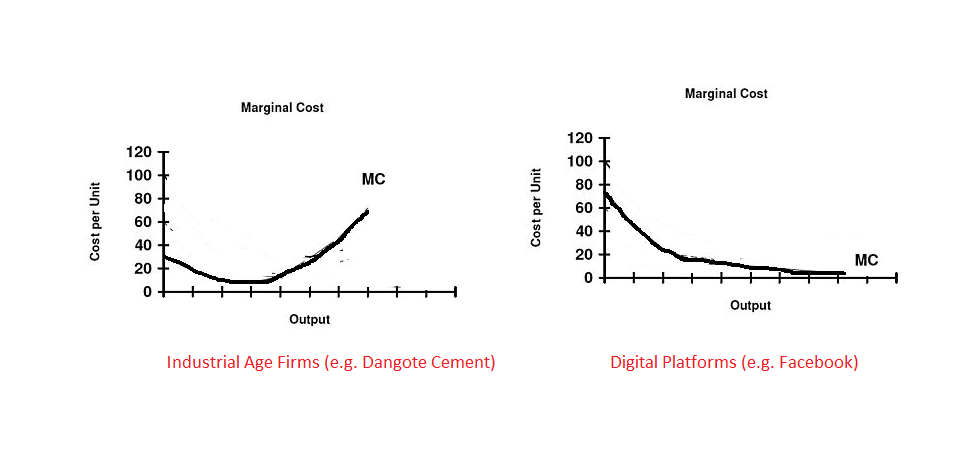
Largely, as I have noted here many times, operating a pan-African ecommerce venture is hopeless, because your marginal cost instead of going to near-zero, as you scale, turn into a curve that looks like an average fixed cost curve (a shape that is similar to the one you see in Dangote Cement which confirms that ecommerce in Africa is a physical business, not electronic). When that happens, scale does not bring efficiencies on transaction and distribution which  are critical for the profitability of digital businesses.

I project that Jumia will shrink from 14 countries it began November 2019 to eight countries by Q2 2020. Once it does that, it would begin to see some elements of profitability (not immediate but on the horizon) even though its GMV will drop.

This redesign is key – geographical footprint means nothing in Africa. There are about five countries in sub-Saharan Africa that matter; others are just for shows. Do not think that being in 14 countries would deliver leverageable opportunity if you cannot validate your hypothesis in three. Our markets are heterogeneous in nature making lessons learned not easily transferable. Yet, you can use large footprints to raise capital at higher valuation; Jumia used that playbook. But at the end, for non-electronic businesses like Jumia, hitting profitability becomes harder.

Image result for near-zeromarginal cost, tekedia

Reasons for the Prejudice Against Female Bosses

1

It seems the world is not yet ready for female bosses. As painful as this might sound, it is true. A lot of people may associate this mindset to illiteracy, but even in the world of academics, women bosses are still discriminated. I believe this prejudice is a global thing because all over the world, women are being encouraged to come out and take up managerial and leadership positions.

The truth is workers, both males and females, are not comfortable working with female bosses. Any time you say your boss is a woman, you will hear comments like, “How are you managing her?” “Nawa, sorry o.” “Hmmm, woman, just be careful” and things like that. In the same vein, people express their displeasure when they learn that they are about to have a female boss. Even children’s movies exhibit female bosses as “horror” to work with.

Maybe there is something female bosses aren’t doing well. Or maybe it is just an unfounded prejudice that emanated from a lifelong culture that sees women as “difficult” and “weak”. Whether they are true or false, the complaints against female bosses need to be looked into.

  1. Female bosses are rude.

One man said the problem he had with his female boss was that she talks to him disrespectfully. When I asked him if his male bosses were like that, he said that they (his male bosses) were his fellow men and therefore can’t be rude to him.

It’s true that women easily lose their temper and talk without holding back, but describing female bosses as rude is quite out of line. If you truly notice, people take criticisms from male bosses better than they do from their female counterparts. The reason for this may be difficult to ascertain, unless one attributes it to the male supremacy “theory”.

Kindly note that women also think female bosses are rude. One woman went as far as saying that her female boss was rude to a male subordinate because she barked out orders at him forgetting that “he was a man”. This behaviour wouldn’t have been found offensive if it was done by a man. This clearly shows that the premise that female bosses are rude is unfounded.

However, women need to work on their emotions and manner of approach while addressing colleagues and subordinates. They should not feel that their authorities were being undermined each time their decisions were challenged. They should understand that their managerial positions require lots of negative and positive feedback from their colleagues, subordinates and customers. If they remember all these, they will address people without harsh words.

  1. Female bosses are inconsiderate and rigid.

This is the major reason a lot of people don’t want female bosses. And truth be said, female bosses are rigid in the way they manage their offices. Once they say something, they don’t bend it. Their words are rules, and they must be obeyed to the letter.

Honestly, male bosses are more easy-going and flexible than their female counterparts. You can easily walk into the office of a male boss, discuss issues with him, and have it sorted out there and then. But for a female boss, well, you will have to say your prayers before knocking on her door. And if she is not in a welcoming mood, you’ll have to go back and wait for her mood to get better. And by the time you managed to go in, you will spend hours explaining why you needed to go against the stipulated rules. She might still not grant your request by the end of the day.

In a nutshell, female bosses need to relax their holds on the plough. They need to be flexible in carrying out their duties. They should remember that their subordinates are humans and not machines, which means that the law has to be bent every now and then to accommodate some of their challenges and differences.

  1. Female bosses are easily biased.

One thing I noticed about female bosses is that if they trust you, they trust you with their lives; and if they don’t trust you, nothing can change their minds towards you. They hardly erase the impressions they have about people.

Another problem here is that they also act based on gossips. If someone tells them something about you, instead of treating it as gossip, they employ it in their decision making.

The consequence of biased bosses is that they treat some people well and treat others badly. They are partial in their treatment of their employees and subordinates. They encourage factions and cliques in offices and they don’t hide their feelings towards their “enemy” groups.

Of course, male bosses are also partial in their dealings with people. So it will be wrong to say that because women easily get biased, they are the only ones guilty of partiality.

  1. Female bosses lack knowledge.

I hear this a lot and I can’t help wondering why people think this is true. Maybe why people assume this is because women are always ready to ask questions and seek directions from their colleagues and subordinates. It is improper to assume that because someone asks questions, he or she lacks knowledge.

However, I think it is high time women started sounding assertive while dealing with their subordinates. A lot of women that have learnt this skill are treated as goddess in their offices. But those that “mother” everyone are seen as empty.

The Roadblocks Are Back on Nigerian Highways With Full Extortion

0

In 2012, when the former Inspector General of police, MD Abubakar, ordered the dismantling of police roadblocks on the highways, it was due to the incessant reports of heavy extortion by the policemen manning the checkpoints, especially, on the East-West road and other intra-state highways.

He said: “All intra-state and highway road blocks which constitute nuisance especially on the roads of Lagos, Edo and South-Eastern States should be dismantled immediately.”

The order stirred mixed reactions, while some were praising the development, others were expressing the fear that it would amount to an increase in armed robbery activities on the highways. Moreover, it was not the first time such an order was given to the men of the Nigerian police; they always flouted it with all impunity.

But to everyone’s surprise, the order was followed, and there was a decrease in armed robbery cases on the East-West roads. Travelers who had been caught up in the time wasting tradition heaved a sigh of relief and prayed that proceeding IGs will maintain the status quo.

On the 23rd of November, I set out on a journey to the Southeast, considering the condition of the roads; it’s going to be a long trip. So leaving Lagos as early as possible will cut me a slice of time that potholes and semi-volcanoes on the federal highways will take, and so I did the early bird thing without minding other elements as time consuming factors. But it didn’t take long before I realized how wrong my pothole-based calculation was.

The first police checkpoint was minimal, not the kind that gets all vehicles to a stop. That was more like the police setting up a subtle roadblock in fear of violating a standing order, I thought. A few miles after the first checkpoint, I realized how wrong I had been once again. The proliferation hits with imaginable awe, it’s a lineup of roadblocks narrowed to accommodate one vehicle at a time.

One after another, vehicles succumb to snail pace and submit to the barking orders of rifle-wielding officers who point to the roadside shouting “park! Park! Park!” Fortunate are you when you don’t get pulled over, for you will have a little time to save compared to those who will undergo the interrogation aimed at fault finding that will result in fines. However, it’s not something you should be happy about; that you scale one doesn’t mean you will scale the others – future roadblocks beam with uncertainties.

As we moved further through Ondo, I had counted 11 checkpoints, and they kept getting increasingly closer, 13 poles gap in between, each with a maximum traffic impact.

It was all sighs in the bus, the intra-state travel realities of pre 2012 have come back with full force, and the impact is so glaring.

By the time we got to Ore, I counted over 20 checkpoints manned by different security agencies but mainly, police divisions. The Nigerian Custom Service (NCS) stationed themselves in strategic places looking for vehicles with goods, the Army concentrates on trucks, collecting N100 to N200 from them. It’s not new; it’s something the Nigerian Government knows about.

In 2017, following the report of a task force set up by the Federal Executive Council (FEC) to determine the reason for the high cost of food items, the Federal Government of Nigeria blamed the hike in food prices on extortionist practices of men of the Nigerian police, Army, and the NCS at various checkpoints. The then Minister of Agriculture, Audu Ogbe said he has written to the heads of the agencies to see if that could be curtailed.

In 2018, the then IG of police, Ibrahim Idris ordered once again, the dismantling of roadblocks, saying it’s obstructing the highways and enabling extortion by the men of the Nigerian police. The order was obeyed but not for long.

After the killing of Olufunke Olakunrin, the daughter of Pa Reuben Fasoranti, the leader of the pan-Yoruba socio-political group, Afenifere, by alleged Fulani herdsmen in Ondo State, on July, 2019, armed forces saw an excuse to return the dismantled roadblocks, and this time, it is prolific.

Before we got to Benin, I had lost count at 49 checkpoints. The rest of the trip to Onitsha was not spared the roadblock-induced traffic either. It was a “standstill welcome” to the southeast, though those coming didn’t appreciate the greeting. Unfortunately, our hissing and growling did nothing to help, and when we thought we had scaled it all, the Army checkpoint in Awka, taught us a lesson in patience.

It was about an hour of slow movements and stillness. The single carriageway was barricaded to a narrow space, forcing vehicles on each lane to take turns passing the checkpoints. It’s a long waiting hour to cross over to the other side of your journey, and that happens at the order of the Army officer in charge.

We got to Enugu by 10 pm, the journey that started by 8:00 am, and should have lasted for eight hours, gulped 14 precious hours, all thanks to police checkpoints.

On our way back, the trip would have been easier since the concentration is on commuters coming from Lagos. But that didn’t happen.

As we got to the boundary between Enugu and Anambra States, the mobile police men from the Oji River Division spotted a co-passenger with an iphone, and ordered him out the bus and whisked him away. Our bus turned back in pursuit of the police van heading back to Enugu, with no destination in mind. It took over an hour for us to catch up with them. By then they have extorted N30, 000 from the boy. It was more like a movie if not that cameras were not rolling, and most of the characters did not audition for any of the roles.

As the festive season beckons with journeys through the highways, the suffering is likely going to double. There will be more cars and people, and roadblocks are likely going to increase to meet up the extortion target of the men in uniform.

The Akanu Ibiam International Airport is closed, so there is practically no alternative to the East-West highways. If the current trend of roadblocks continues, Christmas travelers will have long suffering trips.

Updated: The Winners of MTN’s Academic Research Development & Innovation Challenge

0

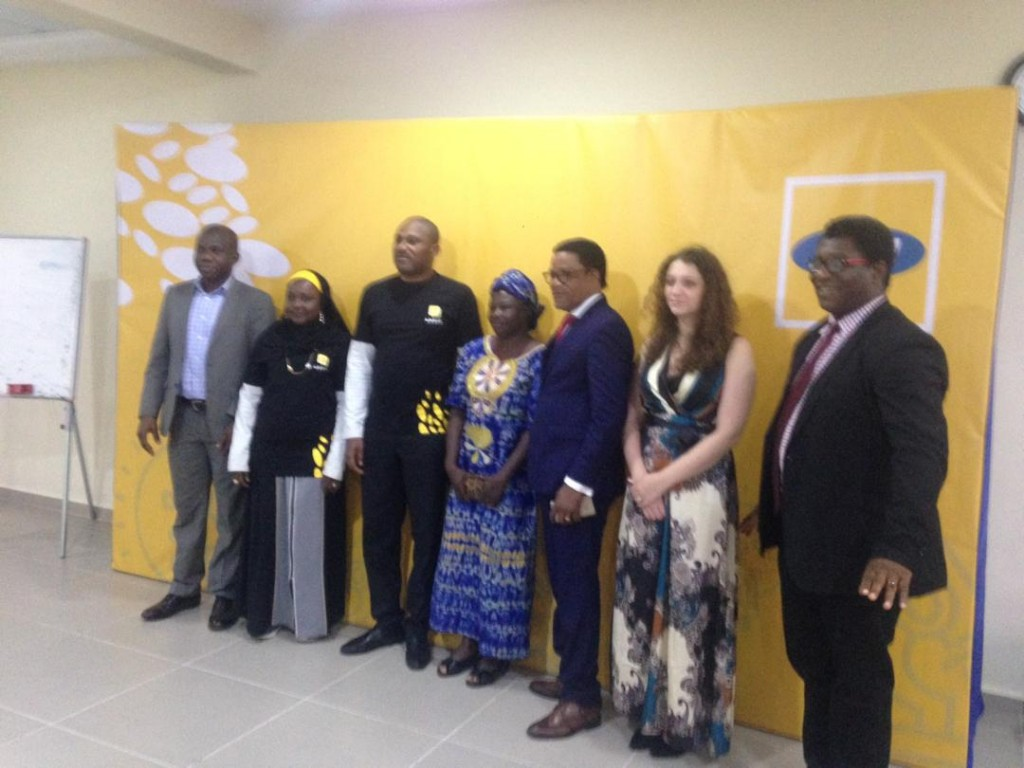
Update – Here are the winners on photo

Previous: 

We just finished selecting the 6 winners in MTN’s Academic Research Development & Innovation Challenge (ARDIC). This evening, the public will know these winners of cash prizes and 6 months of incubation with Seedstars. It was a very exciting moment meeting some of the finest in this nation, demonstrating that if they have support, they would rise like anyone anywhere.

I have accepted the invitation of MTN to serve in the panel that would help select winners for the mobile giant’s Academic Research Development & Innovation Challenge (ARDIC). Through ARDIC, MTN will discover the best research ideas happening in our universities at Master’s and PhD levels. The winners will go home with cash prizes and other benefits.

I have Accepted MTN’s Invitation to Serve in MTN ARDIC Panel

The Size Of The Opportunities

2

As you close the week, in Nigeria, my desire is that the size of the opportunities, NOT the readiness of government policies, should drive you to take action. Nations are built by pioneers who typically go ahead of governments. The Carnegie wrote the ordinance in steel before the U.S. government, the Rockefeller created the oil sector before his government, the Mellon engineered banking in new ways. As they expanded, the government now came to regulate them, to avoid them destroying their companies and the nation! 

While we hope for agility and efficiency from our government, always remember that only the private sector can improve the public sector because unless  the government has resources, via taxes and fees paid by the private sector, nothing will change! The promises of governments are future fees and taxes from the private sector. Without those private sectors, governments cannot do anything.

Nigeria is not in a position to think in months because we do not have resources (yes, we hope we can do better with the little we have). But when our private sector expands, resources will come to governments, and great things will happen. It is ironic – the private sector must advance before the public sector could become efficient. Why? The wealth of nations passes through entrepreneurial capitalism which seeds better public institutions as it pursues the mission of fixing market frictions.

Think about it: your village local government area (LGA) may not be relevant because there is no major company in that LGA. But the day a big company begins to operate in that area, you will notice that the LGA will start bubbling with resources to do better for the citizens. Simply, the big company is now “funding” the LGA administration through fees and taxes the government is collecting from it. Interestingly, it is nearly impossible for the LGA to advance before a reasonable company begins operating therein. Until Nigeria has pioneers in markets, our local governments will not advance to serve our public needs!