DD
MM
YYYY

PAGES

DD
MM
YYYY

spot_img

PAGES

Home Blog Page 6566

Updated: The Winners of MTN’s Academic Research Development & Innovation Challenge

0

Update – Here are the winners on photo

Previous: 

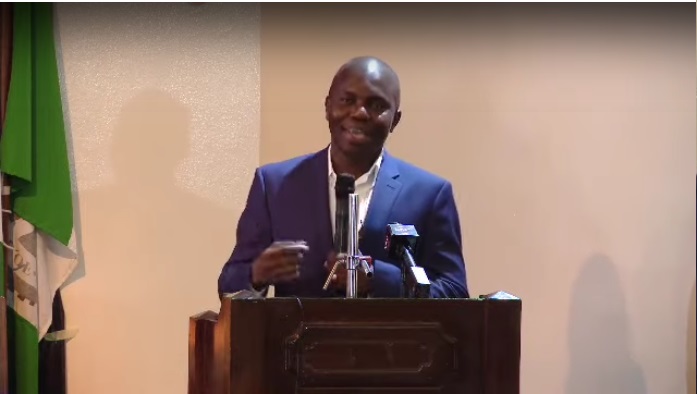
We just finished selecting the 6 winners in MTN’s Academic Research Development & Innovation Challenge (ARDIC). This evening, the public will know these winners of cash prizes and 6 months of incubation with Seedstars. It was a very exciting moment meeting some of the finest in this nation, demonstrating that if they have support, they would rise like anyone anywhere.

I have accepted the invitation of MTN to serve in the panel that would help select winners for the mobile giant’s Academic Research Development & Innovation Challenge (ARDIC). Through ARDIC, MTN will discover the best research ideas happening in our universities at Master’s and PhD levels. The winners will go home with cash prizes and other benefits.

I have Accepted MTN’s Invitation to Serve in MTN ARDIC Panel

The Size Of The Opportunities

2

As you close the week, in Nigeria, my desire is that the size of the opportunities, NOT the readiness of government policies, should drive you to take action. Nations are built by pioneers who typically go ahead of governments. The Carnegie wrote the ordinance in steel before the U.S. government, the Rockefeller created the oil sector before his government, the Mellon engineered banking in new ways. As they expanded, the government now came to regulate them, to avoid them destroying their companies and the nation! 

While we hope for agility and efficiency from our government, always remember that only the private sector can improve the public sector because unless  the government has resources, via taxes and fees paid by the private sector, nothing will change! The promises of governments are future fees and taxes from the private sector. Without those private sectors, governments cannot do anything.

Nigeria is not in a position to think in months because we do not have resources (yes, we hope we can do better with the little we have). But when our private sector expands, resources will come to governments, and great things will happen. It is ironic – the private sector must advance before the public sector could become efficient. Why? The wealth of nations passes through entrepreneurial capitalism which seeds better public institutions as it pursues the mission of fixing market frictions.

Think about it: your village local government area (LGA) may not be relevant because there is no major company in that LGA. But the day a big company begins to operate in that area, you will notice that the LGA will start bubbling with resources to do better for the citizens. Simply, the big company is now “funding” the LGA administration through fees and taxes the government is collecting from it. Interestingly, it is nearly impossible for the LGA to advance before a reasonable company begins operating therein. Until Nigeria has pioneers in markets, our local governments will not advance to serve our public needs!


Import Control Through Importers’ Registry – A Solution To Import Binge

0

The Trumpian bias about the US trade deficits and the US-China trade war is beginning to spill over, and we are beginning to see domestic versions of it in Nigeria (and the rest of Africa). The reluctance that trailed the signing and ratification of the African Continental Free Trade Agreement (AfCFTA) was a harbinger and the eventual border closure is exemplary. The argument was that while the nation looks to grow the local industries, entering the agreement would open the economy to nearly uncontrollable volume of imports especially from foreign countries outside the AfCFTA – as Nigeria is thought to be the target market – which could challenge efforts made to develop the cottage industries. 

Manufacturing countries in Europe, Asia, and America who have standing arrangements with sovereign states in Africa could exploit the trade agreement to route their goods to other African countries, enjoying the exemption on tariffs and other benefits of the agreement. This would have a devastating effect on domestic manufacturing: business shutdown, job losses, and the loss of tariff and tax revenues. There would also be some exchange rate effects as the expanding import bill implies depreciation pressure on the naira exchange rate.

However, it is also likely that the AfCFTA brings significant welfare benefits that offset the scenario above. For instance, increased imports could lower the prices of goods and services through economies of scale and competitiveness. This could, in turn, imply reduced inflationary pressure. Moreover, there is the “rule of origin” that attempts to checkmate the incidence of foreign goods smuggling.

Yet, faced with a budget deficit of N1.9 trillion in 2019 and planned deficit of N2.18 trillion for 2020, the Nigerian economy is in desperate need of finance and the administration is doing everything it can to increase revenue: we have seen the government raise the VAT from 5 to 7.5 percent and introduce new tax schemes. The CBN recently enforced the exclusion of 41 import items from accessing foreign exchange (forex) via the official exchange window in a bid to reduce the pressure of import demand on forex. Only three months after signing the AfCFTA, the government shuts down all land borders with Niger, Benin and Cameroon in jittery reaction to the likelihood of import binge, and the other consequential issues that may follow the implementation of the AfCFTA. This is not peculiar to Nigeria alone: in Equatorial Guinea, the government talks about building a wall to prevent illegal immigration from other West African countries. Xenophobia in South Africa is another overt resistance towards factor mobility.

The Nigerian government is under pressure to protect its economy and win in the AfCFTA but its approaches are anti-free trade, protectionist and nearly indigenization of the economy, very similar to the trade ideology of President Trump in the US.

As the government aggressively extracts revenue in tax from the society and prevents cross-border trade transactions, it directly stifles the economy meting out hardship and misery on its citizens. By these actions and more, the government overtly reveals its preference for revenues over societal welfare, grossly undermines the continental trade agreement and the essence of regional integration, and as well, sends a negative signal to other countries within the. Since the closure of the border, the consumer price index has gone up; small businesses struggle, hunger and poverty trend upward. Investors have also adopted a wait-and-see approach to the one step forward ten steps backward pace of the economy.

The economy admits its weak manufacturing and infrastructure base; it would not stand the competition that would come. Also, uncontrolled import would challenge local manufacturing and ridicule industrial development especially the target on food self-sufficiency in the Economic Recovery and Growth Plan (ERGP).

One way out of the woods

A World Bank data shows that as of 2017, total imports amount to 13.18 percent of GDP and trade growth of 11.56 percent. Even though intra-African trade is still 4.4 percent, the AfCTA holds the potential for increased trade. It is therefore important to establish a system of importers registry based on certain stipulated criteria in readiness for the deluge of importation. These registration criteria need not be monetary payment but would include minimum capital requirements, loans credibility, tax returns, storage/warehouse facilities, logistics ability and etcetera. This approach would eliminate the myriads of micro importers – as is the status quo – that contribute to the pressure on forex while broadening the import business by giving a formal structure. 

The importers’ registry would complement the implementation of the rule of origin clause to eliminate round-tripping. It would allow for the efficient administration of regulatory checks on product destination, quality standards, and tracking. Other importers from across Africa interested in the Nigerian economy need only comply.

It would engender cooperation among the indigenous importers, the CBN and the Nigerian Customs Service.

Other benefit of the importers’ registry is that the registered import businesses would be buoyant enough to issue product warranty and return guarantee to dealers/retailer should the product not satisfy the customer as against the current practice where consumers are ambushed by petty importers who are unable to give these assurances. This would go a long way to ensure consumerism and consumer protection.

Also, by way of trade protection, the registered importers may organize themselves into unions according to their respective trade lines and help combat the incidences of counterfeit products so as to protect their market share/profit, licenses and avoid regulators knocking their doors. The intuition is that these importers are better positioned to curb the menace of substandard items, and with the right incentives, would develop the internal interest to do so.

We have signed the continental free trade agreement which opens our borders to a flood of importers from across Africa, if we cannot manage our own importers, what is to say we would be able to manage the multitude of importers from all over Africa? Yet we do not need to implement draconian policies that isolate us from the rest of the world. We need rather work towards increasing competitiveness by enhancing productive efficiency through technology and the requisite infrastructure. We have given conditions to reopen the borders; we may need also to build a database or register of importers.

The Magic of eBay, the Incubator

1

eBay is selling StubHub, a ticket exchange and resale company which it acquired many years ago. Looking at all the deals eBay had executed over the last few years, including Skype and PayPal, the company has proven to be a far better venture capital firm than an e-commerce operator. It began before Amazon but lost the category-king title to the Seattle-based ecommerce juggernaut. There is something amazing in running an action site (price haggling done via clicks over spoken words as done in African open markets) that propels you to see the digital world from a different angle: live human optimization of pricing for the best possible value for money. Simply, eBay is a better tech incubator than what it is known for today.

The $29 bln firm is a shadow of Amazon in e-commerce, but selling StubHub for $4 bln shows prowess at incubating a business acquired for less than a tenth of that. Off-loading its classified operations could be similarly successful. And eBay’s biggest gains have come from PayPal.

Simply, eBay is a better tech incubator than what it is known for today. The problem here is that eBay has never used these companies for anything more: eBay’s valuation is about $29 billion (was $25 billion before the news of selling StubHub). Yes, it buys them, incubates them and later sell them because it cannot just make them something great. Today, Paypal is worth $127 billion, many multiples to eBay’s market cap. But if you can be buying startups for nothing and turning them into mega-hits, you would be fine over long time.

Meanwhile, eBay has owned StubHub since buying the company in 2007 for $310 million, as a way to more directly invest in the secondary market for tickets, many of which were being resold on eBay itself. The company also in 2016 acquired Spain’s Ticketbis with the goal of further expanding StubHub’s footprint outside the U.S.

As of Q3, StubHub drove $306 million in revenue and gross merchandise volume of $1.2 billion. At the time of its earnings announcement, eBay said it anticipated an update on the StubHub business before the next quarterly earnings.

Imbibing “People First” Principle in Every Action

0

The viral video that showed where the mother of a student of Queens College, Lagos, was fighting one of the school’s security men has sent out a lot of mixed information as well as brought in different reactions about our school system. The video elicited for different reactions from its viewers. People called one another names and blocked fans from their social media pages because of this video. A lot of people believed the girl deserved this type of punishment (sending out the video), while others stood by her. I, as a person, stood against this form of “punishment”, which is inhumane in every ramification.

I watched this video several times to see other offences committed by this girl and I saw none. The only thing I saw was a teenager trying to grow up fast, just the way they all do. Yes, the mother shouldn’t have overlooked her daughter’s “fake lashes”; but does it warrant sending and plastering the girl’s picture all over the internet and making a mockery of her?

I was more disappointed when I went into Linda Ikeji Blog and read that Ali Baba, a renowned Nigerian comedian, pasted the picture of this 14 year old girl in his Instagram page to “shame” her, obviously hoping to attract attention to himself. What has Nigerians truly gotten into? Do we still have the integrity of protecting our young ones?

While reading through some newsletters on my email today, I stumbled on one that is titled “People First”. It was a personal essay written by a woman who narrated how she tried to instil respect for others into her five-year old son. After reading this essay, I noted that what was wrong with the “Queens College Fight” and its accompanying reactions is that Nigerians have forgotten how to put people first.

Yes, in our place of work, in our businesses, in our interactions and in other forms of dealings with fellow humans, we have forgotten the simple term called “Humanity”. These days, people do things for fame, wealth, knowledge, beauty, power and many others without sitting down to consider its effect on the next person. No one cares for anyone but himself. Even the way we handle our environment tells a lot about us. We are gradually turning into machines. We are becoming slaves to machine. We are becoming slaves to the things we should command to make our lives better. This is the reason a woman was heard in the background of that video saying, “ati snap e … we are going to video her…snap her face … snap her very well … video it …” and a security man held the 14 year old girl’s hand, raised her head so that the ‘cameraman’ can get a clean shot of her face and send it over the internet, and everyone thinks it’s ok.

Well, thanks to these inconsiderate people, who do not think about this girl’s future and the damages they have sent her way, a lot of bloggers are making money off her.

But, that isn’t the main idea behind this post, even though that dastardly act calls for legal action. The main reason for this post is to call on all to consider human dignity in everything they do. The newsletter on putting people first taught me a lot of things, and that is what I’ll like to share here.

  1. Consider the action and not the actor.

What this lady tried to explain here is that we should not see people as bad, but call their actions bad. I once had a boss who easily tells employees that made mistakes, “You are stupid” without thinking of its effect. When people started voicing out their displeasure with his manner of correction, he apologised and said that what he actually meant was that the person did a stupid thing, and not that the person was stupid. Well, he stopped after that.

If we look at why people are corrected or punished, we will see that it is to teach the person the right way of doing things, because what that person did was wrong. People are not corrected because they are bad, but because what they did is bad.

  1. Discipline with empathy.

Part of the reason that “Queens College Fight” video tore the social media into two fighting sides was that people seemed to have easily forgotten, or rather, they pretended to have forgotten what it was like to be a teenager. Facebook pages and groups were on fire because of this ‘pretence’. Secondary school classmates called out those that were ‘crucifying’ the girl and her mother and reminded them of their little escapades while in school as a way of proving to them that what the girl did wasn’t an abomination (at least compared to theirs). I was also surprised to see a lot of women vowing that their teenage daughters do not dare fix lashes even though they are in higher institutions. So I want to ask, whose daughters were these ones carrying lashes up and dan?

Sometimes, we punish people without sitting back to remember that we were once like them. This applies a lot to bosses in offices, and parents at home. For example, some bosses talk down on their subordinates (especially the new ones) and slash their salaries for mistakes they (the bosses) too made when they were rookies.

I’m not saying that people shouldn’t be made to feel responsible for their actions, or inactions. My point is, when we want to discipline, or caution, we should remember that we too are not perfect. We should bend down and put ourselves in the other person’s shoes and see the world through his eyes. Then, and only then, should we mete out the appropriate form of punishment, if there should be any.

  1. Build, and not destroy.

This is another matter with the “Queens College Fight” that needed immediate redress. No matter the layers of tough skins that young girl has, she has been dented. The teachers that were supposed to mould her have succeeded in deforming her, and have created a demon that will either make her defiant or very timid. Her real personality has been altered.

Sometimes we do this a lot. We have this zeal to “press” people down until they become overly submissive. We also have this problem of forming people into what we want them to be and not what their best selves should be.

As we form people, let us always remember that everyone has his individuality. Let us think of the person and not of us. The person we are moulding shouldn’t be a miniature us, but his own giant – let him be the best he can be. Let us not destroy people thinking we are building them.

Finally, there is something about this video that triggered off another thing – something none of us should overlook. This video has made a case for Hate Speech Bill to be adopted and go into effect. Trust me, this video would have sent the heads of some people to the gallows if the Hate Speech law (as I see it now) has been enforced.

Let’s be mindful of what we send into the internet. Think Humanity; think People.