DD
MM
YYYY

PAGES

DD
MM
YYYY

spot_img

PAGES

Home Blog Page 6573

Unlocking Opportunities for Nigerians Through Digital Identity

0
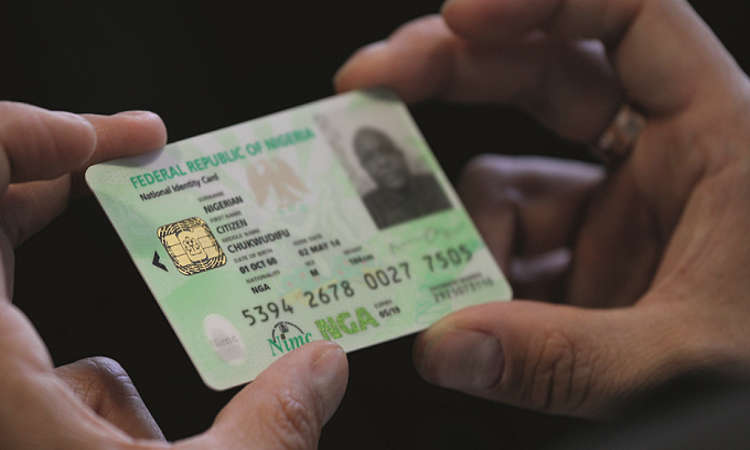
National ID Card, Nigeria

According to a 2019 report by Mc Kinsey, only 28 percent of Nigerians have identities with half of that number lacking digital identities and 70 percent of the citizenry lack any form of identification. By unlocking the potential in digital ID could grow Nigeria’s GDP by 7.1 percent in 2030.

To fix this friction, the National Identity Management Commission (NIMC) plans to deploy a digital identity system which will capture data of all Nigerian citizens. Considering the fact that Nigerians carry different means of identification, the system will integrate all the multiple identities issued by different public and private institutions.

Lack of unique identity has prevented millions of Nigerians from accessing credit facilities from financial institutions.  Cash is the most preferred means of payment due to lack of a centralized form of identity. Credit as a percentage of GDP is lower in Nigeria compared to its peers on the continent like South Africa, Egypt, Kenya, Ghana and Angola. In South Africa, credit cards are mostly used to transact for goods and services while in Kenya, Mpesa the e-payment platform is widely used by all, even alms collectors.

The absence of a credit system prevents Nigerians from accessing goods and services when they need them. Cash based transaction has its inherent risks which include huge processing fees, attacks from armed robbers, etc.

World Bank data reveals a negative credit decline in Nigeria from 22.3 percent in 2009 to 10.95 percent.

This explains the Central Bank of Nigeria’s directive to banks to deepen their loan books by 60 percent of consumer deposit. Lenders such as fintechs and deposit money banks are utilizing technology to unlock loans for their customers with credit scoring based on the available data on their financial habits.

 The NIMC should learn from India’s digital identification Aadhaar which enables biometric authentication has covered over 90 percent of its population creating access to finance for its SMEs and rising middle class.

Also a startup Verify Me, a leading database management solutions provider has unveiled a real time ID verification platform which integrates the National Identity Number, Driver’s License No and Bank Verification No. It has studied the industry and global market in line with anti-money laundering compliance for banks and other financial institutions which explains why the Know Your Customer is important and the British General Data Protection Regulation  directive for privacy guidelines and decided to build a system which provides the most convenient solution for Nigerians in adherence to strict compliance rules to promote a culture of data integrity and privacy.

With its platform BVN (bank verification number), NIN (national ID number) and Driver’s License numbers can be linked to harmonize digitized data which becomes available for organizations to meet their throughput demands. 

There are about 70 million Nigerians with various forms of identities ranging from the NIN, Driver’s License No and the BVN. Most of them cannot access financial services ranging from insurance, banking services because they are financial excluded due to lack of identity and Verify Me in collaboration with the National Identity Management Commission has unveiled an enrollment programme for people to pre-register on their platform which will also collect their biometrics so that all their data will be sent to the NIMC for faster processing and availability of their National Identity Numbers.

Verify Me’s decision to not work with the telecommunication operators who are the major repositories for digital data with over 160 million registered subscribers on their networks is because of tier level which is lower level KYC and lack of standards for facial recognition which is part of Verify Me’s capabilities.

It does a lot of Know Your Customer data verification services for Nigerian banks and operates across all the six geopolitical zones except conflict zones and helps in mapping addresses for security purposes.

Another friction which it is helping to fix which is common in Nigeria is people committing offences in a particular location and relocating to new neighborhoods without the residents being aware of their new neighbors. It fixes through creation of a national work history repository for anyone to plug into and access work history which somebody else has reported enabling corporate and domestic employers to access the work history of their employees to know those who have criminal records to avert potential losses.

Verify plans to roll out series of biometric type recognitions and a KYC Marketplace which will offer originators of addresses used for verification a percentage of revenues each time they are used for authentication. It should explore integration of blockchain into its identity management solutions platform for security, transparency and authenticity.
The Paradox of Europe’s Pioneering Technology Regulation

0

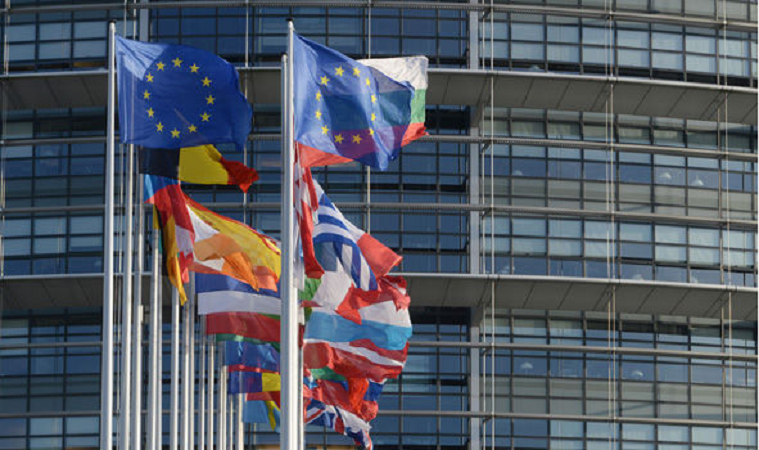
This is a very interesting perspective: Europe has been out-competed in the domain of digital technology by China and the United States. Yes, if you look at the top 20 digital platforms and broad modern technology companies, nearly all of them are controlled by China and U.S. Yet, there is one area that Europe is doing well and innovating, ahead of everyone – Regulation. Interestingly, the investors are saying that the pioneering innovation on regulation which Europe is leading in the world is the very reason they do not want to pump money into the continent because they want to operate in places with lighter regulations.

I will call this The Paradox of Europe’s Pioneering Technology Regulation and it is explained this way: Europe is a modern digital technology innovator on regulation, but as it advances in that domain, investors and entrepreneurs will find the region increasingly not-appealing, and that construct will keep Europe further behind, even though the Europe-anchored regulations like GDPR are becoming benchmarks for other regions of the world. 

Certainly, the world buys something from Europe on technology-regulation. But that may not be the only thing Europe wants to sell. Yes, it would also like to sell services and products in the ways Google, Facebook, Alibaba and Tencent are doing globally.

The mood in Europe is gloomy, and it has nothing to do with Brexit (or the dreary weather). Over and over at the Fortune Global Forum, which concluded earlier this week in Paris, Europeans lamented their continent’s lagging performance in the digital economy. Globally dominant tech behemoths hail almost exclusively from the United States and China, much to the chagrin of Europe’s policymakers and business champions.

“We missed the boat,” said Prince Constantijn van Oranje, a member of the Dutch royal family and a proponent of Europe’s technology community, speaking on a panel about Europe’s “Silicon Valley,” which doesn’t exist. Europe has the smarts and the wealth and the market to be a tech leader. As Constantijn pointed out, the continent was a leader in GSM, yesteryear’s mobile-phone standard. What it needs now is a more vibrant entrepreneurial and venture-capital culture.

Instead, Europe has innovation in a less-than-helpful area for entrepreneurs: regulation. A trio of European regulators disagreed with the assertion, but there’s no escaping the fact that Europe is pioneering data protection with its landmark GDPR requirements even as it lags in digitalization. (And under the expanded powers of the European Union’s top digital regulator, Margrethe Vestager, the continent is about to double down on the former.)  Said Constantijn: “We shouldn’t put ourselves on the back foot too quickly on GDPR. We should have much more flexible regulation.”

Regions with less mature regulatory regimes might make for better investments. Andre Maciel, a Brazilian managing partner in Softbank’s $5 billion Latin American fund, says he is focused on Brazil and Mexico, two markets with tech-savvy young consumers and better-than-average growth opportunities. And lightly regulated labor markets. (Fortune newsletter).

Yet, do not miss the fact that everyone is working hard to stay relevant. Monday could be the day Uber ends its service in London, UK, if the city’s transit authority fails to grant the ride-sharing pioneer a new long-term license. As that happens, the troubled WeWork will ask 2,400 employees to depart this month. That is about 20% of its workforce.

Why Corrupt Public Office Holders in Nigeria Go to Court on Wheelchairs

0

At the ongoing trial of the former pension chairman, Abdulrasheed Maina, in Abuja, there was a sudden halt in the proceedings, orchestrated by the defense counsel’s complain that his client is bleeding.

The defense counsel said that Maina cannot continue with his trial with his health under serious question before the court. He asked for adjournment to receive a report from Nigerian correctional services concerning the health status of his client.

The Nigerian correctional service has asked for a week to turn in Maina health report, and his advocate prayed the court to adjourn the hearing until the report is served. It was a dramatic situation that put the proceedings to a halt, and it was not the first time something like that is happening in a court hearing involving corruption.

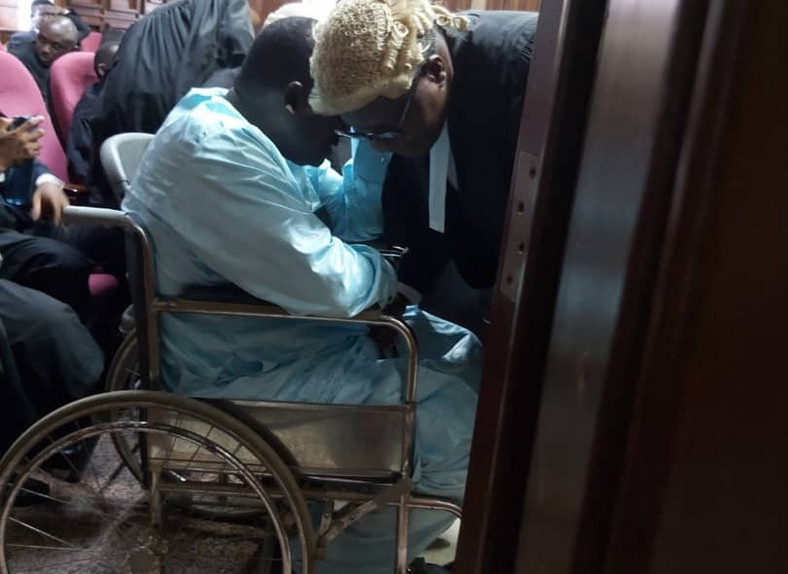
On the 7th of November, Maina was brought to court on a wheelchair, after he couldn’t make a court appearance scheduled for the 5th of November. According to the medical report presented to the court, he was seriously ill, and his condition was pitiable even to the confession of the presiding judge. But he is not the only one who has fallen critically ill owing to his graft case.

In 2016, the former Peoples Democratic Party (PDP), Chairman, Bello Haliru Mohammed, appeared in court on a wheelchair. Mohammed was on trial for his role in the alleged $2 billion the former National Security Adviser, Sambo Dasuki swindled through arms deal.

Another political figure who was notably brought to court on wheelchair is Olisa Metuh, the former PDP National Publicity Secretary, who was also accused of receiving N400 million from the embattled Sambo Dasuki in 2014, appeared critically ill on a wheelchair.

His case got more dramatic, in his recent court appearance; he came lying motionless on a stretcher.

There is a whole number of them; the former presidential adviser on Niger-Delta, Kingsley Kuku, former Adamawa state governor, Bala Ngilari, former minister of petroleum resources, Diezani Alison-Madueke, former minister of aviation, Femi Fani-Kayode, and the list goes on.

One question people keep asking in all these instances is: Why do Nigerian public office holders get sick as soon as they are put on trial for corruption?

The answer many have offered is that they do that to incur the sympathy of judges and the general public. While that is true, there is more to it. It takes a lot of lies, manipulations, cynicism and hardheartedness to loot public fund. And the looters go through all these because they believe that the end will justify the means. So when it turned out otherwise, it becomes a heart wrenching problem they didn’t include in the plan in the beginning, and therefore, will find it difficult to handle.

For instance, there’s a list of 23 landed property linked to Maina that the court has ordered its forfeiture. And millions of naira traced to him has also been confiscated by the Economic Financial Crime Commission (EFCC), and the hunt for more goes on.

That has been the case with many of them who were caught up in the act of looting. The (aku na esi obi ike) wealth gives confidence stance is no longer in play because there is nothing to hold on to. The reverberating effect wrecks through the heart and bones of the perpetrator, rendering him incapacitated in a short time, and his survival may depend on what he is able to hide from the government after all, from the proceeds of his loots.

The former governor of Bayelsa State, late Diepreye Alamieyeseigha, is a noteworthy case. He embezzled as much as $55 million of public fund and used the proceeds to acquire assets around the world. He acquired luxury houses in California, London, and South Africa, and owned an oil refinery in Ecuador.

It was the kind of wealth his six years as a governor gave him the opportunity to amass, and he was happy and healthy swimming through it until 2005, when he was charged with money laundering in London and the police discovered that he had $3.2 million in cash and in the banks and $15 million real estate holdings there.

That was the beginning of the troubles that would later lead him to his early grave. Two years after his impeachment in 2005, Alamieyeseigha pleaded guilty to failing to declare his assets. The whole corruption saga got him only two years in prison.

In 2013, after he got out of prison, former president Goodluck Jonathan granted him presidential pardon, and once again, he became active in political activities. But he didn’t live long enough to enjoy it. Alamieyeseigha died in 2015 as a man who no longer had anything to be afraid of, apart from the fact that there is nothing left to hold on to from the wealth he illegally acquired. Not even his new political roles could assuage the emptiness that he feels for losing it all.

So it is with the rest of them, the fear of lying, intimidating, manipulating protocols only to lose it all in the end is the deadly disease that suddenly renders corrupt political office holders incapacitated during trials.

The Challenge Ahead of Dry Season Farming in Nigeria

2

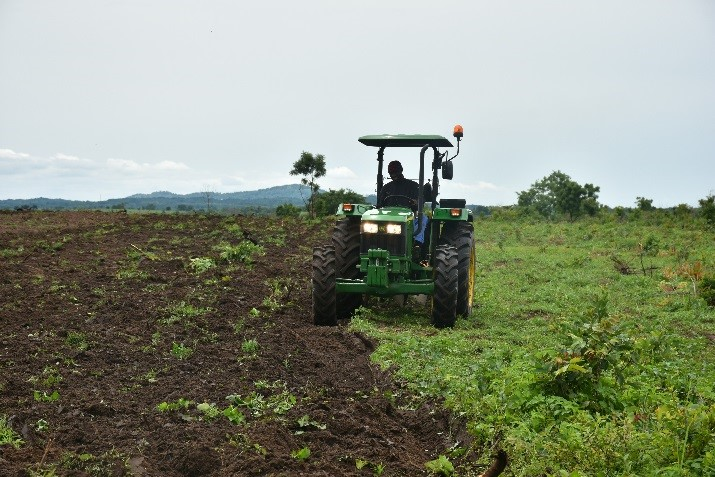
In 2015, President Muhammadu Buhari flagged off the dry season farming campaign in Kebbi State. The initiative was supported by the Central Bank of Nigeria (CBN)’s N20 billion Anchor Borrowers’ Programme (ABP). Before 2015, Nigerian farmers were at the mercy of weather. Most needed crops became scarce in dry seasons due to the lack of technique to cultivate them when the weather condition becomes harsh.

Ever since then, the CBN has supported hundreds of farmers through the ABP, providing them with loans to initiate dry season farming after they must have learned the practice.

In 2018, the Food and Agriculture Organization of the United Nations (FAO) visited Northern Nigeria with the dry season farming technique, the aim was to foster a new approach for farming in Nigeria that will boost food production and alleviate hunger.

Food security has been paramount among the issues that the UN is looking for their solutions, and Nigeria’s inability to cultivate enough food has played a big role in the crisis. The factors contributing to the hunger and malnutrition that it has yielded as a result beckons help from beyond borders.

In the aim to curtail the escalating brunt of hunger emanating from poor agricultural produce, the FAO embarked on distribution of crops and grains, to the tune of 247 tons. And there was also fertilizer distribution, 25-kg bag of 1, 966 tons.

The distribution took place between November and December of 2018, as at February 2019, farmers were able to harvest their crops. An estimated 198, 099 tons of vegetables, 825 tons of maize and 9 402 tons of rice were harvested.

The dry season farming technique and the enabling supply that defy the tradition of waiting on the rain gradually became popular, especially among individual farmers in northern Nigeria.

Dry season farming utilizes greenhouses, drip irrigation and fertigation, with reduced pesticides. Greenhouses are waterproof but solar netted structures that produce regulated conditions for vegetable cultivation. In fertigation systems, soluble fertilizer and other essential plant micronutrients and insecticides are mixed with water at intervals for growth enhancement and crop protection.

In the cases where greenhouses are used, vegetable related crops are mainly cultivated. They are used with drip irrigation facilities and vegetables grown in them require minimum pesticides because the nets in the greenhouses protect crops from pests. Drip irrigation is sometimes used in the open farmland. The holes are perforated at the calibrated spacing and water drops into the base of each plant.

It has been recognized as the most efficient use of water for agricultural purposes if juxtaposed with flood, boom or sprinkling irrigation system.

Recently, the tradition of dry season farming using greenhouses or open farming has been gaining ground as more farmers are embracing the practice. But the local farmers need to be guided in crop plantations so that it could be profitable. Earlier in the year, the Brands and Marketing Manager at Dizengolff West Africa, Nigeria’s office, Humphrey Otalor, Advised farmers:

“You can plant all kinds of vegetables but it is better to take advantage of what is not planted off rainy seasons. For example, if everybody is growing tomatoes, if I am a greenhouse farmer, I will grow pepper because a few people are growing it.

“Farmers can grow bell peppers, sweet melons, spicy peppers, cucumbers, and with the drip irrigation on the open field, you can grow watermelons. The small-scale greenhouse occupies a space of 8m x 24m and it is sold for about N1.7 million. It includes the irrigation kits, seeds, bags of soluble fertilizer, a sprayer and installation to enable a farmer to start production immediately. This however, does not include the source of water, for a farmer should dig a well of borehole as a source of regular water supply,” he said.

Last week, 9, 000 farmers enrolled for the 2019/2020 dry season farming in Bauchi State, under the Fadama III project, an initiative supported by the Nigeria Incentive Risk Sharing and Lending (NIRSAL) of CBN. The goal has been to make rice production an unseasonal activity in Nigeria, by closing the intervals of unproductivity that have always resulted in the scarcity of farm produce.

However, the growing embrace of dry season farming in Nigeria has not come without its challenges. For farmers who cultivate perishable crops like tomatoes, watermelon and other fruits, the loss of a huge amount of the produce can be discouraging. For instance, tomato farmers in northern Nigeria report losses of over 40 percent of their yield due to poor storage and processing facilities.

For those among the farmers whose farms were financed under the ABP, it is a misfortune that will affect their relationship with the apex bank. The introduction of dry season farming in Nigeria is a development that its yield will result in food security and employment. However, preservation of crops and farm produce is necessary in sustaining the idea. A provision of sustainable storage system or subsidy of farm yields will alleviate the vulnerability of individual farmers who lack the capacity to preserve their crops.

I have Accepted MTN’s Invitation to Serve in MTN ARDIC Panel

0

I have accepted the invitation of MTN to serve in the panel that would help select winners for the mobile giant’s Academic Research Development & Innovation Challenge (ARDIC). Through ARDIC, MTN will discover the best research ideas happening in our universities at Master’s and PhD levels. The winners will go home with cash prizes and other benefits.

Context – As of 2017, the Labour statistics report for Nigeria showed that there is 7.9 million Nigerian youth aged 15-34 that are currently unemployed. The report, released by the National Bureau of Statistics (NBS) also revealed that 58.1% of youth within this age bracket who are currently working are underemployed. Entrepreneurship is an effective way to fight against youth unemployment in the country.

The Framework –The MTN Academic Research Development and Innovation Challenge (MTN ARDIC) is an end-to-end support system where selected students would translate their ideas into solutions through a seamless access to applicable tools, data, platform and hands-on mentoring.
The Initiative – MTN will be hosting an exclusive launch of the event to connect with other organizations supporting MTN’s mission to inspire young Nigerian to become entrepreneurs and foster their journey. Students, entrepreneurs and relevant stakeholders are invited to attend the 3 regional pitching events to pitch for the chance to win.

I want to wish all the young researchers good luck. We will meet next week in the nation’s capital for this intellectual battle. The first rule is “No selfies with me” until after the event. Lol.

We thank MTN for this innovation to get our young researchers moving up. I do hope some of the ideas would find strategic partners for commercialization. Nigeria has acres of diamonds everywhere – we just have to mine them!