DD
MM
YYYY

PAGES

DD
MM
YYYY

spot_img

PAGES

Home Blog Page 6576

A Deeper Insight into the Causes of Nigeria’s Population Explosion

0

Some years ago, Charles Oputa, aka Charly Boy (Area Fada), said that poor people give birth to more children than their rich counterparts because while the poor channel all their energy to sex, the rich channel theirs to making more money. This assertion earned him a lot of negative reactions from people. Though I found it hilarious, I still believed he made a lot of sense. From that moment, I started paying closer attention to his insinuation and found out that he wasn’t far from the truth. Today, Area Fada has been proved right.

The 2018 Nigerian Demographic and Health Survey, conducted by the National Population Commission, in conjunction with the Federal Ministry of Health, Bill and Melinda Gates Foundation, WHO, United States Agency for International Development, Global Fund and UNFPA, has proved Charly Boy right in his insight into one of the major causes of population growth. This survey has shown that the birth rate of the rich and the well educated, as well as that of those in urban areas, is lower than that of their counterparts on the other end.

The survey states, “Fertility varies by residence and state. Women in rural areas have an average of 5.9 children compared to 4.5 children among urban women. By state, fertility ranges from 3.4 children per woman in Lagos to 7.3 children per woman in Katsina.” It further states, “Fertility also varies with education and household wealth. Women with no education have twice as many children as women with more than secondary education. Fertility decreases as the wealth of the respondent’s household increases.”

According to this survey, Lagos State has the lowest birth rate at 3.4 children per woman, followed by Akwa Ibom State at 3.6 children per woman, and then Cross River State at 3.7 births per woman. The states with high birth rates include Katsina State (7.3), Bauchi (7.2) and Jigawa (7.1). It also pointed out that women living in the poorest households have birth rate of 6.7 children per woman while those in the wealthiest homes have an average of 3.8 births per woman.

The good news supplied by this survey so far is that fertility has decreased from 6.0 children per woman in 1990 to 5.3 currently. This is a sign that the campaigns towards control of population growth may be taking effect. But then, more still needs to be done.

To manage the growth of population, attention needs to be paid to the NDHS analysis of birth rate without bias. It will be useless leaving the areas where focus should be on and start chasing shadows in the wrong places. There is a need to find out the major causes of higher birth rates in some places and among a certain class of people.

Looking at the results of this survey, it is clear that many factors contribute to population explosion in Nigeria. The summary of all those factors are career, cost of living, formal education, access to information and societal influence. To make this clearer, I’ll bring up the issues raised in the survey and try to connect them with these factors I mentioned above.

Birth Rate of the Urban and Rural Women: The first time I read that report, I asked myself why women in the rural areas, with limited access to proper healthcare, could have more births than the women in the urban area. Some people may assume that this has to do with women in the rural areas being ‘stronger’ than the ones in the urban areas (I’ve heard that a lot).

But, if you look at it critically, you will agree with me that women in the urban areas prefer to have a fewer number of children because they have careers to pursue. It is not to say that women in the rural areas don’t have careers, but theirs aren’t as stringent as that of the women in urban areas. Besides, women in rural areas can go to their places of work or businesses with their young ones, which is hard to witness in urban areas. For instance, if you go to markets and offices in rural areas, you will notice that women spread mats and make-shift beds or playpens beside them to keep their babies. Things like this are hardly seen in urban areas, even in the market. Most urban women are forced to leave their babies at home with nannies or in crèche even when they are barely 3 months old. This discourages them from having many children.

Another thing to consider here is the cost of living. It is cheaper to raise a child in the rural area than in the urban area – think of rent, school fees, medicals, feeding, and so many other bills paid only by people in urban areas. Of course, no one needs to tell these people to have the number of children they can afford to take care of.

Then, women in urban areas have more access to information than those in the rural areas. For instance, urban women know more about birth control and gender-selection than their counterparts in the rural areas. And of course, most urban women are well educated, unlike those in the rural areas that usually stop at secondary school.

Coming to societal influence factor, women in urban areas are not comfortable when they have so many children. Even medical practitioners discourage the birth of more than three children. In most cases, those that have up to four or five will be fast to tell you that they intended stopping at the third one but then, ‘mistake’ happened. This is not what is obtainable in the rural areas, where women are encouraged to continue giving birth until ‘children finish in their womb.’

Variation Based on States: There is no need stating that most women in Lagos are working mothers that have careers to build. This is contrary to most women in Katsina, who are housewives that are not allowed to come out from their husbands’ compounds during the daytime. Also, the flow of information on birth control and gender selection are freer in Lagos than in Katsina – actually the Hausas don’t seem to be much interested in the gender of their children as Igbos do. Girl child education is also encouraged in Lagos than in Katsina. For cost of living, I believe we know that things are cheaper in Northern Nigeria than in any other part (except for FCT).

Variation Based on Income: Charly Boy insinuated that the rich have no time to worry about sex because they have board meetings to attend, business plans to arrange, meetings with partners and so many others. All these, he said, cannot be seen among the poor and so they have ample time to make babies. This assertion may look exaggerated but it still holds water.

In addition to Charles Oputa’s opinion, I’ll say that most rich homes also have career women as mothers and wives. This means that they will also plan to have the number of children that will allow them to grow and develop in their careers.

Also, most women from rich homes are well educated and well informed. They easily get access to all the information they need, including medical ones. This means that they know all the safe and effective birth control methods.

As for cost of living, the richer a person is, the higher his standard of living. For example, a rich person will send his children to expensive schools, stay in expensive apartments, buy expensive cars and live an expensive lifestyle. In other words, he will prefer to have the number of children that will allow him to maintain his status quo.

The point I’m trying to make here is that there is little or no need carrying out much birth and population control awareness campaigns in urban areas when the people that need it most are in the rural areas. Also, more attention should be channelled towards those states that have the highest birth rate. There is no need for interested bodies to go to places like Lagos and Akwa Ibom states to talk to women about having the number of children they can train because they seem to already know that. Let all eyes turn towards the northern part of the country because that is where the explosion seems to be coming from.

As for poverty-induced increase in birth rate, I believe the best way to handle it is by adopting tactful policies that will encourage job creations.

Coscharis Group Unveils a N12 Billion Farm, Rice Mill in Anambra State

1

Cosmas Maduka, the founder and chairman of Coscharis Group, has unveiled a N12 billion rice farm and processing plant in Anambra State. The unveiling event took place on the 3rd of November, and was graced by the Central Bank Governor, Godwin Emefiele, Anambra State Governor, Wilie Obiano, his Kebbi State counterpart, Alhaji Abubakar Bagudu, the Minister of State for Agriculture and Rural development, Mustapha Shehuri, among others, This Day reported.

Rice has become a big subject in Nigeria since 2015, when the President Muhammadu Buhari’s administration partially banned the importation. The government said the decision to restrict rice import was in a bid to diversify the economy and move concentration away from oil to agriculture.

But the ban has resulted in hunger and economic hardship because many businesses thrived on rice importation, and locally produced rice was not sufficient to bridge the demand gap.

Nigeria consumes more than 7 million tons of rice annually, and according to the U.S Department of Agriculture, World Markets and Trade, Nigerian farmers can only produce 3.7 million tons of rice presently. That leaves a wide number of empty stomachs to be filled.

The CBN has introduced policies to facilitate private partnership in its commitment to develop the agricultural sector of the economy. Based on the agricultural facilitation policies of the CBN, many private companies are embracing the partnership.

According to Emefiele, Coscharis rice plant is evidence that the efforts of Buhari’s administration in diversifying the economy and creating jobs through focused intervention in critical areas are yielding results.

“We must also commend the determination and doggedness of Coscharis Farms to establish not only its Rice Farms but also the Processing Mill which will process not only its paddy rice, but also those paddies produced by local small holder farmers under our Anchor Borrowers Programme (ABP),” he said.

Commenting at the event, Maduka said he had the vision for farming a long time ago, but in 2015, saw “the need to develop Nigeria’s agricultural sector” in line with Buhari’s vision, as a reason to make the vision a reality.

“We started with a land in Anaku that was abandoned for so many years because of the peculiar terrain which is prone to flooding. Despite challenges in mechanized farm development, I can tell you today that we will soon cover the entire about 3000 hectares of land that Coscharis Farms Limited currently owns in Anaku.

“We also have plans for smallholder farmers in our surrounding communities to provide training, inputs under the out-grower scheme in cooperation with NIRSAL and other agencies.

“The plan to build a rice processing mill is motivated by our desire to fix a problem. We want to create more jobs and also want to build skills in the region.

“We want to process paddy harvested from our farm in Anaku into best quality rice. We want to contribute significantly to the government’s efforts to ensure food sufficiency through local production of rice. In addition, we want to set the pace for production of best quality local rice that will cause our people to change their milled rice which is known to be rich with important nutrients.

“Rice is the most popular staple food consumed by every household in Nigeria and the country is the highest consumer of rice in the West African sub region and the second largest importer in the world, buying at least 2 million metric tons per annum. Today, we have commenced the journey to accomplish these goals.

“Coscharis Rice Processing Mill, Igbariam is a 120, 000 MT modular ultra-modern Rice Mill this is the first phase with 40, 000 MT per annum capacity. The processing mill has come to stay in order to improve the quality of life of Ndi Anambra as well as the economy of the state and Nigeria in general. The next phase of 80, 000 MT per annum will come on stream before the end of next year,” he said.

The Coscharis Group is not the only conglomerate in Nigeria to embrace farming in such a large way. In 2014, the Dangote Group pledged to invest $1 billion in rice farming to reduce the import quantity of rice and to create jobs.

The group said a few days ago, that “Nigeria will soon be exporting rice,” as there has been a tremendous increase in their farming activities recently. The farms, covering 150, 000 hectares across Jigawa, Kano, Kebbi, Nasarawa, Niger, Sokoto, and Zamfara states, are expected to be producing millions of tons of rice daily. The Dangote Group said it’s also establishing rice mills across the country for processing.

However, the impact of these developments is yet to be felt as the price of rice keeps going higher, and more Nigerians are complaining of hunger as a result of the Nigerian closed borders. The federal government has been urged to take on the challenges stymieing farming in Nigeria, by providing the infrastructure that farmers need to improve their agricultural activities.

The Need to Address Unexplained Charges Levied by Nigerian Banks

0
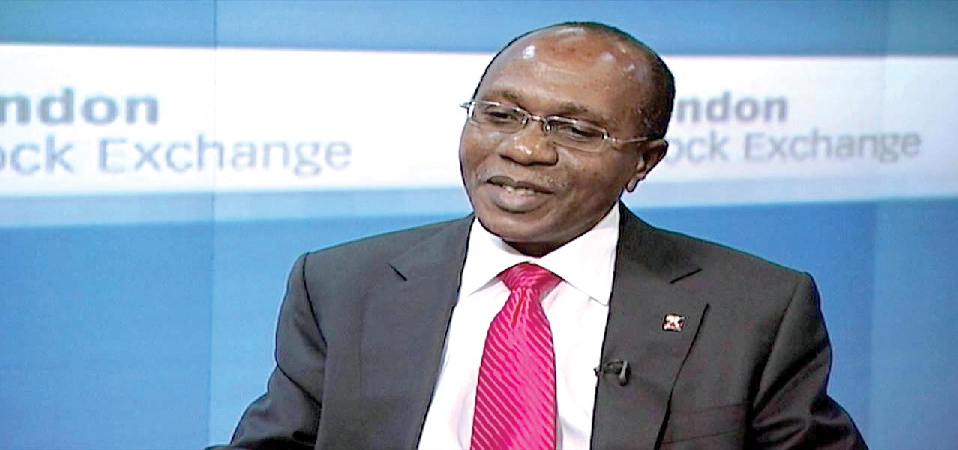
CBN Governor

There are so many unexplained charges and deductions made by Nigerian banks that are beginning to beg for explanation. Maybe why these banks continue with these acts is because nobody questions them. Nigerians always wave-away things that they should address with comments such as, “Who will listen to you if you complain?” or “Just give them what they want so they won’t delay you” and things like that.

The other time I went to Fidelity Bank to transfer some money to a First Bank account. I was told that I will pay N250 cash there and then for the deposit slip. So, if I want to transfer to three different accounts, I will pay a total of N750, excluding the deductions made to my account as the transaction charges. A man beside me asked why he should ‘buy’ deposit slips and was told that it was a way of encouraging ‘cashless’ banking. I truly didn’t understand how interbank fund transfer became physical cash handling. And the bank still charged me for performing the transaction. So, here I am paying two times for just a single transaction. I sincerely hope Fidelity Bank has stopped that extortion.

Anyway, the charges that prompted me to drop this article here is the ‘commission’ collected by banks located within the campuses of Nigerian higher institutions. These banks collect certain amount of money for every payment made into schools’ accounts. For example, if you want to pay your school fees and you decide to use the bank within the campus, you will be charged a ‘commission’ by that bank for paying your school fees through them. This isn’t commission for paying late or something; it is commission for something no one wants to explain to us.

I first encountered this ‘commission’ payment of a thing when I was running my M.A. I needed to make some payments into the school’s, faculty’s and department’s accounts and decided to do that when I go for lectures. I went into a bank there, filled out several deposit slips (you know, every item on the school fees breakdown must have a separate slip), went to the cashiers and handed over the money and the slips only to be told that I didn’t fill the deposit slips for the ‘commissions’.

Honestly, I didn’t understand what the cashier said because it didn’t make sense to me. She gave me back my money and the filled slips and told me to come back when I was with the deposit slips for commissions. I told her I don’t understand what she meant but she seemed to sense that I was in trouble and decided to ignore me. I went to the customer care table to complain about paying commission for making deposits and was told that it is the way they have been doing it. I was to pay N200 for every payment going into the school’s and the faculty’s accounts and then N100 for the ones for the department.

I calculated how many slips I had (and each item to be paid for had separate slip and separate commission) and discovered that the commission was more than my heart could bear. I annoyingly left that bank and went to another one, still within the campus. There I met another story. The cashiers were cordial enough to tell me that the ‘commission’ was for ‘processing’ my payments. Well, I finally paid what I could and left.

This was two years ago. I thought this illegal charge has stopped because I no longer pay through the banks in schools. But a few weeks ago, I happened to be in a bank within a university in Enugu and found out that this tradition is still maintained. This very bank here collects N350 for every payment made into the school’s account. So you can imagine how much a student with about ten deposit slips will pay.

Honestly, I don’t understand why banks have to compel students and parents to pay commissions for paying their schools fees and other fees because they did so through banks located within the school. If you still pay these fees in branches of these banks outside the school, no commission will be demanded for. So, why should the ones located in the campus charge for these payments? And why is CBN not saying anything about this? Why hasn’t there been any explanation on why this ‘commission’ should be collected from payers?

Remember that a staff of one of the banks told me that the commission is for processing payments made into the accounts. I want to ask, if truly there is something like “processing payments”, who should bear the cost? Why are customers easily overtaxed in this country? Why do customers have to bear the burden of everything? Why is it easy to legally cheat people in this country?

There is need for this matter to be addressed. If one of the conditions these banks gave schools for opening branches in their campuses is collection of ‘commissions’ from payers, they should publicly declare that so everyone will know what they are up to. Enough with this extortion of theirs. Nigerian banks are notorious for illegal and hidden charges. They should declare what they collect from customers and why they should do that. It’s high time they stopped their flimsy and shady excuses for stealing from the masses.

Cars45’s Parent Company Raises $400 Million from OLX Group

0

It is simply amazing. Cars45 through its parent company, Frontier Car Group, has raised $400 million from OLX Group, valuing the business $700 million. Cars45 is a very fascinating startup  – it buys, sells, swaps  your used car within 45 minutes. Innovation is not just about technology. Cars45 is innovating on business model. Hybrid is in the gene and Cars45 is a category-king company. OLX Group is part of the largest company in Africa, by direct and indirect market caps – the Naspers from South Africa. Cars45 is Berlin-headquartered!

Frontier Car Group, the parent firm of Cars45 parent firm has raised $400 million from OLX Group, a Prosus classifieds business. Prosus is a European unit run by South African media giant Naspers.

Frontier Car Group’s Cars45 has operations in Kenya and Nigeria and is looking to work with OLX Group to expand operations in emerging markets.

The Frontier Car Group will use OLX Group’s US$400 million to fuel expansion in emerging markets. The $400m investment, comprising a primary injection of capital in FCG and the contribution of OLX’s joint-venture shares in India and Poland, as well as the acquisition of shares held by other investors, founders and management making OLX Group the largest shareholder in FCG and puts the valuation of FCG at $700m.

About Cars45 from its website.

We are Nigeria’s largest car auction service provider with the goal of helping hundreds of customers to sell their cars.At Cars45 our passion is to build the infrastructure for commerce that allows sellers and buyers of Nigerian used Cars to exchange value quickly, cheaply and with unhindered access to independent relevant information required for decision making. We have inspection centres at strategic locations to make it easy for our dear customers to sell their cars.

Press Release

FILE PHOTO: Bob van Dijk, CEO of Naspers and Prosus Group poses at Amsterdam’s stock exchange, as Prosus begins trading on the Euronext stock exchange in Amsterdam, Netherlands, September 11, 2019. REUTERS/Piroschka van de Wouw/File Photo


In 2018 OLX’s venture arm invested $89 million in FCG, a start-up co-founded in 2016 by 26-year-old American CEO Sujay Tyle with emerging market specialist Peter Lindholm and chief technology officer Andre Kussmann.

BERLIN (Reuters) – Prosus PRX.AS classifieds unit OLX Group will invest up to $400 million in Berlin-headquartered used car trading platform Frontier Car Group (FCG) and combine their operations across emerging markets.

That helped FCG expand from four markets to 10: Argentina, Chile, Colombia, India, Indonesia, Mexico, Nigeria, Pakistan, Poland and the United States.

“They have blown all my expectations out of the water,” OLX Group CEO Martin Scheepbouwer told Reuters. “So I said to Sujay, what more can we do?”

OLX will inject capital in exchange for new shares and a tender offer to buy out existing shareholders. The partners will also fold in their joint ventures in India and Poland.

It’s not clear what stake OLX will hold after its investment but it expects to be the largest shareholder.

BUSINESS MODEL

FCG’s approach is similar to that of another Berlin start-up, AUTO1, which is backed by Japan’s Softbank Group.

FCG allows sellers to request a quick online valuation before bringing their car in to an inspection center for an estimate that serves as the basis for an on-the-spot sale to a dealer or private buyer.

“That provides a superior experience for many people, especially in emerging markets where there’s a lack of transparency, a lack of trust and a lack of infrastructure,” Scheepbouwer said in an interview.

FCG employs 1,700 people and runs 500 inspection centers. The company has turned over $700 million in the past 12 months, tripling its revenue.

Tyle said FCG is “very much about how we can be the most trustworthy,” something that is especially important in countries where doing cash deals can be a dangerous undertaking.

Amsterdam-listed Prosus was spun out of South African Internet giant Naspers and holds a stake in Chinese tech giant Tencent.


Visa Picking 20% of Interswitch at $1 Billion Valuation

0

Visa is picking 20% of Interswitch with $200 million, Sky News reports. That makes Interswitch a real unicorn at $1 billion valuation. Great news except that I am afraid once Visa takes all the prizes, Verve will disappear! I hope Interswitch protects that, as Verve has a real potential to become a pan-African card. Of course, Interswitch is a business and can do whatever it wants. Nonetheless, this is good news for team Nigeria.

Sources said on Sunday that the US-based multinational would invest $200m in Interswitch in return for a 20% stake.

The deal will see Visa becoming a cornerstone investor in the Nigerian-headquartered company ahead of a prospective initial public offering in London during the first half of 2020.

Interswitch is one of the largest Africa-focused electronic payments and infrastructure companies, with point-of-sale terminals, online consumer payment platforms and its own card, Verve.

Interswitch’s Innovation And Monopoly Hangover