DD
MM
YYYY

PAGES

DD
MM
YYYY

spot_img

PAGES

Home Blog Page 6583

Combating the Economic Sabotage of Crude Oil Theft in Nigeria with Technology

0

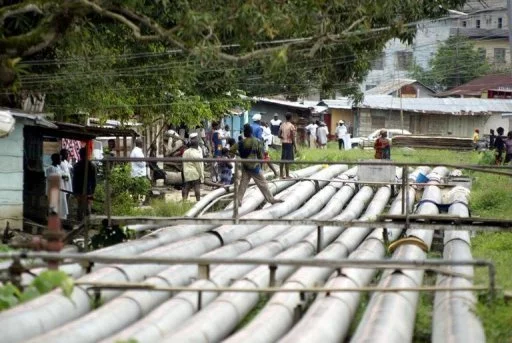
At a period when Nigeria is struggling to meet its revenue target for 2020 national budget, the oil industry which contributes over 70 percent of its revenues lost 22 million barrels in six months or $1.32 billion to crude oil pipeline vandals. That should  be a serious source of concern to not just the stakeholders but the states in the Niger Delta where these criminals operate.

Multinational leading upstream petroleum operator Shell Petroleum Development Company loses about 15,000 barrels per day to oil theft and vandalism.  This amounts to $900,000 or 275 million naira daily to these acts of sabotage.

Aiteo Eastern Exploration and Production, an indigenous player has had to shut down its operations at the Nembe Creek Trunk Line which is responsible for a sizable chunk of crude oil exports due to vandalized pipelines.

For every ruptured pipeline, the affected oil company conducts investigations, deploys boats for inspection, pays for containment and other post spillage activities which cause production downturn as operational targets are not met due to this paralysis. The losses also include environmental pollution, soot which affects the health of human and animal habitants of the communities.

Shell reported 17 oil spills in 2017 and 111 in 2018 replacing 1,160 illegal theft points. In seven years it has had to replace 1,300km out of its 4,000km pipeline network. Most cases of oil spillage are as a result of interference as the oil majors are accused of not carrying their host communities along as partners in development, unlike what happens in other climes which makes their youths vandalize pipelines as a means of protest.

The complicit cycle of corruption has made it possible for the vandals to get crude oil once it is pumped by the oil companies for delivery to the local and foreign markets. Using hacksaws, drillers to make holes and bombs, galvanized pipelines buried underneath are connected to waiting vessels  which will sell the stolen crude to foreign buyers which include refineries.

This criminal activities are also causing Nigeria a negative impression as investors will be wary of committing fresh investments in an environment where their projects are exposed to daily risks.

Poverty is a contributing factor at the heart of vandalism. Due to neglect of the Niger Delta Region whose mineral wealth has been used to develop other parts of the country to the chagrin of its inhabitants, they have taken to crude oil bunkering not minding the negative effects on their immediate environment as well as their existence as a means of survival as refineries, petrochemical plants and other allied industries to create jobs for its youths, state of the art infrastructure are  not in existence.

The Nigerian National Petroleum Development Corporation which operates joint ventures with all the oil companies which operate in the region should do orientation every week on the local TV and radio stations in Ijaw, Urhobo, Itshekiri, Igbo, Ikwerre, Ibibio and other languages spoken by citizens of the Niger Delta states on the dangers of crude oil pipeline vandalization.

Efforts have been made using deep technology to combat this menace. A young Nigerian student Innovator Tayo Sadique from the prestigious Obafemi Awolowo University, Ile-Ife has created a solution Musscomm Spillsat. Spillsat is an oil spill, gas leak and vandalization detection system. It utilizes a balloon satellite to collect aerial data that is processed and used to provide real time analytics to oil and gas companies.

Spillsat should create a mobile and web application for oil and gas operators which will use machine, deep learning and computer vision capabilities in facial recognition for identification and monitoring of  pipeline vandals in real time even under dark cover when carrying out their nefarious activities, reporting the actual amount of barrels per day stolen, environmental impact assessment of the oil spillage or gas leak while integrating the blockchain to track the stolen oil from the point of production to domestic and foreign buyers in order to aid their arrests by officers of the Nigerian Navy and Civil Defense Corps.

The Importance of Early Geotechnical Investigation of a Proposed Site before Development

0

Soil is a living material and the condition, quality, and behavior play a key role in construction projects. All structures, buildings, gas, and chemical plants, harbor, airports,  roads, bridges, dams and even life itself are based on the soil. The soil is the natural foundation that supports all structures and investments. 

As a result, Geotechnical engineers and Engineering geologists have to perform geotechnical investigations to obtain information on the physical and chemical properties of soil and rock underlying a site to design earthworks and foundations for proposed structures, and for repair of distress to earthworks and structures caused by soil conditions. Geotechnical investigation enables the assessment of the suitability of the soil materials in the site by providing vital data for informed site development decision making and planning.

However, the paradox is that soil is the most important yet most neglected in construction projects in Nigeria. Despite the importance of Geotechnical investigation, for both engineering properties and environmental constituents it is one of the most overlooked parts of the construction planning stages. It is not easy to understand why, but one can speculate that the reason is that asset owners and their consultants want to save money, while the Architects do not want to take liability for the soil conditions of the site.

Again, most clients see soil investigation as a waste of funds despite being the cheapest activity in the construction process, hardly is the cost of soil test up to one percent of the cost of construction. Some contractors too ignore the importance of proper soil investigation and analysis and base their design on assumed bearing capacity and rate of settlement. 

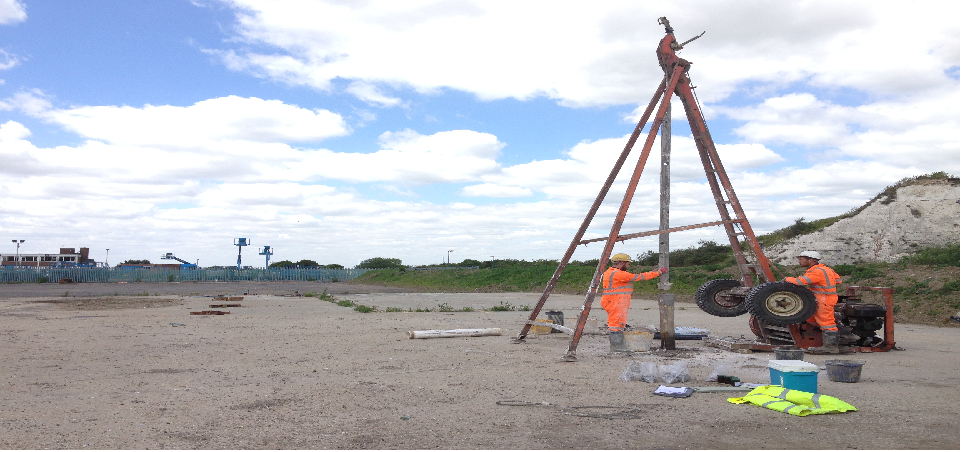
A geotechnical investigation generally includes surface and subsurface appraisal of a site. Occasionally, geophysical methods are used to obtain preliminary qualitative data about sites. Soil Investigation usually involves in-situ testing such as the standard penetration test and cone penetration test. Additionally, site investigation will often include soil sampling and laboratory testing of the retrieved soil samples. Test pits,  trenches, and large diameter borings may also be used to learn about soil conditions at depth for direct visual and manual examination of the soil and rock stratigraphy. The extent of investigation depends on whether the area is built up or not and the size of the structure.

Geotechnical investigation helps geotechnical engineers to correlate varying physical and Engineering properties of soil, which can vary from place to place and from layer to layer even within the limits of the proposed structure. Soil characteristics can change considerably within a small area. Weather, climatic changes, and site management can in the future affect the bearing qualities of the soil if the foundation is not designed properly to the bearing capacity of the soil, then they will fail and so will the structure too. 

An early geotechnical investigation help to determine the bearing capacity of the soil which determine the  soil’s load sustenance capability, helps understand the rate of settlement of the soil which affect the rate at which any structure placed on it settles and stabilise, to select a type and depth of foundation, to select suitable construction technique , to predict and resolve probable foundation problems, to determine if the land can be subjected to subsidence and cause sinking of the building, to determine water table which affects humidity within the foundation and greatly affects the character of a soil which varies considerably with water content, mineral or chemical composition of the soil that might affect the choice of construction materials.

Whatever type of soil one encounters, peat, gravel, clay, silt, sand, or loam soil, understanding the soil properties of a site helps make good construction decisions leading to the success of the project. Therefore,  the structural engineers can efficiently and accurately design the structural elements for the long term viability and soundness of the project. The geotechnical investigation also helps to determine whether there is a need for soil stabilization and the foundation depth to attain the required soil bearing capacity.

In summarising the benefits of geotechnical investigation before any project starts are as follows:

  •  Asset owners and Developers can be informed of potentially problematic soils in the area of their own particular sites. This implies that damage that could be caused by these soils at the inception of the project can be minimized. Thus the associated costs are known from the outset, thus enabling owners and developers to make informed decisions regarding the most appropriate foundation system for the project.
  • In urban development projects there could be the possibility of a group of neighbors owners agreeing to treat a large area of soil on a once-off basis, and sharing the cost of the required treatment process (e.g. the impact rolling of a site located on collapsible soil).
  • In general, early geotechnical investigation reduces maintenance costs, resulting from problematic soils during a project life cycle.

In light of the above, it is clear that asset owners and property developers are taking a huge risk without first performing a rigorous geotechnical investigation of the proposed site.


Allowing Market Forces to Reduce Data Rates In Nigeria using the UK as a Case Study

3

Recently, the Minister for Communications and Digital Economy, Dr Isa Ali Pantami, directed telecommunication companies (otherwise known as telcos) to reduce the price of data plans, improve the quality of service and check illegal deductions of data.

I think the Minister’s action is very commendable but I would have thought it best to allow market forces, through the introduction of new competitive players like MVNOs to assist in achieving the first objective of reducing the price of data plans in Nigeria

Currently, Nigeria has 4 Mobile Network Operators (MNOs) responsible for the provision of communication services. Presently, there is no Mobile Virtual Network Operator (MVNO) existing or operating within the country.

MVNOs differ from MNOs, in the sense that, they do not need a license for spectrum to operate. They either do not need to acquire communication networks or assets. MVNOs purchase communication services (voice or data) from MNOs and then resell to consumers. They could hire customer support, marketing etc. and even operate with their sim. You can think of MNOs as manufacturers, while MVNOs act as wholesalers (middlemen) – simply reselling communication services to consumers.

In most parts of the world, where MVNOs operate, they tend to offer cheaper communication services to consumers, perhaps because their investment in communication networks is light. They also offer consumers the flexibility to choose from different operators.

Using the UK as a case study, Lyca mobile or Lebara, is well known for its cheaper communication services to consumers with lower purchasing power, even though the quality of service may be poor in certain regions. Also, the introduction of Lyca Mobile also means that MNOs like O2 are forced to reduce their services in a bid to attract more customers to their networks and reducing the churn rate.

Additionally, with the advent of 5G, network slicing would allow MNOs to be able to sell slices (dedicated parts of their networks) to enterprises or MVNOs, based on quality of experience, latency, reliability, speed, etc. This means that the Nigeria communication market ought to start preparing for this transition, where MNOs, in the future, could serve simply as manufacturers of communication services while other players market the services directly to consumers. This could equally benefit the MNOs who may be able to reap a quick return on their investments, through a direct focus on manufacturing only.

I therefore would like to conclude that we could achieve lower communication services within the country by incentivising new players (within the industry) to consider acting as MVNOs, which would lead to a fair competition within the market and no doubt, lead to the reduction of communication services offered to consumers.

Nigeria to Issue Tourist Visa-on-Arrival From December

0

Nigerian digital quest has reached the corridors of immigration. An announcement from the Comptroller-General of Nigeria Immigration Service (NIS), Muhammad Babandede, said that there is a plan to digitize tourist visa before the end of 2019.

Babandede disclosed this while hosting the Director General of the Nigerian Tourism Development Corporation (NTDC), at his office on Saturday. He said there is an ongoing effort to make tourist visa web-based in order to improve tourism in Nigeria.

“Everything will be digitized with no physical contact with anybody. Once you apply online, upload your application, submit, pay, and get approval, you start coming and within 24-48 hours, you get your tourist’s visa,” he said.

He said that consideration has also been given to those visiting the country for religious reasons.

“We give them visa-on-arrival for certain churches because we know their spending will boost our economy,” he said.

Much attention has been given to tourism recently by the Minister of Interior, Rauf Aregbesola, who launched the Migration Information Data Analysis System (MIDAS), to track tourist activities and keep the records. Babandede said MIDAS will help the NIS with the statistics of tourists visiting Nigeria.

“The MIDAS will benefit a lot of people and organizations, tourism will benefit from this. We are hereby inviting the NTDC to feed tourism content and activity into the MIDAS system for overall best tourism experience and sustainable economic development in Nigeria,” he said.

Coker noted that the absence of human interphase on the Visa-on-Arrival platform is an indication that there is need for digitization of the system to enable development. Many other African countries have cashed in on the Visa-on-Arrival system to boost tourism; Coker said that the digitization of the visa process is in order to increase the chances of people coming in to do business and improve its ranking on ease of doing business.

“The fear of going to Nigeria now isn’t about how do I get a visa, it’s a certainty that one will get the visa on arrival once one follows very simple procedures. This has changed both images of Nigeria and the ease of coming to Nigeria and doing business in our country,” he said.

However, Coker appealed to NIS to make more room for accommodation when it comes to data sharing. He said there is a need to deepen the collaboration between NTDC and NIS through the digitization of data collation.

“While thanking you on one hand, I will also ask on the other hand that some of the data we get is limited because we do not have a permanent presence at the borders.

“But the complete data that you have can assist us with the right data to the National Bureau of statistics and Central Bank of Nigeria. So we would like to plead with you that the data starts to flow again monthly toward us.

“We would essentially like to collaborate with the NIS to establish a seamless channel through which we can adequately furnish you with information on tourism activities to enable us to work better and ease bottlenecks,” he said.

He also raised concern about the embarkation and disembarkation cards for foreign visitors, which he said are difficult to write due to their small sizes.

“I humbly suggest that the card be uploaded online so that, from your electronic gadget, phone or laptop, you can fill the card online, this will better foreigners’ experience,” he concluded.

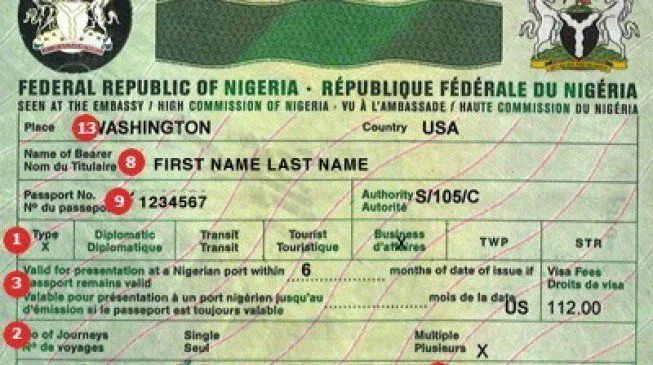
In August, the U.S. announced revised visa reciprocity for Nigeria, a hike in fees for visa application for Nigerians to commiserate with the price that the Nigeria government charges Americans for visa. According to the statement issued by the U.S. consulate, the U.S. government has engaged Nigerian government to request that the Nigerian government change the fees charged to U.S. citizens for certain visa categories. After 18 months of review and consultations, the government of Nigeria did not change its fee structure for U.S. citizen visa applicants.

This is just one of the examples of the difficulties in obtaining visas to Nigeria. For other countries, it’s far worse before now, and it’s one of the reasons Nigeria kept ranking low in the ease of doing business.

So the plan of NIS to introduce digital visa process that allows visa-on-arrival is a development that its benefits span across ease of doing business, development of the tourism sector, and probable reciprocity from other countries that Nigerians visit.

In Support for the Adoption of Electronic Voting System in Nigeria

0

Some constant unpalatable phenomena have always characterized the decades of post-independent periodic elections in Nigeria – violence/killings, voter intimidation/harassment, heavy bribery, riggings, manipulation of election results, ballot box snatchings, and so on.

The most recent Kogi and Bayelsa States gubernatorial elections didn’t escape those features.

The Diplomatic Watch, which comprises Austria, the European Union Delegation, Germany, Ireland, the Netherlands, the United Kingdom and the United States expressed their displeasure with the conduct of the elections.

In their words: “We are concerned by evident vote buying and credible reports of ballot box snatching in both Bayelsa and Kogi.”

A reasonable progressive society will not allow itself to be repeatedly continuously prone to practices of failure except something was seriously wrong with the Leaders and the Led. Such failures becomes outrageously ridiculous when the solutions that could end it all stares all of us in the face.

When commonsense refuses to be common to a community of people, such people are worthy of an assembly of global wailers who gathers to mourn their blatant foolishness.

Just a few days ago, the immediate former president of Nigeria, Goodluck Jonathan, expressed his disapproval with the happenings in the 2019 governorship elections in Kogi and Bayelsa state. He made a couple of statements that expressed my thoughts for some years now about the way forward for Nigerian elections. He said:

‘’The signals coming from Kogi and Bayelsa are quite disturbing. The use of thugs, shooting guns and our people are already being killed when the voting process has not even started is disturbing. This would not happen if we have got to a point in this country where voter card matters. That is why I have always advocated electronic voting. If people these days can transfer billions of dollars from one bank to the other using electronic means, then I believe we can do electronic voting perfectly and that will ensure the use of thugs during elections would not come up again.’’

Isn’t that common sense solution to the unreliable volatile electoral system in Nigeria?

Elections in Nigeria has always witnessed a low voter turnout. This is especially common among the youth population.

According to the Chairman of the Independent National Electoral Commission (INEC), Mahmood Yakubu, there are currently 81 million registered voters in Nigeria. The youths, aged 18 to 35, are about 63% of registered voters which is about 51 million young registered voters.

If the total accredited voters in 2019 presidential election is 29,364,209 and Nigeria has over 51 million young registered voters, then the voting strength of the youths has not been properly harnessed.

Voters’ turnout in the 2019 Presidential and Parliamentary elections was far less than expected. The postponement of the election from February 16 to February 23 by the Independent National Electoral Commission due to logistics problem heightened voter apathy, especially among the youths.

The election process which is mostly manual (and therefore subject to electoral manipulations) and the long time it takes to cast vote on election days also discourages voters’ participation. The case of voters being limited to voting only in the polling unit where they registered reduces participation as a lot of them have relocated from these areas to other parts of the county.

The most viable method through which all classes of Nigerian eligible voters can fully participate in elections is if the current manual voting system is allowed to run along with a completely digitized voting system.

It would be very erroneous to think we are not ready for a digitized voting system. The statistics don’t lie.

According to the International Telecommunications Union (2018):

  • About 77 million Nigerians uses smartphone.
  • Internet penetration in Nigeria is at 63% of the population which is about 126 million.
  • 23% of Nigerians access the internet daily.

2013 Reports by the Nigerian Communications Commission (NCC) states that:

  • Nigeria has the highest number of mobile phone subscriptions in Africa – more than 93 million, representing 16% of the continent’s total mobile subscriptions.
  • The number of subscribers are expanding at about 40% every year.

According to Jumia 2019 mobile report:

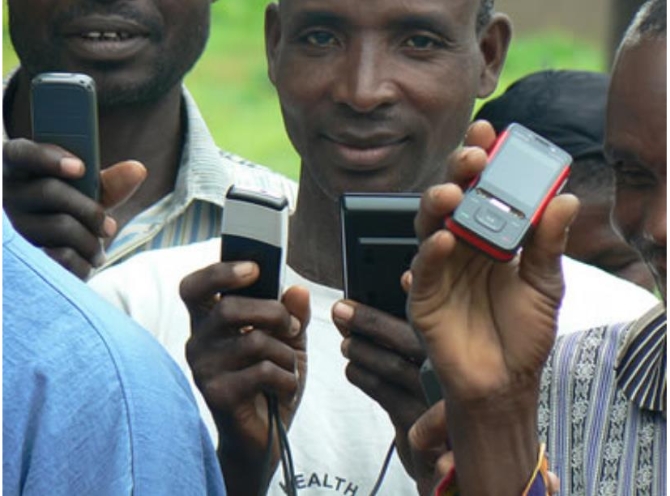
  • There are over 172 million mobile subscribers in Nigeria, implying a penetration rate of 87% of the population.
  • 44% of mobile subscribers are using 3G technology while 4% are using 4G technology.
  • Nigeria’s broadband penetration is forecasted to rise to 55% of the population by 2025 with 70% having 3G connectivity and 17% having access to 4G networks.

Billions of naira transacted through phones by hundreds of thousands of Nigerians occurs daily in the country.

All these information technology statistics points to the obvious fact that Nigeria is absolutely ready for a completely digitized electoral process. All that is needed is the political/leadership will to execute.

How difficult can it be to fully digitize a voting process that occurs only once in 4 years?

The Nigerian youths, who constitutes the majority of the voting population, love using information technology to execute tasks due to its speed, convenience and efficiency. If people can vote online with their smartphones using their Voter Identification Number (VIN), the rate of youths’ democratic participation in elections will geometrically increase.

There have been arguments like – ”there are vast locations in Nigeria where there is very low or nonexistent internet penetration”.

The Nigerian financial sector has evolved to solve this problem. There is now mobile banking via USSD.

The USSD (Unstructured Supplementary Service Data) is a GSM technology that is used to send text between a mobile phone and an application program in the network without the need for internet. Through this internet-less medium, you can make instant transfers, check your account balance, pay bills, buy airtime etc via the dialing of short codes and supplying your bank account information.

So what solutions does this provide for Nigerian elections?

The commonsensical implication is that it is possible for a registered Nigerian voter to vote through the USSD technology for any political party’s candidate of his/her choice through his/her phone without access to the internet as long as he/she can supply his/her Voter Identification Number (VIN) in the USSD voting process.

However, some statistical evidence suggest that the manual voting process should not be entirely wiped out.

According to the EFInA (Enhancing Financial Innovation & Access) 2018 Survey:

  • The Nigerian adult population (18 years and above) is 99.6 million.
  • Out of this, 63.1 million are based in the rural area
  • 20.2 million have no formal education.

Therefore, the complete usage of a digitized voting system could disenfranchise millions of uninformed Nigerians concentrated in rural areas.

This is why a manual voting system needs to be run concurrently with a digitized voting system such that there is less of manual system and more of digital vote in urban areas and less of digital versus more of manual voting system in rural areas.

A digitized voting system will mean less of logistical demands that manual voting system requires, thereby saving us the kind of national embarrassment caused by the last minute postponement of the 2019 Presidential/Parliamentary elections from February 16 to February 23 by the Independent National Electoral Commission (INEC), which was mainly attributed to logistics problems.

A digitized voting system implies a demoralization of the factors and actors that emboldens the farce of an election that plays out in the 2018 Osun State gubernatorial election, the violence and corruption that determines Nigerian election results and the general unreliability of the voting system.

A digitized voting system means every eligible voter can vote from any location in the country irrespective of distance from polling units where they registered.

If the selfish desires of the Nigerian political leaders who came into power through dubious election processes prevents them from enabling an obvious solution that could geometrically increase voters’ participation and bring integrity into our electoral system, then the citizens must rise in unison to demand for such solutions.

It is a shame that when there are weightier issues, the people in government are focused on sponsoring a bill to criminalize hate speech. The successful passage of such bills can only further undermine our democracy and make the electoral system more susceptible to selfish manipulations.

Wouldn’t it be awesome if you can vote via your mobile phone in the comfort of your home on election days?  Wouldn’t it be awesome to vote without fear of intimidation, temptations of bribery and mental/physical exhaustion from travelling long distances to queue for hours at polling units?  Wouldn’t it be great to know your vote is automatically validated immediately you vote and thereby less vulnerable to manual manipulations? Wouldn’t it be nice to be spared the ridiculous sight of top INEC officials at collation centers strenuously staring through long sheets of voters’ data which their spectacles couldn’t effectively capture?  Wouldn’t it be great to have a truly free and fair voting system that effectively keep leaders accountable to the governed?

An electronic voting system properly anchored on flexible secure  information technology innovations can make all these happen.

Commonsense solutions should never be difficult to comprehend and activate for any nation that desires progress.