DD
MM
YYYY

PAGES

DD
MM
YYYY

spot_img

PAGES

Home Blog Page 6584

Yesterday, I Signed Term Sheet With An Abuja Startup

0

Yesterday in Abuja, I signed a term sheet with an amazing entrepreneur who is unveiling something amazing in the logistics & transportation space. His mission is fascinating, and I am very happy to support him. You will learn more in Q1 2020 as full launch happens. The Africa’s cambrian moment is around the corner, and as 2022 draws closer, with the beginning of the era of application utility, you have to be excited for the promises of the future. All sectors would be transformed and new category-kings, bred from digital nativity, will emerge.

From the lagoons of Lagos to the mangrove of Calabar, from the beautiful plains of Sokoto to the plateau of Jos, all the way to the rainforest of Owerri, there is an entrepreneurial explosion in Nigeria, and it is unprecedented. Powered by microprocessors, mathematics, the beautiful science of numbers, is being transmuted by software, eating everything on its path.

And in the process, it is making a better sense of the nation, as entrepreneurs pursue the grand mission – fixing market frictions. Unlike the golden decade (the 1990s) of Nigerian entrepreneurship when amalgams of new generation banks were born, seeding a new age in the nation’s financial system, this moment cuts across sectors. From energy to healthcare, agriculture to logistics and even financial services, Nigeria is being redesigned by the combinatorial powers of software to arrange, re-arrange and make sense of atoms and bytes.

With cloud computing, immersive connectivity, and mobile devices, a 21st century Cambrian moment is emerging in Nigeria: the data everywhere is meeting cheap, ubiquitous and intelligent digital systems to process them. This is our time: welcome to Nigeria’s Cambrian Moment.

Begin building or investing – this continent is changing very fast. This is our time and the momentum is real because the opportunities are unbounded.

Open Mindedness – A Mindset Of Business Growth

0

Among other factors that may be stalling your business growth, maybe your mindset is also a king factor.

A narrative

I checked out today to buy a half crate of egg in the neighbourhood. 

  • Me: How much is half crate I queried. 
  • The lady: It’s N600
  • Me: I buy for N500, since when did it turn N600
  • The lady: I don’t dispute that you buy it for N500 but I was instructed it is N600 here.
  • Me: Okay! Do you have the type of egg that sells 6 for 200?
  • The lady: Yes, it’s available.

PS: Note that half crate of egg is 15 units. By implication, if 6 is available for 200, 15 will cost N500 without any much ado nor bargaining. I tried to help the lady understand this but she shut me from doing so. The result, I only bought goods worth N200 and left the shop.

This event birthed a quick nostalgia from my previous employment with Opeoluwa Shea Butter. It is a common practice while I was with the company to sell either at discount or bearing some cost that otherwise would have been borne by the business partner or altogether adding a new product to the primary package in order to grow a new business territory. All these were done deliberately to foster product growth and grow the number of first-timers that use the company’s product. The result, some new territory go on adding a significant percentage to the bottom line. That’s an open-minded mindset at play.

Where do the two narratives intersect?

Business mindset! One was fixated on the price dictated to her by the business owner, the other was open-minded enough to understand that sometimes you need to “lose money to gain money”. It appears to me that a lot of SMEs (not a startup) are missing a lot in terms of revenue because of their mindset and little to no understanding of how business works.

While I may not use the example of “a shop” to generalize “SMEs”, I make bold to say poor business practices hinged on fixated mindset and not understanding when compromises are needed in business is one of the things responsible for lacklustre growth of small businesses in Nigeria.

From “the lady’s” narrative, if she had an open mind, she would have taken note to understand that N500 is still a profitable deal and wouldn’t have lost N500 in revenue. While for Opeoluwa SheaButter, the business managers understood when compromises are important for the sake of growth.

Business growth

Growth strategy is a whole lot and it takes local understanding to penetrate any local market. This is because different markets have it believes, myth and mindset. Understanding this can help you put an appropriate strategy in place for customer acquisition. One of such workable strategies is what I have described above hinged on the entrepreneur’s mindset. The entrepreneur/business manager must always understand when compromise is needed in order to grow her business to the desired level.

Among other things though that helps to grow customer is understanding the myth of the market. Once in the wake of America industrialization, Andrew Carnegie the father of iron melting (Carnegie Steel) constructed a bridge with iron (new then). However, no one will use the bridge out of fear. But they have a myth in the location then, “if an elephant can walk through a path, then the path is safe”. Your guess is probably right. Carnegie organized a show and arranged an elephant to walk across the bridge to the other side. The rest they say is history. Swift adoption and usage started at once.

Understanding the myth of your market might be the way to unlock growth. But it takes an open-minded person to make the needed compromise.

A Business Model For OPay

0
OBus from Opera's OPay is expected to be launched in some Nigerian cities next month

Car sharing and Ride sharing models have been hailed as the bridges towards transiting to autonomous mobility. These models minimise capital expenditures and increases the efficiency of transportation assets.

Recently, OPay recently launched a new vertical, OCar, to compete against the likes of Uber and Bolt, which makes the field even more crowded. ‘With its go anywhere from 200 naira’, OCar is definitely incentivizing consumers to come onto its platform.

Even though this vertical (ride sharing model) represents a good move, I am of the opinion that OCar could equally benefit from a car sharing business model. The car sharing model, in this context, means if Mr A owns a car and he is commuting to Ikeja from VI (both in Lagos, Nigeria), he is able to share his car with other passengers commuting from Ikeja to VI.

This would provide a market opportunity for private car owners interested in sharing their cars during their journeys. By private owners, I mean private car owners who are not Uber or Bolt drivers, simply private car owners who use their cars for private use but are interested in sharing their cars when commuting.

To achieve this, OCar would need to provide a platform for these private car owners (in Lagos and elsewhere) who may be willing to share their cars with passengers commuting in the same direction of travel. It is already a common occurrence to find private car owners in Lagos offering to pick passengers travelling in the same direction of travel. Such a platform would encourage more private car owners to consider sharing their cars as well as enjoy profits from such car sharing arrangements. This represents a new market opportunity which could help differentiate OCar from Bolt or Uber.

Is this market segment small or big? I do not know. OCar would have to conduct its market research to determine if this market segment is of significant size to justify any reasonable investment. I do know there is an opportunity here, which could easily grow with time.

With its ORide and OTrike platforms, Opay currently manages various motorcycles and tricycles within various cities. It is very common to find various OPay and OTrike drivers sitting idle during less congested times of the day. OPay could equally benefit from expanding its services to allow these drivers become engaged in the delivery of food (take-aways), items (e-commerce), dispatch and other delivery needs etc. I am aware that Opay already collaborates with small restaurants and allow consumers to order food. This service could further be expanded to the ecommerce industry, beyond the food industry.

Another expansion that may interest Opay may involve the provision of bicycle sharing arrangements (OBike) within universities or small private communities. This may be particularly attractive to universities looking to reduce their greenhouse gases, as a way of addressing climate change. This would no doubt involve the construction of dedicated cycle lanes as well as close collaboration with universities.

With Opay’s rapid expansion across various verticals, it may not be long before we see an OTruck platform which may disrupt the truck industry.

For now, OCar looks ready to take on Uber and bolt. The race is definitely on and we are watching closely to see who emerges the winner.

Konga’s Sim Shagaya Raises $3.1M for New Startup uLesson To Fix WAEC Exams

3

He is a pioneer and one of his generation’s finest in our nation. He made many people to believe, and created a path for others to believe. His simplicity is legendary and his optimism about Nigeria was unbounded. He is Sim Shagaya, the founder of Konga. Everyone knew that the day he left Konga that something new would happen: no one can cage a tiger, for long. Today, we are learning that Sim has raised $3.1 million including his own money to help West African kids do better in WAEC. But this time, the magic will come via smartphone classes, not necessarily in what happens in the blackboards.

When Sim goes to WAEC, expect As. I personally congratulate him for the tenacity and rising out of the miry clay of Konga. That is how legends are built.

Press release below.

Nigerian edtech learning platform uLesson has closed a $3.1mn seed-level round led by TLcom Capital with participation by Sim Shagaya – the founder, to address infrastructure and learning gaps in Africa’s education sector. Targeting secondary school learners across the West African region, uLesson will launch officially in February 2020, having been in development and beta testing for 12 months. The seed round announced today allows the team to take the product to market in West Africa, before looking to develop educational content and a product for the East African market.

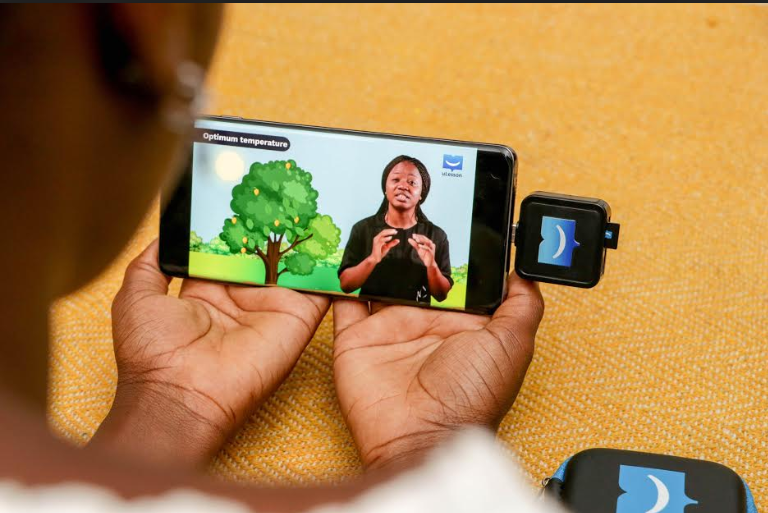
Founded by serial entrepreneur and founder of Nigeria’s Konga, Sim Shagaya, uLesson has built the technology to deploy curriculum-relevant content via smartphones, that allows learners to use the product without concern for internet limitations and costs. uLesson’s mobile offering rests on three pillars: academics, media & technology and curriculum content is delivered via streaming and SD cards. To-date, the Jos-based team has produced over 3,000 richly animated, personalised video learning modules, quizzes and tests that will be available on the uLesson android app, via a subscription model, in Q1 2020.

Low-income families in Africa can spend as much as 40% of household income on expensive schooling and supplemental education, yet the school system across the continent is recording poor academic outcomes. uLesson has been built to address these issues, by leveraging mobile technology to scale access to education and learning, at less than 10% of the cost of a traditional tutor.

The platform allows learners to experience personalised learning, practice tests, region-specific mock tests and assessed performance and progress for students and parents, including rich reporting dashboards for detailed analysis. Tailored towards the WAEC curriculum region (Nigeria, Ghana, Sierra Leone, Liberia and Gambia), uLesson’s current content focuses on core subjects of Maths, Physics, Chemistry and Biology for secondary school students.

Speaking on the investment and upcoming launch of uLesson, CEO Sim Shagaya says, “Education systems across Africa are in crisis and uLesson has been developed to radically shake-up the system and bring better access to high-quality curriculum-relevant educational content to learners across the continent. As our population grows extremely rapidly, the current public and private approach to education investment is chasing a goal that is moving further away. We want to lower the entry point for access to education for young Africans, and technology is the only way this challenge will be met. With this in mind, today is not just an investment in uLesson – it’s an investment in Africa’s future.”

As part of the seed round, Ido Sum and Omobola Johnson, partners in TLcom’s executive team, will join the board alongside former Konga CEO, Shola Adekoya. Speaking on the investment, Ido Sum adds, “In uLesson, we found a company that fitted perfectly with our ethos – an entrepreneur-led startup building affordable, mass-market mobile first solution tackling one of Africa’s largest challenges. In Sim, we have an entrepreneur with an unrivalled track record in building technology products for Africa. His team is building solutions for a massive opportunity, and we strongly believe they are about to make a serious dent in the education market across the continent.”

The global edtech market is projected to reach $341bn and Africa will be a key market fuelling this growth, due to rising smartphone adoption on the continent combined with a high youth population [40% of Africans are under the age of 15]. At present, student to teacher ratios in some parts of Nigeria are 1:70, compared to an average 1:10 in the United States. The dearth of quality teachers, tutors and educational infrastructure on the continent, according to Shagaya, represents a ticking “youth bomb” for the region’s unprecedented demographic growth.

Shagaya concludes, “We work collaboratively, passionately & relentlessly, utilizing every tool available, to deliver high quality affordable education to all Africans. Education, Financial Inclusion & Health need to be tackled on the continent. Remarkable progress in developing financial products has been made. Of the other two, Education represents an immediate opportunity that can be addressed with the tools provided by digital technology (smartphones, wireless internet, data storage and analytics). uLesson believes it has a model that can work in substantially addressing these challenges.”

He Gave Up, Even Before He Began. INEC Nigeria Needs To Improve.

0

The biggest progress will come in Nigeria when we can have an efficient electoral umpire. While I am party-neutral but not apolitical, the consequences of total paralysis in the just concluded Bayelsa and Kogi elections are evident, and make it clear that Nigeria cannot attract new generation of leaders to fix this nation. Two people I know who plan to run for the upcoming governorship election in Anambra have killed the ideas, post Kogi and Bayelsa. One is a tested leader and someone with the heart of his people and community. But looking at the system, he gave up, even before he began. His words: “INEC does not give me confidence, and because I will never invite thugs to maim people I want to serve, I see no path. Because no one has arrested those men on the videos, no clear message has been sent that law was broken. I will remain in the boardrooms to serve this nation”.


LinkedIn Comment on Feed

They want the best brains and untainted minds to join politics, what we haven’t been told is whether they would win from graveyards or treatment homes; because what we call elections here are pure and undiluted madness, with no holds barred.

Politicians have invested heavily on thuggery, to the extent that divesting is no longer attractive, so each election cycle brings greater brutality.

You cannot commit super fraud and simply tell people to go to courts, if they are aggrieved, that’s clear invitation to anarchy and instability in the land. Courts can’t resolve the anger and toxic atmosphere we have created with fraudulent elections, and we know it!

We had decent elections from 2010 to 2015, there were issues, but the votes seemed to have counted considerably. This madness has gone haywire – starting from the staggered elections before 2019 general elections, and from 2019 it has been downward spiral all the way.

INEC’s failure is epic, while the ruling class has essentially destroyed the little progress made in our electoral systems, now we are back to the trenches.

Legacies don’t matter here, thuggery has been elevated and glorified.