DD
MM
YYYY

PAGES

DD
MM
YYYY

spot_img

PAGES

Home Blog Page 6587

Interest, Tide of the Wind and Dedication

2

I giggle a lot and almost could see through anyone’s depth of interest at a glance by asking two simple questions.

  1. How long have you been interested?
  2. Since you are interested in this for this long period of time, what have you done regarding your interest?

By anyone’s answer to this question, I could almost tell whether such person’s interest is motivated by the tide of the wind or by dedication to leapfrog the tides.

Interests are fluid and multidimensional often flowing with the tide of the wind. It is never stable for a living and active being, it can even grow uncontrollably. I was there or say I am still there, that’s why I know.

Interest grows, but interest never gets anyone anywhere, obsession does. Now I agree things start out as interest but those things must grow to become an obsession for them to see the light of the day and possibly leapfrog. It took me time to be able to bring this to perspective. This tweet’s question and answer reveals that…

How do you discover what you need to be focus on? Being one that has a varying interest.
@KapilGuptaMD

Replying to

@real_DavidALADE
There are interests And there are obsessions.

That was me on June 19, 2019, asking the respected and insightful man question about the multidimensional nature of interest and his answer changed everything.

Yes, there are interests and there are obsessions, the mistake a lot of us make is to think of both as one. However, it does not actually take long before it gets revealed that this thing is only a thing of interest to this fellow and not an obsession. For me, the two questions I mentioned earlier quickly help me to pinpoint the difference per time either for myself or for someone else.

Many interests flow with the tide of the wind. I have been there and maybe I am still there. I wish I still have my LinkedIn profile image of about 2 years ago. My profile would have been evidence to show that this guy flows with the wind. I had things like Fintech enthusiasts, Big Data enthusiasts, tech evangelist, tri-sector intelligentsia and so on my profile.

Now those things aren’t bad at all, in fact, it was my version of not seeking permission but following after forgiveness constantly. However, unsustainable.

And if I was to advise anyone, I would still say it’s fine to go through that process. Don’t seek permission always remember.

What usually makes the difference is not stopping at that point of interest. Today those things are ripped off my profile.

How do people move from interest more often than not motivated by the tide of the wind to the realm of obsession? 

By dedication, people achieve this.

Till tomorrow, your interest will keep growing just like mine is constantly growing albeit with the tide of the wind. However, we get to work on (dedication) just a minute percentage of our interests (I may peg it at <5%).

Those interests that we dedicate our time to pursue end up either being an obsession or we realize oh, this can’t grow beyond this and we drop it. In technology development cycle we call it the peak of inflated expectations.”

Only those interests that survive the peak of inflated expectations gets to become an obsession and they are usually very few.

I started by saying I giggle when I get asked some questions. That’s because I could tell that these things someone is asking me of are still in the realm of interest and no matter what I say, it might not be enough to move them to the realm of obsession. It is your sole responsibility to move yourself to the realm of obsession, interest is too multidimensional to invite anyone to navigate it for you. Move beyond interest.

When I see folks in the realm of obsession, something I rarely do, by the way, I can go all out to see them building upon their obsession. They are people worth 100% of my time.

Few of them I’ve met, I pay for online courses for them to learn, some I share my login details with to learn, some I go the extra length of being their accountability partner and some I benefit in different measure.

Yes, it is usually a worthy investment, some did it for me. They are ripping it now and will do later.

Why have I written this?

  1. To help you understand yourself and forces that are shaping you. 
  2. To help you understand the interplay between interest and obsession. 
  3. To help you understand that not all interest will turn into an obsession and only those who turn to obsession actually leapfrog you. 
  4. To also help you understand that it is all normal to have a varying interest.

Above all to help you to move quickly from the realm of interest to the realm of obsession through dedication.

And lastly, to point out that not all interests will make it past the bridge of dedication. And that is 100% alright.

However, you need to be dedicated ASAP in order to root out those interests that are only occupying space in your mind but will never see the light of the day.

I have mastered the art of navigating the realm of interest and obsession for myself and have a mental playbook for this. Hopefully, I will be committed enough to share one day. For today, that’s all.

Invest in people’s obsession and you had reaped your investment one way or another.

Invest in people’s interest and you are almost guaranteed to lose your investment.

When you are making a choice between both, go for obsession.

The Energy Innovators Providing Alternative Routes for Lighting Nigeria

0

According to the Nigerian Meteorological Agency(NIMET), Nigeria is naturally endowed with annual daily sunshine which averages 6.25 hours.

The democratization of solar energy as a leading source globally in the provision of clean renewable energy, and technological advances which is bringing the cost of batteries and photovoltaic capabilities, are changing the narrative in provision of electricity, to millions of underserved rural dwellers and in urban Nigeria where power supply is erratic.

The Power Sector Recovery Plan which outlines reforms required to improve the capacity of the national grid in providing reliable electricity for the nation states that the national economy loses $29.3 billion annually due to the paralysis in the electricity sector value chain. There are over 80 million Nigerians in rural communities without access to electricity, and over 40 million in semi urban areas with limited supply from the national grid. Due to our power system fragility, too much generation and too little can cause its collapse.

The Rural Electrification Agency (REA) states that Nigerians spend almost $14billion (5 trillion naira) annually on inefficient power generation which is expensive ($0.40/kwh) or 140 naira per kilowatts or more, for power which pollutes the environment with noise and poisonous substances. Rocky Mountain Institute and REA in a study supported by Rockefeller Foundation states that provision of energy access can create  a $9.2 billion(3.2 trillion naira) per annum market opportunity for mini grids and solar home systems, which will lead to cost savings of $4.4billion(1.5 trillion naira) annually for Nigerian homes and businesses.

Taking advantage of the abundance of solar energy in northern Nigeria, Blue Camel Energy, a Kaduna based enterprise in partnership with Sterling Bank which has taken renewable energy as one of its core priorities and Kaduna Business School, delivered ‘’Solar-Fi Hub ‘’ which will provide access to electricity for many to charge their devices, access information via TV and can be used by farmers in rural communities for powering grinding machines and water pumps for irrigation. Blue Camel Energy has established its solar photovoltaic assembly plant which will assemble over 10,000 units of clean, affordable, and reliable solar products annually. Also, there is an academy which will develop energy entrepreneurship capacity development for about 3,000 youths.

Lumos Nigeria was established to provide affordable and sustainable electricity to off grid customers. It decided to adopt the pay as you go business model due to the rapid explosion of mobile payments in Africa and decrease in costs for solar energy. Lumos systems are available in key stores of leading telecommunications operator MTN across the country. Customers who want to access its service sign up by paying a one time commitment fee after which they buy the electricity bundle they can afford. Its technology locks the system remotely and only turns on after payment. After they have consumed the product for five years, its customers gain ownership of the system and Lumos unlocks it to provide them free electricity.

Smarter Grid uses distributed energy to provide affordable renewable electricity to underserved electricity consumers and non-consumers. It finances and provides flexible payment options such as  Pay As You Go and Lease To Own  through payment platforms such as Paga and Angaza. The firm has enabled those at the bottom of the pyramid to purchase its solar products for their productive use. Its product suite consists of smart technological devices which guarantee uninterrupted electricity for business owners, telecommunication operators and banks for their rural agency banking operation. Smarter Grid has installed over 7,000 solar systems and products across the nation since it commenced operations.

Green Village Electricity Projects (GVE) is the leading distributed renewable energy solutions provision company in Africa. Its operations cover design, sales, installation and maintenance of renewable energy solutions for residential, commercial, industrial and rural off grid or underserved communities through commercially sustainable business models in line with it’s clients needs. It distributed its first mini grid , a 6KW project in Egbeke, Rivers State and has since expanded to over 12 locations across the country with 13 mini grids serving about 7,000 household with cumulative energy capacity of 0.65 megawatts. It sells power to communities through a vendor network which purchases its electricity for resell to consumers. The vendors act as its agents and facilitate access to payment in rural areas. Residential consumers pay a one time connection fee of 6,000 naira which cover installation of a prepaid meter and load limiter to track energy consumption in real time. It offers  discounted tariffs for micro small and medium businesses in rural communities.

GVE recently signed an agreement with Abuja Electricity Distribution Company and Wuse Market Traders Association for the development of a 1MW Inter Connected mini grid system at Wuse Market which will provide 24/7 electricity to over 5,000 traders who operate in the market which will ultimately lead to the discard of over 3,000 fossil fuel powered generators. The project will transform Wuse Market to Nigeria’s first 100 percent green and generator free economic cluster. The Wuse Market is part of its Distributed Renewable Energy Commercialization Initiative aimed at impacting over 3.6 million Nigerians with reliable power supply to underserved economic clusters like markets, industries, plazas, estates, and MSME’s, across the country by 2023.

Haven Hill Energy is an Abuja based green energy utility company which builds mini grids in off grid communities and sells electricity to consumers at a rate between 1,000 to 2,000 naira depending on consumption pattern. It has also developed projects in the industrial and commercial space for various clients.

Rensource Energy is a distributed energy company which utilizes advanced lithium batteries integrated with solar energy offered through a mobile subscription model which allows its users to pay for the power consumed and understand how they consume it.

Coldhubs provides solar powered cold stations for 24 hour storage of perishable food items for smallholder farmers, retailers and wholesalers. The cold rooms are strategically located in markets and traders store agricultural products in crates for 150 naira only. It uses educational comics in the three most popular indigenous languages Hausa, Igbo and Yoruba to conduct training sessions for market women and small holder farmers on farm to market strategies and management of post harvest losses. Coldhubs has increased the income of its customers by 50 percent.

Arnegy  was established  to provide sustainable solutions to energy reliability issues across emerging markets. It began operations with provision of affordable solar energy solutions to homes and businesses but has now redesigned to offer Power As A Service with focus on minigrids, commercial and industrial clients who need uninterrupted power. It has doubled down on its efforts in deepening penetration by connecting 20 hospitals to stable electricity with a target of 35,000 businesses within the next five years.

Arnegy offers three models to ensure it is competitive for sustainability; Energy As A Service which offers the consumer access to the facilities while he pays rental fee, lease-to-own model which can be settled within 12-48 months, and an outright ownership acquisition.

These outliers are worthy of commendation, and with support from the Federal Ministry of Power, they can help in setting millions of Nigerians free from the shackles of unreliable power.

Solving The Spate of Bank Robberies Across Bank

0

The incidence of bank robberies across cities and towns in Nigeria has become a recurring phenomenon with huge costs on human, material and financial terms. Year-in -year-out, our news media are buzzing with unfortunate incidents of bank robberies. Generally, the situation has assumed almost a fatalistic dimension such that there is an unspoken understanding of the inevitability of such robberies with each incident-free day appearing more as a postponement of the doomsday.

This assessment is not in disregard of efforts by bank authorities and security agencies at combating this menace. But the reality is that the spate, sophistication and daredevilry  of bank robberies across regions in Nigeria have reached alarming proportions such that past and current efforts appear to be the classic definition of foolishness – where different results are expected by repeating a particular course of action. Currently, it appears to be a helpless situation as few days after bank robberies, with loss of lives and money, it is business as usual with no significant departures or improvements in the security architecture.   

The challenges facing banks at providing adequate protection for their locations, staff and customers within can be viewed as systemic both from the banking industry and the larger Nigerian establishment. Specifically, and for the banking industry, there appears to be a consensus of inertia, or at best mid-way efforts at collectively appreciating the situation as a national emergency requiring holistic and drastic reappraisal of their business operations against security realities. Banks, barring other indicators, are inherently high-risk locations, and all relevant considerations should reflect such. 

The need for a holistic and drastic review will essentially require banks to re-examine the siting of their branches with serious attention to the nature of locality (metropolis or remote town, type or nature of activities around, etc), proximity to nearest police division, and possible shortest police response time. In some environments, individual bank’s competitive business goals should be mediated by considerations for collective security need.  In operating environments with peculiarities impinging on security, by design, banks will be sited within clusters that offer a concentration of security investment and presence. Though this arrangement does not totally remove the risk of robbery attacks, but it offers greater deterrence against such.

Apart from siting considerations for banks, there is a heightened need for banks to embed serious security considerations in the design of their buildings and use of building materials. Today’s bank robbers have gone ’ballistic and bombastic’ in the calibre of weapons deployed in their trade. Beyond automatic rifles such as AK47, dynamites have become handy tools for these robbers. Accordingly, design and construction of bank buildings should have such considerations as serious guides where selection of building design and specifications for materials (for walls, windows and doors) are concerned.

In the light of the use of dynamite by bank robbers at forcibly accessing banking halls, mantrap doors therefore offer little resistance in this regard. There is therefore a need to redesign access control processes and systems at banks. Serious consideration should be given to further fortify the access points. Current thinking will require some realignment of priorities and the demand for new investments by banks – again, the situation demands as much.

While it is not feasible to contemplate all manner of ballistics and explosives available to criminals to enable deployment of relevant countermeasures, and while there are no equipment or materials strong enough to withstand a determined adversary with the advantages of tools and a near-absence of armed reaction, the major thinking behind the ideas expressed here notwithstanding are essentially for greater resistance and delay in anticipation of needed armed response.

The thoughts captured in this piece are just a part of the equation needed in addressing the menace of bank robberies. It is however important that banks deliver on their part while concerted efforts are geared toward the other end of the matter.

E-commerce and Logistics in Nigeria

1

From previous conversations from experts in this platform on e-commerce, I have come to assume that perhaps the biggest problem facing e-commerce in Nigeria is the fact that as they scale, the logistic challenges start to get complicated. Then the other problems, which include lack of trust which is hinged around the fear of not getting exactly what is ordered. Many Nigerians for a lot of reasons are still not comfortable paying online. This is also a problem.

To be honest I hate complicated things, and I avoid them unless  in some very limited and specific instances when I try to dabble a little just because I think I may stand a chance of solving them. Sometimes too, you just try as you never know what will unfold as you dig a little bit further beneath the surface. Most complex problems aren’t solved with the entire solution in sight, some just gradually appear as you do those iterations, they just unfold as you scramble.

Basically there are two components in this, e-commerce and logistics. So if I pick the first and isolate it, you discover that most of these firms have no issues here. So, I can say that their comparative strength is in this domain. This doesn’t mean that they haven’t got  little bottlenecks to overcome there.

Part of the problem is in having access to logistics infrastructure to enable them scale. The cost of doing this is unimaginable .But pioneers like Amazon have been able to survive working with companies like UPS, USPS (United States Postal Service) and FedEx, all working under their own individual terms and conditions.

Of Course, our own NIPOST is out of the question for obvious reasons, but still we have got logistics company within us, who have built the needed infrastructure . These companies have had relative success in local delivery and logistics. GIG logistics, ABC transport, and a few others have been able to survive this difficult terrain. They’ve got a comparative strength in local delivery and logistics and interestingly have got the needed basic infrastructure.

EXPLANATIONS USING SET THEORY. 

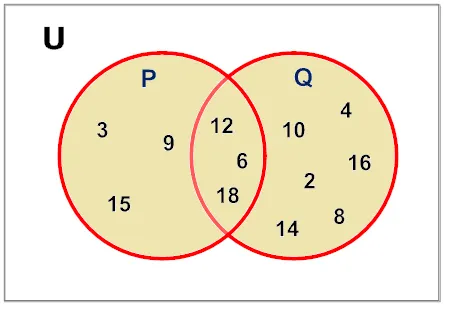
So let’s say there is a company P that has different elements in it, which includes difficulties and strengths in specific areas,  and another company Q which has strengths in a specific area, but has very limited capacity in another important area.

Let for the sake of this analogy take P to be the e-commerce company, and Q the logistics company.

If for maximization of returns, the e-commerce company P  needs logistics necessities (12,6,18,10,4,2,16,8,14) but has only got (12,6,18) ,

But Q being a company that has built logistic capacity with time and experience has got all those necessities (12,6,10,18,4,2,16,8,14).

The solution to the problem would theoretically be the union of the two sets (PUQ) as shown in the grey shaded  portions of the diagram.

Here you have a set that has all the components of Q, and still has the components of P.  As for Q, it benefits by receiving additional inflows from P as is represented by the point of intersection {12,6,18} which is actually also a part of P.

In the end you have more profit for Q and more Specific capacity for P; a win – win situation.

Some companies based in the United States for instance push the manufacture of specific items which are components of their product to China because of the lower cost of production occasioned by cheaper labour.

Nokia for instance is a Finnish firm, but most of its components including it’s  lithium ion batteries are manufactured in China. Nokia saves some money, China makes a little bit more.

So one could suggest that, e-commerce companies merge or sign partnership deals with local transport and logistics Companies who understand the terrain and who have a track record of effective delivery that has been proven and tested with  time.

Nigerians Still Invest in Ponzi Schemes

0

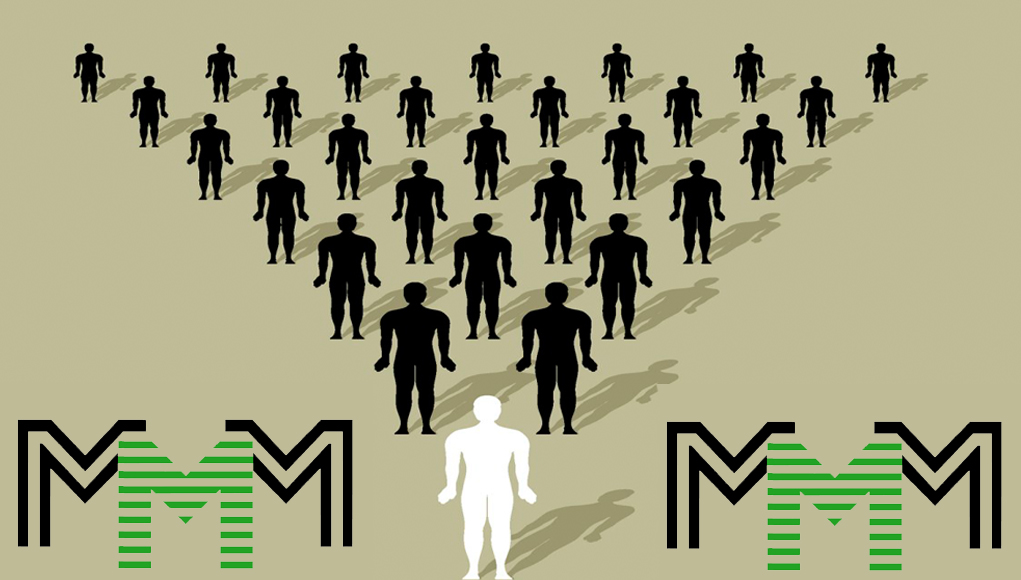
MMM (Mavrodi Mundial Moneybox), a social financial networking scheme, came into Nigeria around November, 2015. The Ponzi scheme promised Nigerians 30% returns on the money they “invested”. However, they will not have access to their money and the “interest” until it matures 30 days later. This promise was so enticing because whereas banks will give you 0.3% interest on your money with them (that is if you didn’t withdraw from it within the month), MMM will give you 30%. This promise of financial independence attracted many Nigerians.

I was among the subscribers of MMM. I learnt about it through my neighbours, who came to sell the idea in the school I worked with then. Most of the teachers jumped in and we really enjoyed it while it lasted. When MMM crashed, we paid the price fully.

The news of the suicides that followed the crash of MMM still tastes bitter in my mouth. There were also cases of crashed marriages and businesses because of unwise investments made by people who believed MMM was their answered prayers. The country was indeed thrown into mourning that period.

But have Nigerians learnt from this bitter experience? No, not at all; they have actually learnt nothing. Most Nigerians refused to learn. MMM only opened the door for more fraudulent Ponzi schemes to enter Nigeria.

Sometime in April, or was it May, my friends contacted me and asked me to invest in another Ponzi scheme called Loom. This one pays eight times of a person’s investment after some days (I think after four days). I told all my inviters that I am yet to recover from MMM so I won’t go in for Loom, which I saw as a looming disaster that will only bring me gloom. I was called chicken livered and all, but I don’t regret my decision because Loom has joined the list of Ponzi schemes in the waste bin.

What prompted me to put up this article is that I went into my Telegram page this morning (after weeks of not visiting it) and noticed a lot of notifications from people and groups I knew nothing of. I only belonged to three groups in Telegram, which I joined because their activities and discussions help me a lot. But today, I found seven new groups that I didn’t add myself and people I don’t know by sending me private chats.

I ignored the chats because I’ve discovered how porous Telegram is but I decided to check out the groups. Out of these seven new groups one discusses matters relating to community development (they are adding people from Anambra State so I guess it has some political undertones) while the other six post matters that sounded like Greek to me.

In these other six groups I’m referring to, I saw comments like, “boss, confirm my payment”, “I want to send up 500k”, “manager reply my direct chat”, “new members have special offers”, “promo package for those that brought new members” and things like that. The first thing my mind told me was, “these are fraudsters”. But as I checked more of these groups, I noticed that they are different Ponzi schemes quietly making their transactions through the social media. People quietly add those they felt will be interested without first notifying them. Maybe, they hoped that by the time the person studies the movement of cash up and down, he will be enticed into the game.

So, here is the whole summary, MMM is still operating in Nigeria. But it is wearing different clothes and answering different names right now.

Of course, I heard that the original MMM is still operating in Nigeria even though its founder, Sergey Mavrodi, has died. But that is not the point I want to make here. The major issue is that Nigerians are still “investing” their hard earned money into wrong ventures.

If you truly sit down to analyse why people go into Ponzi schemes you will agree with me that poverty wasn’t the cause. During the MMM days, people accused poverty for influencing their decisions to take the risk. But today that NairaBet, NaijaBet and other betting houses have kept the low income earners busy, no one will accuse poverty again for pushing people into this high risk “investment” plan.

It is improper to refer to any of these Ponzi schemes as investment. Yes, it increases the money the person “invested” by collecting from other “investors” to settle him; but is that how investments work?

Nigerians need to understand that they can never increase their income through these shady ventures. They need to learn the “easy come easy go” idiom and put it to use. They should stop taking unnecessary and stupid risks. There are so many ways money can be invested and there are many ways income can be increased, choosing Ponzi scheme will only end in disaster.