DD
MM
YYYY

PAGES

DD
MM
YYYY

spot_img

PAGES

Home Blog Page 6589

The Need to Address Unexplained Charges Levied by Nigerian Banks

0
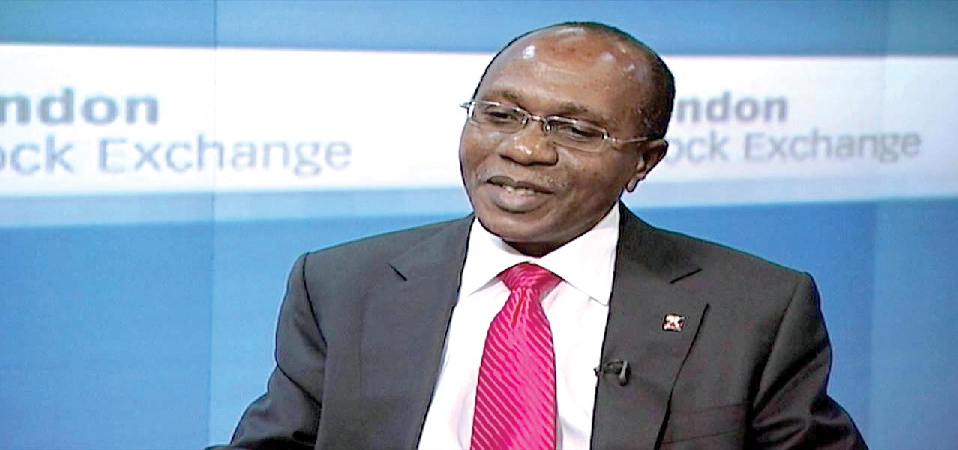
CBN Governor

There are so many unexplained charges and deductions made by Nigerian banks that are beginning to beg for explanation. Maybe why these banks continue with these acts is because nobody questions them. Nigerians always wave-away things that they should address with comments such as, “Who will listen to you if you complain?” or “Just give them what they want so they won’t delay you” and things like that.

The other time I went to Fidelity Bank to transfer some money to a First Bank account. I was told that I will pay N250 cash there and then for the deposit slip. So, if I want to transfer to three different accounts, I will pay a total of N750, excluding the deductions made to my account as the transaction charges. A man beside me asked why he should ‘buy’ deposit slips and was told that it was a way of encouraging ‘cashless’ banking. I truly didn’t understand how interbank fund transfer became physical cash handling. And the bank still charged me for performing the transaction. So, here I am paying two times for just a single transaction. I sincerely hope Fidelity Bank has stopped that extortion.

Anyway, the charges that prompted me to drop this article here is the ‘commission’ collected by banks located within the campuses of Nigerian higher institutions. These banks collect certain amount of money for every payment made into schools’ accounts. For example, if you want to pay your school fees and you decide to use the bank within the campus, you will be charged a ‘commission’ by that bank for paying your school fees through them. This isn’t commission for paying late or something; it is commission for something no one wants to explain to us.

I first encountered this ‘commission’ payment of a thing when I was running my M.A. I needed to make some payments into the school’s, faculty’s and department’s accounts and decided to do that when I go for lectures. I went into a bank there, filled out several deposit slips (you know, every item on the school fees breakdown must have a separate slip), went to the cashiers and handed over the money and the slips only to be told that I didn’t fill the deposit slips for the ‘commissions’.

Honestly, I didn’t understand what the cashier said because it didn’t make sense to me. She gave me back my money and the filled slips and told me to come back when I was with the deposit slips for commissions. I told her I don’t understand what she meant but she seemed to sense that I was in trouble and decided to ignore me. I went to the customer care table to complain about paying commission for making deposits and was told that it is the way they have been doing it. I was to pay N200 for every payment going into the school’s and the faculty’s accounts and then N100 for the ones for the department.

I calculated how many slips I had (and each item to be paid for had separate slip and separate commission) and discovered that the commission was more than my heart could bear. I annoyingly left that bank and went to another one, still within the campus. There I met another story. The cashiers were cordial enough to tell me that the ‘commission’ was for ‘processing’ my payments. Well, I finally paid what I could and left.

This was two years ago. I thought this illegal charge has stopped because I no longer pay through the banks in schools. But a few weeks ago, I happened to be in a bank within a university in Enugu and found out that this tradition is still maintained. This very bank here collects N350 for every payment made into the school’s account. So you can imagine how much a student with about ten deposit slips will pay.

Honestly, I don’t understand why banks have to compel students and parents to pay commissions for paying their schools fees and other fees because they did so through banks located within the school. If you still pay these fees in branches of these banks outside the school, no commission will be demanded for. So, why should the ones located in the campus charge for these payments? And why is CBN not saying anything about this? Why hasn’t there been any explanation on why this ‘commission’ should be collected from payers?

Remember that a staff of one of the banks told me that the commission is for processing payments made into the accounts. I want to ask, if truly there is something like “processing payments”, who should bear the cost? Why are customers easily overtaxed in this country? Why do customers have to bear the burden of everything? Why is it easy to legally cheat people in this country?

There is need for this matter to be addressed. If one of the conditions these banks gave schools for opening branches in their campuses is collection of ‘commissions’ from payers, they should publicly declare that so everyone will know what they are up to. Enough with this extortion of theirs. Nigerian banks are notorious for illegal and hidden charges. They should declare what they collect from customers and why they should do that. It’s high time they stopped their flimsy and shady excuses for stealing from the masses.

Cars45’s Parent Company Raises $400 Million from OLX Group

0

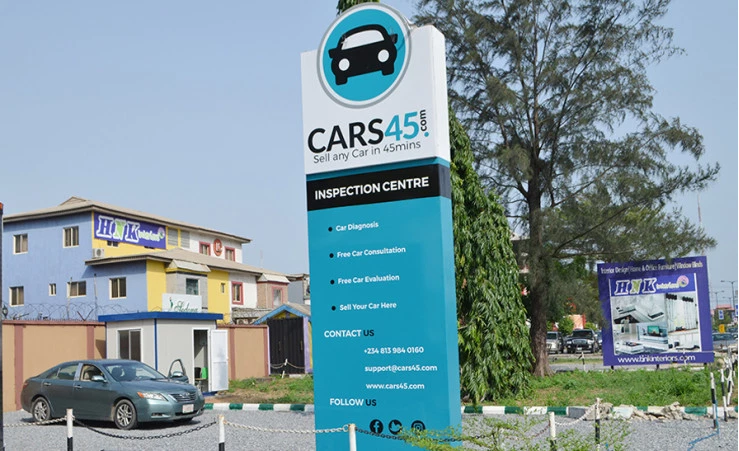
It is simply amazing. Cars45 through its parent company, Frontier Car Group, has raised $400 million from OLX Group, valuing the business $700 million. Cars45 is a very fascinating startup  – it buys, sells, swaps  your used car within 45 minutes. Innovation is not just about technology. Cars45 is innovating on business model. Hybrid is in the gene and Cars45 is a category-king company. OLX Group is part of the largest company in Africa, by direct and indirect market caps – the Naspers from South Africa. Cars45 is Berlin-headquartered!

Frontier Car Group, the parent firm of Cars45 parent firm has raised $400 million from OLX Group, a Prosus classifieds business. Prosus is a European unit run by South African media giant Naspers.

Frontier Car Group’s Cars45 has operations in Kenya and Nigeria and is looking to work with OLX Group to expand operations in emerging markets.

The Frontier Car Group will use OLX Group’s US$400 million to fuel expansion in emerging markets. The $400m investment, comprising a primary injection of capital in FCG and the contribution of OLX’s joint-venture shares in India and Poland, as well as the acquisition of shares held by other investors, founders and management making OLX Group the largest shareholder in FCG and puts the valuation of FCG at $700m.

About Cars45 from its website.

We are Nigeria’s largest car auction service provider with the goal of helping hundreds of customers to sell their cars.At Cars45 our passion is to build the infrastructure for commerce that allows sellers and buyers of Nigerian used Cars to exchange value quickly, cheaply and with unhindered access to independent relevant information required for decision making. We have inspection centres at strategic locations to make it easy for our dear customers to sell their cars.

Press Release

FILE PHOTO: Bob van Dijk, CEO of Naspers and Prosus Group poses at Amsterdam’s stock exchange, as Prosus begins trading on the Euronext stock exchange in Amsterdam, Netherlands, September 11, 2019. REUTERS/Piroschka van de Wouw/File Photo


In 2018 OLX’s venture arm invested $89 million in FCG, a start-up co-founded in 2016 by 26-year-old American CEO Sujay Tyle with emerging market specialist Peter Lindholm and chief technology officer Andre Kussmann.

BERLIN (Reuters) – Prosus PRX.AS classifieds unit OLX Group will invest up to $400 million in Berlin-headquartered used car trading platform Frontier Car Group (FCG) and combine their operations across emerging markets.

That helped FCG expand from four markets to 10: Argentina, Chile, Colombia, India, Indonesia, Mexico, Nigeria, Pakistan, Poland and the United States.

“They have blown all my expectations out of the water,” OLX Group CEO Martin Scheepbouwer told Reuters. “So I said to Sujay, what more can we do?”

OLX will inject capital in exchange for new shares and a tender offer to buy out existing shareholders. The partners will also fold in their joint ventures in India and Poland.

It’s not clear what stake OLX will hold after its investment but it expects to be the largest shareholder.

BUSINESS MODEL

FCG’s approach is similar to that of another Berlin start-up, AUTO1, which is backed by Japan’s Softbank Group.

FCG allows sellers to request a quick online valuation before bringing their car in to an inspection center for an estimate that serves as the basis for an on-the-spot sale to a dealer or private buyer.

“That provides a superior experience for many people, especially in emerging markets where there’s a lack of transparency, a lack of trust and a lack of infrastructure,” Scheepbouwer said in an interview.

FCG employs 1,700 people and runs 500 inspection centers. The company has turned over $700 million in the past 12 months, tripling its revenue.

Tyle said FCG is “very much about how we can be the most trustworthy,” something that is especially important in countries where doing cash deals can be a dangerous undertaking.

Amsterdam-listed Prosus was spun out of South African Internet giant Naspers and holds a stake in Chinese tech giant Tencent.


Visa Picking 20% of Interswitch at $1 Billion Valuation

0

Visa is picking 20% of Interswitch with $200 million, Sky News reports. That makes Interswitch a real unicorn at $1 billion valuation. Great news except that I am afraid once Visa takes all the prizes, Verve will disappear! I hope Interswitch protects that, as Verve has a real potential to become a pan-African card. Of course, Interswitch is a business and can do whatever it wants. Nonetheless, this is good news for team Nigeria.

Sources said on Sunday that the US-based multinational would invest $200m in Interswitch in return for a 20% stake.

The deal will see Visa becoming a cornerstone investor in the Nigerian-headquartered company ahead of a prospective initial public offering in London during the first half of 2020.

Interswitch is one of the largest Africa-focused electronic payments and infrastructure companies, with point-of-sale terminals, online consumer payment platforms and its own card, Verve.

Interswitch’s Innovation And Monopoly Hangover

Halima Aliko Dangote Gets Closer To The BIG Role

1

A new global leader is coming to the scene – the business reign of Halima Aliko Dangote is about here. Ms Dangote takes over Commercial Operations of Dangote Industries Limited as Group Executive Director, which puts her on the path of emerging as Group CEO once her father, Mr. Aliko Dangote, retires. We wish her great success in this new role, on this rotation circle, as she joins the league of the most powerful business leaders of the 21st century.

Full press release below.

Halima Aliko Dangote has been appointed as the Group Executive Director, Commercial Operations of Dangote Industries Limited (DIL), one of Africa’s largest and most diversified business conglomerates.

According to a release by the company, Halima Aliko Dangote is returning to the Group after serving on secondment in several capacities across two of its Business Units over the last five years. She is also a Trustee of the Aliko Dangote Foundation, the philanthropic arm of the conglomerate.

In her most recent role, Halima served as Executive Director of Dangote Flour Mills. Remarkably, she led the turnaround of the business from loss in turnover to a profitable status; a feat derived from consistent high performance over time.

Previously, she served as Executive Director of NASCON, a manufacturer of salt, seasonings and related consumer products, which are enjoying huge patronage among consumers. She continues to serve as a Non-Executive Director of NASCON.

Halima is the president of the Board of The Africa Center in New York, a uniquely focused center providing a forward-looking gateway for engagement with Africa, while encompassing policy, business and culture. She is a Board member of Endeavour Nigeria, and is also a member of the Women Corporate Directors (WCD).

She has over 12 years of professional experience and has held several executive management roles. In her new role, Halima will be responsible for leading the development and implementation of the Dangote Group’s customer strategy to drive customer growth, improve customer relationship management, enhance customer experience and increase long term customer value, according to the release.

She will also be responsible for the implementation of the Group’s shared services strategy with specific oversight for the following functions; Commercial, Strategic procurement, Administration and Branding & Communications.

Halima, who has a strong passion for women empowerment, holds a Bachelors’ Degree in Marketing from the American Intercontinental University, London, United Kingdom and a Master’s Degree in Business Administration from Webster Business School, United Kingdom.

She has attended a number of high profile leadership development programmes including: the Programme for Leadership Development (PLD) at Harvard Business School; Executive Development Programme at Kellogg School of Management; Finance and Accounting for Non-Financial Executives at Columbia Business School.

The Dangote Group, which recently emerged as the Most Admired African Brand and the Most Valuable Brand in Nigeria for the second consecutive year (2018 – 2019) is actively involved in manufacturing cement, sugar, salt, flour, poly-products as well as logistics, oil & gas and real estate.

Interview with CEO of Faryat Products On Building Companies Even With Sickle Cell

0

When you hit rock bottom in life, it is not the end, it is just a bend.

I had the pleasure of interviewing a sickle cell patient who had been through the thick and thin in life. The job wasn’t coming because of her condition.

She had two options:

  • She could either continue to endure and be limited due to her condition.
  • Or take a bold step to rewrite her story by taking some intentional actions.

What did she do?

Let’s find out from the interview I had with her.

Can you tell us more about yourself?
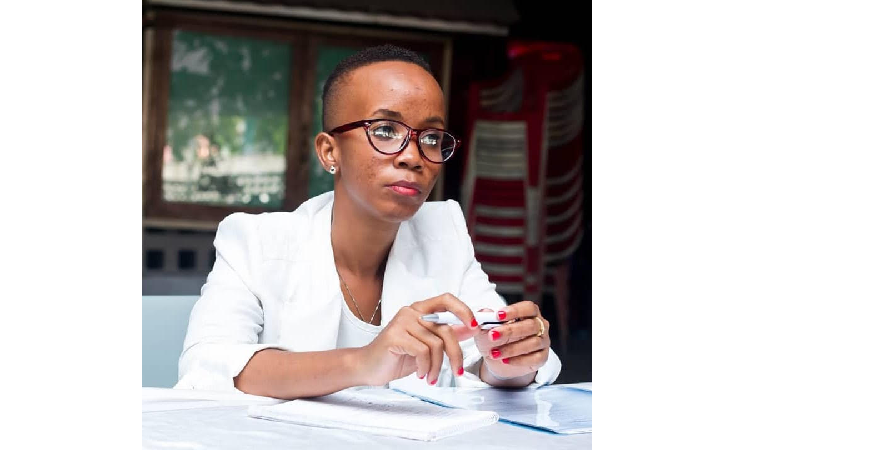
My name is Zainab Ahmed Lukuta, the fourth child from a family of four children.

I did my Primary School education in Tanga Region, Tanzania. Later, I shifted to Dar es Salaam for my Secondary education.

I went to another region (Iringa) for my University studies where I studied Community Development Course at a degree level.

After my studies, I got married with two healthy boys.

I now run a business of Tea Spices which I am the founder and CEO. I also do motivational speaking to different groups of people.

It is great to have you in this edition. I came across your profile on LinkedIn and I just couldn’t look over it. Your profile stated that you’ve overcome some health challenges in the past and that has really motivated you in life. Can you share more about the health challenges?
Once again, thank you, Chinedu.

From my young age, I can remember not being so well. I used to be hospitalized with my mother and I had very poor attendance at school because of that.

When I started Secondary School, I was still getting sick but it wasn’t like before. Then when I was in Form Three, I got so sick that my blood dropped to 3, and I fainted for some days.

So they run a medical check up on me and discovered that I had Sickle Cell. The challenges of the Sickle Cell started showing since I was young but nobody thought it could be sickle cell.

That was really shocking. Were you able to trace how you got into this?
Of course, a person gets Sickle Cell genes from both parents. Both my mother and father come from families that carry the genes of Sickle Cell.

I am very sure that there are still some people who know little or nothing about this. Maybe if they read this interview, they will start considering genotype as the key factor in choosing a partner. Can you share some of the horrible challenges you went through?
Definitely, I’ll share those horrible experiences I had.

After I came out of the hospital, I started having so many pains as I was walking and the reason was the fluid on my hip joint dried and so the bones were grinding each other. The only thing I could take painkillers and other pills for adding blood.

I stayed with the pain until I finished Form six and joined the university. But before I sat for my University Examinations, I had to postpone it and go to the hospital for an operation on both of my legs. Where they cut my hip bones and removed the bone marrow. The reason they did that was to allow blood circulation through the hip bones.

I also used to feel so tired that I could not stand or walk for a very long time. That moment, I used to be very sad and emotionally weak. I found faults in everyone around me because I was in so many pains and I thought it was not fair. Why me?

Spices in markets

Big question – Why me? Who would you have blamed for this?
Now, I blame nobody. Even before, I was just not a happy girl and I could not blame my parents for that.

I can imagine. Career wise, how did that affect you?
I was never employed in my life apart from the works I volunteered. I used to apply for jobs but I just didn’t get any.

It got to a time that I thought about stopping to send job applications because that operation I had was not successful and the pain was still there.

I just didn’t know how I was going to be able to be employed while I had so much pain.

Are you saying it was the sickle cell disease that has stopped you from getting a job or you weren’t just lucky to be shortlisted?
The challenge I got with my legs being in so much pain stopped me from applying. Although I did apply, I never got any, and it is because God wanted me to do something else with my life.

And what is that Zainab?
There are so many people in this world who are going through so many challenges every day and I believe that among many who also went through challenges, it’s my duty to remind those people to keep holding on and to learn from the challenges they go through because God gives us those challenges to learn and grow, and also to shift us to a higher place where we deserve to be.

I am now doing well after my last operation. They have kept an artificial hip bone on my left leg. The pain is gone and I am happy with my family.

You are happily married with two lovely kids. That must have taken an angel to stand by you in those trying times. What can you say about him (I mean your husband)?
He was brought to me for a reason, He is a very loving man. During those hard times, he was always there to support me. He challenges me to grow stronger every day. I thank God for bringing him into my life

One thing for people to understand and remember everyday is WE ARE NOT IN CONTROL.

Once we know this and recognize there is God, then we shall have fewer problems in our societies.

Let’s endeavor to work hard and pray because God listens.

I definitely agree. Can you tell us more about your business?
I do make tea spices. But in my spices, I have mixed with avocado seed flour and I have decided to make mine this way so they can help anyone who is going to use them.

I mix cinnamon, cardamom, ginger, clove and an avocado seed flour.

The seed of an avocado has more nutritional value but many people throw it away and just eat the avocado fruit. To simplify the use of the avocado seed, I have decided to come up with my own product of tea spice so people can enjoy tea but at the same time get the nutrients from an avocado seed. I am the CEO of Faryat Products.

That’s a great work, Zainab. How has your business being faring since you started and how many years now?
It’s less than a year since I started it and ts going okay but I still have work to advertise my business in order to let people know that my product is different from many others that are in the market. And also, how much my product can help People in solving different health issues.

Do you have a website?
I haven’t prepared one but I am working on it.

What support would you love to get for your business from the government or the audience reading this interview?
I would love to see the government giving support for start-up companies like mine, business education, financial education and also, to reduce the processes in registrations of business.

From the audience reading this, I would love to get your support by buying my product for your consumption.

In doing that, it will help me grow the business and also touch the lives of many youths out there by giving them jobs and motivating them to start something on their own.

What’s your advice for every sickle cell patient reading this interview?
Sickle Cell disease is just like any other disease or challenge anyone can have. But you should NEVER EVER give up on your life because of it.

Once you know you have it, follow what the doctors tell you. And never stop dreaming big because every one of us has a chance to grow and be whoever he or she wants to be.

Thank you, Zainab. It has really been nice chatting with you. I wish you sound health and success in all your endeavours.
Thank you so much, Chinedu, for giving me your time. I believe my interview will inspire someone who can bring a change into his or her life.

Definitely. Have a wonderful week ahead.
And you too my friend.