DD
MM
YYYY

PAGES

DD
MM
YYYY

spot_img

PAGES

Home Blog Page 6593

All Set For My Presentation In The National Assembly, Abuja Today

2

All set for my presentation in the Nigerian Parliament today. The National Assembly is our nation’s national square – I like coming here to discuss bills, deliver briefs or support the leaders in ways I can. Former U.S. Vice President Joe Biden Office got me into this type of service: you have brilliance, make time for Nigeria. I am an optimist – Nigeria can only get better even though I hope we can move faster on many things. But those changes can only be executed by people. #BelieveInNigeria

Ndubuisi Ekekwe Will Be Speaking in National Assembly Abuja on Nov 21

Why VISA Partnership Can Make a Major Comeback for Verve

0
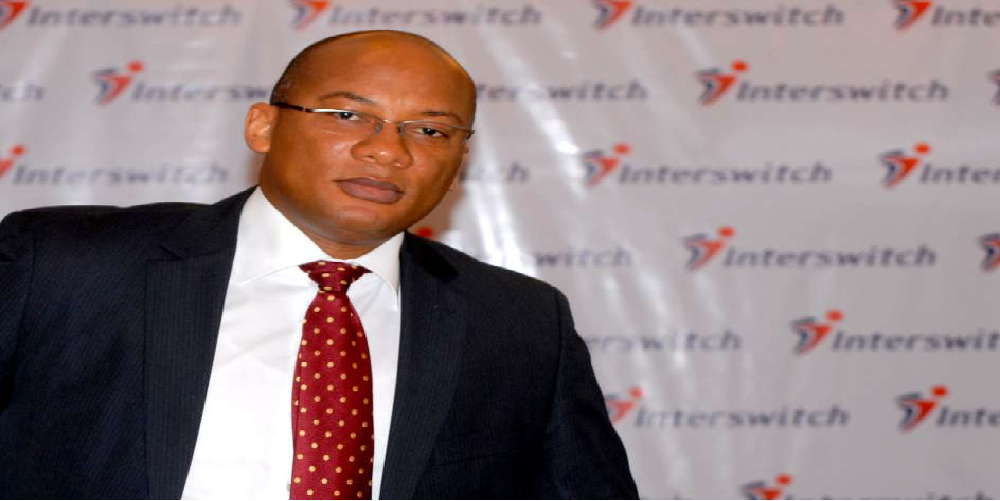
The founder of Interswitch

The largest domestic debit card scheme in Africa with more than 19 million cards activated on its network as of May 2019 owned by Interswitch might just have given a new life to its Debit Card Platform. After numerous unproductive services of the card operation on even local and mostly global scale, can Interswitch save Verve?

On The New Future of the Verve Payment System   

In 2018, electronic payments in Africa accounted for only 12 percent of transactions by volume, compared to 54 per cent in Europe and 79 per cent in North America. Sub-Saharan Africa is the fastest-growing digital payments market in the world, with electronic payment volume expected to grow at a CAGR of approximately 35 per cent from 2018 to 2023 in the region (excluding South Africa). This progress is expected to be driven by the deepening payments infrastructure, population and urbanization growth, GDP growth above the global average, increased mobile and internet penetration, as well as a supportive regulatory landscape for electronic payments and financial inclusion.

Verve International is a Nigerian Pan-African and multinational financial technology and payment card brand owned by Interswitch Group. It was founded in 2009, as a subsidiary of Interswitch. In 2013, it became an autonomous business entity in a restructuring exercise. In 2005 the Central Bank of Nigeria’s issued a mandate to the Nigerian payment industry that operators should migrate from magnetic strip to EMV chip and PIN platform by 2009. The CBN migration policy was adopted to phase out the magnetic strip when the technology became susceptible to fraudulent transactions. It initially issued six million cards in partnership with several Nigerian banks.

Verve offers card products in Nigeria. In 2013, Verve was reported to have “over 20 million cards in circulation and access over 119,631 points of sale, 11, 287 ATMs and over 1,000 online merchants.”[6] In March 2013, Discover Financial Services partnered with Interswitch, which enabled the acceptance of Verve Cards across the Discover global network, covering 185 countries and territories as at the time of the agreement. The alliance also allowed acceptance of Discover and Diners Club International (DCI) Cards at Interswitch-enabled ATM and point-of-sale (POS) terminals for purchases in Nigeria.

The Issues Surrounding Verve

Verve is not really a bad payment system if you consider doing digital payments in Nigeria or in the various African countries that supports the Verve service. The most annoying part that has pestered Nigerians is the rejection of Verve cards on social media advertising platforms such as Facebook, where PayU does not accept but reject Verve cards. Twitter and even Instagram seem to even ignore the Verve cards on their platforms, seems like Verve is a joke to them.

These issues have not been regulated since Verve started operational service on digital payments. Thus, it seems that Interswitch wasn’t looking at scaling their payment system globally by the way. This has made numerous digital savvy people who make online payments to request for Mastercard or VISA cards, as you won’t blame them will you?

Interswitch Might Just Have a Fix

1.06 billion credit cards! The number of credit cards from the four primary credit card networks (VISA, Mastercard, American Express, and Discover) is 679 million in 2018. There were a total of 1.06 billion credit cards in 2017 and the projection for 2022 is close to 1.2 billion. All hope is not lost for Verve as they have partnered with Visa Inc. (“Visa”), a world leader in digital payments, as their announced a strategic partnership is one that will further advance the digital payments ecosystem across Africa.

What are we expecting to regards this partnership? For what it’s worth, VISA is occupying the global scale of Payment systems globally and yes, I mean globally because; Visa is accepted in over 150 countries around the world. This makes it as one of the most universal credit cards available. The wide acceptance of Visa is substantiated by the fact that more than 20 million merchants accept Visa cards across the globe. The Security for its cardholders is the first priority for Visa too.

The Future. . .

Visa stands for Visa International Service Association. The company consists of six different entities. Each segment focuses on one particular geographical area, providing offers and meeting regulations that vary from region to region. Just so you know, more than 500 million Visa credit cards are currently circulating in the United States. This is the nation’s leading electronic payment brand.

A strategy that has always structured VISA is that ‘No credit cards are directly issued by Visa.’ An association of member banks provide cards to its wide customer base. Though Interswitch is playing its cards right in the regulation of Verve, it could also benefit from the strategic partnership and model that runs VISA. We could see a major global acceptance of Verve on International platforms and services come the Q1 of 2020.

Towards Curbing Election Crises in Nigeria Through Radical Adjustments

0

From the look of things, there will be no election in Nigeria without bloodshed. Election has become a do-or-die affair in this country. No amount of publicity and peace talk can stop violence that accompanies Nigerian elections. In fact, in the near future, election may become synonymous to violence since there is no election without violence.

The recent conducted elections in Kogi and Bayelsa states did not disappoint the expectations of many Nigerians who knew there will massive disruption of the process. As news had it, there was a high level of violence, vote buying, voters’ inducement, intimidation and harassment. Speculation also had it people died and some ad hoc staff are missing.

One couldn’t help wondering why violence must accompany elections. A lot of people blame poverty for this but I believe this problem supersedes poverty and its related challenges. Why I believe so is because most of the thugs and disruptors are from average homes where they have good means of sustaining themselves. Some are even students from tertiary institutions, whose parents believed were in school not knowing they left their studies in search of thuggery jobs.

I believe the major cause of the high rate of violence in elections these days is the massive salary, allowances and other earnings received by our public office holders. These aspirants that cause troubles know that what they will make in a tenure as public officers, they cannot make in a life time in their private businesses. They see politics as the easiest way to climb the ladder of wealth without doing much work. For this, they do all within their power to get “juicy” positions even if it means sacrificing their fellow human beings.

Nigerians have been campaigning for peace during elections. Mothers have been told to hold their children so they don’t become politicians’ thugs. Youths have been appealed to, to desist from violence. Even political aspirants have promised they won’t instigate violence. Yet, the thing that cries still cries, as my people will say. For that I suggest radical adjustments to Nigerian political system as an approach to curbing election crisis.

THE WAY OUT

If the current administration truly wants to put a stop to election crisis, they should consider the following:

  1. Electronic Voting System

The world is going digital; and so Nigeria should follow suit. There is need to cast votes electronically. This method isn’t the one that makes use of special electronic voting machines, where voters converge in a place to cast their votes (since the thugs will also converge and harass voters and INEC officials). The method I’m suggesting is the one that will involve the electorates sitting down in their homes and casting their votes with their mobile phones.

This method may sound outrageous, but it used by private establishments. For example, Big Brother Naija uses this approach and they are very effective. So why won’t it be adopted for election of public office holders?

  1. Salary Slash

If political office holders have to struggle for minimum wage the same way civil servants do, I don’t think anybody will want to take up any position, even if his village people donated him to the federal government. But on a more serious note, there won’t be much struggle for offices if the salaries, allowances and other mouth-watering entitlements of Nigerian public officers were significantly reduced.

  1. Adjustments in Qualifications

I’m not concerned about the paper qualifications or educational certificates the person has. My concern here is what makes the person eligible to rule or lead us. If you will take time to meditate on what I’m going to say here, you will agree with me.

Have you noticed that most of the aspirants that have huge businesses in Nigeria do not instigate violence? Have you noticed that most of the people that cause problems are those that have nothing to lose if this country goes up in flames because of election-induced violence? I mean, have you noticed that the ones that took up offices when they were already rich don’t scramble for positions and they vacate offices without scuffle?

I won’t mention names because I believe their good names speak for them. Because of the good examples laid down by these people, I believe it will be better if one of the prerequisites for vying for any political office is the evidence of establishing a network of businesses and companies that have been contributing to the growth of the nation’s economy. It will also be better if those businesses and companies have been in existence in the country for not less than 10 years, and that they show signs of growth and development. If this is adopted, all the people taking up political positions will think of policies that will help their businesses, and consequently the nation’s economy to thrive. This approach will only see people that want to develop the country in public offices, and not those looking for ways of enriching their pockets.

  1. Single Tenure System

Of course, if you are a busy man, who was elected by your people to help them develop the nation, and they pay you peanuts for that, you couldn’t wait to leave office. But because so much money is paid to these officeholders, and more money paid when they leave, they don’t want to vacate seats for others. For example, look at our senate and you will see those who felt their people do not have any other good person that can represent them (I didn’t say anything o). But seriously, Nigeria needs to adopt a single tenure system for public offices.

Hate Speech: Nigerian Broadcasting Corporation (NBC) Mandated to Make New Rules

0
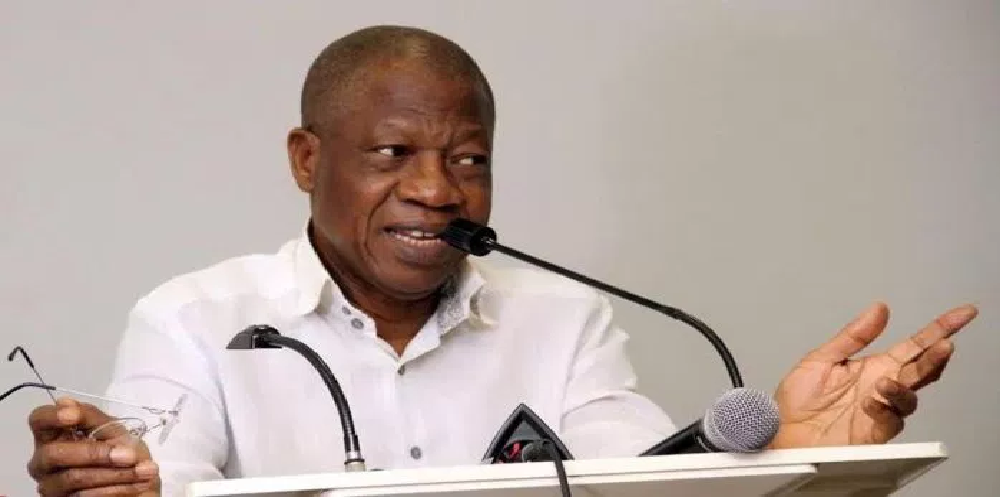
Lai Mohammed, Nigeria's minister of information

The Federal Government of Nigeria has directed the Nigerian Broadcasting Corporation (NBC) to formulate new regulations that will, among other things, keep the media industry competitive, NAN reported.

The directive came from the Minister of Information and Culture, Lai Mohammed, on Tuesday in Abuja, after receiving the report of the NBC Reform Implementation Committee which was chaired by prof. Armstrong Idachaba.

Mohammed said the new rules should protect the media industry from anti-competitive behaviors and stipulate adequate sanctions for anyone caught violating the rules. He also directed the NBC to make rules to regulate internet broadcast so that those who provide broadcast on the internet will do so with a sense of responsibility.

The Minister said the fines will be reviewed according to the directive given earlier by President Muhammadu Buhari, the Commission should amend the N500, 000 to N5 million for breaches relating to hate speeches, inciting comments and indecency. And willful repeat of infractions on three occasions after fine would attract suspension of license.

He also directed the Commission to upgrade breach of political comments relating to hate speeches and divisive comments to Class A offense in the broadcasting code. Mohammed said the Committee’s report will be used to facilitate the process of forwarding an Executive Bill for the consideration of the Federal Executive Council and further legislative action.

“The Bill will address the existing lacuna in the areas of the regulation of the internet, the ongoing Digital Switch over, Digital Access Fee, and insulation of the regulator from partisan politics.

“An important aspect of Mr. President’s approval for the reform of the NBC is in the area of the welfare of staff. I will therefore, be directing the NBC to commence work on an enhanced welfare package for the staffers of the Commission, with a view to implementing such as soon as possible.

“In this age of technology and the internet, a responsible and respectable broadcast industry regulator must be properly equipped. We shall therefore, commence the process for the acquisition of modern broadcast equipment for the Commission for the purpose of monitoring and enforcement.

“Similarly, government shall commence the process of beefing up the material, training and manpower needs of the Commission,” he said.

Government’s push to regulate media activities in Nigeria has stirred a lot of opposition, both locally and internationally. It is believed that press freedom has come under intense attack in the last four years, with many journalists locked up on charges bordering on treason and hate speech.

Earlier in the year, African Independent Television (AIT), was temporarily shut down because of its social programme called Kaaki Social, where the views of Nigerians are collated from social media and air on the channel. The government considered the views hate inciting and forced AIT to shut down the programme, even the Anchor, Ohimai Amaize, was forced to flee the country.

Ever since then, the Nigerian government has been unflinching in its determination to control what goes out in the media. Some journalists have been locked up for reporting what the government considers a threat to national security.

On November 12, the Hate Speech Prohibition Bill passed first reading at the plenary; the Bill is seeking to criminalize the offense with death as penalty. The Bill, sponsored by the Deputy Senate Whip, Senator Sabi Abdullahi, is seeking to establish agency for hate speech under the name, “National Commission for the Prohibition of Hate Speeches (Establishment etc.) Bill 2019.

When the bill was first presented to the 8th senate by Abdullahi, who was then the Spokesperson of the senate, it describes hate speech as “an offense committed when a person publishes, presents, produces, plays, provides, distributes and/or directs the performance of any material, written and/or visual, which is threatening, abusive or insulting words or behavior, commits an offense if such person intends thereby to stir up ethnic hatred, or having regard to all the circumstances, ethnic hatred is likely to be stirred up against any person or persons from such an ethnic group in Nigeria.

“A person subjects another to harassment on the basis of ethnicity for the purposes of this section where, on ethnic grounds, he unjustifiably engages in a conduct which has the purpose or effect of (a) violating that other person’s dignity or (b) creating an intimidating, hostile, degrading, humiliating of offensive environment for the person subjected to the harassment.” The 26 page bill highlighted hate speech among other things as offenses it seeks to make punitive.

Although the reintroduction of the bill has been met with fierce opposition that the senate even denied sponsoring the bill, the presidency appears to have a backup plan in case Abdullahi’s bill fails.

The Minister of Information and Culture, Lai Mohammed has maintained that there is no going back in the Executive’s quest to curb the media, even though the move has been described as a draconian clampdown on press freedom.

The concern being raised by many is that there are no codes stipulating what hate speech is, which leaves it to the discretion of the Executive or anyone in authority to determine. And that is considered a legalized way to suppress dissenting voices.

An instance given by the Socio-Economic Rights and Accountability Project (SERAP), is Agba Jalingo, a Cross River State journalist who made a report on the State Governor, Ben Ayade, and was charged with treason. The argument is that the bill, if passed, will enable highhandedness among public office holders, giving the room to suppress criticism.

Civil society groups and human rights activists have urged the senate to kill the bill and give attention to more important things.

Nigeria Customs Service’s Unwillingness to Use Scanners Amidst Smuggling Challenges

0

In October 2018, the European Union (EU) handed cargo scanners to Nigeria and Togo, just after the completion of the newly built Seme-Krake joint border.

Keti karlsen, the head of the EU delegation to Ecowas handed the machine to President Muhammadu Buhari and his Benin Republic counterpart, Patrice Talon, to facilitate easy and faster clearance of goods along the Seme-krake border.

The Seme Krake Joint Border Post (JBP) was facilitated by ECOWAS’ Road Transport and Transit Facilitation Programme, aimed at fostering regional trade through road infrastructure. The JBP defied the old norms to represent modern structures that will accommodate the current demographics of West African states. With its international standard, there is room for huge inflow of goods and services and intra-trade activities in the region.

But to many people’s worry, especially shippers, the Nigeria Custom Service (NCS) is yet to put the scanners to use. It’s been over a year now, and there is no plan to install the equipment.

Recently, the Nigerian Shippers Council (NSC) organized a stakeholders meeting over the border closure and the way forward. During the meeting, Bello Jibo, Head, Revenue for Seme Customs, acknowledged that the NCS has in its possession, two functional scanners at Seme Border.

“One scanner was provided by the Economic committee of West African States (ECOWAS) to us but we have not started using it. We are making use of the old scanner that we have. Though just recently, the old scanner had a downtime, but we are currently working on it,” he said.

Stakeholders’ concern about the functionality of the scanner stems from the recent events in the border, mainly the closure that has subjected goods and services to more scrutiny. Jibo did not give a reason why the scanner is not in use and that stirs curiosity.

Attention has been shifted to the seaports recently due to the closure of land borders. Hassan Bello, Executive Secretary of the NSC noted that there is an expectation of increase in activities at the seaport, a reason the Customs Service should be up and doing in the use of equipment to fast-track import and export activities through the seaport.

“We are having longer waiting days in the anchorage, and we need to put other ports into use. Customs needs to ensure that equipment like scanners are put into use as well to fast trade through quicker cargo clearance,” he said.

Jibo acknowledged that the scanners, when functional, have been instrumental to speedy processes of clearance of goods in the border. He said when goods are scanned and nothing wrong is detected in accordance with trade guidelines, the cargo would be passed without physical examination.

The concern about unutilized equipment goes beyond the Seme Krake border. It has been noted also that the mobile scanning equipment valued at $120 million, handed to the NSC by Destination Inspection (DI) service providers, have been laying in waste since five years now. Just like in other places, the Custom Service has refused to make use of the scanning equipment to the detriment of rapid clearing services.

It is reported that over 90 percent of all goods passing through Nigerian seaports and borders go through physical examination, a process that has resulted in congestion and slow service delivery.

The Managing Director, Gold-link Investment Limited, Tony Anakebe, said the slow pace of clearing activities in Nigerian ports has put other ports in West Africa ahead of Nigeria.

“This is why the process of clearing imported cargo at the Nigerian ports is currently the longest compared to clearing from other seaports in neighboring West African ports,” he said.

The NCS’ refusal to put the scanning equipment to use has been seen as deliberate. The physical examination of goods in Nigerian seaports has been fingered as the bane of transparency and congestion in ports among other things. In the wake of the border closure, experts called on the Federal Government of Nigeria to use gadgets in its fights against smuggling. Obviously, the acknowledgement of the Custom Service that scanners are not being used in the borders is only a confirmation of what many people have been saying – winning the war against smuggling depends more on efficient customs service.

To contain the porousness of Nigerian borders, the Nigeria Customs Service must learn to make use of security gadgets in their service delivery.