DD
MM
YYYY

PAGES

DD
MM
YYYY

spot_img

PAGES

Home Blog Page 6603

Lessons from Israel On Creating An Innovative Globally Competitive Economy

1

According to the World Economic Forum’s 2019-2020 Global Competitiveness Report, Israel is the number one country for entrepreneurship and embrace of disruptive ideas. It is also the first for macroeconomic stability, companies innovative growth, research and development expenditures and multi stakeholder collaboration.

Israel spends 4.3 percent of its GDP on R&D, the highest in the world. An average of 20 new R & D Centres are established every year by organizations in biotechnology, computing, electronics, defense and other various fields critical to human civilization with over 300 multinational corporations having their R&D Centers there. It is also first in the world for venture capital investments as a ratio to GDP.

As the Startup Nation, it breeds 600 net new startup companies every year. It’s Ecosystem is anchored on a tripod of Human Capital, Financing Infrastructure and Research Infrastructure which supports Research and Development that ultimately results in economic value.

The Israel Innovation Authority also known as Matimop is the state agency which promotes and supports Israel’s quest as an innovation nation. It helps in fostering skilled personnel across all Research Centers across the country, investment in research infrastructure, development of finance infrastructure, addresses the market failures in R&D and bridges finance death alleys.

The secret of Israel’s deep technological capabilities which breeds disruptive innovation in its society is rooted in the Israeli Defense Forces elite Talpiot Unit which exposes it’s officers to the best engineering education available in the world.  According to Eric Schmidt former Chairman and CEO of Google the Israeli tank commander who has fought in the Syrian wars is the best engineering executive in the world as they are operationally the best and are extremely detail oriented.

In the Israeli military, tactical innovation comes from the bottom up from individual tank commanders and their officers. Considering the fact that every Israeli undergoes some compulsory experience in its Israeli Defense Forces, technology talents in the Jewish nation are unbounded and unconstrained as the ideology of Chutzpah allows for thought provoking criticism aimed at challenging the existing status quo which is the secret of its victories against countries which threaten her national interest and security.

It’s immigration policy allows Jews from different countries of the world to settle in their ancestral homeland bringing their various skill sets which has led to its entrepreneurship success.

Israel established Yozma an initiative to fund innovators in conjunction with the private sector which supported a huge number of startups which recorded successful exits as unicorns and recently launched Our Crowd, a crowdfunding platform that has helped in deepening access to finance for its entrepreneurs.

Israeli Research Institutions were also the first in the world to commercialize academic research.  The Weizmann Institute of Technology established Yeda (knowledge) to commercialize its research which has fostered thousands of biotechnology products and companies amassing over $400million. The Hebrew University of Jerusalem’s technology transfer company Yissum earns over $1 billion annually from research and has registered over 5,500 patents and 1,600 inventions.

The Nigerian Ministry of Defense should collaborate with the Federal Ministry of Science and Technology and Communication and Digital Economy to engage retired officers of the three units that are engineering graduates to create startup companies.

A $1billion Defense Innovation Fund should be established by the Office of the National Security Adviser to promote Research and Development in the armed forces and fund cutting edge innovative solutions which will be deployed to solve the rising insecurity in the land and others which are important to national development that can be used by civilians will be supported by venture capital. The internet which has transformed human civilization and contributed over a trillion dollars to global economic output was a product of R&D from the United States Defense and Allied Research Products Agency that is at the heart of the USA’s technological dominance.

President Muhammadu Buhari should launch a National Innovation Fund which will be supported by the private sector and give tax credits to organizations that invest a minimum of $10 million annually to fund R & D and startups. This will help to deepen the innovation and entrepreneurship ecosystem in Nigeria to make her economy globally competitive in the comity of nations.

Tim Denning Shared How to Move from Losing a Job and Depression to Being Relevant and Productive.

1

Nobody loves being fired, but when it happens, life must continue.

I came across a story on Facebook about a man that got himself killed because he lost his job. The fear of uncertainties pushed him. Was he stupid? No! He wasn’t at all.

Life can be tough at times, leaving you with no option. Suicidal should never be the solution to this.

That’s why I delved into this aspect of life. How can we deal with the shock of getting fired? My guest, Tim Denning from Australia will be sharing his journey with us.

It is great to have you here, Tim. Can you tell us more about yourself?

I’m from Australia and write for a living. This has been a journey that started back in 2014 and has completely changed my life. My goal is to inspire the world through entrepreneurship and personal development.

LinkedIn has been a big part of that journey and has allowed me to reach many more people than I could ever imagine. Writing on social media can change your life and I wish to see everyone take up that opportunity.

You are a man who has dealt with a lot in life. You have moved on from losing your job and dealing with mental illness many years ago, but here you are still standing, what has actually kept you going?

The kindness of complete strangers. When I lost my job, people I barely knew helped me find new opportunities and gave me the advice and feedback to keep going.

When your goal is to inspire others every day, when you hit your own rough patch, people will be there for you. It’s not the struggle you face but the decision you make about what it means that determines the outcome.

Never ever give up. Losing your job or dealing with mental illness can happen to anyone. Once you overcome immense challenges in life and in business, it gives you thick skin that you can use to tackle even bigger problems and perhaps help even more people.  

Losing your job. What impact (positive or negative) has that had on you?

Whenever I face other people who are in a similar situation or become part of a hiring process, I have a completely different level of empathy. It has brought be closer to understanding other people and shown me how anyone can fall from glory.

Anyone can be laid off or work for a company that goes through financial hardship. It’s not necessarily your fault.

I learned through the process that there were many personal traits I had adopted over the years that weren’t serving me. It was an opportunity to see some of my flaws and actively work on fixing them. The process of unemployment lasted longer than I thought and it gave me plenty of time to reflect.

My friends on LinkedIn were invaluable and if it wasn’t for them, things could have been different. Always be humble. Always be kind. See a little bit of yourself in other people’s problems.

How were you able to move on from the awful experience?

It wasn’t awful looking back. I couldn’t truly be a leader unless I’d experienced both sides of the working world. Every day people are getting laid off or losing their jobs and I could never understand that predicament.

The quickest way to move on is to get out there, back yourself and start looking for your next career. Don’t get stuck in the situation or the delicious temptation to seek revenge. Also, when you’re ready, forgive that bad boss or those colleagues who may have wronged you. That’s the hardest part of the whole process and that’s the true test of humanity.

What significant things did you learn from the experience?

I learned true humility. The situation required me to explain what had happened to potential new employers. The best way was to put a positive spin on it. I compared losing my job to starting businesses. When you start a business, it often takes many failures before you have the one idea or product that goes on to be a raging success.

I explained to hiring managers that if after seven years, you decide to change careers, it’s highly likely that the first time around is not going to work out. It’s normal.

By demonstrating that I could deal with failure and use it to build a new career, I showed my resilience. Employers love seeing how strong you can be in tough times. No one wants to hire somebody who gives up easily or can’t deal with problems. Business is about dealing with problems every day and losing your job is the ultimate test.

In a way, I wish everybody could lose their job at least once to get the benefit of the experience and understand what it’s like to be humbled by life.

Losing a job is not always the best feeling, what would you advise anyone to do in those moments?

Remember that you are enough and all you can do is start again. Staying at home is the worst thing you can do. Get out there and have coffee with people. Network with strangers. Get on LinkedIn and approach people that can help you through direct messages.

In my case, I used my unique skills on social media and my hobby of writing to get the attention of leaders and even barter with companies to get job interviews in return for some free advice on social media. I did the same with recruiters. I helped recruiters with their LinkedIn strategy in return for them helping me find my next gig.

Use whatever talents you have to inspire people to help you during your toughest career moments.

When you landed a new role, was there a point where you felt haunted by the previous experience?

Not really. The only time you feel haunted is when you let your past define your future. What’s done is done and the best strategy is to start again and try even harder this time around.

Do you still feel pressured to do more in order to avoid the previous experience?

I don’t feel pressured but I’m definitely more determined. Nobody is going to stop me and if I fail this time around, it’s going to be on my terms.  The only way you guarantee yourself to repeat failure is by not giving it everything you’ve got. Hard work pays off and so does the discipline that comes with it.

What advice do you have for anyone who has been beaten down by life?

Get around people who will build you up. Don’t kick the can down the road and hang out with people who refuse to try again.

Go to Meetups, attend Toastmasters or get on Eventbrite and go to some business events. Find people who want more out of life and won’t settle for second best. Become comfortable with being the dumbest person in the room and look for those opportunities.

Thank you, Tim. I really appreciate your time and valuable insights.

Love ya man and thanks for all your support. It means so much to me :)

The ECOWAS Implications As CFA franc Disconnects From France

0

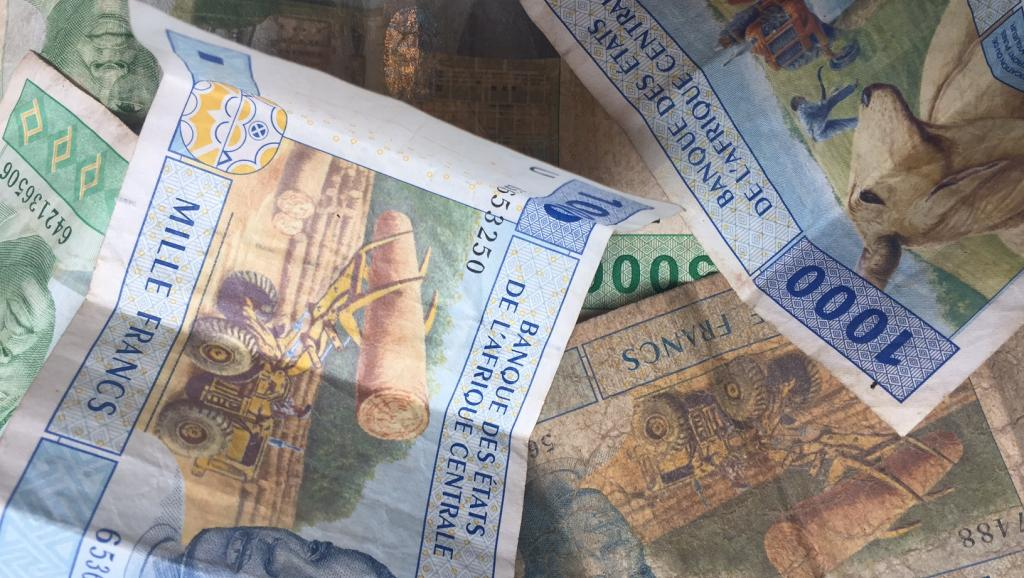
The president of the Republic of Benin, Patrice Talon, has announced that West African countries will be withdrawing their foreign reserve CFA franc, from France. Talon said in an interview with France24 that it is a unanimous decision by user-countries in the West African region to withdraw the fund.

“We unanimously agree on this, to end this model,” he said.

“The Central banks of African countries of WAMU (West African Monetary Union) will manage all these foreign currency reserves and will distribute them to the various central banks partners in the world,” he added.

Since 1945, the West and Central African Francophone countries have been tied to CFA Franc, which reserve is in France. The situation has technically tied the economies of the West African countries to France and by extension, the European Union (EU), which means, EU economic policies affect Francophone West African countries.

In January, Liugi Di Maio, an Italian deputy prime minister blamed France for contributing to the immigration crisis in Europe through its financial activities in Africa. He said France has been exploiting former West African colonies through CFA franc, currently being used by 14 countries in Western and Central Africa. According to ANSA, the Italian news agency, Maio said of the French president, Emmanuel Macron; “first he lectures us, then continues to finance public debt with the money with which he exploits Africa,” he said.

When the CFA franc was created in 1945, it was pegged to the French currency then, the French Franc (FF). The CFA franc continued to be used until recently when members of the Francophone region decided to create something that will represent freedom from colonialism. There are now two different versions of it: the CFA franc of the West African Economic and Monetary Union (WAEMU), which has eight member countries, and the one for Central African Monetary and Economic Community, which has six members.

However, both versions of CFA are still pegged to the Euro and tied to the French economy. France holds 50 percent of the foreign exchange reserves of the countries using CFA, 14 of them in all. Recently, there has been a loud call for the CFA franc countries to assert their total independence from what has been described as neocolonialism that has left countries without control of their own currency.

In August 2017, a protest erupted in Dakar, the Senegalese capital over the continuous use of the CFA by African countries. Led by Kemi Seba, the infamous activist who burnt a 5,000 CFA note in defiance, it was a wakeup call to all francophone countries that still use the currency to create their own and demonstrate their total freedom from colonialism.

Pro-democracy youth movements in West Africa such as Y’en a Mare in Senegal and le Balai Citiyen in Burkina Faso have recently made the scraping of CFA their focal point. They say it’s time to end the obvious influence that France is still exercising on Africa.

These movements and protests have the complement of Liberate Africa from Monetary Slavery: Who Profits from the CFA Franc? A book published in 2016, by a group of African and European economists. The book criticizes the CFA as a means of post-colonial exploitation by France. Though France has always maintained that the participation of member countries has been out of their willingness, and the CFA reserve initiative has been to help stabilize the currency of her former colonies, using Guinea as an example, economists disagree. Morocco, Tunisia and Algeria all broke away from the CFA to issue their own currencies, which when compared to countries in CFA are significantly stable.

The argument has been that the CFA is a good currency for those who benefit from it. Talk of the major French and overseas corporations, the executives of the zone’s central banks, the elites wishing to repatriate wealth, heads of states who are not ready to step on the toes of the colonial masters yet.

France has evidently been the highest beneficiary of the CFA, a fact clear by their attitude toward African leaders who oppose the arrangement and those who support it. African leaders who support the CFA franc have enjoyed quid pro quo from France, in the form of a total support for them no matter what they do, while those who showed signs of dissent were fiercely opposed by the French government.

France holds a de facto veto on the boards of the two central banks within the CFA franc zone. Since 2010, when the Central Bank of West African States (BCEAO), was reformed, the conduct of monetary policy has been assigned to monetary policy committee. The French representative is a voting member of the committee, while the president of WAEMU commission attends only in an advisory capacity. Moreover, the European Central Bank also dictates the monetary and exchange rate policies CFA franc zones.

The French authorities have kept mum on the recent events regarding CFA franc, and so did African leaders until Talon broke the silence. But during his presidential campaign, Emmanuel Macron was quoted to have said that moving away from the CFA is the decision of African countries.

Since 2015, the 74-year old French legacy has seen increased dissent from around the world. In 2017, Kemi Seba’s protest against the CFA, through his NGO, SOS Pan-Africa (Urgences Panafricanistes) garnered momentum across Africa, Europe and in Haiti. Pan-Africanist, economists and activists all came together to urge the countries in the CFA zone to break away.

The resuscitation of the call to break away from CFA, and move the African funds to other destinations in Europe, is however, highlighting the incredible fact that Africa still lacks the capacity to function independently. One of the economic challenges the continent has faced is a single currency to facilitate easy exchange and intra-African trade.

The proposed currency (Eco) that could have served as an alternative to CFA was due to go into use in 2015, but has been deferred until 2020. So there is no alternative currency for the 14 countries currently on CFA.

Although, Talon didn’t give a timeframe for withdrawal of the fund, 2020 is just around the corner with its uncertainties. If Ecowas fails once again to facilitate the circulation of Eco, the quest to withdraw from CFA will likely mean moving from the influence of one European country to the other.

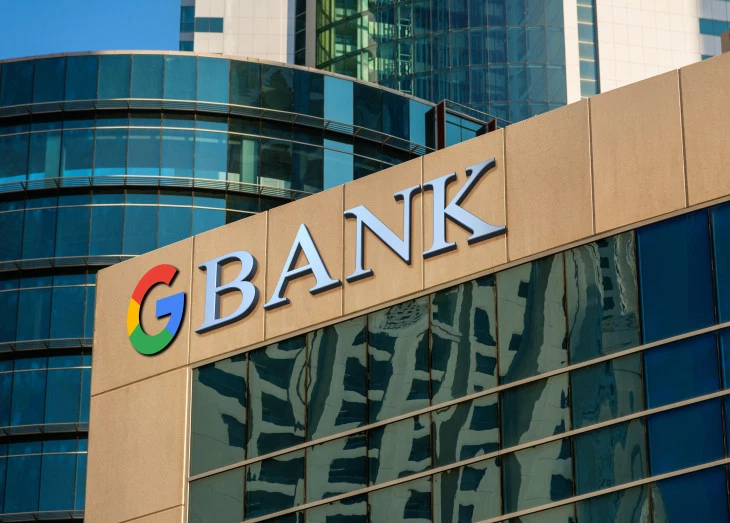
The Google Bank Plc

0

Alphabet Inc’s Google will offer checking accounts to customers starting next year in a finance push, the Wall Street Journal has reported. The project, named Cache, will have accounts by Citigroup Inc and a credit union at Stanford University, according to the report.

“Our approach is going to be to partner deeply with banks and the financial system,” Caesar Sengupta, general manager and vice-president of payments at Google, told the Journal in an interview.

“It may be the slightly longer path, but it’s more sustainable,” Sengupta was quoted as saying in the report.

The search giant will tie the accounts to its Google Pay offering, which already has 100 million users around the globe, a person with knowledge of the project told CBS MoneyWatch.

Now,  which bank in Nigeria will get the blessing of Google? That would be huge in the market as Google takes this mission global.

Jumia Is A Better Payment Company Than Ecommerce As JumiaPay Skyrockets

1

In the history of the African commerce, no one has ever succeeded in ecommerce, financially. From Mocality to Kalahari, Konga to Jumia, Efritin to OLX, the end-results have been predictable: massive losses. Unlike in other emerging markets like China, India and Brazil, African ecommerce pioneers did not build double play payment products at inceptions, missing a critical profit engine to fund logistics-related expenses. Alipay powered China’s Alibaba just as PhonePe was helping Flipkart in India.

But that may be changing as Jumia has gone all payments with JumiaPay: “Jumia saw record volume with its payment platform JumiaPay, which reached 2.1 million transactions and 32 million euros in total payment volume, nearly double the year before.”

Looking at the Q3 2019 financials, Jumia is a better payment company than an ecommerce. JumiaPay has better numbers and growing just fine. Indeed, in the real scheme of things, there is nothing like an ecommerce company in Africa when your marginal cost is still all physical with expensive parallel logistics solutions in places with no national postal systems.

Jumia said marketplace revenue on the platform rose 52.1%, to 18.9 million euros, but overall revenue ticked up just 19.1%, to 40.1 million euros, or $44.1 million, as it saw nearly flat growth from its first-party e-commerce business. That was below analyst estimates of $51.9 million.

Jumia saw record volume with its payment platform JumiaPay, which reached 2.1 million transactions and 32 million euros in total payment volume, nearly double the year before. Gross profit in the quarter rose 45%, to 18.1 million euros, but its operating loss continued to expand, widening 34.6%, to 54.6 million euros.

Co-CEOs Sacha Poignonnec and Jeremy Hodara said:

We are making significant progress in the usage and relevance of our platform for consumers and sellers and are firmly positioning Jumia as the digital destination of choice for everyday needs in Africa. In parallel, we continue to make great strides in our payment and fintech business with JumiaPay showing very strong growth momentum on both volume and transaction metrics.


But despite the progress on JumiaPay, it is still a long night for Jumia as TC Daily notes:

JumiaPay has released its financial report for the third quarter of 2019 and it’s a bit of a mixed bag. The good – JumiaPay, its financial service is the company’s fastest-growing category. It represented an equivalent of 11.6% ($35.2 million) of Jumia’s entire GMV during Q3 2019. The bad – Jumia is still losing cash. Its operating loss in Q3 2019 stood at $55 million about $10 million higher than Q3 2018.

The full earnings call transcript is available here.

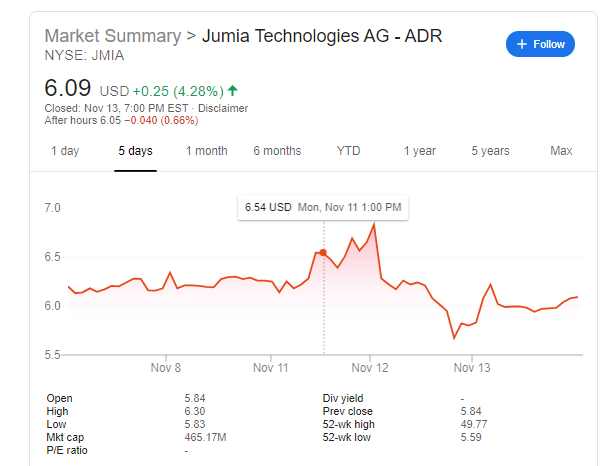
Jumia stock has lost significant value since its IPO