DD
MM
YYYY

PAGES

DD
MM
YYYY

spot_img

PAGES

Home Blog Page 6613

Keep Going – You Are Doing Great

0

Life can be dicey. You could plan for ”A”, and ”B” occurs when you least expect. I could remember those days when I was a job seeker. I traveled to Lagos on a Friday evening for an impromptu job interview. I had been invited for an interview at a reputable company. I applied for the vacant position six months away from the day of the invite. It was an impromptu interview. 

I could have perhaps let it slide but my love for the role wouldn’t let me give up on it. I boarded a bus from Ibadan to Lagos at around 4 p.m. in the evening. 

I had always dreamed of working in a bank. I got into the bus with lots of imagination. I pictured myself in the banking system doing my daily assignment. I pictured myself in a meeting with the board of directors. There was nothing I did not imagine. How I wish it came to pass. 

I got to Lagos by 11 p.m. Thanks to the traffic congestion as always. I could barely eat my dinner as I yearn for some rest. The journey ahead is still far, I said to myself as I retired to bed.

I woke up the next morning, freshened up and got dressed. I set out for the journey around 5:23 a.m. I could barely read anything about the bank last night as I was too tired. All I did was try to remain calm. Although I glanced through some as I journeyed in a rickety molue. 

I got to the venue around 7:48 a.m., looking relaxed and scared at the same time. ”Whatever comes my way, it’s fine,” I said to myself. 

I joined the long queue of job applicants who were sitting. It seemed we were all here for the same purpose. I tried to remain unintimidated. 

After sitting for two hours, a young lady came out to address us – ”Hi everyone, we have a slight change in our appointment with you. The proposed interview with you will no longer commence today. 

”We will contact you for further information about the next date. 

”We regret any form of inconveniences.”

She said and left. The announcement was welcomed with unpleasant noises in the banking hall. Everyone seems disappointed with the manner in which we were treated, especially from a reputable bank.

It was like a shock to me. I had actually told some friends that I was travelling for a job interview and they should have me in their prayers. 

I was really gutted. I had no idea what to do next.

I don’t want to go home with the same story – we will get back to you. 

I had no choice but to return. I did tell them the truth and moved on. But here’s a lesson I learned, ”Always be prepared for the unexpected.”

 My Kenyan friend, Njeri Marasi said,

In my culture, grown-ups are advised not to look at a baby when he falls. Reason?

”The baby will cry when he realizes that someone saw him fall. But if nobody notices, the baby rises up and keeps going. I have observed this to be true.

”While this practice is sometimes criticized, it offers an invaluable lesson in life.

”People make mistakes and are often aware of them. No need to keep focusing on the weaknesses. Overlook and you will be amazed how quickly they pick themselves and walk more steadily.

”If you fail, assume nobody noticed and keep going. A pity-party will erode your confidence.”

This is also common with many job seekers, they are always bothered about their failures. What people would say about them, and the society’s views. 

I used to be ashamed of my failures. I wouldn’t want to tell anyone about my shortcomings. I don’t want to be labelled a failure. But does it really matter? 

You don’t have power on people’s opinion. You didn’t fail like I always say, you only discovered a reason why it didn’t work. 

Be like a baby. Fall and stand up. Life is full of surprises but in the end, they are all life lessons.

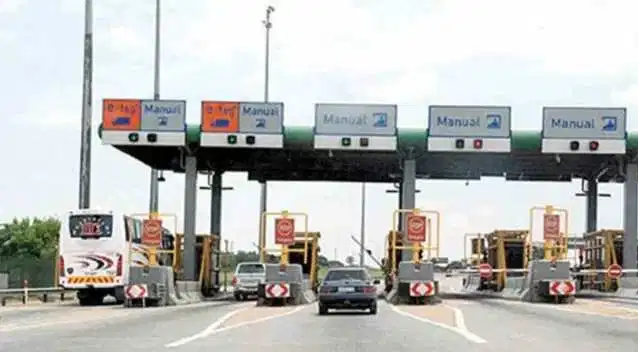
Most Nigerian Firms Serve West and Central Africa Markets Via Land Borders

1

So many questions on what Onitsha traders are exporting while responding to my call for Nigeria to open land borders for exports even if we keep them closed for imports! But before my response, let me share this comment from Francis.

Francis Oguaju  ·

As always, everything about Nigeria somewhat appears complicated: if you take drastic action to correct or mitigate one problem, you end up creating paralysis in many other places; thinking things through could help, perhaps.

We remain highly deficient when it comes to using data to make decisions; all this while – government’s argument centred on how much we are losing from importation or smuggling via the borders, no one cared to publish how much we also make through exports via the same land borders; a serious omission that shouldn’t be left unattended.

When politicians want to run for highest offices in the land, you hear lines such as, ‘I am still making consultations with my people and associates’, apparently they forget to make the same all important ‘consultations’ on economic issues that affect multiple and varied constituencies and stakeholders; our decision-making capabilities as a people remain questionable…

It’s the same reason why we argue on wage increase, without corresponding arguments on revenue generation and capacity to fund our unrivalled level of profligacy. To advance, we must shift from getting few calls right to that of getting most calls right!

Now, here is my response:

Most big manufacturers like Unilever and Consolidated Breweries use Nigeria as a hub to serve some west and central African countries.  Because of the proximity of Cameroon to Aba, Unilever uses land borders to move its goods to that nation. In Onitsha, we have many small scale manufacturers making biscuits, cosmetics, etc which serve smaller West African nations. It is important to understand that some African countries see Nigeria in the same dimension as we see United States. 

Pharmaceutical firms in Nigeria serve most markets like Togo, Benin Republic and southern Cameroon. In short, in my village of Ovim (Abia State), we have a beverage maker whose 100% market is Cameroon. He does not sell his products in Nigeria as he makes more money in Cameroon than Nigeria even though he sources the raw materials from Oron in Akwa Ibom.

So, when we write Onitsha or Aba, do not just think these guys are just traders. Also understand that many manufacturers serve Niger Republic from northern Nigeria. They manufacture in Nigeria even though they sell in Chad and Niger. There are many reasons for that – Nigeria’s has a more advanced banking system and deeper talent base to support production.

Largely, if this border closure continues, I expect companies like FrieslandCampina WAMCO (makers of peak milk), Cowbell, Unilever to experience massive revenue drops in 2019. Most of these entities serve other small African countries via land borders. 

You may argue why not use sea to move these items – the fact is this, by the time you load a truck and travel from Aba to Lagos, you are largely already in Cameroon. And then it has to spend 3 months in the sea. Why do that especially for perishable or time-sensitive items like drinks, food items and medicine? It makes no sense.

Beyond Closure

The closure of border is simply saying that Customs is not doing its work well. If Customs does its works well, this will not be needed. Also, the argument that import revenue is improving because land borders are closed must also be evaluated on how much exports have been affected. We can make extra N2 trillion from import fees while our local industries that serve small African countries go out of business! Government will have more money in its vaults while families will lose breadwinners.

The Nigerian Banks’ Trust Challenge on USSD Charges

0
CBN Governor

The recent introduction of charges on Unstructured Supplementary Service Data (USSD) transactions came with more than controversy. It may have exposed the lies and conspiracies beneath the exploitative charges that Nigerian bank customers have had to deal with all the time.

When MTN sent notification to its subscribers about the commencement of charges on USSD based transactions, the Nigerian public did not receive the message with open arms. Therefore, the Ministry of Communication and Digital Economy has to wade into the controversy that ensued, ordering MTN to halt the proposed charges.

Upon consideration of the matter by the Ministry of Communication, Dr. Isa Pantimi, the Minister, ordered its immediate suspension.

“After receiving briefing about the proposed USSD charges, I realized there was no justification for the new tariff and consequently, I directed its immediate suspension. Any telecom operator that violates this directive would be sanctioned appropriately.” He said.

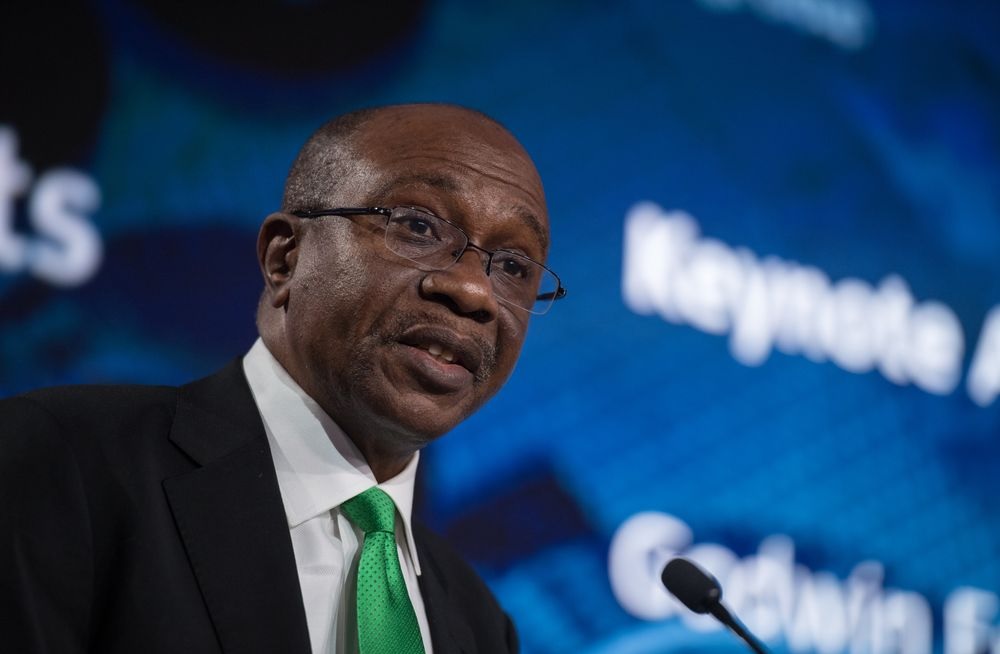
The Central Bank of Nigeria (CBN), also registered its opposition to the development. At the just concluded World Bank/IMF Annual Meetings, in Washington on Sunday, the CBN Governor, Godwin Emefiele told the press:

“MTN is the only company that is yet to implement end-user billing which is the standard practice for customer initiated transactions. This is despite the fact that the banks, working with CBN, have engaged MTN over a period of more than one year to try to bring down the cost of USSD to aid financial inclusion.” He said.

When asked if the Apex Bank approved of the charges as announced by MTN, Emefiele said:

“About five, four months ago, I held a meeting with some telecom companies as well as the leading banks in Nigeria at Central Bank Lagos. At that time we came to a conclusion that the use of USSD is a sunk cost. What we mean by a sunk cost is that it is not an additional cost on the infrastructure of the telecom company.

“But the telecom companies disagreed with us, they said it is an additional investment on infrastructure and for that reason they needed to impose it. I have told the banks that we will not allow this to happen. The banks are the people who give this business to telecom companies and I leave the banks and the telecom companies to engage.

“I have told the banks that they have to move their business, move their traffic to a telecom company that is ready to provide it at the lowest cost possible, if not at zero cost. And that is where we stand, and we must achieve it.” He concluded.

As admitted by the CBN Governor, it is the business of the banks and telcos to settle the bill emanating from the USSD transactions. The telcos feel it is becoming a heavy burden to bear running it at zero or low cost, so they wanted the banks to upset the cost. The banks as usual don’t want to take responsibility for any or additional transactional costs, so they directed the network operators to start charging subscribers for transactions. This they did without the approval of regulators, mainly, the Central Bank and the Ministry of Communication and Digital Economy.

It was based on their agreement with the banks that MTN issued the notice of tariff to its subscribers. But that didn’t go well with the subscribers as it generated a lot of noise which caught the attention of the regulators who vehemently opposed the development. In a nutshell, the plan backfired and everyone has herself to defend.

In a moment of twist, the body of bank CEOs issued a statement on Monday, denying any knowledge of the development, alleging that MTN acted on its own. The Group stated:

“The banks did not ask MTN to start charging customers as contained in the text message. The decision on whether, and what amount, to charge customers for assessing USSD is entirely that of the telco company. In the same way a customer is billed for calls, SMS and data.”

They went further to say that charges for financial transactions remain unchanged, and they have no plans to change them.

“That the banks are determined to pursue the National Financial Inclusion Strategy of the government and will continue to advocate that telcos identify wholeheartedly with this laudable initiative and implement transparent and low pricing model in the use of USSD access codes.” The statement said.

By this statement, the banks exempted themselves from any blame and made telcos scapegoats who will face the backlash from the people or likely the wielding axe of regulators.

In a bid to set matters straight, MTN issued a statement titled: Clarification on media reports regarding implementation of Unstructured Supplementary Service Data (USSD) end user billing by MTN Nigeria Communication PLC.

“We at MTN Nigeria Communication plc (MTN Nigeria) approach everyday with one primary objective – finding ways to make our customers lives a little easier; which is why we will focus on what really matters, our customer. They are the reason we made transparency and simplicity central to the recent drawn out engagements with the banks over USSD charges and how they should be applied.

“Following consultation with industry stakeholders, customer feedback and media reports related to the message notifying our customers of upcoming changes in our charging mode for access to banking services via USSD channel, we wish to confirm that the new charging model has not gone into effect.

“The situation has made it necessary to restate that MTN Nigeria, in line with our company policy will always be transparent in our dealings with customers, the industry and relevant regulatory bodies. The SMS notification to our customers is reflective of this commitment and was sent after formal requests received from individual banks as well as the Body of Banks CEOs to implement end-user billing – a billing methodology where the customer is directly charged USSD access fees irrespective of the service charges that the bank may subsequently apply to their bank account.

“It should be noted that the banks had been up-till now been on a corporate billing plan – where a corporate client, the provider of the service that is accessed through the USSD channel (in this case the bank) pays the access fees at a wholesale price.

“We believe the costs associated with USSD banking services should be charged to the consumer only once – as with other USSD services we provide, which we believe has been adequately provisioned for within existing CBN guidelines. It is in fact, in line with National Financial Inclusion Strategy of the Federal Government that we resisted the calls for end-user billing. We relented only after exhausting avenues of engagement with the banks in pursuit of a model that enabled a single charge. We believe separate charges by the banks and telecoms companies are an unnecessary burden on the consumer especially the target group that the National Financial Inclusion Strategy is aimed at.

“With this in mind, it is imperative for all parties to approach the table and engage constructively toward a solution, putting the consumer at the fore of all decisions. The banks have been and still are our esteemed customers and valued partners. We look forward to collaborating with them and other stakeholders and will be glad to implement the decisions approved by the regulators.”

This statement explains two things:

  1. The banks, in attempt to avoid any financial responsibility emanating from USSD transactions asked the telcos to charge consumers directly, and reneged when it became a problem.
  2. The problem is far from being over. In a situation where the banks are dodging a possible hammer from regulators and at the same time don’t want to foot the USSD charges bill, it’s either the telcos withdraw their services or the banks find a secret way to deduct the charges from depositors accounts.

FUTO Lecture Video, UNIZIK, Nigeria Needs To Open Land Borders for EXPORT

5

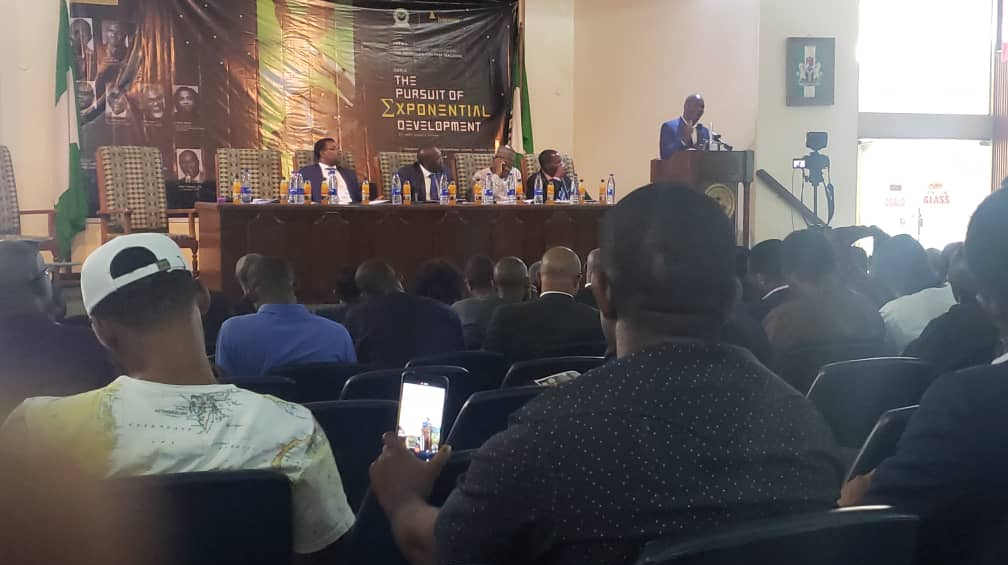
I flew into Asaba for Awka for a University Lecture at UNIZIK. It was an amazing ecosystem of intellectual conversation. My big friend Mr. Val Ozigbo, President and Group CEO of Transcorp Plc chaired the event.

I will be in Awka in October. Yes, I have accepted the invitation of the Vice Chancellor of Nnamdi Azikiwe University, Awka,  Prof. Charles O. Esimone, to deliver a university-wide lecture in that institution named after the Zik of Africa, a Founding Father of modern Nigeria. The podium I will mount for this specific event has been graced by Prof Barth Nnaji, Senator David Mark, Dr Kalu Idika Kalu, Prof Chukwuma Soludo, Chief Emeka Anyaoku, Bishop Mathew Hassan Kuka, among others. To have my name is that league is simply amazing.

From Awka, I will touch base in Onitsha to challenge the OMATA members who continue to thrive, creating Africa’s largest market, despite institutional challenges across Nigeria. My message to them:  band together, join efforts, push for scale to improve unit economics, and move upstream. We must create conglomerates and dominant category-king companies out of Onitsha. To do that, we must unleash entrepreneurial capitalism with the mindset of scaling capabilities over the rituals of “cultural trading”.

The orator teased me, proclaiming the lecture, as the “best in the history of the lecture series”. I thank the Vice Chancellor and Deputy Vice Chancellors for hosting me in the beautiful UNIZIK.

Today, did some OMATA connections in Onitsha.

Mr. President, Onitsha traders need help – relying on info shared, they are losing businesses. Onisha is the largest market in Africa. Nigeria can close land borders for import, but we need to allow export.

People that come to Onisha buy from Onisha and then import into their nations. Government should allow that. Men and women are weeping here because they cannot export. Open the land borders for export, at least. Just Export.

Please do not accuse me of anything – I have to speak for these men and women. I have sent a note to the minister that Nigeria needs to consider opening land borders for EXPORT at least.

Graduates Turn Okada Riders But Here’s The Way Forward

0
Okada driver

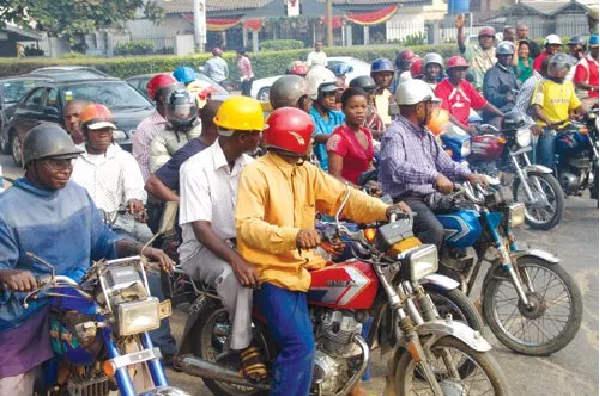
When a graduate turns an Okada rider, then it says a lot about the future of the country.

I was commuting to the market on a motorcycle today when I had the pleasure of chatting briefly with the rider, Sanmi Ajayi.

According to him, ”I am a University graduate, but after an unsuccessful job search and ridiculous job offers, I ventured into Okada business (motorcycle).”

Sanmi is a graduate of the University of Ibadan, with a Second Class Upper in Geology.

I can imagine the challenges many job seekers out there are going through. But the recruiters are also facing the same.

It hurts to see graduates still do odd jobs to survive. Do you know the number of fresh graduates mobilized for the national youth service scheme every year?

If you divide it into three batches, add them to the waiting list of job seekers in the country and see the unemployment rate that you will come up with. Until Nigerians start creating industries instead of buying properties in Dubai, the problems won’t go away.

According to a respondent, Macs Ezebuno, who engaged my article on LinkedIn, he shared his opinion about doing menial jobs like Okada as a graduate. He said, ”Chinedu, I do not see anything wrong in doing menial jobs.

”In fact, it doesn’t matter what anyone does as a university graduate or non-graduate. What matters is what they have in mind before venturing into the menial jobs.

  • ”Did they venture just to sustain or to gather resources for better?
  • ”Did they venture with the future in mind or they ventured for the now?
  • ”Again, the little they got, did they reinvest in themselves or they wasted it?


”Many graduates and non-graduates have gone through a lot but are better entrepreneurs today because they learnt what they would not have learnt in classrooms. Kudos to those who became better persons through dignity of labour (the hard way).”

Another respondent also shared his own perspective too. David Ferdinand Uche said, ”I will always take my advice to the side of Nigerian graduates.

”One big mistake to make in Nigeria is to study a course that requires very sophisticated training before one will become employable. Very Sophisticated courses give little or no room for personal development in the required practical skills for employability – Geology and Petroleum Engineering for example.

”The advantage of an unsophisticated course in Nigeria is that an undergraduate, while still in school, can be personally developing himself in the required practical skills in his area of interest under the supervision of an expert – Computer Science, Chemistry and Electrical Engineering for example.

”Another problem of Nigerian graduates is that we don’t pass through school for a purpose. Example: I wanted to understand and learn Chemistry so I can formulate and develop chemical products like personal care and cosmetic products among all, and I decided to study industrial chemistry – that’s purpose!

”Undergraduates with purpose don’t think like others! They always look for a way, while still in school, to get the required practical skills for them to be employable in an area of interest.
Some labs knew I existed in my undergraduate time.”

Festus Oyewole had a different view to what Ferdinand said. Festus said, ”What Uche said is what I call human reasoning. Anyways, it is not really about the course of study. We just need to face the reality that our population is more than the available jobs like what the writer said. We need to think about Self development.

”Above all, God is what we need.”

There are pools of graduates out there and hence, it makes it very difficult to choose the right candidate. The uphill battle to filter thousands of resumes in their job portals is really overwhelming. This calls for new ways of looking at the issues, necessitating the use of technology.