DD
MM
YYYY

PAGES

DD
MM
YYYY

spot_img

PAGES

Home Blog Page 6618

The Radio Boom in Osun and its Implications on the State Information Landscape

0

Good governance thrives on a marketplace of ideas. Radio as an arm of the electronic media is the most ubiquitous, popular and highly sought after means of mass communication. Its reach to the nooks and corners of developing nations is legendary. As part of the emerging cities in the millennium, the radio waves have continued to witness more expansion. In Osun, the trend is there, the implications are obvious. The implications are the focus of this piece.

How it all began

The first radio signal was first sent and received in Osun on  25th November, 1991. This followed the attempts to create a media house for the new state carved out from the old Oyo State. Since then, the government owned station has continued to play a leading role in the Osun media landscape. This is in spite of the location of Gold FM, a Radio Nigeria FM Station in Ilesa by the Olusegun Obasanjo led Federal Government. Some form of competition came on board when Uniq 103.1 FM, a privately owned radio station located in Ilesa, also surfaced on the Osun media landscape in 2010. The competition from Ilesa was buoyed up from the central zone with Raypower FM and Rave FM coming in succession to swell the number of radio stations in the State of the Virtue. After them have come  Crown FM, Ife; Timsed FM, Ijebu Ijesa, Oodua FM, Ile Ife and Great FM located on the campus of the Obafemi Awolowo University, also in Ile Ife.

What are the implications of the expanded radio space in Osun?

The radio boom in Osun has its own consequences depending on where one is looking at it. The prospect is looking brighter for the average Osun indigenes and residents and advertisers hoping to derive some benefits from this development. However, radio station owners and managers, the space is getting wider and the audience base is becoming more competitive. For the radio audience in Osun, there is a variety of stations and programmes. The choice is theirs to make. Listeners have more stations to attend to their radio needs and listening pleasure. They are the greatest beneficiaries of this multiplication of radio stations. They have gradually exited an era when they only had access to information from government owned radio station to a number of stations driven by different motives. Their chances of getting their voices heard have also widened. In Osun today, the average listener is the beautiful  bride whose taste bud is now to be romanced with quality programmes. Not only that, the access to multiple voices and ideas on issues now pervades the airwaves in the state. So, no matter how it is considered, the listener is the winner in Osun.

Advertisers too now have wider opportunities to market their products and services to the people. From Osogbo to Ijebu Ijesa, the coast is clearer for the advertisers to spread their messages. There is a break in the long  monopoly of the airwaves enjoyed by the government owned OSBC before now. Jingles in English and Yoruba could continue to roll out on the Osun airwaves.

For the government, the wider information landscape is a major threat.  The voice has been taken out of the radio station previously considered as the government megaphone. The media handlers of the governor now has to monitor the expanded airwaves 24/7 to stay on top of information flow and respond to issues faster than their predecessors. The emerging radio boom now opens the government flanks to more criticism. Where the state owned station might be cautious in interrogating certain issues concerning the owners, their private counterparts would go all the way to open up government policies to scrutiny. While the average citizens are the greatest beneficiaries of the expanding media space, the government appears the most threatened.

Radio station owners and managers are equally under fire. The implication of more players on the airwaves is water tight competition. The narrow source of revenue becomes narrower. The stations compete in terms of audience base and advertising revenue. In broadcast business, the medium first builds a huge listenership which would be patronised by the advertisers. With more stations in competition for the same audience base, getting audience attention becomes water tight. The station with the domineering transmission power that has the reach stays on top. This must be complemented with quality programming and sound mix of great talents. Not only that, creative ways must be devised to make the audience loyal to the station. The mechanism of feedback must be strengthened. The trend of location of the new radio stations in the state is interesting. There seems to be a tug of war between the Osun Central Zone and the Osun East Senatorial District. The state capital, Osogbo is in contention with Ilesa, Ife and Ijebu Ijesa in hosting the radio stations.

The airwaves could only get bigger and better!

The WeWork’s $8 Billion Bailout

2

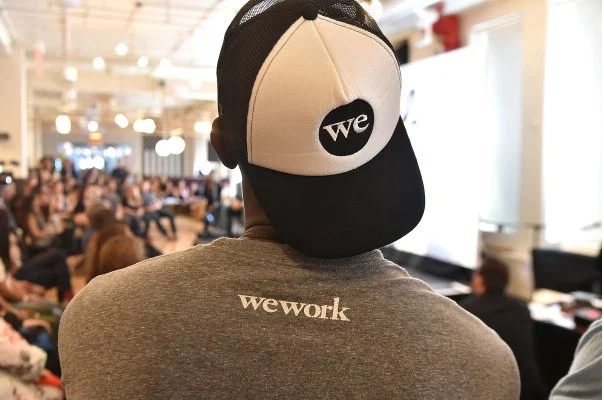
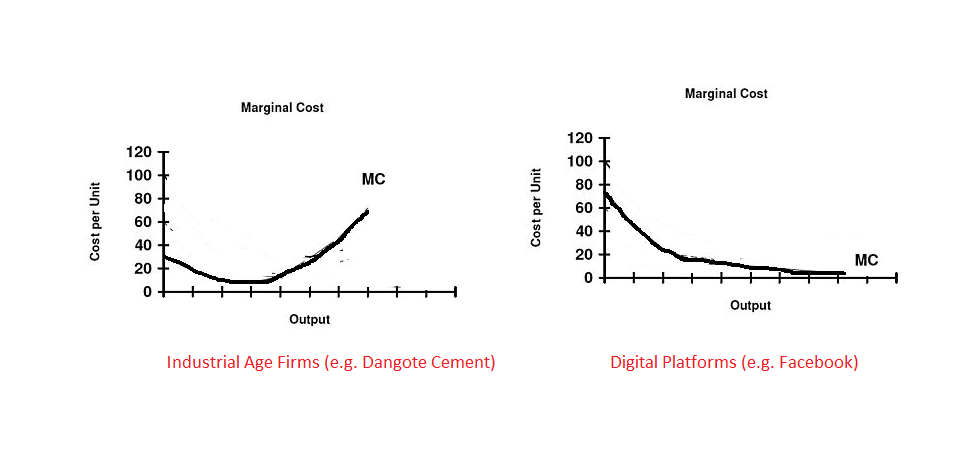
WeWork gets up to $8 billion new capital injection from SoftBank, and now the Japanese investor is on the path to own 80% of the company. This simply settles what everyone has been saying: WeWork (yes, We Company) is not a technology company. Simply, WeWork does not see improved marginal cost with scale, and when that happens, growth does not necessarily become leverageable. If growth is not leverageable, scalable advantage stalls, and the company cannot claim to be (overly) in the technology species. Sure, there are uncommon cases when one can achieve that type of growth, but count real estate out!

The We Company and SoftBank Group have agreed to a new capital infusion, which will see SoftBank committing $5 billion in new financing and issuing a tender offer for another $3 billion in buybacks for shareholders.

After the closing and the tender offer, SoftBank will own approximately 80% of The We Company, according to a statement. However, it will not hold a majority of voting rights, thanks to WeWork’s convoluted ownership structure.

WeWork follows the Left plot. As output increases, marginal cost begins to rise after a time.

What Early Investors Look for in Companies

The Mission of City Scope Africa’s John Fatanmi – A Conversation on Business, Values and Shared Prosperity

0

When you hit rock bottom, there two options; remain stuck or get up and carry on.

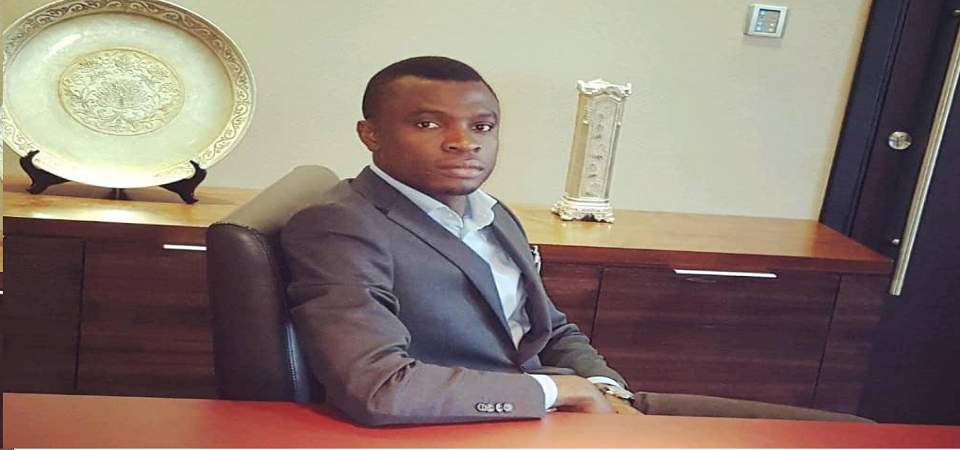
That was the case with John Fatanmi. He is a Co-founder and Chief Executive Officer at City Scope Africa.

We had over an hour on a phone conversation. We discussed the situation in the country and his part in changing her image positively.

Can we get to know you?
I am John Fatanmi, fondly called JGold by sobriquet. I am a TEDx Speaker, Media Entrepreneur and Magazine Publisher.

”I lead the team at City Scope Africa as a Cofounder and the Chief Executive.

”I am also the Convener of the annual African Business Professionals and Entrepreneurs Conference (formerly Boot Camp) in Sub-Saharan Africa, precisely in Lagos-Nigeria, for sometimes now (four editions so far).”


It’s great to finally have you here after so much effort to get an interview date with you. Can you share more about City Scope?
”The pleasure has always been mine. Thanks for reaching out. I need to quickly say that the brand is now registered with the nomenclature ’City Scope Africa’ (formerly City Scope Ng) and not ’City Scope’

”City Scope Africa is a pan African media platform with the commitment of showcasing excellence in people of African descent and shining the spotlights on beautiful places of interest in Africa.

”At City Scope Africa our sole aim is to inspire people (largely of African Descent) to strive for excellence in major facets of human endeavours and become what they intentionally want to be, by reading about the winning stories and strategies of Africans doing small things (sometimes big things) in profoundly transformative ways.

”Another core mandate of ours, is to uncover and harness the untapped potentials of Africa’s rich and diverse cultures by showcasing
beautiful destinations in Africa for adventure travel and corporate tourism through AFROTOURISM.

”Afrotourism is a vital component of our local economies. It will contribute to African tourism development and change the existing narrative held about the continent, over the years.”


You are on a great mission. What actually led you into this?
”When I visited Dubai and the oil richest Emirate of the UAE, Abu Dhabi, in the year 2014, I was asked to pay about 4,000 Dirhams (over 350,000 Naira) for ordinary pleasure – horse riding. This got me mad, especially when I saw Nigerians paying. Yet, back at home, we could barely pay 1,000 Naira to see the statue of Eyo Masquerade in Lagos or Moremi statue at Ile Ife, Osun State or the Obudu Cattle Ranch in Calabar and beautiful mountain at Uganda.

”Also, when you meet Emiratis (the name for UAE Nationals) on the streets of UAE, you are accosted and asked, are you from Africa? When you respond in the affirmative.. they are quick to say ’Oh Africa, Corruption and Football.’

”They mention names like Jay Jay Okocha and Rashidi Yekini. I tried to answer annoyingly, that Nigeria is not just about football and some African leaders may be corrupt but we have a whole of other beautiful things in Africa that the western media world do not showcase.

I also remind them that Africa is not a country but a continent with a lot of opportunities for all of us.
I later realized from vox populi that Rasheed Yekini sometimes played for an Abu Dhabi club.

”All these informed taking City Scope Africa up a notch, even though, I have started lowkey in 2011 before visiting the Emirates.

”Chinedu, frankly speaking, the western world knows little or nothing about Africa. More often than not, Africa is always in the bad news of the western media. What is known is that there are jungles, big animals, corruption, poverty and Malaria. This sums up the world’s ‘narrative’ of this great continent, AFRICA, over the years.. At City Scope Africa, we are using our indigenous media to change such agelong ‘narrative’.”


I can imagine. It is definitely sad when I hear or read bad stories about Africa especially Nigeria. I must commend you for taking a bold step towards it. But if I may ask, what has been your major challenge to achieving your goals with City Scope Africa?
”A whole lot but I will dwell on a few. Solely setting out in 2011, I had challenges ranging from brand acceptance to finance. I started just with magazine publication (known back then and registered as City Scope Magazine). At that time I was a final year student of the Federal University of Technology in Akure, South West Nigeria. It was very rough setting out alone. The Vision was not very clear, I must confess. So, it was difficult to sell the Vision to some of my colleagues back then.

”I struggled with making it an entertainment and lifestyle magazine. I had to beg a lot of small and medium scale firms in Akure to place adverts on the magazine (it was printed hard copy back then). In Fact, I had to print 1000 copies each time and I didn’t have the financial purchasing power as a student. I skipped lectures to travel down to Lagos to print and pay graphics designer. That wasn’t sustainable again, I got stuck financially and had to persuade some friends to work with me based on pro bono.

”I remember inviting my biological younger brother (from the same father and mother) to work on the graphics of the magazine pro bono too. In return, I encouraged him to take his designs up a notch and he is today a Cofounder at Fourthcanvas. (A design agency that worked on the campaign Three of the African Presidents).

”I remember giving up on magazine publication for some 3years, after having about three magazine hardcopy publications to my credit (It was an annual publication back then)

”Technically, it is very tough to be an entrepreneur in this clime.

”I picked my vision up again in 2016 from where I left it in 2014 while in Nigeria, before moving to the UAE (I initially visited but got distracted with a job offer from an Abu Dhabi Emirati).

”I encountered some challenges again and made some pathetic mistakes through to 2017.

”I later realized that vision is progressive and it will grow with a collaborative strategy. God reveals visions in phases, and they are usually fulfilled in phases.

”I also suddenly realized that I will always need to raise a company of people to accompany me in your vision. Since I have been struggling with it, I will need to communicate my vision within my little circle of influence.

”So I had to revise and recast my vision to myself. I evaluated and did some appraisals and realigned. So I noticed I was not still on course. I invited a partner to join me. Fast forward to 2018, I have four guys on my team, some are investors and one of them is a Cofounder today.

”That was how I overcame those challenges. New challenges are showing up though, but we have amicable ways to tackle them, now as a team.

”Challenges are useful part of Vision. Challenges have a way of baking you strong. Aliko Dangote said “Life would be very boring without challenges”. So, we shouldn’t pray off challenges but pray for stronger backs to withstand when they arise.”


What a mission. You are definitely going to make a history with your vision and I hope many will be inspired by your work. Last Boot Camp, I learned that Toyin F Sanni is your Patron, how were you able to convince a strong woman and great personality like her to buy into your vision?
”Well, that is just the assumption in the minds of everyone. Toyin Sanni is neither our Matron nor Sponsor.

”As a matter of fact, I have not even met her before in my life (she was duly represented at the last Boot Camp by her Compliance Officer at Emerging Africa Capital Group Ikoyi). All of the Speakers at the Boot Camp 4 (now Conference), we were meeting them for the first time.

”We have a special way of making friends virtually, using our massive online network, LinkedIn especially.

”I think our Vision and Mission get people attracted to us. It is not easy to combine two big things together. At City Scope Africa we publish monthly magazines and hold conferences annually, aside from other things we do discreetly to impact. Let me acquaint you in details with the two major things.

”City Scope Africa is the parent body to City Scope Africa Magazine, and City Scope Africa Academy

”City Scope Africa Magazine (A Publication of City Scope Africa) was birthed out of the need to celebrate outstanding achievements and showcase excellence in people who have risen (and striving) to the very zenith of their careers and have positively affected their societies, in their chosen endeavours.

”City Scope Africa Academy is an Academy, connecting young professionals and entrepreneurs in Africa, where conversations around business, lifestyle and Nation building are made. The Academy organizes the annual African Business Professionals and Entrepreneurs Conference.

”Yes, there are some we had to reach out to, virtually, just like we did to Prof. Ndubuisi who was not available to speak at the last Boot Camp 4 (now Conference). Hopefully, he will join us at the 2020 African Business Professionals and Entrepreneurs Conference 5.”


What should we expect from City Scope Africa in the next five years? 

Sincerely speaking I am not good at projections, just the way my Vision of City Scope Africa (formerly City Scope Ng) wasn’t clear to me at inception. Life just happened.

”For me, there is no clear model or blueprint for the next five years but I remember my Cofounder (who also doubles as our COO) saying that our two  appendages (City Scope Africa Magazine and City Scope Africa Academy) will take new dimensions. I don’t want to share for public consumption for now because of our competitors. (joking, that is just on a lighter note).

”That said, quite frankly, our initiative, the African Business Professionals and Entrepreneurs Conference will grow to become the largest gathering of business professionals (budding and successful) and captains of industries in Africa in the next five years or less.

”I also believe that the Africa of our dream is possible and achievable. I don’t have a timeline for that African dream though but I know it will happen in our lifetime, someday and very soon.”


My last question for you, in which area would you need help from the government or private organization?
”Obviously, we need support (most especially conference sponsorship) from government, corporate bodies and/or high networth individuals for our annual conference, especially as we plan the 2020 AFRICAN BUSINESS PROFESSIONALS AND ENTREPRENEURS CONFERENCE 5 in Lagos-Nigeria.

”You see, Africa is one of the richest continents on earth, full of natural resources starting from enormous manpower, famous for its cultural heritage and hospitality and attracts tourism for its beautiful nature.

”Hence businessmen from around the globe are eyeing Africa to be their next profitable investment destination.

”Africa’s thriving business market is still considered young compared to other Asian, American or European markets; which makes it a great opportunity for businessmen and entrepreneurs.

”So, we want to prepare our people for the emerging opportunities. I sincerely look forward to a conference where we do not have to ask anyone to pay for registration (Hopefully looking at year 2020 edition and going forward). If we get enough sponsors, then it will be a free entry for all, especially budding entrepreneurs and young business professionals. That will also afford them the opportunity to pitch winning ideas to potential investors.

”Africa is a continent, with shared prosperity for all of us, not just in tourism but particularly in business and entrepreneurship.

”Potential supporters and partners can check the pictures of the August 2019 Conference 4 (formerly Boot Camp here) http://bit.ly/bootcampictures and download our October 2019 Magazine Edition here http://cityscope.africa/magazine/

”You can also subscribe to our monthly magazine via the magazine link. For further enquiries, Magazine Adverts placement and Conference Sponsorship/Partnership, you can shoot us an email to info@cityscope.africa.

”Lastly, Chinedu many thanks for having me. I didn’t take the opportunity to be interviewed for granted. Thanks to the Tekedia Media team at large, for reaching out to me.”

The Elon Musk’s Tweet

5

In my model, by 2022, we will begin a new era of immersive connectivity in Africa, anchored on mobile internet. It would not be powered by the current players in the telecom sector. Yes, a new species of companies will emerge to offer internet services with a new basis to customers. Today, Elon Musk tweeted  “Sending this tweet through space via Starlink satellite “, and just like that we are at the beginning of that new era. People, SpaceX’s Starlink is largely here.

SpaceX  CEO Elon Musk used an internet connection provided by his company’s Starlink constellation of broadband satellites early on Tuesday AM. Musk used the network in place with the Starlink satellites already in orbit to send a simple tweet, declaring that he’d done just that.

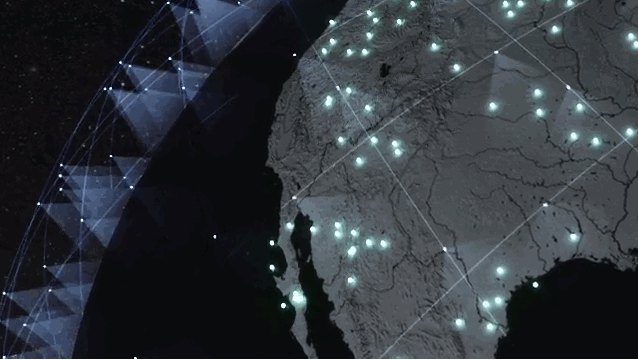
Starlink is SpaceX’s ambitious project to launch and operate its own network of broadband satellites, which will then provide broadband connectivity on a global level, including to areas that did not previously have reliable access to a high-speed internet connection.

He plans to drop 42,000 satellites into orbits to provide internet connectivity to basically cover the good earth. I expect services like SpaceX Starlink and others from Google and Facebook connectivity efforts to serve Africa massively.

On the current GSM and the broad terrestrial players? They would be here but what GSM did to CDMA in Africa could be returned to it. While most are concerned with the OTT services like Skype and Whatsapp, the biggest challenge ahead for companies like MTN, Glo, and Airtel in Nigeria will be products coming from SpaceX and other satellite providers. We are used to satellites ground stations receiving and converting satellite signals, nothing says that telcos will be the custodians of those solutions, and nothing says also that cheaper phones cannot have the feature in coming years.

No matter how you look into that future – there is disruption coming. And customers will surely enjoy!

LinkedIn Comment on Feed

I don’t think there is a way MTN and the rest can react to this innovation. I doubt if these companies have the technical capabilities to perform this feat.

The starlink idea is not a new one, this idea was first brought up by Iridium in the early 1990s to provide space based internet service with a global coverage.

Today iridium has a constellation of about 66 satellites, but I guess they were limited by the cost of “one use” rocket launch (bankrupt initially)

SpaceX solved an initial problem that have them a victory in this domain. They first solved the problem of reusable rocket.

With a reusable rocket, you can launch “many” rockets with the same engine.

You can cut cost by 100s.

One space x rocket can launch 66 iridium satellites, but iridium likely used more 30 rockets to launch their constellation.

This innovation paved the way and gave space x the capacity to position thousands of rocket in space at s lower cost.

The dominance of starlink will put America ahead.

Innovative companies make the nation great.

What can we learn from this? If logistics is affecting my e-commerce business, can I solve the problem of logistics first?

When this is done, I can operate with a capacity that competitors cannot match.

If space x delivers as planned, USA will have an edge in this arena just like the Chinese have dominance in 5G.. Great and innovative companies make the nation great

The Presidency Gives Breakdown of the Nigerian Electricity Roadmap

0
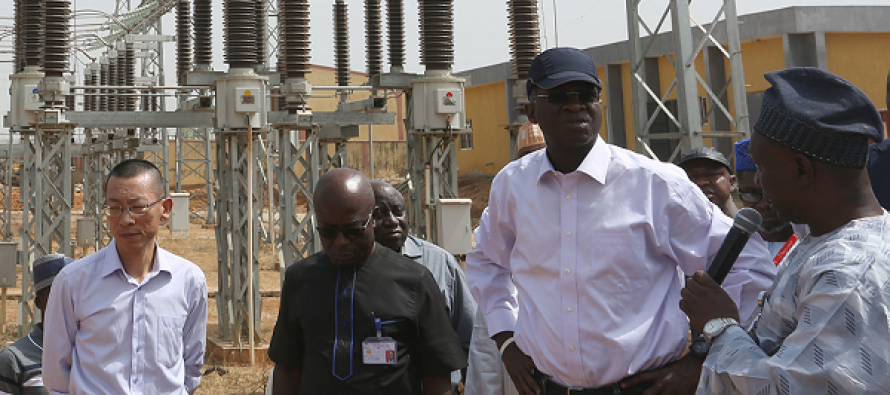
Mr B. Fashola is Nigeria's energy minister

In respect to the $2.5 billion loan secured recently by the Federal Government of Nigeria from the World Bank, for the purpose of stable power supply, the Nigerian Government has given a breakdown of the contract it has with Siemens and how they intend to achieve their aim.

Condemnation trailed the government’s move to add more to the already existing $81.27 billion Nigeria’s debt. The fury mainly stems from the fact that about $20 billion has been spent so far on power generation and there is nothing to show for it.

With the cases of embezzlement associated with electricity fund in the past, Nigerians are concerned that there is no guarantee that the newly accessed loan will prove different. Therefore, it beckons on the Federal Government to explain how the funds will be utilized to effect constant power supply.

On Monday, the presidency issued a statement giving a breakdown of the Electrification Roadmap that necessitated the loan.

“The Nigerian Electrification Roadmap (NER) is a set of critical upgrade interventions in the transmission and distribution segments of the power sector, developed by the Nigerian Government in partnership with Siemens, to increase operational grid capacity to 11,000 MW over the next few years.

The Implementation Agreement for the Roadmap was signed by Nigerian Government and Siemens on July 22, 2019, in a ceremony presided by the president. Here is an unfolding timeline of the transformational Roadmap.

August 31, 2018; Chancellor Angela Merkel visited Nigeria and met with president Buhari. She brought along with her a business delegation that included the Global CEO of Siemens, Mr. Joe Kaeser. Nigeria and Germany agree to explore cooperation in a number of areas including power.

In October 16 and 17, 2018, Siemens and Nigerian Ministries, Departments and Agencies (MDAs) held a joint workshop, at which Siemens presented a draft proposal. In November 18, 2018, Siemens formally submitted an Expression of Interest and proposal for a Nigerian Electrification Roadmap (NER), outlining a plan to tackle Nigeria’s historical Transmission and Distribution challenges.

In January 8 to 11, 2019, Siemens and BPE, on behalf of the Nigerian Government, undertook site visit to all DisCos. This provided an opportunity to formally engage with DisCos and present to them the draft Roadmap. In March 19 to 22, 2019: A 3-day workshop bringing together Siemens and Nigerian Government’s MDAs, to collate necessary input, validate project assumptions, and identify projects to be included in the first phase of the planned Roadmap.

In March 25 to April 30, 2019: Review and revalidation by Siemens of lists of priority projects previously submitted by TCN Nigeria and the DisCos. In May 1 to June 26, 2019: Siemens engaged further with representatives of TCN, NERC, BPE, Ministry of Power and all the DisCos to review technical and commercial considerations for the project, culminating in the submission of revised Technical and Commercial proposal to Nigerian Government. In July 22, 2019: Signing of Roadmap Implementation Agreement between Siemens and Nigeria.

ONGOING:

Finalizing project costing, training needs and analysis, negotiations, with a view to financial close shortly. The NER comprises several individual brownfield and greenfield transmission and distribution upgrade and expansion projects that will be executed by Siemens and other project partners. These include but are not limited to the following:

  • Transmission Projects: Supply and installation of Transmission Substations, Mobile substations, Transformers, Compensation Systems, and Overhead Transmission Lines.
  • Distribution Projects: Upgrade/Expansion of existing Distribution Substations, Supply and installation of power distribution products and systems. Installation and commissioning of mobile substations, and power Distribution Lines.
  • Power System Simulation and Studies: Software licenses and associated services for TCN and Discos. Training and Technical Services for TCN and Discos.
  • Control and Protection Devices: Supply of Control and Protection devices for TCN and Discos.
  • Meter Data Management Systems: Deployment of national Meter Data Management Infrastructure (hardware, Software, Services).
  • Technical Training: Extensive Training and Technical support for TCN, DisCos and other relevant power sector agencies.
  • Impact of the Nigeria Electrification Roadmap (NER)
  • Will deliver improved power supply nationwide, with attendant results in job creation, investor confidence, cost and ease of doing business and economic growth.
  • Will provide training and capacity building for thousands of young Nigerians (non-graduates, students and graduates)
  • Will create economic opportunities for Nigerian engineering companies that will serve as local vendors for the provision of manpower and equipment.
  • Will stimulate/encourage inflow of additional investment into the power sector.
  • Will open up financing opportunities that can be taken up by local banks and investors.”

The summary of the breakdown is that the borrowed funds will be utilized judiciously to the effect of constant power supply. And to achieve that, president Buhari reiterated that the process will involve no middle men.

“Our goal is simply to deliver electricity to Nigerian businesses and homes. Our intention is to ensure that our cooperation is structured under a Govt-to-Govt framework. No middlemen will be involved, so that we can achieve value for money for Nigerians.” He concluded.